IWA has advised government to strengthen planning policy in recognising the role canals and navigable rivers play in housing, climate resilience, and local economies in a submission made via its Planning Advisory Panel to the The Ministry of Housing, Communities and Local Government (MHCLG) this week. This follows major changes to the NPPF in 2024, on which IWA commented in detail, and the recent passing of the Planning and Infrastructure Bill.
Britain’s canals and navigable rivers deliver varied benefits for communities, nature and the economy, yet new national planning policy overlooks their strategic importance..
While often celebrated for their heritage and leisure value, canals and rivers play a much wider role today. They support wildlife and biodiversity, provide natural flood management and climate resilience, create green corridors through towns and cities, attract tourism and investment, and homes for residential boaters.
Yet because waterways frequently cross several local authority boundaries, they can too easily fall between planning policies. IWA says stronger national policy is needed so that canals and rivers are properly considered in decisions about housing, infrastructure and place-making.
Charlie Norman, IWA’s Director of Campaigns, said:
“Our submission outlines the need for residential boat moorings provision in the planning system, and the need to review and update Canal Conservation Areas. As well as this, there is so much potential that is not being realised, for example, water transfer by canals. From the contribution of water-based travel and inland ports to sustainable transport, our waterways are not being recognised for their potential, and the planning system can go a long way to fix this.
“The value of canal restorations to healthy communities is immense. Despite all these benefits, they are treated as an afterthought in planning policy, and this is a wasted opportunity.”
IWA’s response factors in these areas that could better reflect planning policy in valuing waterways:
Strategic infrastructure: Canals and navigable rivers should be explicitly recognised in national planning policy, so they are considered in housing growth, transportplanning, active travel,and regeneration projects;
Climate and nature: Canal and river corridors are natural green and blue infrastructure that support biodiversity, urban cooling, water management, and climate adaptation;
Homes: Residential boating is a long-established way of living, yet provision for residential moorings is rarely planned for properly. Local plans should assess and provide forresidential boat dwellers;
Heritage and place-making: Waterways are often the historic heart of towns and villages. Development should protect and enhance their character and heritage setting; and
Expert involvement: Waterway specialists should be consulted when development plans affect canals, rivers, and their surrounding corridors.
IWA says that recognising waterways in planning policy would help unlock their full potential, from delivering environmental gains, economic growth to new opportunities for sustainable living.
“If we want thriving communities, resilient landscapes and attractive places to live and work, canals and rivers should be recognised as part of the nation’s strategic infrastructure”, Charlie Norman concluded.
IWA has submitted a response to the Call for Evidence issued by the Independent Water Commission.
The Commission was launched by the UK and Welsh Governments in October 2024 and is chaired by Sir Jon Cunliffe, a former Deputy Governor of the Bank of England. It is tasked with carrying out the largest review of the water industry since privatisation.
The topic of water resources management is becoming increasingly important for the future of the inland waterways. Through Navigation Committee, IWA has previously responded to consultations on regional Water Resource Plans, various water companies’ Water Resource Management Plans, and the Fens, South Lincolnshire and SESRO (Abingdon) reservoirs. There are various proposals for water transfer schemes, of which the Grand Union Canal Transfer is the most advanced. Not only would these bring income to currently navigable or restored canals, they also make clear the role of canals as a part of the national infrastructure.
IWA’s response to the Call for Evidence makes the following points:
There is a need for joined-up strategic water planning, across the country as a whole and with a multi-sector approach (i.e. including key users such as inland waterways as well as water companies)
Inland waterways both navigable and capable of restoration must be seen as part of the national infrastructure and included in the picture
Suggesting a duty on water companies to consider navigable waterways in their strategic planning
Navigation authorities do not have enough funds even to maintain the status quo let alone invest for the future, especially in the face of climate change
Abstraction laws need to consider canals and rivers as part of the same overall picture
Potential for mutual benefits from e.g. water transfer schemes, both for currently navigable waterways and restoration schemes
Noting that there are already water transfer schemes on navigable waterways (e.g. Llangollen, Gloucester & Sharpness, Bridgwater & Taunton Canals; Yorkshire Ouse and River Lee Navigation)
Highlighting the Grand Union Canal Water Transfer Scheme as an example of canals becoming essential parts of national infrastructure again
Identifying the key role that some of the 500 miles of waterway restorations could play, in particular mentioning the main schemes where restorations and water transfer could go hand in hand (e.g. Cotswold Canals Severn-Thames Transfer (CCSTT) scheme; Buckingham Arm; others)
Mentioning the numerous benefits of an inland waterway over a buried pipeline and regeneration benefits along the route
Recommending that water companies liaise with restoration societies and/or ourselves to understand the potential schemes and explore the wider benefits of individual schemes, considering if there are examples that could benefit from a revised Ofwat Innovation Fund.
[The photo shows Horseshoe Falls on the River Dee, which supplies water to the Llangollen Canal, including water carried via the Llangollen Canal to the 21 acre Hurleston Reservoir, which holds 85 million gallons of public drinking water supply for south Cheshire – by Adrian Rayson]
A major aim of the reforms is to increase the rate of house building by changes to the planning system, including a mandatory housing-need assessment method, and designation of parts of the Green Belt as ‘grey belt’ where development will be permitted.
Whilst canalside redevelopment of ‘brownfield’ sites in built-up areas is usually beneficial to the waterways, major built developments in the countryside that destroy the rural environment of waterways can damage their heritage setting, wildlife, tourism value and economic benefits. This is particularly so in Green Belt areas which are designated primarily to prevent urban sprawl, promote urban regeneration, and safeguard the countryside.
IWA’s response is critical of the Green Belt and the ‘grey belt’ proposals, and the general approach of blaming the local planning system for failures of the house building market. There are many other detailed changes that IWA has commented on including ‘sustainable’ development, the control of major housebuilders over housing market supply, and ‘affordable’ housing. IWA also expressed concerns about the landscape impacts of increasingly large wind turbines being built onshore, and a preference for rooftop solar rather than large scale solar farms on agricultural land.
Some of the consultation questions provided opportunities to promote better recognition by the planning system of the needs for residential boat moorings provision, the potential for water transfer by canals, reduced planning application fees for canal restoration charities, recognition of the tourism value of waterways, and new and updated canal Conservation Areas. A detailed response about waterways freight was also included, as an appendix.
IWA’s comments on residential boats were:
Another group of people totally ignored by the National Planning Policy Framework is residential boaters. The canals and navigable rivers are home to tens of thousands of people living full-time on boats. These include static houseboat residents, ‘liveaboard’ boaters on river cruisers and canal narrowboats that spend much of their time moored in marinas or on linear off-side canal berths, and waterborne travellers licenced by Canal & River Trust as ‘continuous cruisers’. In the absence of any planning guidance, there is a troubling neglect and inconsistency in local plans and the response of local planning authorities to planning applications for the provision of residential boat moorings. Some councils allow marinas to include residential berths, many simply ignore the issue, but others specifically exclude it by policy or conditions. Living afloat is widespread and increasing, and local planning authorities with inland waterways in their areas should be required by the National Planning Policy Framework to assess and make appropriate provision for this as an integral part of their housing provision. Such allocations should take account of the locational restrictions on provision of residential moorings compared with ‘bricks-and-mortar’ properties, of the lesser landscape impacts of low-profile boats compared with buildings, and of the need and ability of boats to move to access services.
IWA has sharply criticised a lazy proposal by Government body Natural Resources Wales (NRW) that says it is considering demolishing Aberdulais Aqueduct, which carries the Tennant Canal over the River Neath.
In a low-key consultation quietly issued by the Welsh Government quango, NRW lists five options for spending millions of pounds to reduce the flood risk for 27 properties alongside the river Neath, which have a long history of flooding. Two of the options, believed to be favoured by NRW, involve complete or partial demolition of Aberdulais Aqueduct, which would forever frustrate restoration proposals to bring the Neath and Tennant canals back to life as well as impacting the wellbeing, environmental and heritage benefits provided by the Canal.
The Aberdulais Aqueduct is a Scheduled Ancient Monument that spans the River Neath immediately south of the A465 in Aberdulais. The structure is located approximately two miles north-east of Neath. It consists of a 104-metre-long structure comprising ten arches of overall length 66 metres bridging over the River Neath and a retained section extending a further 28 metres on the east bank of the River. The aqueduct is of masonry construction and the condition of the structure has deteriorated significantly over the years since navigation ceased nearly a hundred years ago. The Aqueduct historically formed a navigable link between the Tennant and Neath Canals and was constructed to also cross over an old 1750s navigable cut on the eastern side of the river. Construction of the aqueduct began in 1823, and it was formally opened in May 1824.
The aqueduct lies about 80 metres to the south of the confluence between the River Dulais and the River Neath. Just south of the confluence of the rivers a weir is located from which water is abstracted to supply the Tennant Canal. This weir has failed, and Natural Resources Wales has proved uncooperative in approving its repair, leading to the Tennant Canal being nearly dry in recent years, with damage to the environment and loss of wildlife from the Canal.
In times of flooding, the Aberdulais Aqueduct is perceived as an obstruction to the flow of the river. Flooding of the adjacent land and properties has occurred on several occasions. The properties in Canal Side have a long history of flooding, with damaging events in December 1979 and October 1998. In recent years, climate change has worsened the situation and floods have become more regular, with damage to the aqueduct. A structural inspection report commissioned by IWA’s Waterway Recovery Group in December 2021 showed that urgent works were required to prevent further damage to the Ancient Monument, but nothing has been done so far. In its consultation, Natural Resources Wales admits that demolition of the aqueduct would have relatively little impact in reducing floods, but the local view is that NRW would like to demolish the aqueduct so it can be seen to be doing something.
IWA Deputy Chair Sue O’Hare said “Whilst the Inland Waterways Association has every sympathy with the residents of Canal Side, demolishing one of Wales’s renowned historic structures would be nothing short of bureaucratic vandalism while not achieving the aim of significantly reducing the flood risk. Over the years a great deal of voluntary effort and public money has gone into bringing the Neath Canal back to life for the benefit of the community. IWA calls upon the owners of the Neath and Tennant Canals (St Modwen and Port Tennant Canal Company), Neath Port Talbot Council and the government agencies concerned to work together to rescue this precious piece of heritage and amenity for the benefit of future Welsh generations.”
National Resources Wales’s consultation, which closes on 26th February is at https://bit.ly/AberdulaisENG. The consultation conveniently omits any mention that the Aqueduct is a Scheduled Ancient Monument, or any historical background or its purpose. Rather, it just suggests demolition as if the Aqueduct were just some pile of inconveniently discarded rubble. The consultation does admit, however, that even if the aqueduct were to be demolished, that it would “unlikely to be able to remove the flood risk to the Aberdulais community entirely”. Alternative, albeit possibly more expensive, measures of making properties more flood-resilient, appear not to have been considered. However, the consultation does admit that “Additional measures (necessary) are likely to take a whole catchment approach and may include improved warning and informing, nature based solutions as well as engineered defences.”
Cancellation of HS2 Phases 2a, 2b and HS2 East will avoid major noise impacts on waterway users at numerous locations and remove the blight on several canal restoration projects.
Phase 2a (Fradley to Crewe) was authorised in 2021 and early environmental work has been undertaken. Its cancellation and removal of its safeguarding “in weeks” will remove the threat of major disruption and noise to the Trent & Mersey Canal at Great Haywood Marina with its semi-residential boaters.
It is not yet clear if the current Crewe–Manchester Bill and its Select Committee hearings will be dropped or if the Manchester section, which doubles up as part of the ‘Northern Powerhouse Rail’ route, may be retained pending a decision on a modified Network North scheme.
The HS2 East (Birmingham to East Midlands Parkway) plans had not been updated since abandonment of the East Midlands to Leeds part of Phase 2b East in the 2021 Integrated Rail Plan. Its cancellation and removal of the safeguarding on Phase 2b “by summer next year” (which presumably includes HS2 East) will enable the Ashby Canal restoration at Measham to proceed as part of the stalled Measham Waterside housing development. It also removes a crossing of the Coventry Canal at Polesworth.
Phase 1, which is under active construction, will be completed, although with a smaller station at Euston. It will include the currently partly delayed section beyond Coleshill to Fradley and the Handsacre Link where it will join the West Coast Mainline. So the works affecting the Lichfield Canal restoration have not changed, with construction of the replacement Cappers Lane canal bridge and the canal diversion under Cappers Lane Viaduct expected to continue, although the timescale is uncertain. But the Trent & Mersey Canal bridge at Fradley and the grade separated junction at Streethay are clearly no longer needed.
IWA has sought to engage constructively with HS2 for more than a decade and has achieved various improvements to their plans, most notably saving the Trent & Mersey Canal at Fradley Wood End from devastation by three unnecessary viaduct crossings.
However, HS2 has never properly recognised the major noise impacts on canal users, and particularly on the residential use of boats, and the noise mitigation measures at many of the canal interfaces were therefore inadequate. Whilst construction and operational noise will still affect the Grand Union, Oxford and BCN canals many others will now be spared, and the two canal restoration projects can now proceed unhindered by uncertainty.
The HS2 (Crewe – Manchester) Bill Select Committee has published its First Special Report (19/7/2023). It covers responses to individual petitioners, some traffic and design issues, and a major section on Ground Conditions in Cheshire.
IWA’s correspondence on the subsidence risk to HS2 and the Trent & Mersey Canal is referenced several times in the report, and in its conclusions the Committee requires HS2 to “provide us with responses to the questions asked by the Inland Waterways Association”.
IWA’s written evidence to the committee (Evidence on Route Selection & Subsidence Risk in Cheshire, 25/6/2023, published 11/7/2023) asked 9 questions about subsidence risk from the unstable ground in the Cheshire brine field, on matters that were not covered by or were insufficiently explained in response to other Petitioners’ evidence to the committee. These cover the risks of HS2 construction reactivating historic areas of subsidence, and in particular where the route crosses the canal at Billinge Flash.
IWA’s questions challenge assumptions about earthworks, drainage, differential subsidence, and future repairs. IWA also proposed a local route modification that would avoid the major subsidence hazard around Billinge Flash, removing two of the three viaduct crossings of the canal between Middlewich and Broken Cross. This would also provide significant cost savings and greatly reduce the visual and noise impacts of both construction and operation on the heritage, wildlife and recreational corridor of the Trent & Mersey Canal and its users. The final question asks that HS2 fully investigate and consider the benefits of this proposed route modification.
IWA awaits with interest the response from HS2 Ltd. to the critical questions and the constructive alternative route proposal, and to the Select Committee’s further deliberations when this and more information on ground investigations is published.
[The photo shows Billinge Green Flash – by ‘Captain Wolf’]
IWA’s Silver Propeller Challenge was set up to encourage visitors to the less well-used parts of the system, in boats of all sizes. To complete the challenge visit 20 locations or more and then let us know – details on how to submit can be found here.
This year, six new locations have been added, from Scotland to Kent, inviting exploration of some underused but fascinating corners of the waterways system.
Take an adventurous trip up the River Clyde and see Glasgow from a new angle, by boat or canoe and enjoy spectacular views ‘doon the watter’.
Although visiting leisure craft are scarce, the tidal river through the city is regularly used by members of the Rutherglen Cruising Club, many of whom moor up at the Club moorings for the winter and head off down the Clyde for each summer spent along the west coast of Scotland. The Club was formed in the 1930s when the Old Pals Club and the Strathclyde Boat Club amalgamated. The Club’s home moorings were next to a slaughterhouse on the river bank near to where the Thomas Seath shipbuilding yard was located.
Access to the River Clyde from the connected Lowland Canal System, is via Bowling, and then head upstream. Glasgow weir (separating tidal water from non-tidal) prevents direct access to Rutherglen and this can be negotiated at high tide by making a booking via 0141 276 1585. Check out the River Clyde page for navigation hints and tips on the river.
Take a scenic cruise along the River Forth and visit the historic city of Stirling, by boat or canoe and enjoy the Scottish countryside and distant mountains.
Visiting leisure craft are few and far between, but the brand new mooring pontoon installed by Stirling Council is a popular spot for canoeing and other water sports by the locals.
Access from the connected Lowland Canals for boaters would be by joining the tidal River Carron at the Kelpies, heading downstream for a short distance to meet the Firth of Forth at Grangemouth. From there it’s upstream via Kincardine and Alloa to Stirling. The river is tidal all the way.
Two rivers sharing a name have also been added, but they are in different counties:
The River Stour in Suffolk is navigable from Cattawade near the Orwell Estuary to Brundon Mill, just upstream of Sudbury. Except for the first three quarters of a mile below Sudbury, the river forms the county boundary between Suffolk and Essex, and was immortalised in the paintings of John Constable. Fifteen locks were built by the River Stour Navigation Company, but the waterway had largely fallen out of commercial use by the early twentieth century. Restoration of the Navigation was one of IWA’s earliest campaigns, leading to the formation of the River Stour Trust, which runs a high profile campaign for restoration today. Several locks have been restored and the whole Navigation can be used by canoes and other light craft.
There is a right of navigation on theKentish River Stourto Canterbury. However, it is presently navigable only from the sea at Pegwell Bay to Fordwich. There are weirs a short distance above Fordwich Bridge – remnants of old mills. It may be possible to canoe from Canterbury to Fordwich, but there is no official access or portage over the weirs. Fordwich is the location for your Silver Propellor visit, encouraging you to have a scenic cruise along the quiet Kent countryside.
The Middlewood flight of locks, which connect the Manchester Bolton & Bury Canal to the upper River Irwell and thus to the rest of the connected navigable system were restored and reopened in 2008 as part of a £600 million large property development. However, due to an absence of water supply, the locks are not available for public access and the entrance off the Irwell has silted up. The upper River Irwell leads into the Manchester Ship Canal, and can be accessed via Pomona Dock No3 from the Bridgewater Canal. A photo of your craft anywhere on the upper River Irwell in the vicinity of Middlewood Locks and the entrance to the Manchester Bolton & Bury Canal would be good evidence of your visit.
The Thames and Medway Canal sees few waterways visitors other than local paddle-sports enthusiasts, ducks and enthusiastic volunteers from the Thames and Medway Canal Association who turn out on regular work parties to keep the waterway clean and accessible – so why not pay them a visit?
The western side of the Thames & Medway Canal was opened between Gravesend and Higham in 1801 and continued in use until 1934, but the eastern end of the canal, mostly comprising Higham Tunnel, took longer to build and was sold to the railway company in 1846 and closed to Navigation. For more about Higham Tunnel, check out our feature on canal tunnels. For more about the history of the canal, see the Thames and Medway Canal page.
IWA continues to engage with any new public consultations and parliamentary petitioning opportunities to help protect the waterways and their users from undue impacts of HS2.
For the extensive work already underway on Phase 1, London to Birmingham and to Fradley/Handsacre we rely on local Branches and members to monitor construction issues affecting their waterways. You can contact us for advice, and any specific problems can be reported direct to the HS2 helpline: HS2enquiries@hs2.org.uk Freephone: 08081 434 434 . Please copy your comments and HS2’s responses to IWA then we can monitor the bigger picture. Contact HS2@waterways.org.uk
PHASE 1 (London to Fradley)
Phase 1 between London, Birmingham and Fradley is under active construction with tunnels, major viaducts, and road crossings being followed by large scale earth moving for cuttings and embankments. The engineering works are said now to be 40% complete, with the first services due to run between London and Birmingham “by the early 2030s”.
Paddington Arm
In the London area, work is underway on most of the tunnels and several of the viaducts.
The route passes below the Regents Canal and the Paddington Arm in tunnels at depths of 12 to 30 metres. More visible works by the contractor SCS are two temporary bridges over the canal near Willesden Euro Terminal site, one a conveyer bridge for spoil, the other for transporting tunnel segments.
Grand Union Canal
The route emerges from tunnel to cross the Colne Valley on the very long but attractively designed Colne Valley Viaduct with arched spans over the Grand Union Canal and adjoining lakes. The piers are under construction and the deck is being attached by a huge launching girder. The canal crossing is timetabled for January to March 2024 with daytime closures requested. There have been no complaints to CRT so far from this construction work by the contractor ALIGN, although concerns remain about the long-term noise impacts of the operational railway, here as at other canal crossings.
Wendover Arm
Further north, an unresolved concern is potential effects of a deep cutting on the springs feeding the Wendover Arm and Wilstone Reservoir. Modelling of the aquifer has been completed and the results are with the Environment Agency for scrutiny but are not yet published. Meanwhile, the HS2 Chiltern AONB Panel has awarded £300k to the Wendover Canal Trust for work to upgrade the towpath.
Oxford Canal
The section of route being constructed by the contractor EKFB includes culverting part of the Boddington Feeder to the Oxford Canal. The Oxford Canal Viaduct crosses the summit section by Willison’s Bridge 128 near Wormleighton where a temporary haul road bridge has been built. The canal wall under the viaduct will have sheet piles with a concrete capping. After a public consultation, the viaduct piers and offside abutment wall will have masonry cladding, rather than a concrete finish, although the nearest canal bridges are brick. IWA’s main concern remains the operational noise impact from trains on this currently tranquil and remote part of the canal, both at the viaduct and where the route skirts a loop in the canal near Bridge 127.
In Warwickshire, Staffordshire, and Birmingham the contractor is BBV and IWA has attended several of their liaison meetings with CRT to discuss the designs of various canal crossings and help minimise construction impacts.
Grand Union Canal
The Longhole Viaduct over the Grand Union Canal, close to Longhole Bridge 31 near Welsh Road, will be a full span crossing with piers set back from the canal. The main span will be launched (pushed in) to minimise the canal closure. Construction is due later this year. The temporary conveyer bridge over the canal for moving spoil from the nearby tunnel is due to be removed in May in an overnight stoppage. CRT received payment for the conveyer crossing as it saved many lorry journeys for the contractor.
Birmingham & Fazeley Canal
The Birmingham & Fazeley Canal viaduct crossing at Curdworth, below Lock 5, is adjacent to the M42 box bridge which has already been installed. The first offside pier coffer dam started with piling in April, to be followed by the towpath side pier with 40 metres deep piling, requiring a short towpath closure and diversion. The deck beams will be lifted in with a giant crane on the north side, then pre-cast units set between the beams, with each lift requiring locally controlled short canal closure. When complete the viaduct will be used as a temporary haul road for construction of the adjacent embankment. The canal stoppage details over the next 2 years are yet to be confirmed.
Lichfield Canal
The Cappers Lane Viaduct crossing of the Lichfield Canal near Huddlesford will include a canal diversion to maintain headroom, as agreed after earlier campaigning by IWA and Lichfield & Hatherton Canals Restoration Trust. The new channel is to have a concrete invert and walls, with design details of the interface with the existing channel ongoing. The design of the replacement Cappers Lane road bridge is now agreed to have brick-faced wing walls with a concrete string course, patterned concrete abutments, and open style parapets. The bridge construction is imminent, but there is no firm timetable yet for the canal channel or the viaduct. The displaced boats of Lichfield Cruising Club have now moved into their completed new basin, which was funded by HS2, after many years campaigning by LCC and IWA.
Trent & Mersey Canal
There has been extensive clearance work around Wood End Lock above Fradley Junction for construction of the Trent & Mersey Canal Viaduct, and for the Handsacre Link which will now just miss the canal following IWA’s earlier campaigning. But there has been no update on the final design of the viaduct recently. A temporary canal bridge will be needed above Shade House Lock to construct the short stub of embankment north of the viaduct if this is built as part of Phase 1 as originally planned (although logically it would be done as part of Phase 2a).
Birmingham & Warwick Junction Canal
The design of the Saltley Viaduct in Birmingham across the Grand Union Canal below Garrison Locks has a wet abutment, and the site is tightly constrained. However, the proposal to close and locally infill the canal to aid the preferred method of construction is not accepted by CRT which wants a narrow channel maintained for boats and water supply. The construction timing is currently uncertain. There is also a highway bridge crossing but with its piers set back from the canal this is less of a problem.
Digbeth Branch Canal
Also in Birmingham, construction of the Curzon Street Viaduct across the Digbeth Branch by Lock 6 is scheduled for winter 2023/24, possibly using night-time closures. CRT want to avoid a simultaneous closure with the Saltley Viaduct works.
PHASE 2a (Fradley to Crewe)
Between Fradley and Crewe, early Environmental Works (trees, ponds, bat houses, etc) and some other enabling works are underway and statutory notices have been served on landowners, including CRT, but matters have been otherwise quiet. The main concern with Phase 2a is construction of the Great Haywood Viaduct and subsequent operational noise impacts on the marina and Trent & Mersey Canal. On 9 March the Government announced a 2-year delay to construction of Phase 2a. The design contract was due to be let about now, followed by a main works contract later this year, but the timescale for these is now unclear.
Meanwhile, several towpath improvement projects funded by HS2 are proceeding as planned.
Trent & Mersey Canal
Towpath work between Shade House Lock above Fradley Junction and the A515 Kings Bromley Road Bridge has now started. It is being funded by HS2’s Road Safety Fund through Staffordshire County Council and being carried out by their contractors Amey. The 3km length includes some bank protection and is expected to take 6 months. There will be towpath closures and, with access at Woodend Lock being currently closed by HS2, there are no intermediate access points so it may be closed throughout. However, CRT are conscious of how well used is this section, particularly over the summer and at weekends, so have asked that closures be limited as much as possible in length and to their working days of Monday to Friday. This section of towpath is unusually wide so people may be able to pass behind the sections being worked on.
In addition, funding has apparently been allocated by the Department for Transport for a new footbridge over the canal between Shade House and Wood End to connect the towpath with an offside footpath. This would presumably be separate from the HS2 viaduct. The canal is quite wide here so it would be a major structure but as yet there is no design. It would seem easier and less expensive to simply reinstate public access to the tail bridge at Wood End Lock which is currently closed by the HS2 works.
Staffordshire & Worcestershire Canal
Towpath resurfacing from Great Haywood to Milford is being funded by HS2 through the Trent-Sow HS2 Group (on which IWA is represented) and is due to start in April. The 3.75km length is expected to take 5 months. CRT have requested further funding from the Department for Transport to continue this from Milford to Baswich and the A34. They are also making funding bids to HS2’s Community & Environment Fund for work on the Junction Bridge and toll office at Great Haywood, and to their Biodiversity Fund for work on hedges, reedbeds etc. on both the S&W Canal and T&M Canal.
PHASE 2b West (Crewe to Manchester)
CRT are negotiating a ‘Side Agreement’ to the current Bill, based on their Phase 1 agreement with some improvements for clarity and protection, which may avoid the need for a Select Committee petition hearing. The hearings have started but there has been no contact from the Committee or HS2 about a hearing date. Previously, CRT with route-wide interests has been timetabled nearly last, and IWA has been grouped with them. IWA’s main petition is on noise mitigation at the canal crossings, one issue that CRT has not significantly addressed. CRT’s main outstanding concerns are the viaduct crossings. Two more Additional Provisions are expected although their scope is not known and the impact on the timing of the Hearings is uncertain.
Middlewich Branch Canal
The three Shropshire Union Canal Viaducts carry additional tracks into the Crewe North Rolling Stock Depot, crossing the canal between Bridges 25 and 26 on the Middlewich Branch. In place of the visual impact of 3 adjacent viaducts with different alignments and heights, a single covered tunnel had been considered (illustrated in Canal Boat magazine in 2019) but CRT are currently reconsidering the design. There will also be a new road bridge carrying the realigned Clive Green Lane, and IWA’s Additional Provision petition asks for changes to a towpath access cycle ramp.
Trent & Mersey Canal
There are three crossings of the Trent & Mersey Canal, by the River Dane Viaduct near Bridge 177, Puddinglake Brook Viaduct between bridges 179 and 190A, and the Trent & Mersey Canal Viaduct at Billinge Flash near Whatcroft. This flash is the most notable area on the whole route of former high subsidence due to historic brine pumping. CRT are asking for longer viaducts with more spans to better maintain the open views.
Subsidence Risk
An information paper published on 3 March on “Understanding the Ground Risk across the Cheshire Plain” seeks to retrospectively justify HS2’s choice of route across the subsidence prone salt field. It identifies the two areas most at risk from ground movement as Billinge Flash and around Clive Green Lane, which may also affect the new road crossing of the canal there. It recommends the viaducts use bored piles with jacking points but does not address the transition between viaducts and embankments.
PHASE 2b East
The 2021 Integrated Rail Plan cut back the plans for the Eastern Leg of HS2 to terminate at East Midlands Parkway, near the River Soar, with the route north through Toton to Leeds being dropped. Although no longer allocated any funding or timescale, it has not been entirely abandoned and the route safeguarding directions remain in place. A new study of how to take HS2 into Leeds was promised but has not yet started. Neither is there any timetable for a further Bill for the remaining section of HS2 East, nor any sign of the amended plans needed to connect this with East Midlands Parkway.
This unsatisfactory state of affairs leaves both the Chesterfield Canal and the Ashby Canal restorations in limbo. The Chesterfield Canal at Staveley is having to make provision for a rail bridge crossing that may never be built. The housing development at Measham that would fund restoration of a section of the Ashby Canal is on hold pending a decision on an alternative route which was promised in 2018.
Northern Powerhouse Rail High Speed Lines
The Integrated Rail Plan also included plans for two new sections of high speed lines as part of the Northern Powerhouse Rail plans for a Transpennine route upgrade: from Warrington to a junction with HS2 West and from Manchester to Marsden. However, without any detailed route plans having been published their impacts on waterways are uncertain, and with no funding allocated or firm timescales, these plans seem to be just aspirational.
We’ve been inspired by HM King Charles III’s life of service, and so we are encouraging everyone to do something as part of The Big Help Out on this Coronation bank holiday Monday 8th May for a national day of volunteering. Let’s inspire the nation to support our inland waterways. Here are some simple things that you could do to take part:
Visit your local canal or river navigation and take some photos of anything that isn’t as it should be, or that needs to be improved – e.g. poorly maintained towpath or structures, rubbish in the waterway, etc. Then send your photos to protect@waterways.org.uk – and we will follow up with the relevant authority.
Send a letter or e-mail to your MP and/or local councillors telling them how much you value the waterways in your area, and why Government should not be cutting its maintenance support to the two main navigation authorities, Canal & River Trust and the Environment Agency (because that’s exactly what Defra and the Treasury plan to do).
Tell your friends about your recent visits to the waterways on social media and why you support the waterways.
Spend a few minutes collecting litter along your local canal or riverbank and share pictures to protect@waterways.org.uk to show what you’ve done. Every little helps!
We have roles all round the country from litter picking to rebuilding and restoration work; from media and web roles to secretary and chairs; social activities to helping at events.
In a bid to highlight the importance of the waterways network, and as the only independent and national charity dedicated to supporting all of Britain’s navigable rivers and canals, we have produced a new report: Waterways for Today.
We are pleased to announce that the report was officially launched at our 63rd Annual General Meeting on Saturday 24th September at The Guildhall in Lichfield. News of the report was very well received by members at the AGM and hard copies were distributed to the branches in attendance.
Visit the Waterways For Today section on our website here or contact Head Office to request a hard copy.
The report demonstrates how inland waterways can contribute to the country’s economic recovery and outlines the 12 most significant benefits that the inland waterways can bring to our economy, environment, local communities and lives.
IWA petitions against HS2 (Crewe – Manchester) Bill
The Bill received a second reading on 20 June and was referred to an HS2 Select Committee to hear petitions from those directly and specially affected.
The HS2 (Crewe – Manchester) Bill for Phase 2b West affects the Middlewich Branch of the Shropshire Union Canal, the Trent & Mersey Canal, and the Ashton and Rochdale canals in Manchester.
IWA’s main objection to the plans is the absence of adequate noise mitigation measures for canal users.
The plans include (i) the Crewe North Rolling Stock depot and three adjacent viaduct crossings of the Middlewich Branch, (ii) three separate viaduct crossings of the Trent & Mersey Canal north of Middlewich, and (iii) a main construction compound in Manchester. At each of these interfaces the canals would be subject to excessive noise unless better mitigation is provided.
IWA has responded to several previous consultations, including the National Infrastructure Commission and the Transport Select Committee, criticising the choice of route through an area prone to brine subsidence, and its adverse effects on the canals’ landscape, environment and heritage.
We are particularly concerned that the residential use of boats is not adequately assessed, and the noise mitigation measures proposed are therefore inadequate where HS2 crosses or runs near to each of the affected canals.
Noise Mitigation
Our canals are major heritage assets, wildlife sites and recreational corridors, valued for their tranquillity, and each HS2 affected location is used by tens of thousands of people each year.
Noise levels close to HS2 bridges will be extremely high without acoustic barriers and the noise of passing trains will propagate over a wide area. Although this is intermittent, it is the peak noise levels that cause maximum disturbance, and any form of averaging noise levels is misleading.
HS2 automatically includes noise barriers, earthworks or fencing, to protect residential properties but continues to misrepresent all canal users as ‘transitory’ and thus not worthy of consideration. A few canal crossings benefit from the proximity of inhabited buildings, but most crossings in rural areas are given no protection and will be subject to intolerable levels of noise.
Our Petition explains in detail the wide variety of ways in which people use and reside on the waterways, and the vulnerability of moored boat occupants to external noise. Canal boats are residences, and whilst not always permanently occupied, and capable of moving, wherever more than a few boats are moored, permanently or intermittently, it is likely that people will be living there for significant periods, so their acoustic environment should be protected.
Parliament failed to address this issue for Phase 1 and for Phase 2a, but that is no reason why the same mistakes should be repeated with Phase 2b.
Canal Interfaces
IWA’s Petition details the usage of the canals around each HS2 interface. On the Middlewich Branch permanent moorings at Park Farm and visitor moorings at Yew Tree Farm are affected. On the Trent & Mersey Canal visitor moorings at Bramble Cuttings, popular temporary moorings at Billinge Green Flash and permanent moorings at Oakwood Marina would be particularly affected.
At each canal crossing location there should be 4-metre-high noise barrier fencing across the viaducts and on adjacent embankments. In Manchester the construction compound should have substantial noise fencing.
First Additional Provision
The Bill, as deposited, would also affect the Bridgewater Canal and the Manchester Ship Canal, although the Government’s last-minute decision to remove the Golborne Link through an Additional Provision (AP1) removes the threat to moorings on the Bridgewater Canal, for now at least.
However, AP1 includes some new works on the Middlewich Branch at Clive Green Lane Bridge that, whilst providing improved cycle access, would worsen pedestrian access. IWA’s second Petition therefore asks for retention of the access steps and towpath hedge.
Read IWA’s Petitions:
The full text of both IWA petitions; that against the Bill and that against the First Additional Provision; as published on the Select Committee website, can be seen here:
In August 2021 IWA successfully applied for a CADW grant to cover the cost of a structural survey of the Aberdulais Aqueduct. In September Mann Williams, who specialise in creative conservation of historic buildings and structures, undertook the survey and produce a report at the end of January 2022.
The main conclusion of this investigation and report is that, despite appearances, the condition of the monument is relatively stable and in its current state repair is feasible. IWA believes urgent and immediate works should be as quickly as possible to mitigate further damage increasing the cost and complexity of repairs.
In early May IWA, Neath & Tennant Canals Trust and CADW are planning to jointly host a site visit with all the key stakeholders (Natural Resources Wales, Neath Port Talbot Council, the owners of the Aqueduct and Network Rail) to discuss and agree the next steps for the project in order to conserve the structure, consolidating what is currently there, so that in the future it can be strengthened and relined and revert back to navigation.
At a local level there is a growing awareness of heritage and the importance of project heritage assets in the area. We believe there is a real opportunity to save this heritage asset and will continue to lead on this campaign.
The High Speed Rail (Crewe to Manchester) Bill for HS2 Phase 2b West was deposited in January 2022, with a public consultation on the Environmental Statement to the end of March.
IWA has studied the 335 reports and map books, totalling tens of thousands of pages, for their impacts on several waterways and the changes since previous consultations. The environmental reports detail the major adverse visual, heritage and community impacts the Proposed Scheme will have on the waterways from both construction and operation of the railway.
Noise impacts
However, the noise impacts on canal users, and particularly on the residential use of boats, is not adequately assessed and the noise mitigation measures proposed are therefore inadequate for each of the affected canals.
HS2 Ltd seek to dismiss all canal users as ‘transitory’, with only short exposure to the noise from HS2. This ignores the facts that people live on their boats when underway, can moor for up to 14 days in most places, and often stay overnight on their moorings, whether these are officially residential or not.
IWA’s response concentrates on this outstanding issue of noise mitigation, and again asks that all canal crossings are provided with noise barrier fencing across viaducts and bridges, and with fencing or earth barriers on adjacent embankments.
Our response details how each of these interface locations are used for temporary, visitor and permanent moorings.
Waterways affected
The main affected locations are:
The Middlewich Branch of the Shropshire Union Canal – 3 viaducts close together at 7 to 8 metres height, and affecting permanent moorings at Park Farm and visitor moorings at Yew Tree Farm.
The Trent & Mersey Canal in the Dane valley – 3 viaduct crossings (River Dane, Puddinglake Brook, Trent & Mersey Canal) at 10 to13 metres above canal water level, and affecting visitor moorings at Bramble Cuttings and permanent moorings at Oakwood Marina.
The Bridgewater Canal at Agden near Lymm – a viaduct 11 metres high directly above the Lymm Cruising Club moorings, which will be lost during the construction period of over 3 years.
The Ashton Canal and Rochdale Canal in Manchester city centre with the Main Compound for building the new HS2 Station right alongside the Ashton Canal at Ducie Street.
At each of the viaduct sites IWA has called for noise fencing 4 metres high for maximum protection.
The decision to scrap the Eastern Leg of HS2 between the East Midlands and Leeds in favour of upgrading existing routes is good news for several waterways that were threatened by the proposals.
We have welcomed this in our submission to an Inquiry into the Government’s Integrated Rail Plan (IRP), which affects several waterways and canal restoration projects. However, we continue to be critical of the intention to press ahead with the Western Leg of HS2 2b. Additionally, there is a lack of detail on the Northern Powerhouse Rail (NPR) routes which may adversely affect other waterways.
The IRP was published in November 2021. It covers HS2 Phase 2b, NPR and some Midlands Rail Hub proposals and sets out the Government’s decisions on new high speed lines and major upgrades of the rail network in the North and Midlands over the next 30 years.
Our submission was made in response to an invitation by the House of Commons Transport Select Committee to anyone concerned by the implications of the IRP and how it integrates with HS2.
HS2 Phase 2b East will now end at East Midlands Parkway station but the IRP says nothing about its route through Measham which still threatens a large housing site that was set to contribute significantly to the restoration of the Ashby Canal. The review of this route which was promised in 2018 should now be speedily completed to allow the restoration to proceed.
HS2 Phase 2b West
The IRP confirms the intention to proceed with HS2 Phase 2b West from Crewe to Manchester, which will have major impacts on the environment and heritage of the Middlewich Branch of the Shropshire Union Canal and on the Trent & Mersey Canal north of Middlewich. We have been critical of the engineering design of this route, crossing the Cheshire salt field with its unpredictable subsidence problems, and its poor integration with the NPR proposals for east-west connectivity. Therefore, we are advocating for progress on this route to be paused while new proposals are considered.
New Transpennine Route
The NPR proposals for a new Transpennine route have been cut back to upgrades of the existing route via Huddersfield to Leeds, with a new section of high speed line from Manchester to Marsden, east of Standedge tunnel. But finding a new route through hilly terrain and dense built development will be a major challenge. We have called for more information about the routes of new sections of NPR line, and where widening of existing lines outside the present railway land take is planned, which could impact several waterways. They should also make clear if they plan to re-open the two original single track tunnels at Standedge, which would affect the current operational safety measures for the canal tunnel.
Warrington to HS2 West
Another section of high speed line is proposed between Warrington and a connection with HS2 West. This uses a freight line which crosses the St Helens (Sankey) Canal at low level on a former swing bridge which would permanently prevent its full restoration. Either a raised crossing should be provided or if this is not feasible than a different route for NPR through Warrington Central should be considered.
Protecting the Waterways from the worst effects of HS2
We’re campaigning to protect canals and rivers from the damaging effects of HS2, especially where the tranquillity of the waterways is under threat. Our HS2 route changes have already reduced waterways crossings – saving the project £50 million – and we have secured agreement for a new canal restoration route, a new mooring basin, changes in viaduct designs and improved noise protection.
Water transfer projects can bring benefits to the waterways for leisure, alongside flood management and enhancing the natural environment. At the most recent All Party Parliamentary Group for the Waterways (APPGW), parliamentarians and waterway organisations spoke about the potential of water transfer projects. This includes using or creating reservoirs, pipelines and waterways to manage the movement of water.
Water transfer projects could include canal restorations and new waterways, with existing canals potentially used to transfer drinking water. Speakers from the water industry outlined the opportunities to the APPGW, chaired by Michael Fabricant MP.
As well as offering a potential income source for navigation authorities, water transfer projects can also improve the usability of the system. The schemes would upgrade and improve some of the 200-year-old infrastructure, improving resilience for the future.
Possible Water transfer projects from OFWAT and Affinity water
Claire Beloe, Principal Engineer at Ofwat and RAPID, explained they are assessing 17 strategic solutions for use with development funding of up to £469 million divided between nine water companies. Most options are water source development options, including three new reservoirs, effluent reuse and desalination. However six of the options involve water transfer, utilising rivers, canals and pipelines. Two of the transfer options include elements of raw water transfer by canal.
Clare Carlaw, Water Resources South East Engagement Lead for Affinity Water shared their scheme for The Grand Union Canal. This would be the transfer of treated wastewater via the existing canal network. One of the major advantages of this scheme is that by using the canal they are not building new structures or digging up large areas for new pipes. This obviously has a huge advantage in terms of impact on communities, the environment and cost.
Possible Water transfer projects from Water Resources East
Robin Price, Managing Director at Water Resources East, shared their plans to transfer water from areas of surplus to areas of deficit. This would include increasing connectivity using both open water channels as well as pipelines. Central to these plans are two new strategic reservoir systems – one in south Lincolnshire and one in the Fens.
Waterways can be pivotal to how water gets in and out of these reservoirs and Robin outlined four potential projects:
The Boston to Peterborough Wetland Corridor, led by IWA working with Lincolnshire County Council and the Environment Agency. It would be 12 miles of new waterway that would unlock 50 miles of connectivity.
The Stamford Canal could offer the opportunity to link Rutland Water Reservoir with the new south Lincolnshire Reservoir.
The Bedford to Milton Keynes Waterway could bring 11 miles connecting the Grand Union Canal and the River Great Ouse. It could also act as an urban drainage system, reducing flood risk. In addition it would act as a header tank for water taken from the bottom of the Great Ouse system into the new Fens reservoir.
The North Walsham & Dilham Canal offers an opportunity for abstraction and water for irrigation, with an opportunity for effluent re-use, using nature based solutions to treat the water and put it back into the system rather than losing it out to the sea
As COP26 begins in Glasgow, we are celebrating the success of our recent trial of Hydrotreated Vegetable Oil (HVO) in boats. A cross-section of the existing fleet on the inland waterways network have been using the fuel for propulsion, domestic use and heating. These boats include those with relatively modern diesel engines as well as older, more traditional engines and even a few historic boats.
HVO Trial in boats
This trial, sponsored by Crown Oils, has come about thanks to our IWA Sustainable Boating Group which was set up to explore ways of ensuring that the inland waterways meet the Government’s target of zero carbon emissions by 2050.
There are over 80,000 powered craft on the network. We are well aware that a viable alternative to diesel fuel needs to be found to reach net zero targets. HVO is a second generation biofuel which appears to have all of the necessary requirements going for it.
For example:
it mixes well with other diesel fuels
is already approved by most engine manufacturers
has none of the diesel bug issues that have plagued first-generation biodiesel
is stable when stored
remains free flowing to -25°C
brings a 10% drop in fuel consumption
The feedback from IWA members who are trialling this new fuel has been overwhelmingly positive. HVO is indeed a viable alternative to diesel fuel. It is also a straight drop-in replacement compatible with fuel that is already in a boat’s tank.
HVO is 90%+ carbon neutral
As well as being 90%+ carbon neutral, there is no need to change the boat’s means of propulsion or to modify the existing engine in any way. This means there is no requirement for an engine upgrade or any kind of trade-in. So, all diesel engines powering today’s inland waterways craft can easily become nearly carbon neutral overnight, simply by changing their fuel to HVO.
Domestic use and Heating
This is all very well and good for propulsion but what about domestic use such as cooking and heating? In these trials, boaters discovered that diesel-fuelled domestic devices were happy to operate on HVO. Specifically, they reported a cleaner burn with reduced fumes and smoke and less cleaning required. The lack of smoke has been a commonly noted benefit as well as quieter engine noise.
So what is the catch?
So what is the catch? At this time, the two main issues with HVO are a lack of availability and taxation issues affecting the price. The first of these will hopefully be resolved as demand increases. Once the market has been established, supply will inevitably increase and in turn, the price may drop. However, we will call on the Government to introduce tax cuts on HVO to make it more affordable, whilst appealing for boaters to switch their fuel source.
Additionally, HVO, like all biodiesels, is manufactured from vegetable oils. Currently, the HVO being supplied to the inland waterways is manufactured exclusively from waste and recycled oils. This means that it does not adversely affect the world supply of food and food oils. However, we recognise that as demand increases there is a risk that this will change and so we will work to ensure that it doesn’t.
Fortunately, the use of diesel on the inland waterways is relatively small and is likely to decrease as boats move to electric drive.
Protecting the unique waterways environment
Jonathan Mosse who leads on alternative fuels for the IWA Sustainable Boating Group says, “While we all agree that electric drives in one form or another are most certainly the future for inland waterway craft, these are still a long way off for most of the existing fleet. For the foreseeable future, the reality is that the vast majority of engines and generators will still be diesel-powered. We need to urgently find a way to change to a more sustainable fuel for our boats. This is something that not only reduces carbon emissions but also protects the unique waterways environment. We believe we have found the answer in HVO and the time to change is now.”
Bowman Bradley, Chair of the Group, adds “We are pleased that a small number of fuel suppliers are now stocking HVO. We are encouraging more boatyards and marinas to do so. Individual boat owners can assist this more widespread supply by requesting HVO wherever they fill up.”
Waterborne freight and better dredging could be future solutions to combatting the climate emergency, parliamentarians were advised at a recent meeting of the Waterways APPG about freight and sustainability.
The MPs and peers of the All Party Parliamentary Group met on 14th September, and were joined by representatives from navigation authorities, waterway organisations and government officials. Three speakers gave presentations describing ways in which the inland waterways can contribute to the UK’s net zero carbon target.
Government should promote water freight
The first of the three speakers was David Lowe, Chairman of the Commercial Boat Operators Association. David gave an overview of current freight operations and future planned developments, including some easy wins if more funding was made available. He noted that the government’s proposed new public body, Great British Railways, would have “a statutory duty to promote rail freight to secure economic, environmental, and social benefits for the nation”. David suggested that this policy should be replicated so that Canal & River Trust would be obliged – on the waterways designated as Commercial Waterways in the 1968 Act – to promote waterborne freight to secure economic, environmental and social benefits for the nation.
David also suggested that the APPGW should ask Government to issue guidance on its priorities for water freight. He suggested that with modest funding the Department for Transport could support developing water freight on the larger waterways, including re-introducing Freight Facility Grants for wharves and handling facilities in England.
Green benefits of transfer of freight to inland waterways
The next speaker was John Pomfret who outlined how transfer of freight to inland waterways could contribute to several themes in the Government’s 25-year Environment Plan. These include cleaner air (lower fuel use by inland waterway vessels compared with road HGVs), cleaner water (risk of spills from accidents involving waterway freight vessels is less than 25% of risk from road traffic accidents), less waste (long life of waterway craft compared with road vehicles) and less congestion on the roads.
John suggested that a change in mind-set is needed to achieve more waterborne freight in the UK. Hauliers are more familiar with road transport which can cause resistance to change. Better promotion of inland water transport is needed, along with a carrot and stick approach (a combination of funding support and planning conditions). Planning authorities need to be made aware of the opportunities, and wider safeguarding of existing wharves is essential.
In terms of the infrastructure required, John outlined that modernisation and upgrading was required on some non-tidal waterways, especially those operated by CRT. He suggested that these requirements should be taken into account in the next Government funding settlement for CRT. He also suggested that there should also be additional funding from DfT for freight – probably through grant systems. In particular, all motorway miles should be taken into account in calculating grant available through the Modal Shift Revenue Support scheme.
Decarbonising inland waterways in the UK
The third presentation was by Dr Momchil Terziev and Dr Tahsin Tezdogan, of Strathclyde University’s Faculty of Engineering, who talked about their “Decarbonising Inland Waterways in the UK” project. This research, which is supported by IWA, aims to take a holistic approach in looking at how the UK inland waterways can be decarbonised, and has been submitted to the Engineering and Physical Sciences Research Council for £3.8 million funding.
Using data from navigation authorities and a scale model of a canal at the Kelvin Hydrodynamics Laboratory, along with computer modelling, they will seek to identify how dredging can reduce greenhouse gas emissions from inland waterways in the most cost-effective and environmental way. The project will also look at how innovative green propulsion technology can be adapted to the inland waterways fleet to contribute to the zero emissions target for future generations. Another outcome of the project would see the development of a user-friendly tool (such as a mobile phone app) that would inform boat crews of the best operational conditions to ensure minimum emissions from their vessel. Working in partnership with other universities, they will also look at the environmental impacts of dredging and whether there is a way of reversing the emission of greenhouse gases when dredging is carried out.
Follow up with Department of Transport
The three presentations were followed by a general discussion, with waterway users and navigation authorities having the opportunity to raise questions. One of the key outcomes of the discussion was the importance of more investment in waterways freight, and in particular whether the Department for Transport should be contributing to that in the same way that they do with rail freight. Michael Fabricant MP, Chair of the Group, concluded the meeting by confirming that the Group would write to the Department for Transport about this issue.
Invasive species are a problem because of the threat that they can pose to the native environment, the economy and the public’s health.
Along the waterways, invasive plant species can cause navigation and water control problems. In addition, they can reduce habitat availability and the quality of the water.
Many types of invasive plant species are found along waterways. The four most common are: Himalayan Balsam, Japanese Knotweed, Floating Pennywort and Giant Hogweed.
Therefore, the Government must support HVO as it is the best current option for boats on the inland waterways.
We believe HVO provides an immediate solution for the majority of diesel-powered craft registered on the inland waterways. This is based on research carried out by members of IWA’s Sustainable Boating Group and wider commercial operators.
As a drop-in alternative to mineral diesel, HVO is more than 90% carbon neutral with many other benefits. Most importantly, it is available now. Potential uptake is only sluggish due to its availability, as well as greater production costs and therefore price at the pump.
One of the current barriers to the commercial use of alternative fuels is that fossil fuel prices do not fully reflect the environmental costs that result from their use. Examples of this are the costs of climate change and pollutant impacts. This reduces the perceived cost-effectiveness of alternative fuels, leading to under-investment in related technologies and systems.
The Government needs to support HVO until fuels made from renewable sources (other than biomass) are readily available, at an acceptable price and are free of any diesel engine operating issues.
Here are just 10 mini beasts who have come out of hiding and are using our waterways. Waterways can play an integral part in the lifecycle of our many our native invertebrates. Here are just a few you can expect to see when exploring your local waterways this summer.
1. Emperor Dragonfly
Probably our most well known and easily recognisable dragonfly is the Emperor Dragonfly. Our fascination with this dragonfly comes from its bulkiness and sheer size, yet these features do not detract from its agility and grace whilst in flight. Coming in two colours, blue for males and green for females the two sexes are easily distinguishable from one another. This species is most likely to be found near or on large ponds and lakes, but are often found skimming along canals and other slow flowing water bodies hunting for its prey. On a rare occasion you may see this frantic flyer resting on marginal vegetation found alongside Britain’s waterways.
Photo: Adult Emperor Dragonfly (M) look for the continual black line that runs down this species segmented abdomen (Photo by: Quartl (Own work) [GFDL], via Wikimedia Commons)
2. Mayfly
Don’t be fooled by this fly’s name. Many of the 51 species of UK Mayfly can be found skirting through the air and along our waterways outside the month of May. A dainty fly, this species can be recognised by its long, fine tail bristles, clear wings and short antennae. With their wings situated vertically over their bodies, these flies spend their very short lives airborne looking for a mate. You may be lucky and on a clear day see the Mayfly nymph (characterised by their ‘three tails’) underwater where they spend most of their lives. The Mayfly plays an important role within the food chain providing food for a variety of species including bats and amphibians. You can do this species a favour and help these pollution-sensitive critters by ensuring your boat, car or house doesn’t leak potential contaminants into the waterways.
Photo: Adult Mayfly resting on vegetation (Photo by: Teppo Mutanen [Copyrighted free use], via Wikimedia Commons
3. Banded Demoiselle
The Banded Demoiselle is one of only two UK species of damselfly with obviously coloured wings; the other being the Beautiful Demoiselle. The male Banded Demoiselle is often more striking than its female counterpart having an iridescent blue-green body colour and a ‘fingertip’ black-blue mark at the midpoint of the wing. The female on the other hand has pale light green wings and a green and bronze body. Unlike the Emperor Dragonfly, the Banded Demoiselle has slower and more flutter-like flight akin to that of a butterfly. Preferring slow-flowing lowland water bodies with muddy bottoms, this species can be a common site resting on bank side vegetation or flying along a waterway.
Photo: Banded Demoiselle (M) characterised by its iridescent blue green body and fingertip mark on its wings. (Photo by: Alex Melson)
4. Whirligig Beetle
You need only peer over the deck of your boat or over the side of the towpath to catch a glimpse of the Whirligig Beetle. Made up of 12 similar species of beetles, these beetles are black with an oval body shape and have the back two legs adapted into short, flat paddles for its aquatic lifestyle. They are found rapidly skimming the surface of water bodies in groups, preying upon small invertebrates unfortunate enough to fall into the water. They are also well adapted to diving underwater to catch prey.
Photo: Whirligig Beetels darting around on the waterways. (Photo by harum.koh f (Whirligig beetles (Gyrinus japonicus)) [CC BY-SA 2.0], via Wikimedia Commons)
5. Water Boatmen and Backswimmers
If Whirligig Beetles are the Ferrari of surface dwelling invertebrates, that would make the water boatmen the Reliant Robin, spending more time on its back than anything. Although this is not entirely true as some species swim on their fronts . To clear up confusions ecologists now refer to these two species as Water Boatmen or Backswimmers. You guessed it, the ones who swim on their backs are called Backswimmers and those on their front are Water Boatmen. Brown in appearance and having two long hairy hind legs used for paddling, they use their smaller front legs for scooping up food. Another difference to note is that Backswimmers are carnivorous, whilst the Water Boatmen are vegetarian. Look out for these guys on calm or slow moving waterbodies.
Photo: Backswimmer using its enlongated hind legs to paddle along the waters surface.(Photo by:Holger Gröschl (http://www.naturspektrum.de/ns1.htm) [CC BY-SA 2.0 de], via Wikimedia Commons)
6. Wasp Spider
A striking arachnid, the Wasp Spider receives its name after its body pattern resembling a wasps colouration. Fear not however as this spider is completely harmless and its exotic colouration is a means of defence to deter would be predators. With its black and yellow pattern it is a very easy species to identify. You will find this critter building its orb web in grasslands, but this species is also known to live in gardens, woodlands, farmland and coastal areas, so it wouldn’t be a push to say they may be living along the waterways. The Wasp Spider is a relatively new arrival to the UK as of 1920’s from the Mediterranean and their spread north as a result from a warming climate.
Photo: Wasp Spider awaiting for prey to become entangled into its orb web (Photo by: Andreas Eichler [CC BY-SA 3.0], via Wikimedia Commons)
7. Painted Lady Butterfly
With so many butterflies that frequent UK waterways how do you choose which one to highlight? The Painted Lady migrates from the desert fringes in Africa to Europe and the UK in time for summer. This butterfly has orange-brown wings with black and white spots on its forewing. With its undersides mottled brown with spots. In a good year the Painted Lady can be seen almost anywhere in the UK. For your best chance to spot this butterfly and in fact most butterfly species, look out for them mid-morning to late afternoon on a sunny and windless day, paying close attention to flowering plants along the banks.
Photo: Painted Lady Butterfly collecting nectar after a long migration form Africa. (Photo by: Jörg Hempel [CC BY-SA 3.0 de], via Wikimedia Commons)
8. White-Tailed Bumblebee
In the UK there are 25 species of bumblebee to spot. The White-Tailed Bumblebee is one of the more common ones you will see buzzing around from March through to November. As the name suggests this Bumblebee has a bright white tail and black and yellow bands. This species is very similar to other bumblebees and can be difficult to tell apart. The males however do have extra yellow tufts on their head and thorax (middle segment). With bumblebee populations in decline due to habitat loss, canals and navigations can play a major role in providing a wildlife corridor to connect fragmented habitats that bees could traverse, especially when planted with flowers.
Photo: White-Tailed Bumblebee. (Photo by: Ivar Leidus (Own work) [CC BY-SA 4.0], via Wikimedia Commons
9. Grasshopper
You are more likely to hear the grasshopper than see it. With most UK grasshoppers being various shades of green or brown or both to blend into their preferred habitat, they can be extremely difficult to spot. The main difference between a grasshopper and a cricket is that the grasshopper has short antennae. They are vegetarians opting to eat grass, leaves, corn and other vegetation. You will find these critters inhabiting areas of long grass where plenty of food can be found.
Photo: Meadow Grasshoppers are one of our more common species of Grasshoppers, look for the brown stripe down their back and green sides. (Photo by Charlesjsharp (Own work, from Sharp Photography) [CC BY-SA 4.0], via Wikimedia Commons)
10. Shield bug
Another terrestrial bug to keep and eye out for is the shield bug. An adult of this species is easy to recognise by either its flattish oval shape or five-sided shield shape. These critters often adorn brown or green colourations similar to their food plant, as to avoid predation from birds and other predators. Close inspection of vegetation will give you the best chances of seeing these interesting little ‘true bugs’. It is often seen that Shield Bugs show parental care and defend their young, by releasing a pungent smelling liquid to ward of predators or to remain close to where their eggs are laid.
Photo: Recently shed Hawthorne Shield Bug will gradually lose its orange colour as its new exoskeleton hardens, during this stage the bug is very susceptible to predation from birds (Photo by: Alex Melson)
#Insectweek
If you’re interested in finding out more about amazing creatures visit national insect week and see what is going on in your area.
The HS2 Phase 2b Western Leg Design Refinement proposals affect the Middlewich Branch of the Shropshire Union Canal in the Wimboldsley area north of Crewe. Plans would also impact the Ashton Canal and Rochdale Canal in Manchester.
We are working to protect all waterway routes from the project, regardless of their current navigation status, as well as from disruption during construction. As compensation for environmental and heritage damage, we are also campaigning for improvements to waterways as part of the works. We have previously proposed a review of the whole route of the Western Leg to integrate it with Northern Powerhouse Rail. The route needs to take better account of subsidence risks; the landscape, noise and heritage impacts on the Trent & Mersey Canal in the Dane valley north of Middlewich; and noise and visual impacts on the Middlewich Branch of the Shropshire Union Canal.
Shropshire Union Canal, Middlewich Branch
A rolling stock depot over about 4 km around Wimboldsley will affect the historic environment of the Middlewich Branch. This is in addition to three viaduct crossings of the canal between Park Farm and Yew Tree Farm. Users of the canal will be subject to construction and operational noise impacts of the depot. We want to see additional planted bunding in the plans, to help provide visual and noise screening in this area.
Three viaduct crossings are proposed along the Middlewich Branch in the latest plans. These will impact on woodland habitats as well as the tranquility and character of the area. The viaducts will also impact on the setting of the historic canal bridge, Hughes Bridge 25, which is Grade II Listed. We successfully lobbied for a balancing pond near Park Farm to be removed to allow for more screen planting of the railway, but more changes are needed. Adverse visual and noise impacts need to be mitigated by sympathetic design of the viaducts and provision of noise barriers. To protect waterway businesses, We are also pushing for any stoppages during construction to be minimised. Stoppages should be avoided completely between March and October. In addition, the moorings, which will be lost under the viaducts should be compensated.
The new Clive Green Lane Overbridge will be near the historic canal bridge, Clive Green Bridge 24. We want to see a design, which respects the architectural tradition of Shropshire Union Canal bridges. They should also provide a minimum 3m air draught clearance over the canal. We also want to see access to the canal towpath for pedestrians and cyclists from Clive Green Lane as part of the works.
Ashton Canal & Rochdale Canal
Proposed changes to increase the size of Manchester Piccadilly High Speed Station will bring it closer to the Ashton Canal. The main construction compound, road closures and works in the surrounding area will further affect the Ashton Canal and the Rochdale Canal.
We want to see canal users included in noise assessments. We will continue to campaign for substantial noise fencing here to protect users and waterway habitats.
Our on-going campaign to protect waterways heritage has been bolstered by the launch of the first part of a two-part report which aims to highlight the significance of waterways heritage across the UK.
The report focuses on the need for better protection of waterways heritage assets but also calls on navigation authorities, councils, planning authorities, developers and builders to consider waterways heritage in any future development plans for local waterways and adjoining land.
Britain’s waterways form a vast, open-air network of working canals and rivers, connecting city and countryside, alive with boats and enjoyed by millions. As a heritage asset it is unsurpassed in scale and accessibility. It tells the story of Britain’s industrial past as well as being important to its future. Sadly, many of the unique and diverse heritage features that make the waterways so special are not protected. Vast numbers have already disappeared and those that remain are at great risk of being lost.
Our report highlights our concerns and calls for a greater level of protection for waterways heritage features, over and above the 2,800 larger structures that are already listed through the Historic England register. These include 70 scheduled ancient monuments and five UNESCO world heritage sites. We don’t want the waterways to become a museum. What we are asking for is that our waterway history is protected and included in development plans rather than being overlooked or removed.
Part two of this report will be released in the summer and will go into more detail about the value of waterways heritage using a series of in-depth case studies alongside other resources for use by our Branch Heritage Officers.
A shift from ‘infrastructure versus nature’, to an approach where infrastructure is designed, built and maintained in ways that benefit our environment, has led to the publication of a new guidance note by IWA. Written by IWA’s Restoration Hub team, Introducing Biodiversity Net Gain to Waterway Restorations is designed to support waterway restoration projects with future development opportunities.
Managing impacts on biodiversity has long been part of infrastructure development. However, declarations on the joint climate and biodiversity crisis by private and public sector organisations escalated during 2019, placing biodiversity loss, and the need to address it, at the centre of political and public discussions. Biodiversity Net Gain (BNG) looks to be the answer.
The concept is simple as the approach leaves biodiversity in a measurably better state than before. BNG will fundamentally change the way we approach Waterway Restoration in the future. Where previously biodiversity and the environment would have been an afterthought or a nice ‘added extra’, BNG will require developers and construction organisations to put biodiversity at the heart of all activities from project inception to the aftercare.
Mike Palmer, IWA Trustee says “Biodiversity Net Gain is an opportunity in waiting for Waterway Restoration and canals in general. BNG will give us the tools to really demonstrate the positive impact waterway restoration can offer to the environment and will allow us to talk to larger organisations looking to make their own improvements locally.”
To find out more about how Biodiversity Net Gain will affect Waterway Restoration, download our guidance below.
The overwhelming proportion of craft currently navigating our inland waterways are propelled by fossil fuels, mainly diesel but in many cases petrol. While their overall contribution to UK carbon emissions is small, it will inevitably come under scrutiny in the near future and, in any case, we also have a social responsibility to ‘do our bit’. While there are many steps boaters can take right now to reduce carbon emissions from their craft, such as not running engines at locks, the thrust of this feature is to paint a picture of what sustainable propulsion on our canals and rivers might look like in the coming decades. Technology will inevitably develop, possibly in ways we do not envisage, but IWA’s focus is on technologies that are currently available or close to being available rather than ‘blue sky’ thinking.
There are many stakeholders in the inland waterways world, from boaters, navigation authorities, boat-builders and marinas, to hire companies, chandlers, marine surveyors, BSS inspectors and more. Most will be required to make a significant (to them) investment if we are to resolve the issue. It is hoped that our vision for the future, if ultimately validated, will allow these groups to move forward with a degree of confidence.
When we talk about the boats themselves, we’re mainly referring to steel, diesel-powered canal craft, both narrow and wide-beam. The reason for this is the large number in the existing fleet and within the IWA membership, as well as the similarities of the basic design. However, the principles established will be applicable in some cases to other types of craft, including river boats, but not all.
This is not a technical feature, but is assembled from my technical knowledge (limited), the useful discussions that have taken place over the last month or two with IWA colleagues, and some feedback from the ‘trade’. Hopefully it will prompt others with specialist knowledge or bright ideas to do further work to underline or amend the vision. The problems are largely economic and logistical rather than technical.
Photo: Leading the way: Ortomarine’s ‘Watt Knot’ boasts diesel-electric propulsion with a 775Ah 48V battery bank and eight 160W semi-flexible solar panels fixed flush to the roof.
New-build boats
It seems extremely likely that the canal boat of the future will be driven by an electric motor. The technology exists and is mature. Quite a few boats have been built over the years with electric motors and they work. Motor vehicle technology will lead development.
As with road vehicles, the problem is how to carry the energy around. Hydrocarbon liquids are a very efficient and effective method of transporting energy. There are two current solutions, both of which are being actively developed for road and rail vehicles:
1) Batteries:
There are very few issues installing a battery bank in a narrowboat. Weight is not a problem and space is more readily available than in a car. Power requirements are well within the range of the current technology and less than most road cars. The main drawback of batteries is range and recharge times. Both will improve. Batteries can be recharged using a shore connection, by onboard photovoltaic cells or small wind turbines. PV cells and wind turbines, given the current state of development, will not be able to provide all the energy required. However, PV cells are developing rapidly. Batteries can also be charged by hydrogen fuel cells, see below.
Batteries are, of course, only ‘green’ if the electricity used to charge them is ‘green’, which at the moment is only partly true. This is a national problem and will not be addressed here. There are also environmental issues around the manufacture, recycling and disposal of batteries.
2) Hydrogen:
Hydrogen is an efficient method of transporting energy but not as good as hydrocarbon liquids. The hydrogen is converted into electricity in a fuel cell. The technology is well developed (and will develop further) and the size of existing cells is within that required to propel a narrowboat. Hydrogen, while potentially dangerous, can be engineered, in my opinion, to be no more hazardous than a petrol system. It will never be as intrinsically safe as a diesel system. Yet, California has 10,000 hydrogen cars and they are commercially available worldwide. Germany has hydrogen trains and they will be on the UK rail system too in a year or so. I assume they will be allowed in tunnels! Hydrogen engineering is well understood and mature.
Currently hydrogen is not ‘green’ as it is mainly manufactured from hydrocarbon liquids and gases. This could be made ‘semi-green’ with CO2 capture. It can also be manufactured from ‘green’ electricity if available in sufficient quantity. Again, this is a national problem not confined to the waterways.
IWA’s current vision for new-build narrowboats of the future
Powered by an electric motor.
Equipped with a battery bank large enough for canal cruising at normal speed.
Equipped with a hydrogen tank and a fuel cell powerful enough for canal cruising at normal speed.
Both would be used when high power (stopping, starting, manoeuvring) is required.
Battery charging by shore connection, onboard PV cells or the fuel cell.
The combination of battery and hydrogen fuel cell gives flexibility and reduces the cost of the total installation because of the reduced size of the fuel cell.
The cost would currently be higher than a diesel set-up, but this would come down with time.
Batteries would be adequate for short trips.
The hydrogen system would give range and fast refuelling capability.
An electronic management system would be required, but this technology is available.
Photo: ‘Tout vert’ and it only takes two hours to charge! France is well ahead of the UK network with electric hire-boats and newly installed charging infrastructure on some waterways.
Existing craft
Boats last a long time, as do their diesel engines. Owners, especially those with few engine hours a year, will be reluctant to convert from diesel to electric drive unless required by legislation, which is unlikely. It therefore follows that most of the existing diesel fleet will be with us for many years to come.
Given that we don’t wish these boats to be made obsolete by legislation or owners being forced into expensive conversions, we need to find a way of significantly reducing the environmental impact of the existing diesel engine.
One possibility is to use biodiesel. While not entirely ‘green’ (its manufacture requires use of a small quantity of hydrocarbon) it is a significant improvement on mineral diesel. Using biodiesel at 100% concentration has a number of disadvantages and problems. On our inland waterways, however, we can probably mitigate most:
1) Biodiesel is manufactured from vegetable oil, and almost any vegetable oil can be used. The most common is palm oil, which gives a biodiesel that thickens in temperatures such as we experience during UK winters. This isn’t a problem when used at low percentages in mineral diesel, as in current road diesel, but it does cause issues at 100%, particularly when fuel lies unused in tanks for a significant period. Fortunately, proprietary biodiesels (using a blend of oils) are now being produced which can resist northern European winter temperatures.
2) Pure biodiesel burns at a slower rate than mineral diesel and hence high revving, turbo-charged road diesels can struggle on 100% biodiesel. This is not a problem when blended at low percentages into mineral diesel. Most, if not all, canal-boat engines are low-revving and not turbo-charged, and so we would not expect this to be a problem for the majority of craft.
3) The rubber seals and similar components of some canal-craft engines, mainly in fuel systems, may not be fully resistant to 100% biodiesel. This can be corrected – at a cost. Work would need to be done to identify and convert these engines, but it is believed that most modern ones are biodiesel resistant.
4) Biodiesel is currently, and perhaps inherently, more expensive than mineral diesel.
5) Biodiesel is manufactured from vegetable oils, and its production normally uses land which could otherwise be given over to food. In most cases, the oil itself is a foodstuff. For this reason biodiesel has not become the universal solution to road vehicles emissions. Inland waterway use, however, would be relatively small in comparison to cars etc, and so could be acceptable.
Refuelling and recharging
Assuming existing boats can be converted to biodiesel, the current refuelling infrastructure could be used.
Future builds, however, will require more investment, whether we are considering an electric recharging infrastructure or a hydrogen refuelling one. At the moment we’re in a catch-22 situation: commercial operators will not invest until the boats to use it exist, and private owners won’t buy the boats until the infrastructure is available. It is unlikely that Government will stump up the cash, as is happening, to some extent, with road transport.
An electric charging infrastructure does, of course, exist in most marinas and this will be adequate for slow charging of boats moored for significant periods. It would require upgrading for faster charging. This could be adequate for most ‘hybrid’ (hydrogen/electric) boats as envisaged earlier. It is difficult to imagine every visitor mooring on the system being equipped with charging points.
Hydrogen refuelling stations are more problematic. None exists on the system as far as we know. They will also need a distribution system, probably tankers, to service them. They will be more costly than red diesel pumps and tanks, but the technology is available. Work is currently being done to develop hydrogen infrastructure in the UK, both for road/rail transport and for domestic use, but this is some way off. The natural gas industry is actively looking at using the gas grid to distribute hydrogen for domestic use. This may ultimately develop into a partial solution.
It may also be possible to develop a network of hydrogen refuelling stations around hire-fleet bases, if enough hire companies could be persuaded to use hydrogen boats. Hire-boats are typically refuelled at base, sent out for one or two weeks and refuelled at the same base on their return. Hire-boats are also replaced at relatively frequent intervals, compared with private boats. This combination could make installing a hydrogen refuelling station at a hire-base reasonably economical, with a hydrogen fleet being available in a short period of time.
If sufficient bases could be ‘converted’ this would provide a basic network for private boaters to use and hence encourage the uptake of hydrogen boats, eventually leading to further development of the hydrogen refuelling infrastructure. This would only apply to the central part of the system, however, where hire bases are common, and leave a problem for outlying waterways, at least initially.
Have your say
This article is not intended to be a final solution to the problem of sustainable boating on our inland waterways. It tries to paint a picture of where we might go and is intended to stimulate discussion, development and the generation of new ideas. Some may disagree with parts of it.
Photo top: Mothership Marine’s 57ft semi-trad stern with 10kW electric drive and 2kW of solar panels was launched last year. It’s not entirely electric – a 7kW ‘range-extending’ generator is also on board – but it’s not bad!
What is the difference between a signal crayfish and a native crayfish?
The signal crayfish is lobster-like in appearance and reaches a maximum size of 16-18cm.
Its claws have red undersides with a small turquoise/white blotch on the upper surface at the claw hinge. The upper surface of this species is usually brown to greenish-brown, while the lower surface is often a contrasting bright orange or red. The signal crayfish has a distinctly smooth ridge running along the middle of the rostrum (the foremost projection of the carapace).
Photo: Bright red underside of claws
In comparison, the native white-clawed crayfish is much smaller (under 12cm), with a brown to olive pitted body. The underside of the claws are usually a dirty-white colour – never red.
The white-clawed crayfish was once a widespread and common species in English and Welsh rivers, but has suffered a decline of 50 – 80% across its European range in the last ten years and is classified as ‘endangered’ on the IUCN red list of threatened species and is at risk of global extinction.
Why are there two types of crayfish in britain’s canals and rivers?
In the 1970s, the British government introduced the signal crayfish (Pacifastacus leniusculus) from North America to UK waters. The crayfish plague had ravaged native crayfish populations in Europe and it was seen as an attractive commercial species for export to the lucrative Scandinavian market. Unfortunately, they are a carrier of crayfish plague and it is likely they passed it to the native white-clawed crayfish (Austropotamobius pallipes) in the UK.
Signal crayfish soon escaped from commercial fisheries and began to outcompete the native white-clawed crayfish for habitat and food. They have decimated the native crayfish populations. Signal crayfish cause further problems by burrowing into river and canal banks causing erosion, bank collapse and sediment pollution. In addition, the signal crayfish is a voracious predator. It feeds on a variety of fish, frogs and invertebrates, as well as plants, and even eating its own species.
Where are signal crayfish in Britain?
The signal crayfish is well established in England and Wales, especially in the south-east of England. They are not as prevalent in Scotland but several well-established populations have been recorded.
Signal crayfish are able to disperse up and downstream, cross most natural and artificial barriers and travel over land to reach water bodies nearby. Dispersal distances of over 300m in 2 days, and several hundred metres over land in one night have been recorded. Dispersal has been aided by human transfer and release of individuals, although this is now illegal.
The signal crayfish occurs both in still and slow-flowing freshwater environments, including rivers, streams, lakes, reservoirs and canals. They are also able to tolerate slightly salty water.
It takes shelter under rocks and boulders, within tree roots or in burrows and cavities within banks. In the winter, adult signal crayfish shelter in burrows and enter a state of torpor. These burrows are formed of many inter-connecting tunnels, and can be up to two metres deep.
The signal crayfish has a relatively high reproductive potential, with the female of this species laying between 200 and 400 eggs in the autumn. The female then carries the eggs around under her tail through the winter until the spring, when the eggs hatch. Once hatched, the young remain attached to the female’s tail until they are released in May or June. Signal crayfish reach sexual maturity at about 2 or 3 years old, and can live for up to 20 years.
What are the problems with crayfish in british waterways?
1. Environmental impact
Signal crayfish’s extensive burrows can destabilise banks, causing erosion and bank collapse, increasing flood risk and the silt load in the water. Their burrows displace threatened riverside species such as Britain’s water vole (Arvicola amphibius).
Native crayfish are becoming extinct through the spread of crayfish plague and competition for resources. Signal crayfish are bigger, grow faster, reproduce more quickly and are more tolerant of a wider range of conditions than the native white-clawed crayfish.
They feed on fish and amphibian eggs, tadpoles, juvenile fish, aquatic invertebrates, detritus and aquatic vegetation and where present reduce populations of native species and affect food webs.
2. Economic Impact
Signal crayfish burrowing can cause erosion of riverbanks. Burrows can be up to 2m deep, with many inter-connecting tunnels that weaken the bank. This can contribute to problems with flooding, livestock safety and stability of structures built on the banks.
Crayfish also take refuges from salmonid fish and predate fish eggs, which could reduce the value of commercial fisheries.
3. Crayfish Plague (Aphanomyces astaci)
This fungus-like disease is fatal to the endangered white-clawed crayfish. It spreads by waterborne spores released from infected crayfish.
The spores of crayfish plague can survive for up to two weeks in damp conditions, but can be killed by drying or disinfecting. Introducing new signal crayfish is usually the source of new outbreaks, however spores are also carried between waterways on wet fishing equipment, boots and boats.
CAn I catch crayfish in a canal or river?
You must not trap non-native crayfish without written consent from the Environment Agency (EA) in England or Natural Resources Wales in Wales. You also need permission from the landowner and any relevant angling clubs. Native crayfish are a protected species – you can only trap them for scientific purposes and not to eat or sell.
What can I do to stop the spread of signal crayfish?
The best defence against further spread of signal crayfish is biosecurity. If you use the waterway, you need to follow the Check; Clean; Dry guidelines.
Anglers:
Dry or disinfect any boots or equipment before moving between waterways.
Avoid fishing different waterways on the same day.
The use of crayfish as bait is illegal in any form.
Boaters:
Check the boat exterior for young.
If removing boat from waterway, check the bilge and interior for any obvious crayfish and flush the engine cooling system through with fresh water from a piped supply
Canoeists:
Drain the boat as usual and check the interior for any obvious crayfish
If possible flush the boat out with fresh water from a piped supply
Under the Wildife and Countryside Act 1981 (as amended), it is an offence to release, or allow to escape, any non-native species into the wild in the UK except under licence. If you catch a signal crayfish, bring it ashore or into the boat for humane destruction.
Practising good biosecurity practice by everyone who uses or works in or around water (including fishermen, boaters and contractors), will prevent the transfer of animals or eggs between waters.
Predators: In the UK, the signal crayfish is known to be predated by otters (Lutra lutra), American mink (Mustela vison) and predatory fish such as Atlantic salmon (Salmo salar) and European eels (Anguilla anguilla).
Trapping: Trapping trials have concluded that although numbers may be reduced during the short-term, traps may favour the capture of larger individuals. An unintended consequence of selective harvesting is the increased growth and earlier maturation of juvenile crayfish, which can cause the population to increase. It is not, therefore a sustainable long-term solution.
There needs to be greater attention to avoiding and mitigating environmental and community damage, including minimising impacts on the users, heritage and restoration of the inland waterways.
The decision to scrap much of the Eastern Leg of HS2 Phase 2B is good news for the waterways along that route, however, we continue to be critical of the intention to press ahead with the Western Leg of HS2 2b.
Our concerns raised in the previous consultations remain relevant but largely unanswered. They include some fundamental criticisms of the inadequate recognition of noise impacts on waterways, subsidence risks on the western leg route, and uncertainty for waterway restoration projects at Measham and Staveley.
IWA’s major concerns are:
Landscape, noise and heritage impacts on the Trent & Mersey Canal in the Dane valley north of Middlewich
Noise and visual impacts on the Middlewich Branch of the Shropshire Union Canal
Threats, uncertainty and delay to the restoration of the Ashby Canal at Measham
Threats, uncertainty and blight to the restoration of the Chesterfield Canal at Staveley and Norwood
Noise
In particular, there has been a fundamental failure to acknowledge that waterway users are not just ‘transient’ but in many locations people live on boats for varying periods of time, and those places should be provided with noise mitigation to at least the same standards as would automatically apply to residential buildings at that location.
Unlike buildings, however, boats cannot easily be retrofitted with double glazing, and their mobility and the outdoor lifestyle of boaters means that they are more dependent on external controls including noise fencing on viaducts and bridges, earth bunding and screen planting.
IWA contends that wherever boats are permanently moored, or permitted to moor temporarily overnight or for a few days or months, they are likely to be occupied residentially and those locations should be protected by noise mitigation to residential standards.
Whilst the design of bridges and viaducts is important, the minor additional visual impact of noise fencing should not be used as an excuse to deny the major audible benefits that it can provide. To static boat residents or waterway users encountering HS2 at walking pace it will in the long term be the operational noise that most impacts and disrupts their lifestyle and activities.
We run over 250 ‘canal clean-up’ work parties every year through our branches and have been trying for over 20 years to address the problem of litter in our waterways. We held our first Birmingham Canal Navigations (BCN) Clean Up back in 1997. Since 2012, we have been running a sustained programme of canal clean-ups across the majority of our branches, taking in excess of 400 tonnes of plastic and other rubbish out of canals in that time.
We firmly believe in the concept of “act local” and support Canal & River Trust’s idea that if every visitor picked up and recycled just one piece of plastic each time they visited, the canals and rivers could be plastic free in a year. If anyone is interested in keeping their local stretch of canal clear of litter, they are welcome to join one of our ‘canal clean-up’ events where all litter-picking tools and safety equipment will be provided. For more information, or to contact your local IWA branch, take a look here.
Much of the litter that ends up in the rivers and canals has been blown there from the land, although boaters are also guilty of dropping litter from boats. We are actively encouraging our members and the wider boating community to be aware of how they dispose of their litter to ensure it doesn’t find its way into the water. As part of our Gaptracker Campaign, we are calling for better rubbish collection and recycling facilities along the waterways. Rubbish collection facilities should be situated at least every five hours of cruising time apart, which isn’t always the case. Often where there are rubbish bins, they aren’t emptied frequently enough and the overflowing rubbish ends up in the water. We are working with all relevant Navigation Authorities, including Canal & River Trust to overcome these issues.
Ivor Caplan, IWA National Chairman says “Our members are already very aware of the problem of litter in rivers and canals. We often hear tales from boaters of propellers that have to be freed from plastic bags. At IWA, we are looking to reduce overall plastic usage and we are ensuring all our events are now single-use plastic free. This started at this year’s Canalway Cavalcade and was very successful. IWA is more than happy to accept Canal & River Trust’s Plastic Challenge and looks forward to seeing a marked difference in the amount of litter in the UK’s rivers and canals in the future.”
You never know what you may come across, from the familiar sights of rabbits and foxes to a rear glimpse of badgers or otters. Here is our guide to spotting mammals along the waterways.
Water Vole
Water voles are also known as water rats, but they are different animals. Water voles have rounder noses, deep brown fur, short ears and their tails, paws and ears are all covered in hair. Water voles often like to sit and eat vegetation such as waterside plants and stems in the same places. Water voles live in burrows within the banks of rivers, ditches, ponds and streams and like to be beside slow moving, calm water. They are experts in swimming and diving.
Interesting fact: Every day a water vole will consume approximately 80% of its body weight. (Source: Nottinghamshire Wildlife Trust)
Photo taken by Peter Trimming
Otter
Otters can live both on land and in water. Otters are found on river banks, lakes, streams and in some coastal areas. They mainly eat fish but also frogs, crab and even small mammals and birds. They have features that enable them to live on the water such as a thick coat of fur which allows them to keep warm in freezing cold water, webbed feet, and they can close their ears and nose whilst swimming.
Interesting fact: An Otter can remain under water for up to 4 minutes and can dive up to 300 feet in search of food. (Source: Otter World)
Photo taken by Catherine Trigg
Dormouse
Dormice have a golden coat with a thick furry tail and large black eyes. They are nocturnal creatures and can spend up to three-quarters of their life asleep; they hibernate when food is low to conserve energy. Their diet consists of buds, hazelnuts, berries and insects. In Britain, dormice are mainly found in the southern counties.
Interesting fact: Dormice can spend their entire lives high up in the trees without ever touching the ground. (Source: The Wildlife Trusts)
Photo taken by H. Osadnik
Hare
Hares are up to 70cm long and weigh around 7kg. They have long ears with black tips, a white underbelly and tail with big eyes on either side of their head. Compared to rabbits, hares have a more upright posture and longer limbs. They can be seen, in woodlands, hedgerows or arable land. Their diet consists of plants, crops, berries, fungi and roots. Unlike other mammals, hares do not hibernate in the winter but instead store large amounts of fat in their bodies.
Interesting fact: A hare’s ability to run fast can put distance between themselves and danger. With running speeds of 35 miles per hour they are the fastest land mammal in the UK (Source: Nottinghamshire Wildlife Trust)
P
hoto taken by Bohringer Friedrich
Badger
Badgers live in groups in underground tunnel systems created by themselves or other badgers. These are called setts and can be made on the embankments of canals. Badgers have black faces, white markings and a light coloured underbelly. They are nocturnal creatures and their diet consists mainly of earthworms but they also like to eat insects, bluebell bulbs and elder berries. Badgers are most easily seen near their setts or searching for food at night.
Interesting fact: Despite being nocturnal, badgers have poor eyesight but have an excellent sense of smell and acute hearing. (Source: Nottinghamshire Wildlife Trust)
Photo taken by Peter Trimming
Stoat
These mammals are brown in the summer but can turn white in the winter, except for the tip of their tails which is black. They can be seen around hedgerows, paths, walls, ditches and like to stay near to an area with lots of food around. Stoats are predators eating birds, reptiles and small mammals and also take chicken eggs. Stoats mostly move around at night and can sometimes be seen in the day but be careful not to startle them as they can quickly disappear!
Interesting fact: Stoats can kill adult rabbits that are much larger in size to themselves with a bite to the base of the skull. (Source: The Wildlife Trusts)
Photo taken by Keven Law
Wood Mouse
Wood mice are small mammals with a light brown coat and big eyes and ears. They can be mostly found in woodland areas looking for food such as seeds from grasses, herbs and trees or buds, shoots, berries and insects. Wood mice usually live for no longer than two years because they get eaten by animals including foxes, weasels and owls.
Interesting fact: With approximately one wood mouse for every two people in the UK, they are one of its most common small mammals. (BBC Nature)
P
hoto taken by Mike Pennington
Weasel
Weasels are smaller in size to stoats and do not have a black tip on their tails. They are able to adapt to live in many places including grassland and woodlands. Having long thin bodies allows them to hunt for food such as mice, voles and shrews in their burrows underground.
Interesting fact: A weasel has its own territory of between five and eight hectares and during the night this mammal can travel up to 2km hunting for food. (Source: Nottinghamshire Wildlife Trust)
Photo taken by Keven Law
Fox
Found in either the city or countryside, foxes do not hibernate in the winter months and are most likely to be seen at dawn or dusk hunting for food. They are small mammals with a reddish brown colour coat, pointed ears and a bushy tail and can produce 28 different calls. Foxes are known for hunting poultry but can eat anything they come across being omnivores. Foxes stay and live together in groups, during August to November any cubs within the group leave to find new territories.
Interesting fact: Male foxes bark but females make a spine-chilling scream, this can be heard often in the winter when their courtship takes place. (Source: The Wildlife Trusts)
Photo taken by Laubenstein Ronald, U.S. Fish and Wildlife Service
Rabbit
Rabbits are a familiar sight in Britain and can be seen in fields and woodland during the day and night, usually in large groups. Similar to hares they have long sensitive ears to alert them of possible danger and eyes on either side of their heads allowing 180 degrees of vision. Rabbits out in the wild often have grey hair and white bellies with a fluffy tail. As a warning signal to other rabbits that predators are about, rabbits thump their back legs. Their diet contains any vegetation such as grasses, tree bark, small herbs and agricultural crops.
Interesting fact: A rabbit thumping it’s back legs sends a warning to others that one of their numerous predators is about. (Source: BBC Nature)
Moorhens are also called marsh hens or river chickens. They are small black feathered birds with a red pointed beak and are found near marshes, ponds and streams. Moorhens can live in cities as well as the countryside. To help them with swimming and walking on slippery surfaces they have webbed toes. A moorhen’s diet consists of insects, water-spiders, plants and larger animals such as lizards.
Photo of Moorhen Chicks by Jans Canon
Mandarin Ducks
Male Mandarin ducks have a red bill with orange feathers on their cheeks and sides and a purple breast with two white vertical bars. Female Mandarin ducks are different in how they look to male ducks they have grey heads with a white stripe behind the eye and a brown back. These ducks are shy and like to be beside lakes with overhanging trees and bushes. Mandarin ducks eat insects, vegetation and seeds.
Photo of a Male Mandarin Duck by David Iliff
Kingfishers
Kingfishers have large heads, a long sharp bill, short legs and a short tail. They have brightly coloured feathers with some kingfishers having feathers sticking upwards from their heads. Their nests are in tree hollows or holes in the ground beside a river bank or lake. Kingfishers are known for hunting and eating fish but some kingfishers also eat crustaceans, frogs, insects, spiders, reptiles and mammals. Even though these birds have bright colourful feathers it is rear to spot one along the waterways!
Photo of a Kingfisher by Thoth,God of Knowledge (Flickr name)
Mallards
Mallards are large, sociable ducks that live in rural or urban wetland habitats. Male birds have a green head and grey on their wings and belly and female birds have brown specks on their feathers. Mallards eat water plants, seeds, acorns, berries and insects. At this time of year there is likely to be lots of ducklings about!
Photo of Mallard Ducks next to PaperMill Lock, Chelmer and Blackwater Navigation
Reed Bunting
Reed Bunting birds have large heads and thick necks and are medium in size. Male birds have a black head and white collar and when singing they are usually perched on a bush or reed. Their habitats are in dense vegetation and the nests are built by female birds with reeds and grass. These birds are found in wet vegetation and on farmland. They like to feed on seeds and insects.
Photo of a Female Reed Bunting Bird by Thermos
Mute Swans
The Mute Swan is a very large, white heavy flying bird. They have long S-shaped necks and orange bills with black at the base. Mute swans can be seen anywhere where there is a shallow lake or river even in urban parks. Swans eat seaweed and aquatic plants whilst on the water or seeds, berries, insects and plants when they are on land.
Photo of a Swan Family by Chris Clegg
Grey Herons
Grey herons are long-legged birds that primarily feed on fish. They are non-swimming birds and can be seen by lakes, rivers, swamps, ponds and the sea. Herons hunt on their prey by sitting still on the edge of the water before using their long beaks to catch food from the water or the ground. The diet includes a range of aquatic animals, including fish, reptiles, amphibians, crustaceans, molluscs and aquatic insects.
Photo of a Grey Heron by Angela Acott
Coots
Coots have black feathers with white bills and white on top of their bills. These birds can be seen on freshwater lakes, gravel pits, reservoirs, rivers and urban park lakes. They build their nests in shallow water sheltered by vegetation and sometimes out in the open. Coots like to feed on aquatic plants and small animals such as snails and larvae.
Photo of a Coot by Marcus Rowland
Canada Geese
Geese are large, noisy birds and can be seen in grassland areas and parks with lakes. Their diet consists of grass, roots, cereal leaves and spilled grain. The Canada goose has a large population in the UK. They have a black head and neck with white patches around the throat.
Photo of a Canada Goose
Great Crested Grebes
Great Crested Grebes are small birds with pointed bills, round bodies and small tails. They can be seen at lakes, gravel pits, canals and slow moving rivers where there is lots of vegetation. They are excellent swimmers and divers but cannot walk on dry land. Their habitats are floating nests built near vegetation in the water. Great Crested Grebes eat insects, crustaceans and small fish.

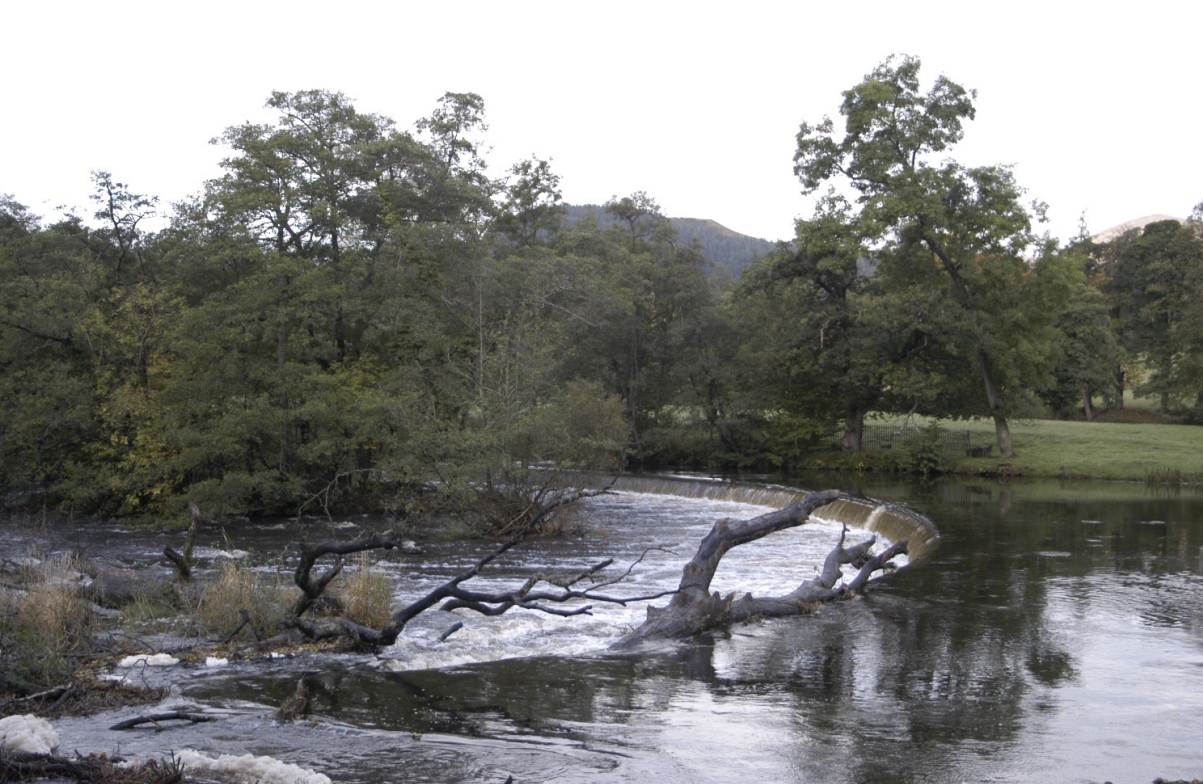
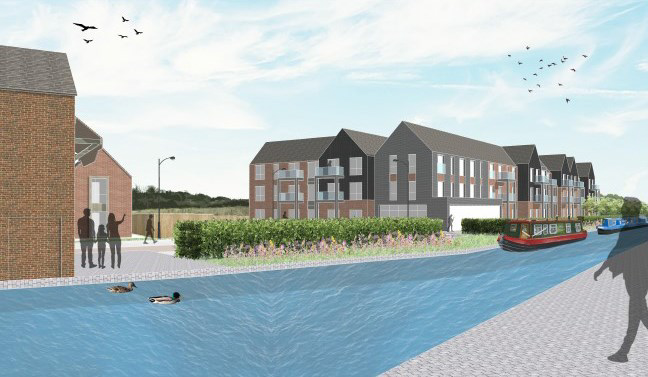
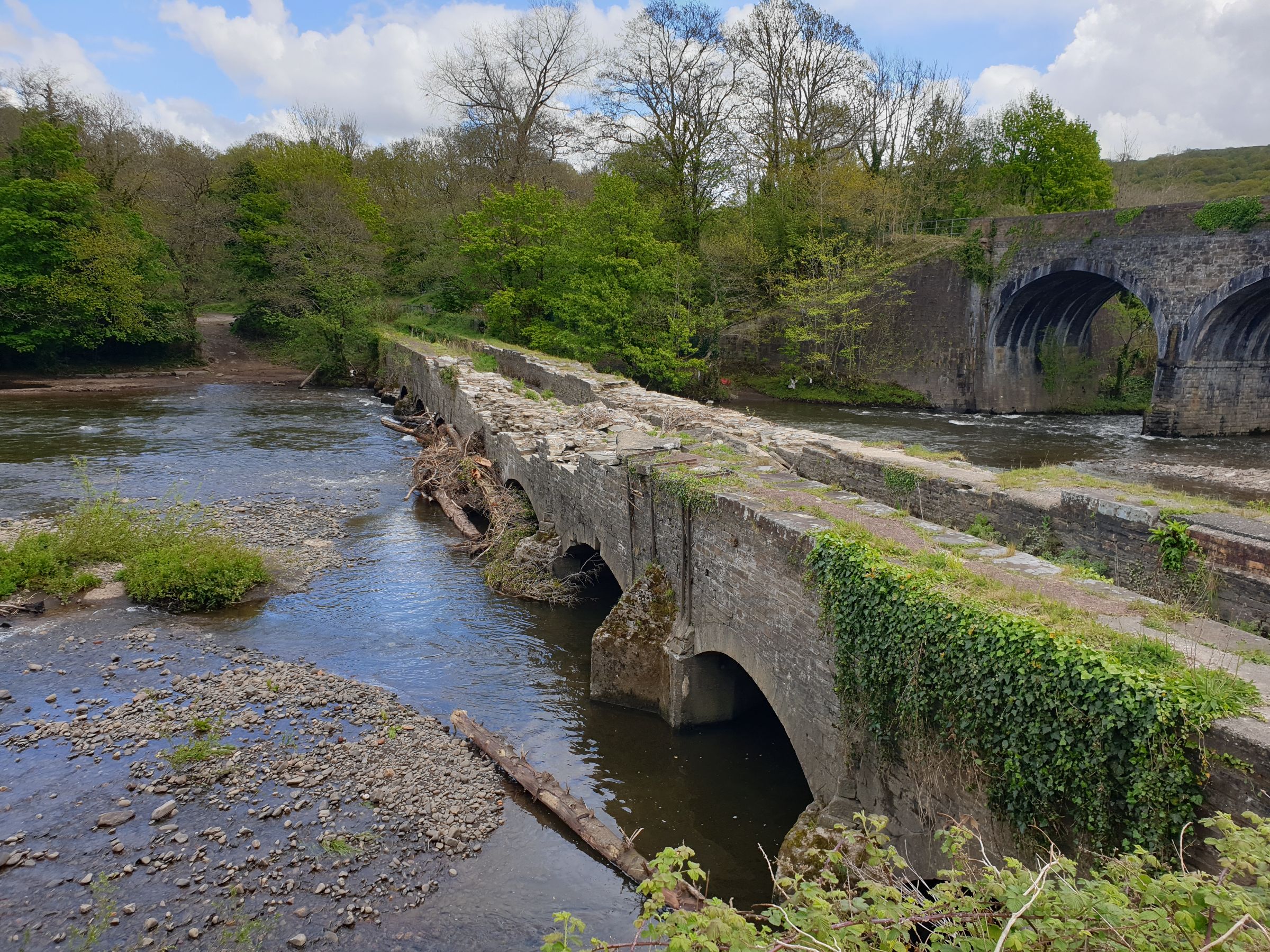


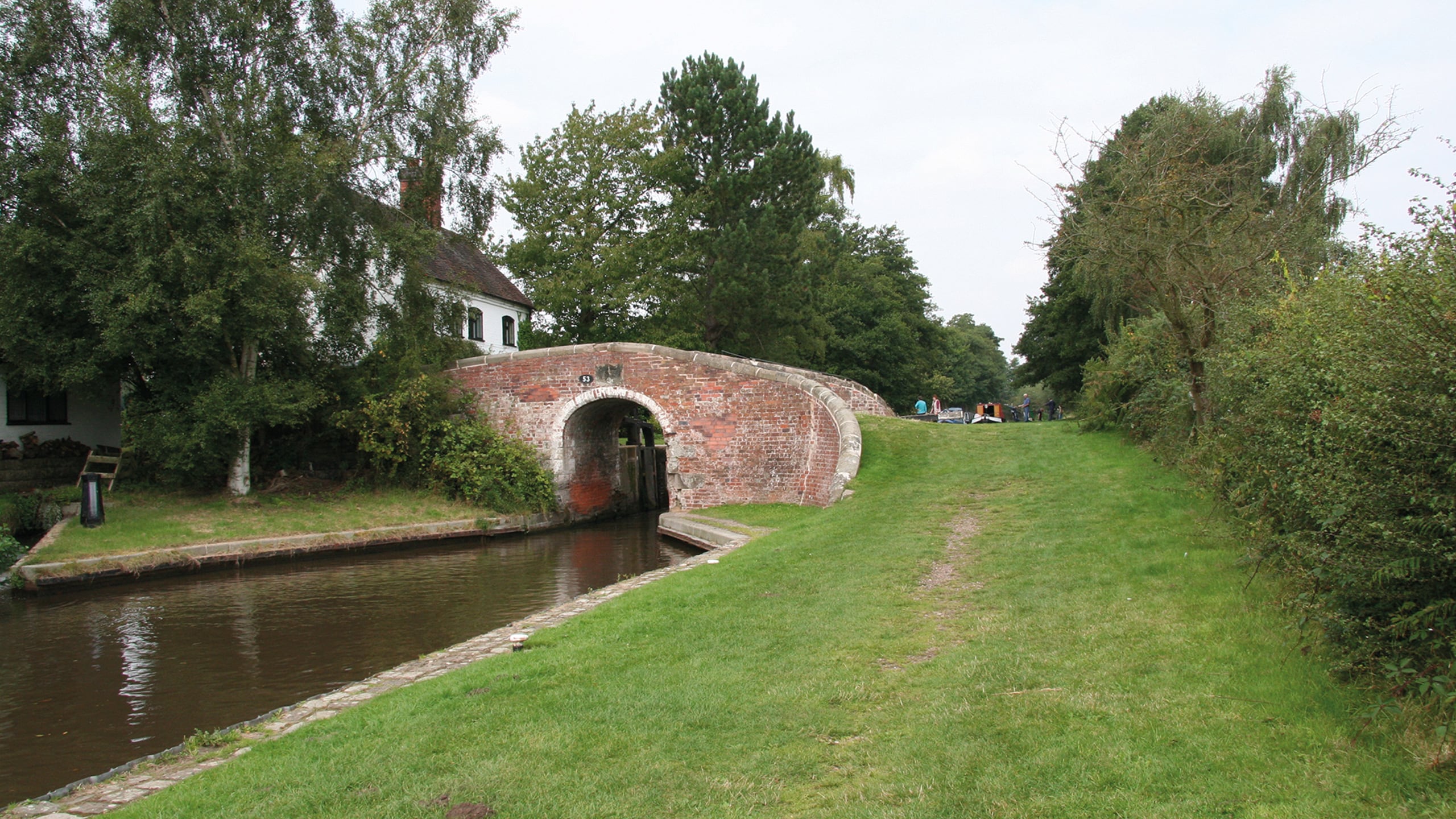

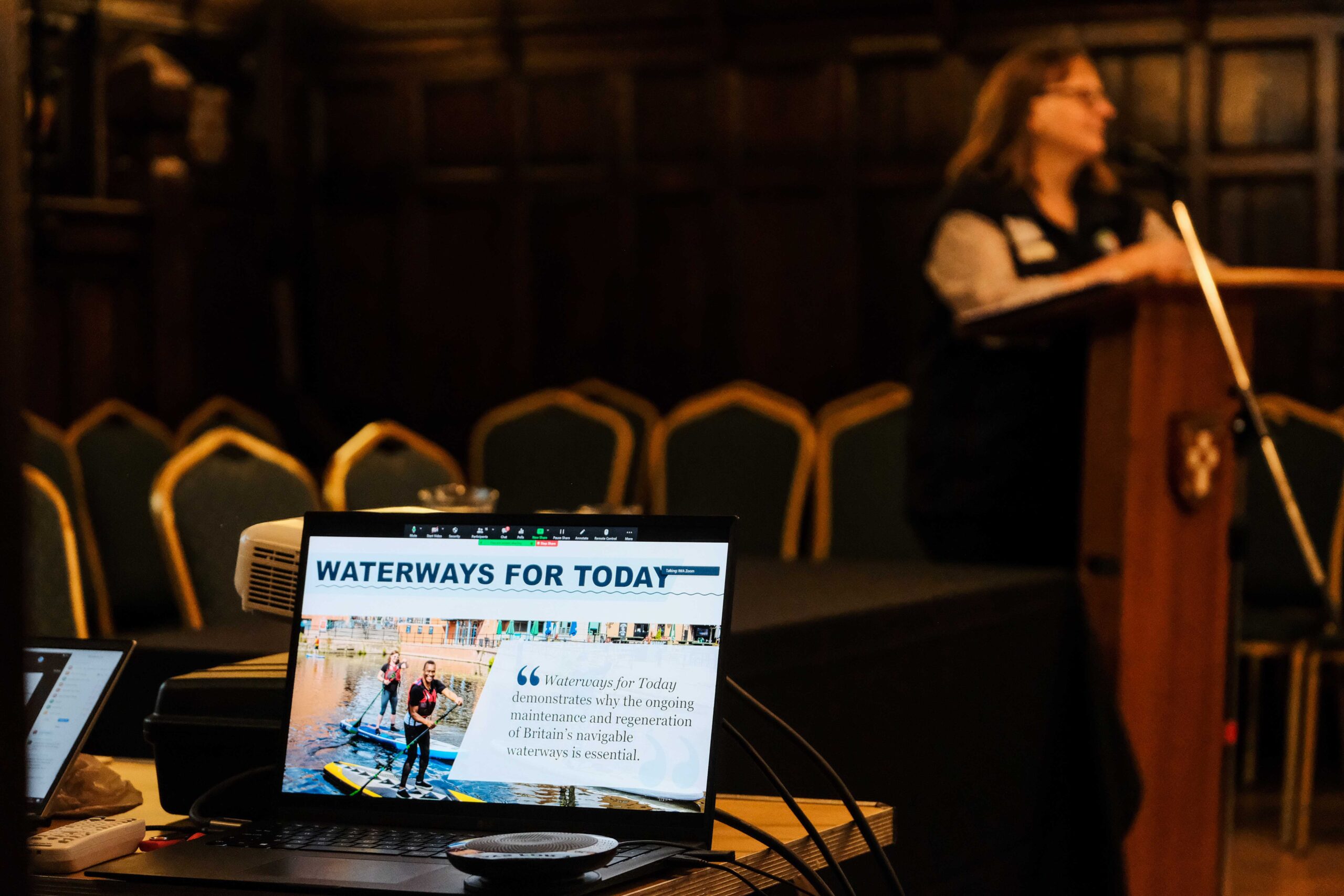


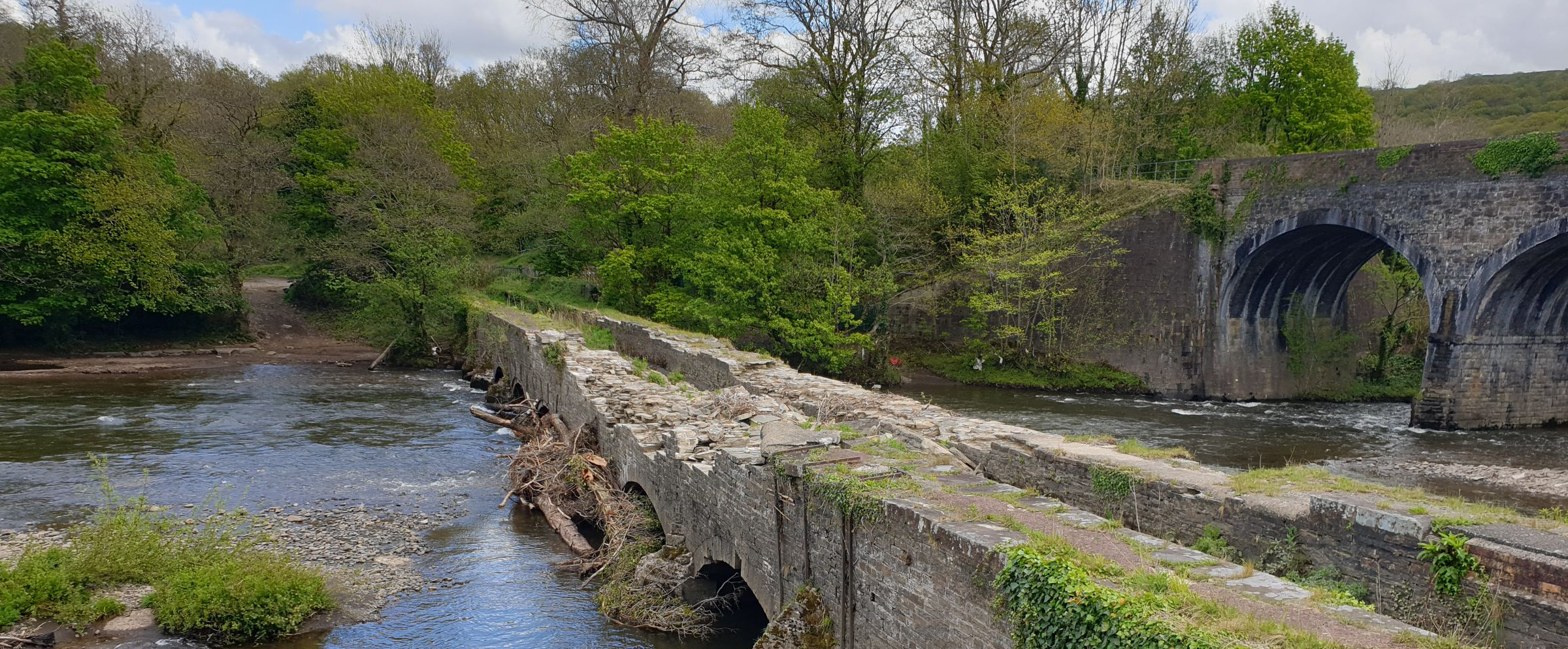



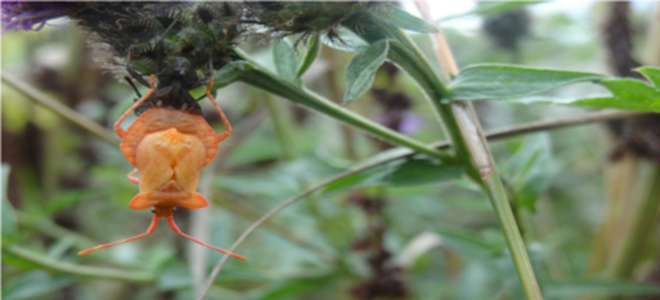
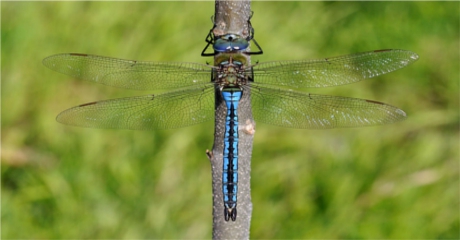
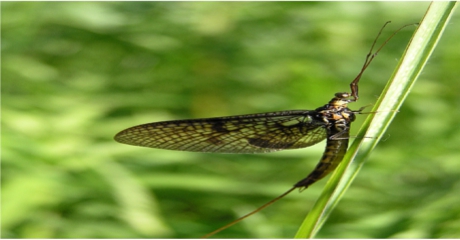
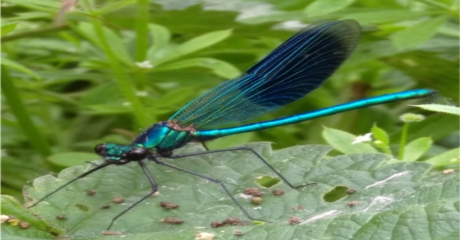


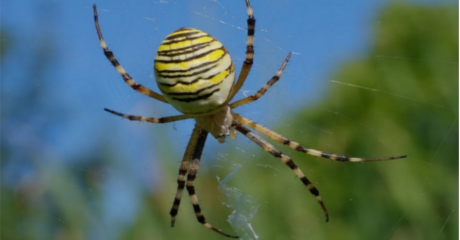

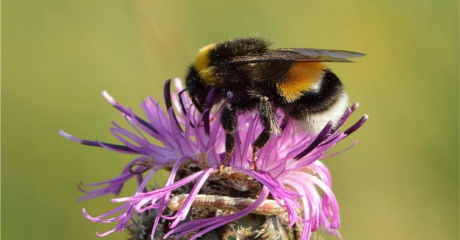

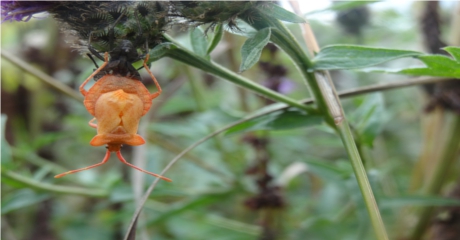


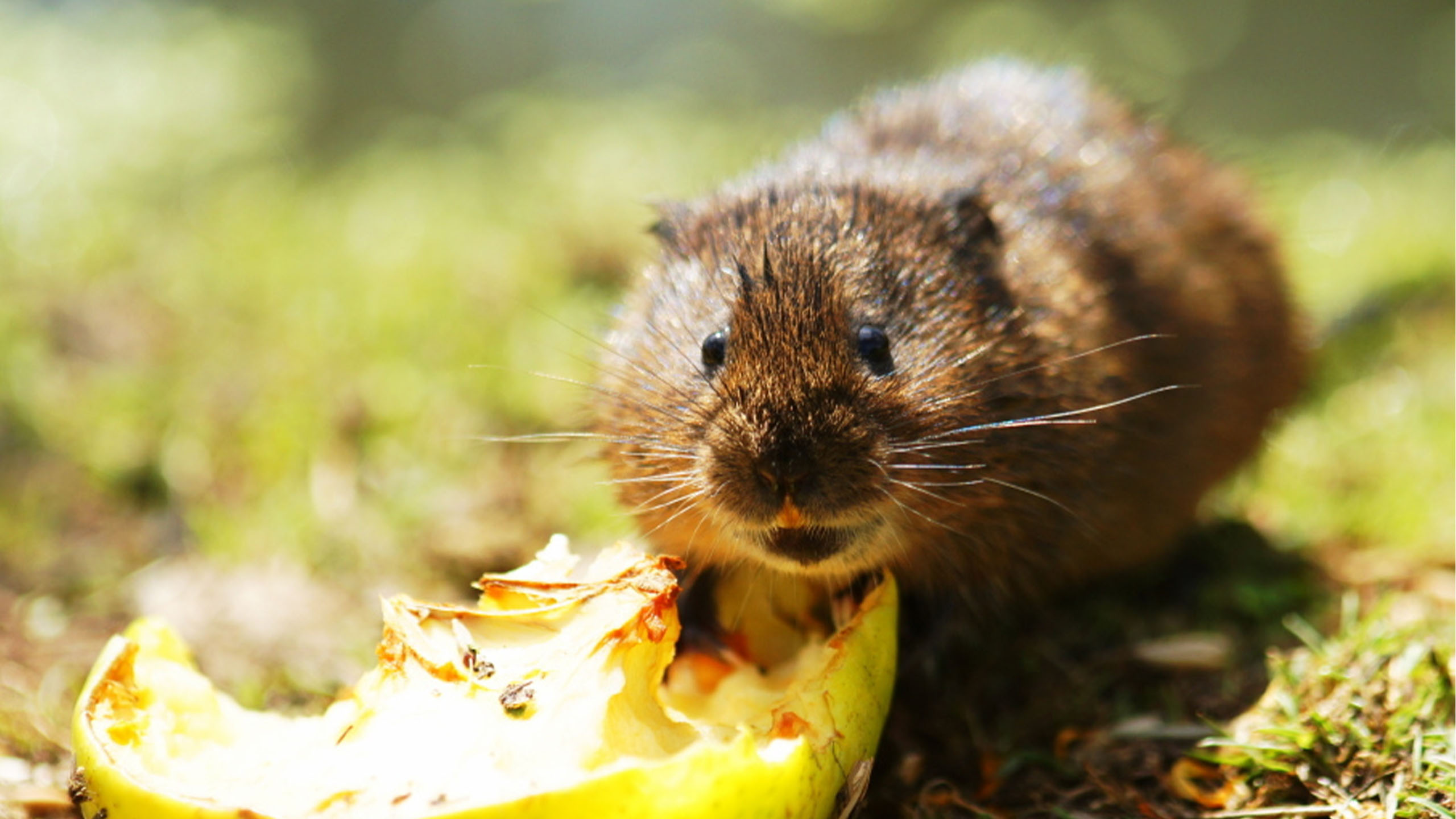
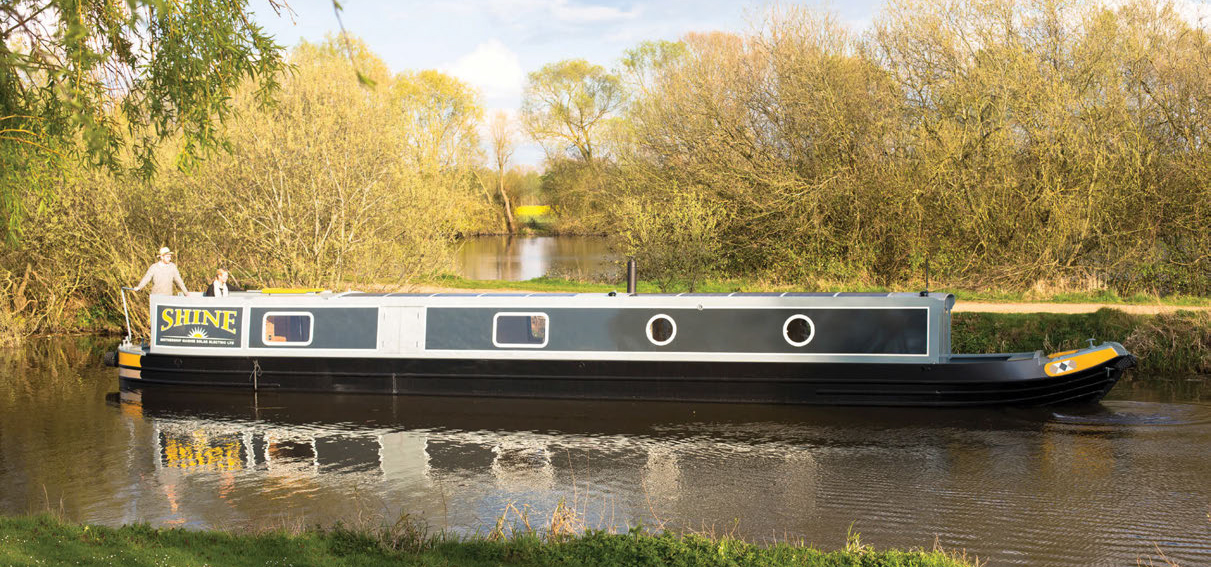
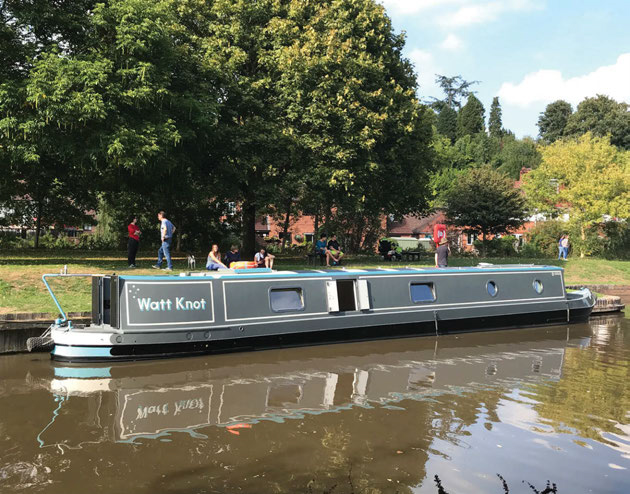
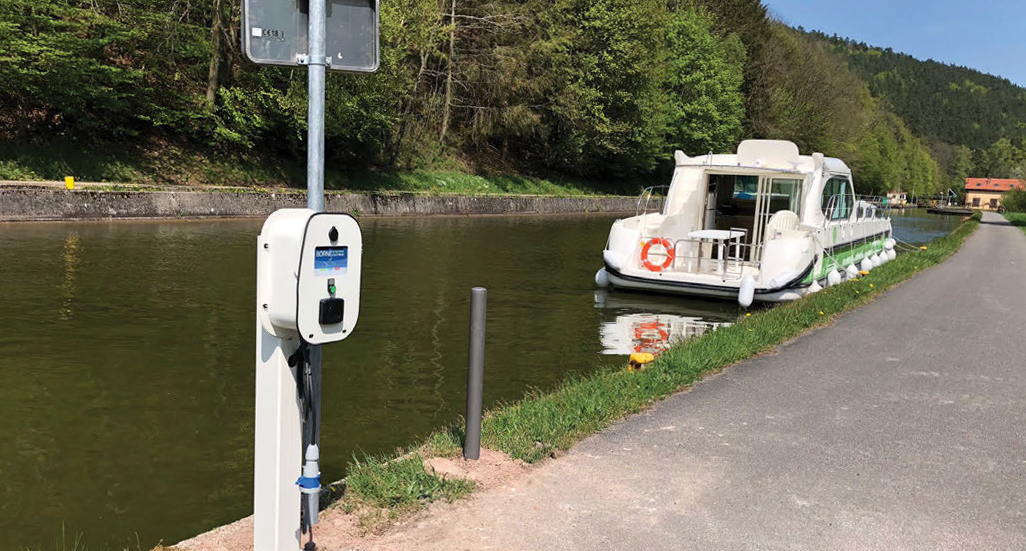
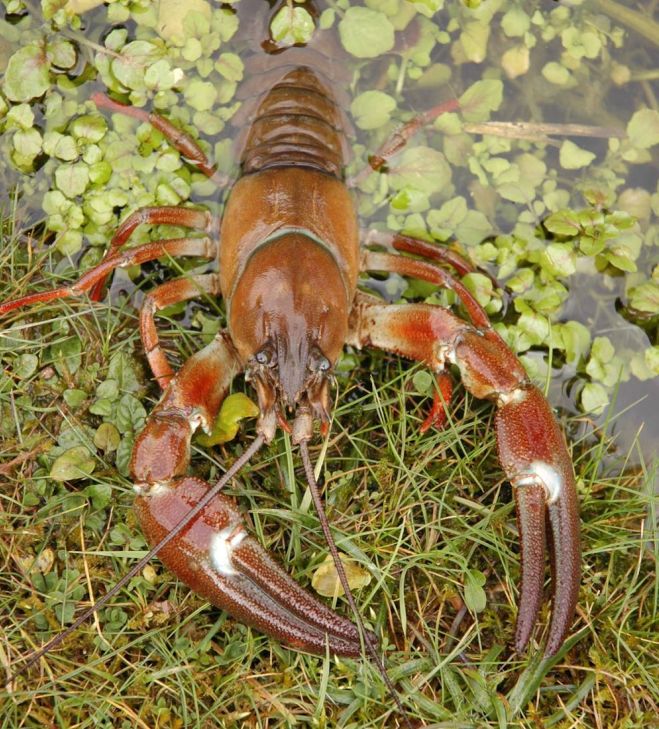
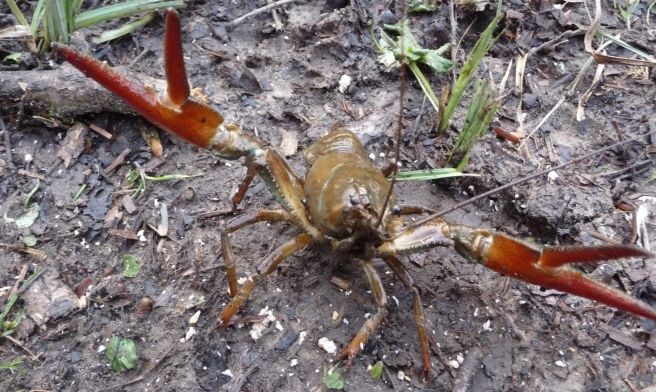

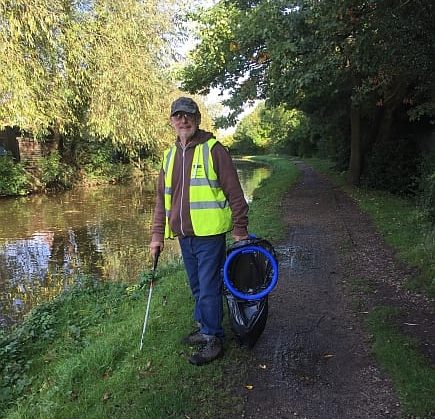
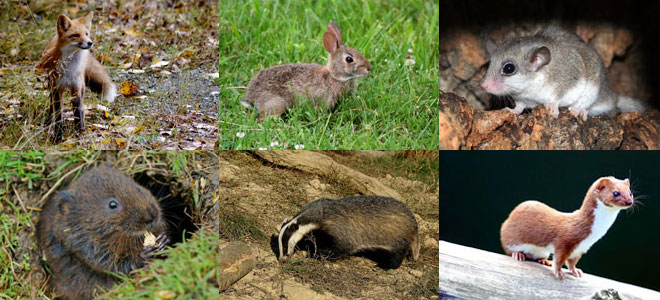
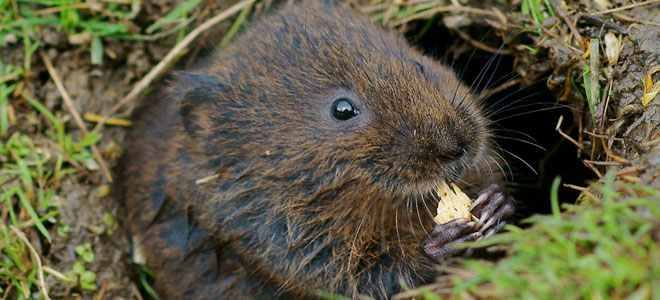
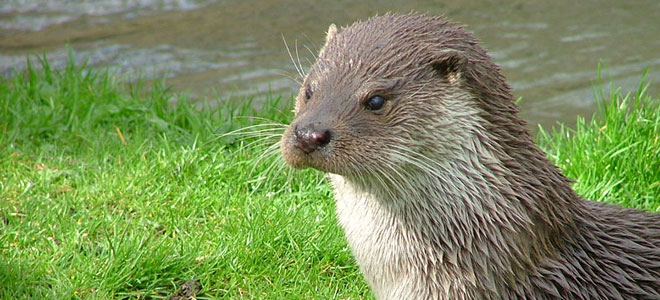

 P
P
 P
P