IWA has worked with Canal & River Trust (CRT) to help improve its revised Restoration Delivery Plan (RDP), published this morning (28th July 2026), which will provide the framework for future restoration of canals not currently open to boats and managed by the Trust. Through reinforcing the importance of a friendly approach to waterway restoration and encouraging CRT to consider restoration as a core charitable objective rather than a secondary priority, IWA is pleased that the Trust has listened and that the result is an improved plan.
The Restoration Delivery Plan is intended to set out how the Trust will work with restoration promoters and other partners to deliver the restoration of waterways across England and Wales. As a critical friend to CRT, IWA has engaged constructively with the Trust’s senior management to ensure that restoration receives the support and strategic priority it deserves.
Through detailed engagement with the Plan, IWA has helped move the document towards a more positive, practical and delivery-focused one that better reflects the ambitions expected of a major national charity. The discussions have also led to improvements in CRT’s internal restoration processes and a better mutual understanding of how restoration activity should be managed across the Trust’s network. This, however, needs to be matched by restoration groups becoming increasingly professional when undertaking construction work, both onsite and with design and Health & Safety paperwork.
IWA believes this revised approach should act as a catalyst for raising standards across the restoration movement. Through its technical expertise its recently formed Restoration Delivery Group, new Restoration Panel and Waterway Recovery Group, IWA is well placed to provide the guidance and practical assistance that restoration organisations need to deliver successful projects.
Waterway restoration is one of IWA’s strategic priorities for 2026, and the Association will continue working with CRT, restoration promoters and other parties to help build a stronger, more professional and more successful restoration sector.
George Rogers, Chair of IWA’s Restoration Delivery Group, said:
“The publication of the revised Restoration Delivery Plan is a significant step in the right direction. IWA has worked constructively with Canal & River Trust to strengthen both the Plan itself and the processes that support it, and we are pleased that this engagement has resulted in meaningful improvements.
“We will continue to engage positively with the Trust and the wider restoration community to support the successful delivery of these shared objectives.”
As well as IWA’s previously stated concerns about Canal & River Trust’s proposed implementation of its Restoration Development Plan, which so far has led to uncertainty and restoration schemes being delayed or even halted, along with reported inconsistencies between CRT regions, IWA has particular concerns for the situation on the Wendover Arm of the Grand Union Canal. Here, not only has CRT stopped all restoration work, and seemingly maintenance thereof, but it has closed, drained and fenced off the section of canal reopened amid much fanfare by Sir David Suchet in 2005. CRT also forbade any boats over 40 foot in length from navigating the section of canal from Bulbourne Junction to the Stop Lock, which had previously never been closed to navigation, a restriction which was only lifted when IWA complained about it.
The Wendover Arm was initially constructed as a feeder channel for the Grand Union Canal but was soon made fully navigable. It then closed from the Stop Lock just above Tringford Pumping Station in 1904 owing to leakage through the canal bed. In the 1980s, the South Bucks Section of IWA’s Hertfordshire Branch (later to become IWA Chiltern Branch) began to campaign for full restoration of the Wendover Arm, and some initial clearance work parties were held. An early campaigning success was a navigable culvert under the then-planned A41 Aston Clinton bypass where IWA appeared at the public inquiry. In 1989, Wendover Arm Trust was formed to campaign for full restoration of the Arm. An early aim was to restore the lowered Little Tring road-bridge, and in 2005 this was achieved with the first section of the canal re-opened from the Stop Lock through to a new basin for winding craft beyond the restored Little Tring Bridge. This work was enabled in part through fundraising by Wendover Arm Trust, and in part through a large donation by IWA utilising the proceeds of a substantial bequest by Tim Wilkinson, author of the post-war canal carrying book ‘Hold on a Minute’. The author’s bequest to IWA included copyright of the book.
Wendover Arm Trust then set about restoring the dry section of canal from Little Tring Bridge to Drayton Beauchamp, to specifications agreed by then British Waterways, and in recent years CRT, with a fabric liner and brick blocks, including rebuilding of wooden footbridges and other structures in brick, with various sections being tested for leaks, etc, as works progressed. A section of canal that had been infilled with household rubbish in the 1920s was excavated and most of the material, now deemed hazardous, was removed by contractors, funded by a substantial grant from Hertfordshire County Council. All this work was nearing completion, sections of canal rewatered and Wendover Arm Trust had expected to complete restoration and reopening of this section to the A41 bypass by about now.
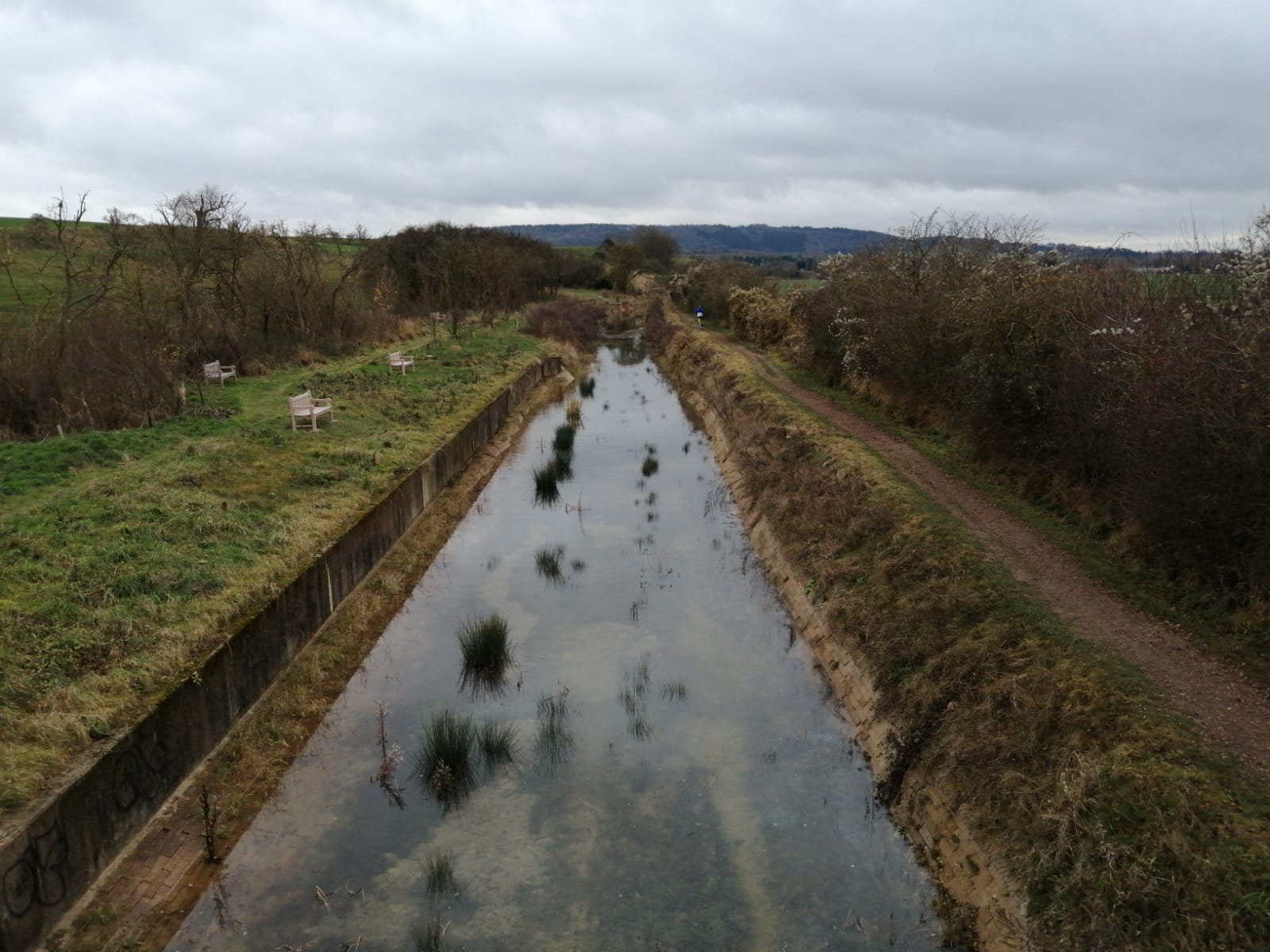
About two years ago, local Canal & River Trust management cited some Health & Safety and environmental concerns and asked Wendover Arm Trust to cease work. Since then, there has been a dialogue between the Trust and CRT, with long delays by CRT to respond to matters, apparently because of ‘lack of resources’. All the restored sections have been drained down and now have a layer of vegetation growing across the restored lining. CRT has insisted that Wendover Arm Trust (now trading as Wendover Canal Trust), sign an onerous detailed licence agreement before restoration works can commence. The Canal Trust eventually signed this agreement in September 2025, but CRT has yet to agree to Wendover Canal Trust recommencing work. Meantime, a leak in the section of canal restored and reopened in 2005 was identified following notification by an adjacent landowner. CRT commissioned a report and concluded the leak would cost £300k to fix, although the report has not been made available. CRT’s response has been that fixing the leak is low priority, and so it has installed a rather permanent looking earth dam at the stop lock, drained the canal and erected what looks to be permanent wooden and mesh fencing around both sides of the drained canal for its entire section. CRT says it has no intention of even reviewing the matter until at least 2027.
Having closed and drained the previously restored section of canal, CRT sought to stop any boats longer than 40 foot from using any part of the Wendover Arm Canal – as stated in a notice that was erected at Bulbourne Junction. Whilst accepting that there had been some shortcomings by Wendover Canal Trust, which the Trust was keen to rectify, IWA believes that CRT has badly mismanaged the situation and failed to take the necessary leadership to ensure full and timely repairs and restoration. Rather, CRT has just put barriers in place, both physically and psychologically, thus demotivating local volunteers and supporters. CRT’s response is that it has insufficient resources to do all that it wants, and the Wendover Arm is not a priority. There is much damage to repair of CRT’s own making. Frustrated and disappointed by the situation, IWA has raised the matter with CRT’s senior management in hopes that the situation will be addressed in a more positive and productive manner.
IWA has strongly challenged CRT’s new draft Restoration Delivery Plan (RDP), arguing that it treats restoration as a low priority rather than a core charitable objective. Several major restoration projects (including the Grantham Canal, Wendover Arm, and Pocklington Canal) have stalled under CRT ownership. The RDP would see volunteer groups face new financial burdens and bureaucratic obstacles that seem contrary to the collaborative spirit that CRT purports to offer, and a different mindset to that with which British Waterways delivered spectacular reopenings 25 years ago. As a critical friend to CRT, IWA is leading the charge to refocus attention on restoration, engaging directly with CRT’s senior management and its new CEO to ensure waterway restoration receives the leadership, support, and priority it deserves.
THE BACKGROUND
After consulting widely with restoration groups and other interested parties we have concluded that CRT’s plan is misguided because it addresses symptoms, not underlying issues. IWA has always thought of ourselves as a critical friend to The Trust, and on this issue, we must lean into the former description of our long relationship.
Restoration work has been halted on several restoration projects where CRT is a landowner, either owning most of the waterway, as in the case for the Grantham Canal, the Wendover Arm and Pocklington Canal, or where it is a minority landowner, as with the Cromford Canal. In fairness, in some cases, CRT says work has stopped because of Health & Safety arrangements, or environmental issues, but it most case it just claims that it doesn’t have the resources to review work plans or respond to restoration groups’ correspondence.
However, waterway restoration is one of CRT’s principal objectives alongside other important objectives as maintaining the navigable system, heritage and natural environment and landscape – yet the RDP seems to position waterway restoration as a something it might consider when funds permit. We think this is an abandonment of one of CRT’s principal duties.
The RDP requires restoration promoters to commission professional studies for planned works, and to pay CRT such studies and work proposals to be reviewed by additional staff or contractors. This has led to some outrage that CRT planned to charge £40 per hour to deal with correspondence and plans put forward by them. Other complaints concern external training courses to be undertaken at considerable expense although this requirement has since been reduced to compulsory on-site training. The latest draft of CRT’s Plan (published this summer) as part of a consultation met strong criticism from several restoration groups, particularly where works had been stopped, resulting in financial cost and volunteer disillusionment. A planned WRG Canal Camp on the Cromford Canal had to be cancelled, for example.
CONCERNS & CHALLENGES
Overall, it is our view that the plan reads as a defensive document; more like a commercial business on a cost-cutting mission, far from the ‘can do’ manifesto and operational plan expected of a high-profile national charity.
So, on the one hand, CRT wants to be a leader of the restoration movement with a high profile at national events, but on the other hand it is custodian of multiple canals that were abandoned by its predecessors, but for which it is frustrating work to restore.
25 years ago, with Lottery funding and regional development agency support, the then British Waterways Board management launched ambitious plans to revive and regenerate these waterways leading to spectacular restoration reopenings: the Huddersfield Narrow, Rochdale, Droitwich, Forth & Clyde, and Union canals are fine examples. Momentum has now faltered in a more difficult economic climate, and CRT is perceived, rightly or wrongly, as a blocker of restoration.
We are clear about the challenges: The Grantham Canal, for example, is a complex and major restoration, on the other hand the Pocklington Canal and the Wendover Arm, both wholly owned by CRT are probably the two easiest waterway restoration schemes in the country, notwithstanding that the Wendover Arm has two difficult road crossings and some minor footbridges and pipes, yet these schemes have been dragging on for more than 50 and 40 years, respectively.
Surely, CRT, given its charitable duties, should be taking the lead on these restorations rather than leaving them to two small groups? We accept that CRT must adhere to building, environmental and heritage protection legislation, and in some cases restoration promoters need to improve their operational practices, and where required, we support CRT’s moves to raise standards. However, this needs leadership and support rather than just raising obstacles.
WHAT IS IWA DOING?
We don’t wish merely to criticise; IWA wants to work constructively to resolve challenges and to provide support. Over the years, IWA and the restoration sector have provided a broad range of professional services and know-how to bring about successful restorations. Work is also underway to ensure that IWA raises its support for waterway restoration and will do so as a 2026 priority. In conclusion, we are pleased to report that CRT is taking IWA’s views seriously. We are now engaged in direct meetings with senior management, the latest on 15th December, and we have ensured that Campbell Robb, CRT’s new CEO is fully aware of our concerns. We will continue to work constructively with CRT to achieve the best outcome for the waterways, including restoration.
Riverside revival £300k Langport River Project has transformed 7.6 miles of river into a visitor destination, attracting around 250,000 people a year, helping new cafés, shops and services thrive
Community Cocklemoor meadow and Huish Bridge now boast renewed pathways, pontoons, canoe steps, fishing platforms, picnic areas, a slipway, cycle hire and a community boat, thanks to a partnership between Langport Town Council and IWA
Lasting impact With smart solar lighting, e-bike charging, recycled materials and biodiversity monitoring, the project delivers sustainability as well as local pride: plans are for more paths, parking and moorings
Regeneration of the riverside in Langport, Somerset, has given this traditional market town a new lease of life. Five years on from initial completion of the Langport River Project, the Upper River Parrett attracts around 250,000 visitors per year and new businesses and services have opened in the town.
To celebrate the project’s success, local film-maker Gordon McKerrow has produced a short documentary about how it has helped boost Langport. The film was first screened in Langport on 16th of September to celebrate partnership and volunteer effort by the council and IWA, alongside community groups and local businesses.
Val Saunders commented:
“A range of new businesses have opened since the river project brought new life to the town. Langport has become a café culture centre and we rarely have an empty shop on the high street. The town has developed a renewed sense of civic pride.”
While the project ensured that 7.6 miles of river are now navigable for trail boats and paddle craft, its focus was to create an attractive destination in the centre of town, between Bow Bridge and Huish Bridge. The picturesque Cocklemoor lies at its heart, with activities including walking, paddleboarding, swimming, fishing, cycling and boat trips. Now, approximately 250,000 people per year visit the riverside.
Ray Alexander added: “Langport’s story shows just what can be done to enhance an area by improving its waterway and waterside. It wasn’t a big, multi-million-pound project, but it has achieved so much for the area.”
And Gerard Tucker, Town Clerk, concluded:
“The Langport Community expresses its gratitude to the IWA for their support in helping Langport in the delivery of its vision. We do not consider the regeneration of Langport to be complete and the refurbishment of more paths, creation pf cycle paths and additional parking are on our list for one day! Perhaps even a mooring for our community boat, The Duchess of Cocklemoor, to make it easier for people to access and enjoy the river.”
The funding neared £300,000 ten years ago, sourced from a combination of European funds, local authorities and the Canoe Foundation.
More about the regeneration
A 7.6 mile stretch of the river and its tributaries is now designated as navigable, from the sluice gates of Oath Lock upstream to Thorney Mills half lock (disused) along with short sections of the River Yeo and the River Isle. Fortunately, no major remedial navigational work, such as dredging or lock repair, was needed.
Cocklemoor is a riverside meadow with new pathways, pontoons, canoe steps, accessible fishing platforms, picnic spots, seating and information boards. From here, Langport’s community boat The Duchess of Cocklemoor runs pre-booked trips, led by local volunteers.
At Huish Bridge, the slipway has been restored for trail boats and paddle craft, with a new car park and community space. Langport Town Council acquired both Cocklemoor and the Huish Bridge slipway from the Environment Agency to deliver the project. Nearby, a cycle hire operates at Bow Bridge and a rowing club is based at Huish Bridge.
Sustainability, wellbeing and ecology were forefronted. The facilities include ‘smart’ solar lighting, recycled plastic furniture, e-bike charging points, outdoor exercise equipment and locally made willow bird hides. A system of monitoring the biodiversity of the riverbank has been established.
The IWA West Country Branch worked with councillors and council staff to initiate the project and see it through. An IWA consultant engineer surveyed the slipway and advised on its restoration. IWA’s Waterway Recovery Group helped at Langport on three occasions: removing silt from the slipway, undertaking tree clearance works and, earlier this year, renewing the paths across Cocklemoor.
Removal of the safeguarding for the cancelled rail development paves the way for the Measham Waterside housing development to proceed which includes restoration of 1100 metres of the Ashby Canal. It will also simplify the Chesterfield Canal restoration at Staveley.
The Ashby Canal restoration at Measham has been blighted by HS2 since 2014. The original route cut through the middle of the planned housing estate, rendering it and the associated canal restoration unviable This was amended in 2016 and again in 2017, and a further review promised in 2018, but then finally abandoned in 2023.
The Chesterfield Canal could have been forced to build an extra lock and to deepen another planned lock to pass under the site of a former railway bridge to be reinstated as access to an HS2 depot, even though that had been subsequently abandoned.
Phase 2b East (East Midlands to Leeds) was abandoned in 2021 and HS2 East (Kingsbury to East Midlands Parkway) cancelled in 2023, with all the safeguarding due to be removed by Summer 2024.
IWA had written to the Rail Minister in February this year about the unnecessary delay and its effect on the two canal restoration projects, and welcomes this belated announcement.
In a 6-Monthly Report to Parliament on 17 July, the Secretary of State for Transport said “I am today formally lifting the safeguarding directions for the former Phase 2b Eastern Leg (between the West Midlands and Leeds), removing the uncertainty that has affected many people along the former route.”
For the abandoned Phase 2a (Fradley to Crewe) the planning safeguarding was largely lifted in January 2024 although the land and property acquired on the route has not yet been sold and the Act of Parliament for its construction remains in place.
On the former Phase 2b West (Crewe to Manchester) route the safeguarding still remains pending future decisions on Northern Powerhouse Rail.
On Tuesday 13th May, under IWA’s secretariat, the All Party Parliamentary Group (APPG) for the Waterways convened to hear expert evidence from Wilts and Berks Canal Trust and Buckingham Canal Society.
13 MPs and their representatives attended to learn about the benefits of waterway restoration, citing the 50 canal restoration projects around the country. Example of the economic benefits of the Kennet and Avon canal were given:
· £92m p.a. GVA increased economic activity
· 11.2 million visits p.a. (up from 7.7million in 1995)
· 2700 FTE jobs along canal corridor
· 1230 FTA jobs form increased canalside activity e.g. hospitality
· Doubled canalside development
Martin Hollis, Chair of the Wilts and Berks Canal Trust, explained that housing beside waterways attracts a 10-20% premium. On health and wellbeing, he referred to research indicating that waterways users have higher life satisfaction and are more active. He summarised by saying canal restorations:
· deliver significant Economic, Health/Wellbeing and Nature/Biodiversity benefit,
· have been shown to stimulate doubling of Development and Housebuilding
· alleviate Flooding and (as a side benefit) increase Agricultural Productivity & Yield
Terry Cavender, Executive Officer of the Buckingham Canal Society, gave background on the Buckingham Canal Society, explaining that although they are a charity, they need to think and act commercially to take advantage of opportunities, and ensure paperwork including insurance and Health and Safety is covered.
He cited advice for other restorations to capture everything, manage the ‘now’, consider all of the restoration phases including the before / meanwhile uses, during and after; and, have a vision that can evolve. Crucially they need to have sustainable funding plans for the future.
Given the assembled political audience, he further laid out ways that MPs can help support waterways restorations:
· Recognise canals as national infrastructure
· Support the funding of our waterways by encouraging DEFRA to review all of the waterways grants – they need to be index linked
· National Planning Policy Framework should protect restoration routes and include restoration groups as statutory consultees
· National policy to use canals for flood alleviation and water transfer/supply
Bill Esterson, MP, chair of the APPG thanked the speakers and mentioned how he has been pleased to see developers investing in waterways sites in his constituency.
Lord German as co-chair raised the issue of leveraging these issues to get funding – need to incentivise private development – and provide evidence that there’s a 10-20% uplift in property value thanks to the proximity of a waterway.
Charlie Norman, IWA’s Director of Campaigns and Public Affairs, said:
“Canal restoration projects deliver huge benefit and deserve active support from voters, Councils and Parliament. It is also incredible how much volunteer expertise and time is devoted to restoration. This was a particularly well attend and enjoyable APPG session with thanks to all who contributed.”
The Annual Waterways Restoration Conference at the National Waterways Museum was jointly organised by IWA and Canal & River Trust on 26th April 2025.
We had a packed audience for this event, which was held at the historic venue at Ellesmere Port. Special thanks go to the excellent speakers and compere who made the Conference inspiring and delightful, to IWA Chester and Merseyside Branch, and all the volunteers who helped hugely throughout the day, and to the Museum and Archives teams.
The event was really made by the attendees, locally and from far and wide, who networked and offered so much in terms of questions and comments. Mike Wills, IWA Chair committed the organisation to increasing the Association’s capacity to support efforts in support of restoration projects. The challenges remain huge, however, and restoration groups are going to have to depend on each other more.
The Conference slides can be downloaded from the links below.
After the event there was a fascinating walk around Chester’s historic waterways, organised by John Herson of IWA Chester & Merseyside Branch and Chester Civic Trust – see the video here.
We would like to thank the Daniel Adamson Preservation Society for displaying the remarkable hand-built model of The Danny the restoration story of which is available on the Society’s website.
While we acknowledge the need for housing, a healthy, thriving waterway network should not be the price that has to be paid for new homes. Good planning should provide everyone with a decent home they can afford, as well as preserve and protect our heritage.
The Melksham Link is a crucial initiative to connect the Kennet & Avon Canal near Semington to the River Avon at Challymead. This restoration would allow boats to navigate through Melksham, past Melksham Gate Weir, and eventually connect to the historic canal line near Forest Farm before joining the Thames and Severn Canal.
We highlighted two major concerns. First, the developer has blatantly ignored strategic proposals for the area, despite acknowledging awareness of the Melksham Link plans. Second, the consultation fails to address the significant negative consequences of blocking this vital waterway connection.
The Wilts and Berks Canal Trust is optimistic about securing planning permission for the Melksham Link this year. However, the Berryfield developer has deliberately objected to the canal scheme to clear the way for their housing development, disregarding both the Melksham Neighbourhood Plan and the Wiltshire Council Local Plan.
We believe the developer should be required to modify their proposal to take account of the canal restoration and this is why we have submitted an objection.
Blocking the canal route would deprive Melksham of significant potential tourism, leisure, and employment opportunities that would accompany a restored waterway, including canalside hospitality venues, marinas, and retail establishments.
The council is already familiar with successful restoration work on the Wilts & Berks Canal, including the popular stretch at Pewsham Locks near Lacock and ongoing rebuilding around Swindon. We think this should be used as a model to show that it is possible to build new and much-needed housing, while protecting canals.
These are the reasons why IWA has formally requested that the Planning Committee reject this application. If you’d like to submit your own views the planning application can be found here and is open until 12th March 2025.
Thanks to the many volunteer hours that have been dedicated to this process. This objection also shows the importance of vigilance by local people and organisations as well as the enormous expertise within IWA. Waterway supporters are encouraged to report any local plans that threaten restoration to their local IWA Branch, IWA’s Chesham office or the relevant local restoration society.
The restoration of the Wilts and Berks Canal is an ambitious 70-mile project to recreate a cross-country navigation network. Opened in 1810, along with the North Wilts Canal in 1819, the Wilts & Berks Canal was formally abandoned by Act of Parliament in 1914. It has always been known by the shortened form of the county names to reflect the wording in the original Act of Parliament. After abandonment, ownership of the Canal was returned to adjacent landowners and local authorities, and some sections of the canal were sold. The main line route of the Canal runs from Abingdon on the Thames to Semington on the Kennet & Avon Canal; there were branches at Calne, Chippenham, Longcot and Wantage, and the North Wilts Canal runs from Swindon to Cricklade.
The Wilts and Berks Canal Trust has been making great progress on several fronts, with backing from partner organisations and help from the IWA’s Waterways Recovery Group. For example, in Swindon, new sections of canal are being built by developers as part of Council planning conditions. There is much good work being done in Swindon, so this planning proposal is particularly disappointing and sufficiently serious that IWA has objected to the plans for the redevelopment of the Oasis site. This site is just north of Swindon Station where the North Wilts Canal is planned to be restored to link up to the Thames and Severn Canal route at Cricklade. As the national campaigning body promoting restoration of the waterways network, IWA supports the vital work which the Wilts & Berks Canal Trust, which is an IWA corporate member, is doing.
The plans for the Oasis site ignore the needs for reserved routing for the re-establishment of the Canal through this part of Swindon. Permitting this development as proposed would preclude through restoration for several generations, thereby denying the residents of Swindon of the multiple advantages that a restored Wilts & Berks Canal would bring them. It would also be a serious setback to plans to reconnect Swindon to the rest of the national waterways network.
Objecting to the proposal, IWA has written: “We urge the Planning Committee to reject these applications until modified (in a comparatively minor degree) to permit the eventual rebuilding of the canal through this area. We understand that the developers have been aware of this opportunity for over a decade but seem to have ignored the needs of a restored Wilts and Berks Canal in the detail of their plans. It is therefore for the planning authority to protect this route. The current plans should be rejected until they incorporate an effective future route for a restored canal.”
The proposals include 700 homes, and it is well established that canals can be an excellent feature in new developments giving the community walking and wheeling routes; potential for water sports, being adjacent to a leisure centre, and helping nature recovery by creating a blue-green corridor for wildlife. IWA hopes that the Council will seize this opportunity not just because it will enable Swindon to be well connected by water again but also because of the benefits to local people and their physical and mental health.
This case shows the importance of vigilance by local people and organisations. Waterway supporters are encouraged to report any such threats to restoration to their local IWA Branch, IWA’s Chesham office or the relevant local restoration society.
Neath Port Talbot Council issued a Neath and Tennant Canals options appraisal consultation in November 2024 to look at possible ways to restore and regenerate the Neath and Tennant canals for the benefit of people, places and the environment.
The Council held a community workshop in early December 2024 to share options and gather views from the public. Two IWA South Wales Branch representatives, as well as several IWA members, and representatives from local canal groups attended a packed workshop at Aberdulais.
IWA has responded to the consultation options put forward by the Council. Whilst encouraged that the Council sees the benefits that the canals’ restoration can bring, IWA feels that the lack of an option to return the canals to full navigability ignored the significant benefits that a wider ranging vision would bring. IWA feels that the options presented lacked the ambition and strategic vision demonstrated by other canal restorations elsewhere in the UK that have revitalised town and city centres.
The Branch referred Neath Port Talbot Council to IWA’s comprehensive report Waterways for Today which explains how navigable waterways can act as a catalyst for investment and regeneration. The report also provides evidence showing why waterway focused projects are perfect for including in regeneration projects and third party funding bids.
Restoration of both the Neath and the Tennant canals to full use is complicated by ownership issues. Neath Port Talbot Council terminated a Neath Canal Public Access Rights Agreement in December 2023 which previously gave the public access to parts of the Neath Canal towpath.
IWA is very concerned that the options presented made no mention at all of key canal historic assets that need protecting in the short term. The Aberdulais Aqueduct (a Scheduled Ancient Monument) and associated weir are vital parts of both canals, and their continuing neglect is having, and will have, a significant impact on the viability of the canals’ restoration and future use. The IWA has an ongoing campaign to raise the issue of the potential threats to this important canal asset. Repair of the aqueduct and weir needs to be part of a wider plan to protect local houses and other properties at Aberdulais from potential flooding.
IWA believes that:
The Aberdulais Aqueduct, weir and associated flood works need to be protected and work completed as soon as possible.
Canal ownership relationships need to be resolved so that works can be completed along both the canals.
A new partnership or dedicated organisation needs to be set up.
A clear Vision and Strategic Plan needs to be created supporting the Vision of Full Navigability of the Canals.
To view IWA’s response to the consultation, click here.
Restoration of the bridge was an amazing achievement, and facilitates further restoration of the Montgomery Canal. The work has been led by a volunteer group over the past 8 years. Originally intended to be volunteer-built at a cost of about £300,000 but, following the Covid pandemic, it was built by a contractor in 2023 at a cost of £1.1m – and that money was sourced through public appeal from individual and group donations and grants. The whole project was described by Shropshire’s Lord Lieutenant as, ‘an incredible job’.
What follows below is a slightly modified version of an article, by Martin Ludgate, that appears in Navvies 324. You can subscribe to Navvies here, from only £5 per annum.
Until around 1960 it was possible for boats to make a through journey east-west through the centre of Manchester. From the Bridgewater Canal at its Castlefield Basin terminus to the west of the city centre, the surviving one-mile length of the Rochdale Canal climbed through nine locks (the ‘Rochdale Nine’) to Ducie Street Basin. Beyond there, the main trans-Pennine length of the Rochdale Canal had been abandoned (with little hope of reopening), but the Ashton Canal turned right and climbed another 18 locks to Dukinfield Junction. Here the Huddersfield Canal (generally regarded as another hopeless case) continued straight ahead, but boats could turn right into the Lower Peak Forest Canal, then cross Marple Aqueduct and climb Marple Locks to join the Upper Peak Forest and Macclesfield canals. From there, the Macclesfield led to the Trent & Mersey, which in turn connected to the Bridgewater, completing a 100-mile circuit – which waterways supporters later dubbed the ‘Cheshire Ring’.
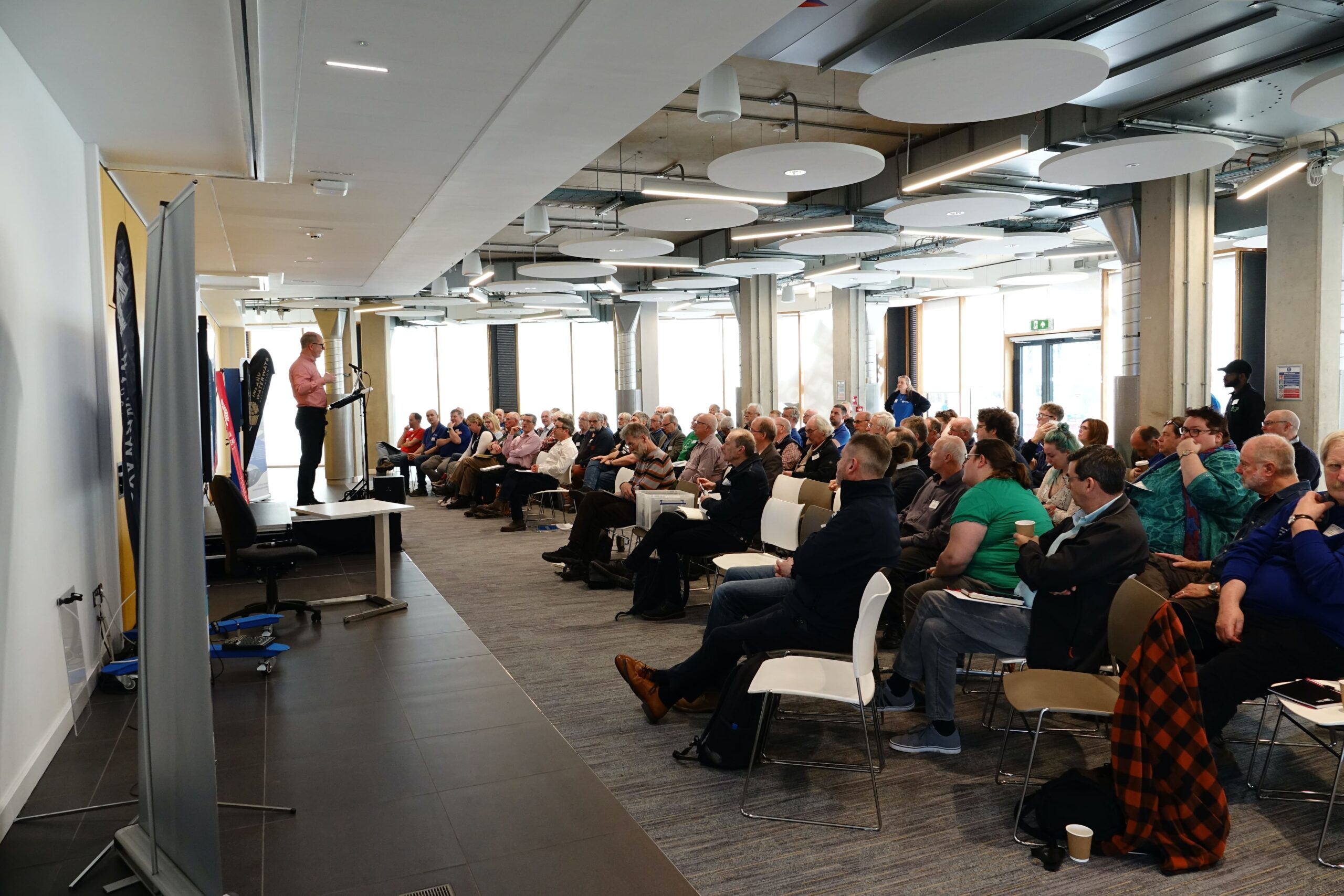
The 2024 Annual Waterways Restoration Conference was held in the Creative Hub at Northampton University, attracting over 100 delegates on a sunny Saturday in April. The event, which is jointly organised by the Inland Waterways Association and Canal & River Trust, was opened by Julie Sharman (Chief Operating Officer at Canal & River Trust). The theme this year focused on inclusion, collaboration, training, skills and sustainable planning.
Keynote speakers included Eoin Harris of Canal & River Trust who spoke on the topic of environmental constraints and opportunities in restoration projects. Eoin’s presentation inspired some thoughtful actions that trusts and societies can take moving forward to ensure that their projects comply with legislation and they take advantage of any opportunities created by their development work.
Eoin was followed by Mark Bevan and Francis Holden of Kuso Construction, who specialise in temporary works and were able to provide clarity on the topic and explain some of the basic lower-level tasks that are involved in temporary works. During the presentation, they provided examples of how people often fail to meet standards and the consequences of these standards not being met. A lively Q&A session ensued after their talk.
The final speaker of the afternoon was Mike Palmer, of IWA’s Waterway Recovery Group, who talked of the importance of real skills training in the practical activities undertaken by restoration groups. He also explained where and how the organisations can help and support them. Mike mentioned the new Practical Restoration Handbook which is due to be launched and explained other ways that IWA/WRG aim to lead on best practice within the inland waterways restoration sector. During the presentation, George Rogers of Chesterfield Canal Trust gave attendees a glimpse of what might be in store for next year’s Canal Camps. He is working closely with the sites team, and they are starting to talk to any group who may be interested in the possibility of holding a camp at their site in 2025.
Delegates also had the opportunity to participate in two of the following workshops:
Mental and physical challenges in restoration volunteering – Claire Cavender (Buckingham Canal Society) and Jenny Hodson (IWA)
Creating capacity for restoration – Chris Madge (Derby and Sandiacre Canal Trust), George Rogers (Chesterfield Canal Trust), Terry Cavender (Buckingham Canal Society), and the IWA Restoration Hub High Level Panel
Diversifying your volunteer base – Jenny Hodson (IWA) and Darren Starling (Canal & River Trust)
Campaign and membership management within a small team – Lisa Mant (Cotswold Canals Trust)
This year, rather than a post-conference tour of a local restoration project, attendees took part in a walk around the local area during lunchtime which was led by John Pomfret. It also involved a display by members of the Canal & River Trust hydrology team who demonstrated their flume tank. After the walk, delegates watched a webinar and YouTube footage from the Angling Trust on invasive species clearance and also had time to network and share best practice tips with one another.
Attendees than enjoyed a brief update on the Fund Britain’s Waterways campaign followed by a closing speech by IWA National Chair, Mike Wills.
We would like to thank Paul Rodgers for his excellent compèring of the event, the wonderful volunteers on the reception desk and in the car park, IWA Northampton Branch for their overall support, and Terry from Buckingham Canal Society for his support in the buildup to the event. Also thank you to everyone who attended on the day, we hope you got as much out of it as we, the organisers, did. We look forward to seeing you again next year at a new venue, with fresh topics inspired by the restoration field. Dates, venues and topics will be decided as soon as the team have had a chance to review the feedback from this year’s event and your suggestions for future ones.
IWA has sharply criticised a lazy proposal by Government body Natural Resources Wales (NRW) that says it is considering demolishing Aberdulais Aqueduct, which carries the Tennant Canal over the River Neath.
In a low-key consultation quietly issued by the Welsh Government quango, NRW lists five options for spending millions of pounds to reduce the flood risk for 27 properties alongside the river Neath, which have a long history of flooding. Two of the options, believed to be favoured by NRW, involve complete or partial demolition of Aberdulais Aqueduct, which would forever frustrate restoration proposals to bring the Neath and Tennant canals back to life as well as impacting the wellbeing, environmental and heritage benefits provided by the Canal.
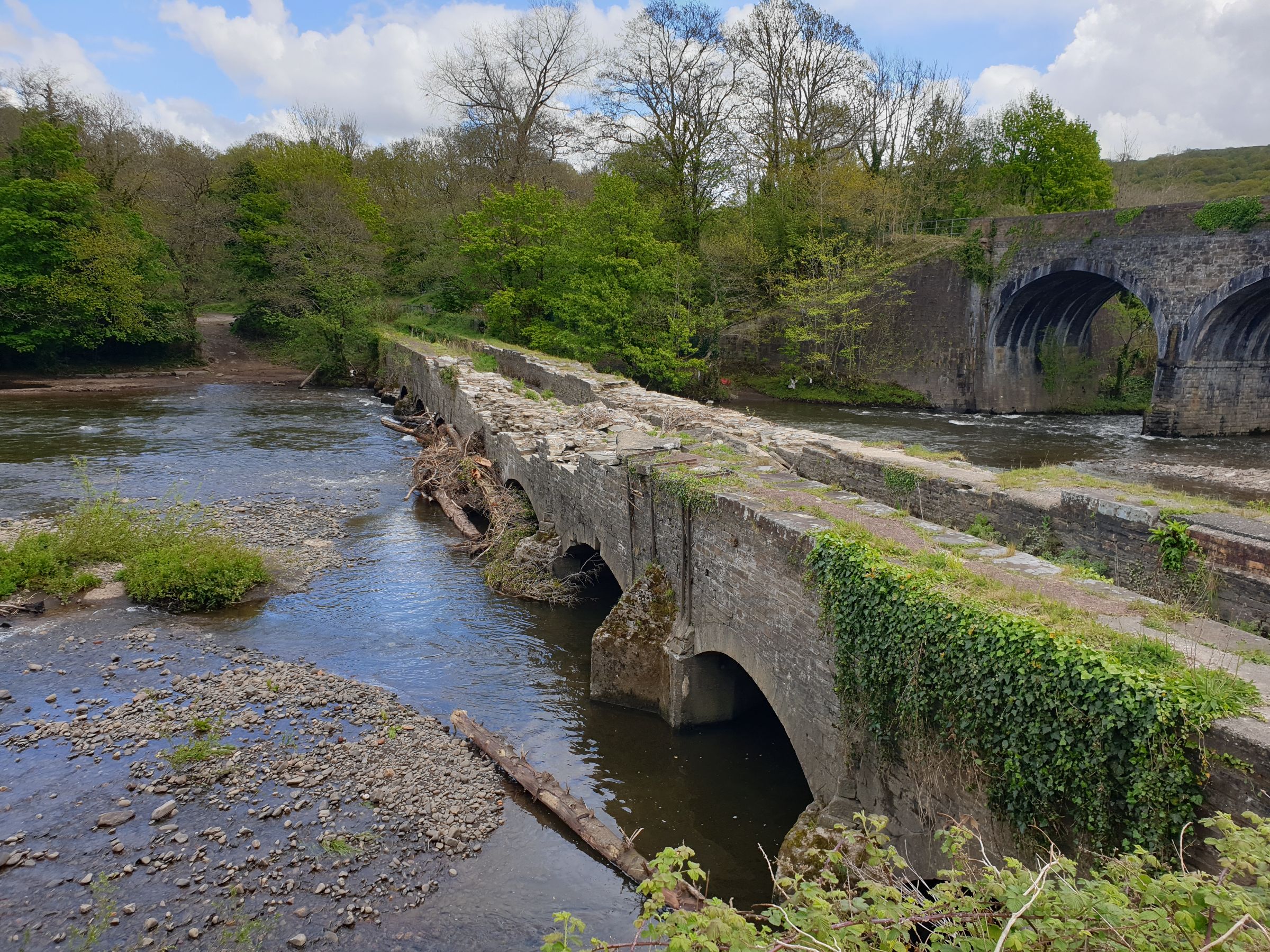
The Aberdulais Aqueduct is a Scheduled Ancient Monument that spans the River Neath immediately south of the A465 in Aberdulais. The structure is located approximately two miles north-east of Neath. It consists of a 104-metre-long structure comprising ten arches of overall length 66 metres bridging over the River Neath and a retained section extending a further 28 metres on the east bank of the River. The aqueduct is of masonry construction and the condition of the structure has deteriorated significantly over the years since navigation ceased nearly a hundred years ago. The Aqueduct historically formed a navigable link between the Tennant and Neath Canals and was constructed to also cross over an old 1750s navigable cut on the eastern side of the river. Construction of the aqueduct began in 1823, and it was formally opened in May 1824.
The aqueduct lies about 80 metres to the south of the confluence between the River Dulais and the River Neath. Just south of the confluence of the rivers a weir is located from which water is abstracted to supply the Tennant Canal. This weir has failed, and Natural Resources Wales has proved uncooperative in approving its repair, leading to the Tennant Canal being nearly dry in recent years, with damage to the environment and loss of wildlife from the Canal.
In times of flooding, the Aberdulais Aqueduct is perceived as an obstruction to the flow of the river. Flooding of the adjacent land and properties has occurred on several occasions. The properties in Canal Side have a long history of flooding, with damaging events in December 1979 and October 1998. In recent years, climate change has worsened the situation and floods have become more regular, with damage to the aqueduct. A structural inspection report commissioned by IWA’s Waterway Recovery Group in December 2021 showed that urgent works were required to prevent further damage to the Ancient Monument, but nothing has been done so far. In its consultation, Natural Resources Wales admits that demolition of the aqueduct would have relatively little impact in reducing floods, but the local view is that NRW would like to demolish the aqueduct so it can be seen to be doing something.
IWA Deputy Chair Sue O’Hare said “Whilst the Inland Waterways Association has every sympathy with the residents of Canal Side, demolishing one of Wales’s renowned historic structures would be nothing short of bureaucratic vandalism while not achieving the aim of significantly reducing the flood risk. Over the years a great deal of voluntary effort and public money has gone into bringing the Neath Canal back to life for the benefit of the community. IWA calls upon the owners of the Neath and Tennant Canals (St Modwen and Port Tennant Canal Company), Neath Port Talbot Council and the government agencies concerned to work together to rescue this precious piece of heritage and amenity for the benefit of future Welsh generations.”
National Resources Wales’s consultation, which closes on 26th February is at https://bit.ly/AberdulaisENG. The consultation conveniently omits any mention that the Aqueduct is a Scheduled Ancient Monument, or any historical background or its purpose. Rather, it just suggests demolition as if the Aqueduct were just some pile of inconveniently discarded rubble. The consultation does admit, however, that even if the aqueduct were to be demolished, that it would “unlikely to be able to remove the flood risk to the Aberdulais community entirely”. Alternative, albeit possibly more expensive, measures of making properties more flood-resilient, appear not to have been considered. However, the consultation does admit that “Additional measures (necessary) are likely to take a whole catchment approach and may include improved warning and informing, nature based solutions as well as engineered defences.”
IWA has expressed its deep concerns at plans announced by the local authority, in a recent consultation, to cease funding of towpath access to the Neath Canal, which would likely lead to the Canal being entirely closed off to public access. In a letter to the leader of the Council, chair of IWA’s Navigation Committee, Sue O’Hare, urged Neath Port Talbot Council to recognise the value of public access to whole length of the Neath Canal and to work with the private owner to ensure the continued benefits that use of this valuable asset bring to the community. Much of the Neath Canal is owned by property developers St Modwen, to which the Council pays an annual fee to maintain public access.
IWA’s letter draws attention to the Association’s recent report Waterways for Today which demonstrates the benefits of inland waterways and highlights twelve specific themes, and the recent article “Waterways at Risk” in the Local Government Association’s First Magazine, written by Sir Robert Atkins, IWA trustee, former waterways minister and MEP. The Council has suggested that it could save £135,000 by terminating access agreements.
The 13.5-mile (21.7 km) Neath Canal stretches from Pontneddfechan to Neath, has 19 locks and was first completed in 1795, with extensions added from Neath to Giant’s Grave a year later, and further private extensions including the Jersey Canal, reaching Briton Ferry by 1842. Since construction the waterway has been owned by the Neath Canal Company, but that company is currently owned by St Modwen the property developers, who acquired it from petrochemical giant BP as part of a major industrial land redevelopment. BP had originally acquired the canal company for industrial water supply purposes. Use of the Canal for navigation purposes ceased in the 1930s, but restoration was proposed in 1974 with the formation of Neath and Tennant Canals Preservation Society (now Neath and Tennant Canals Trust), and more recently Ty Banc Canal Group has formed to work on the northern part of the canal. From 1974 to 1990 the canal benefited from job creation schemes run by the Manpower Services Commission and Youth Training Scheme to work on the northern section from Resolven to Ysgwrfa. By 1990 there was 3.5 miles (5.6 km) of navigable canal, including 7 restored locks and a slipway at Resolven Basin. It received a 1998 Europa Nostra award for the quality of the work, and a Civic Trust Award in 1992. The £4 million project was jointly funded by the Welsh Office and the Prince of Wales Trust. At one time, there were two trip boats on the canal, but both have ceased operating.
[The photo shows a trail boat on the Neath Canal at an IWA National Trailboat Festival]
IWA is supporting the Cotswold Canals Trust in campaigning for a scheme which would provide desperately needed additional water supplies to London and the South East, and could enable the restoration of the whole 36 miles of the Thames – Severn link. IWA will be submitting responses to this and the other Water Resource Management Plans currently out for consultation, but this is one where additional voices would really make a difference.
The consultation considers a wide range of issues affecting water resources but the biggest impact on canal restoration is how to transfer water from the Severn to the Thames. Both a pipeline and open water transfer via restored canals are being considered.
A key omission in the consultation when comparing the canal vs pipeline, is the presentation of a well considered analysis of the financial value of the restored canal to society and the local economy. This seems to have been largely ignored but, the Cotswold Canals Trust have used the recent IWA Waterways for Today Report, to calculate the additional financial value of restoring the canal. This could run to about £800million over the next 80 years (the basis on which the costs and best value calculations are based). That additional benefit more than offsets the difference in cost between the pipeline and canal options. It also justifies pressing for the full restoration of the canal rather than the minimum necessary to enable the transfer of water alone.
For further details and how to make your voice heard, the Cotswold Canals Trust has a full guide which can be found here. The two relevant consultations close on February 20th and March 21st.
On Tuesday, November 1. Wendover Canal Trust (WCT) staged its biggest ever community engagement event with more than 100 guests from 85 different organisations, to mark the 25th anniversary of work starting on restoration of the Wendover Canal. The occasion also enabled the Trust to provide an update on its activities, hold a dialogue with representatives from local organisations and thank its current supporters.
IWA has supported the project throughout those 25 years, both nationally and through IWA Chiltern Branch, while IWA’s Restoration Hub has been providing a significant amount of support recently Our Technical Support Officer, Mikk Bradley, worked with Canal & River Trust over drawings and designs for Whitehouses sluice structure. He has also prepared detailed drawings for the repairs to the foundations of the swing bridge, including stop plank design, the Narrows structure and towpath strengthening wall. Mikk has also taken on an active role in training WCT volunteers in levelling. The WCT Environment Group were trained by IWA’s former Volunteer Co-ordinator Alex Melson on Biodiversity Net Gain, who lead a training afternoon walking along the Wendover Canal and highlighting many aspects which were of value to the wildlife at Whitehouses Pocket Park.
At the event, which was held in “Your Café in the Park” in Aston Clinton, WCT chairman Clive Johnson said the canal was almost impenetrable when the decision was taken to restore it and the first task was to clear the hawthorn scrub. He said that volunteer construction started in 1997 and that “our wonderful volunteers have been doing heavy construction work for 25 years – and we are all unpaid.”
He added: “Our plan is that by the end of 2025 we will complete our lining of section which has always leaked near Tring, then we will restore the water level all the way to Wendover for boats to Buckland, and eventually Wendover. None of this would have been possible without the funders of the restoration and the towpath upgrade.” The canal and its towpath were becoming a green corridor, he said, “accessible to us all to boost our well-being, with increased biodiversity.” Ros Daniels (Canal & River Trust Director for London and South East) proposed a celebratory toast and other distinguished guests included Commodore Tim Hennessey, RN DL, Deputy Lieutenant of Hertfordshire; Wing Commander Anna Toothill, Deputy Station Commander, RAF Halton and Councillor Christopher Townsend, Mayor of Tring.
Over the years, local Waterway Recovery Group volunteers have got stuck in at the Trust’s regular work parties, and this summer two WRG canal camps were held on the Wendover Canal. WRG regional groups have held weekend digs on site, two digs so far this year. IWA’s Restoration Hub will continue to support this project and run camps there in 2023 and beyond.
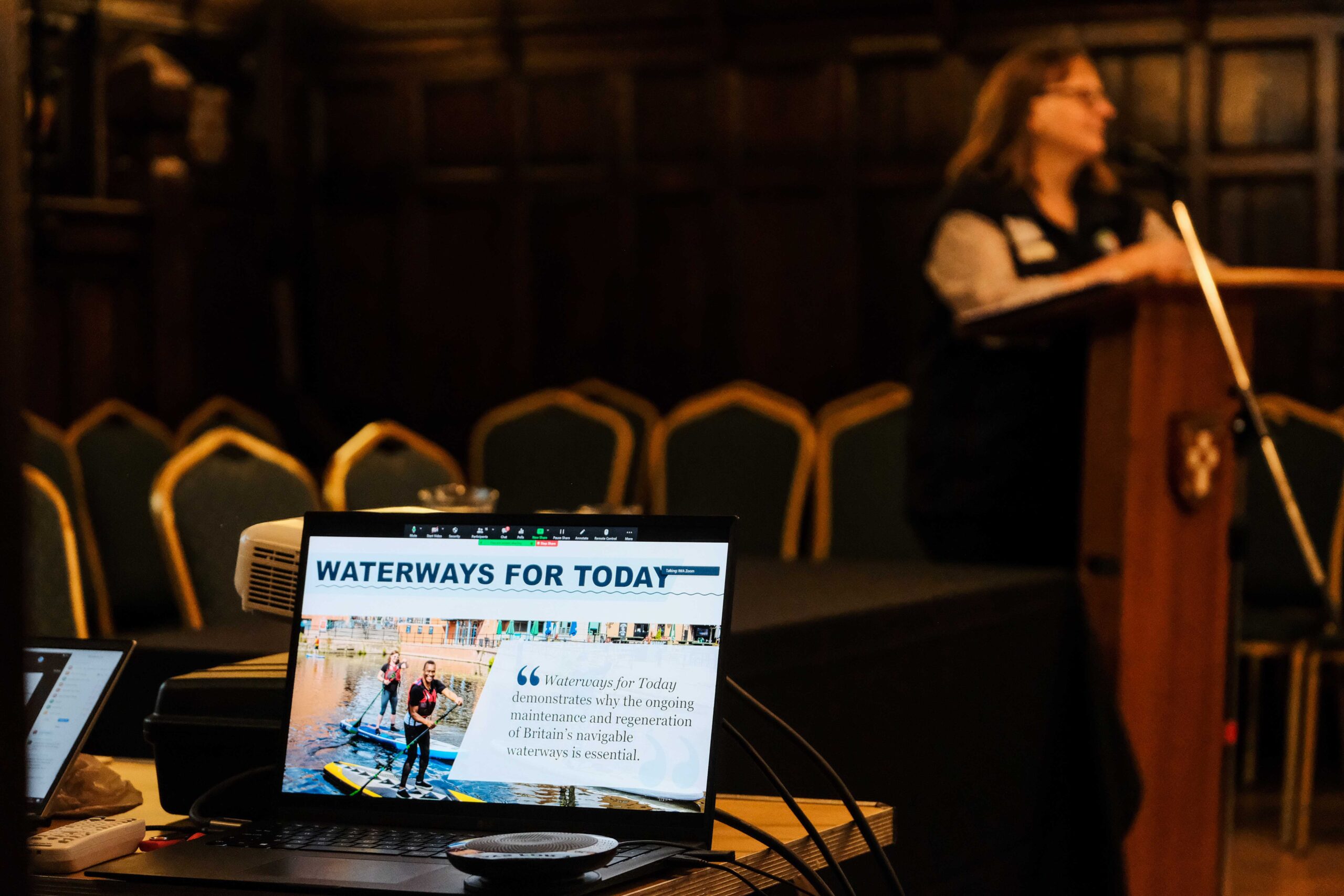
In a bid to highlight the importance of the waterways network, and as the only independent and national charity dedicated to supporting all of Britain’s navigable rivers and canals, we have produced a new report: Waterways for Today.
We are pleased to announce that the report was officially launched at our 63rd Annual General Meeting on Saturday 24th September at The Guildhall in Lichfield. News of the report was very well received by members at the AGM and hard copies were distributed to the branches in attendance.
Visit the Waterways For Today section on our website here or contact Head Office to request a hard copy.
The report demonstrates how inland waterways can contribute to the country’s economic recovery and outlines the 12 most significant benefits that the inland waterways can bring to our economy, environment, local communities and lives.
Ashton Attack (ASHTAC for short) followed on from Operation Ashton, the campaign to save the Ashton Canal. Approximately 1000 people worked on the Ashton Canal and the Lower Peak Forest Canal over a single weekend in March 1972. The event contributed to the Cheshire Ring being fully re-opened to navigation in 1976.
Ten years ago a large scale clean up took place to celebrate the 40th anniversary, with over 100 volunteers travelling from all over the country, including many of the original participants of the 1972 event. The 50th anniversary event was slightly more modest, with uncertainties over Covid preventing the planning of a larger scale event, but with a significant amount of work being carried out.
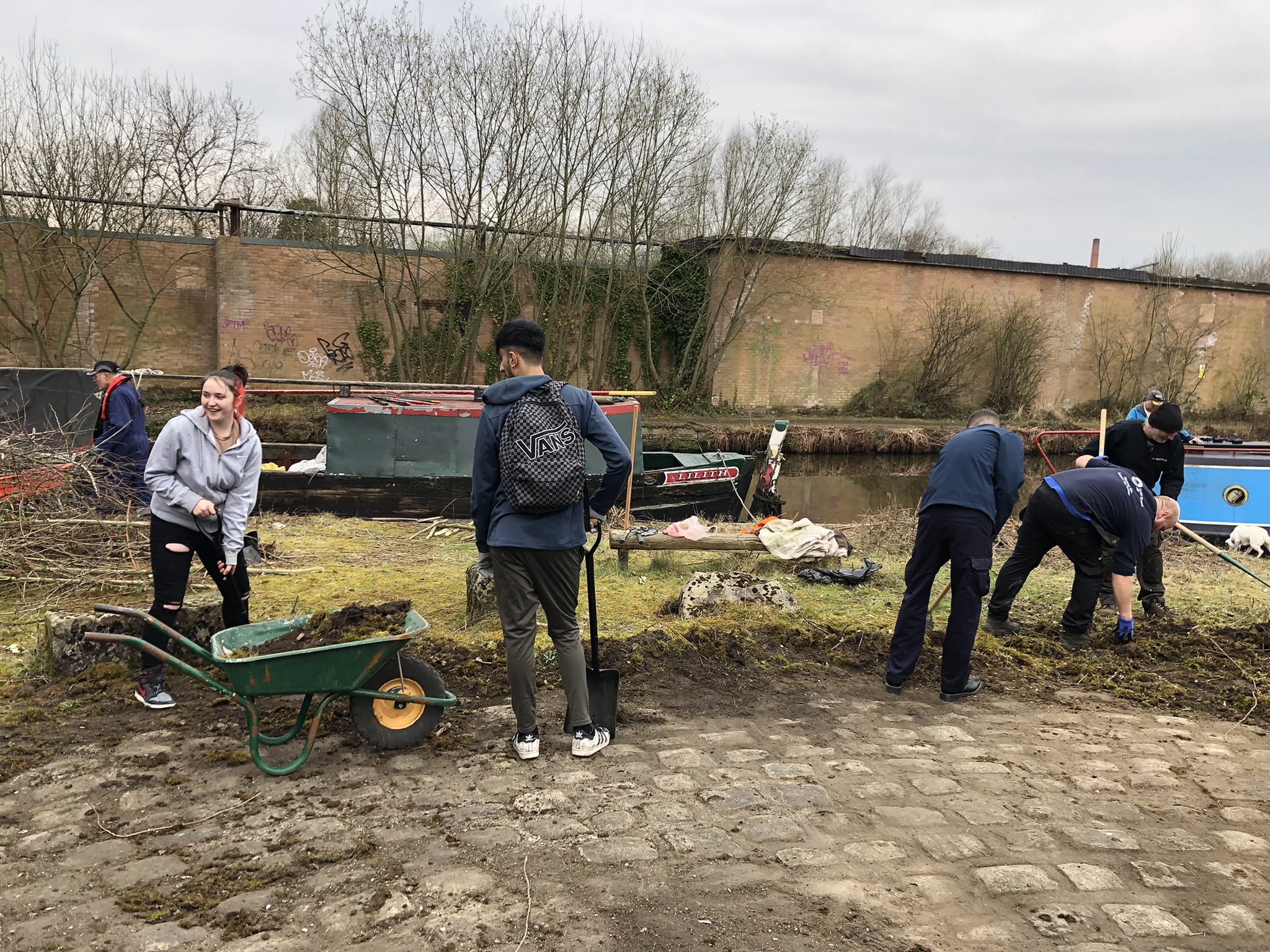
The event held on 21st and 22nd March saw over 30 volunteers from the local area and from across the north west area, cleaning up the Ashton canal in the vicinity of Portland Basin. Tasks included litter picking, vegetation removing, tree cutting and general canal-side tidying.
The event was organised by Tameside Canal Boat Trust, Canal & River Trust and IWA Manchester Branch with help from ASDA Ashton, Tameside Sea Cadets, Portland Basin Museum, Jigsaw Homes and the Wooden Canal Boat Society.
On Saturday 26th March 2022 over 120 delegates and volunteers descended on Stroud for the Annual Waterway Restoration Conference. The conference was jointly hosted by the Inland Waterways Association and Canal & River Trust.
The last time the waterway restoration sector gathered together for a national networking event it was March 2019. Whilst the conference moved successfully online for 2 years, there was a demand for a face-to-face event.
This year the focus was on ‘Overcoming obstacles and seizing opportunities’ . The Cotswold Canals Trust and partners showcased the significant progress that their project has made over the past 2 years. Specifically, through major infrastructure projects such as A38 Whitminster Roundabout and the Ocean Rail Bridge. Delegates also had the chance to attend workshops: ‘Relining the canal’, by the Canal & River Trust, and ‘Diversifying your volunteer base and board’, by the Young Trustee Movement.
“It was fantastic to catch up with some many friends and familiar faces across the restoration sector. The networking over coffee and lunch at these events is just as important as the keynote sessions, all of which provided delegates the opportunity for problem solving, inspiration and sharing of ideas.”
The decision to scrap the Eastern Leg of HS2 between the East Midlands and Leeds in favour of upgrading existing routes is good news for several waterways that were threatened by the proposals.
We have welcomed this in our submission to an Inquiry into the Government’s Integrated Rail Plan (IRP), which affects several waterways and canal restoration projects. However, we continue to be critical of the intention to press ahead with the Western Leg of HS2 2b. Additionally, there is a lack of detail on the Northern Powerhouse Rail (NPR) routes which may adversely affect other waterways.
The IRP was published in November 2021. It covers HS2 Phase 2b, NPR and some Midlands Rail Hub proposals and sets out the Government’s decisions on new high speed lines and major upgrades of the rail network in the North and Midlands over the next 30 years.
Our submission was made in response to an invitation by the House of Commons Transport Select Committee to anyone concerned by the implications of the IRP and how it integrates with HS2.
HS2 Phase 2b East will now end at East Midlands Parkway station but the IRP says nothing about its route through Measham which still threatens a large housing site that was set to contribute significantly to the restoration of the Ashby Canal. The review of this route which was promised in 2018 should now be speedily completed to allow the restoration to proceed.
HS2 Phase 2b West
The IRP confirms the intention to proceed with HS2 Phase 2b West from Crewe to Manchester, which will have major impacts on the environment and heritage of the Middlewich Branch of the Shropshire Union Canal and on the Trent & Mersey Canal north of Middlewich. We have been critical of the engineering design of this route, crossing the Cheshire salt field with its unpredictable subsidence problems, and its poor integration with the NPR proposals for east-west connectivity. Therefore, we are advocating for progress on this route to be paused while new proposals are considered.
New Transpennine Route
The NPR proposals for a new Transpennine route have been cut back to upgrades of the existing route via Huddersfield to Leeds, with a new section of high speed line from Manchester to Marsden, east of Standedge tunnel. But finding a new route through hilly terrain and dense built development will be a major challenge. We have called for more information about the routes of new sections of NPR line, and where widening of existing lines outside the present railway land take is planned, which could impact several waterways. They should also make clear if they plan to re-open the two original single track tunnels at Standedge, which would affect the current operational safety measures for the canal tunnel.
Warrington to HS2 West
Another section of high speed line is proposed between Warrington and a connection with HS2 West. This uses a freight line which crosses the St Helens (Sankey) Canal at low level on a former swing bridge which would permanently prevent its full restoration. Either a raised crossing should be provided or if this is not feasible than a different route for NPR through Warrington Central should be considered.
Protecting the Waterways from the worst effects of HS2
We’re campaigning to protect canals and rivers from the damaging effects of HS2, especially where the tranquillity of the waterways is under threat. Our HS2 route changes have already reduced waterways crossings – saving the project £50 million – and we have secured agreement for a new canal restoration route, a new mooring basin, changes in viaduct designs and improved noise protection.
434 metres of the Wendover Arm Canal started re-watering on the 27th November, a process that takes about 3 weeks. This is a significant and exciting step forward for the full restoration of the Wendover Arm Canal.
IWA’s Restoration Hub has been providing a significant amount of support to the project, led by the Wendover Arm Trust. Our Technical Support Officer, Mikk Bradley, worked with Canal & River Trust over the drawings and designs. This allowed this section of restoration work to be undertaken by volunteers. He has also prepared detailed drawings for the repairs to the foundations of the swing bridge, including stop plank channels and sheet piling bank protection. Mikk has also taken on an active role in training Wendover Canal Trust volunteers in levelling and relevant regulations.
The re-watering has come about thanks to the enormous effort of the Wendover Canal Trust volunteers over the last 6 years. During lockdown, local Waterway Recovery Group volunteers got stuck in at the Trust’s regular work parties. IWA’s Restoration Hub will continue to support this project and we will be running a Family Canal Camp with Wendover Canal Trust in 2022.
Co-operative moorings, community moorings… Call them what you will but one thing is certain – they’ve become something of a buzzword on our waterways in recent years.
In London especially, where the growing number of people living aboard is putting ever greater pressure on mooring space, they’re being hailed as one of the few success stories to date in tackling the problem. So much so that IWA’s Vision for London document in 2019 identified the creation of more community moorings as key to future policy in the capital.
What are co-operative moorings?
Co-operative moorings are owned and run by the boaters living there. They are usually small in scale (most contain no more than ten boats) and often in disused basins or derelict canalside sites.
Paul Strudwick, IWA’s London Region chair, says: “The idea of the community moorings is to use places – basins, off-side stretches – that are currently waiting for development. They’re often locations that can’t have long-term or permanent moorings, or any work that could reduce future options for developers.”
In the same way that charity shops are sometimes given short-term leases for empty units before a permanent business moves in, so a group of boaters might set up a co-operative to look after the land for the duration of the lease and operate the moorings, continues Paul. It’s not a new idea, but in the past, especially in London, efforts to set them up haven’t always got off the ground. “We’re hoping that with IWA support, new co-ops will have more success.”
And indeed they are. The Surge Co-op is a case in point. Al Cree is one of its founder members. His quest for somewhere permanent and reasonably priced to live afloat in London was complicated further by the size of his craft – it’s a beast, at 127ft x 17ft, of a Belgian freight barge. When development around his former mooring forced him to move off in 2016, he started looking at other offerings on the tidal section of the River Lea.
Affordable moorings
In the end he found a “friendly factory owner” on the Channelsea River, who allowed Al to moor outside and have access from their yard. When other boaters kept asking if they could moor there too, four of them set up Surge, a non-profit organisation with the primary focus of reanimating Bow Creek with affordable, co-operatively run moorings.
He explains: “It’s not Canal & River Trust land, so we can set up moorings with minimal capital cost. We’re using a standard co-operative housing model where everyone will pay to cover the initial loans/expenditure and generate a constant income for upkeep and creative workshops/community outreach.”
There’s also a focus on ecological engagement, with regular river clean-ups and replanting already underway.
Community and heritage benefits of co-operatives
Ultimately the mooring will include all the main services, including visitor mooring, plus access for rowers and other watersports. Another key point, says Al, is that all the vessels will be valued beforehand, and that won’t include the mooring, so no one will be able to profit from the sale of their boat in its current location. “That’s one of the key problems in London – people selling their boat and cashing in on where it’s moored. It prices people out of the waterways.”
At Surge’s current site, members are hoping to eventually accommodate eight larger boats, but the group’s ultimate vision is up to 200 moorings along the whole of this tidal river. “There are over 40 known, disused wharves, so historically there would have been hundreds of barges here. There’s so much opportunity and it would be a real shame if we lost this waterways heritage,” says Al.
Not far away is Cody Dock, another thriving creative and community hub on the River Lea in Newham, East London. Gasworks Dock Partnership, a registered charity and social enterprise, has been operating two tidal live/work moorings beside the dock since 2011 and plans are now underway to restore and reactivate the brick-lined dock itself to create a further seven moorings within it. The charity says the new moorings “will form an integral part of [its] sustainable business model and provide an exciting way of continuing the strong community focus that has been at the heart of Cody Dock’s restoration”.
“Ecology, history, art and volunteering”
But community moorings are by no means confined to the capital. Wolverhampton Urban Moorings on the Wyrley & Essington Canal are a great example of how boaters can help themselves elsewhere on the system too. The group was previously based at Minerva Works, Digbeth, where it used its volunteer experience with CRT to create the Friends of Warwick Bar canal adoption scheme, regenerating a run down and underused section of canal.
When this site was sold, the group secured a longterm lease for a community mooring at a disused wharf in Wolverhampton. In 2016 they set to work transforming it into a community centre and garden for boaters and local land-dwellers alike, with a focus on sustainability and the arts. But the over-riding aim, says the group, is “to create mooring sites that boaters actually want, integrating ecology, history, art and volunteering”.
We can now make a plan to save Aberdulais Aqueduct, a Scheduled Ancient Monument, thanks to our successful grant application to CADW.
We are working closely with the Neath & Tennant Canals Trust to protect Aberdulais Aqueduct on the Neath and Tennant Canals. The aqueduct is in a poor state following flood events causing significant damage to the structure.
Our campaign to save Aberdulais aqueduct has involved conversations with Natural Resources Wales and the local council. There are concerns that both organisations would support the removal of the aqueduct to alleviate local flooding issues. We have also had meetings with CADW and the owners of the aqueduct. We are also supporting the local Trust to rebuild relationships with local residents and work with the ‘Save the Tennant Canal’ group to create further pressure at a local level.
In August 2021 IWA successfully applied for a CADW grant to cover the cost of a structural survey of the aqueduct. A survey is needed to get a better idea of the scale of the repair work and potential cost implications. Mann Williams, who specialise in creative conservation of historic buildings and structures, undertook the survey. Once we have the survey results, we will plan the next stage of our campaign to save this heritage gem.
Volunteers rolled up their sleeves to clear and level a section of the path. Several new gates are now installed on the trail that will create a safe pathway link between the village and the canal. A delivery of 20 waymarkers are also keeping the hard-working volunteers busy.
The village of Snarestone at the terminus of the canal is a short walk from Measham. However, there is little to link the two settlements. Waterway users arriving at Snarestone along the canal often aren’t aware that Measham- with its shops and facilities – is close by. To get to the village, people currently have to walk country lanes with poor visibility and unsafe verges.
We are celebrating after the local authority turned down proposals for a development. The scheme would have blocked the future restoration of the Uttoxeter Canal in Staffordshire.
The site proposed for development was opposite the restored first lock and basin of the canal at Froghall. There was no route for future restoration of the canal in the proposed development. As a result, it would have prevented the rest of the Uttoxeter Canal from ever joining on to the navigable Caldon Canal and the network of connected inland waterways. Campaigners from The Inland Waterways Association and the Caldon & Uttoxeter Canals Trust are happy the restoration can continue.
The development proposal was for 48 new houses and restoration of a listed farmhouse, partially on a greenfield site not allocated for housing in the Local Plan. Both the Local Plan and the Churnet Valley Masterplan specifically state that any development should not prejudice potential reinstatement of the route of the Uttoxeter Canal. Development should also allow for land for the future restoration of the canal, along with walking, cycling and horse riding routes.
Application refused
The Planning Applications Committee unanimously refused the application. This was for a wide range of reasons, including:
the application not meeting the aspirations for mixed use of the site
flood and transport concerns
the integrity of the adjacent Caldon Canal embankment
the appropriateness of the design of the houses for a rural location
the harm to the future restoration of the Uttoxeter Canal
Of the over 300 objections submitted, many were objecting primarily to the impact on the future restoration of the canal.
Restoration can continue
The restoration of the first lock and basin of the canal at Froghall happened in 2005. The restoration came about as a partnership between volunteers, British Waterways and local authorities, backed by European funding. As a result, this popular section of the canal is now always busy with visiting boaters, tourists and walkers.
A study in 2009 concluded it would be feasible to restore the Uttoxeter Canal between Froghall and Denstone. Consequently, this would open up more of the Churnet Valley for recreation. Since then, a number of volunteer-led projects have been completed further down the valley. Find out about the Churnet Valley Living Landscape Partnership.
Campaign success
The two waterway charities have been campaigning about the impact the development would have on the canal restoration since the planning application was first placed 7 months ago. In that time we have seen support from across the country from people keen to see the canal restored.
Alison Smedley, from The Inland Waterways Association, said “We are just relieved that common sense has prevailed. There is no other viable route available for the canal – the alternatives put forward by the developer simply don’t stack up. We don’t object to part of the site being developed for housing, as allocated in the Local Plan, provided the development allows for the future restoration of the Uttoxeter Canal and doesn’t undermine the stability of the Caldon Canal embankment and its retaining wall.”
Rupert Smedley, spoke on behalf of the Caldon & Uttoxeter Canals Trust at the Planning Applications Committee meeting. He said “An opportunity exists for the developers to embrace the canal and benefit from it throughout the former Boltons Copperworks site. Examples exist across the country and within Staffordshire where developers have done just this, and we remain very willing to meet with the developers to discuss alternative plans for the site that would allow for the future restoration of the canal”.
I currently work as a primary school teacher in the North East. Just like in canal restoration, there is never a dull day! When I’m not at work, I enjoy volunteering. I first discovered Waterway Recovery Group when I was 16. I was looking for an organisation that I could complete my Duke of Edinburgh residential stay with, and it was a choice between cathedral camps and canals.
The canals won! As a family, we’d always been heavily involved in sailing and kayaking, and we had been on a number of daytrips along the Kennet & Avon.
I’ve always loved the water and definitely feel more at home on it than on land. I completed a week’s volunteering at a trail-boat rally at Glasson Dock in 1989, where I met some very unique characters who left a lasting impression.
One of these new friends was heavily involved with the logistics side of WRG. He was very keen to promote a more professional image of volunteering and was passionate about training volunteers to drive and use the vehicles and plant (which are regularly used on sites) safely and responsibly.
The first training event
The first training ‘event’ we organised was a very humble trailer training exercise and from there it evolved into something far bigger, taking place over bank holiday weekends and even including sponsors at one point! Although there’s always some element of training on the camps themselves, the benefit of having a dedicated weekend for it is that we can upskill large numbers of volunteers without impacting on often urgent timescales on projects during the summer.
My role is really to coordinate the instructors and volunteers. A whole weekend of training sessions are timetabled to teach anything from dumper driving and using 360 excavators to bricklaying and scaffolding. Depending on the level of skill required, we sometimes bring in outside professional training, but the majority of sessions are delivered by a set of wonderful volunteers who have become WRG instructors by virtue of having gained significant experience on our sites. Without them, the weekend just wouldn’t be possible.
This year marks 25 years since the first event, and in that time we’ve probably trained quite a few hundred WRGies and local society members. When I first became involved with WRG, there was no shortage of women. Many of the girls I met when I was 16 are still some of my closest friends 32 years on. With regards to training, however, there’s much less female involvement. This is a real shame as my experience of learning to drive plant and vehicles was extremely positive and is one of the things I love most about working on the canals.
Getting more women involved
We would love more women to get involved and redress the gender imbalance. I defy anyone to complete an excavator training session without a Cheshire cat smile on their face! It’s a brilliant opportunity to learn something different in a wonderfully welcoming environment. The great thing about WRG (and this was one of the reasons I became so involved in the first place) is that the majority of volunteers ignore gender stereotypes. Everyone is encouraged to learn and become involved in any task with which they are comfortable. As a young, female volunteer, certainly in the group of people I was ‘digging’ with, I never felt that I was overlooked because I was a woman. In fact, I was positively encouraged to give everything a go. By the time I turned 21, I was happily driving all vehicles and operating just about every piece of plant available on site.
WRG has some legendary characters, many of whom are, or were, women with a solid layer of strength running through their core. They taught me to have a voice, they taught me to never be afraid to have a go, and they taught me that you will find kindness if you look in the right places.
Jess Leighton
WRG volunteer and Waterway Legacy Leadership Programme participant
I’m 26 and work as a junior doctor in the North East. Like Alison, I stumbled across the Waterway Recovery Group website while completing my Duke of Edinburgh Award and, thinking that it sounded a bit different, I signed up. My dad drove me down to Chesterfield for the camp and I didn’t really know what to expect. But I threw myself into the week and had a really incredible time. Everyone was so friendly and encouraging, I would have stayed for another week if I didn’t have my Gold expedition a few days later!
After a few years of camps, I started to think about how I could contribute more to WRG. I was encouraged to get involved as a leader, but the main thing holding me back was unfamiliarity with the technical procedures and planning side. So when I saw WRG was advertising a programme to give budding leaders training in these areas and to support them in leading camps, it felt like the perfect opportunity. I applied for the programme and was over the moon to be successful.
Jess Leighton
Waterway legacy leadership
The Waterway Legacy Leadership Programme is investing in 15 volunteers who will receive over £1,000 worth of training and development across 2020 and 2021. The aim is to meet the needs of the restoration sector to ensure robust and volunteer-led canal and waterways restoration projects continue.
Unfortunately, we’ve been held up a little by Covid-19, so are just settling into the training schedule for 2021. But I’m really looking forward to getting stuck in, and especially to putting it all to use on my next camp. I’ve also recently been involved with the Covid Canal Camp Working Group. It’s been really lovely to chat to the other volunteers and try to work out a safe way to return to restoration. We have devised an outline of what a WRG camp might look like in 2021 and are sharing that with volunteers to see if they would feel comfortable. It’s a huge challenge but vital that volunteers are safe.
Over the years I’ve been involved with WRG, the women I’ve met have taught me to be unapologetic about having an ‘unusual’ interest, which is a very valuable life lesson. There’s no reason why more women shouldn’t get involved. Admittedly, WRG camps are physically challenging, and it can be mentally tough too. I think it’s really important to know when to take a break or ask for help, and not to feel like you need to push yourself. You should be enjoying yourself too.
Rhiannon Smith
WRG volunteer and Waterway Legacy Leadership Programme participant
I’m 22 and I’m currently studying for a Masters in Classical Linguistics (in layman’s terms, Latin and Greek grammar) at Newnham College, Cambridge. I’ve been rowing for 11 years now so a lot of my life has been spent at, on, or occasionally in various bodies of water.
My grandmother is Audrey Smith, who was IWA chair from 1994 to 1998 and has been an amazing inspiration to me. I proudly tell people that my grandmother has her own blue plaque in Liverpool docks – like actual proper famous people do.
Waterways are a family legacy to me, and I grew up spending my summers with her and Grandpa boating around England. I don’t remember a lot of things she achieved (I wasn’t even born for some of them) but seeing pictures and hearing the stories make me wish I had – I can just imagine boating a flotilla of narrowboats down the Manchester Ship Canal and how much organisation must have gone on behind the scenes to make it happen. But the balance is starting to shift: I used to jokingly complain that I was only ever recognised as ‘Audrey Smith’s granddaughter’ but Grandma has been amused to tell me someone recently greeted her with the words: “Oh, you’re Rhiannon Smith’s grandmother!”
First experience with WRG & IWA
As far as we can tell, my first experience with WRG and IWA was a combined leaders training weekend and IWA committee meeting when I was three months old. From then, I spent many summers running around festival sites and generally getting underfoot. I began to properly become involved with restoration in the summer of 2015: I have been on four camps, three of them as assistant leader, and several weekends since then. Now I own the steeltoecap wellies and boots, it seems a waste not to keep using them!
Joking aside, being a WRG volunteer is really important to me. Waterway restoration might not be the most exciting of volunteering roles, and people might not think I’m changing the world, but I look around and think, if not me, then who? I get to meet people I would never normally cross paths with, do things that others like me never do, and who knows, I’ve started so young that I might see a fully operational canal pass through some locks I’ve restored eventually.
Duke of Edinburgh’s Award & Female-only camps
The lack of women in waterways restoration, and the lack of young people generally, is something that needs addressing. The Duke of Edinburgh scheme provides a steady stream to our camps, but I think we could be doing more to capitalise on that.
There needs to be more targeted advertisement aimed at DofErs after they’ve done a camp to return for another one, and also to attract people from more walks of life. Perhaps, after their first camp, new WRGies could be put in touch with their local volunteering group, for example, and a concerted effort should be made to reach out and invite newbies on weekends. When I transitioned to weekend digs last year, I essentially fumbled around on Facebook finding groups, searching for people I knew and asking my dad what to do – a set of resources that your average post-DofE volunteer isn’t going to have. Having spent my entire educational years in female-only settings, I’d also love one day to see a female-only camp in the way we’ve started having family camps.
Margaret Gwalter
Vice chair of the Neath & Tennant Canals Trust
I have been boating since 1974 when, while visiting friends who lived near Great Haywood, my husband and I saw narrowboats for hire along the canal and decided to book one for the following Easter. I was hooked.
We joined IWA back in 1977 when we acquired a small boat of our own, and soon got involved with Canalway Cavalcade. When we got our own narrowboat, Ernest, in 2000, we began taking a more active part in the event, for several years being the boat that housed the public address system! It became our habit to cruise the canal system every year making the National Festival our destination and helping out on the IWA stand. We were also active members of St Pancras Cruising Club but had to give up boating a few years ago as we were getting very creaky, me especially.
When we lived in London I was heavily involved with the London Canal Museum, first as education officer (having taken early retirement from teaching) and then as a trustee and chair. During that time we were able to turn the museum around from near-closure. I was project manager for the refurbishment of the ground floor, working with museum designers and colleagues and doing a great deal of fundraising. Further work was then done in developing the back room areas. I stood down as a trustee in 2003 but was still involved for a few years after. It was the greatest satisfaction to be part of the team that laid the foundations for the museum to become the thriving place it is today.
Joining IWA South Wales Branch
I joined the IWA South Wales Branch when we moved permanently to South Wales, and became chair in 2010. My aim was to make the South Wales canals better known, especially those in the Neath and Swansea valleys where there are myriad smaller canals, including an underground one.
When I stood down, about five years ago, I got involved with the Neath & Tennant Canals Trust. My first involvement with the Neath Canal was when, as IWA chair, we set up a meeting with representatives of the canal company. We were concerned the canal was not being properly managed and, in particular, we wanted to see more facilities for boaters. Sadly negotiations seem to have come to a full stop, with Canal & River Trust wanting a large dowry to take it on and the canal company not wanting to pay it. The canal is becoming neglected; where we had 27 boats for the Trailboat Festival in 2011, it is now so overgrown that a canoe would have difficulty getting through.
CAMPAIGNING TO SAVE Aberdulais Aqueduct
The trust is currently campaigning to save Aberdulais Aqueduct. There have been attempts over the years to restore the structure, including feasibility studies in 2009 and 2012, but none has been followed through. Flooding in February 2020, and especially the suggestion that the aqueduct should be destroyed, has given us the impetus to campaign more urgently for its repair and restoration. Last year we were in contact with Bwrdd Cymru, CRT’s board in Wales, Neath Council and IWA. The latter has written to CADW, the Welsh equivalent of English Heritage, National Resources Wales, Neath Council, the aqueduct’s owners and the local Assembly member. Depending on the responses we get, we will take the campaign further this year, involving local heritage groups and councillors. In the meantime we hope there will be no further damage to the aqueduct over the winter.
In terms of recruiting more women to the restoration sector, I think it’s a case of better promoting the female participants we already have. There are so many strong women involved with waterways. Let’s champion them more.
A shift from ‘infrastructure versus nature’, to an approach where infrastructure is designed, built and maintained in ways that benefit our environment, has led to the publication of a new guidance note by IWA. Written by IWA’s Restoration Hub team, Introducing Biodiversity Net Gain to Waterway Restorations is designed to support waterway restoration projects with future development opportunities.
Managing impacts on biodiversity has long been part of infrastructure development. However, declarations on the joint climate and biodiversity crisis by private and public sector organisations escalated during 2019, placing biodiversity loss, and the need to address it, at the centre of political and public discussions. Biodiversity Net Gain (BNG) looks to be the answer.
The concept is simple as the approach leaves biodiversity in a measurably better state than before. BNG will fundamentally change the way we approach Waterway Restoration in the future. Where previously biodiversity and the environment would have been an afterthought or a nice ‘added extra’, BNG will require developers and construction organisations to put biodiversity at the heart of all activities from project inception to the aftercare.
Mike Palmer, IWA Trustee says “Biodiversity Net Gain is an opportunity in waiting for Waterway Restoration and canals in general. BNG will give us the tools to really demonstrate the positive impact waterway restoration can offer to the environment and will allow us to talk to larger organisations looking to make their own improvements locally.”
To find out more about how Biodiversity Net Gain will affect Waterway Restoration, download our guidance below.
After becoming derelict in the 1930s, restoration began on the waterway in 1969. Now, about 50% of the canal’s 35 miles have been returned to navigation and the towpath has also been brought back into use. Most of the canal is a Site of Special Scientific Interest and in Wales it is a Special Area of Conservation. However, thanks to a 2005 conservation management strategy, these precious habitats continue to be protected, even as the waterway welcomes increasing boat and visitor numbers. Restoration to date has included the creation of off-line nature reserves to safeguard wildlife and rare water plants when sections of the canal are reopened to traffic. These have become an attraction in their own right.
Meanwhile, the built heritage – an integral part of the restoration – has also been rejuvenated. Currently 25 of the canal’s 28 locks have been restored and many of its bridges, aqueducts, warehouses and other structures have been conserved although more remains to be done.
Formerly a lock house, it was converted in 2010/11 thanks to a government grant of £385,000 under the Community Assets Programme and now boasts a coffee shop, a meeting and education room, a play and picnic area, shower and toilets. It also serves as an archive and office base for the Chesterfield Canal Trust. With many local facilities closed due to financial cuts, the Hub has filled a much-needed gap in the area. Its flexible space lends itself to a wide variety of different uses. The meeting room is used by schools, crèches and playgroups. It is available from early morning until late evening so social events, training courses and night school classes are also easily accommodated.
The Hollingwood Hub site is owned by Derbyshire County Council, who supervised the renovation and construction, and it is run by the Chesterfield Canal Trust. It is conveniently located on the Chesterfield Canal towpath (which also forms part of the Trans Pennine Trail), attracting some 55,000 walkers and 30,000 cyclists each year, as well as anglers and canoeists. Many of them call at the Hub for coffee, for information about the canal or for volunteering opportunities. Meanwhile, the garden is being developed by local volunteers and school children. Benches, picnic tables and cycle racks have already made this an inviting area for all.
Obstacles included two motorways and countless road blockages. So how did it ever get completed?
The answer lies with far-sighted local authorities, who wanted their communities to benefit from the restoration. Local hire boat fleet, Shire Cruisers, played a part in bringing life to the waterway.
Getting boats regularly using this isolated stretch of water, brought with it the economic benefits associated with tourism but also turned it into a ‘working waterway’. This helped make the case for further restoration.
When Nigel and Susan Stevens bought Shire Cruisers in 1980, their boats could only go one way, on the Calder & Hebble Navigation. They were excited by the expansion prospects presented by the Rochdale restoration. By 1985 this had advanced to six isolated but navigable miles around Hebden Bridge. They put a boat here, and short breaks were so popular that a second boat was added.
One of many make-or-break moments was the public enquiry for the Manchester ring road (M60) – because of the established boat hire operation, the inspector saw the potential of the canal and ruled that the ministry must provide for navigation. This changed the prospects of the canal with funders now believing they were backing a winner.
Seeing the waterway in action made all the difference. Funding agencies could be confident that their investment would benefit the local community.
In 2001, the Huddersfield Narrow was reopened, which completed the South Pennine Ring, bringing even more holidaymakers to the area, all ready to spend their money supporting growing local businesses.
Stroud District Council was one of the first to fully capitalise on the economic benefit of a restoration project. In late 2008 they took on leadership of a Heritage Lottery funded project to restore a six-mile section of the Cotswold Canals. The decision was taken against a backdrop of recession and difficult financial and engineering challenges, but with huge community support.
Through the Phase 1A Stonehouse to Thrupp regeneration project, they have seen over £115m of private investment. This has transformed the area.
Formerly used as a car park, the canal here has been excavated to become a navigable channel once again, complete with a tripboat. The Ebley Mill building itself was previously converted into offices by Stroud District Council. Other parts of the complex now have new uses too and luxury houses face onto the canal, developers having been lured by the waterfront potential.
In all, some 550 new houses have been built, 62 hectares of brownfield land recycled and over 770 jobs created.
After the success of Ebley Mill, Stroud District Council is keen to repeat it at a site further along the canal. The £3m infrastructure works at Brimscombe Port will provide 200 new homes, business units, community facilities and a canal marina in the Stroud Valley.