Category: Underfunding

Love the waterways? Find out the latest about our work to protect and restore the UK’s canals and rivers.

  • £6.5m Waterways Investment Welcome but Fails to Address Systemic Underfunding Crisis

    £6.5m Waterways Investment Welcome but Fails to Address Systemic Underfunding Crisis

    IWA has welcomed the announcement of £6.5m Government investment in Canal & River Trust waterways, while warning this one-off capital grant is not the systemic funding reform Britain’s canals and rivers urgently need.

    This additional investment will fund essential resilience work on specific infrastructure across the Canal & River Trust’s 2,000-mile network, supporting communities, businesses and wildlife that depend on secure waterways.

    However, the funding is targeted at discrete projects (e.g reservoirs) rather than addressing the broader maintenance backlog. It provides no support for the 3,000 miles of Britain’s navigable waterways not managed by the Canal & River Trust, many of which (particularly those managed by the Environment Agency) face critical infrastructure challenges due to chronic underfunding.

    Mike Wills, Chair of the Inland Waterways Association, said:

    “IWA welcomes any additional funding for our waterways, and this investment reflects the aims we’ve been campaigning for. Our Risk Index shows that climate change poses one of the biggest threats to canal and river infrastructure, so investment specifically targeting resilience to extreme weather is a priority.

    Last year’s disastrous breaches demonstrated the costs of fixing problems after they happen. But our Risk Index also shows that much more is needed. This is a one-off capital grant for specific projects, not the first instalment of ongoing investment, nor part of a comprehensive review of long-term funding requirements. It does nothing to change the Government’s overall funding approach to waterways, and it does nothing for the 3,000 miles of Britain’s canals and rivers managed by the Environment Agency and other navigation authorities.

    We need the Government to develop a long-term funding plan that addresses the needs of all 5,000 miles of Britain’s navigable waterways. Piecemeal project grants won’t build the resilient network the country needs.”

    IWA is calling on the Government to:

    • Conduct a comprehensive review of funding requirements across all UK waterways
    • Develop a funding strategy that covers maintenance and climate resilience
    • Extend support beyond Canal & River Trust waterways to the entire 5,000-mile network
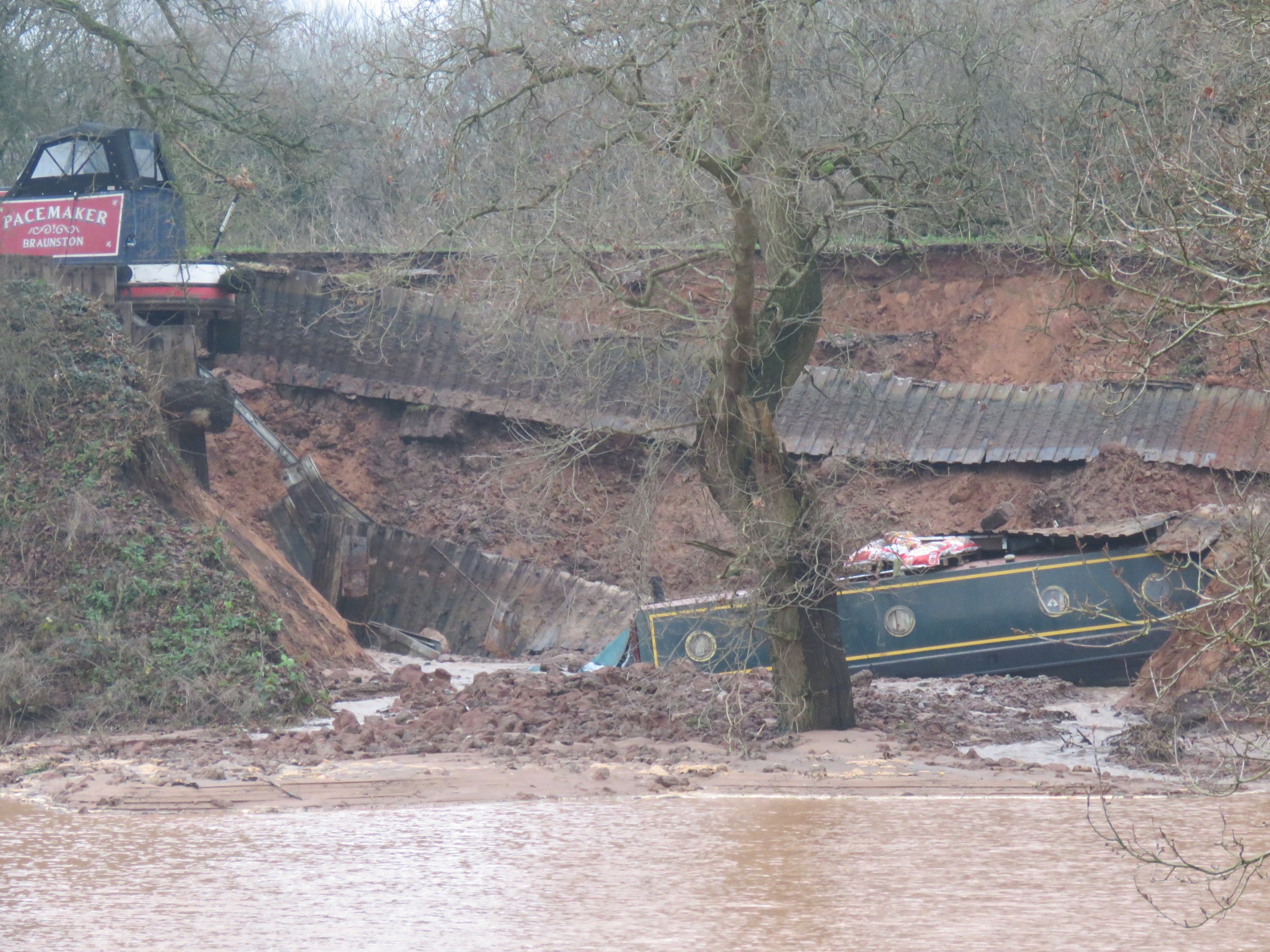
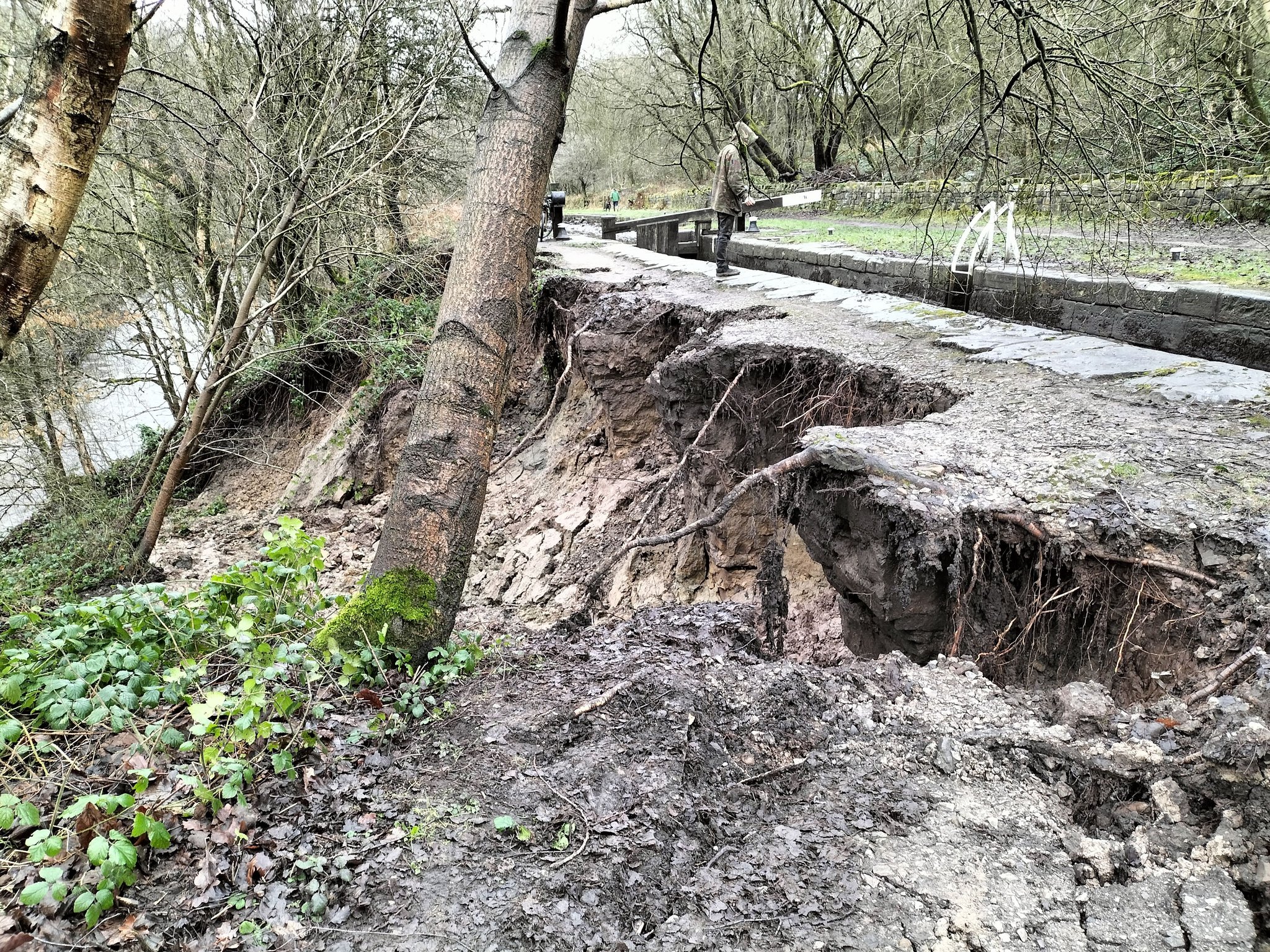
  • Breach on the Llangollen Canal at Whitchurch – IWA Response

    Breach on the Llangollen Canal at Whitchurch – IWA Response

    Commenting on this latest breach, Michael Haig, chair of Shrewsbury & North Wales branch of The Inland Waterways Association, said:

    “As one of the most popular and heavily used canals on the entire network, the Llangollen Canal has a special place in the hearts of thousands of visitors from both this country and overseas. It also supports businesses, recreation and wellbeing along its 49-mile length, and beyond, with numerous holiday boat hire operators on neighbouring waterways also adding to visitor numbers.

    “That’s why, although we appreciate the engineering complexities of repairing the breach itself, we’re calling for multi-agency action to restore full navigation to as much of the canal as possible, including downstream of the breach, so that the waterway can continue to bring economic, social, health and wellbeing benefits to the many communities along its predominantly rural length. For the moment, thanks are certainly due to all who acted so quickly and professionally in what were clearly frightening scenes.”

    The Llangollen canal forms part of national water infrastructure. Each failure shuts down the connected system resulting in water supply disruption and harms local economies and in this most recent case, leaves people homeless.

    This is why this year IWA has mapped the risks across our 5,000-mile network, and it is clear these risks are growing.

    [Photos of the breach site by Jim Forkin]

    Notes (updated 24th December 2025):

    On 22nd December at about 4:14am, a breach occurred on the Llangollen Canal near the Whitchurch Arm at Whitchurch. The incident was declared a major incident by Shropshire Fire & Rescue Service. Two boats were washed into the breach, with two more positioned dangerously close to the affected area. All affected boaters are safe with alternative accommodation arranged. In close coordination with local emergency services, Canal & River Trust secured the site and installed stop planks at Grindley Brook Lock, along with a water gate to regulate water flow upstream and downstream of the breach, and CRT is now pumping water around the breach. Accommodation for 13 individuals from eight households, including their pets, was arranged through hire boats or hotels in partnership with Shropshire Council. CRT’s licensing teams have been in contact with boaters in the area to identify and address any welfare needs.

    Shortly after the occurrence, all locks on the Llangollen Canal were closed, and towpaths in affected areas remain shut for safety. To strengthen containment, two additional dams were installed alongside measures to regulate water around the breach. Pumping operations are underway, with three 6-inch pumps currently in use. These pumps are delivering a maximum overnight discharge of 19 Ml/d, and refilling the downstream section. The Grindley Brook customer service facilities have been temporarily reopened to support ongoing response efforts. CRT will continue monitoring of water levels and structural integrity, including ashing up gates at Hurleston and other key locations. A full investigation as to what may have caused the breach is underway.

  • IWA Welcomes Breakthrough Agreement on Monmouthshire & Brecon Canal Water Crisis 

    IWA Welcomes Breakthrough Agreement on Monmouthshire & Brecon Canal Water Crisis 

    IWA has welcomed last night’s announcement by the Welsh Government of a financial settlement to resolve the water abstraction crisis that has threatened the future of the Monmouthshire & Brecon Canal. The Welsh Government will provide cover for up to £400,000 every year, for the next five years. The Canal & River Trust (CRT) will also contribute up to £100,000 annually. The funding will support a vital water supply agreement.

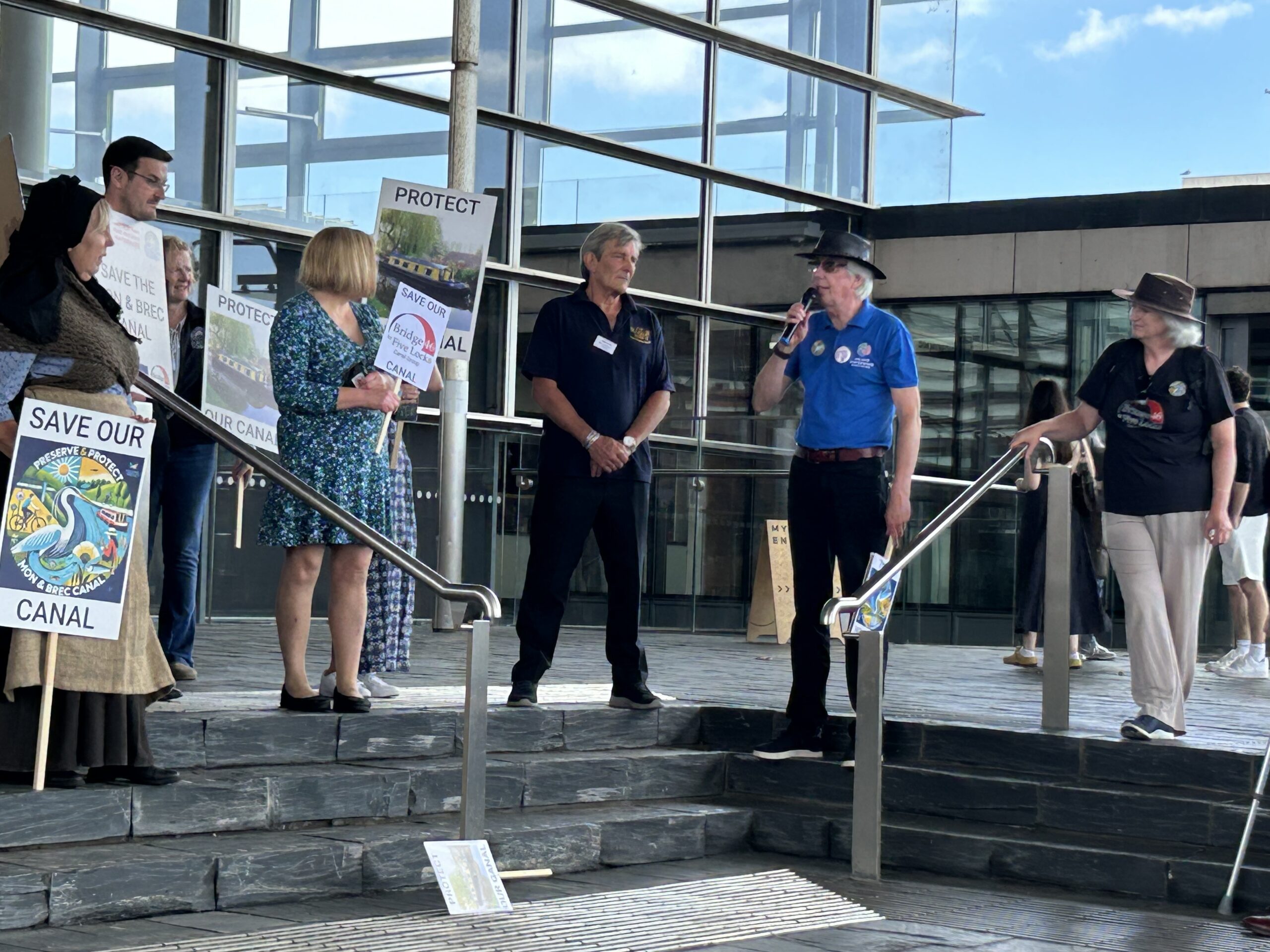
    IWA has been at the forefront of the campaign as a key member of the Preserve & Protect the Mon & Brec Canal (PPMB) coalition. IWA representatives helped organise the Senedd Rally on 9th July 2025, which preceded the Senedd Petitions Committee debate that saw overwhelming cross-party support for action. Following the rally and debate, the Welsh Government announced the creation of the Task & Finish Group on 17th July 2025. 

    The agreement, announced by Deputy First Minister and Cabinet Secretary Huw Irranca-Davies, follows months of intensive campaigning, and negotiation between the Canal & River Trust (CRT), local authorities, and the Welsh Government through the specially convened Task & Finish Group. 

    The water abstraction crisis has seen CRT spend nearly £1 million this year alone purchasing water from Dŵr Cymru Welsh Water, with costs reaching up to £40,000 per week at peak times. This expenditure has diverted vital funds away from essential maintenance and dredging work on the canal. 

    Paul Thomas, Secretary of IWA South West and South Wales Region, said:  

    “This announcement is a major victory for everyone who has fought to preserve this historic waterway. The Mon & Brec Canal is not just a navigation route, it’s a vital part of our heritage, a significant economic asset for the region, and a much-loved recreational resource for thousands of people. We are delighted that the Welsh Government has recognised its importance and taken steps to secure its future.” 

    The Task & Finish Group, which includes representatives from Welsh Government, CRT, Natural Resources Wales, Dŵr Cymru, and local councils, finally convened on 17th November after delays. The announcement follows intensive behind-the-scenes negotiations between all parties. 

    Paul Thomas added:  

    “This shows what can be achieved when organisations work together with a common purpose. I want to pay tribute to all our partners in PPMB, the Commercial Operators Group, Brecon Beacons Tourism, the Bridge 46 to Five Locks Canal Group, and the many individual campaigners who have given their time and energy to this cause.” 

    IWA particularly acknowledges the crucial role played by members of the public, who signed the Senedd Petition in their thousands and contacted their local MSs and MPs to demand action. The support of Cllr Jan Butler, other local Councillors, MSs and MPs across party lines has been instrumental in keeping pressure on decision-makers. 

    Mr Thomas concluded: “We await the full details of the agreement. CRT will now be able to focus its resources on maintaining and improving the canal rather than simply keeping water in it. However, our work doesn’t end here – we will continue to monitor the situation closely to make sure this agreement delivers real, lasting benefits for the Mon & Brec Canal and all who use and love it.” 

  • 75% of Britain’s waterways face financial peril as almost all brace for heavier winter rainfall

    75% of Britain’s waterways face financial peril as almost all brace for heavier winter rainfall

    Britain’s unique canal and river network faces a “perfect storm” of underinvestment and climate risk – as reported in The Guardian today.

    • Three-quarters of Britain’s canals face financial insecurity, with the majority of the nation’s navigation authorities struggling to maintain essential infrastructure amid declining funding;
    • Climate pressures are intensifying, with new mapping showing every waterway in Britain will face greater risk from drought in summer and floods in winter; and
    • The combination of reduced funding and rising climate impacts creates a “perfect storm” for the nation’s 5,000-mile canal and river network, threatening heritage, navigation, tourism, wildlife, utilities, homes, communities and businesses.

    Following the Climate Change Committee’s warning to government to prepare for 2oC warming by 2050, the Inland Waterways Association (IWA) has published a first-of-its-kind map revealing the likely impact of this warming on Britain’s 5,000-mile network of canals and navigable rivers. 

    Facing a dual crisis of funding and climate resilience, the new map reveals 99% of Britain’s navigable inland waterways are at risk. The research from the only national charity that campaigns for all the country’s canals and river navigations finds that 75% of canals are financially insecure, while 99% are expected to experience increased winter rainfall, threatening infrastructure already struggling with years of underinvestment. 

    Key findings are: 

    • The majority of our waterways are managed by navigation authorities struggling financially;
    • Canals will be impacted by increased water shortages, especially in the Pennines and Midlands; and
    • Our mapping shows that no part of the system will escape susceptibility to winter precipitation and drought risk.
       

    Britain’s 5,000 miles of navigable canals and rivers, including the 2,700-mile connected system across England and Wales are a national treasure providing significant public benefit to millions of people across Britain. Our inland waterways are blue green corridors that connect fragmented wildlife habitats and provide free access to nature. They also generate significant economic activity, including associated tourism, supporting over 300,000 jobs [2] and saves the NHS over £1.1 billion [3] each year. Almost 80% of local authorities have a navigable waterway or a waterway under restoration, disproportionately so in more deprived areas. 

    Charlie Norman, IWA’s Director of Campaigns, says: 

    “Right now, Britain’s matchless canal and river network faces a perfect storm of underinvestment and climate risk.  

    “Our findings paint an alarming picture of vital national infrastructure under increased strain. Decades of erratic government support along with more frequent extreme weather events have left many waterways vulnerable to breaches, closures and mounting maintenance costs. This year’s drought led to the closure of dozens of canals across the country, affecting wildlife, tourism, businesses and people living on the canals. 

    “Without intervention the network, a cornerstone of the UK’s industrial heritage, providing leisure and tourism destinations for millions, as well as green corridors for wildlife, faces irreversible decline by 2050.” 

    Rainfall 

    Rising winter rainfall is placing Britain’s waterways under increasing strain. While reservoirs rely on winter rainfall to prepare for summer, excessive precipitation is already causing major damage, as seen in the catastrophic Bridgewater Canal breach on New Year’s Day 2025, and similar incidents on the Huddersfield Canal and Calder & Hebble Navigation. 

    IWA’s new mapping using Met Office climate projections shows no part of the network will escape increased winter rainfall under 2°C of global warming. In the south, rivers such as the Thames were closed to navigation for nearly five months last winter due to flooding: a blow to local businesses and leisure users alike. Many of the major navigable rivers in England (Thames, Nene, Great Ouse, Medway) are managed by the Environment Agency, which faces the threat of serious under-funding for maintenance. 

    Drought

    Following this summer’s drought, with the driest spring ever recorded, Met Office climate projection maps have been used to show how waterways are likely to be affected by lack of water in the future. This map shows the median projected drought severity for a global 2 degrees temperature rise, which IPCC data suggests could happen within the next few decades. 

    Higher drought severity figures are predicted for several crucial areas for the waterways – in areas of higher ground where canals cross summits and therefore where key reservoirs are located. The Pennine summit provides canal links between the North- East and North West waterways (Leeds & Liverpool, Rochdale and Huddersfield canals) and this whole area is predicted to see increased drought. This year already most of the Leeds & Liverpool Canal has been shut since May due to low water. 

    The other key area of concern is the Midlands, the heart of the canal network, fed by many reservoirs whose water resources will be increasingly stretched. An area rich in canal heritage and home to numerous waterways businesses depending on a connected network, it is an area that will be increasingly hit by drought in the future. 

    Funding 

    Lack of funding to maintain waterways in the face of climate change is a key factor and IWA has used expert knowledge of the status of the various navigation authorities looking after our waterways to categorise them. Only 25% of waterways are considered to be financially stable, leaving three-quarters of the network facing moderate to severe funding threats.  

    Charlie Norman continues: 

     “This is why IWA calls on Government to undertake a review of Britain’s inland waterways, with the goal of creating a long-term investment plan 

    “Some aspects of our unique, built environment are assumed to automatically happen. That seems to be the case with our waterways network: they are rightly cherished but there is a dangerous assumption that they are magically self-sufficient. 

    “They are magical, but they don’t just happen. 

    “We want a network that is well-maintained, accessible and alive. This includes the management of the system as a whole and more localised action, for example, where waterways heritage is concerned lest it fall through the gaps of heritage protection. 

    “Improved infrastructure can attract new businesses and enhance the experience of all who use them [4]. Waterways also play a very important role in mitigating the effects of climate change by cooling our cities [5], transferring water, providing active travel routes and supporting biodiversity.  

    “November’s Budget is the perfect opportunity for The Chancellor to signal investment now so we can strengthen this vital, historic network to prevent structural failures, water shortages, navigation stoppages and heritage loss. The case for action is clear: protect and invest today, and our waterways will continue to serve communities, nature and the economy for generations.” 

    Conclusion 

    Britain’s 5,000 miles of navigable waterways are a national asset, but reduced funding and climate change put them at severe risk. 

    Government should review Britain’s inland waterways to create a long-term investment plan because the case is clear: millions spent now will save billions later. With relatively modest investment, Government can secure huge returns in public health, economic growth, climate resilience, and regional renewal. 

    Improved infrastructure will attract new businesses, boost tourism, and enhance the experience of everyone who enjoys Britain’s waterways. 

    IWA’s evidence-based climate risk map shows where and why our waterways face the greatest threats by 2050: now, we need solutions. 

    This November’s Budget is an opportunity for The Chancellor to invest now and keep Britain’s waterways flowing and thriving. They are matchless, and deserve to be well-maintained, accessible and alive. 

  • IWA Responds to Proposed Broads Navigation Charges

    IWA Responds to Proposed Broads Navigation Charges

    The Broads Authority has invited comments on its proposal for a below-inflation increase in 2026/27 boat tolls of 2.5%, coupled with investment in some improvements to navigation.

    This has been enabled, despite falling boat numbers, by a belated recognition by Defra that navigation is fundamental to the character of the Broads, bringing benefits to the economy, the natural and built environment, local communities and the lives of individual people.

    IWA has previously made this case to Government, pointing out that adequate funding is needed for safety provision and maintenance, yet the Broads Authority has been the only major inland navigation authority not to receive government funding to support maintenance of navigation, only ring-fenced National Parks grant funding. IWA urged Government to recognise the need for financial support to ensure that navigation and the character of the Broads are maintained, and Defra has now responded by allowing more flexible use of National Park funding to support navigation – albeit without providing any new money.

    IWA’s Navigation Committee has written to the Broads Authority setting out IWA’s concerns in considering next year’s tolls – that the current level of maintenance should not be degraded, improvements should be made to navigation where possible, and efforts should be made to stem the decline in boat numbers – and supporting the proposed increase in boat tolls.

    [The photo shows boating and leisure activities on the Broads – by Charles Stride]

  • IWA calls for urgent action as Cam Conservancy faces crisis 

    IWA calls for urgent action as Cam Conservancy faces crisis 

    The Cam Conservancy (the Navigation Authority in charge of 6 miles of the River Cam in Cambridgeshire) has warned that it may “become unviable and inoperative” without intervention, as its financial struggles continue and its two locks remain closed. This is a crisis that threatens not just Cambridge’s river users, but the city’s economy and safety. However, this isn’t contained to one area. 

    The Cam Conservancy’s situation is symptomatic of a vulnerability that could threaten the entire waterway network along with communities and businesses nationally. Across Great Britain, navigation authorities are buckling under mounting financial pressures and climate change impacts. 

    IWA supports the Cam Conservancy’s urgent call for a comprehensive national review of waterways infrastructure. Our rivers and canals aren’t just recreational assets, they’re vital for local economies and the environment, an irreplaceable part of our national heritage and they must be well maintained to prevent flooding and risk to life. For this reason IWA is leading the Fund Britain’s Waterways coalition of more than 160 organisations to campaign for sufficient funding to safeguard the future of our waterways

  • Fund Britain’s Waterways flotilla to Westminster

    Fund Britain’s Waterways flotilla to Westminster

    Support the FBW Flotilla in Gainsborough on 1st April 2025. The journey begins with a flotilla of boats setting off from Keadby (River Trent) on 1st April 2025 as the start of the major FBW campaign cruise to the heart of government, culminating outside the Palace of Westminster on 7th May. This year’s flotilla is led by Hazel Owen, Chair of the AWCC (Association of Waterways Cruising Clubs) and a member of the FBW steering group. There is still the chance to join the flotilla.

    The boats will depart from Keadby on 1st April and progress upstream, aiming to be joined by further boats at West Stockwith and Gainsborough. The flotilla is set to pass through Gainsborough at approximately 10:00 a.m. on 1st April, and this is the chance to show support for Britain’s waterways. 

    SUPPORT THE FBW FLOTILLA IN GAINSBOROUGH, 1st APRIL 2025 Come to Gainsborough by 9.30 a.m. on Tuesday, 1st April, to support the Fund Britain’s Waterways flotilla as it makes its way towards Westminster. 

    The flotilla carries a crucial message: our canals and rivers are both valuable and valued but need adequate funding. The first group of boats will have set off from the Strawberry Island Boat Club in Doncaster at the end of March. They will join the tidal River Trent at Keadby, making their way upstream. At around 8:30 a.m. on 1st April, boats from the Chesterfield Canal at West Stockwith will join the flotilla. The combined flotilla will then pass through Gainsborough around 10:00 a.m., where they will be greeted by more boats and supporters on land. 

    Please note: this is a “passing through” event due to tidal schedules, so make sure to be at the river pathways near the bridge in Gainsborough by 9:30 a.m.

    You could also visit West Stockwith at 8:00 a.m. to catch the flotilla as it sets out. This event is the first of many leading up to the main Campaign Cruise at Westminster. The FBW flotilla will continue its journey drawing attention to the ongoing need for investment and support for Britain’s inland waterways. 

    The FBW campaign was launched in 2023 to highlight the severe underfunding and deteriorating condition of the country’s network of canals and navigable rivers. The campaign continues to seek support of parliamentarians and the general public to secure the necessary resources for the upkeep of these vital waterways. Hazel Owen, who will lead the flotilla, said: “The need for greater investment in our waterways has never been clearer. This flotilla is not just about boats; it represents the voices of everyone who cares about the future of our canals and rivers. We must show Parliament that we are serious about safeguarding these precious resources.” 

    To take part in the Cruise on a boat in the flotilla: For details please contact Andrew Phasey on info@fundbritainswaterways.org.uk.

  • Protecting the Future of the Mon & Brec Canal

    Protecting the Future of the Mon & Brec Canal

    Recent decisions on water abstraction licences pose a serious threat to the Monmouthshire & Brecon Canal (Mon & Brec) and could drastically reduce water levels, jeopardising the canal’s long-term sustainability and the communities, businesses, and wildlife that depend on it.

    The Canal & River Trust (CRT) recently lost an appeal regarding water abstraction from the River Usk and Trosnant Spring, limiting the amount of water that can be used to feed the canal. Without adequate water supply, CRT has warned that sections of the Mon & Brec could become unnavigable or even face closure, though this would be the worst-case scenario. We believe even the prospect of this is unacceptable. Many businesses do well in this area, and they can do without even the hint of uncertainly especially as we come into warmer months and the holiday season.

    For over 225 years, this canal has supported local economies, provided habitats for wildlife, and been a recreational space for all canal users. It’s also a significant part of Wales’ tourism industry: hire boat companies, trip boats, and canalside businesses generating jobs and revenue for the region currently operate successfully and are in need of reassurance. Up until now, the Welsh Government has supported canal restoration, most notably with the Montgomery Canal. We now need that same commitment for the Mon & Brec.

    IWA is actively working to ensure the canal’s future. We are urging Welsh Government to work with Natural Resources Wales (NRW) to reconsider the impact of these water restrictions, not only on the Usk’s ecology but on the canal itself with its diverse ecosystem.

    In South Wales, canal restoration efforts in Cwmbran have made significant progress, with restored bridges, new moorings, and lock gate replacements. Decades of investment, much of it funded through government grants and the National Heritage Lottery Fund, must not be wasted. Losing the northern section of the Mon & Brec would be very bad for future restoration and regeneration projects.

    We have written to Senedd members, the Deputy First Minister and Cabinet Secretary for Climate Change and Rural Affairs in the Welsh Government, and relevant MPs to put pressure on getting the right outcome for the Mon and Brec.

    Paul Thomas, IWA South West and South Wales Region Secretary, said:

    “This is a serious threat to the Mon & Brec Canal, we can’t just watch it happen. Cutting water supply risks making parts of the canal unnavigable, which would be bad news for local businesses, tourism, and wildlife. For over 225 years, this waterway has been at the heart of the community, and we need the same commitment to its future that we’ve seen for other Welsh canals. This is why we are urging the Welsh Government to work with Natural Resources Wales to reconsider these restrictions, and we are writing to all relevant politicians. People love their local canal, but waterways as we know and value them would not exist if not for the historic campaigning of many before us. That work is still needed today.”

  • Waterways APPG holds first Working Meeting 

    Waterways APPG holds first Working Meeting 

    The Waterways All-Party Parliamentary Group (APPG) held its first working meeting in parliament on January 21st, chaired by Lord German. The usual chair, Labour MP for Sefton Central Bill Esterson was called to the chamber minutes before the meeting started.  

    The APPG noted with deep sadness the recent passing of Baroness Jenny Randerson, who had been due to attend. Her longstanding support for, and love of, the waterways has been appreciated. 

    Pictured (from left) are: Lord Michael German, Abtisam Mohamed MP, Uma Kumaran MP, Wendy Morton MP,  Baroness Llin Golding. Not pictured but present: Sir Gavin Williamson MP PHOTO CREDIT: Susie Mather 

    The APPG discussed concerns over the growing crisis facing the UK’s inland waterways network, citing recent breaches on the Bridgewater and Huddersfield Canals as evidence of worsening infrastructure decline. 

    Members emphasised that despite the significant economic, social, and environmental benefits of the waterways, and the tireless contributions of volunteers, chronic underfunding is leading to increased structural failures, posing both safety risks and financial burdens. 

    Discussion focused on the critical need to safeguard the network’s future. The group also outlined key priorities for the coming year, including environmental management, flood defence, and sustainable freight solutions.  

    The Bridgewater Canal breach was cited as a stark reminder of the financial and operational challenges posed by ageing infrastructure.  

    The fragmented ownership of the network and the responsibilities of private navigation authorities in maintaining infrastructure were also discussed. 

    The APPG committed to progressing discussions on climate resilience and waterway funding, with plans to bring the issue to a Westminster Hall debate to drive parliamentary awareness and action. 

    As secretariat, he Inland Waterways Association (IWA) hopes the now 24-strong group will unlock the environmental, social, economic, and cultural potential of the UK’s rivers and canals by boosting local economies, promoting sustainability and connecting people to nature. 

  • Fund Britain’s Waterways representation to the Spending Review 2025

    Fund Britain’s Waterways representation to the Spending Review 2025

    Fund Britain’s Waterways (FBW) is a growing action group currently comprising 145 member organisations representing hundreds of thousands of users and supporters of inland waterways. Its sole purpose is to campaign collectively for an increase in government funding of Britain’s inland waterways to avert their decline, and to promote awareness of the huge economic, environmental and social well-being value they provide.

    FBW made a submission to the Autumn Budget 2024. Since then we have seen the collapse of embankments on both the Bridgewater Canal and the Huddersfield Narrow Canal on New Year’s Day following sustained heavy rainfall. These events demonstrate the vulnerability of our canals to the increasingly frequent severe weather events resulting from climate change. Increased investment will be needed in order to future-proof the network.

    We have therefore presented a strengthened argument in our Spending Review submission and repeated our request to Government that:

    1. the importance of Britain’s inland waterways as a unique national asset and part of the national infrastructure is recognised
    2. the deterioration in condition that is already happening is acknowledged
    3. a review of government funding for all Britain’s inland waterways be carried out as a matter of urgency, with the aim of defining a sustainable funding solution which will enable the current benefits of our canals and rivers to be maintained and enhanced for future generations.

    To fund our inland waterways properly would cost a small (in government terms) investment measured in millions not billions of pounds. In return the country will continue to obtain billions of pounds of benefits for health, economic and environmental benefits, much of the benefits in less well-off areas.

    We are already seeing the waterways deteriorating and businesses suffering, and the rate of deterioration is increasing because of the impact of extreme weather events caused by climate change. If underinvestment continues this will become worse until a tipping point is reached and waterways have to be closed, wasting the benefits as well as the millions of hours of volunteer time and millions of pounds of public money that have gone into the current network. Read the full submission here.

  • Neath and Tennant Canals Consultation fails to recognise canal potential

    Neath and Tennant Canals Consultation fails to recognise canal potential

    Neath Port Talbot Council issued a Neath and Tennant Canals options appraisal consultation in November 2024 to look at possible ways to restore and regenerate the Neath and Tennant canals for the benefit of people, places and the environment.

    The Council held a community workshop in early December 2024 to share options and gather views from the public. Two IWA South Wales Branch representatives, as well as several IWA members, and representatives from local canal groups attended a packed workshop at Aberdulais.

    IWA has responded to the consultation options put forward by the Council. Whilst encouraged that the Council sees the benefits that the canals’ restoration can bring, IWA feels that the lack of an option to return the canals to full navigability ignored the significant benefits that a wider ranging vision would bring. IWA feels that the options presented lacked the ambition and strategic vision demonstrated by other canal restorations elsewhere in the UK that have revitalised town and city centres.

    The Branch referred Neath Port Talbot Council to IWA’s comprehensive report Waterways for Today which explains how navigable waterways can act as a catalyst for investment and regeneration. The report also provides evidence showing why waterway focused projects are perfect for including in regeneration projects and third party funding bids.

    Restoration of both the Neath and the Tennant canals to full use is complicated by ownership issues. Neath Port Talbot Council terminated a Neath Canal Public Access Rights Agreement in December 2023 which previously gave the public access to parts of the Neath Canal towpath.

    IWA is very concerned that the options presented made no mention at all of key canal historic assets that need protecting in the short term. The Aberdulais Aqueduct (a Scheduled Ancient Monument) and associated weir are vital parts of both canals, and their continuing neglect is having, and will have, a significant impact on the viability of the canals’ restoration and future use. The IWA has an ongoing campaign to raise the issue of the potential threats to this important canal asset. Repair of the aqueduct and weir needs to be part of a wider plan to protect local houses and other properties at Aberdulais from potential flooding. 

    IWA believes that: 

    • The Aberdulais Aqueduct, weir and associated flood works need to be protected and work completed as soon as possible.
    • Canal ownership relationships need to be resolved so that works can be completed along both the canals.
    • A new partnership or dedicated organisation needs to be set up.
    • A clear Vision and Strategic Plan needs to be created supporting the Vision of Full Navigability of the Canals.

    To view IWA’s response to the consultation, click here.

  • Storm Bert breaches Stover Canal

    Storm Bert breaches Stover Canal

    The canal, River Teign and an unused railway line all run parallel in a section of the valley near Kingsteignton. Heavy rain building up in the canal and on land to the west of the railway embankment caused some 60 metres of canal embankment south of Teign Bridge to collapse. The water flowed into an adjoining clay pit owned and operated by Sibelco.

    A similar length of railway embankment also collapsed. The Templer Way pedestrian route along the canal towpath, and the Stover Trail for pedestrians, cyclists and horse riders, on the western side of the railway, have both been washed away.

    For background, the railway and canal are owned by Network Rail, with the canal leased to Teignbridge Council and sub-leased to the Stover Canal Trust which is working on its restoration.  The railway has been non-operational for some years and there is now concern as to whether Network Rail will try to use the occasion to close it permanently.

    The Stover Canal Trust is an IWA corporate member. Its Chairman, Paul Taper, shared his initial assessments: “It is clearly early days, and needless to say, the costs will be considerable. One of the first actions will be to rebuild the canal embankment, which may need piling etc. to make it strong and watertight. The water in the quarry pit will need to be tested by the Environment Agency for contamination and, only if suitable, can be pumped back into the canal and river. Pumping time is estimated at nine months due to the sheer volume of water involved. 

    “The railway embankment will need to be rebuilt if flood water is to be retained on its western side. Both the Templer Way, along the canal towpath, and the Stover Trail, to the west of the railway, will need to be reinstated.”

    Additional damage was done to the canal north of Teign Bridge. Stover Canal Trust volunteers held an ad hoc work party shortly after the storm and made good the damage to two footbridges and some of the towpath on the northern half of the canal.

    A meeting was held between Sibelco, Stover Canal Trust, the Environment Agency, Teignbridge District Council and Devon County Council to discuss the issues regarding pumping out the quarry and preventing it from happening again. Network Rail were invited but did not attend the meeting. Further update meetings will be held at two monthly intervals.

    Aerial photo of the devastation several days after Storm Bert. To the left the railway track hangs loose. The line of the canal can just be made out in the centre, running immediately parallel to the track. The flooded clay pit lies to the right, having been filled through a breach in the canal embankment. (Photo: David Abel)

  • Huddersfield Narrow Canal Closed after New Year Rainfall

    Huddersfield Narrow Canal Closed after New Year Rainfall

    The mainstream media is giving widespread coverage to the collapse of the Bridgewater Canal embankment near Dunham Massey in Greater Manchester on New Year’s Day following sustained heavy rainfall. Less widely reported is that the rain also led to a structural failure of the embankment supporting the side of Lock 11W on the Huddersfield Narrow Canal to the north east of Manchester. As a result Canal & River Trust (CRT) had to close the canal between Locks 12 West and 10 West on 1st January until further notice.

  • Major Breach of the Bridgewater Canal Severs North-South Route

    Major Breach of the Bridgewater Canal Severs North-South Route

    A section of the Bridgewater Canal embankment near Dunham Massey in Greater Manchester collapsed on New Year’s Day after sustained heavy rainfall, resulting in water pouring into neighbouring fields and flooding a sewage works.

    The BBC reported that 90mm of rain fell on north west England over the New Year’s period. A major incident was declared because of serious flooding across Greater Manchester, Lancashire and Cheshire, including the breach of the canal. Greater Manchester Fire and Rescue Service reported evacuating nearly 1,000 people during the incident.

    The collapse has attracted widespread public attention: drone footage and photos of the breach have been widely shared across social media and one video became the ‘most watched’ on the BBC news website. Canal & River Trust has issued a statement making clear that the canal is not one of its waterways, and also stressing the vulnerability of all canals and infrastructure of this age to extreme weather arising from climate change.

    The Bridgewater Canal is directly owned by the Bridgewater Canal Company Limited, which is owned by Peel L&P, a division of Peel Holdings plc. It forms part of the popular Cheshire Ring cruising circuit and is also an important north-south link between the Leeds & Liverpool Canal at Leigh and the Trent & Mersey Canal at Preston Brook, as well as part of the east-west routes across the Pennines on the Rochdale and Huddersfield Narrow Canals.

  • Canal access to the Kelpies to close for months

    Canal access to the Kelpies to close for months

    The closure is currently planned to last from November 2024 to March 2026 because, although Scottish Canals has funding to build the necessary replacement lock gates, the Scottish Government has not yet made available the funds to fit them and for associated lock repairs. If all the funding had been available together, the work could have been completed much more quickly.

    Construction of the waterway commenced in 1768 and was finally completed in July 1790. For it to have lasted so long is a tribute to both contemporary engineering prowess and the restoration work undertaken at the turn of this century.

    The Forth & Clyde Canal declined in the second half of the 20th century and was finally closed in 1963. In March 1999 National Lottery Funding, totalling £100 million, was precured to reopen the navigation and the process of decay was reversed: new channels have been engineered, blockages circumnavigated and more than 30 bridges rebuilt to reinstate the coast-to-coast waterway we see today.

    An important part of this vision was the rôle the waterway would play as a transit canal allowing seagoing leisure vessels to move between Scotland’s east and west coasts. Completion of this restoration was almost 25 years ago, which is the useful life of a lock gate. Across the waterway’s 34 miles there is a total of 39 locks, few of which have received significant attention since the reopening.

    The eastern end of the navigation – running from Lock 16 near the Falkirk Wheel for 2¾ miles down to Lock 2 at the Kelpies – will shortly be closing for sixteen months. This is to allow re-gating of five of the fifteen locks in the flight and a thorough investigation of all the locks themselves. This section of the navigation includes several short pounds which will be totally dewatered (preventing navigation) thereby making the whole operation more efficient.

    An early design by prominent engineer John Smeaton, much of this end of the waterway crossed unstable ground and the locks were constructed on what were effectively timber rafts, using pitch pine. Whilst it is not unusual to find wooden floors to locks, running the timbers under the lock walls for added stability is uncommon.

    Timbers forming the lock floors are, in places, in poor condition with significant holes visible. These are relatively easy to replace but it is the condition of the timber, hidden under the masonry forming the lock chambers, that poses a large unknown.

    Whilst funding is now in place for the five sets of lock gates, money still needs to be found to cover the cost of their installation and to underwrite any issues in this highly unusual construction that are uncovered along the way. It is this considerable uncertainly that dictates such an extended closure, as current diving investigations can only determine the extent of lock-related works and the state of the visible sections of the timber flooring.

    Scottish Canals has been in touch with Transport Scotland demonstrating that navigation is a public rather than a private benefit and therefore deserves financial support from the Government. This position is supported by RYA Scotland, by the Lowland Canals Association and also by IWA. IWA agrees that the Scottish Government should recognise the value of navigation to the public as a general principle, together with the value of the Forth & Clyde Canal as a sea-to-sea link.

  • IWA Concern at Cam Conservancy Financial Situation

    IWA Concern at Cam Conservancy Financial Situation

    In May 2024, due to safety concerns regarding the structural integrity of the lock islands at Baits Bite and Jesus Green locks, the decision was taken to close the locks until further notice. 

    Visual and underwater camera surveys have now shown that the fabric of both locks is unstable and vulnerable to collapse. Both lock islands carry public footpaths over the river, and the footpath at Baits Bite was closed by Cambridgeshire County Council at the same time as the Conservancy closed the lock and remains closed.

    Both locks will require stabilisation work to make them safe in the short term and rebuilding in the medium term. The immediate stabilisation work is likely to cost around £1.5 million per lock, with the need greatest at Baits Bite. Rebuilding the locks is likely to cost at least £5 million each, probably more.

    The Conservancy has stated that funds for the immediate stabilisation work are not readily available to them, and the medium-term rebuilding of the locks is beyond the Conservancy’s financial means.

    The Conservancy’s income comes almost exclusively from fees, which just cover routine operations and it receives no additional funding for capital works. As a result, the Conservators are exploring potential sources of external funding.

    The situation has left many boats stranded on the river with no maintenance facilities on the affected stretch, and no visitors able to reach the popular tourist destination of Cambridge by boat. Some have been forced to crane their boats out in order to leave.

    This news comes as IWA are also calling for additional funding for the Broads Authority as concerns have been raised about the sustainability of the funding model for the Broads as demonstrated by the recent Broads Authority briefing on navigation charges for 2025/26.

    Sue O’Hare, Chair of IWA’s Navigation Committee, said:

    “Through Fund Britain’s Waterways IWA is campaigning for adequate national and local government funding for all Britain’s navigable rivers and canals to ensure that future generations can continue to enjoy their many benefits. The circumstances of the River Cam are unique but the need for funding is universal.”

    For more information see the Cam Conservancy website.

  • IWA Concern about the Financial Sustainability of the Broads

    IWA Concern about the Financial Sustainability of the Broads

    The Norfolk and Suffolk Broads are a valuable natural asset, recognised by their National Park status. Uniquely among National Parks, the Broads area includes 125 miles of navigable waterways. These waterways are fundamental to the character of the Broads and bring benefits to the economy, the natural and built environment, local communities and the lives of individual people. About 7.5 million people visit the Broads each year, drawn by the special qualities of the wetland landscape and the tranquillity of the waterways threaded through it, traversed by boats of all shapes and sizes. As a result tourism in the Broads contributes £775 million to the Norfolk and Suffolk economy and supports over 7,000 jobs. The Authority’s briefing is available here.

    The Broads receive National Park Grant funding from Defra, but the Norfolk and Suffolk Broads Act 1988 requires this to be used solely for funding National Park expenses and not for maintaining the waterways to keep them safe and navigable. Rather, all navigation costs must be funded from navigation tolls paid by over 8,000 private boat owners and 54 hire boat companies. This has resulted in the need to increase tolls substantially in recent years, which has generated considerable public disquiet. The number of both privately owned and hire boats has been decreasing, partly as a result of the increase in charges but also because of other factors such as poor weather, the cost of living crisis and relatively cheap foreign holidays. In consequence the Broads Authority briefing on navigation charges states a significant shortfall of £394,000 in the budget for management of the Broads navigation for 2025/26 and sets out some stark options. Ultimately the situation poses a threat to the essential character of the Broads and will potentially degrade their National Park status, as well as their contribution to the economy.

    IWA previously set out its concerns over the need for large toll increases in a representation to the Secretary of State for Transport and urged Government to recognise the need for financial support to ensure that navigation and the character of the Broads are maintained. As noted in the representation, the Broads Authority is the only major inland navigation authority that does not receive government funding to support maintenance of navigation. Government has argued that use of the Broads waterways is a private benefit which should not be funded, despite waterways and boating being an integral part of the special qualities justifying the National Park designation – and therefore a public asset. Many people as well as boaters enjoy the public benefits provided by the rivers and wetlands.

    The Broads Authority has written to the Government demonstrating that navigation is a public rather than a private benefit and deserves financial support from the Government. This position is supported by the Broads Society and also by IWA. IWA agrees that Government should recognise the value of navigation to the general public and provide a permanent regular annual navigation supplement to the Broads Authority, in addition to its funding as a National Park.

    Sue O’Hare, Chair of IWA’s Navigation Committee, said:

    “Through Fund Britain’s Waterways IWA is campaigning for adequate national and local government funding for all Britain’s navigable rivers and canals to ensure that future generations can continue to enjoy their many benefits. The circumstances of the Broads are unique but the need for funding is universal.”

  • Fund Britain’s Waterways Government Autumn Budget Submission

    Fund Britain’s Waterways Government Autumn Budget Submission

    Fund Britain’s Waterways is a growing action group currently comprising 136 member organisations representing hundreds of thousands of users and supporters of inland waterways. Its sole purpose is to campaign collectively for an increase in government funding of Britain’s inland waterways to avert their decline, and to promote awareness of the huge economic, environmental and social well-being value they provide.

    Our request to Government is that:

    1. the importance of our inland waterways as a unique national asset and part of the national infrastructure is recognised;
    2. the deterioration in condition that is already happening is acknowledged; and
    3. a comprehensive review of Government funding for all our inland waterways should be carried out as a matter of urgency, with the aim of defining a sustainable funding solution which will enable the current benefits of our canals and rivers to be maintained and enhanced for future generations.

    To fund our inland waterways properly would cost a small (in Government terms) investment measured in millions, not billions, of pounds. In return, the country would continue to obtain billions of pounds of benefits for health, economic and environmental benefits, much of those benefits being enjoyed in less well-off areas.

    We are already seeing the waterways deteriorating and businesses suffering. Without urgent action the inland waterway network will be in serious jeopardy. If the condition of waterways continues to deteriorate, waterways will ultimately have to be closed, businesses will be harmed, communities placed at risk, the benefits lost, and millions of hours of volunteer effort wasted.

    Read the full submission here.

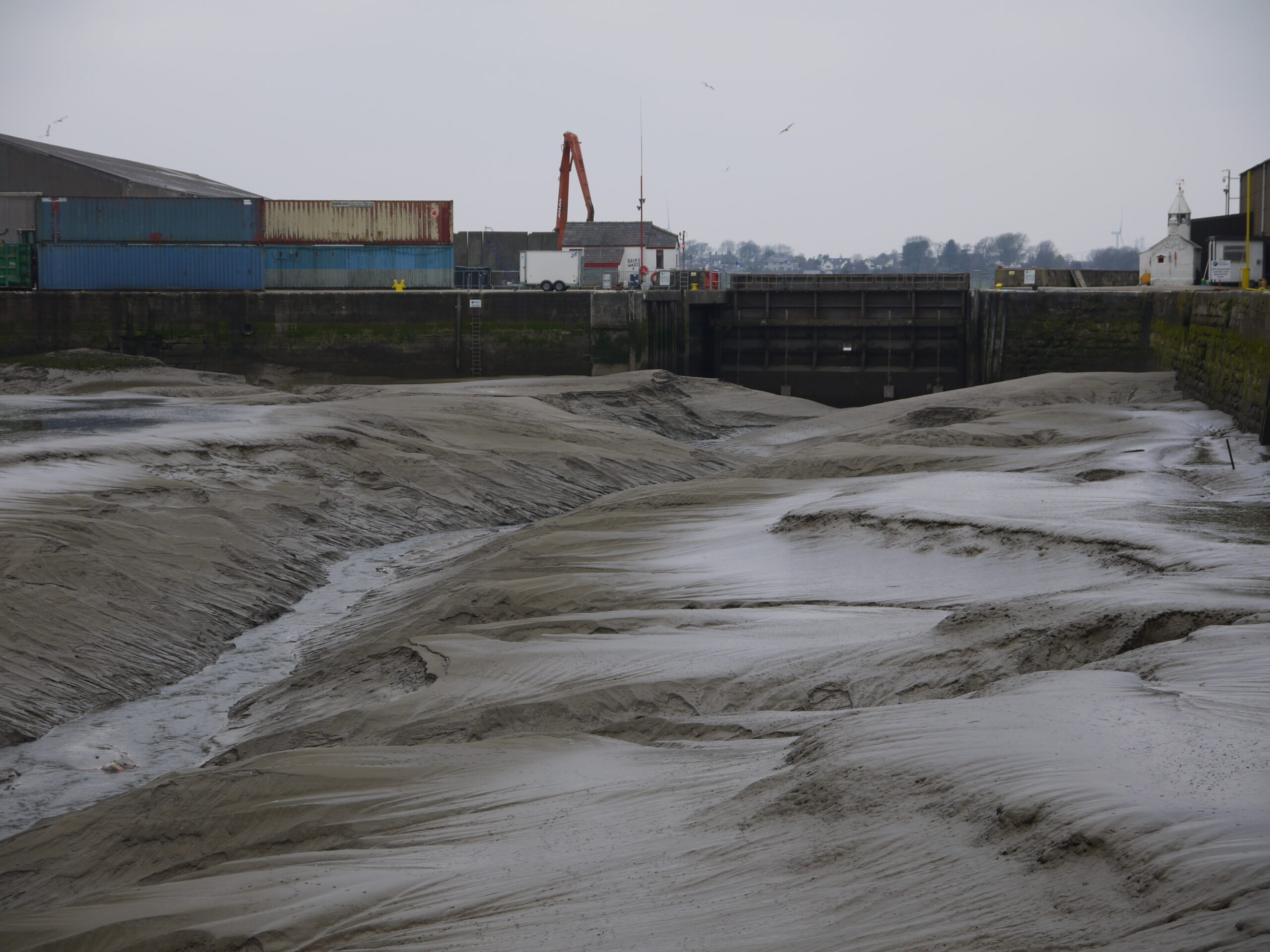
  • Lancaster Canal Isolated from the Sea

    Lancaster Canal Isolated from the Sea

    IWA is concerned that boaters have been trapped since September 2023, unable to pass through Glasson Dock because of a failure of the tidal gate that connects the Dock to the Sea, and a stand-off between the Port of Lancaster Commission which owns the gate, and the Environment Agency. The funding plight of navigation authorities in the area has been aggravated by the failure of a gate at the tidal end of the Ribble Link and a breach at Hollowforth Aqueduct, both of which are major works that will take months to fix at great expense. And boaters are, literally, stuck in the middle.

    At Glasson Dock, the 38 year-old gate is currently stuck, and although it’s owned by the port, in 2001 the Environment Agency added an extension to the gate to make it a flood defence. The port is not responsible for flood defences for the area. No modifications were made to the supporting structures. Since then, the port maintained and operated the gate with minimal contribution from the Environment Agency. In recent years, the port has spent a fifth of its annual turnover maintaining the gate. Over three years ago the port informed the Environment Agency that the gate was beyond its lifespan and needed replacing and that the port could not afford to do this. The Agency confirmed that replacement funds were in its capital scheme budget.

    Update October 2025 – The Lancaster canal is no longer isolated. The sea gate at the dock is still away for repair or replacement. Boats can use the basin lock and get out to sea, but there remains a problem is with high spring tides and flood risk to local population around the dock area. Ribble Link is fully back in operation and has been open for most of 2025 dependent, as always, on the weather and tides from April to September. Hollowforth Aqueduct has been fully repaired.

    [The photo above shows Glasson Dock, with tide out but the sea gate still in place – taken in July 2024 – by David Faulkner.]

  • Disappointment as Popular Boat Festival is Cancelled

    Disappointment as Popular Boat Festival is Cancelled

    The popular Ware Boat Festival, run by IWA Lee & Stort Branch every year to coincide with the Ware Festival, organised by Ware Town Council, due to take place on the 5th to the 7th of July, has had to be cancelled at the last minute. Hertfordshire County Council has issued a closure order for a large section of the towpath on the River Lee through Ware, including the entire site on which the Festival was to be held.

    The closure is on the grounds that the state of the towpath is now so dangerous as to constitute a danger to the public. Hertfordshire County Council has erected barriers at either end and entrances to the towpath to prevent public access, and anyone setting foot on the towpath could be liable to prosecution and a substantial fine.  The towpath has been in a poor state for many years, deteriorating each year, and usually volunteers from IWA Lee & Stort Branch undertake a few days’ work to make things safe for the festival.  The towpath, which is a public right of way, was assessed by Hertfordshire County Council’s contractors, Ringway, who identified 40 serious and dangerous issues, each of which could have been enough on their own to issue the closure order.  Hertfordshire County Council say that the issues are so serious that they have no choice but to maintain the closure until substantial works are undertaken, as a matter of public safety. 

    The cost of the works is estimated at £100,000s, which Hertfordshire County Council will fund, as highways authority, but only when they have the budget as it has been classified as a ‘complex’ issue for a specialist team.  There is no timescale for the work; IWA has asked for assurance the work would be complete before the 2025 festival, but this has not been forthcoming so far. The decision demonstrates a lack of multiagency partnership working, as no consultation with the town council, Canal & River Trust or IWA took place.

    Craig Haslam of IWA Lee and Stort Branch said “This is a sad and disappointing day for our local boaters and the wider community of Ware after 20 years of staging this incredibly popular festival.  We do not question the need for significant improvements. However, we feel this could have been achieved through a planned closure when footfall and river traffic is quieter, rather than electing for the blunt instrument of a full an immediate closure via a prohibition order which we believe is a disproportionate approach and was done with no consultation.”

    The situation highlights the fragility of Britain’s inland waterways, and that it is not just boaters who are affected when the waterways are not funded and maintained adequately. The Fund Britain’s Waterways group has come together to campaign to persuade national and local government to ensure that the benefits provided to the public by the waterways do not continue to be eroded.

  • Results of IWA Boaters’ Survey

    Results of IWA Boaters’ Survey

    In support of Fund Britain’s Waterways (FBW), IWA asked boaters for their views on the state of the inland waterways network and how it impacted on their cruising in 2023. The boaters’ survey was intended both to provide a snapshot of current conditions and as a benchmark to enable the identification of future deterioration if funding continues to be inadequate. As with FBW, it covered all navigations in Britain, and it gathered crucial insight into various aspects such as condition of locks, depth of water, ease of mooring and provision of services.

    726 boaters responded anonymously during March and painted a picture of declining condition since their previous cruises and in the long term over the total period that they had been boating. This really does back up FBW’s argument that our waterways are already deteriorating and action is needed urgently.

    You can read the IWA press release about the results of the boaters’ survey here and a summary of the results here.

  • Anglian Waterways isolated by closures

    Anglian Waterways isolated by closures

    IWA is deeply concerned about the double effect of funding cuts and the recent prolonged extreme weather on access to and within the Anglian waterways.

    Boaters are unable to navigate to or from the Great Ouse, as there is no completion date for the desilting works at Salter’s Lode, which did not start until 27th May. It could be mid-June or later before the first boat from the Middle Level and beyond will be able to access the Great Ouse system, and for Great Ouse boaters wishing to use their Anglian Pass licences to access the Middle Levels and Nene. The impact of the stoppage is already being felt by local boatyards and hireboat companies, whose trade relies on the navigable connection.

    The River Nene is expected to open fully on 1st June after winter works were delayed by the recent extreme weather and navigation on the Bedford Ouse is also affected by the ongoing closure of Brownshill Lock due to failure of parts which will need to be fabricated, with no date yet available for its reopening due to the complex nature of the repair. Further upstream, the Cam Conservators have had to close both Bait’s Bite and Jesus Locks due to structural concerns, with no timescales yet available for their reopening. Brandon Lock on the Little Ouse is also closed until further notice due to siltation. A broken beam on the Northampton flight connecting the canal system to the River Nene further limits access to the region.

    The Upper Great Ouse, the Ely Ouse and the Middle Levels are currently all isolated from one another, and no boats are able to get to the extremities of the Ely Ouse’s tributaries at Cambridge or Brandon. Whilst the waterways are open either side of all these closures, they create a fragmented system with users prevented from accessing key facilities and services, and hire boats trapped.

    Paula Syred from Fox Narrowboats in March said “Not only will half of our hire season have been affected, we have also seen a major down turn in our workshop and slipway services as customers have had to cancel or reschedule their work, being unable to reach us.  The only growth in business this year has been from boats being lifted onto lorries to escape the area.”

    Sue O’Hare, Chair of IWA’s Navigation Committee said “Combined with inadequate funding, issues such as these will only worsen as the impacts of climate change are increasingly felt. The Fund Britain’s Waterways group has come together to campaign to persuade national and local government to ensure that the benefits provided to the public by the waterways do not continue to be eroded.”

    The Environment Agency was approached for a response but was unable to comment in the pre-election period.

  • How to vote as a Live-Aboard Boater

    How to vote as a Live-Aboard Boater

    With the General Election announced for Thursday 4th July, it’s important for everyone to register to vote by the deadline of

    23.59 Tuesday 18 June.

    There are two ways to do so as a live-aboard boater:

    If you live on a boat and you have a permanent mooring which you use as an address, you can register to vote there.

    Register to vote on the government website

    If you don’t have a permanent mooring you can use as an address, you can choose to register at either:

    • a place where you spend most of your time
    • or where have some connection e.g where your family or friends live

    You could register at the place where you were last permanently registered to vote. Alternatively, you could register at somewhere like the boatyard you use for maintenance for example. It’s worth bearing in mind that if the address you use to register to vote is not the same as the one you use for banking this could impact your credit rating.

    To register to vote in this way, you’ll need to download and complete a form for someone with no fixed or permanent address.

    Download register to vote form

    Filling in your form
    The application form includes instructions on how to fill it in correctly.

    When you fill in the form, you’ll be able to say how you want to receive information about your registration. You can collect it from the electoral services team at the local council for the address you’re registering at, or have it delivered to an address you provide.

    Where to send your completed form
    Once you have completed the form and made sure you have signed it, you need to send it to the electoral services team at the local council for the address you’re registering at.

    You can send your form by post. The electoral services team at your local council may also accept a scanned copy of your form by email, but you should check with them first.

    Don’t forget you now need need Photo ID to vote, but it doesn’t need to match your address, just your name. Find out more here.

    Postal and Proxy Voting

    These methods can be useful if you are unable to get to the polling station where you are registered. The deadlines for these are:

    Deadline for applying for a postal vote17.00 Wednesday 19 June 
    Deadline for applying for a proxy vote17.00 Wednesday 26 June 

  • Stand Off Between Navigation Authorities Leaves Boaters Stuck

    Stand Off Between Navigation Authorities Leaves Boaters Stuck

    Denver Sluice and Lock on the Great Ouse are owned and managed by the Environment Agency (EA). Salter’s Lode Sluice and Lock are owned and managed by the Middle Level Commissioners. Transit between Denver Sluice and Salter’s Lode allows access to the Great Ouse, the river Cam, and the rivers Lark, Little Ouse, and Wissey. The Denver crossing is now effectively closed and the only navigable connection between the Great Ouse and the rest of the ‘system’ is by the difficult and hazardous Wash crossing (until the Bedford / Milton Keynes link progresses).

    After Christmas 2023, the Middle Level Commissioners (MLC) dredged Salter’s Lode lock. This necessitated removing over 250 tons of silt from inside the lock. There is a considerable build up of silt outside the lock, on the tidal Great Ouse managed by the EA. MLC are concerned that as soon as they open the tidal doors of Salter’s Lode it will immediately be filled with silt from the tidal Great Ouse, and so they have closed the lock until the EA dredge outside it.

    At a recent meeting of its Anglian Water Group (AWG), EA reported this to stakeholders, but currently the EA has no plans to dredge! The link between the Great Ouse and the Middle Level now appears indefinitely closed until one or other of the navigation authorities gives in. This closes off approximately 130 miles of navigation, affects hundreds of leisure boats and prevents access from the connected navigable system to places such as Bedford and Cambridge.

    During April 2023, contractors for EA dredged outside Denver (photo 1 below). Rather than removing arisings, they threw it back out into river (in the hope it would wash out to sea), and there was subsequently heavy siltation experienced downstream at the first bend in the river (photos 2 and 3 below). This blocked the outfall of the Old Bedford River and caused several hire boat groundings on the tidal side of Salter’s Lode. It appears that MLC feel that EA caused this sudden and dramatic increase in rate of siltation affecting Salter’s Lode, and are waiting for EA to do something about it on ‘their side’.

    Sue O’Hare, IWA deputy national chair, said “We are appalled that boaters are left stranded through no fault of their own, and that businesses are left to count their losses because of the Environment Agency’s inaction.  We sympathise with the Middle Level Commissioners’ wish to keep their lock clear of silt and functioning correctly for its dual purposes of navigation and flood protection for local communities, and we sympathise with the Environment Agency at having to deal with over double the usual monthly rainfall in this area so far this year, but the Agency has a legal duty to keep the waterway open for navigation.

    A Spokesperson for the Environment Agency said: “We have been and will continue to progress plans for the clearance of the blockages caused by the build-up of silt in the tidal river at Denver Lock and Salters Lode within the scope of our available budget.”

    There have been delays across all our navigation works programme as a direct result of the weather and subsequent river conditions. We will continue to work with our delivery partners to resolve the situation as soon as we can. Updates will be provided on our navigation notices which can be found at our Visit Anglian Waterways webpages.”

    [The title photo shows silting at Salters Lode in early March 2024 – by Paul Burrows of the Middle Level Commissioners]

  • Survey Launch: IWA Campaign Seeks Boater Input on 2023 Cruising Experience

    Survey Launch: IWA Campaign Seeks Boater Input on 2023 Cruising Experience

    As part of IWA’s work in support of the multi-organisation Fund Britain’s Waterways (FBW) campaign, a survey has been launched aimed at gathering crucial insights from boaters regarding their experiences while cruising in 2023. This initiative is a vital component of FBW’s ongoing campaign to secure funding for all waterways and navigation authorities across Great Britain.

    The survey seeks to understand the nuances of boaters’ experiences, focusing on the impact of various aspects of waterway conditions on their enjoyment and the ability to complete planned routes within the allotted time. Boaters are encouraged to share both positive and negative experiences, highlighting instances such as efficiently resolved stoppages.

    “This survey serves as a pivotal tool in our campaign,” said Sue O’Hare, Deputy Chair of IWA. “Not only will it provide us with valuable insights into the recent condition of our waterways, but it will also establish a benchmark for future assessments, particularly in the event of potential funding reductions.”

    Boaters are urged to participate in the survey, which can be accessed via the following link www.waterways.org.uk/boater-survey. The survey guarantees anonymity, ensuring that the data collected remains confidential.

    The survey is open until Friday 29th March 2024. Results are planned for public release in Spring 2024 and will be shared with navigation authorities to inform decision-making and resource allocation.

    To ensure widespread participation, boaters are encouraged to share the survey link widely within the boating community.

  • Navigation Authorities to be quizzed

    Navigation Authorities to be quizzed

    FBW was launched at the end of June 2023 in response to the inadequate funding and deteriorating state of Britain’s network of canals and navigable rivers. Despite the widespread appreciation of the value of this unique and well-loved national asset and the benefits it delivers, the Government appears intent on significantly reducing its funding. Through FBW, more than 110 organisations, including IWA as a member of its steering group, are campaigning together for national and local government to act now and protect the public benefit and natural capital of our waterways.

    FBW’s activities to date have focused on raising awareness of the challenges facing our canals and rivers and the message that increased and sustainable funding is needed. Three well-reported Campaign Cruises were held in 2023 in Birmingham, Gloucester and past the Palace of Westminster on the Thames. In 2024, there will be a weekend of action over the May Day Bank Holiday weekend (4th to 6th May 2024). This will comprise a series of events across the country on waterways managed by different inland navigation authorities, in addition to IWA’s annual Canalway Cavalcade at Litle Venice in London. It will culminate in a second Campaign Cruise past the Houses of Parliament on Wednesday 8th May, when Parliamentarians will be invited to view the event and express their support for the continued maintenance of the waterways.

    At the same time as campaigning for increased funding for navigation authorities, FBW recognises the importance of those navigation authorities being able to explain how they are making the best possible use of funds for the waterways. FBW will therefore be holding sessions with major navigation authorities, starting with the Canal & River Trust on Wednesday 10th April 2024.

    The sessions will be chaired by FBW and live streamed to FBW members, with a recording and writen notes of the meeting to be made publicly available at a later date. FBW members are invited to submit detailed writen questions, which will be collated and submited to each navigation authority two weeks in advance of its meeting. FBW will then ask the questions in the meeting and the navigation authority will provide detailed answers, both in person in the meeting and also in writing.

    Les Etheridge, Chair of FBW, and recently retired IWA national chair, said: “By arranging these sessions we are enabling FBW members to ask questions on any area including those where reservations are publicly expressed. These will be positive and constructive sessions which we hope will benefit both the navigation authority and FBW.”

    FBW members who would like to submit a question for the Canal & River Trust session can send it by email to info@fundbritainswaterways.org.uk by 13 March 2024.

  • IWA Supports FBW Weekend of Action

    IWA Supports FBW Weekend of Action

    Since its launch at the end of June 2023, Fund Britain’s Waterways (FBW) has created an impressive coalition of member organisations totalling well over one hundred, representing hundreds of thousands of users and supporters of inland waterways. A public petition has attracted close to 50,000 signatures. Three well-reported Campaign Cruises in Birmingham, Gloucester and past the Palace of Westminster on the Thames have substantially raised awareness of the challenges facing our canals and rivers and the need for action. IWA has played a leading role in all this.

    Plans for 2024 include an important weekend of action over the May Day Bank Holiday weekend (4 to 6 May 2024) to highlight the impact of insufficient funding for Britain’s 5,000 miles of inland waterways. The weekend of action is planned to take place across the country on waterways managed by different inland navigation authorities. It will coincide with IWA’s annual Canalway Cavalcade at Little Venice in London, which this year will be themed on Fund Britain’s Waterways.

    Boaters attending Cavalcade are invited to join a Campaign Cruise past the Houses of Parliament on Wednesday 8 May, as the culmination of the weekend of action.

    Parliamentarians will be encouraged to view the event and express their support for the continued maintenance of the waterways to enable them to keep on delivering economic, health, environmental and well-being benefits. We hope that activities taking place across the country over the weekend, including by IWA branches, will attract local and national media attention, building up to the Westminster Cruise on 8th May for which FBW will be aiming for national coverage. IWA is encouraging its branches and corporate and individual members to organise events during the weekend of action to spread the word that waterways need to be properly funded to stop them from falling into decline. Events can be as simple as a few boats gathered together at a “public” location where flyers can be handed out and people be encouraged to sign our petition or get more involved.

    Details of how to organise an event, promote the FBW cause at any events you are involved in at any time throughout the year, or get involved in the Westminster Campaign Cruise are available here

  • IWA Responds to Broads Navigation Charges Increase Challenge 

    IWA Responds to Broads Navigation Charges Increase Challenge 

    IWA has submitted a representation to the Secretary of State regarding the toll increases imposed on boaters on Broads Authority navigations. In December 2023, the Broads Hire Boat Federation launched a challenge, under the Harbours Act, against the Broads Authority’s decision to increase tolls by 13% in 2023. As part of this process interested parties were invited to submit representations to the Department of Transport to assist with the decision.  

    The Norfolk and Suffolk Broads have National Park status, but navigation is integral to their character, bringing economic, environmental, and societal benefits to the region. Consequently, maintaining the safety of navigators and funding adequate maintenance is crucial. Unlike other major inland navigation authorities, the Broads Authority does not receive government funding for navigation maintenance and relies solely on toll revenue. 

    In the letter to the Secretary of State IWA expressed concern over the toll increases but acknowledged the challenges faced due to inflation and climate change. Climate change, in particular, has significantly impacted the Broads, necessitating increased resources for maintenance and safety provisions. 

    However boatyards and private boat owners are finding these toll rises difficult. The toll hikes have led to a decline in boat movement, posing a threat to the essential character of the Broads and potentially degrading its National Park status. 

    IWA urged the government to recognise the necessity of financial support to ensure the continued maintenance of navigation and preservation of the Broads’ character. Appropriate provision would enable tolls to be kept affordable and boats to continue as a defining feature of the Broads. 

  • IWA Concern Regarding CRT Licence Fee Rises

    IWA Concern Regarding CRT Licence Fee Rises

    IWA is disappointed that the recent announcement by Canal & River Trust (CRT) of its intention to increase boat licence fees disproportionately for different user groups does not take on board the concerns that IWA and many other organisations and individuals raised.

    Firstly, we are opposed to the introduction of surcharges that appear to be an attempt to change the principle that there is only one type of licence, the Pleasure Boat Licence. 

    We are also still concerned about the divisive effect of the consultation and ensuing discussion and announcement on the boating community, particularly at a time when CRT and the waterways need everyone’s support.

    Boaters use the waterways in a wide range of different ways, either with or without a home mooring. It is not necessarily the case that continuous cruisers use the system and its facilities more than boaters with a home mooring.

    IWA does support the proposal to charge by area, as this would bring CRT in line with the Environment Agency’s charging system and make Gold Licence administration more straightforward.

    Regarding overall price rises, bearing in mind that CRT is dependent for a good part of its income on a Government grant that is not inflation linked, we appreciate that the Trust has no option but to try to raise more from other sources to compensate. However, increasing the licence fee beyond inflation risks pricing boaters off the system, or boaters simply being unable to pay, which could result in a net loss.

    We would like to see CRT achieving a considerable increase in the non-boating income from all those who currently enjoy the waterways and whose benefits will suffer if they deteriorate.

    Alongside this, we (and the Fund Britain’s Waterways action group) will continue to campaign for local and national government to recognise the many benefits including health and wellbeing that the inland waterways provide to a large part of the population and to fund them accordingly.

  • Mayor backs Birmingham Campaign Cruise organised by Fund Britain’s Waterways

    Mayor backs Birmingham Campaign Cruise organised by Fund Britain’s Waterways

    The Fund Britain’s Waterways Action Group issued the following press release on 1st August 2023 about the upcoming Campaign Cruise in Birmingham.

    West Midlands Mayor Andy Street BACKS Birmingham campaign cruise where canal and river campaigners will descend upon ‘Britain’s Venice’ on Sunday 13th August

    Boaters, walkers and other canal enthusiasts will converge in Birmingham to urge the government to adequately fund Britain’s waterways – and they want the public to get on board. 

    The flotilla, which will assemble for 12 noon on the canal frontage next to the Mailbox (B1 1RS), has been organised by a new campaign group called Fund Britain’s Waterways (FBW). The coalition comprises more than 50 organisations including those representing boaters, anglers and other waterways users.  Andy Street, Mayor of the West Midlands, said:

    It’s often said that Birmingham has more canals than Venice but their importance goes far beyond this famed statistic. Our vast and diverse canal network is a remarkable historical inheritance – cherished by the wildlife and local communities that exist around them and enjoy them today. I feel strongly that this very special legacy should be maintained, nurtured and celebrated for generations to come and I’m sure many fellow residents right across our region feel the same. That’s why I stand ready to work constructively with both local and national stakeholders to help ensure these unique waterways are preserved in the months and years ahead.

    Birmingham alone has 35 miles of canals, many dating back to the 1700s. But many fell into decline when railways and roads took over the long-distance transportation of goods.  

    Thanks to the determination of passionate campaigners and thousands of volunteer hours, many have since been restored, boosting jobs and the economy with new residential developments alongside restaurants, bars and other businesses.  

    All this is under threat, say FBW’s campaigners. The government has announced it will cut £300m over the next decade from its grant to Canal & River Trust, which manages Birmingham’s waterways. 

    FBW’s Chair, Les Etheridge, said:

    We want the prime minister to acknowledge the many social, economic and environmental benefits that Britain’s inland waterways provide and give his assurance that the government will intervene, where necessary, to ensure our rivers and canals remain fully open, navigable, safe and accessible for all. More than 8.5 million people (nearly 15% of the population) live on or within 1km of the waterways, and half of us live within 5km. In urban areas, the percentage is often much higher. Add to those figures the additional 10 million people who access the waterways for business, leisure, wellness or commuting, and it is clear that open, accessible and well-maintained waterways are vital for us all, and for Britain’s economy, ecology and wellbeing.

    Ivor Caplan, one of the event organisers said:

    I have lived on a narrowboat close to Birmingham and really appreciated the local heritage and contribution that these waterways made to the prosperity of the city. Along with many other residents on land and water, I enjoyed the green fingers that these canals provide between Birmingham and other West Midlands conurbations together with the varied environment that they support.

    Visitors to the event will enjoy the great variety of boats, including some original working boats, as well as adding their voice to this vital campaign to ensure that these waterways are there to be enjoyed by future generations.

    Inland Waterways Association Chief Executive, Professor Sarah Niblock, said:

    The Fund Britain’s Waterways campaign is not just about boating. The risk to our canals and rivers is equally important for all towpath users. Do show your support for this campaign by coming along to the towpaths at the Birmingham Mailbox from 11.00 am to 1.00 pm on Sunday 13th August. As well as enjoying the varied boats attending, there will be an online presentation explaining the importance of the campaign. A link will be added to this website nearer the date to access it, or via a QR code displayed at the event.

    Notes to Editors:

    The benefits of Britain’s inland waterways are documented in:

    About Fund Britain’s Waterways (FBW): FBW brings together a wide range of organisations with the sole purpose of campaigning collectively for an increase in government funding of Britain’s inland waterways to avert their decline, and to promote awareness of the huge economic, environmental and social wellbeing value they provide. Established in June 2023, it already has over 50 members representing hundreds of thousands of users and supporters of inland waterways.

    Contact:

    For more information, please contact:

    To join the group, please email membership@fundbritainswaterways.org.uk. For more information, please visit fundbritainswaterways.org.uk or email info@fundbritainswaterways.org.uk.

  • Fund Britain’s Waterways Responds to Canal & River Trust Funding Announcement

    Fund Britain’s Waterways Responds to Canal & River Trust Funding Announcement

    The Fund Britain’s Waterways Action Group issued the following press release on 11th July 2023 in response to a DEFRA announcement regarding Canal & River Trust Funding on 10th July 2023:

    Fund Britain’s Waterways warns against the Government’s latest Canal & River Trust funding offer

    After months of waiting for DEFRA to announce its decision on future grant funding for the Canal & River Trust (CRT), and less than a fortnight after the launch of Fund Britain’s Waterways (FBW), the Secretary of State has now confirmed that the Government plans at least to continue providing grant funding to CRT beyond March 2027 when the current grant comes to an end. Whilst this is welcomed, FBW members including the Inland Waterways Association (IWA) are deeply concerned that the Secretary of State has only gone as far to offer “over £400m” for the ten-year period from April 2027 which marks a further dramatic cut1. According to CRT it will equate to at least a 40% reduction of funding in real terms compared to recent levels2. The current funding, which has been fixed at £52.6m per annum since 2021, is already failing to keep up with inflation and the physical toll that more frequent severe weather is having on the waterways’ infrastructure.  

    DEFRA’s offer is simply not enough to avert the decline of CRT’s network, particularly given the charity already faces a deficit of £12 -15m. The grant it receives from DEFRA makes up almost a quarter of its income and is critical in helping it lever in other sources of income and fund its essential maintenance programme. As Richard Parry, Chief Executive of CRT, has said3 the proposed funding cuts from 2027/2028 will have a potentially “devastating impact”.

    FBW is campaigning to ensure that beyond this Parliament there will be sufficient grant funding to retain the huge environmental, economic and social benefits that Britain’s inland waterways provide. That includes the 2,000 miles of waterways managed by CRT which alone contribute £6.1bn per year in economic and social value4. It is why, as part of FBW’s broader campaign, it will continue to work with CRT and others to encourage the Government to rethink this week’s funding announcement.

    Les Etheridge, Chair of FBW, said:

    The Government must take heed of CRT’s warnings. Otherwise, these proposed cuts will result in the closure of waterways, harming businesses and placing communities at risk as the condition of CRT’s waterways inevitably deteriorates.

    IWA’s CEO, Professor Sarah Niblock, added:

    The waterways renaissance has been one of the UK’s biggest success stories of the past 50 years on all levels. It is actually hard to find the words to express how devastated we feel and how fearful we are for the future in the wake of this decision. Sadly, the government don’t seem to have even referred to their own data on the sheer scale of benefits offered by the waterways to our economy, ecology and wellness. I urge everyone to express their concerns to their MPs as a priority.

    Notes to Editors:

    1. DEFRA’s Written Statement is available to view at: https://questions-statements.parliament.uk/written-statements/detail/2023-07-10/hcws924
    2. CRT media release Government funding cuts put future of nation’s historic canals at risk | Canal & River Trust (canalrivertrust.org.uk)
    3. Ibid
    4. “Valuing Our Waterways” (November 2022) published by CRT / Simetrica-Jacobs, with all methodology aligning with 2022 HM Treasury Green Book valuation techniques https://canalrivertrust.org.uk/about-us/valuing-our-waterways

    About Fund Britain’s Waterways (FBW): FBW brings together a wide range of organisations with the sole purpose of campaigning collectively for an increase in government funding of Britain’s inland waterways to avert their decline, and to promote awareness of the huge economic, environmental and social wellbeing value they provide. Established in June 2023, it already has over 40 members representing hundreds of thousands of users and supporters of inland waterways – see below.

    Contact: For further information, please contact the IWA Chief Executive Officer, Sarah Niblock. Email: ceo@waterways.org.uk or call: 01494 783453.

    For more information about Fund Britain’s Waterways, or to join the group, please visit www.fundbritainswaterways.org.uk or email info@fundbritainswaterways.org.uk.

    FBW member organisations include:

    • Accessible Waterways Association, set up to inform, represent, and assist people who live with disabilities, impairments or accessibility issues, and who want to enjoy the inland waterways and their surrounding environments
    • Aqueduct Marina, an award-winning, 5 Gold Anchor, Clean Marina accredited narrowboat marina. Based on one of the best locations in the country on the Middlewich Branch of the Shropshire Union Canal in Church Minshull. We are a full-service marina with a busy boat yard, brokerage caravan site and cafe
    • Association of Waterways Cruising Clubs, an affiliated group of boat clubs offering their members mutual facilities relating to boating on the inland waterways of England and Wales
    • Aylesbury Canal Society, promoting the use of and providing moorings on the Aylesbury Arm of the Grand Union Canal for over 50 years. The Society and its members have always been involved in waterways campaigning, which is needed today as much as it was back in the 1970s when ACS was formed.
    • Basingstoke Canal Society, working to secure an environmentally sustainable long-term future of the Basingstoke Canal for the benefit of its users and the community
    • Bradley Canal Restoration Society, working toward the restoration of the Bradley Canal, from the Bradley Locks Workshop to the Walsall Canal at Moorcroft
    • Braunston Marina, a major centre for leisure craft and narrowboats at the crossroads of the Grand Union and Oxford Canals
    • British Canoeing, the national governing body for paddlesports in the UK
    • British Marine, trade body for the UK leisure, superyacht and small commercial marine industry, representing 1400+ member businesses, through regional and group specific member associations which include:  
    • British Marine’s Inland Boating Association withover 100 independent companies offering river and canal holidays on hire boats, hotel boats, plus passenger trip boats and business services
    • British Marine’s Passenger Boat Association representing all sectors of the passenger boat industry, including scheduled transport services, pleasure trips, private & business hire
    • The Broads Hire Boat Federation including operators of holiday hire cruisers and day-hire craft on the Norfolk Broads
    • British Marine’s London and Thames Valley Regional Association which has over 250 members, of which over 80 operate their business alongside the non-tidal and tidal River Thames
    • British Marine Inland Boating, formerly the Association of Pleasure Craft Operators APCO. The main trade body for inland waterway businesses, representing over 100 independent companies offering river and canal holidays on hire boats, day boats, hotel boats, passenger trip boats and business services.
    • Chesterfield Canal Trust, working to promote the full restoration and appropriate development of the Chesterfield Canal, and to campaign for the construction of the Rother Valley Link, a navigable waterway to join the Chesterfield Canal to the Sheffield and South Yorkshire Navigation
    • Commercial Boat Operators Association, the prime trade organisation involved in the effort to sustain and increase freight carriage on our waterways for economic and environmental reasons
    • DBA – The Barge Association, the club for people interested in leisure and liveaboard barging on the inland waterways of UK and Europe
    • Electric Boat Association, championing the interests of electric boat owners
    • Fox Narrowboats, a long-established family business operating a marina in March in Cambridgeshire, providing narrowboat and day boat hire, and curating a comprehensive blog about Fenland waterways
    • Foxhangers, an established boatyard and hire fleet in Wiltshire employing approx. 35 people and providing 12,000 visitor nights each year, grown since its founding in 1997 following the restoration of the Kennet & Avon Canal after massive investment from British Waterways, local government, and the National Lottery
    • Great Ouse Boating Association, representing boaters on the rivers Great Ouse, Cam, Lark, Little Ouse, Wissey and associated East Anglian waterways of England
    • Historic Narrow Boat Club, a not-for-profit national club dedicated to preserving the working heritage of UK canals, from the boats themselves to details of the waterways on which they travel
    • Inland Waterways Association, the only independent, national charity dedicated to supporting and regenerating Britain’s navigable rivers and canals as places for leisure, living and business
    • Kennet & Avon Canal Trust, the charity that restored the Kennet & Avon Canal which runs from Bristol to Reading and now operates 9 trip boats, including 4 for disabled passengers, and the world famous and fully operational Crofton Pumping Station
    • Kennet & Avon Trade Association, a local trade association for businesses operating on the Kennet & Avon Canal
    • Lowland Canals Association, aiming to promote the interests and wellbeing of boaters and other users of the lowland canals
    • National Association of Boat Owners, listening to boat owners, speaking out for boat owners, representing boat owners
    • National Inland Navigation Forum, a forum bringing together organisations with inland navigational interests
    • Newbury Boat Company, a family-run marina within a Site of Special Scientific Interest on the Kennet & Avon Canal in Newbury
    • Norbury Wharf, located at the heart of the Shropshire Union Canal at Norbury Junction. Offering full boat yard facilities and hire boats all year round.
    • Residential Boat Owners’ Association, the only national organisation which exclusively represents and promotes the interests of people living on boats in the British Isles
    • River Thames Society, a charity formed in 1962 to help look after the Thames, for its protection and promotion from the source to the sea
    • Roving Canal Traders Association, a non-profit making organisation run to help support and promote the diverse array of existing and potential Canal & River Trust registered Roving Traders on our waterways
    • Royal Yachting Association, the national governing body for dinghy, motor and sail cruising, all forms of sail racing, RIBs and sportsboats, windsurfing and personal watercraft, and a leading representative body for inland waterways cruising in the UK
    • Russell Newbery Register, started as an owners & enthusiasts club and formed to promote and preserve a valuable piece of Britain’s Industrial and Canal heritage & history
    • Shire Cruisers, a hire fleet and boatyard which helps customers to explore the Pennine canals and Yorkshire navigations
    • Shropshire Union Canal Society, working to maintain, improve and restore the Shropshire Union Canal network for over 50 years. The society’s activities include restoration work to open up the dry section of the Montgomery Canal in Shropshire, enhancement and maintenance work centred on Ellesmere on the Llangollen Canal, and bringing knowledge of the SU system to a wider audience through talks and guided walks.
    • Thames MotorBoaters Association, representing owners of powered craft registered on the non-tidal Thames
    • The Baldwin Trust, a small charity based in Leicestershire who provide therapeutic narrowboat cruises on Leicestershire waterways. With over 40 years of service to the community, in a typical season the Baldwin Trust gives over 2000 people, many of whom have mobility and other challenges, a very enjoyable day out on the water.
    • The Boating Association, set up over 70 years ago to promote co-operation and comradeship between all river users and all associated waterways, to ensure the extension, development and improvement of these waterways and of their facilities and amenities so as to make the waterways safer and more pleasant
    • Torksey Yacht Club, a small club based at the junction of the Fossdyke Navigation and the River Trent at the ancient village of Torksey
    • Trent and Mersey Canal Society, founded in 1974 when Harecastle Tunnel was closed, and repairs looked unlikely. Later we fought for the repair and re-opening of Anderton Boat Lift.
    • TrentLink, a discussion group of 1,600 cruising boaters of narrow boats to seagoing cruisers with a particular interest in the safe navigation of the tidal River Trent that links the “East Midlands” and “Yorkshire and North East” Canal & River Trust Regions
    • Wendover Canal Trust, bringing the Wendover Canal to life, by rebuilding and relining the canal, increasing biodiversity and attracting more people to enjoy our ever-improving green corridor and improve their wellbeing
    • Wilts & Berks Canal Trust, the UK’s largest canal restoration project – 72 miles from the Kennet & Avon Canal near Melksham in Wiltshire via Swindon to the River Thames Abingdon in Oxfordshire – estimated to deliver £50m economic benefit annually and £150m wellbeing benefit annually, when complete
    • Your Helmsman, a boat mover, helm instructor and boating coach
  • Government’s Waterways Funding Cuts will hit UK Economy, Ecology And Health

    Government’s Waterways Funding Cuts will hit UK Economy, Ecology And Health

    IWA is concerned about the thousands of jobs, health and wellbeing benefits and nature habitats that could be lost if our canals and rivers fall into disrepair due to government funding cuts following an announcement from DEFRA today. Our volunteers stopped the canal network from being concreted over in the 1950s and, since then, have supported and helped the restoration of 500 miles of navigable waterways with the opportunity to transform another 500 miles. 

    It’s estimated that 80,000 jobs are directly connected to Britain’s waterways, from canal side cafes to major housing, sporting and leisure developments, which collectively contribute £1.5 billion annually to the economy.

    IWA issued this press release following the announcement and is now urging the public to write to their MPs to object to the Government’s announcement that it will reduce its maintenance and repair grant funding by more than £300 million in real terms over the next decade.

    The Association’s National Chair, Les Etheridge, said:

    Our waterways system is in very real danger of disappearing. If parts of the network fall into disrepair or close, this will be at the cost of the hundreds if not thousands of businesses that rely daily on waterways users.

    He emphasised that DEFRA has cut Canal & River Trust funding at a time when the bill for maintaining these precious assets is actually growing exponentially, not falling, due to climate change and inflation:

    Adverse weather events such as hot dry spells and storms have already damaged heritage buildings and structures and resulted in alarming rises in fish deaths in canals, where still water is particularly vulnerable to oxygen depletion. At a time like this, the Government should be protecting nature and wildlife, not turning its back on it.

    DEFRA’s reduced grant allocation to the Canal & River Trust, the body responsible for managing and maintaining 2000 miles of UK waterways, has come in spite of much evidence accepted by the Government showing that blue-green spaces deliver substantial benefits to the economy, to individuals and communities, and to nature and biodiversity. 

    Our CEO, Professor Sarah Niblock, said:

    We’re representing the needs of millions of people in the UK who rely on the waterways for their mental and physical health as well as for work, commuting and leisure. Among the people who will be worst hit by any decline will be those who are already most vulnerable such as those living in deprived areas, most of which have waterways running through them. In urban areas, the waterways offer some of the only glimpses of nature we get as well as a space for different parts of the community to interact.

    The Environment Agency, which is funded mainly by DEFRA, received less than half the expected grant in aid funding which pays for their operational staff, maintenance work and major asset improvement or replacement projects.

    Prof Niblock added:

    Our inland waterways offer an incredible solution to many societal challenges – economic regeneration, addressing the mental health crisis, building community cohesion as well as mitigating the effects of climate change. The cost-benefit analysis of investment is irrefutable but it’s as if the government is now turning its back on this.

    All of Britain’s waterways require considerable investment to maintain but, with some canals dating back 250 years, ageing infrastructure and the growing impact of climate change will lead to increasing repair backlogs and inevitable closures of sections of the waterways.

    Mr Etheridge said:

    We’re already seeing increasing and extended levels of closures and each one of those impacts businesses relying on passing trade.

    The DEFRA offer of £400m over 10 years averages out as grant funding of £40m per year from 2028-2037, compared with the current £52.6m per year. At the level of spend on operating, maintaining and repairing waterways reported by CRT for 2021/22, IWA estimates that with an average grant reduction of £12.6m per year, the funding cuts would mean:

    • being unable to do winter maintenance on 586 miles of waterway
    • being unable to operate, maintain and repair 156 miles of waterway
    • that 50% of the spend on reservoirs will be unfunded.

    Mr Etheridge said that the renaissance and popularity of the waterways is due in no small part to the work of tireless campaigners and volunteers over the past 75 years-plus, but that could soon be consigned to history.

    IWA is running a campaign to Protect Our Waterways which you can learn more about here. The Association is also a founding member of Fund Britain’s Waterways (FBW), a coalition of organisations representing hundreds of thousands of users and supporters of inland waterways. FBW is campaigning for national and local government to act now and protect the public benefit and natural capital of our waterways. Visit the Fund Britain’s Waterways website to learn more.