Responding to the Chancellor’s Spending Review, Bowman Bradley, Chair of IWA’s Sustainable Boating Group, said:
“We are disappointed that the Government has again overlooked the inland waterways sector in its 2025 Spending Review. Despite our detailed proposals and the sector’s substantial £4.41 billion annual contribution to the economy, the absence of targeted support for sustainable boating is a missed opportunity.
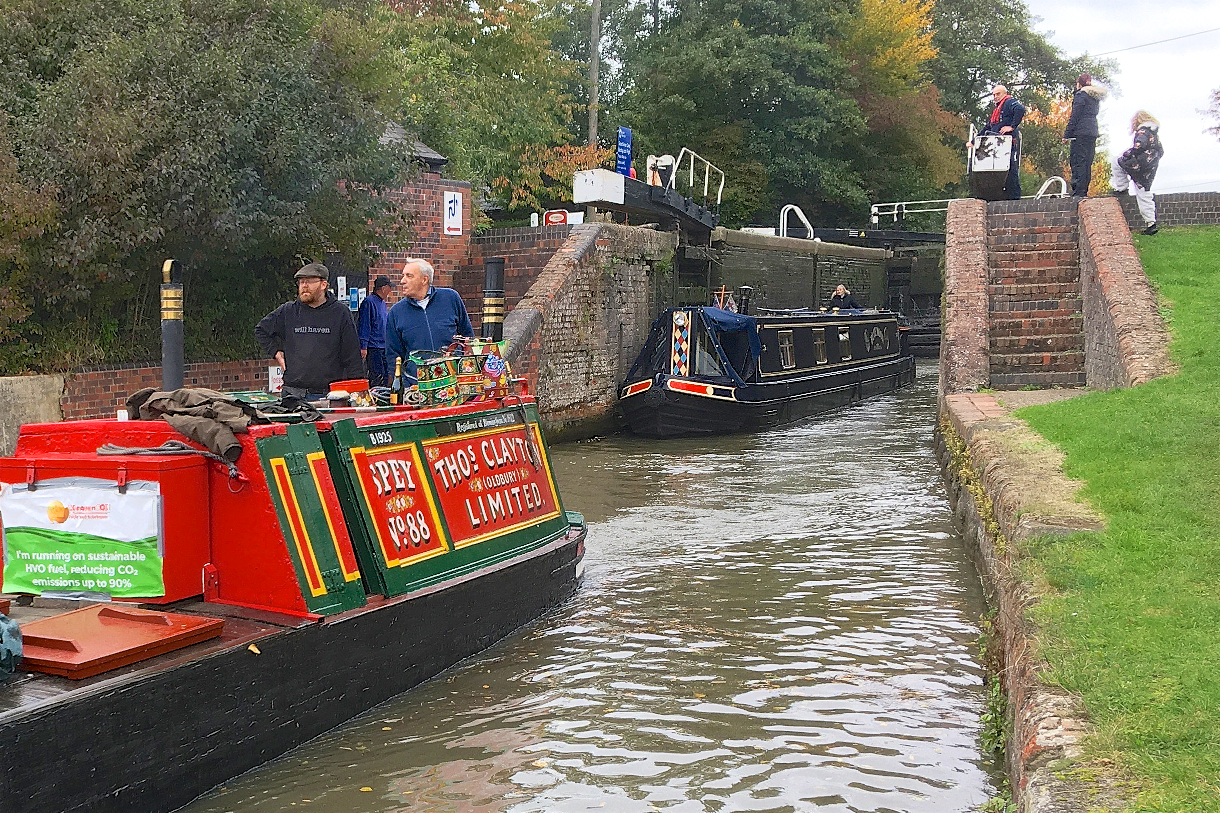
“Hydrotreated Vegetable Oil (HVO) stands out as a viable, cleaner alternative to diesel, offering up to 90% reduction in carbon emissions and compatibility with existing engines. The fact is that without fiscal incentives or infrastructure investment, its adoption remains limited. This inaction not only stalls our progress towards net zero but also does not help the livelihoods of 133,000 individuals employed within the sector.
“The Government’s apparent failure to invest sensibly undermines its own environmental commitments and neglects the potential of our waterways to lead in sustainable transport.
“Substantial increases in investment in infrastructure were announced, but the missing piece of the puzzle is delivery.”
The UK’s rivers and canals are home to thousands of boats, from leisure cruisers to working barges delivering freight. They are also vital green-blue corridors, enjoyed by millions of walkers, cyclists, and nature lovers. However, most boats still rely on fossil fuels. IWA wants boating to be more sustainable and even though the current overall contribution to UK carbon emissions from boats is very small, we want to help reduce emissions on the waterways.
This is why IWA’s Sustainable Boating and Freight Groups has submitted a representation to the Treasury, focusing on the need to review the supply and taxation of alternative fuels.
Why Change is Needed
Environmental Benefits Moving towards cleaner energy will help protect wildlife and reduce pollution.
Economic Impact Our waterways support over 133,000 jobs and contribute billions to the UK economy.
Health & Wellbeing Active use of canals and rivers improves public health, saving the NHS over £1 billion annually due to the health benefits of active waterway use
Challenges to Greener Boating
While new boats are being built with electric or hybrid engines, most existing boats still run on diesel. Alternative fuels like Hydrotreated Vegetable Oil (HVO) are cleaner but remain stubbornly expensive and difficult to access. Bankside charging infrastructure for electric boats are also limited.
What Needs to Happen?
To make sustainable boating a reality, we are calling for: ✔ Affordable, cleaner fuel Tax incentives and better availability of HVO fuel. ✔ More charging points Investment in bankside charging for electric and hybrid boats. ✔ Joined-up government support A clear strategy that helps boaters transition to net zero without unnecessary cost and complexity.
The case for government action has only grown. By simplifying the fuel supply landscape, investing in infrastructure, and ensuring a coordinated policy approach, the Government can bring in a fair and practical transition towards net zero for leisure and commercial inland boating.
In the cause of sustainable boating, many boats and boaters are moving away from fossil fuels, like diesel, gas and solid fuel, towards electricity, both to propel the boat and for domestic purposes.
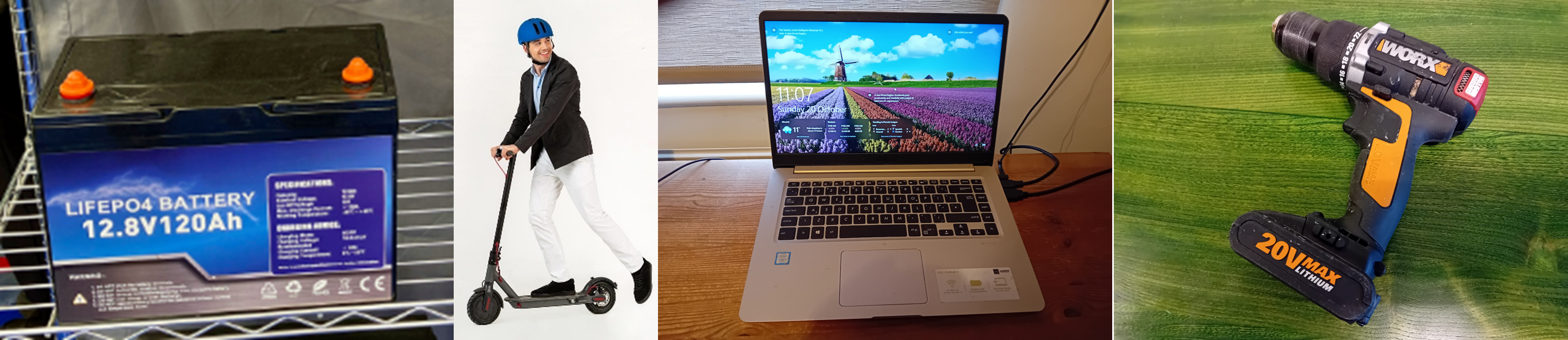
One result of this is the increasing use of new technology batteries on boats, usually based on lithium chemistry. These may be installed in your boat or be part of portable appliances and devices brought on board.
Bowman Bradley, chair of the Sustainable Boating Group said “Whilst these new battery technologies bring much benefit, we are all becoming aware of the hazards that can result if they are damaged or used incorrectly. Many of these hazards exist whether we are afloat or onshore, but some are specific to boats and boaters. Whether you have realised it or not, you almost certainly have lithium chemistry batteries somewhere on your boat, even if only in your mobile phone, and, of course, the larger the battery the greater the potential hazard.“
The Boat Safety Scheme has published comprehensive information regarding lithium-ion battery safety on boats and IWA encourages all boaters to read it at:
The Group’s objective is to make ‘subsidised’ HVO readily available, at an affordable price to ALL recreational boaters and not just limited to the inland waterways (Category A, B and non-tidal Category C waters, as designated by Marine Shipping Notice No 137) – as is currently the case. At present craft operating in tidal waters cannot benefit from Road Transport Fuel Certificates (RTFCs) two of which are applied to every litre of HVO sold to qualifying craft. Their value varies but they are currently worth £0.17 each, so a litre of HVO effectively attracts ‘subsidy’ of £0.34.
Volatility in pricing is a real concern and does nothing to encourage boatyards and marinas to stock the fuel. In early April 2024, the wholesale price of HVO was only £0.12 (12%) greater than gas oil (red diesel) per litre, but by early May that differential was more like 50%. This is believed to be largely down to fluctuations in commodity markets as fuel prices themselves vary, alongside the raw materials (or feedstock) which are quite separately governed by the agricultural commodity market.
Manipulating the value of an RTFC would, in theory, represent a government ‘device’ for controlling this volatility but with their current low value there is limited room for (pricing) manoeuvre. Two years ago an RTFC was worth £0.42 so, with an effective subsidy of £0.84 attached to each litre of HVO sold, there was ample room to make an external impact. Those in the fuel industry are therefore suggesting that the time has come to revisit Hydrocarbon Oil Duties Act 1979 – the Act that laid down our current fuel duty mechanisms: https://www.gov.uk/hmrc-internal-manuals/oils-technical-manual/hcoteg31000.
The HVO Joint Working Group is currently building a case for RTFC application to all recreational boating around demonstrating that the consumption of diesel fuel (and potentially, HVO should it be made affordable) is extremely small and will therefore have little effect on revenue for HMRC. In addition, we are pointing out that this sector has few other alternatives to decarbonising as the biofuels allocated to both the Coastal and Deep Sea Maritime sectors are inappropriate for recreational boat users.
Furthermore, the sea-going recreational sector depends upon reliable fuelling of their diesel engines, which may well still have a long life ahead of them, making scrapping an environmentally undesirable, unrealistic and an extremely expensive option. The emphasis on ‘reliable’ being a reference to problems with ‘diesel bug’ (and associated mechanical issues) exacerbated by the FAME content of mineral diesel on sale in marinas and boatyards.
HVO sold in the UK is currently supplied by Neste and manufactured in Rotterdam. It is shipped to Stanlow (supplying Crown Oil and it’s agents and subsidiaries) and to Dagenham from where it is distributed by Certas. It has been mooted that with the refinery element of Grangemouth closing down, Neste (or one of its competitors) should be encouraged to establish an UK HVO manufacturing plant on the site.
Finally, taking the bigger picture, the limiting of RTFC-eligibility to vessels plying Category A, B and non-tidal Category C waters is having a negative environmental impact on commercial carrying on the inland waterways, where many craft are transporting bulk cargoes, on tidal rivers into UK towns and cities, where air quality is at a premium. The Rivers Thames and Medway being good examples as, indeed, could be the Rivers Clyde and Tay.
Not only is HVO 90% carbon neutral, it’s polluting nitrogen oxides and particulate emissions are substantially reduced, so there are consequently significant health benefits (apart from the obvious carbon reduction) to be gained where water-borne traffic interfaces with dense populations.
The Department for Transport has told IWA that it intends to put out a Call for Evidence around maritime biofuel use, but as yet the Department has offered no time scales. To this end, the Group’s energies are predominantly focused on establishing usage data and general fact gathering in the belief that further, individual approaches to the Department, will only be referred to this upcoming consultation process.
As COP26 begins in Glasgow, we are celebrating the success of our recent trial of Hydrotreated Vegetable Oil (HVO) in boats. A cross-section of the existing fleet on the inland waterways network have been using the fuel for propulsion, domestic use and heating. These boats include those with relatively modern diesel engines as well as older, more traditional engines and even a few historic boats.
HVO Trial in boats
This trial, sponsored by Crown Oils, has come about thanks to our IWA Sustainable Boating Group which was set up to explore ways of ensuring that the inland waterways meet the Government’s target of zero carbon emissions by 2050.
There are over 80,000 powered craft on the network. We are well aware that a viable alternative to diesel fuel needs to be found to reach net zero targets. HVO is a second generation biofuel which appears to have all of the necessary requirements going for it.
For example:
it mixes well with other diesel fuels
is already approved by most engine manufacturers
has none of the diesel bug issues that have plagued first-generation biodiesel
is stable when stored
remains free flowing to -25°C
brings a 10% drop in fuel consumption
The feedback from IWA members who are trialling this new fuel has been overwhelmingly positive. HVO is indeed a viable alternative to diesel fuel. It is also a straight drop-in replacement compatible with fuel that is already in a boat’s tank.
HVO is 90%+ carbon neutral
As well as being 90%+ carbon neutral, there is no need to change the boat’s means of propulsion or to modify the existing engine in any way. This means there is no requirement for an engine upgrade or any kind of trade-in. So, all diesel engines powering today’s inland waterways craft can easily become nearly carbon neutral overnight, simply by changing their fuel to HVO.
Domestic use and Heating
This is all very well and good for propulsion but what about domestic use such as cooking and heating? In these trials, boaters discovered that diesel-fuelled domestic devices were happy to operate on HVO. Specifically, they reported a cleaner burn with reduced fumes and smoke and less cleaning required. The lack of smoke has been a commonly noted benefit as well as quieter engine noise.
So what is the catch?
So what is the catch? At this time, the two main issues with HVO are a lack of availability and taxation issues affecting the price. The first of these will hopefully be resolved as demand increases. Once the market has been established, supply will inevitably increase and in turn, the price may drop. However, we will call on the Government to introduce tax cuts on HVO to make it more affordable, whilst appealing for boaters to switch their fuel source.
Additionally, HVO, like all biodiesels, is manufactured from vegetable oils. Currently, the HVO being supplied to the inland waterways is manufactured exclusively from waste and recycled oils. This means that it does not adversely affect the world supply of food and food oils. However, we recognise that as demand increases there is a risk that this will change and so we will work to ensure that it doesn’t.
Fortunately, the use of diesel on the inland waterways is relatively small and is likely to decrease as boats move to electric drive.
Protecting the unique waterways environment
Jonathan Mosse who leads on alternative fuels for the IWA Sustainable Boating Group says, “While we all agree that electric drives in one form or another are most certainly the future for inland waterway craft, these are still a long way off for most of the existing fleet. For the foreseeable future, the reality is that the vast majority of engines and generators will still be diesel-powered. We need to urgently find a way to change to a more sustainable fuel for our boats. This is something that not only reduces carbon emissions but also protects the unique waterways environment. We believe we have found the answer in HVO and the time to change is now.”
Bowman Bradley, Chair of the Group, adds “We are pleased that a small number of fuel suppliers are now stocking HVO. We are encouraging more boatyards and marinas to do so. Individual boat owners can assist this more widespread supply by requesting HVO wherever they fill up.”
Hybrid electric drives and, ultimately, hydrogen-powered fuel cells will undoubtedly become the standard specification for new boats in the years ahead. In the meantime, however, IWA has been puzzling over how to green the diesel-driven boats currently on our inland waterways. These engines may well have a useful life of up to 40 years, making their replacement with a brand-new hybrid drive both unnecessary and uneconomic for the average boater.
Dino-Diesel Replacement
The solution IWA has identified, in tandem with other organisations and commercial operators, is to replace fossil fuel diesel (often referred to as dino-diesel) with a carbon-neutral alternative. Initially this was biodiesel produced by a process known as transesterification, using methanol and sodium hydroxide (or similar) as a catalyst. But these two components mean that the fuel is, in fact, only about 87% carbon neutral. This product has become known as first generation biodiesel. For a number of reasons, it is generally considered totally unsuitable for marine use.
Fortunately, early this century the Finns starting developing a process for converting animal fats and waste vegetable oil into diesel fuel, employing hydrogen. Today this alternative, known as second generation biofuel, is becoming readily available and is already in regular commercial marine use. More than 90% carbon neutral, and with none of the shortcomings displayed by its first generation cousin, it looks like being the drop-in replacement fuel for those keen to run their existing diesel engines into a carbon-neutral future.
HVO perks FOR BOATERS
Hydrotreated Vegetable Oil (HVO) carries a wide range of endorsements from Vetus to Volvo, Kubota to Yanmar. It is completely stable when stored (up to ten years), remains free-flowing down to at least -25°C and is not hygroscopic (attracts water). In other words, unlike first generation biodiesel, it does not promote the development and growth of diesel bug. What’s more, it is 100% miscible, meaning that it happily mixes with all other diesel fuels.
Strict tracing of the feedstock ensures that HVO is made from waste oils. It is not directly produced on land otherwise reserved for growing food. It also boasts up to 30% lower nitrogen oxide outputs – and the potential to reduce particulate emissions by nearly 90%. Combined with a higher cetane value, it’s superior in every way to dino-diesel.
IWA has started a conversation with the Canal & River Trust (soon to be cascaded down through other Association of Inland Navigation Authorities members) to explore the place that HVO will occupy in their Position Paper on Sustainable Boating. As with all these things, price and availability are everything, and currently outlets for the fuel are fairly limited.
HVO campaigning
Going forward, IWA will be pressing for greater use of HVO on our waterways. You can read more about our vision for sustainable propulsion, which has already gained considerable respect and traction across the inland waterways.
Availability of the fuel is still limited in the UK, and IWA has been at the forefront of its promotion on the inland waterways. We are working with fuel companies, existing users and potential outlets to raise its overall profile. This follows IWA trials with HVO on boats, encompassing propulsion through to heating and cooking. So far absolutely no problems have been encountered and users often report a cleaner burn with lower visible emissions.
Fuel-boat
One of the most exciting initiatives on the HVO front is the fuel-boat Barnet. It has just started trading on London waterways following an extensive refit. With the exception of the Thames tideway, Barnet is the first fuel-boat to sell HVO. The London Waterbus Company will be among its new customers.
nb Barnet – HVO fuel boat
The initiative is the brainchild of Lee Wilshire, director of Waterway Projects Ltd. Lee also operates a boatyard just north of Stonebridge Lock on the Lee & Stort.
For those keen to support a sustainable future it’s worth noting that the fuel will have seen zero road miles since leaving the refinery, probably in Finland. Instead, it travels by ship to the Thameside Stolthaven Terminal and thence by bunker-barge Dispenser up Bow Creek, before being pumped into Barnet.
GPS Marine services largely operates Dispenser to supply its own tideway fleet of tugs and workboats. They have been using HVO across the board without problems in a wide range of propulsion units and ancillary engines, including Lister-powered generator sets. The CEO, John Spencer, is also a member of the IWA HVO sub-group.
Find out more
Together with the Commercial Boat Owners Association, IWA will be campaigning to level the price playing field between mineral diesel and HVO, and encouraging the general uptake of this fuel on the inland waterways. To this end, a group of experts and current users of the fuel has been established. Among other ‘duties’, its members are available to answer general queries about biofuels in a boating context. Contact jonathan.mosse@waterways.org.uk or find out more about sustainable boating.
Our vision for sustainable boating outlines how developments in more environmentally friendly propulsion can help the inland waterways meet the UK’s zero carbon commitments. The All Party Parliamentary Group (APPG) for the Waterways learned more about the subject of sustainable propulsion on 10th November. MPs and Lords were joined at the meeting by IWA, boating organisations, navigation authorities and other stakeholders, to hear the latest thinking. A lively discussion followed four expert presentations and concluded when Michael Fabricant MP, Chair of the Group, committed to write to the Chancellor on behalf of the APPGW. His letter (see below) focuses on 3 key issues:
the need to invest in infrastructure to deliver more electric charging points across the system;
a proposed boat engine scrappage scheme to encourage conversion of existing boats; and
a move towards greater distribution and use of biofuels. This step is favoured, over the current proposal by HMRC and HM Treasury to move from red diesel to white for inland waterways craft.
the Presentations
First off, Bowman Bradley, chair of IWA’s Sustainable Propulsion Group, presented IWA’s viewpoint. He pointed out that policy makers will need to develop a legislative framework to meet the sector’s vision. For instance, Government would need to invest in a recharging infrastructure, to include electric charging points, hydrogen technologies as well as provide more support for biofuels.
Second up, Jonathan Collins of Cadent Gas highlighted the growing importance and developments of hydrogen-based technologies in reducing emissions from the residential, transport and maritime sector. Philip Whiffin from the University of Warwick demonstrated that the low energy and low power requirements of the majority of canal-based pleasure craft, made battery-based solutions feasible and cost effective as replacements for traditional hydrocarbon-based engines. Finally, the Group also heard about a scheme led by Oxfordshire County Council. Marine engine manufacturers, electric vehicle and infrastructure providers and other user and stakeholder groups are working together on a feasibility study to install electric charging points on the Oxford Canal.
The overwhelming proportion of craft currently navigating our inland waterways are propelled by fossil fuels, mainly diesel but in many cases petrol. While their overall contribution to UK carbon emissions is small, it will inevitably come under scrutiny in the near future and, in any case, we also have a social responsibility to ‘do our bit’. While there are many steps boaters can take right now to reduce carbon emissions from their craft, such as not running engines at locks, the thrust of this feature is to paint a picture of what sustainable propulsion on our canals and rivers might look like in the coming decades. Technology will inevitably develop, possibly in ways we do not envisage, but IWA’s focus is on technologies that are currently available or close to being available rather than ‘blue sky’ thinking.
There are many stakeholders in the inland waterways world, from boaters, navigation authorities, boat-builders and marinas, to hire companies, chandlers, marine surveyors, BSS inspectors and more. Most will be required to make a significant (to them) investment if we are to resolve the issue. It is hoped that our vision for the future, if ultimately validated, will allow these groups to move forward with a degree of confidence.
When we talk about the boats themselves, we’re mainly referring to steel, diesel-powered canal craft, both narrow and wide-beam. The reason for this is the large number in the existing fleet and within the IWA membership, as well as the similarities of the basic design. However, the principles established will be applicable in some cases to other types of craft, including river boats, but not all.
This is not a technical feature, but is assembled from my technical knowledge (limited), the useful discussions that have taken place over the last month or two with IWA colleagues, and some feedback from the ‘trade’. Hopefully it will prompt others with specialist knowledge or bright ideas to do further work to underline or amend the vision. The problems are largely economic and logistical rather than technical.
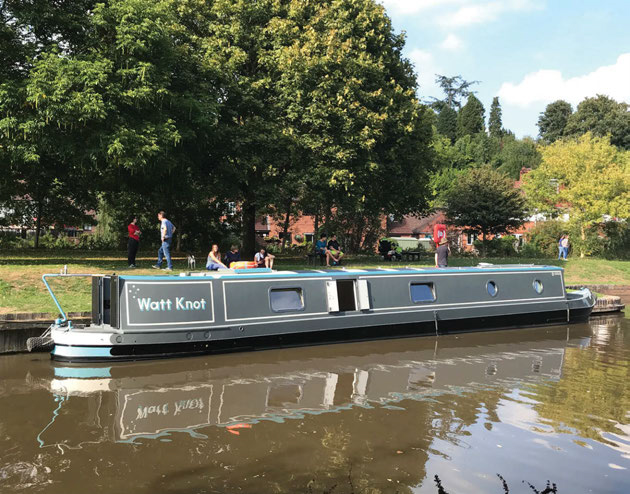
Photo: Leading the way: Ortomarine’s ‘Watt Knot’ boasts diesel-electric propulsion with a 775Ah 48V battery bank and eight 160W semi-flexible solar panels fixed flush to the roof.
New-build boats
It seems extremely likely that the canal boat of the future will be driven by an electric motor. The technology exists and is mature. Quite a few boats have been built over the years with electric motors and they work. Motor vehicle technology will lead development.
As with road vehicles, the problem is how to carry the energy around. Hydrocarbon liquids are a very efficient and effective method of transporting energy. There are two current solutions, both of which are being actively developed for road and rail vehicles:
1) Batteries:
There are very few issues installing a battery bank in a narrowboat. Weight is not a problem and space is more readily available than in a car. Power requirements are well within the range of the current technology and less than most road cars. The main drawback of batteries is range and recharge times. Both will improve. Batteries can be recharged using a shore connection, by onboard photovoltaic cells or small wind turbines. PV cells and wind turbines, given the current state of development, will not be able to provide all the energy required. However, PV cells are developing rapidly. Batteries can also be charged by hydrogen fuel cells, see below.
Batteries are, of course, only ‘green’ if the electricity used to charge them is ‘green’, which at the moment is only partly true. This is a national problem and will not be addressed here. There are also environmental issues around the manufacture, recycling and disposal of batteries.
2) Hydrogen:
Hydrogen is an efficient method of transporting energy but not as good as hydrocarbon liquids. The hydrogen is converted into electricity in a fuel cell. The technology is well developed (and will develop further) and the size of existing cells is within that required to propel a narrowboat. Hydrogen, while potentially dangerous, can be engineered, in my opinion, to be no more hazardous than a petrol system. It will never be as intrinsically safe as a diesel system. Yet, California has 10,000 hydrogen cars and they are commercially available worldwide. Germany has hydrogen trains and they will be on the UK rail system too in a year or so. I assume they will be allowed in tunnels! Hydrogen engineering is well understood and mature.
Currently hydrogen is not ‘green’ as it is mainly manufactured from hydrocarbon liquids and gases. This could be made ‘semi-green’ with CO2 capture. It can also be manufactured from ‘green’ electricity if available in sufficient quantity. Again, this is a national problem not confined to the waterways.
IWA’s current vision for new-build narrowboats of the future
Powered by an electric motor.
Equipped with a battery bank large enough for canal cruising at normal speed.
Equipped with a hydrogen tank and a fuel cell powerful enough for canal cruising at normal speed.
Both would be used when high power (stopping, starting, manoeuvring) is required.
Battery charging by shore connection, onboard PV cells or the fuel cell.
The combination of battery and hydrogen fuel cell gives flexibility and reduces the cost of the total installation because of the reduced size of the fuel cell.
The cost would currently be higher than a diesel set-up, but this would come down with time.
Batteries would be adequate for short trips.
The hydrogen system would give range and fast refuelling capability.
An electronic management system would be required, but this technology is available.
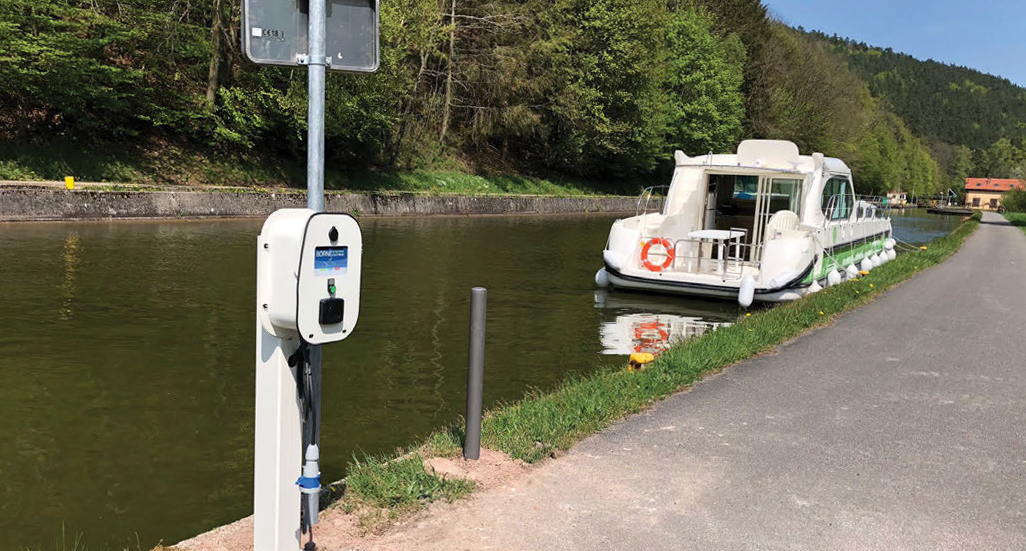
Photo: ‘Tout vert’ and it only takes two hours to charge! France is well ahead of the UK network with electric hire-boats and newly installed charging infrastructure on some waterways.
Existing craft
Boats last a long time, as do their diesel engines. Owners, especially those with few engine hours a year, will be reluctant to convert from diesel to electric drive unless required by legislation, which is unlikely. It therefore follows that most of the existing diesel fleet will be with us for many years to come.
Given that we don’t wish these boats to be made obsolete by legislation or owners being forced into expensive conversions, we need to find a way of significantly reducing the environmental impact of the existing diesel engine.
One possibility is to use biodiesel. While not entirely ‘green’ (its manufacture requires use of a small quantity of hydrocarbon) it is a significant improvement on mineral diesel. Using biodiesel at 100% concentration has a number of disadvantages and problems. On our inland waterways, however, we can probably mitigate most:
1) Biodiesel is manufactured from vegetable oil, and almost any vegetable oil can be used. The most common is palm oil, which gives a biodiesel that thickens in temperatures such as we experience during UK winters. This isn’t a problem when used at low percentages in mineral diesel, as in current road diesel, but it does cause issues at 100%, particularly when fuel lies unused in tanks for a significant period. Fortunately, proprietary biodiesels (using a blend of oils) are now being produced which can resist northern European winter temperatures.
2) Pure biodiesel burns at a slower rate than mineral diesel and hence high revving, turbo-charged road diesels can struggle on 100% biodiesel. This is not a problem when blended at low percentages into mineral diesel. Most, if not all, canal-boat engines are low-revving and not turbo-charged, and so we would not expect this to be a problem for the majority of craft.
3) The rubber seals and similar components of some canal-craft engines, mainly in fuel systems, may not be fully resistant to 100% biodiesel. This can be corrected – at a cost. Work would need to be done to identify and convert these engines, but it is believed that most modern ones are biodiesel resistant.
4) Biodiesel is currently, and perhaps inherently, more expensive than mineral diesel.
5) Biodiesel is manufactured from vegetable oils, and its production normally uses land which could otherwise be given over to food. In most cases, the oil itself is a foodstuff. For this reason biodiesel has not become the universal solution to road vehicles emissions. Inland waterway use, however, would be relatively small in comparison to cars etc, and so could be acceptable.
Refuelling and recharging
Assuming existing boats can be converted to biodiesel, the current refuelling infrastructure could be used.
Future builds, however, will require more investment, whether we are considering an electric recharging infrastructure or a hydrogen refuelling one. At the moment we’re in a catch-22 situation: commercial operators will not invest until the boats to use it exist, and private owners won’t buy the boats until the infrastructure is available. It is unlikely that Government will stump up the cash, as is happening, to some extent, with road transport.
An electric charging infrastructure does, of course, exist in most marinas and this will be adequate for slow charging of boats moored for significant periods. It would require upgrading for faster charging. This could be adequate for most ‘hybrid’ (hydrogen/electric) boats as envisaged earlier. It is difficult to imagine every visitor mooring on the system being equipped with charging points.
Hydrogen refuelling stations are more problematic. None exists on the system as far as we know. They will also need a distribution system, probably tankers, to service them. They will be more costly than red diesel pumps and tanks, but the technology is available. Work is currently being done to develop hydrogen infrastructure in the UK, both for road/rail transport and for domestic use, but this is some way off. The natural gas industry is actively looking at using the gas grid to distribute hydrogen for domestic use. This may ultimately develop into a partial solution.
It may also be possible to develop a network of hydrogen refuelling stations around hire-fleet bases, if enough hire companies could be persuaded to use hydrogen boats. Hire-boats are typically refuelled at base, sent out for one or two weeks and refuelled at the same base on their return. Hire-boats are also replaced at relatively frequent intervals, compared with private boats. This combination could make installing a hydrogen refuelling station at a hire-base reasonably economical, with a hydrogen fleet being available in a short period of time.
If sufficient bases could be ‘converted’ this would provide a basic network for private boaters to use and hence encourage the uptake of hydrogen boats, eventually leading to further development of the hydrogen refuelling infrastructure. This would only apply to the central part of the system, however, where hire bases are common, and leave a problem for outlying waterways, at least initially.
Have your say
This article is not intended to be a final solution to the problem of sustainable boating on our inland waterways. It tries to paint a picture of where we might go and is intended to stimulate discussion, development and the generation of new ideas. Some may disagree with parts of it.
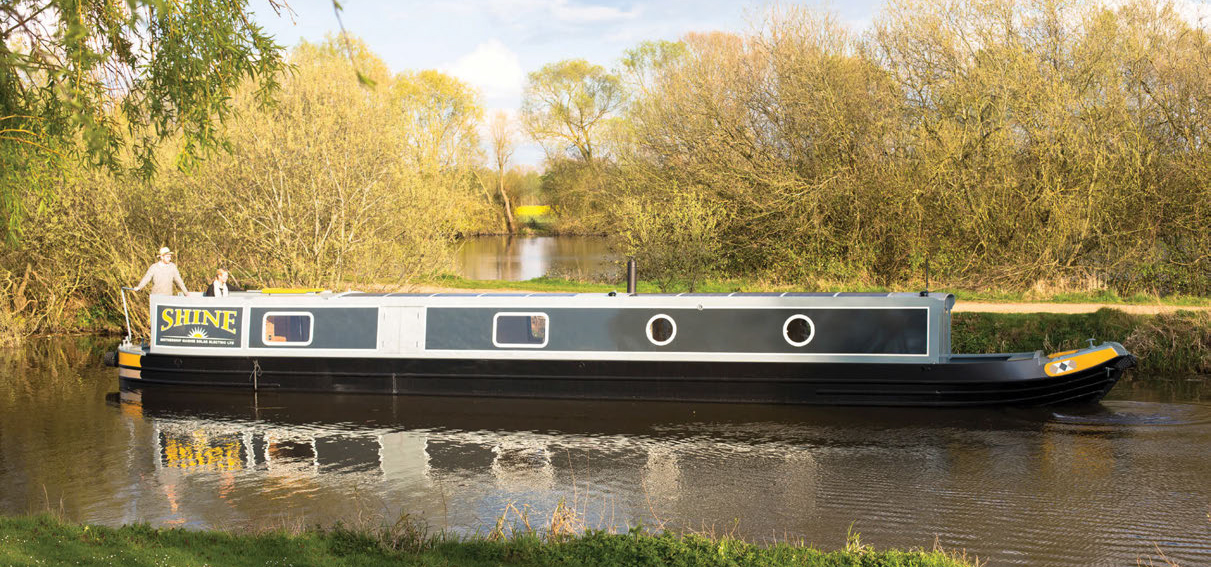
Photo top: Mothership Marine’s 57ft semi-trad stern with 10kW electric drive and 2kW of solar panels was launched last year. It’s not entirely electric – a 7kW ‘range-extending’ generator is also on board – but it’s not bad!