Tag: Navigable

  • IWA Navigation Committee News

    IWA Navigation Committee News

    In order to make IWA’s navigation-related campaigning work more visible, a Navigation section will be included in future editions of the Bulletin email alongside the Restoration and Environment sections.

    1. Water resources

    The Sustainability & Environment Group now leads in the area of water resources for IWA, but there are many aspects relevant to navigation.

    • Water Abstraction

    Navigation Committee has been aware for some time of the view expressed by CRT Chief Executive Campbell Robb that the forthcoming renewal of CRT’s abstraction licences issued by the Environment Agency (EA) represents the single biggest threat to the canal network. The reason for this is partly the effort and cost required to renew them, but primarily the potential risk to water supplies from onerous conditions being imposed such as reduced abstraction or the requirement for fish screening. The latter has emerged as a live issue, firstly on the Monmouthshire, Brecon & Abergavenny Canals where feeds from rivers and streams have been taken out of use in preference to the installation and maintenance of very fine screens. More recently, restricted opening hours have been imposed at Diglis Locks at the junction of the Worcester & Birmingham Canal with the River Severn, because of restrictions on the use of back-pumping without fish screening being implemented. CRT’s Head of Boating and Customer Service described this in Navigation Committee’s recent meeting as a very concerning situation which will be replicated elsewhere across the network and will impose millions of pounds of extra cost on CRT – costs which were of course not foreseen when CRT was established as a charity.

    It has become apparent through these events and through consultation documents that EA appears to be protecting river environments over other aquatic environments such as canals in water abstraction, despite canals being long-standing legitimate and necessary abstractors of water which provide environmental benefits in their own right. This point was raised in Navigation Committee’s recent liaison meeting with Defra’s inland waterways team, who were sympathetic to the view and said they had been in discussion with CRT for several years. It appears that there may be an important role for IWA in pressing CRT’s case that canal water supplies need to be protected. The point was explicitly included in IWA’s response to the latest EA consultation, the Consultation on Significant Water Management Issues, which was submitted on 18th May.

    • Water Retention

    A draft document setting out IWA’s proposals for improving the security of water supply for navigation on CRT’s canal system had been discussed at the last Navigation Committee meeting and the content agreed. The format was subsequently developed and the document sent to the CRT National Boating Manager with a formal response for feedback from the National Hydrology Manager and the Operations Performance Director.

    • Water Transfer

    Navigation Committee noted that IWA’s response to the Grand Union Canal Transfer Phase Two Public Consultation had been led by Graham Heald and submitted on 30th March and a news item had been published. IWA called for a more comprehensive and transparent demonstration of the engineering of the canal section of the scheme to show how the water flows would be managed and controlled, both to ensure navigation within the transfer length and to maintain or preferably enhance water supplies to the wider canal network to London, Oxford, Northampton, Warwick, Leicester and Shardlow. IWA Northampton Branch also submitted a response focusing particularly on local points.

    • CRT work on Water Resources

    The CRT Council Boater Representatives group had a special meeting on water resources on 20th April, attended by Sue O’Hare as IWA nominee on Council and Graham Heald by invitation.

    A report was provided on CRT’s incident review of the 2025 drought. It had been found that knowledge transfer and collaboration across the organisation had worked well, together with strong leadership roles. Areas for improvement included asset reliability, data and water level and flow measuring (SCADA) limitations, and communications (where it had proved challenging to achieve the right balance between certainty and comprehensiveness). A positive outcome had been the addition of new roles in the National Hydrology team. A webpage of drought FAQs has been produced.

    In terms of the outlook for 2026, the wet winter had helped to replenish reservoirs but it had been followed by a dry spring. The position of reservoir work had improved over last year with some works being finished, meaning that Toddbrook Reservoir could be refilled and brought back into use and capacity restrictions on some other reservoirs lifted.

    A revised Water Resources Strategy was already overdue and still in preparation, with CRT seeking clarity from EA over the Water Resources National Framework which imposes new and unique expectations on CRT.

    • Condition of the waterways

    The two major breaches (the Llangollen Canal at Whitchurch and the Bridgewater Canal at Little Bollington) continue to cause disruption for both businesses and individual boaters. CRT appears to be making rapid progress at Whitchurch, but despite repeated assurances that the Bridgewater Canal Company still intends to reopen its canal by the end of 2026 there is still no visible work being carried out yet. More positive news was the reopening of the Staffordshire & Worcestershire Canal ahead of schedule after the repair of the collapsed bywash at Penkridge.

    Other issues discussed around the network included the lack of announcements about repairs to the Anderton Boat Lift, the water level problems at New Islington Marina in Manchester, the ongoing closure of the Tame Valley Canal at Spouthouse Embankment, the problems at Keadby Lock and the Vazon sliding rail bridge on the Stainforth & Keadby Canal, the deteriorating condition of locks on the Bridgwater & Taunton Canal, the closure of the Avon Navigation for the rebuilding of Nafford Lock, the reopening of Baits Bite Lock on the River Cam and Salter’s Lode Lock on the Middle Level Navigations following work on the guillotine gates.

    It is very noticeable that CRT is now talking of difficult conversations about less well-used waterways, such as the Dee Branch which it has said is effectively permanently closed. Developments elsewhere are equally concerning. The Great Ouse Boating Association views the decline in the condition of EA assets on the Great Ouse as having reached a critical point and will be highlighting this to politicians in its joint campaign cruise with Fund Britain’s Waterways in July. The Basingstoke Canal has recently lost its manager and the position will not be filled.

    • Closure of CRT Customer Service Facilities (CSFs)

    Following a consultation with boaters in 2022 on the minimum standard for CSFs, CRT announced that showers, toilets and laundry facilities would be closed across the network from November 2025 and invited expressions of interest from other organisations in running them. Navigation Committee was concerned at the time that the closures appeared rushed and it was unclear that the published process had been followed, and requested that CRT answer a set of questions. Since then, there has been widespread dissatisfaction and discussion on social media, and Navigation Committee received a specific enquiry highlighting the impact in areas where many boaters have small cruisers in which it is impossible to install usable facilities. A response from CRT was still awaited but a specific commitment was made in the recent Navigation Committee meeting with the National Boating Team.

    OTHER POINTS

    • CRT’s Independent Commission on the Future of Boat Licensing

    As previously reported, a small subgroup of Navigation Committee is taking thoughts forward so that IWA is ready to respond to further consultations at the appropriate time. CRT has recently appointed a Boating Transformation Programme Manager, Alice Hamilton. Alice will lead the work on communications and engagement. The plan is for a pre-consultation with national boating organisations followed by a 3-month consultation over summer, during which CRT is hoping for face-to-face contact with boaters as well as online.

    • Residential boating/mooring

    The All Party Parliamentary Group for the Waterways meeting on 14th April explored residential boating, with presentations by the Residential Boat Owners Association and the National Bargee Travellers Association. The complexity of the subject has since been highlighted in mainstream media after it became known that the Leader of the Green Party, Zack Polanski, may not have paid Council Tax that was due.

    • Fishing matches and visitor moorings

    A CRT stoppage notice recently stated that a fishing match was to be held right across the visitor moorings on the Trent & Mersey Canal in Rugeley, which are intensively used by boaters to visit the town centre shops. The issue was resolved following contact by Helen Whitehouse with the CRT West Midlands Regional Director, but the general principle was raised by Navigation Committee in its meeting with the National Boating Team. CRT confirmed that the principle agreed by British Waterways of not allowing fishing matches to be held over designated visitor moorings still stands, and that the stoppage notice in question had used the wrong template and given an unintended message.

    • Boat Safety Scheme consultation on Smoke Alarms

    IWA’s response to the BSS’s consultation was submitted on 22nd April, in support of introducing a new mandatory safety standard for the correct number of suitable working smoke alarm(s) in good condition.

    • Skippers Guide to Trent Falls

    The Skippers Guide to the Passage Planning and Transit of Trent Falls produced by Brian Sharples and endorsed by Navigation Committee has been published here.

    • Decarbonisation of the Inland Waterways

    Navigation Committee noted the adoption of the Sustainable Boating Group Policy for the Decarbonisation of the UK Inland Waterways Leisure Fleet  by trustees as an IWA policy. It has been submitted to the Department for Transport as part of their Call for Evidence on the Decarbonisation of Smaller Vessels.

    • Environment Agency National Waterways Forum and National Waterways Advisory Group meeting 25th March (attended by Sue O’Hare as IWA nominee)

    The increased focus, importance and funding being given to navigation by EA is good to see, though there is still much to be done. EA’s CEO Philip Duffy has directly committed to improving the navigation service, which has resulted in new posts and transformation programmes as well as increased funding.

    • Resource funding £21m for 2026/27 (up from £16m last year and £13m the year before)
    • Capital funding £33m for 2026/27 (up from £25m in 2025/26)
    • This is the first year of a 3-year settlement, so in principle the same amount of Grant In Aid should be received for each of the next three years, albeit subject to change because of external pressures.

    Asset management is the first of the transformation programmes (Project Aurora) including harmonisation of the treatment of assets across EA and development of condition assessments harnessing data and digitisation. EA will be moving to Reliability Centred Maintenance, i.e. inspecting each asset as dictated by its reliability rather than at fixed intervals.

    Long-standing work on removing sunken and abandoned boats and on compliance is now coming to fruition. A mooring strategy and a commercial strategy are in development.

    A 20-year vision statement has been formally approved: “thriving, valued navigable waterways”. Next will be a 5-year strategy for the management of navigable waterways and associated assets, with four “ambitions”:

    • Open, reliable waterways
    • More financially sustainable
    • Modern, streamlined service
    • Adapt and innovate for the future

    The next step is the first dedicated director, Simon Hawkins, who will lead the navigation teams, and who started on 1st April (previously, navigation was split across directorates). However this positive news was subsequently tempered by the discovery that the Deputy Director Asset Operations Service, Lindsey Sayner, who has been chairing NWF meetings, has now been seconded to another organisation and the role has been taken over by Mark Ross, who is currently unknown to IWA.

    • Navigation Committee six-monthly meeting with Defra inland waterways team – 1st May

    As previously noted, the IWA Waterways Directory and the GIS files behind the map had been provided to a new member of the Defra team who is working to understand which waterways are managed by a navigation authority and which are unregulated. The data is being used for exploring access policy and ways of increasing access to unregulated waterways.

    The Defra team is still in discussion with CRT about the delivery mechanism for future grant funding and hopes to sign the grant agreement for 2027-2037 before the end of 2026. The additional £6.5m funding which was announced in February was said to have become available internally and was decided to be about the right amount to cover the additional costs because of climate change, hence it was provided as capital investment for dealing with the additional high cost of asset failures.

    • Navigation Committee liaison meeting with the CRT National Boating team – 13th May

    No further details have yet become available of CRT’s management restructuring beyond the announcements about the CRT top team by Campbell Robb in a video message to volunteers on 23rd April.

    Following a request by Navigation Committee, CRT is working on reinstating the total duration of unplanned stoppages as a KPI as well as the number.

    The Boater App is in development phase with MySociety and FixMyStreet, and is to be launched this year.

    CRT has temporarily taken over control and management of the wharf, facilities and moorings at Sherborne Wharf in Birmingham to ensure that boaters can continue to use them after the bankruptcy of Sherborne Wharf Ltd.

    Navigation Committee raised a complaint made about the substantial increase fees for events held on its property, but CRT reiterated that the policy is to cover costs and not to make a profit. Subsidy was no longer affordable.

    Forthcoming meetings

    • CRT National Boating Organisations meeting – Hatton, 10th June (Roger Stocker to represent IWA)
    • EA National Waterways Forum & National Waterways Advisory Group extraordinary meeting on national navigation strategy – 10th June (Sue O’Hare to represent IWA)
    • Navigation Committee online meeting – 8th July

    Sue O’Hare
    Chair of Navigation Committee
    25th May 2026

    [The photo shows the boaters facilities at Marsworth – by Alison Smedley]

    The report from the March 2026 Navigation Committee meeting is available here.

    The report from the January 2026 Navigation Committee meeting is available here.

    Reports from pre-2026 Navigation Committee meetings are available here.

  • IWA Navigation Committee News

    IWA Navigation Committee News

    In all 25 narrowboats including two former working pairs made the journey along the Walsall Canal to the basin, where they were welcomed by the Mayor of Walsall. The campaign cruise attracted a good deal of interest and was covered by ITV Central News and the Express & Star local paper. A press release was subsequently issued and is available here.

    Hazel Owen (National Chair of the Association of Waterways Cruising Clubs and Chair of FBW) gave an update on the Fund Britain’s Waterways campaign to Navigation Committee. Following this first FBW campaign cruise of 2026, other cruises were planned in London and on the Great Ouse alongside the main focus on north west waterways.

    Major discussion points included:

    1. Political lobbying

    The arrangements for the All Party Parliamentary Group (APPG) for the Waterways under the new Chair Bill Esterson MP were clarified and it was explained that representatives of organisations relevant to the matter in hand would be invited. It was agreed that all political parties should be approached for campaigning and lobbying purposes. The need for IWA to maintain a visible leadership role in the waterways sector through its campaigning was stressed.

    • Condition of the waterways

    Repairs of the two major breaches (the Llangollen Canal at Whitchurch and the Bridgewater Canal at Little Bollington) are expected to take most of 2026, although the Canal & River Trust (CRT) is making much faster and much more visible progress on the former than Peel L&P is on the latter. Both are having a substantial effect on hire boat companies, since the Llangollen Canal and the Cheshire Ring are very popular cruising routes. This is exacerbated by the collapsed bywash at Penkridge on the Staffordshire & Worcestershire Canal which severs the Four Counties Ring as well, though is scheduled to be reopened on 1st May.

    The Anderton Boat Lift between the River Weaver and the Trent & Mersey Canal is also scheduled to be closed all year. Fortunately CRT has managed to reopen Marsh Lock for booked passages, so the Weaver is no longer completely cut off from the rest of the network.

    In this light it is particularly pleasing to see major change starting in both CRT and the Environment Agency (EA) with the arrival of new senior management.

    The CRT Chair David Orr and CEO Campbell Robb have said that this needs to be a reset point, for both the way things are done and the way they are communicated. The Better Boating Plan has been expanded into a three-year Transforming the Boater Experience Programme, with a dedicated Programme Manager and a total budget allocation of £10m. CRT secured an additional one-off payment of £6.5m from Defra, reportedly as a result of starting to engage with government in a different way. The financial challenges are substantial though, and considerable work remains to be done to create a long-term sustainable plan with enough room for the substantial investment in the network that is needed.

    The EA CEO Philip Duffy has directly committed to improving the navigation service. The recent focus on navigation had already led to new roles including Deputy Directors for both Navigation Strategy and Navigation Operations. The National Waterways Forum meeting on 25th March heard that the first-ever dedicated director for navigation is shortly to be appointed, to bring together the navigation teams from different directorates. Several transformation programmes are under way, starting with asset management. A three-year settlement with increased resource and capital funding will start in 2026/27. A long period of work on compliance and enforcement is now coming to fruition, with well-publicised success in removing sunken and abandoned boats. Regular liaison meetings with CRT are being held at all levels, from quarterly meetings of Executive Directors to operational level. A statement from the River Thames Society on social media reported “a buoyant spirit in the [EA navigation] team… lots being done and many problems still to be tackled, but a positive mood running through the system”.

    • CRT’s Independent Commission on the Future of Boat Licensing

    As previously reported, a small subgroup of Navigation Committee is taking thoughts forward so that IWA is ready to respond to further consultations at the appropriate time. CRT is expecting to publish both its response to each of the 36 Commission recommendations and a timetable for engagement and consultation in May or June.

    • Residential boating and mooring

    The next meeting of the APPG is scheduled to be on Residential Boating, exploring issues affecting residential boating and moorings provision. Organisations with an interest in this area will be invited.

    • Water resources

    Water resources management continues to be a very significant topic, and although the Sustainability & Environment Group now leads in this area there are many aspects relevant to navigation.

    • IWA’s response to the Environment Agency consultation on Reserving Water Abstraction Rights was submitted in January and shared with CRT and the Wilts & Berks and Cotswolds Canals Trusts. It was also shared with Defra, with a cover note pointing out that IWA emphasises the need to protect long-established waterways infrastructure in its response, and is well aware of CRT’s concerns over the resource and cost implications of applying for its abstraction licences to be renewed, in addition to the possibility of onerous restrictions being imposed or even licences not being renewed. A summary article and link to the full response are available here.
    • IWA’s response to the consultation on proposed new Broad Oak Water reservoir in Kent was submitted in March, making the argument for protecting navigation on the Stour which has been hindered by eutrophication and siltation. A summary article and link to the full response are available here.
    • Navigation Committee agreed to pass the Environment Agency consultation on Significant Water Management Issues in River Basin Management Planning to the Sustainability & Environment Group, since the consultation is almost entirely related to environment, chemical and pollution issues.
    • Phil Sharpe had developed a draft document setting out IWA proposals for improving the security of water supply for navigation on CRT’s canal system. The document was agreed by Navigation Committee to be excellent and to be suitable for sending to CRT at CEO level in order to trigger discussions and action.
    • Graham Heald (IWA Water Lead) and Phil Sharpe have been progressing the IWA response to the Grand Union Canal Transfer Project Phase Two Public Consultation. Phil reported on the meeting with CRT and Affinity Water representatives the previous day. It had become apparent that much of the necessary technical work had already been done but was not documented in the consultation documents. This will be the main thrust of IWA’s response.

    OTHER POINTS

    • Navigation Committee agreed to recommend the reappointment of Sue O’Hare as a Member on the expiry of her term of office to Trustees.
    • Navigation Committee noted the resignation of Jessal Murarji as Honorary Consultant Engineer and Corresponding Member of Navigation Committee. Jessal had been representing the Honorary Consultant Engineers on Navigation Committee since July 2022. The Committee recorded its thanks to him, and expressed the hope that another way can be found to maintain a link with the Honorary Consultant Engineers.
    • Navigation Committee noted the submission of IWA’s response to the National Planning Policy Framework by the Planning Advisory Panel. The response highlighted that inland waterways are not being given the recognition as essential national infrastructure that they merit. A summary article and link to the full response are available here.
    • Navigation Committee will lead on IWA’s response to the Boat Safety Scheme (BSS) public consultation on the introduction of a new mandatory Boat Safety Standard with related BSS Requirements for suitable smoke alarms in good condition and in suitable locations on all classes of boat with accommodation spaces.
    • Navigation Committee agreed that IWA’s Policy on Unauthorised Renting of Boats should be renamed and updated into the new format for policies.
    • In view of the unreliability of the Vazon sliding railway bridge over the Stainforth & Keadby Canal in warmer weather, and now the likely closure of Keadby Lock for some time, it is becoming increasingly necessary for inland waterways boats to make the tidal passage around Trent Falls in order to transit between the northern and Midland waterways via the Trent. Brian Sharples had prepared a Skippers Guide to Trent Falls which Navigation Committee was delighted to endorse for publication on the IWA website.
    • Following a significant period without a manager for IWA’s Certificate of Boat Management scheme, Trustees have appointed Andrew Phasey as manager. Andrew will continue with his previous role of Chief Trainer in parallel, but with a wish to relinquish the Chief Trainer role before the end of 2026. The scheme reports to Navigation Committee at present, but since the customer base is mainly restoration-related groups, Trustees may decide to change this line of reporting in due course.
    • The link to the IWA Waterways Directory and the GIS files behind the map were provided to Defra, in response to a request from a new member of the Defra inland waterways team for help to improve the team’s data and knowledge on inland waterways.
    • Updates were received from IWA West Country Branch on its current projects: the Bridgwater Tidal Barrier, the regeneration of Bridgwater Docks, and the replacement of the bridges carrying the A379 over the Exeter Ship Canal. Much excellent campaigning work continues to be done.
    • A new standing agenda item has been introduced for a report from Navigation Committee’s representative on the Sustainability & Environment Group, to ensure close working between the two groups.

    Forthcoming meetings

    • Navigation Committee six-monthly meeting with Defra inland waterways team – 14th April
    • CRT Council Boater Representatives special meeting on water resources – 20th April (Sue O’Hare to represent IWA)
    • Navigation Committee regular liaison meeting with the Canal & River Trust National Boating team – 13th May
    • Navigation Committee online meeting – 13th May

    Sue O’Hare
    Chair of Navigation Committee
    31st March 2026

    [The photo shows moored boats in Walsall Basin on 21st March – by Peter Fisher]

    The previous report from Navigation Committee is available here.

    Earlier reports from Navigation Committee are available here.

  • IWA Navigation Committee News

    IWA Navigation Committee News

    1. Canal & River Trust’s Independent Commission on the Future of Boat Licensing

    As reported in November, a small subgroup of Navigation Committee was formed to take thoughts forward so that IWA is ready to respond to the Commission report and any further consultations at the appropriate time.

    Although the review was about more than residential boating, it is the residential boating and continuous cruising aspects which are attracting most attention. On 31st January, the Residential Boat Owners Association will be hosting a hybrid open meeting to “Review the Review of CRT Licensing”, which representatives from Navigation Committee will be attending.

    2. Residential boating and mooring

    A group comprising representatives of IWA, The National Association of Boat Owners, National Bargees Travellers Association and the Residential Boat Owners Association has met twice to try to agree a common approach to residential boating.

    3. Water Resources

    IWA’s national Water Lead Graham Heald joined the meeting and guided the discussions on the many aspects of water resources management which are currently in focus.

    • Grand Union Canal Transfer Project

    The Phase Two Public Consultation will run from 11th February to 2nd April 2026. Graham Heald is leading for IWA and is organising a meeting with the promoters during the consultation period. There will be an opportunity for Q&A on the consultation at the next online meeting of the Canal User Working Group on 19th February.

    • Environment Agency consultation on reserving water abstraction rights

    Submissions to this consultation are due by 16th February and Graham Heald is leading IWA’s response. The current view is that the approach is concerning, because it does not appear to recognise canals as legitimate and necessary abstractors of water which provide environmental benefits in their own right. IWA will liaise with CRT over its response and will share the final version with the Defra inland waterways team.

    • Environment Agency consultation on Significant Water Management Issues in River Basin Management Planning

    This consultation is almost entirely related to environment, chemical and pollution issues, although there are areas where IWA could usefully comment. The deadline is not until 20th May.

    • IWA guidelines on water transfer and water supply and retention are in development.

    OTHER POINTS

    • Navigation Committee welcomed Brian Sharples as IWA’s North East Region representative.
    • Jonathan Mosse will represent IWA on a Boat Safety Scheme committee reviewing the future frequency of BSS examinations.
    • Paul Thomas will represent Navigation Committee on IWA’s Sustainability & Environment Group.
    • The updated IWA Towpaths Policy is now available here.
    • As part of the Risk Index campaign, relevant navigation authorities were formally asked for their plans about their indefinite stoppages. So far, only the Environment Agency has responded.
    • Since the previous Navigation Committee meeting, CRT has suffered two major issues, the breach of the embankment at Whitchurch on the Llangollen Canal and the collapsed bywash culvert at Penkridge on the Staffordshire & Worcestershire Canal. CRT has been praised for its rapid response at Whitchurch, especially compared with the ongoing Bridgewater Canal breach where not only has little visible progress been made but there are now reports on social media of deterioration. CRT launched an appeal to help fund the repairs and has already raised £166,000.
    • Keadby Lock has just had to be closed for a currently unknown period. The lock (and the nearby Vazon sliding railway bridge) are key to the North/South route using the Trent and avoiding Trent Falls.
    • The Bridgewater Canal Company has appointed a principal consultant to lead on the design and project management of the reinstatement after the breach in January 2025. Subject to the outcomes of ecological surveys and engineering design, construction work is expected to begin in summer 2026 with completion by the end of 2026.
    • IWA Kent & East Sussex Branch provided a report on abandoned boats on the River Adur, demonstrating the extent of the problem. It was noted that both CRT and the Environment Agency have been making efforts to remove more abandoned boats and to publicise their activities.
    • IWA’s concerns over the closure of ‘non-essential’ Customer Service Facilities have been formally communicated to CRT and a response requested.
    • CRT held an introductory meeting for national boating organisations with the new Chief Executive Campbell Robb on 4th December. There were three main themes (communication, long-term funding and boater experience). Campbell Robb set out his desire to move away from reacting to emergencies to a new approach of investing to save and innovating where appropriate. He stated that the biggest immediate threat to CRT waterways is the need to reapply for 157 water abstraction licences with potentially onerous licence conditions. The overall tenor of the meeting was encouragingly positive and collaborative.
    • The Environment Agency’s new focus on navigation has been reflected in recent communications. A blog described EA, CRT and the Broads Authority sharing their learning from managing navigation in this year’s drought, and Campbell Robb later confirmed that CRT and EA are committed to working together on navigation from the Chairs down. The report “Drought prospects for spring 2026” included a chapter dedicated to navigation, spelling out in quite some detail the likely impact on different waterways in three scenarios. While the details of the forecasts could be argued with, it is notable that the press release accompanying the report explicitly mentions the impact on navigation and is signed by the Water Minister Emma Hardy.
    • Scottish Canals has done well in the Scottish budget. It is encouraging to see the statements that Scotland’s transport network “includes rail, bus, trunk roads, ferries, regional aviation and canals” and “we are investing in Scottish Canals to ensure they remain a valuable resource for biodiversity, active living and tourism”.
    • The Broads Authority has appointed a new Chief Executive, Sarah Cowley, who will start in August and take over from John Packham.
    • Baits Bite Lock on the River Cam was reopened after temporary stabilisation work on schedule on 19th December, but the need for funding for permanent works on both Baits Bite and Jesus Green locks remains.
    • Uncertainty over the impact of high-speed rail projects on some waterways continues and has increased after the announcement of the Government’s long-term plans for Northern Powerhouse Rail.
    • There have been some changes at the Fund Britain’s Waterways (FBW) campaign. IWA has reduced its staff involvement in order to focus efforts on IWA’s own campaigns, and Mike Wills stepped down as Chair of FBW but continues as IWA representative on the steering group. Hazel Owen of the Association of Waterways Cruising Clubs has taken over as Chair and several new volunteers have been recruited, including a representative of Leicester Civic Society to add a non-boating voice on the steering group. The first event of 2026 will be the jointly-branded FBW/Birmingham Canal Navigations Society Icicle Cruise on 21st March on the Walsall Canal to celebrate its reopening after the chemical spill and sample the new CRT arrangements in Walsall Basin. A Canalway Cavalcade dispersal cruise will be in company with a flotilla of historic narrowboats, to celebrate the 90th anniversary of the Harland & Wolff fleet built in 1936 at Woolwich. The Great Ouse Boating Association is hoping to organise a campaign cruise on the Great Ouse to coincide with the Bedford River Festival. The plans for the main campaign cruise to the North West are still awaiting a response from Peel Ports about use of the Manchester Ship Canal.
    • An article from the Sunday Times of 18th January expressed concerns about the impact of the removal of the Landfill Tax exemption for dredging. These were discussed at the Navigation Committee regular liaison meeting with CRT on 26th January, where it was explained that the article was incorrect and it is the specific exemption for the use of stabilisers for treating contaminated wet dredgings which will be removed from April 2027. CRT is still working through the implications, but the change will increase the cost of dredging though only in cases of treated contaminated waste.

    Forthcoming meetings

    • RBOA hybrid open meeting to “Review the Review of CRT Licensing” – 31st January (Ivor Caplan and Roger Stocker to represent IWA)
    • Grand Union Canal Transfer Canal User Working Group meeting – 19th February (Sue O’Hare, Phil Sharpe and Helen Westlake to represent IWA)
    • CRT Council Boater Representatives meeting – 25th February (Sue O’Hare to represent IWA)
    • CRT Council meeting – 18th March (Sue O’Hare to represent IWA)
    • CRT meeting with national boating organisations – 24th March (Sue O’Hare and Mike Wills to represent IWA)
    • Environment Agency National Waterways Forum / National Waterways Advisory Group meeting – 25th March (Sue O’Hare to represent IWA)

    Sue O’Hare
    Chair of Navigation Committee
    26th January 2026

    Previous reports from Navigation Committee are available here.

  • Welsh Government Announces £5million Investment for Mon & Brec Canal

    Welsh Government Announces £5million Investment for Mon & Brec Canal

    On 9th July, IWA representatives joined members of the “Preserve & Protect the Mon & Brec Canal” group and other local campaigners outside the Senedd to call on Welsh Government ministers and Natural Resources Wales to act so that the future of the Monmouthshire and Brecon Canal is secured for the next generation.

    Following the Senedd debate and a meeting with key stakeholders, Deputy First Minister Huw Irranca-Davies MS announced on 17th July that the Welsh Government “intends to prioritise capital funding of up to £5m within its budget to upgrade the pumping station that is supporting the current temporary [water-supply] agreement.” 

    Additionally, he announced that a Welsh Government led “Task and Finish Group” will work together with key stakeholders to develop further options to build resilience in the canal’s capacity and identify how any capital works and ongoing costs of the water supplied will be met. 

    Paul Thomas, IWA South West and South Wales Region Secretary, said: “We welcome Huw Irranca-Davies’s statement which shows that the Mon & Brec canal is finally being taken seriously. The Welsh Government’s emergency investment is a vital first step to provide certainty to those whose livelihoods depend on the canal. But this job isn’t done. The new Task and Finish Group must move quickly and deliver a fair and lasting solution. The Mon & Brec is loved by communities, boaters, businesses and wildlife. It deserves a future as rich as its past. ” 

  • Peel Ports Bids to Impose an Annual Fee on Boaters on the River Clyde

    Peel Ports Bids to Impose an Annual Fee on Boaters on the River Clyde

    The Peel Ports Group owns Clydeport, which functions as the harbour authority for 450 square miles of waterway in and around the River Clyde and its estuary.

    Recently they announced that they would be imposing an annual fee, commencing in April 2025, on all leisure craft operating on their waterways which includes Loch Fyne giving access to the Crinan Canal. The charge will apply to boats between 6 metres and 24 metres in length within the Clyde jurisdiction north of Irvine, and will apply to permanent berths and visitors. The charge proposed is £120 per annum and £90 for summer.

  • Lancaster Canal Isolated from the Sea

    Lancaster Canal Isolated from the Sea

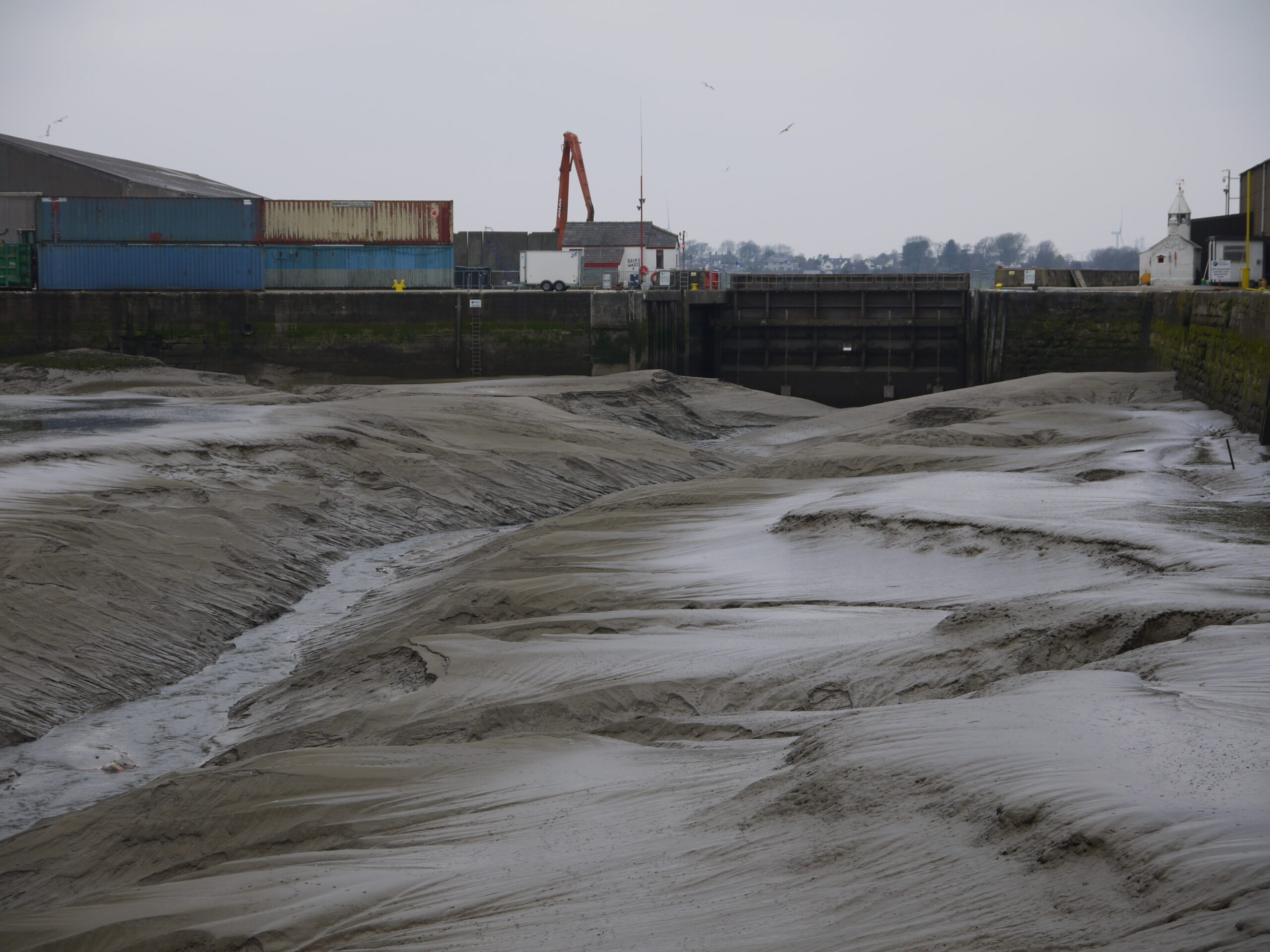
    IWA is concerned that boaters have been trapped since September 2023, unable to pass through Glasson Dock because of a failure of the tidal gate that connects the Dock to the Sea, and a stand-off between the Port of Lancaster Commission which owns the gate, and the Environment Agency. The funding plight of navigation authorities in the area has been aggravated by the failure of a gate at the tidal end of the Ribble Link and a breach at Hollowforth Aqueduct, both of which are major works that will take months to fix at great expense. And boaters are, literally, stuck in the middle.

    At Glasson Dock, the 38 year-old gate is currently stuck, and although it’s owned by the port, in 2001 the Environment Agency added an extension to the gate to make it a flood defence. The port is not responsible for flood defences for the area. No modifications were made to the supporting structures. Since then, the port maintained and operated the gate with minimal contribution from the Environment Agency. In recent years, the port has spent a fifth of its annual turnover maintaining the gate. Over three years ago the port informed the Environment Agency that the gate was beyond its lifespan and needed replacing and that the port could not afford to do this. The Agency confirmed that replacement funds were in its capital scheme budget.

    Update October 2025 – The Lancaster canal is no longer isolated. The sea gate at the dock is still away for repair or replacement. Boats can use the basin lock and get out to sea, but there remains a problem is with high spring tides and flood risk to local population around the dock area. Ribble Link is fully back in operation and has been open for most of 2025 dependent, as always, on the weather and tides from April to September. Hollowforth Aqueduct has been fully repaired.

    [The photo above shows Glasson Dock, with tide out but the sea gate still in place – taken in July 2024 – by David Faulkner.]

  • IWA Leases Moorings at Stoke Bardolph on the River Trent

    IWA Leases Moorings at Stoke Bardolph on the River Trent

    There have always been moorings of a fashion for commercial barges stopping at the Ferry Boat Inn en-route up or down the Trent. The Inn dates from 1823.

    From the 1950s to the 1970s, the moorings and associated concrete slipway were maintained by a local sailing club based on the river, but when the sailing club ceased operation at the site just over 40 years ago, the timber and concrete moorings fell into disrepair with only ad hoc repairs carried out by local boaters.

    There was a foot ferry across the river by the moorings, to Shelford on the opposite bank. The ferry ceased operation in around the 1950s, but the steps and slipway either side are still present.

    The Ferry is an ancient one, being referred to as far back as the year 1275 when it “yielded a mark yearly”.

    With a shortage of visitor moorings on the River Trent, local boaters from the Facebook group “Visitor Moorings on the River Trent & Associated Waterways”, led by Robert Aspey (now IWA Nottinghamshire Trent Group Moorings Officer), met on site in 2018 to see what could be done to repair these dilapidated visitor moorings. They were now in a dangerous condition with many planks missing from the fixed timber pontoon, only one mooring ring still present, and overgrowth over the whole site.

    When contacted, Canal & River Trust and the brewery that owned the Ferry Boat Inn said they did not know who owned the moorings. Eventually, Severn Trent Water were tracked down as the owners of the freehold. One of their managers agreed to meet the group on site and thanked them for pointing out the poor state of the timber moorings, as the water company would have been liable for any accidents.

    [The photos show the moorings at Stoke Bardolph – by Robert Aspey]

  • Stand Off Between Navigation Authorities Leaves Boaters Stuck

    Stand Off Between Navigation Authorities Leaves Boaters Stuck

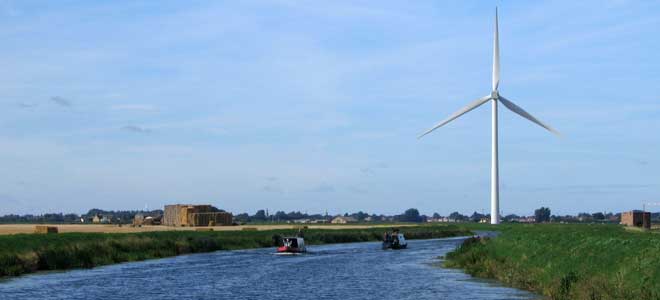
    Denver Sluice and Lock on the Great Ouse are owned and managed by the Environment Agency (EA). Salter’s Lode Sluice and Lock are owned and managed by the Middle Level Commissioners. Transit between Denver Sluice and Salter’s Lode allows access to the Great Ouse, the river Cam, and the rivers Lark, Little Ouse, and Wissey. The Denver crossing is now effectively closed and the only navigable connection between the Great Ouse and the rest of the ‘system’ is by the difficult and hazardous Wash crossing (until the Bedford / Milton Keynes link progresses).

    After Christmas 2023, the Middle Level Commissioners (MLC) dredged Salter’s Lode lock. This necessitated removing over 250 tons of silt from inside the lock. There is a considerable build up of silt outside the lock, on the tidal Great Ouse managed by the EA. MLC are concerned that as soon as they open the tidal doors of Salter’s Lode it will immediately be filled with silt from the tidal Great Ouse, and so they have closed the lock until the EA dredge outside it.

    At a recent meeting of its Anglian Water Group (AWG), EA reported this to stakeholders, but currently the EA has no plans to dredge! The link between the Great Ouse and the Middle Level now appears indefinitely closed until one or other of the navigation authorities gives in. This closes off approximately 130 miles of navigation, affects hundreds of leisure boats and prevents access from the connected navigable system to places such as Bedford and Cambridge.

    During April 2023, contractors for EA dredged outside Denver (photo 1 below). Rather than removing arisings, they threw it back out into river (in the hope it would wash out to sea), and there was subsequently heavy siltation experienced downstream at the first bend in the river (photos 2 and 3 below). This blocked the outfall of the Old Bedford River and caused several hire boat groundings on the tidal side of Salter’s Lode. It appears that MLC feel that EA caused this sudden and dramatic increase in rate of siltation affecting Salter’s Lode, and are waiting for EA to do something about it on ‘their side’.

    Sue O’Hare, IWA deputy national chair, said “We are appalled that boaters are left stranded through no fault of their own, and that businesses are left to count their losses because of the Environment Agency’s inaction.  We sympathise with the Middle Level Commissioners’ wish to keep their lock clear of silt and functioning correctly for its dual purposes of navigation and flood protection for local communities, and we sympathise with the Environment Agency at having to deal with over double the usual monthly rainfall in this area so far this year, but the Agency has a legal duty to keep the waterway open for navigation.”

    A Spokesperson for the Environment Agency said: “We have been and will continue to progress plans for the clearance of the blockages caused by the build-up of silt in the tidal river at Denver Lock and Salters Lode within the scope of our available budget.”

    “There have been delays across all our navigation works programme as a direct result of the weather and subsequent river conditions. We will continue to work with our delivery partners to resolve the situation as soon as we can. Updates will be provided on our navigation notices which can be found at our Visit Anglian Waterways webpages.”

    [The title photo shows silting at Salters Lode in early March 2024 – by Paul Burrows of the Middle Level Commissioners]