Tag: Planning Issues

  • IWA responds to the Independent Water Commission consultation

    IWA responds to the Independent Water Commission consultation

    IWA has submitted a response to the Call for Evidence issued by the Independent Water Commission.

    The Commission was launched by the UK and Welsh Governments in October 2024 and is chaired by Sir Jon Cunliffe, a former Deputy Governor of the Bank of England. It is tasked with carrying out the largest review of the water industry since privatisation.

    The topic of water resources management is becoming increasingly important for the future of the inland waterways. Through Navigation Committee, IWA has previously responded to consultations on regional Water Resource Plans, various water companies’ Water Resource Management Plans, and the Fens, South Lincolnshire and SESRO (Abingdon) reservoirs. There are various proposals for water transfer schemes, of which the Grand Union Canal Transfer is the most advanced. Not only would these bring income to currently navigable or restored canals, they also make clear the role of canals as a part of the national infrastructure.

    IWA’s response to the Call for Evidence makes the following points:

    1. There is a need for joined-up strategic water planning, across the country as a whole and with a multi-sector approach (i.e. including key users such as inland waterways as well as water companies)
    2. Inland waterways both navigable and capable of restoration must be seen as part of the national infrastructure and included in the picture
    3. Suggesting a duty on water companies to consider navigable waterways in their strategic planning
    4. Navigation authorities do not have enough funds even to maintain the status quo let alone invest for the future, especially in the face of climate change
    5. Abstraction laws need to consider canals and rivers as part of the same overall picture
    6. Potential for mutual benefits from e.g. water transfer schemes, both for currently navigable waterways and restoration schemes
      1. Noting that there are already water transfer schemes on navigable waterways (e.g. Llangollen, Gloucester & Sharpness, Bridgwater & Taunton Canals; Yorkshire Ouse and River Lee Navigation)
      2. Highlighting the Grand Union Canal Water Transfer Scheme as an example of canals becoming essential parts of national infrastructure again
      3. Identifying the key role that some of the 500 miles of waterway restorations could play, in particular mentioning the main schemes where restorations and water transfer could go hand in hand (e.g. Cotswold Canals Severn-Thames Transfer (CCSTT) scheme; Buckingham Arm; others)
      4. Mentioning the numerous benefits of an inland waterway over a buried pipeline and regeneration benefits along the route
      5. Recommending that water companies liaise with restoration societies and/or ourselves to understand the potential schemes and explore the wider benefits of individual schemes, considering if there are examples that could benefit from a revised Ofwat Innovation Fund.

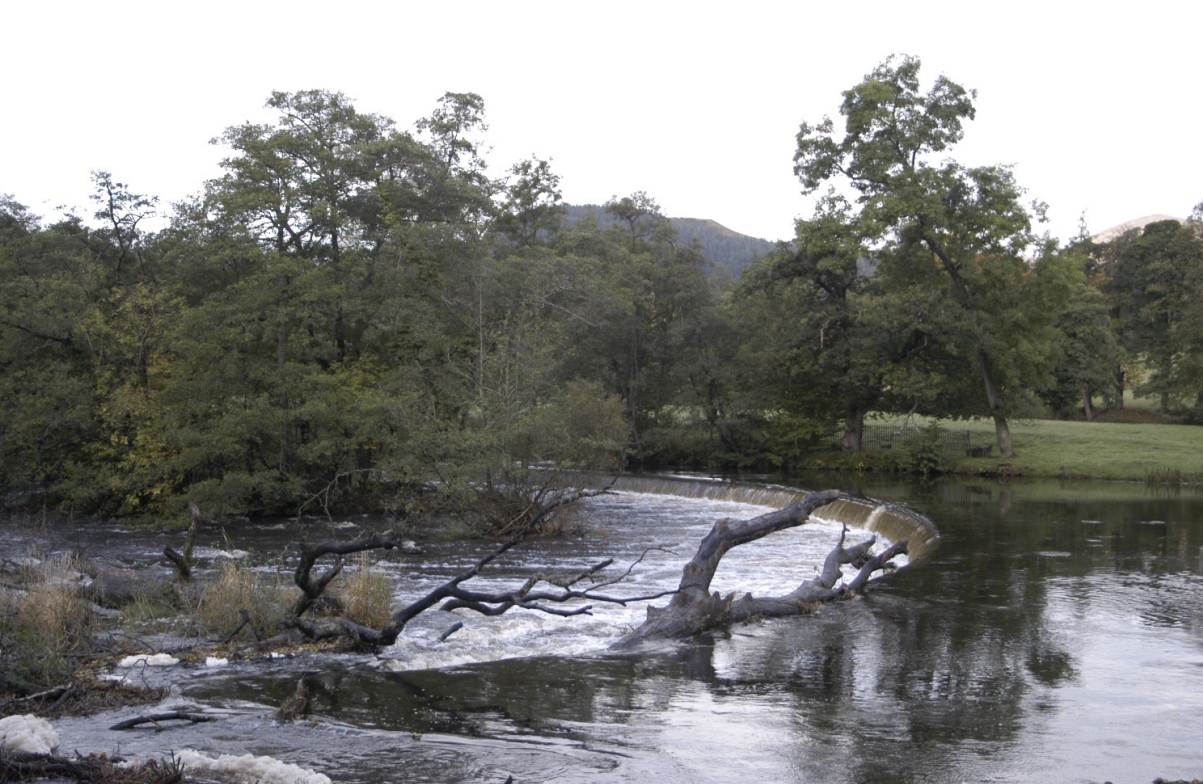
    [The photo shows Horseshoe Falls on the River Dee, which supplies water to the Llangollen Canal, including water carried via the Llangollen Canal to the 21 acre Hurleston Reservoir, which holds 85 million gallons of public drinking water supply for south Cheshire – by Adrian Rayson]
  • IWA Responds to National Planning Policy Consultation

    IWA Responds to National Planning Policy Consultation

    A major aim of the reforms is to increase the rate of house building by changes to the planning system, including a mandatory housing-need assessment method, and designation of parts of the Green Belt as ‘grey belt’ where development will be permitted.

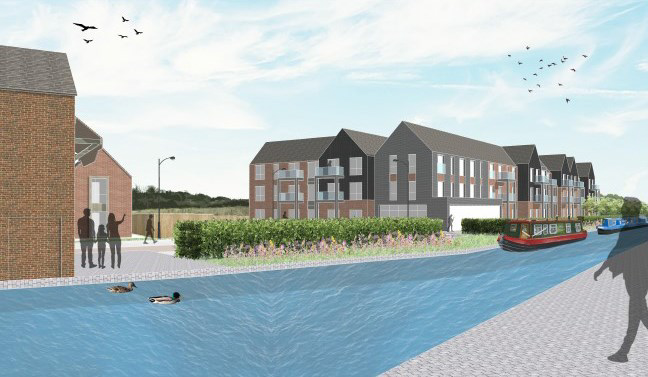
    Whilst canalside redevelopment of ‘brownfield’ sites in built-up areas is usually beneficial to the waterways, major built developments in the countryside that destroy the rural environment of waterways can damage their heritage setting, wildlife, tourism value and economic benefits.  This is particularly so in Green Belt areas which are designated primarily to prevent urban sprawl, promote urban regeneration, and safeguard the countryside.

    IWA’s response is critical of the Green Belt and the ‘grey belt’ proposals, and the general approach of blaming the local planning system for failures of the house building market.  There are many other detailed changes that IWA has commented on including ‘sustainable’ development, the control of major housebuilders over housing market supply, and ‘affordable’ housing.  IWA also expressed concerns about the landscape impacts of increasingly large wind turbines being built onshore, and a preference for rooftop solar rather than large scale solar farms on agricultural land.

    Some of the consultation questions provided opportunities to promote better recognition by the planning system of the needs for residential boat moorings provision, the potential for water transfer by canals, reduced planning application fees for canal restoration charities, recognition of the tourism value of waterways, and new and updated canal Conservation Areas.  A detailed response about waterways freight was also included, as an appendix.

    IWA’s comments on residential boats were:

    Another group of people totally ignored by the National Planning Policy Framework is residential boaters.  The canals and navigable rivers are home to tens of thousands of people living full-time on boats.  These include static houseboat residents, ‘liveaboard’ boaters on river cruisers and canal narrowboats that spend much of their time moored in marinas or on linear off-side canal berths, and waterborne travellers licenced by Canal & River Trust as ‘continuous cruisers’.  In the absence of any planning guidance, there is a troubling neglect and inconsistency in local plans and the response of local planning authorities to planning applications for the provision of residential boat moorings.  Some councils allow marinas to include residential berths, many simply ignore the issue, but others specifically exclude it by policy or conditions.  Living afloat is widespread and increasing, and local planning authorities with inland waterways in their areas should be required by the National Planning Policy Framework to assess and make appropriate provision for this as an integral part of their housing provision.  Such allocations should take account of the locational restrictions on provision of residential moorings compared with ‘bricks-and-mortar’ properties, of the lesser landscape impacts of low-profile boats compared with buildings, and of the need and ability of boats to move to access services. 

    For more information, see the IWA Policy on Residential Boating at: https://waterways.new1.fixed-staging.co.uk/about-us/library

    IWA would welcome an opportunity to contribute to suitable guidance for inclusion in the National Planning Policy Framework revision.

    IWA’s full submission to the consultation is here.

    Read the Government’s consultation, which explains the questions being responding to.

  • Successful campaign to protect Caldon Canal heritage

    Successful campaign to protect Caldon Canal heritage

    IWA North Staffordshire & South Cheshire Branch submitted an objection to a Canal & River Trust planning application for Listed Building Consent for alterations at Hazelhurst Top Lock (Lock 10). IWA objected strongly on heritage and health and safety grounds to one aspect of the application, which was the proposal for a fabricated “restrictor” on the end of the balance beams.  Despite what the Heritage Design and Access Statement says, we were concerned that this would have had a detrimental impact on the heritage setting of the Listed lock (which is also part of a conservation area), and would have introduced a new unexpected hazard to boaters operating the lock, who would no longer be able to pass around the end of the balance beam in an emergency, for example if the gate is swinging closed of its own accord.  The problem at this lock is that the balance beams are too long for the original stonework of the lock.  We suggested that this could be rectified by reducing the length of the balance beams and adding additional weight underneath (if the balance of the gate is affected), as has been done in many other locations around Canal & River Trust’s network of waterways. This view has been endorsed by IWA’s national Navigation Committee. Objections were also submitted by the Caldon and Uttoxeter Canals Trust and the Historic Narrow Boat Club for the same reasons.

    We recently heard that our objections have been taken on board, as Canal & River Trust have removed the part of the application referring to the balance beam “restrictors”. They are now planning simply to move the handles on the end of the balance beams to align with the quadrant below, as well as investigate the possibility of shortening the beam.

  • HS2 & Integrated Rail Plans continue to threaten waterways

    HS2 & Integrated Rail Plans continue to threaten waterways

    The decision to scrap the Eastern Leg of HS2 between the East Midlands and Leeds in favour of upgrading existing routes is good news for several waterways that were threatened by the proposals.

    We have welcomed this in our submission to an Inquiry into the Government’s Integrated Rail Plan (IRP), which affects several waterways and canal restoration projects. However, we continue to be critical of the intention to press ahead with the Western Leg of HS2 2b. Additionally, there is a lack of detail on the Northern Powerhouse Rail (NPR) routes which may adversely affect other waterways.

    The IRP was published in November 2021.  It covers HS2 Phase 2b, NPR and some Midlands Rail Hub proposals and sets out the Government’s decisions on new high speed lines and major upgrades of the rail network in the North and Midlands over the next 30 years.

    Our submission was made in response to an invitation by the House of Commons Transport Select Committee to anyone concerned by the implications of the IRP and how it integrates with HS2.

    HS2 Phase 2b East

    Scrapping much of HS2 East avoids adverse impacts to several waterways including the Cranfleet Cut, Erewash Canal, Nottingham Canal, Chesterfield Canal, Sheffield & South Yorkshire Navigation, and Aire & Calder Navigation.  However, the “safeguarding” orders remain in place which means the Chesterfield Canal restoration at Staveley continues to be blighted by uncertainty, and we have called for this to be lifted.

    HS2 Phase 2b East will now end at East Midlands Parkway station but the IRP says nothing about its route through Measham which still threatens a large housing site that was set to contribute significantly to the restoration of the Ashby Canal.  The review of this route which was promised in 2018 should now be speedily completed to allow the restoration to proceed.

    HS2 Phase 2b West

    The IRP confirms the intention to proceed with HS2 Phase 2b West from Crewe to Manchester, which will have major impacts on the environment and heritage of the Middlewich Branch of the Shropshire Union Canal and on the Trent & Mersey Canal north of Middlewich. We have been critical of the engineering design of this route, crossing the Cheshire salt field with its unpredictable subsidence problems, and its poor integration with the NPR proposals for east-west connectivity. Therefore, we are advocating for progress on this route to be paused while new proposals are considered.

    New Transpennine Route

    The NPR proposals for a new Transpennine route have been cut back to upgrades of the existing route via Huddersfield to Leeds, with a new section of high speed line from Manchester to Marsden, east of Standedge tunnel.  But finding a new route through hilly terrain and dense built development will be a major challenge.  We have called for more information about the routes of new sections of NPR line, and where widening of existing lines outside the present railway land take is planned, which could impact several waterways.  They should also make clear if they plan to re-open the two original single track tunnels at Standedge, which would affect the current operational safety measures for the canal tunnel.

    Warrington to HS2 West

    Another section of high speed line is proposed between Warrington and a connection with HS2 West. This uses a freight line which crosses the St Helens (Sankey) Canal at low level on a former swing bridge which would permanently prevent its full restoration.  Either a raised crossing should be provided or if this is not feasible than a different route for NPR through Warrington Central should be considered.

    Protecting the Waterways from the worst effects of HS2

    We’re campaigning to protect canals and rivers from the damaging effects of HS2, especially where the tranquillity of the waterways is under threat. Our HS2 route changes have already reduced waterways crossings – saving the project £50 million – and we have secured agreement for a new canal restoration route, a new mooring basin, changes in viaduct designs and improved noise protection.