Tag: Regeneration

  • 50 Years since IWA members open Canal Museum

    50 Years since IWA members open Canal Museum

    Dr David Owen’s Thames boating holidays of the 1950s were followed by canal cruising in his own boat, and by the late 1960s he had become a noted author of inland waterway books. He was a geologist with a museum career in Liverpool, Leeds and Manchester, and enthusiastic chair of IWA’s Manchester Branch. In September 1970, he led a small team of waterway supporters in the North West, some gathered from his night school talks at Manchester University on Industrial Archaeology and Inland Waterways, to form what would become the Boat Museum Society with the aim of opening the North Western Museum of Inland Navigation, at a site eventually secured from British Waterways at Ellesmere Port, where there was a range of disused waterway buildings at the junction of the Shropshire Union Canal’s derelict docks with the Manchester Ship Canal. It took until 1974 before an intense period of work party activities could start at the planned museum site, but there had been earlier activity elsewhere around the country rescuing old historic boats that might otherwise have been destroyed.

    [The photo, above, shows founding Museum members, (from the left) Tony Lewery, Peter Froud, David Owen, Harry Arnold and Tony Hirst at the unveiling of a milepost on the Shropshire Union Canal at Ellesmere Port – the museum’s other co-founder, Edward Paget-Tomlinson was unable to be present for the occasion]

    By 1976, the museum was ready for its formal opening by Sonia Rolt, widow of IWA co-founder Tom Rolt. David Owen was now elevated to IWA Manchester Branch’s President, and chair of the Museum’s Board of Management. The Island Warehouse had been secured from vandals, the top basin cleared and the Toll House restoration begun. The Museum’s exhibition had been designed by Tony Lewery in the ground floor of the Toll House. It was staffed by volunteers and initially open only at weekends. At the end of the summer, the museum closed for the season, but the restoration of the Toll House, and care for the collection of boats which had been brought to Ellesmere Port, continued. The Queen and the Duke of Edinburgh visited in November 1979.

    In January 1981, the Boat Museum Trust, a partnership between NWMIN, the very supportive Ellesmere and Neston Borough Council and Cheshire County Council, was established to administer the Museum and Tony Hirst was appointed Director. This relationship between the Museum and the two local authorities was crucial in ensuring that the Museum became firmly recognised as an asset to the local community. Government funding aimed at regenerating Merseyside in 1981-82 enabled restoration of the remaining dock buildings, and there were visits from government minister Michael Heseltine and Prime Minister Margaret Thatcher. New exhibitions were opened and The Boat Museum, as it had become known, won a number of prestigious awards, including the Council of Europe’s Museum of Europe award jointly with the Museum du Vivant du Canal du Centre in Belgium for 1984.

    [The above photo show the boat builders’ workshop at the Island Warehouse at the Museum in its early years – IWA Collection]

    1990 saw the opening of the David Owen Archive (now National Waterway Archive) on the ground floor of the restored slipway workshops by the Duke of Westminster. This is now the central archive for Canal & River Trust’s historic records, and also holds some IWA archives and IWA’s historic book collection on permanent loan.

    Running the museum was not always plain sailing, however, and the museum’s survival became more challenging in the late 1980s and 1990s, when competition for people’s leisure time meant less income for running and developing. One of the museum’s many challenges was getting suitable insurance cover for its wide-ranging activities, which was covered by IWA’s then expanding insurance arrangements. Tony Hirst’s success in managing the museum led him to become chairman of the Association of Independent Museums between 1990 and 1994 and this led to many other museums around the UK joining with IWA’s insurance arrangements to improve buying power with insurers. For several years, IWA’s insurance arrangements extended to cover even the Royal Naval Museum in Portsmouth. Tony Hirst’s work was recognised with an OBE in 1995 for Services to Museums.

    [The photo above shows the short boat ‘Georgebeing prepared for exhibit at the Museum – by Harry Arnold / IWA Collection]

    By the late 1990s, both the Boat Museum at Ellesmere Port, and British Waterways’ Museum at Gloucester Docks were running at a deficit and their future as separate museums had become unsustainable. Increasing running costs and greater competition for visitors’ leisure time had taken their toll. In 1999, it was agreed that both museums would join together, along with BW’s small canal museum at Stoke Bruerne, under a charity The Waterways Trust (TWT), controlled by British Waterways. Tony Hirst retired as Director of the Boat Museum at Ellesmere Port at the end of 1999. TWT was then absorbed into Canal & River Trust shortly after the latter became operational in 2012, which has ensured the Museum’s long-term survival.

    [The top photo shows celebrations at the official opening – by W. Broadhurst / IWA Collection]

    [Photos below show another royal visitor, the Duke of Gloucester – IWA Collection; and museum exhibits ‘Gifford’ and Mossdale. Gifford was given to the museum by co-founder Edwards Paget-Tomlinson – photo by Harry Arnold]

  • Community moorings

    Community moorings

    Co-operative moorings, community moorings… Call them what you will but one thing is certain – they’ve become something of a buzzword on our waterways in recent years.

    In London especially, where the growing number of people living aboard is putting ever greater pressure on mooring space, they’re being hailed as one of the few success stories to date in tackling the problem. So much so that IWA’s Vision for London document in 2019 identified the creation of more community moorings as key to future policy in the capital.

    What are co-operative moorings?

    Co-operative moorings are owned and run by the boaters living there. They are usually small in scale (most contain no more than ten boats) and often in disused basins or derelict canalside sites.

    Paul Strudwick, IWA’s London Region chair, says: “The idea of the community moorings is to use places – basins, off-side stretches – that are currently waiting for development. They’re often locations that can’t have long-term or permanent moorings, or any work that could reduce future options for developers.”

    In the same way that charity shops are sometimes given short-term leases for empty units before a permanent business moves in, so a group of boaters might set up a co-operative to look after the land for the duration of the lease and operate the moorings, continues Paul. It’s not a new idea, but in the past, especially in London, efforts to set them up haven’t always got off the ground. “We’re hoping that with IWA support, new co-ops will have more success.”

    And indeed they are. The Surge Co-op is a case in point. Al Cree is one of its founder members. His quest for somewhere permanent and reasonably priced to live afloat in London was complicated further by the size of his craft – it’s a beast, at 127ft x 17ft, of a Belgian freight barge. When development around his former mooring forced him to move off in 2016, he started looking at other offerings on the tidal section of the River Lea.

    Affordable moorings

    In the end he found a “friendly factory owner” on the Channelsea River, who allowed Al to moor outside and have access from their yard. When other boaters kept asking if they could moor there too, four of them set up Surge, a non-profit organisation with the primary focus of reanimating Bow Creek with affordable, co-operatively run moorings.

    He explains: “It’s not Canal & River Trust land, so we can set up moorings with minimal capital cost. We’re using a standard co-operative housing model where everyone will pay to cover the initial loans/expenditure and generate a constant income for upkeep and creative workshops/community outreach.”

    There’s also a focus on ecological engagement, with regular river clean-ups and replanting already underway.

    Community and heritage benefits of co-operatives

    Ultimately the mooring will include all the main services, including visitor mooring, plus access for rowers and other watersports. Another key point, says Al, is that all the vessels will be valued beforehand, and that won’t include the mooring, so no one will be able to profit from the sale of their boat in its current location. “That’s one of the key problems in London – people selling their boat and cashing in on where it’s moored. It prices people out of the waterways.”

    At Surge’s current site, members are hoping to eventually accommodate eight larger boats, but the group’s ultimate vision is up to 200 moorings along the whole of this tidal river. “There are over 40 known, disused wharves, so historically there would have been hundreds of barges here. There’s so much opportunity and it would be a real shame if we lost this waterways heritage,” says Al.

    Not far away is Cody Dock, another thriving creative and community hub on the River Lea in Newham, East London. Gasworks Dock Partnership, a registered charity and social enterprise, has been operating two tidal live/work moorings beside the dock since 2011 and plans are now underway to restore and reactivate the brick-lined dock itself to create a further seven moorings within it. The charity says the new moorings “will form an integral part of [its] sustainable business model and provide an exciting way of continuing the strong community focus that has been at the heart of Cody Dock’s restoration”.

    “Ecology, history, art and volunteering”

    But community moorings are by no means confined to the capital. Wolverhampton Urban Moorings on the Wyrley & Essington Canal are a great example of how boaters can help themselves elsewhere on the system too. The group was previously based at Minerva Works, Digbeth, where it used its volunteer experience with CRT to create the Friends of Warwick Bar canal adoption scheme, regenerating a run down and underused section of canal.

    When this site was sold, the group secured a longterm lease for a community mooring at a disused wharf in Wolverhampton. In 2016 they set to work transforming it into a community centre and garden for boaters and local land-dwellers alike, with a focus on sustainability and the arts. But the over-riding aim, says the group, is “to create mooring sites that boaters actually want, integrating ecology, history, art and volunteering”.

  • A plan to save Aberdulais aqueduct

    A plan to save Aberdulais aqueduct

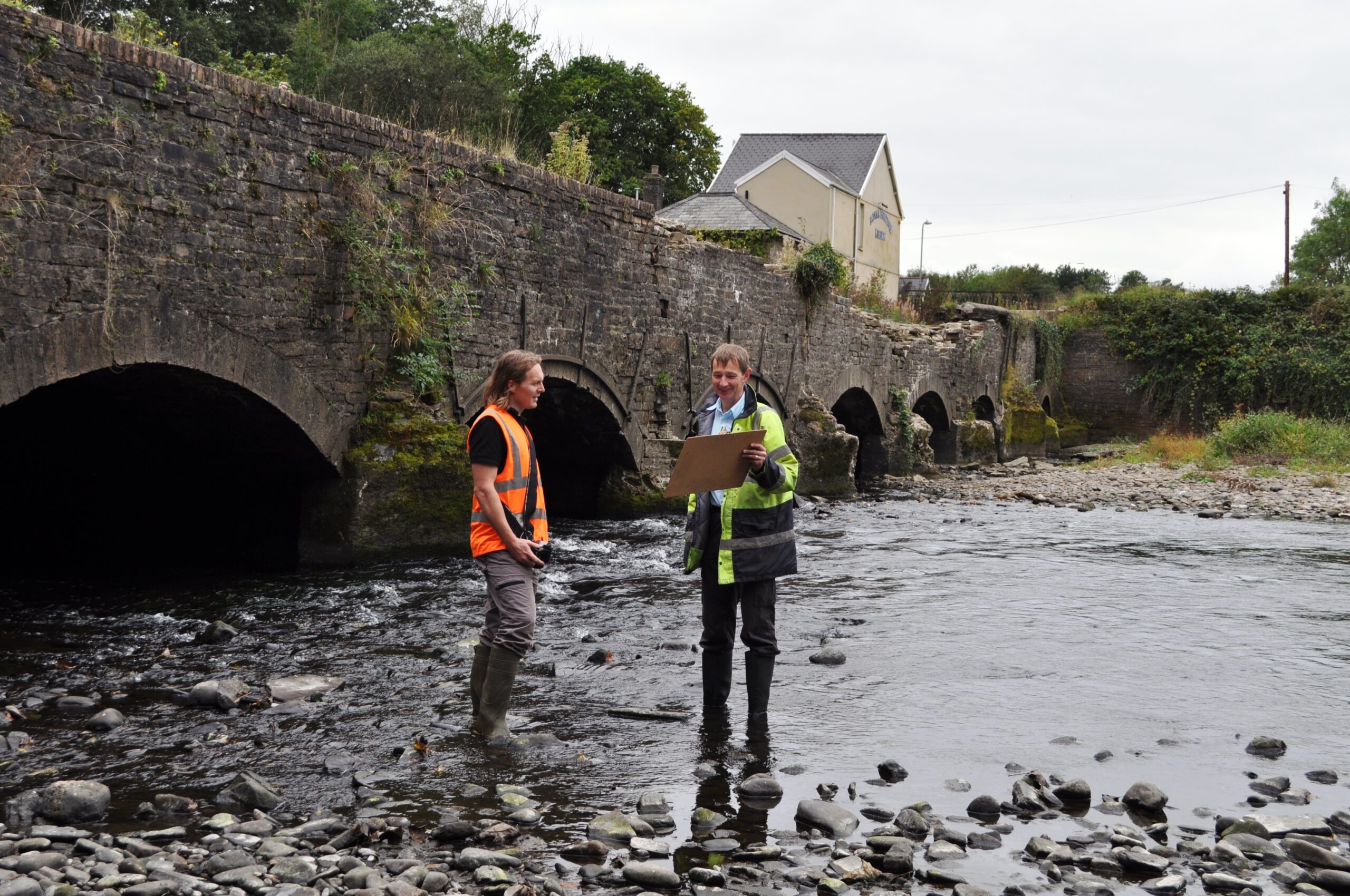
    We can now make a plan to save Aberdulais Aqueduct, a Scheduled Ancient Monument, thanks to our successful grant application to CADW.

    We are working closely with the Neath & Tennant Canals Trust to protect Aberdulais Aqueduct on the Neath and Tennant Canals. The aqueduct is in a poor state following flood events causing significant damage to the structure.

    Our campaign to save Aberdulais aqueduct has involved conversations with Natural Resources Wales and the local council. There are concerns that both organisations would support the removal of the aqueduct to alleviate local flooding issues. We have also had meetings with CADW and the owners of the aqueduct. We are also supporting the local Trust to rebuild relationships with local residents and work with the ‘Save the Tennant Canal’ group to create further pressure at a local level.

    In August 2021 IWA successfully applied for a CADW grant to cover the cost of a structural survey of the aqueduct. A survey is needed to get a better idea of the scale of the repair work and potential cost implications. Mann Williams, who specialise in creative conservation of historic buildings and structures, undertook the survey. Once we have the survey results, we will plan the next stage of our campaign to save this heritage gem.

    Find out more about Aberdulais Aqueduct

  • New Ashby Canal path update

    New Ashby Canal path update

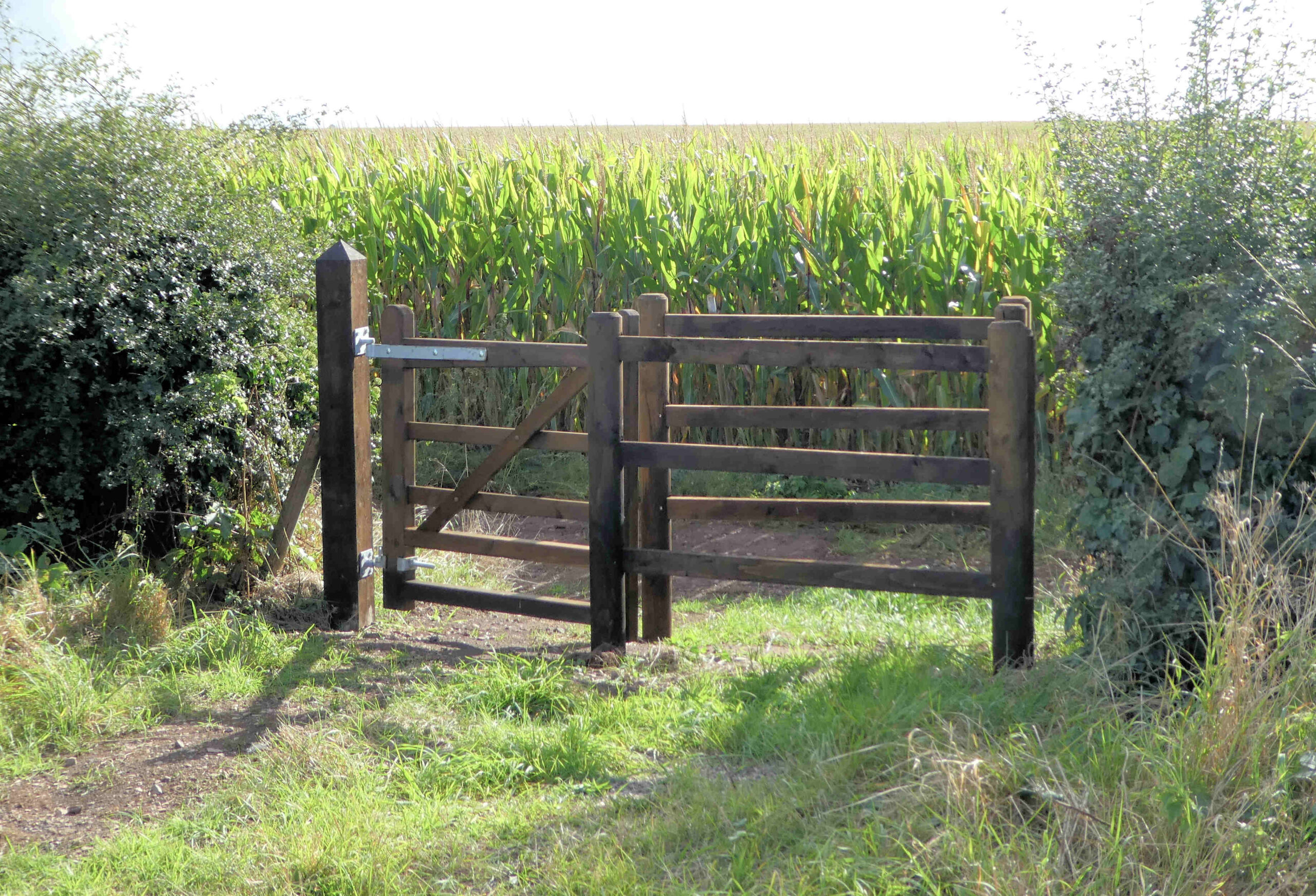
    Volunteers rolled up their sleeves to clear and level a section of the path. Several new gates are now installed on the trail that will create a safe pathway link between the village and the canal. A delivery of 20 waymarkers are also keeping the hard-working volunteers busy.

    The village of Snarestone at the terminus of the canal is a short walk from Measham. However, there is little to link the two settlements. Waterway users arriving at Snarestone along the canal often aren’t aware that Measham- with its shops and facilities – is close by. To get to the village, people currently have to walk country lanes with poor visibility and unsafe verges.

    We hope the trail will help to regenerate the area, as well as highlight the local heritage. The project is funded by our Waterways in Progress grant. Find out more about the Ashby Canal Trail: Regeneration

  • Hollingwood Hub, Chesterfield Canal: Creating community spaces

    Hollingwood Hub, Chesterfield Canal: Creating community spaces

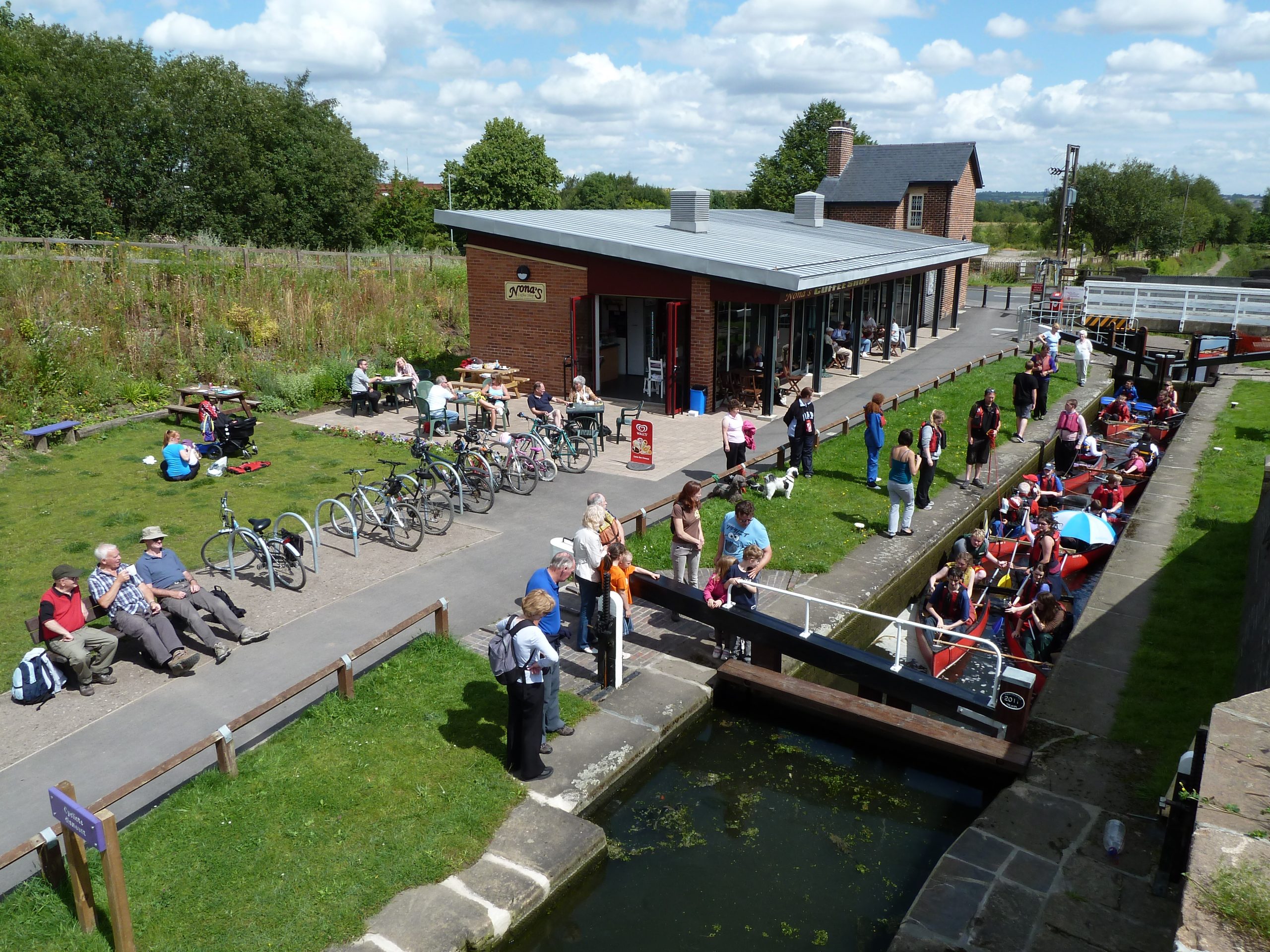
    Formerly a lock house, it was converted in 2010/11 thanks to a government grant of £385,000 under the Community Assets Programme and now boasts a coffee shop, a meeting and education room, a play and picnic area, shower and toilets. It also serves as an archive and office base for the Chesterfield Canal Trust. With many local facilities closed due to financial cuts, the Hub has filled a much-needed gap in the area. Its flexible space lends itself to a wide variety of different uses. The meeting room is used by schools, crèches and playgroups. It is available from early morning until late evening so social events, training courses and night school classes are also easily accommodated.

    The Hollingwood Hub site is owned by Derbyshire County Council, who supervised the renovation and construction, and it is run by the Chesterfield Canal Trust. It is conveniently located on the Chesterfield Canal towpath (which also forms part of the Trans Pennine Trail), attracting some 55,000 walkers and 30,000 cyclists each year, as well as anglers and canoeists. Many of them call at the Hub for coffee, for information about the canal or for volunteering opportunities. Meanwhile, the garden is being developed by local volunteers and school children. Benches, picnic tables and cycle racks have already made this an inviting area for all.

  • Ebley Mill, Cotswold Canals: A catalyst for transformation

    Ebley Mill, Cotswold Canals: A catalyst for transformation

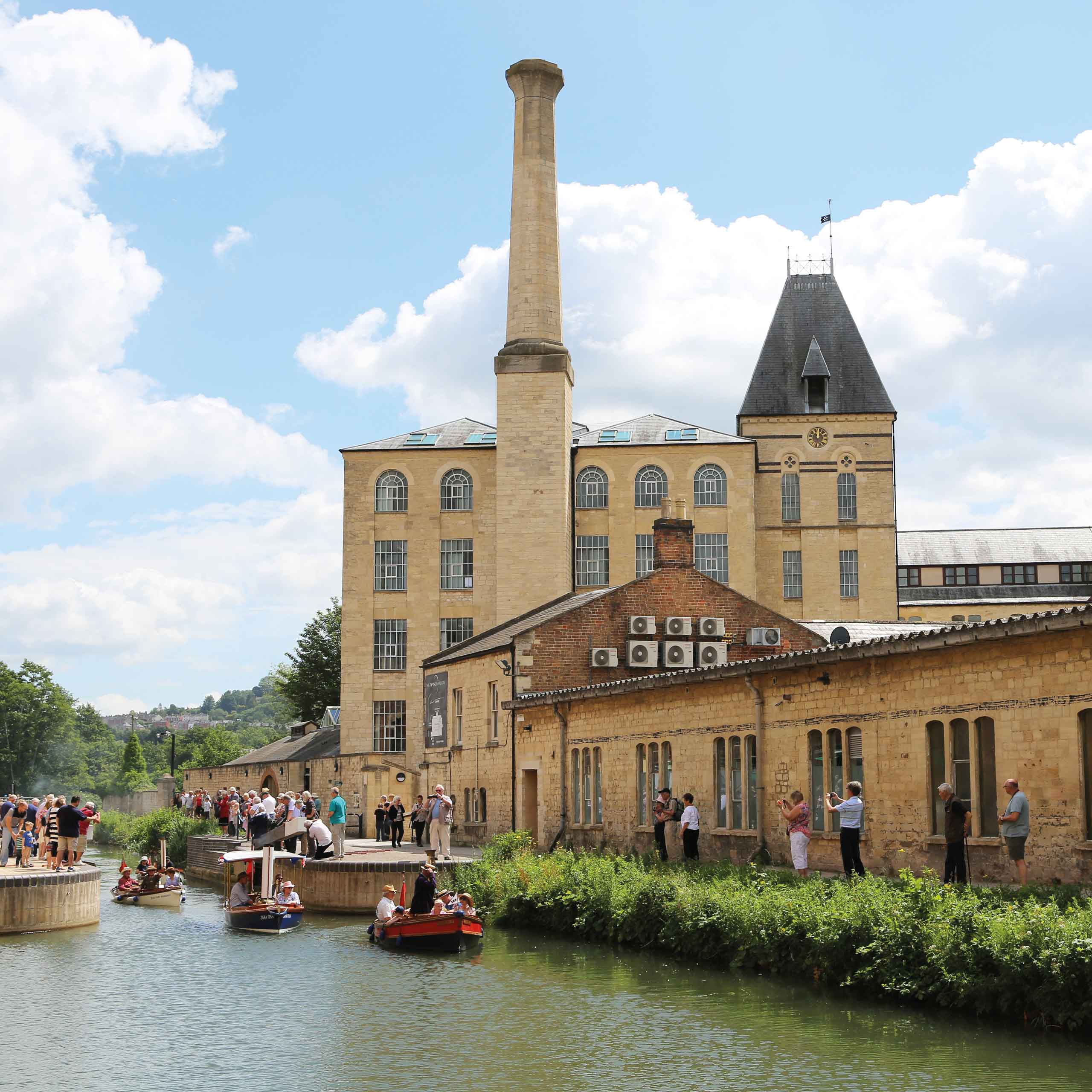
    Stroud District Council was one of the first to fully capitalise on the economic benefit of a restoration project. In late 2008 they took on leadership of a Heritage Lottery funded project to restore a six-mile section of the Cotswold Canals. The decision was taken against a backdrop of recession and difficult financial and engineering challenges, but with huge community
    support.

    Through the Phase 1A Stonehouse to Thrupp regeneration project, they have seen over £115m of private investment. This has transformed the area.

    Formerly used as a car park, the canal here has been excavated to become a navigable channel once again, complete with a tripboat. The Ebley Mill building itself was previously converted into offices by Stroud District Council. Other parts of the complex now have new uses too and luxury houses face onto the canal, developers having been lured by the waterfront potential.

    In all, some 550 new houses have been built, 62 hectares of brownfield land recycled and over 770 jobs created.

    After the success of Ebley Mill, Stroud District Council is keen to repeat it at a site further along the canal. The £3m infrastructure works at Brimscombe Port will provide 200 new homes, business units, community facilities and a canal marina in the Stroud Valley.