Tag: Restoration

  • IWA says CRT ‘must take more proactive approach’ for the Wendover Arm

    IWA says CRT ‘must take more proactive approach’ for the Wendover Arm

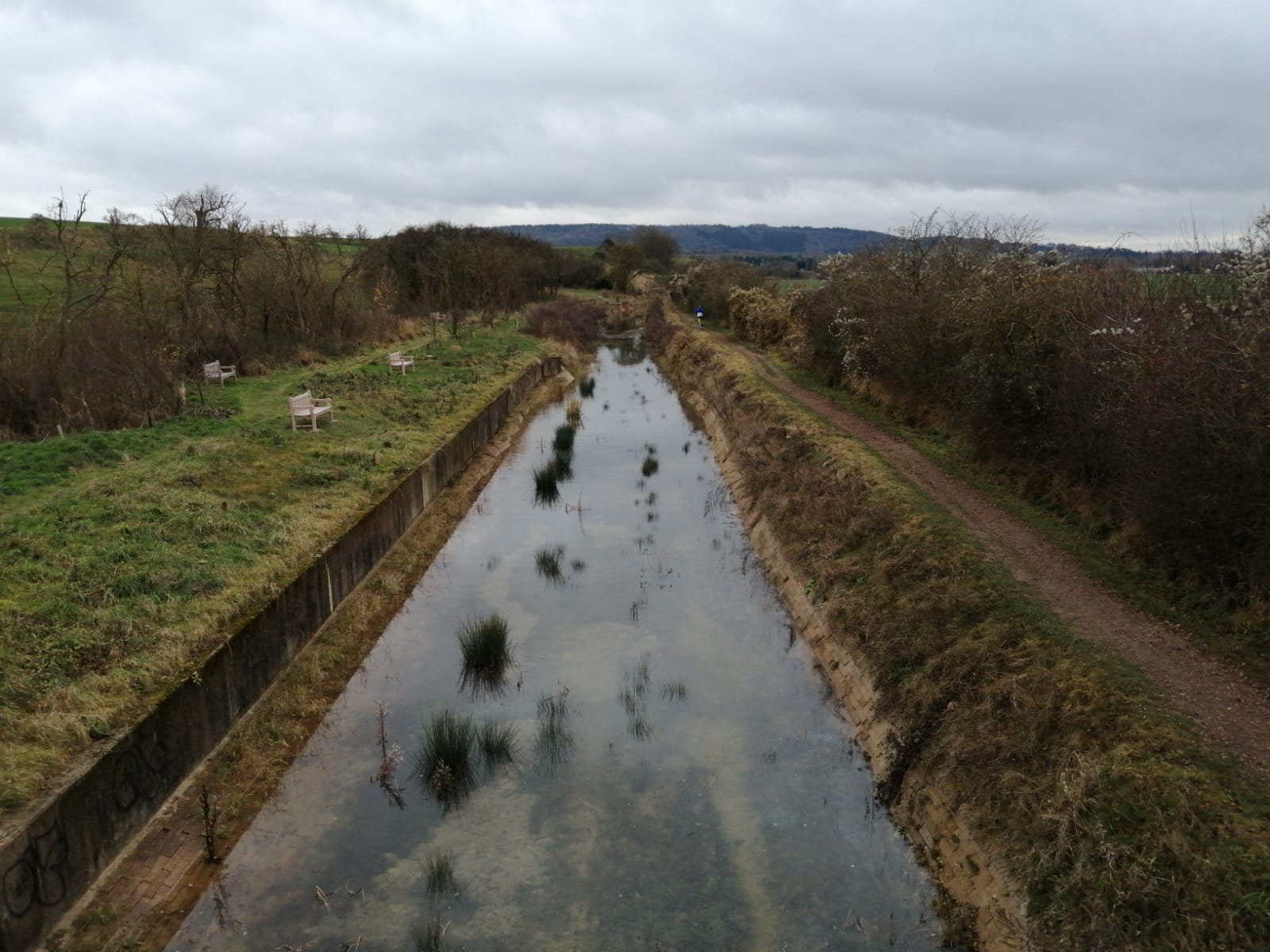
    As well as IWA’s previously stated concerns about Canal & River Trust’s proposed implementation of its Restoration Development Plan, which so far has led to uncertainty and restoration schemes being delayed or even halted, along with reported inconsistencies between CRT regions, IWA has particular concerns for the situation on the Wendover Arm of the Grand Union Canal.  Here, not only has CRT stopped all restoration work, and seemingly maintenance thereof, but it has closed, drained and fenced off the section of canal reopened amid much fanfare by Sir David Suchet in 2005.  CRT also forbade any boats over 40 foot in length from navigating the section of canal from Bulbourne Junction to the Stop Lock, which had previously never been closed to navigation, a restriction which was only lifted when IWA complained about it.

    The Wendover Arm was initially constructed as a feeder channel for the Grand Union Canal but was soon made fully navigable.  It then closed from the Stop Lock just above Tringford Pumping Station in 1904 owing to leakage through the canal bed.  In the 1980s, the South Bucks Section of IWA’s Hertfordshire Branch (later to become IWA Chiltern Branch) began to campaign for full restoration of the Wendover Arm, and some initial clearance work parties were held.  An early campaigning success was a navigable culvert under the then-planned A41 Aston Clinton bypass where IWA appeared at the public inquiry.  In 1989, Wendover Arm Trust was formed to campaign for full restoration of the Arm.  An early aim was to restore the lowered Little Tring road-bridge, and in 2005 this was achieved with the first section of the canal re-opened from the Stop Lock through to a new basin for winding craft beyond the restored Little Tring Bridge.  This work was enabled in part through fundraising by Wendover Arm Trust, and in part through a large donation by IWA utilising the proceeds of a substantial bequest by Tim Wilkinson, author of the post-war canal carrying book ‘Hold on a Minute’.  The author’s bequest to IWA included copyright of the book.

    Wendover Arm Trust then set about restoring the dry section of canal from Little Tring Bridge to Drayton Beauchamp, to specifications agreed by then British Waterways, and in recent years CRT, with a fabric liner and brick blocks, including rebuilding of wooden footbridges and other structures in brick, with various sections being tested for leaks, etc, as works progressed.  A section of canal that had been infilled with household rubbish in the 1920s was excavated and most of the material, now deemed hazardous, was removed by contractors, funded by a substantial grant from Hertfordshire County Council.  All this work was nearing completion, sections of canal rewatered and Wendover Arm Trust had expected to complete restoration and reopening of this section to the A41 bypass by about now.

    About two years ago, local Canal & River Trust management cited some Health & Safety and environmental concerns and asked Wendover Arm Trust to cease work.  Since then, there has been a dialogue between the Trust and CRT, with long delays by CRT to respond to matters, apparently because of ‘lack of resources’.  All the restored sections have been drained down and now have a layer of vegetation growing across the restored lining.  CRT has insisted that Wendover Arm Trust (now trading as Wendover Canal Trust), sign an onerous detailed licence agreement before restoration works can commence.  The Canal Trust eventually signed this agreement in September 2025, but CRT has yet to agree to Wendover Canal Trust recommencing work.  Meantime, a leak in the section of canal restored and reopened in 2005 was identified following notification by an adjacent landowner.  CRT commissioned a report and concluded the leak would cost £300k to fix, although the report has not been made available.  CRT’s response has been that fixing the leak is low priority, and so it has installed a rather permanent looking earth dam at the stop lock, drained the canal and erected what looks to be permanent wooden and mesh fencing around both sides of the drained canal for its entire section.  CRT says it has no intention of even reviewing the matter until at least 2027.

    Having closed and drained the previously restored section of canal, CRT sought to stop any boats longer than 40 foot from using any part of the Wendover Arm Canal – as stated in a notice that was erected at Bulbourne Junction.  Whilst accepting that there had been some shortcomings by Wendover Canal Trust, which the Trust was keen to rectify, IWA believes that CRT has badly mismanaged the situation and failed to take the necessary leadership to ensure full and timely repairs and restoration.  Rather, CRT has just put barriers in place, both physically and psychologically, thus demotivating local volunteers and supporters.  CRT’s response is that it has insufficient resources to do all that it wants, and the Wendover Arm is not a priority.  There is much damage to repair of CRT’s own making.  Frustrated and disappointed by the situation, IWA has raised the matter with CRT’s senior management in hopes that the situation will be addressed in a more positive and productive manner.
  • IWA Response to CRT’s Restoration Delivery Plan

    IWA Response to CRT’s Restoration Delivery Plan

    IN SUMMARY

    IWA has strongly challenged CRT’s new draft Restoration Delivery Plan (RDP), arguing that it treats restoration as a low priority rather than a core charitable objective. Several major restoration projects (including the Grantham Canal, Wendover Arm, and Pocklington Canal) have stalled under CRT ownership. The RDP would see volunteer groups face new financial burdens and bureaucratic obstacles that seem contrary to the collaborative spirit that CRT purports to offer, and a different mindset to that with which British Waterways delivered spectacular reopenings 25 years ago. As a critical friend to CRT, IWA is leading the charge to refocus attention on restoration, engaging directly with CRT’s senior management and its new CEO to ensure waterway restoration receives the leadership, support, and priority it deserves.

    THE BACKGROUND

    After consulting widely with restoration groups and other interested parties we have concluded that CRT’s plan is misguided because it addresses symptoms, not underlying issues. IWA has always thought of ourselves as a critical friend to The Trust, and on this issue, we must lean into the former description of our long relationship.

    Restoration work has been halted on several restoration projects where CRT is a landowner, either owning most of the waterway, as in the case for the Grantham Canal, the Wendover Arm and Pocklington Canal, or where it is a minority landowner, as with the Cromford Canal. In fairness, in some cases, CRT says work has stopped because of Health & Safety arrangements, or environmental issues, but it most case it just claims that it doesn’t have the resources to review work plans or respond to restoration groups’ correspondence.

    However, waterway restoration is one of CRT’s principal objectives alongside other important objectives as maintaining the navigable system, heritage and natural environment and landscape – yet the RDP seems to position waterway restoration as a something it might consider when funds permit. We think this is an abandonment of one of CRT’s principal duties. 

    The RDP requires restoration promoters to commission professional studies for planned works, and to pay CRT such studies and work proposals to be reviewed by additional staff or contractors. This has led to some outrage that CRT planned to charge £40 per hour to deal with correspondence and plans put forward by them. Other complaints concern external training courses to be undertaken at considerable expense although this requirement has since been reduced to compulsory on-site training. The latest draft of CRT’s Plan (published this summer) as part of a consultation met strong criticism from several restoration groups, particularly where works had been stopped, resulting in financial cost and volunteer disillusionment. A planned WRG Canal Camp on the Cromford Canal had to be cancelled, for example.

    CONCERNS & CHALLENGES

    Overall, it is our view that the plan reads as a defensive document; more like a commercial business on a cost-cutting mission, far from the ‘can do’ manifesto and operational plan expected of a high-profile national charity.

    So, on the one hand, CRT wants to be a leader of the restoration movement with a high profile at national events, but on the other hand it is custodian of multiple canals that were abandoned by its predecessors, but for which it is frustrating work to restore.

    25 years ago, with Lottery funding and regional development agency support, the then British Waterways Board management launched ambitious plans to revive and regenerate these waterways leading to spectacular restoration reopenings: the Huddersfield Narrow, Rochdale, Droitwich, Forth & Clyde, and Union canals are fine examples. Momentum has now faltered in a more difficult economic climate, and CRT is perceived, rightly or wrongly, as a blocker of restoration.

    We are clear about the challenges: The Grantham Canal, for example, is a complex and major restoration, on the other hand the Pocklington Canal and the Wendover Arm, both wholly owned by CRT are probably the two easiest waterway restoration schemes in the country, notwithstanding that the Wendover Arm has two difficult road crossings and some minor footbridges and pipes, yet these schemes have been dragging on for more than 50 and 40 years, respectively.

    Surely, CRT, given its charitable duties, should be taking the lead on these restorations rather than leaving them to two small groups? We accept that CRT must adhere to building, environmental and heritage protection legislation, and in some cases restoration promoters need to improve their operational practices, and where required, we support CRT’s moves to raise standards. However, this needs leadership and support rather than just raising obstacles.

    WHAT IS IWA DOING?

    We don’t wish merely to criticise; IWA wants to work constructively to resolve challenges and to provide support.  Over the years, IWA and the restoration sector have provided a broad range of professional services and know-how to bring about successful restorations. Work is also underway to ensure that IWA raises its support for waterway restoration and will do so as a 2026 priority. In conclusion, we are pleased to report that CRT is taking IWA’s views seriously. We are now engaged in direct meetings with senior management, the latest on 15th December, and we have ensured that Campbell Robb, CRT’s new CEO is fully aware of our concerns. We will continue to work constructively with CRT to achieve the best outcome for the waterways, including restoration.

  • IWA Welcomes HS2 Safeguarding Removal

    IWA Welcomes HS2 Safeguarding Removal

    Removal of the safeguarding for the cancelled rail development paves the way for the Measham Waterside housing development to proceed which includes restoration of 1100 metres of the Ashby Canal.  It will also simplify the Chesterfield Canal restoration at Staveley.

    The Ashby Canal restoration at Measham has been blighted by HS2 since 2014.  The original route cut through the middle of the planned housing estate, rendering it and the associated canal restoration unviable  This was amended in 2016 and again in 2017, and a further review promised in 2018, but then finally abandoned in 2023.

    The Chesterfield Canal could have been forced to build an extra lock and to deepen another planned lock to pass under the site of a former railway bridge to be reinstated as access to an HS2 depot, even though that had been subsequently abandoned.

    Phase 2b East (East Midlands to Leeds) was abandoned in 2021 and HS2 East (Kingsbury to East Midlands Parkway) cancelled in 2023, with all the safeguarding due to be removed by Summer 2024.

    IWA had written to the Rail Minister in February this year about the unnecessary delay and its effect on the two canal restoration projects, and welcomes this belated announcement.

    In a 6-Monthly Report to Parliament on 17 July, the Secretary of State for Transport said “I am today formally lifting the safeguarding directions for the former Phase 2b Eastern Leg (between the West Midlands and Leeds), removing the uncertainty that has affected many people along the former route.”

    For the abandoned Phase 2a (Fradley to Crewe) the planning safeguarding was largely lifted in January 2024 although the land and property acquired on the route has not yet been sold and the Act of Parliament for its construction remains in place.

    On the former Phase 2b West (Crewe to Manchester) route the safeguarding still remains pending future decisions on Northern Powerhouse Rail.

  • Waterways Restoration Conference 2025

    Waterways Restoration Conference 2025

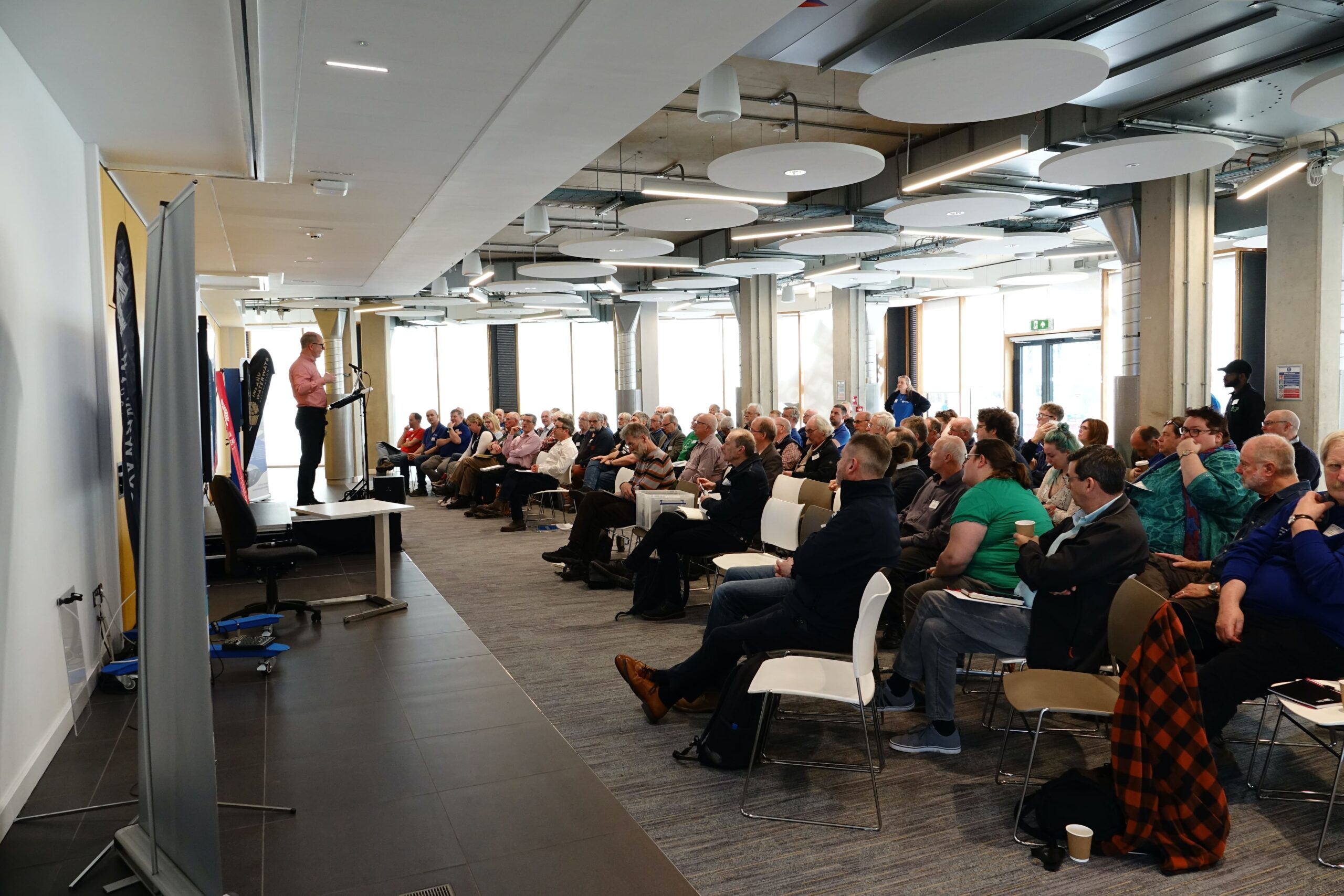
    The Annual Waterways Restoration Conference at the National Waterways Museum was jointly organised by IWA and Canal & River Trust on 26th April 2025.

    We had a packed audience for this event, which was held at the historic venue at Ellesmere Port. Special thanks go to the excellent speakers and compere who made the Conference inspiring and delightful, to IWA Chester and Merseyside Branch, and all the volunteers who helped hugely throughout the day, and to the Museum and Archives teams.

    The event was really made by the attendees, locally and from far and wide, who networked and offered so much in terms of questions and comments. Mike Wills, IWA Chair committed the organisation to increasing the Association’s capacity to support efforts in support of restoration projects. The challenges remain huge, however, and restoration groups are going to have to depend on each other more.

    The Conference slides can be downloaded from the links below.

    After the event there was a fascinating walk around Chester’s historic waterways, organised by John Herson of IWA Chester & Merseyside Branch and Chester Civic Trust – see the video here.

    We would like to thank the Daniel Adamson Preservation Society for displaying  the remarkable hand-built model of The Danny the restoration story of which is available on the Society’s website.

    Changing Conversations around Heritage – Hugh Pearman

    Grand Union Water Transfer Project – Introduction – John Pomfret

    Grand Union Water Transfer Project – S J O’Kane and Peter Walker

    Grand Union Water Transfer Project – Continuing the Conversation – John Pomfret

    Canal & River Trust and Waterway Restoration – Sean McGinley

    Restoration Moving Forward – Mike Palmer

    There were also two presentations about working with young volunteers, which are available on application to Verena Leonardini

  • IWA supports campaign to protect the route of the North Wilts Canal in Swindon

    IWA supports campaign to protect the route of the North Wilts Canal in Swindon

    The restoration of the Wilts and Berks Canal is an ambitious 70-mile project to recreate a cross-country navigation network. Opened in 1810, along with the North Wilts Canal in 1819, the Wilts & Berks Canal was formally abandoned by Act of Parliament in 1914. It has always been known by the shortened form of the county names to reflect the wording in the original Act of Parliament. After abandonment, ownership of the Canal was returned to adjacent landowners and local authorities, and some sections of the canal were sold. The main line route of the Canal runs from Abingdon on the Thames to Semington on the Kennet & Avon Canal; there were branches at Calne, Chippenham, Longcot and Wantage, and the North Wilts Canal runs from Swindon to Cricklade.

    The Wilts and Berks Canal Trust has been making great progress on several fronts, with backing from partner organisations and help from the IWA’s Waterways Recovery Group. For example, in Swindon, new sections of canal are being built by developers as part of Council planning conditions. There is much good work being done in Swindon, so this planning proposal is particularly disappointing and sufficiently serious that IWA has objected to the plans for the redevelopment of the Oasis site. This site is just north of Swindon Station where the North Wilts Canal is planned to be restored to link up to the Thames and Severn Canal route at Cricklade. As the national campaigning body promoting restoration of the waterways network, IWA supports the vital work which the Wilts & Berks Canal Trust, which is an IWA corporate member, is doing.

    The plans for the Oasis site ignore the needs for reserved routing for the re-establishment of the Canal through this part of Swindon. Permitting this development as proposed would preclude through restoration for several generations, thereby denying the residents of Swindon of the multiple advantages that a restored Wilts & Berks Canal would bring them. It would also be a serious setback to plans to reconnect Swindon to the rest of the national waterways network.

    Objecting to the proposal, IWA has written: “We urge the Planning Committee to reject these applications until modified (in a comparatively minor degree) to permit the eventual rebuilding of the canal through this area. We understand that the developers have been aware of this opportunity for over a decade but seem to have ignored the needs of a restored Wilts and Berks Canal in the detail of their plans. It is therefore for the planning authority to protect this route. The current plans should be rejected until they incorporate an effective future route for a restored canal.”

    The proposals include 700 homes, and it is well established that canals can be an excellent feature in new developments giving the community walking and wheeling routes; potential for water sports, being adjacent to a leisure centre, and helping nature recovery by creating a blue-green corridor for wildlife. IWA hopes that the Council will seize this opportunity not just because it will enable Swindon to be well connected by water again but also because of the benefits to local people and their physical and mental health.

    This case shows the importance of vigilance by local people and organisations. Waterway supporters are encouraged to report any such threats to restoration to their local IWA Branch, IWA’s Chesham office or the relevant local restoration society.

  • Neath and Tennant Canals Consultation fails to recognise canal potential

    Neath and Tennant Canals Consultation fails to recognise canal potential

    Neath Port Talbot Council issued a Neath and Tennant Canals options appraisal consultation in November 2024 to look at possible ways to restore and regenerate the Neath and Tennant canals for the benefit of people, places and the environment.

    The Council held a community workshop in early December 2024 to share options and gather views from the public. Two IWA South Wales Branch representatives, as well as several IWA members, and representatives from local canal groups attended a packed workshop at Aberdulais.

    IWA has responded to the consultation options put forward by the Council. Whilst encouraged that the Council sees the benefits that the canals’ restoration can bring, IWA feels that the lack of an option to return the canals to full navigability ignored the significant benefits that a wider ranging vision would bring. IWA feels that the options presented lacked the ambition and strategic vision demonstrated by other canal restorations elsewhere in the UK that have revitalised town and city centres.

    The Branch referred Neath Port Talbot Council to IWA’s comprehensive report Waterways for Today which explains how navigable waterways can act as a catalyst for investment and regeneration. The report also provides evidence showing why waterway focused projects are perfect for including in regeneration projects and third party funding bids.

    Restoration of both the Neath and the Tennant canals to full use is complicated by ownership issues. Neath Port Talbot Council terminated a Neath Canal Public Access Rights Agreement in December 2023 which previously gave the public access to parts of the Neath Canal towpath.

    IWA is very concerned that the options presented made no mention at all of key canal historic assets that need protecting in the short term. The Aberdulais Aqueduct (a Scheduled Ancient Monument) and associated weir are vital parts of both canals, and their continuing neglect is having, and will have, a significant impact on the viability of the canals’ restoration and future use. The IWA has an ongoing campaign to raise the issue of the potential threats to this important canal asset. Repair of the aqueduct and weir needs to be part of a wider plan to protect local houses and other properties at Aberdulais from potential flooding. 

    IWA believes that: 

    • The Aberdulais Aqueduct, weir and associated flood works need to be protected and work completed as soon as possible.
    • Canal ownership relationships need to be resolved so that works can be completed along both the canals.
    • A new partnership or dedicated organisation needs to be set up.
    • A clear Vision and Strategic Plan needs to be created supporting the Vision of Full Navigability of the Canals.

    To view IWA’s response to the consultation, click here.

  • The Rebuilding of Schoolhouse Bridge on the Montgomery Canal

    The Rebuilding of Schoolhouse Bridge on the Montgomery Canal

    Restoration of the bridge was an amazing achievement, and facilitates further restoration of the Montgomery Canal. The work has been led by a volunteer group over the past 8 years. Originally intended to be volunteer-built at a cost of about £300,000 but, following the Covid pandemic, it was built by a contractor in 2023 at a cost of £1.1m – and that money was sourced through public appeal from individual and group donations and grants. The whole project was described by Shropshire’s Lord Lieutenant as, ‘an incredible job’.

  • The Ashton and Peak Forest Canals – Reopened 50 Years Ago

    The Ashton and Peak Forest Canals – Reopened 50 Years Ago

    What follows below is a slightly modified version of an article, by Martin Ludgate, that appears in Navvies 324. You can subscribe to Navvies here, from only £5 per annum.

    Until around 1960 it was possible for boats to make a through journey east-west through the centre of Manchester. From the Bridgewater Canal at its Castlefield Basin terminus to the west of the city centre, the surviving one-mile length of the Rochdale Canal climbed through nine locks (the ‘Rochdale Nine’) to Ducie Street Basin. Beyond there, the main trans-Pennine length of the Rochdale Canal had been abandoned (with little hope of reopening), but the Ashton Canal turned right and climbed another 18 locks to Dukinfield Junction. Here the Huddersfield Canal (generally regarded as another hopeless case) continued straight ahead, but boats could turn right into the Lower Peak Forest Canal, then cross Marple Aqueduct and climb Marple Locks to join the Upper Peak Forest and Macclesfield canals.  From there, the Macclesfield led to the Trent & Mersey, which in turn connected to the Bridgewater, completing a 100-mile circuit – which waterways supporters later dubbed the ‘Cheshire Ring’.

  • Waterway Restoration Conference 2024

    Waterway Restoration Conference 2024

    The 2024 Annual Waterways Restoration Conference was held in the Creative Hub at Northampton University, attracting over 100 delegates on a sunny Saturday in April. The event, which is jointly organised by the Inland Waterways Association and Canal & River Trust, was opened by Julie Sharman (Chief Operating Officer at Canal & River Trust). The theme this year focused on inclusion, collaboration, training, skills and sustainable planning.

    Keynote speakers included Eoin Harris of Canal & River Trust who spoke on the topic of environmental constraints and opportunities in restoration projects. Eoin’s presentation inspired some thoughtful actions that trusts and societies can take moving forward to ensure that their projects comply with legislation and they take advantage of any opportunities created by their development work.

    Eoin was followed by Mark Bevan and Francis Holden of Kuso Construction, who specialise in temporary works and were able to provide clarity on the topic and explain some of the basic lower-level tasks that are involved in temporary works. During the presentation, they provided examples of how people often fail to meet standards and the consequences of these standards not being met. A lively Q&A session ensued after their talk.

    The final speaker of the afternoon was Mike Palmer, of IWA’s Waterway Recovery Group, who talked of the importance of real skills training in the practical activities undertaken by restoration groups. He also explained where and how the organisations can help and support them. Mike mentioned the new Practical Restoration Handbook which is due to be launched and explained other ways that IWA/WRG aim to lead on best practice within the inland waterways restoration sector. During the presentation, George Rogers of Chesterfield Canal Trust gave attendees a glimpse of what might be in store for next year’s Canal Camps. He is working closely with the sites team, and they are starting to talk to any group who may be interested in the possibility of holding a camp at their site in 2025.

    Delegates also had the opportunity to participate in two of the following workshops:

    • Mental and physical challenges in restoration volunteering – Claire Cavender (Buckingham Canal Society) and Jenny Hodson (IWA)
    • Creating capacity for restoration – Chris Madge (Derby and Sandiacre Canal Trust), George Rogers (Chesterfield Canal Trust), Terry Cavender (Buckingham Canal Society), and the IWA Restoration Hub High Level Panel
    • Diversifying your volunteer base – Jenny Hodson (IWA) and Darren Starling (Canal & River Trust)
    • Campaign and membership management within a small team – Lisa Mant (Cotswold Canals Trust)

    This year, rather than a post-conference tour of a local restoration project, attendees took part in a walk around the local area during lunchtime which was led by John Pomfret. It also involved a display by members of the Canal & River Trust hydrology team who demonstrated their flume tank. After the walk, delegates watched a webinar and YouTube footage from the Angling Trust on invasive species clearance and also had time to network and share best practice tips with one another.

    Attendees than enjoyed a brief update on the Fund Britain’s Waterways campaign followed by a closing speech by IWA National Chair, Mike Wills.

    We would like to thank Paul Rodgers for his excellent compèring of the event, the wonderful volunteers on the reception desk and in the car park, IWA Northampton Branch for their overall support, and Terry from Buckingham Canal Society for his support in the buildup to the event. Also thank you to everyone who attended on the day, we hope you got as much out of it as we, the organisers, did. We look forward to seeing you again next year at a new venue, with fresh topics inspired by the restoration field. Dates, venues and topics will be decided as soon as the team have had a chance to review the feedback from this year’s event and your suggestions for future ones.

  • IWA mounts campaign to save Scheduled Ancient Monument from needless destruction.

    IWA mounts campaign to save Scheduled Ancient Monument from needless destruction.

    IWA has sharply criticised a lazy proposal by Government body Natural Resources Wales (NRW) that says it is considering demolishing Aberdulais Aqueduct, which carries the Tennant Canal over the River Neath. 

    In a low-key consultation quietly issued by the Welsh Government quango, NRW lists five options for spending millions of pounds to reduce the flood risk for 27 properties alongside the river Neath, which have a long history of flooding.  Two of the options, believed to be favoured by NRW, involve complete or partial demolition of Aberdulais Aqueduct, which would forever frustrate restoration proposals to bring the Neath and Tennant canals back to life as well as impacting the wellbeing, environmental and heritage benefits provided by the Canal.

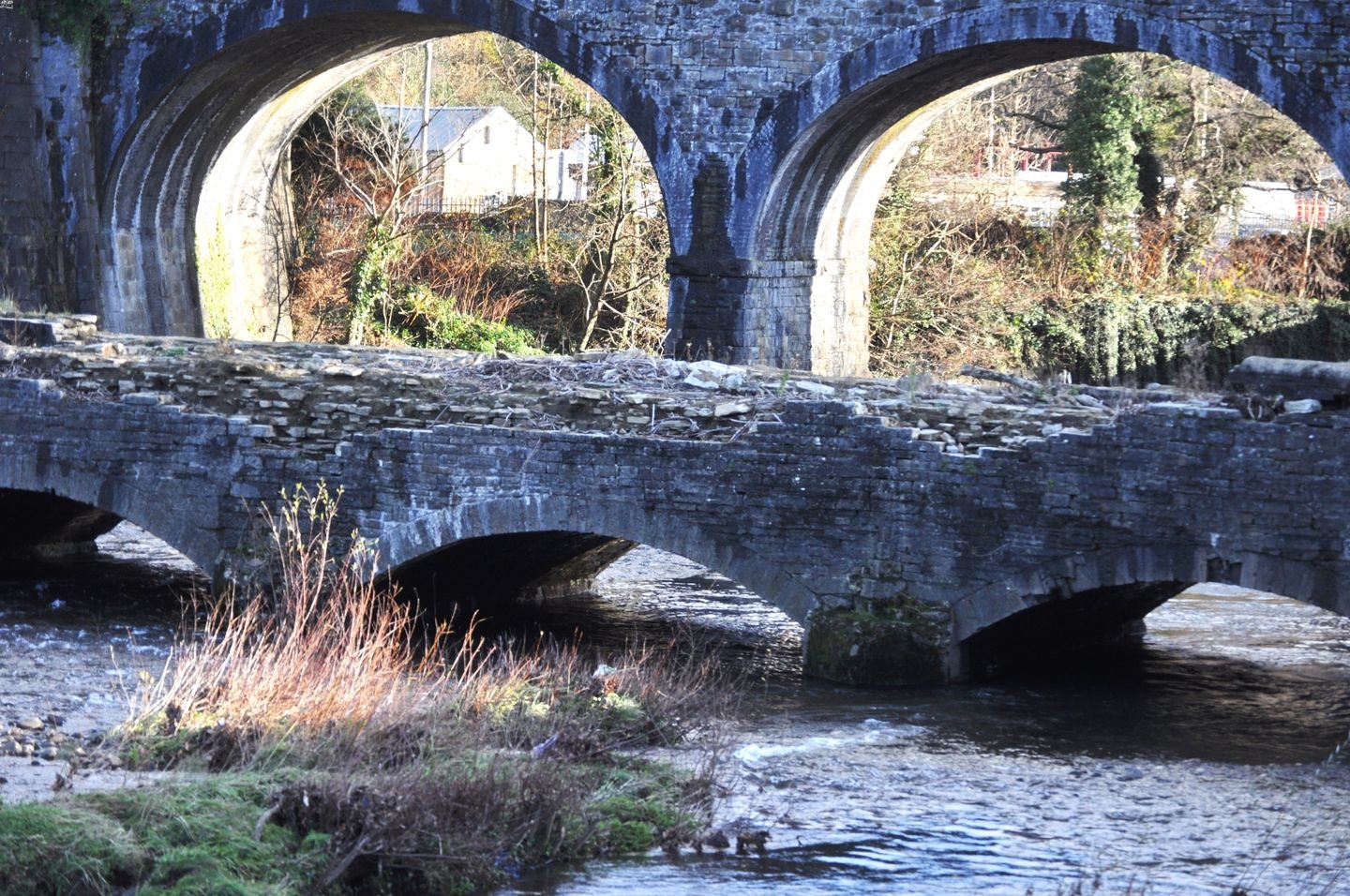
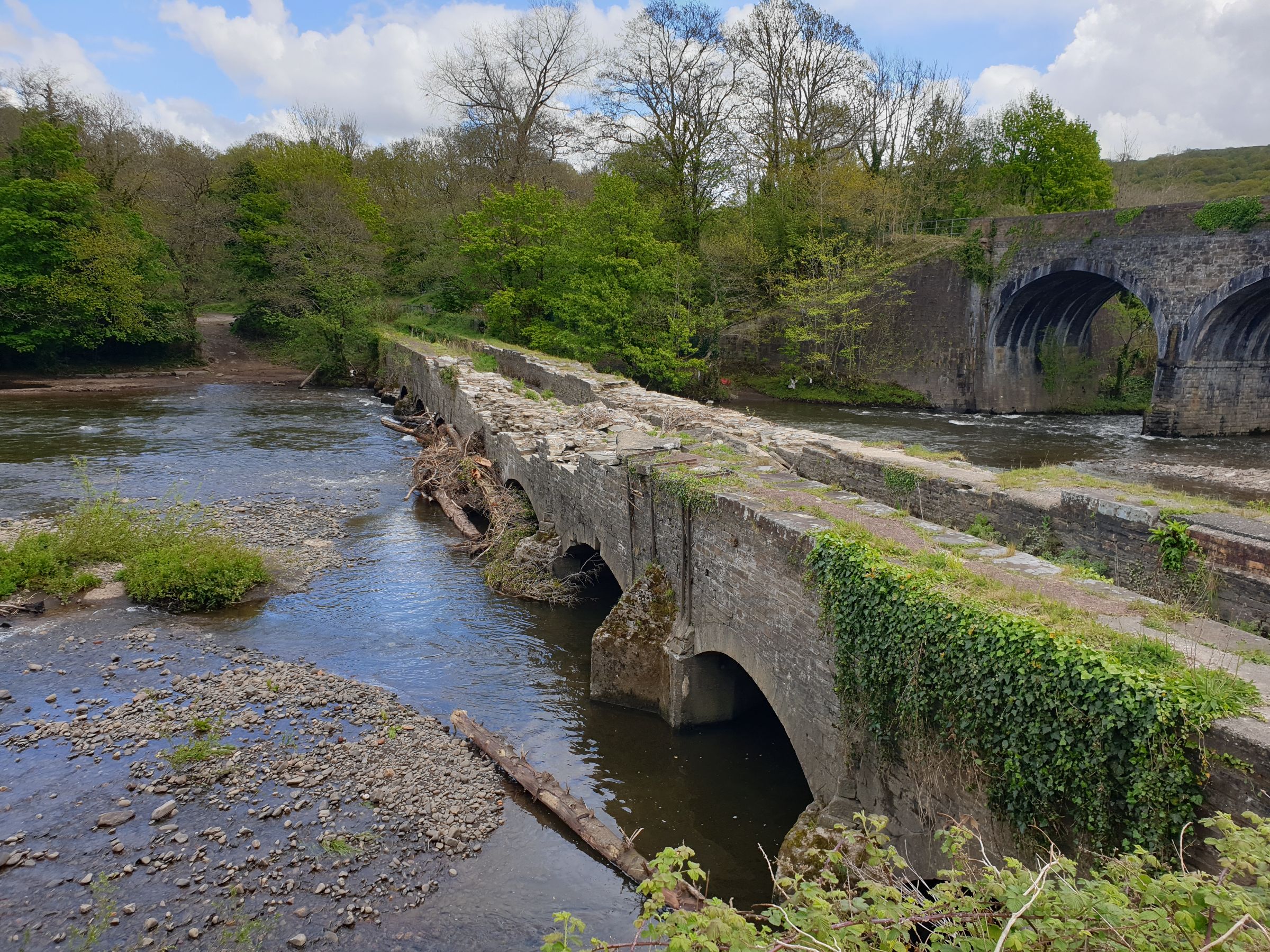
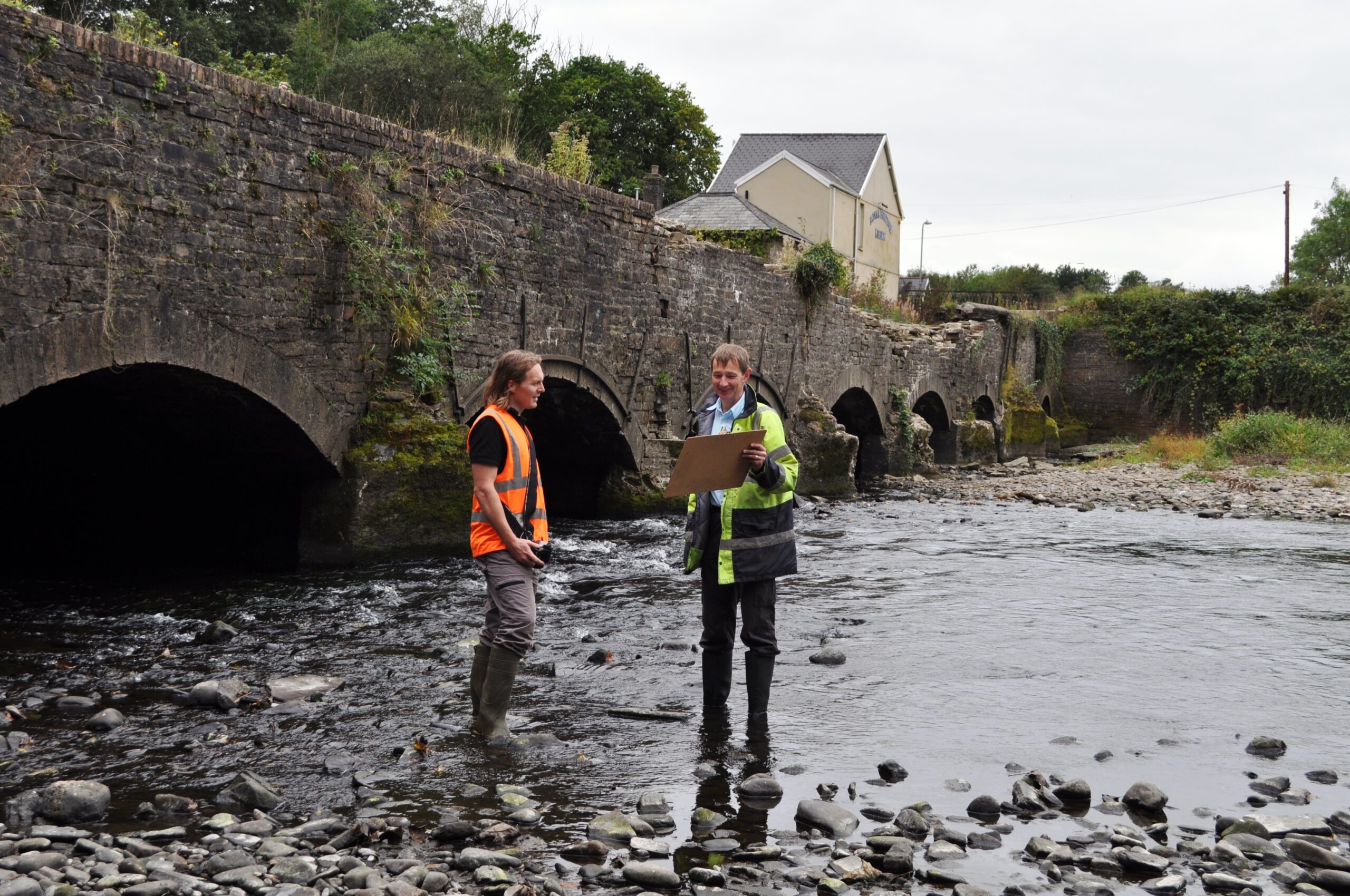
    The Aberdulais Aqueduct is a Scheduled Ancient Monument that spans the River Neath immediately south of the A465 in Aberdulais. The structure is located approximately two miles north-east of Neath.  It consists of a 104-metre-long structure comprising ten arches of overall length 66 metres bridging over the River Neath and a retained section extending a further 28 metres on the east bank of the River.  The aqueduct is of masonry construction and the condition of the structure has deteriorated significantly over the years since navigation ceased nearly a hundred years ago.  The Aqueduct historically formed a navigable link between the Tennant and Neath Canals and was constructed to also cross over an old 1750s navigable cut on the eastern side of the river.  Construction of the aqueduct began in 1823, and it was formally opened in May 1824.

    The aqueduct lies about 80 metres to the south of the confluence between the River Dulais and the River Neath. Just south of the confluence of the rivers a weir is located from which water is abstracted to supply the Tennant Canal.  This weir has failed, and Natural Resources Wales has proved uncooperative in approving its repair, leading to the Tennant Canal being nearly dry in recent years, with damage to the environment and loss of wildlife from the Canal.

    In times of flooding, the Aberdulais Aqueduct is perceived as an obstruction to the flow of the river.  Flooding of the adjacent land and properties has occurred on several occasions.  The properties in Canal Side have a long history of flooding, with damaging events in December 1979 and October 1998.  In recent years, climate change has worsened the situation and floods have become more regular, with damage to the aqueduct.  A structural inspection report commissioned by IWA’s Waterway Recovery Group in December 2021 showed that urgent works were required to prevent further damage to the Ancient Monument, but nothing has been done so far.  In its consultation, Natural Resources Wales admits that demolition of the aqueduct would have relatively little impact in reducing floods, but the local view is that NRW would like to demolish the aqueduct so it can be seen to be doing something.

    IWA Deputy Chair Sue O’Hare said “Whilst the Inland Waterways Association has every sympathy with the residents of Canal Side, demolishing one of Wales’s renowned historic structures would be nothing short of bureaucratic vandalism while not achieving the aim of significantly reducing the flood risk.  Over the years a great deal of voluntary effort and public money has gone into bringing the Neath Canal back to life for the benefit of the community.  IWA calls upon the owners of the Neath and Tennant Canals  (St Modwen and Port Tennant Canal Company), Neath Port Talbot Council and the government agencies concerned to work together to rescue this precious piece of heritage and amenity for the benefit of future Welsh generations.”

    National Resources Wales’s consultation, which closes on 26th February is at https://bit.ly/AberdulaisENG.  The consultation conveniently omits any mention that the Aqueduct is a Scheduled Ancient Monument, or any historical background or its purpose.  Rather, it just suggests demolition as if the Aqueduct were just some pile of inconveniently discarded rubble.  The consultation does admit, however, that even if the aqueduct were to be demolished, that it would “unlikely to be able to remove the flood risk to the Aberdulais community entirely”.  Alternative, albeit possibly more expensive, measures of making properties more flood-resilient, appear not to have been considered. However, the consultation does admit that “Additional measures (necessary) are likely to take a whole catchment approach and may include improved warning and informing, nature based solutions as well as engineered defences.”

  • Plans for The Next IWA National Trailboat Festivals

    Plans for The Next IWA National Trailboat Festivals

    The next National Trailboat Festival is planned to take place in 2024, and sites are under discussion about sites for 2025 and 2026. An announcement for the 2024 Festival should be made in late 2023.

    Trailboat Festivals are very useful for drawing attention locally and nationally to restoration or improvement projects. In addition to a greater awareness of the project, these events can draw local political attention to successful restorations and also provide a source of additional income. When people see others gathering and the tranquil movement of pleasure boats – illuminated at night and decorated with bunting and flags – on even a small part of their previously disused canal, it gives a lot of pleasure. It adds considerably to the quality and tone of the locality – urban or rural. It leaves people wanting to see further improvement and attracts more supporters for the restoration project.

    For those interested to host a Trailboat Festival in future years:

    There is no set design for a Trailboat Festival as its very nature will depend upon the waterway being promoted. These events depend in part on the availability of volunteers, financial resources, and the extent of support from local politicians and the community. We have members and supporters in all parts of the country, and can certainly ask those who are local to you if they are willing to help with preparation. A Waterway Recovery Group (WRG) team could be available if requested, depending on availability, to provide manual assistance in constructing, running and dismantling as they have people who have been putting on events for many years and may be available to give advice in person, over the phone or by email. We may also be able to free loan a two-ton trailer full of the sort of gear necessary to stage an event, although a 4×4 vehicle with a tow bar is required to collect it. Some marketing for the event can be carried out centrally as part of our programme of events which is advertised each year, and our website can also be used. You can apply to our Finance Committee for help with your early organising costs.

    The format for applications is to submit a written request but the first step is to check that you have the basic facilities available. Please email the Trailboat Officer for a list of required facilities. As each event tends to be unique to its waterway and to its organising committee, all we need at the outset is an Outline Proposal of your Trailboat Festival Plan. We will send you advice on what this should cover and an example for guidance. To secure the approval and support of IWA, it is necessary for us to feel sure the event is likely to take place and that the event is planned properly. Organisers will need to plan several years ahead and have a suitable budget in place. For assistance with answering the questions in the application, just email iwa.trailboat.festivals@gmail.com. We are continuously looking for applicants for Trailboat Festivals up to 4/5 years in advance to allow plenty of advertising time.

  • Wendover Arm Canal back in water

    Wendover Arm Canal back in water

    434 metres of the Wendover Arm Canal started re-watering on the 27th November, a process that takes about 3 weeks. This is a significant and exciting step forward for the full restoration of the Wendover Arm Canal.

    IWA’s Restoration Hub has been providing a significant amount of support to the project, led by the Wendover Arm Trust. Our Technical Support Officer, Mikk Bradley, worked with Canal & River Trust over the drawings and designs. This allowed this section of restoration work to be undertaken by volunteers. He has also prepared detailed drawings for the repairs to the foundations of the swing bridge, including stop plank channels and sheet piling bank protection. Mikk has also taken on an active role in training Wendover Canal Trust volunteers in levelling and relevant regulations.

    The re-watering has come about thanks to the enormous effort of the Wendover Canal Trust volunteers over the last 6 years. During lockdown, local Waterway Recovery Group volunteers got stuck in at the Trust’s regular work parties. IWA’s Restoration Hub will continue to support this project and we will be running a Family Canal Camp with Wendover Canal Trust in 2022.

  • A plan to save Aberdulais aqueduct

    A plan to save Aberdulais aqueduct

    We can now make a plan to save Aberdulais Aqueduct, a Scheduled Ancient Monument, thanks to our successful grant application to CADW.

    We are working closely with the Neath & Tennant Canals Trust to protect Aberdulais Aqueduct on the Neath and Tennant Canals. The aqueduct is in a poor state following flood events causing significant damage to the structure.

    Our campaign to save Aberdulais aqueduct has involved conversations with Natural Resources Wales and the local council. There are concerns that both organisations would support the removal of the aqueduct to alleviate local flooding issues. We have also had meetings with CADW and the owners of the aqueduct. We are also supporting the local Trust to rebuild relationships with local residents and work with the ‘Save the Tennant Canal’ group to create further pressure at a local level.

    In August 2021 IWA successfully applied for a CADW grant to cover the cost of a structural survey of the aqueduct. A survey is needed to get a better idea of the scale of the repair work and potential cost implications. Mann Williams, who specialise in creative conservation of historic buildings and structures, undertook the survey. Once we have the survey results, we will plan the next stage of our campaign to save this heritage gem.

    Find out more about Aberdulais Aqueduct