Author: Amy Tillson

  • IWA supports campaign to protect the route of the North Wilts Canal in Swindon

    IWA supports campaign to protect the route of the North Wilts Canal in Swindon

    The restoration of the Wilts and Berks Canal is an ambitious 70-mile project to recreate a cross-country navigation network. Opened in 1810, along with the North Wilts Canal in 1819, the Wilts & Berks Canal was formally abandoned by Act of Parliament in 1914. It has always been known by the shortened form of the county names to reflect the wording in the original Act of Parliament. After abandonment, ownership of the Canal was returned to adjacent landowners and local authorities, and some sections of the canal were sold. The main line route of the Canal runs from Abingdon on the Thames to Semington on the Kennet & Avon Canal; there were branches at Calne, Chippenham, Longcot and Wantage, and the North Wilts Canal runs from Swindon to Cricklade.

    The Wilts and Berks Canal Trust has been making great progress on several fronts, with backing from partner organisations and help from the IWA’s Waterways Recovery Group. For example, in Swindon, new sections of canal are being built by developers as part of Council planning conditions. There is much good work being done in Swindon, so this planning proposal is particularly disappointing and sufficiently serious that IWA has objected to the plans for the redevelopment of the Oasis site. This site is just north of Swindon Station where the North Wilts Canal is planned to be restored to link up to the Thames and Severn Canal route at Cricklade. As the national campaigning body promoting restoration of the waterways network, IWA supports the vital work which the Wilts & Berks Canal Trust, which is an IWA corporate member, is doing.

    The plans for the Oasis site ignore the needs for reserved routing for the re-establishment of the Canal through this part of Swindon. Permitting this development as proposed would preclude through restoration for several generations, thereby denying the residents of Swindon of the multiple advantages that a restored Wilts & Berks Canal would bring them. It would also be a serious setback to plans to reconnect Swindon to the rest of the national waterways network.

    Objecting to the proposal, IWA has written: “We urge the Planning Committee to reject these applications until modified (in a comparatively minor degree) to permit the eventual rebuilding of the canal through this area. We understand that the developers have been aware of this opportunity for over a decade but seem to have ignored the needs of a restored Wilts and Berks Canal in the detail of their plans. It is therefore for the planning authority to protect this route. The current plans should be rejected until they incorporate an effective future route for a restored canal.”

    The proposals include 700 homes, and it is well established that canals can be an excellent feature in new developments giving the community walking and wheeling routes; potential for water sports, being adjacent to a leisure centre, and helping nature recovery by creating a blue-green corridor for wildlife. IWA hopes that the Council will seize this opportunity not just because it will enable Swindon to be well connected by water again but also because of the benefits to local people and their physical and mental health.

    This case shows the importance of vigilance by local people and organisations. Waterway supporters are encouraged to report any such threats to restoration to their local IWA Branch, IWA’s Chesham office or the relevant local restoration society.

  • Neath and Tennant Canals Consultation fails to recognise canal potential

    Neath and Tennant Canals Consultation fails to recognise canal potential

    Neath Port Talbot Council issued a Neath and Tennant Canals options appraisal consultation in November 2024 to look at possible ways to restore and regenerate the Neath and Tennant canals for the benefit of people, places and the environment.

    The Council held a community workshop in early December 2024 to share options and gather views from the public. Two IWA South Wales Branch representatives, as well as several IWA members, and representatives from local canal groups attended a packed workshop at Aberdulais.

    IWA has responded to the consultation options put forward by the Council. Whilst encouraged that the Council sees the benefits that the canals’ restoration can bring, IWA feels that the lack of an option to return the canals to full navigability ignored the significant benefits that a wider ranging vision would bring. IWA feels that the options presented lacked the ambition and strategic vision demonstrated by other canal restorations elsewhere in the UK that have revitalised town and city centres.

    The Branch referred Neath Port Talbot Council to IWA’s comprehensive report Waterways for Today which explains how navigable waterways can act as a catalyst for investment and regeneration. The report also provides evidence showing why waterway focused projects are perfect for including in regeneration projects and third party funding bids.

    Restoration of both the Neath and the Tennant canals to full use is complicated by ownership issues. Neath Port Talbot Council terminated a Neath Canal Public Access Rights Agreement in December 2023 which previously gave the public access to parts of the Neath Canal towpath.

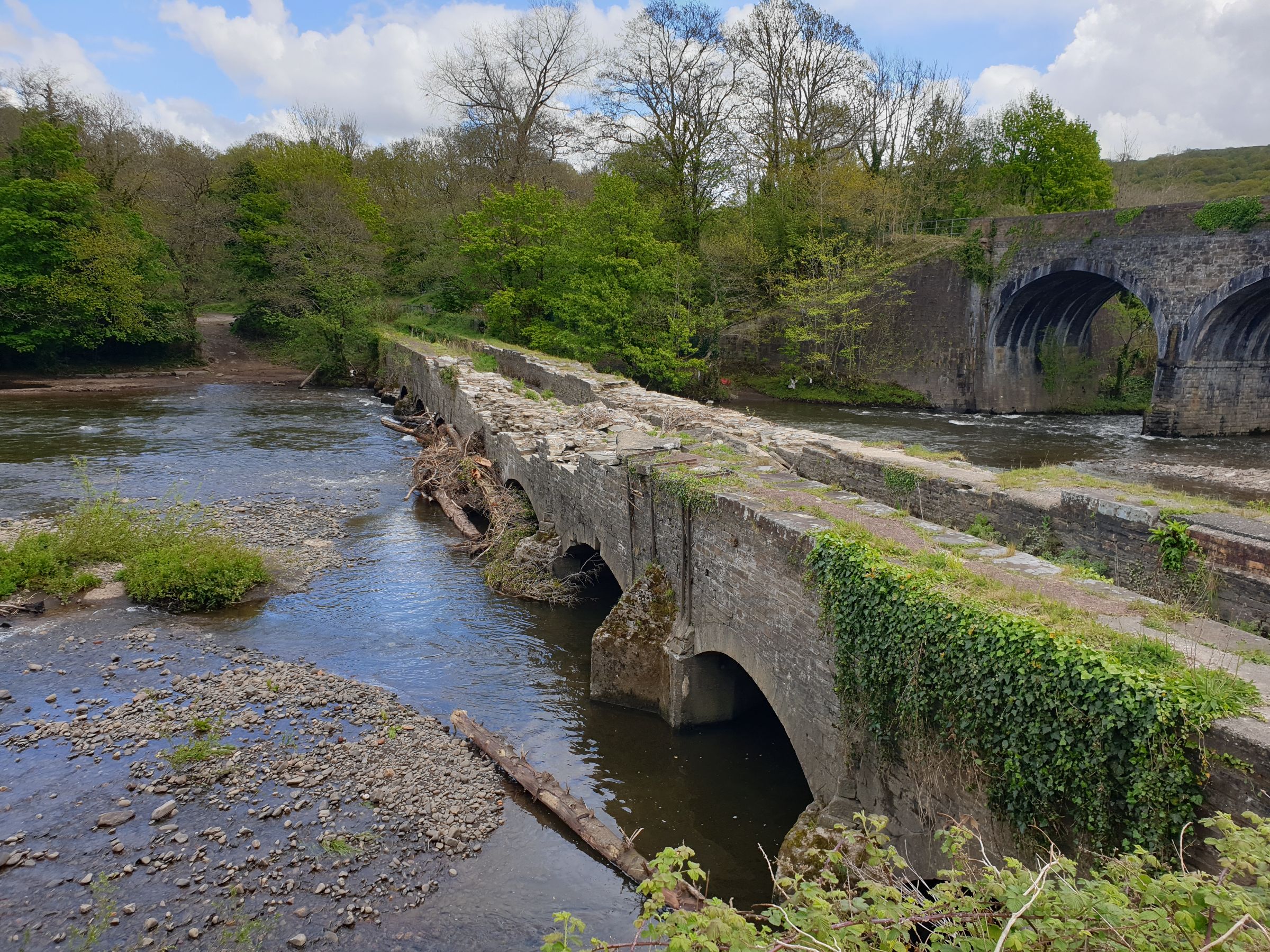
    IWA is very concerned that the options presented made no mention at all of key canal historic assets that need protecting in the short term. The Aberdulais Aqueduct (a Scheduled Ancient Monument) and associated weir are vital parts of both canals, and their continuing neglect is having, and will have, a significant impact on the viability of the canals’ restoration and future use. The IWA has an ongoing campaign to raise the issue of the potential threats to this important canal asset. Repair of the aqueduct and weir needs to be part of a wider plan to protect local houses and other properties at Aberdulais from potential flooding. 

    IWA believes that: 

    • The Aberdulais Aqueduct, weir and associated flood works need to be protected and work completed as soon as possible.
    • Canal ownership relationships need to be resolved so that works can be completed along both the canals.
    • A new partnership or dedicated organisation needs to be set up.
    • A clear Vision and Strategic Plan needs to be created supporting the Vision of Full Navigability of the Canals.

    To view IWA’s response to the consultation, click here.

  • Storm Bert breaches Stover Canal

    Storm Bert breaches Stover Canal

    The canal, River Teign and an unused railway line all run parallel in a section of the valley near Kingsteignton. Heavy rain building up in the canal and on land to the west of the railway embankment caused some 60 metres of canal embankment south of Teign Bridge to collapse. The water flowed into an adjoining clay pit owned and operated by Sibelco.

    A similar length of railway embankment also collapsed. The Templer Way pedestrian route along the canal towpath, and the Stover Trail for pedestrians, cyclists and horse riders, on the western side of the railway, have both been washed away.

    For background, the railway and canal are owned by Network Rail, with the canal leased to Teignbridge Council and sub-leased to the Stover Canal Trust which is working on its restoration.  The railway has been non-operational for some years and there is now concern as to whether Network Rail will try to use the occasion to close it permanently.

    The Stover Canal Trust is an IWA corporate member. Its Chairman, Paul Taper, shared his initial assessments: “It is clearly early days, and needless to say, the costs will be considerable. One of the first actions will be to rebuild the canal embankment, which may need piling etc. to make it strong and watertight. The water in the quarry pit will need to be tested by the Environment Agency for contamination and, only if suitable, can be pumped back into the canal and river. Pumping time is estimated at nine months due to the sheer volume of water involved. 

    “The railway embankment will need to be rebuilt if flood water is to be retained on its western side. Both the Templer Way, along the canal towpath, and the Stover Trail, to the west of the railway, will need to be reinstated.”

    Additional damage was done to the canal north of Teign Bridge. Stover Canal Trust volunteers held an ad hoc work party shortly after the storm and made good the damage to two footbridges and some of the towpath on the northern half of the canal.

    A meeting was held between Sibelco, Stover Canal Trust, the Environment Agency, Teignbridge District Council and Devon County Council to discuss the issues regarding pumping out the quarry and preventing it from happening again. Network Rail were invited but did not attend the meeting. Further update meetings will be held at two monthly intervals.

    Aerial photo of the devastation several days after Storm Bert. To the left the railway track hangs loose. The line of the canal can just be made out in the centre, running immediately parallel to the track. The flooded clay pit lies to the right, having been filled through a breach in the canal embankment. (Photo: David Abel)

  • Widening perspective of Taunton Waterways Strategy

    Widening perspective of Taunton Waterways Strategy

    Somerset Council issued a consultation document in September on its proposed Taunton Waterways Strategy.

    IWA’s West Country Branch reviewed the proposed strategy and, whilst generally supportive of the proposals, felt that significant benefits of waterways-focused development had been overlooked.

    The draft Strategy focuses on the opportunities that waterways offer to mitigate flooding, enhance biodiversity, encourage active and sustainable travel and build a sense of community. But the roles that waterways play in creating jobs and bringing financial benefits through tourism and leisure were hardly touched on.

    The Branch’s response to the consultation made a series of suggestions intended to provide the Council with a wider perspective on the benefits of navigable waterways. It also flagged up that the Grand Western Canal had been omitted from the Strategy, despite its origins in Taunton, plus the need to refer to wider waterways issues in Somerset, which could have a positive and lasting impact on the town.

    The Branch referred Somerset Council to IWA’s comprehensive report Waterways for Today which explains how navigable waterways can act as a catalyst for investment and regeneration. The report also provides evidence showing why waterway focused projects are perfect for including in regeneration projects and third party funding bids.

    To view the Branch’s response to the consultation, click here.

  • IWA Response to EA Registration Fees Increase

    IWA Response to EA Registration Fees Increase

    The Environment Agency has recently announced that even though a large majority of customers did not support the proposal, it has decided to increase boat registration fees by 9%. 

    IWA acknowledges that the Environment Agency’s funding position has left it in a difficult position, considering how inflation has impacted on its costs such as building, materials and repairs. However, as shown by the consultation response, the majority sentiment amongst our membership who use the EA waterways is that the 9% increase is too much.

    This is largely due to the impacts on navigation of increased delays to planned winter maintenance works, with more and more works encroaching on summer boating. In particular, access between the Great Ouse, Middle Levels and River Nene was prevented due to delayed work. Through passage on the Nene was not possible until 1 June, Denver crossing was closed until 10 June, Brownshill Lock was closed until 17 June and Brandon Lock remains closed at the time of writing. 

    Other concerns include a significant increase in the number of lock failures, the numerous weirs blocked by debris and abandoned boats which increases the risk of floods, various investment decisions that fail to prioritise navigation, loss of income through failure to enforce regulations, and failure to maximise commercial opportunities.

    We are also concerned that the Environment Agency’s navigation teams have lost many of their more experienced staff who had in-depth knowledge and understanding of the waterways when communicating with business and leisure customers. More effective management will require more responsive and well-informed operation managers.

    The Environment Agency has stated that the rise in registration fees will be used to improve the experience of users. As we said in our consultation response these are some of the aspects where IWA would like to see improvement:

    • greater reliability for navigation and better facilities for boaters; 
    • speedier attention to faults and shorter stoppage times;
    • streamlining and rationalising EA’s procedures including its very complicated charging regime;
    • increasing revenue by better enforcement of unlicensed boats (many of which will be uninsured and without Boat Safety Scheme certificates);
    • reviewing the criteria for issuing and lifting strong stream advice;
    • improving reliability of existing equipment (particularly gear boxes and electrical systems at locks);
    • more efficient use of staff including subcontractors for the winter maintenance works programme. 

    Sue O’Hare, Chair of IWA’s Navigation Committee, said:

    “It is understandable that the Environment Agency has felt the need to make a significant increase to boat registration fees, but it is disappointing that its funding position has made this necessary. Through Fund Britain’s Waterways IWA is campaigning for adequate national and local government funding for all Britain’s navigable rivers and canals to ensure that future generations can continue to enjoy their many benefits. At the same time it is incumbent upon all navigation authorities to ensure that their funding is used effectively and efficiently.”

  • IWA Concern at Cam Conservancy Financial Situation

    IWA Concern at Cam Conservancy Financial Situation

    In May 2024, due to safety concerns regarding the structural integrity of the lock islands at Baits Bite and Jesus Green locks, the decision was taken to close the locks until further notice. 

    Visual and underwater camera surveys have now shown that the fabric of both locks is unstable and vulnerable to collapse. Both lock islands carry public footpaths over the river, and the footpath at Baits Bite was closed by Cambridgeshire County Council at the same time as the Conservancy closed the lock and remains closed.

    Both locks will require stabilisation work to make them safe in the short term and rebuilding in the medium term. The immediate stabilisation work is likely to cost around £1.5 million per lock, with the need greatest at Baits Bite. Rebuilding the locks is likely to cost at least £5 million each, probably more.

    The Conservancy has stated that funds for the immediate stabilisation work are not readily available to them, and the medium-term rebuilding of the locks is beyond the Conservancy’s financial means.

    The Conservancy’s income comes almost exclusively from fees, which just cover routine operations and it receives no additional funding for capital works. As a result, the Conservators are exploring potential sources of external funding.

    The situation has left many boats stranded on the river with no maintenance facilities on the affected stretch, and no visitors able to reach the popular tourist destination of Cambridge by boat. Some have been forced to crane their boats out in order to leave.

    This news comes as IWA are also calling for additional funding for the Broads Authority as concerns have been raised about the sustainability of the funding model for the Broads as demonstrated by the recent Broads Authority briefing on navigation charges for 2025/26.

    Sue O’Hare, Chair of IWA’s Navigation Committee, said:

    “Through Fund Britain’s Waterways IWA is campaigning for adequate national and local government funding for all Britain’s navigable rivers and canals to ensure that future generations can continue to enjoy their many benefits. The circumstances of the River Cam are unique but the need for funding is universal.”

    For more information see the Cam Conservancy website.

  • IWA Concern about the Financial Sustainability of the Broads

    IWA Concern about the Financial Sustainability of the Broads

    The Norfolk and Suffolk Broads are a valuable natural asset, recognised by their National Park status. Uniquely among National Parks, the Broads area includes 125 miles of navigable waterways. These waterways are fundamental to the character of the Broads and bring benefits to the economy, the natural and built environment, local communities and the lives of individual people. About 7.5 million people visit the Broads each year, drawn by the special qualities of the wetland landscape and the tranquillity of the waterways threaded through it, traversed by boats of all shapes and sizes. As a result tourism in the Broads contributes £775 million to the Norfolk and Suffolk economy and supports over 7,000 jobs. The Authority’s briefing is available here.

    The Broads receive National Park Grant funding from Defra, but the Norfolk and Suffolk Broads Act 1988 requires this to be used solely for funding National Park expenses and not for maintaining the waterways to keep them safe and navigable. Rather, all navigation costs must be funded from navigation tolls paid by over 8,000 private boat owners and 54 hire boat companies. This has resulted in the need to increase tolls substantially in recent years, which has generated considerable public disquiet. The number of both privately owned and hire boats has been decreasing, partly as a result of the increase in charges but also because of other factors such as poor weather, the cost of living crisis and relatively cheap foreign holidays. In consequence the Broads Authority briefing on navigation charges states a significant shortfall of £394,000 in the budget for management of the Broads navigation for 2025/26 and sets out some stark options. Ultimately the situation poses a threat to the essential character of the Broads and will potentially degrade their National Park status, as well as their contribution to the economy.

    IWA previously set out its concerns over the need for large toll increases in a representation to the Secretary of State for Transport and urged Government to recognise the need for financial support to ensure that navigation and the character of the Broads are maintained. As noted in the representation, the Broads Authority is the only major inland navigation authority that does not receive government funding to support maintenance of navigation. Government has argued that use of the Broads waterways is a private benefit which should not be funded, despite waterways and boating being an integral part of the special qualities justifying the National Park designation – and therefore a public asset. Many people as well as boaters enjoy the public benefits provided by the rivers and wetlands.

    The Broads Authority has written to the Government demonstrating that navigation is a public rather than a private benefit and deserves financial support from the Government. This position is supported by the Broads Society and also by IWA. IWA agrees that Government should recognise the value of navigation to the general public and provide a permanent regular annual navigation supplement to the Broads Authority, in addition to its funding as a National Park.

    Sue O’Hare, Chair of IWA’s Navigation Committee, said:

    “Through Fund Britain’s Waterways IWA is campaigning for adequate national and local government funding for all Britain’s navigable rivers and canals to ensure that future generations can continue to enjoy their many benefits. The circumstances of the Broads are unique but the need for funding is universal.”

  • Engaging with the Grand Union Water Transfer Scheme Consultation

    Engaging with the Grand Union Water Transfer Scheme Consultation

    Severn Trent Water, Affinity Water, and Canal & River Trust have consulted on plans to transfer available treated recycled water from the Birmingham area, via the canals, to an area supplied by Affinity Water in Hertfordshire and Bedfordshire. Water would be piped into the Coventry Canal, probably at the top of Atherstone Locks, and would flow south via the Oxford and Grand Union Canals to an abstraction point somewhere near Leighton Buzzard. It would then be piped to a reservoir near Luton to help alleviate shortages in part of Affinity Water’s public water supply area.

    This is not a new idea – the Llangollen Canal, Gloucester & Sharpness Canal, Bridgwater & Taunton Canal and Fossdyke have all been used for water transfer for many years and this brings in extra income for CRT. However, every canal has its own specific character and we need to make sure we get the best deal for the Grand Union out of the scheme. IWA submitted a response supporting in principle the concept of water transfer schemes if they facilitate improved navigation in areas that are currently subject to a water shortage. The consultation does not provide any of the detail required in order to assess heritage impacts or the effects of engineering modifications. The next stage of consultation needs to closely define the extent and costs of all these interventions, well in advance of any Development Control Order (DCO) application, so that IWA and others can provide detailed advice and take an informed position on this proposal.

    While the use of the canal for water transfer in drought periods has the potential to eliminate the sort of lock-use restrictions we have had in the past in dry summers, we will want to be assured that the scheme will not have negative effects on canal users. So we will be looking for answers and reassurance on matters such as:

    • the impact of raised water and bank levels on bridge headroom, flood risk, water depth, moorings and heritage
    • the location, design of and power supply for pumping facilities;
    • the currents that will be generated in the canal, especially through the fixed cross-section of Braunston Tunnel;
    • the way the scheme will be operated during drought periods;
    • water quality of the transferred water;

    This will be a project authorised by central Government under a Development Consent Order (DCO) and the aim of the promoters is to apply for the DCO early in 2026. This will be followed by a period of ‘Examination in Public’ by the Planning Inspectorate, then a decision on the DCO, probably in 2027, with a view to the scheme being operational by 2033.

    IWA will feed in its views as the scheme is developing and, at the appropriate time, will consider whether to make what is called a ‘relevant representation’, which would enable us to participate in the Examination in Public.

    The public consultation closed on 25 October. Details of the scheme and consultation arrangements are available on the web at: www.guctransfer.co.uk. Further opportunities to comment will be opened up as the scheme progresses.

    Read the full IWA response.

    [Article updated on 28 October to reflect that the consultation has now closed]

  • Sustainable Boating Group Submission to Government Spending Review

    Sustainable Boating Group Submission to Government Spending Review

    IWA and its partners in the Fund Britain’s Waterways group have submitted a joint representation to the Government Spending Review on the more general issues of waterways funding. Additionally, the Sustainable Boating Group has submitted their own, focusing on the need to review the supply and taxation of HVO biodiesel. IWA’s Freight Group has also submitted a representation.

    New craft are increasingly being built using electric propulsion. However, the existing leisure fleet, mainly using mineral diesel, will last many decades. Conversion of most of it to electric propulsion is unlikely and the scrapping of so many serviceable diesel engines would be environmentally undesirable.

    The ‘FAME’ biodiesel currently being used in B7 road diesel is unsuitable in a marine environment (even at 7%) because it causes expensive engine failures which, in some instances, results in safety issues.

    The only practical way of decarbonising the existing leisure fleet is for it to use Hydrogenated Vegetable Oil (HVO) as a fuel. Because of price volatility and complex government regulations HVO is not readily available for leisure boaters to use at a price they are prepared to pay.

    Leisure boating supports many jobs and provides a significant contribution to the national economy.

    IWA has therefore asked that the upcoming budget and spending review includes a holistic approach to the supply of HVO to leisure boaters that will simplify the regulatory regime, allow HVO to be sold on the inland waterways at a relatively stable and acceptable price and hence allow the economic value of the sector to be protected and the existing fleet to be largely and rapidly decarbonised. Based on our estimates, we believe that the cost to the Treasury will be very small.

    Read the full submission here.

  • IWA Concern over Vazon Bridge Opening

    IWA Concern over Vazon Bridge Opening

    IWA has written to Network Rail to express concern about the ongoing problems with the opening times of the Vazon bridge over the Stainforth and Keadby Canal.  

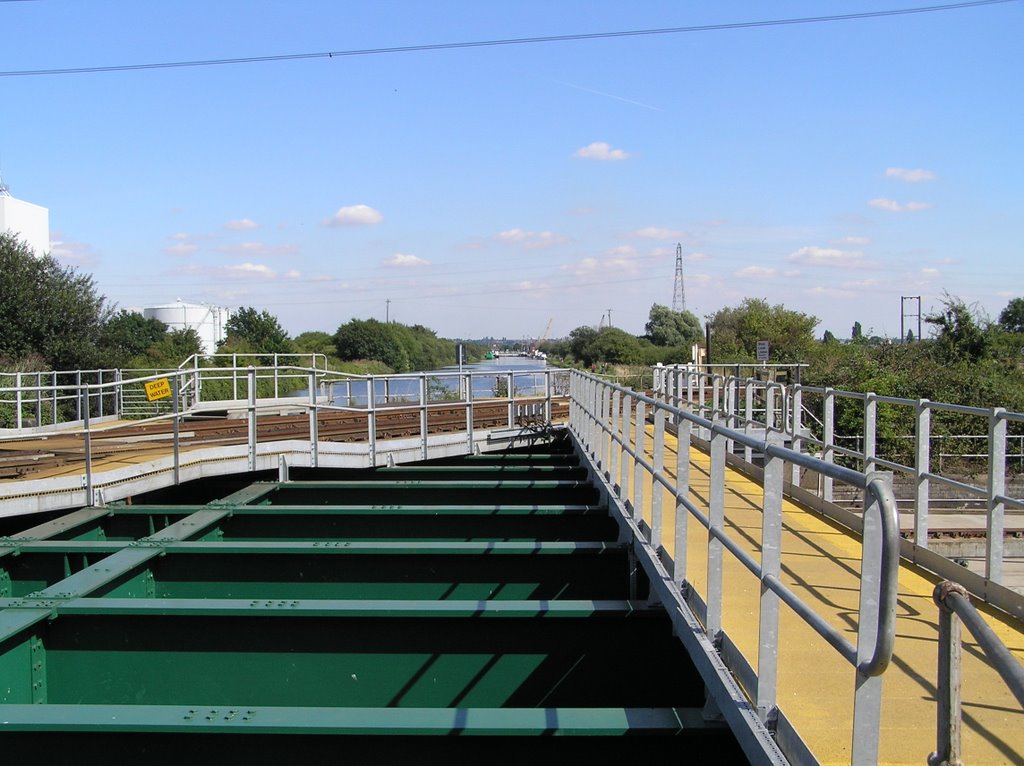
    The Vazon Sliding Railway Bridge works by sliding open to allow boats on the Stainforth and Keadby canal to pass, before returning to its original position, enabling trains to continue with their journey. The crossing connects trains between Doncaster, Scunthorpe and the Lincolnshire coast and is a busy rail freight route. The sliding bridge is Britain’s only sliding railway bridge over a canal, with the original structure dating back to the 1860s. 

    Sensors on the structure alerted Network Rail teams to a a fault with its mechanism which involves a key component that allows the bridge to slide across the canal. The part needs replacing and a new one is now being specially made. 

    Prior to the maintenance work, the bridge was opened for boaters as required, but at the time of writing the bridge is only opened at 10pm each day, with no indication of when normal service will resume. One daily 10pm opening is not only potentially dangerous due to the need to cruise in the dark but takes no account of tides, further limiting the availability of navigation. The bridge is now illuminated and signed to aid boaters, but whilst this is welcome, raises the further concern that Network Rail are looking to make this one opening in 24 hours a permanent arrangement.  

    Navigation rights at the Vazon bridge precede the railway as the Stainforth & Keadby Canal was already in use when the rail line was built and are covered by Act of Parliament. IWA has asked for reassurance that, once these bridge repairs are completed, the rail bridge will return to its normal service of being opened for boaters when required, and when this service would be reinstated. 

    In the meantime, thanks are due to Celyn Winter and Callum Joinson, two members of the “Try the Trent” group, who have been helping boaters navigate through the rail bridge and the nearby road bridge since night time access was required a month ago.

    Update: Keadby Bridge reopened on 24th September after engineers completed their investigations.

  • Disappointment as Popular Boat Festival is Cancelled

    Disappointment as Popular Boat Festival is Cancelled

    The popular Ware Boat Festival, run by IWA Lee & Stort Branch every year to coincide with the Ware Festival, organised by Ware Town Council, due to take place on the 5th to the 7th of July, has had to be cancelled at the last minute. Hertfordshire County Council has issued a closure order for a large section of the towpath on the River Lee through Ware, including the entire site on which the Festival was to be held.

    The closure is on the grounds that the state of the towpath is now so dangerous as to constitute a danger to the public. Hertfordshire County Council has erected barriers at either end and entrances to the towpath to prevent public access, and anyone setting foot on the towpath could be liable to prosecution and a substantial fine.  The towpath has been in a poor state for many years, deteriorating each year, and usually volunteers from IWA Lee & Stort Branch undertake a few days’ work to make things safe for the festival.  The towpath, which is a public right of way, was assessed by Hertfordshire County Council’s contractors, Ringway, who identified 40 serious and dangerous issues, each of which could have been enough on their own to issue the closure order.  Hertfordshire County Council say that the issues are so serious that they have no choice but to maintain the closure until substantial works are undertaken, as a matter of public safety. 

    The cost of the works is estimated at £100,000s, which Hertfordshire County Council will fund, as highways authority, but only when they have the budget as it has been classified as a ‘complex’ issue for a specialist team.  There is no timescale for the work; IWA has asked for assurance the work would be complete before the 2025 festival, but this has not been forthcoming so far. The decision demonstrates a lack of multiagency partnership working, as no consultation with the town council, Canal & River Trust or IWA took place.

    Craig Haslam of IWA Lee and Stort Branch said “This is a sad and disappointing day for our local boaters and the wider community of Ware after 20 years of staging this incredibly popular festival.  We do not question the need for significant improvements. However, we feel this could have been achieved through a planned closure when footfall and river traffic is quieter, rather than electing for the blunt instrument of a full an immediate closure via a prohibition order which we believe is a disproportionate approach and was done with no consultation.”

    The situation highlights the fragility of Britain’s inland waterways, and that it is not just boaters who are affected when the waterways are not funded and maintained adequately. The Fund Britain’s Waterways group has come together to campaign to persuade national and local government to ensure that the benefits provided to the public by the waterways do not continue to be eroded.

  • Anglian Waterways isolated by closures

    Anglian Waterways isolated by closures

    IWA is deeply concerned about the double effect of funding cuts and the recent prolonged extreme weather on access to and within the Anglian waterways.

    Boaters are unable to navigate to or from the Great Ouse, as there is no completion date for the desilting works at Salter’s Lode, which did not start until 27th May. It could be mid-June or later before the first boat from the Middle Level and beyond will be able to access the Great Ouse system, and for Great Ouse boaters wishing to use their Anglian Pass licences to access the Middle Levels and Nene. The impact of the stoppage is already being felt by local boatyards and hireboat companies, whose trade relies on the navigable connection.

    The River Nene is expected to open fully on 1st June after winter works were delayed by the recent extreme weather and navigation on the Bedford Ouse is also affected by the ongoing closure of Brownshill Lock due to failure of parts which will need to be fabricated, with no date yet available for its reopening due to the complex nature of the repair. Further upstream, the Cam Conservators have had to close both Bait’s Bite and Jesus Locks due to structural concerns, with no timescales yet available for their reopening. Brandon Lock on the Little Ouse is also closed until further notice due to siltation. A broken beam on the Northampton flight connecting the canal system to the River Nene further limits access to the region.

    The Upper Great Ouse, the Ely Ouse and the Middle Levels are currently all isolated from one another, and no boats are able to get to the extremities of the Ely Ouse’s tributaries at Cambridge or Brandon. Whilst the waterways are open either side of all these closures, they create a fragmented system with users prevented from accessing key facilities and services, and hire boats trapped.

    Paula Syred from Fox Narrowboats in March said “Not only will half of our hire season have been affected, we have also seen a major down turn in our workshop and slipway services as customers have had to cancel or reschedule their work, being unable to reach us.  The only growth in business this year has been from boats being lifted onto lorries to escape the area.”

    Sue O’Hare, Chair of IWA’s Navigation Committee said “Combined with inadequate funding, issues such as these will only worsen as the impacts of climate change are increasingly felt. The Fund Britain’s Waterways group has come together to campaign to persuade national and local government to ensure that the benefits provided to the public by the waterways do not continue to be eroded.”

    The Environment Agency was approached for a response but was unable to comment in the pre-election period.

  • How to vote as a Live-Aboard Boater

    How to vote as a Live-Aboard Boater

    With the General Election announced for Thursday 4th July, it’s important for everyone to register to vote by the deadline of

    23.59 Tuesday 18 June.

    There are two ways to do so as a live-aboard boater:

    If you live on a boat and you have a permanent mooring which you use as an address, you can register to vote there.

    Register to vote on the government website

    If you don’t have a permanent mooring you can use as an address, you can choose to register at either:

    • a place where you spend most of your time
    • or where have some connection e.g where your family or friends live

    You could register at the place where you were last permanently registered to vote. Alternatively, you could register at somewhere like the boatyard you use for maintenance for example. It’s worth bearing in mind that if the address you use to register to vote is not the same as the one you use for banking this could impact your credit rating.

    To register to vote in this way, you’ll need to download and complete a form for someone with no fixed or permanent address.

    Download register to vote form

    Filling in your form
    The application form includes instructions on how to fill it in correctly.

    When you fill in the form, you’ll be able to say how you want to receive information about your registration. You can collect it from the electoral services team at the local council for the address you’re registering at, or have it delivered to an address you provide.

    Where to send your completed form
    Once you have completed the form and made sure you have signed it, you need to send it to the electoral services team at the local council for the address you’re registering at.

    You can send your form by post. The electoral services team at your local council may also accept a scanned copy of your form by email, but you should check with them first.

    Don’t forget you now need need Photo ID to vote, but it doesn’t need to match your address, just your name. Find out more here.

    Postal and Proxy Voting

    These methods can be useful if you are unable to get to the polling station where you are registered. The deadlines for these are:

    Deadline for applying for a postal vote17.00 Wednesday 19 June 
    Deadline for applying for a proxy vote17.00 Wednesday 26 June 

  • Survey Launch: IWA Campaign Seeks Boater Input on 2023 Cruising Experience

    Survey Launch: IWA Campaign Seeks Boater Input on 2023 Cruising Experience

    As part of IWA’s work in support of the multi-organisation Fund Britain’s Waterways (FBW) campaign, a survey has been launched aimed at gathering crucial insights from boaters regarding their experiences while cruising in 2023. This initiative is a vital component of FBW’s ongoing campaign to secure funding for all waterways and navigation authorities across Great Britain.

    The survey seeks to understand the nuances of boaters’ experiences, focusing on the impact of various aspects of waterway conditions on their enjoyment and the ability to complete planned routes within the allotted time. Boaters are encouraged to share both positive and negative experiences, highlighting instances such as efficiently resolved stoppages.

    “This survey serves as a pivotal tool in our campaign,” said Sue O’Hare, Deputy Chair of IWA. “Not only will it provide us with valuable insights into the recent condition of our waterways, but it will also establish a benchmark for future assessments, particularly in the event of potential funding reductions.”

    Boaters are urged to participate in the survey, which can be accessed via the following link www.waterways.org.uk/boater-survey. The survey guarantees anonymity, ensuring that the data collected remains confidential.

    The survey is open until Friday 29th March 2024. Results are planned for public release in Spring 2024 and will be shared with navigation authorities to inform decision-making and resource allocation.

    To ensure widespread participation, boaters are encouraged to share the survey link widely within the boating community.

  • IWA mounts campaign to save Scheduled Ancient Monument from needless destruction.

    IWA mounts campaign to save Scheduled Ancient Monument from needless destruction.

    IWA has sharply criticised a lazy proposal by Government body Natural Resources Wales (NRW) that says it is considering demolishing Aberdulais Aqueduct, which carries the Tennant Canal over the River Neath. 

    In a low-key consultation quietly issued by the Welsh Government quango, NRW lists five options for spending millions of pounds to reduce the flood risk for 27 properties alongside the river Neath, which have a long history of flooding.  Two of the options, believed to be favoured by NRW, involve complete or partial demolition of Aberdulais Aqueduct, which would forever frustrate restoration proposals to bring the Neath and Tennant canals back to life as well as impacting the wellbeing, environmental and heritage benefits provided by the Canal.

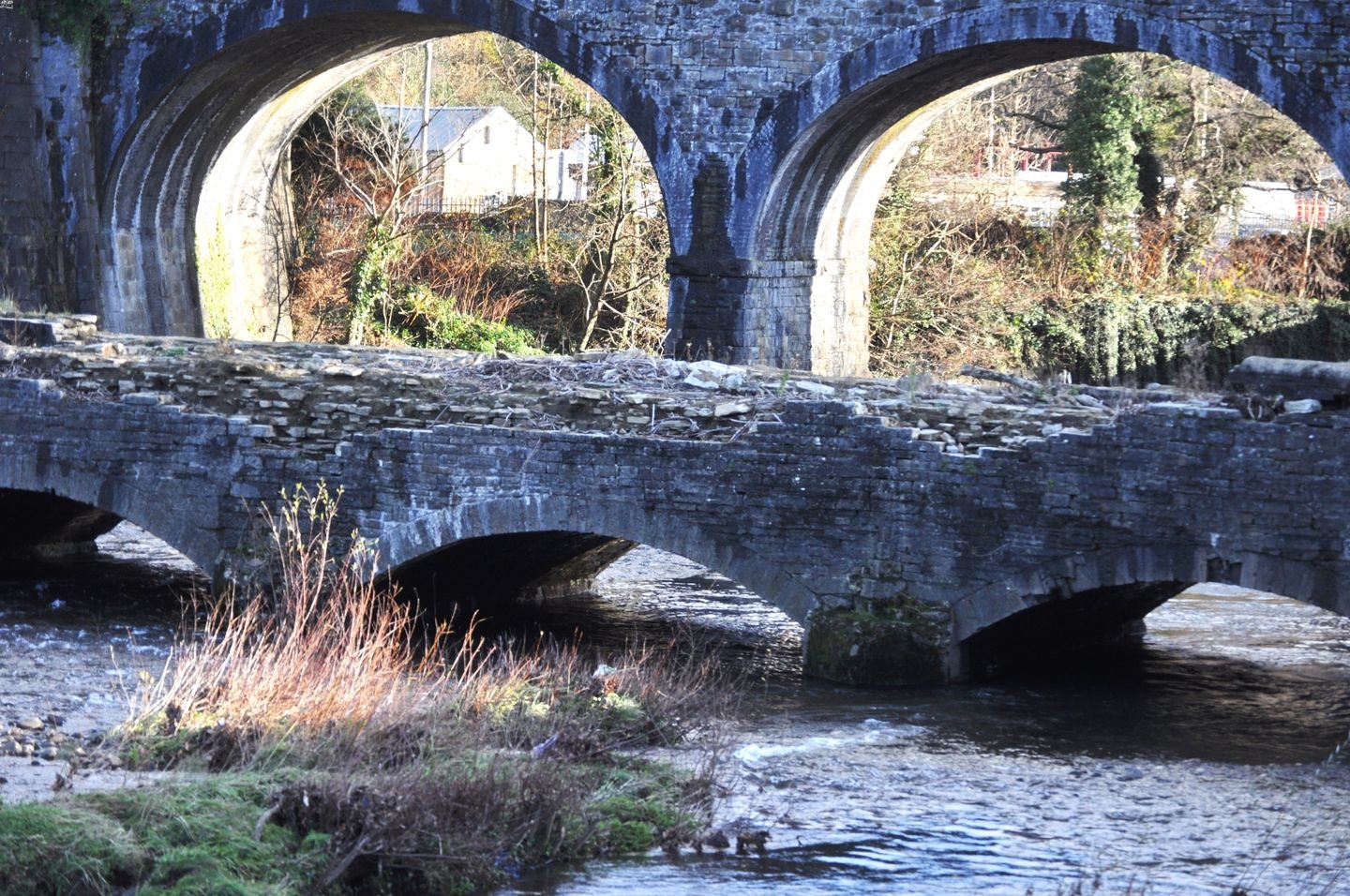
    The Aberdulais Aqueduct is a Scheduled Ancient Monument that spans the River Neath immediately south of the A465 in Aberdulais. The structure is located approximately two miles north-east of Neath.  It consists of a 104-metre-long structure comprising ten arches of overall length 66 metres bridging over the River Neath and a retained section extending a further 28 metres on the east bank of the River.  The aqueduct is of masonry construction and the condition of the structure has deteriorated significantly over the years since navigation ceased nearly a hundred years ago.  The Aqueduct historically formed a navigable link between the Tennant and Neath Canals and was constructed to also cross over an old 1750s navigable cut on the eastern side of the river.  Construction of the aqueduct began in 1823, and it was formally opened in May 1824.

    The aqueduct lies about 80 metres to the south of the confluence between the River Dulais and the River Neath. Just south of the confluence of the rivers a weir is located from which water is abstracted to supply the Tennant Canal.  This weir has failed, and Natural Resources Wales has proved uncooperative in approving its repair, leading to the Tennant Canal being nearly dry in recent years, with damage to the environment and loss of wildlife from the Canal.

    In times of flooding, the Aberdulais Aqueduct is perceived as an obstruction to the flow of the river.  Flooding of the adjacent land and properties has occurred on several occasions.  The properties in Canal Side have a long history of flooding, with damaging events in December 1979 and October 1998.  In recent years, climate change has worsened the situation and floods have become more regular, with damage to the aqueduct.  A structural inspection report commissioned by IWA’s Waterway Recovery Group in December 2021 showed that urgent works were required to prevent further damage to the Ancient Monument, but nothing has been done so far.  In its consultation, Natural Resources Wales admits that demolition of the aqueduct would have relatively little impact in reducing floods, but the local view is that NRW would like to demolish the aqueduct so it can be seen to be doing something.

    IWA Deputy Chair Sue O’Hare said “Whilst the Inland Waterways Association has every sympathy with the residents of Canal Side, demolishing one of Wales’s renowned historic structures would be nothing short of bureaucratic vandalism while not achieving the aim of significantly reducing the flood risk.  Over the years a great deal of voluntary effort and public money has gone into bringing the Neath Canal back to life for the benefit of the community.  IWA calls upon the owners of the Neath and Tennant Canals  (St Modwen and Port Tennant Canal Company), Neath Port Talbot Council and the government agencies concerned to work together to rescue this precious piece of heritage and amenity for the benefit of future Welsh generations.”

    National Resources Wales’s consultation, which closes on 26th February is at https://bit.ly/AberdulaisENG.  The consultation conveniently omits any mention that the Aqueduct is a Scheduled Ancient Monument, or any historical background or its purpose.  Rather, it just suggests demolition as if the Aqueduct were just some pile of inconveniently discarded rubble.  The consultation does admit, however, that even if the aqueduct were to be demolished, that it would “unlikely to be able to remove the flood risk to the Aberdulais community entirely”.  Alternative, albeit possibly more expensive, measures of making properties more flood-resilient, appear not to have been considered. However, the consultation does admit that “Additional measures (necessary) are likely to take a whole catchment approach and may include improved warning and informing, nature based solutions as well as engineered defences.”

  • IWA Responds to Broads Navigation Charges Increase Challenge 

    IWA Responds to Broads Navigation Charges Increase Challenge 

    IWA has submitted a representation to the Secretary of State regarding the toll increases imposed on boaters on Broads Authority navigations. In December 2023, the Broads Hire Boat Federation launched a challenge, under the Harbours Act, against the Broads Authority’s decision to increase tolls by 13% in 2023. As part of this process interested parties were invited to submit representations to the Department of Transport to assist with the decision.  

    The Norfolk and Suffolk Broads have National Park status, but navigation is integral to their character, bringing economic, environmental, and societal benefits to the region. Consequently, maintaining the safety of navigators and funding adequate maintenance is crucial. Unlike other major inland navigation authorities, the Broads Authority does not receive government funding for navigation maintenance and relies solely on toll revenue. 

    In the letter to the Secretary of State IWA expressed concern over the toll increases but acknowledged the challenges faced due to inflation and climate change. Climate change, in particular, has significantly impacted the Broads, necessitating increased resources for maintenance and safety provisions. 

    However boatyards and private boat owners are finding these toll rises difficult. The toll hikes have led to a decline in boat movement, posing a threat to the essential character of the Broads and potentially degrading its National Park status. 

    IWA urged the government to recognise the necessity of financial support to ensure the continued maintenance of navigation and preservation of the Broads’ character. Appropriate provision would enable tolls to be kept affordable and boats to continue as a defining feature of the Broads. 

  • Leisure boaters move closer to using subsidised biofuel in battle to decarbonise waterways

    Leisure boaters move closer to using subsidised biofuel in battle to decarbonise waterways

    A subsidised biofuel, which will help decarbonise the waterways, has been given the green light for more widespread use on leisure boats by the UK Government. DfT provided written clarification over the Renewable Transport Fuel Certificates (RTFC’s)subsidy after the HVO Joint Working Party – representing IWA, RYA and the Cruising Association – met with officials from the DfT in Westminster in November 2023.

    Leisure boaters looking to reduce their carbon footprint while cruising will be able to take greater advantage of a government managed subsidy on hydrotreated vegetable oil (HVO), after the Department for Transport (DfT) agreed that the benefit can apply to fuel used for onboard domestic purposes, as well as for the propulsion of vessels.

    The move will narrow the price gap between HVO and mineral diesel. It will also mean that it will be easier for suppliers to market HVO to the leisure boating sector in the future as they will not have to establish what proportions of the fuel will be used for domestic and propulsion purposes on the vessel, a requirement complicated by the fact that most leisure vessels have only one fuel tank.

    HVO is a biodiesel alternative to ‘FAME’- a first generation biodiesel currently being added to fuel supplied to the leisure boating industry and to road diesel.  The addition of 7% ‘FAME’ biodiesel to mineral diesel (B7) is resulting in fuel unsuited to a marine environment, causing regular boat engine failures due to blockages in vital fuel injection components.

    Bowman Bradley, chair of the Joint Working Party and IWA’s Sustainable Boating Group, said: “We are delighted that the DfT appear to have recognised the problems that the leisure boating sector faces and taken this important first step towards resolving them.”

    However, the group warned that even with the new measures, there will still be a significant price gap between HVO and mineral diesel. The Joint Working Party will continue to work with Government to seek to make HVO affordable to the leisure boater to allow the sector, and the existing fleet in particular, to transition away from fossil fuels.

    This will also then resolve the safety issues associated with using B7 diesel in a marine environment, particularly in craft that cruise challenging waters.


    Mr Bradley added: “We look forward to continuing the dialogue with the DfT, and other relevant government departments, to find a complete solution. In this way we can significantly transition the leisure boating sector away from fossil fuels and eliminate the engine failures associated with B7 diesel. If you are in the middle of the Trent and Mersey Canal it is just an expensive inconvenience but on the tidal Trent, in a fast-flowing estuary or two miles off the coast in a force 8 it becomes a problem.”

  • Parliamentarians hear about Achieving Net Zero on UK Leisure Craft

    Parliamentarians hear about Achieving Net Zero on UK Leisure Craft

    The MPs and peers of the All Party Parliamentary Group met in Westminster on 28th November, and were joined by representatives from navigation authorities, waterway organisations and government officials. Two speakers gave presentations describing ways how inland waterways could reduce emissions and contribute to the UK’s net zero carbon target and the barriers to doing so.

    Bowman Bradley, Chair of the joint IWA, RYA and Cruising Association Working Group gave an overview of the issue explaining how while technology for electric boats is progressing, the key to improve sustainability is the existing fleet. It is large, will be with us for a long time (leisure boats have very long lifetime) and most are unlikely to be converted to electric drive. They are mostly driven by, mainly small, diesel engines. They will need diesel fuel for decades into the future. First generation ‘FAME’ biodiesel gives significant problems in a marine environment, even at the 7% level. It is even more water absorbent than mineral diesel and deteriorates with storage, particularly in a damp environment.

    He explained how IWA’s Sustainable Boating Group have done extensive trials with a second generation biodiesel, HVO or Hydrotreated Vegetable Oil. This has been shown to be fully compatible with modern and traditional boat engines and other diesel burning appliances found on leisure craft. It can be used at 100% or mixed in any proportion with mineral diesel. It can use all of the existing refuelling infrastructure, on shore and on board. It has none of the problems associated with FAME biodiesel. HVO offers a net CO2 reduction of up to 90% and significant reductions in noxious tail pipe emissions when compared with mineral diesel.

    Simon Lawford, from Crown Oil gave a presentation on the factors preventing HVO from being widely available. Like most biofuels, HVO is inherently more expensive than mineral diesel and thus benefits from a government managed subsidy (RTFC’s), but this only applies to fuel used for boat propulsion, not that used for ‘domestic’ purposes. Most leisure boats have only one fuel tank and there are different tax and duties applied to mineral diesel when they refuel (the 60/40 split) and this also applies to HVO. Several different governments departments own different parts of this problem. The overall result is that HVO is expensive and complex for the suppliers to market to leisure boaters. Hence wholesalers and retailers are reluctant to supply it and boaters cannot, or will not, buy it.

    IWA, the Royal Yachting Association and the Cruising Association have recently formed a joint working group to bring this problem to the attention of government. After the presentations to the All-Party Parliamentary Group for the Waterways they met with the Department for Transport to explain the issue, but more needs to be done.

    We encourage all boaters to write to their MP’s drawing their attention to this problem and asking them to lobby government to adopt policies that will make HVO affordable and available to leisure boaters, thus allowing an immediate and very significant reduction in the carbon footprint of UK leisure craft.

  • IWA Responds to HS2 Cancellation

    IWA Responds to HS2 Cancellation

    Cancellation of HS2 Phases 2a, 2b and HS2 East will avoid major noise impacts on waterway users at numerous locations and remove the blight on several canal restoration projects.

    Phase 2a (Fradley to Crewe) was authorised in 2021 and early environmental work has been undertaken.  Its cancellation and removal of its safeguarding “in weeks” will remove the threat of major disruption and noise to the Trent & Mersey Canal at Great Haywood Marina with its semi-residential boaters.

    Phase 2b West (Crewe-Manchester) is currently before Parliament.  Its cancellation and removal of its safeguarding “by summer next year” will remove the threats of disruption and noise at the Middlewich Branch Canal crossings and to the on-line moorings at Park Farm Stanthorne, and also at the three proposed Trent & Mersey Canal viaduct crossings and to residential boats at Oakwood Marina, along with the threat of possible subsidence of the canal around Billinge Flash.

    It is not yet clear if the current Crewe–Manchester Bill and its Select Committee hearings will be dropped or if the Manchester section, which doubles up as part of the ‘Northern Powerhouse Rail’ route, may be retained pending a decision on a modified Network North scheme.  

    Either way, IWA is unlikely now to be called to put our case for better noise protection for canals to the Select Committee, or to receive the promised response to our questions about ground stability in Cheshire.

    The HS2 East (Birmingham to East Midlands Parkway) plans had not been updated since abandonment of the East Midlands to Leeds part of Phase 2b East in the 2021 Integrated Rail Plan.  Its cancellation and removal of the safeguarding on Phase 2b “by summer next year” (which presumably includes HS2 East) will enable the Ashby Canal restoration at Measham to proceed as part of the stalled Measham Waterside housing development.  It also removes a crossing of the Coventry Canal at Polesworth.

    Confirmation that the East Midlands to Leeds route has been abandoned, and removal of the safeguarding on that section, simplifies the Chesterfield Canal restoration at Staveley, which will no longer need a deepened lock, or an extra lock, on the section to be restored at Staveley under the Towns Fund.  This also finally confirms avoidance of crossings of the River Soar at Kegworth, Cranfleet Cut on the River Trent, the Erewash Canal, Sheffield & South Yorkshire Navigation, and Aire & Calder Navigation.

    Phase 1, which is under active construction, will be completed, although with a smaller station at Euston.  It will include the currently partly delayed section beyond Coleshill to Fradley and the Handsacre Link where it will join the West Coast Mainline.  So the works affecting the Lichfield Canal restoration have not changed, with construction of the replacement Cappers Lane canal bridge and the canal diversion under Cappers Lane Viaduct expected to continue, although the timescale is uncertain.  But the Trent & Mersey Canal bridge at Fradley and the grade separated junction at Streethay are clearly no longer needed.

    IWA has sought to engage constructively with HS2 for more than a decade and has achieved various improvements to their plans, most notably saving the Trent & Mersey Canal at Fradley Wood End from devastation by three unnecessary viaduct crossings. 

    However, HS2 has never properly recognised the major noise impacts on canal users, and particularly on the residential use of boats, and the noise mitigation measures at many of the canal interfaces were therefore inadequate.  Whilst construction and operational noise will still affect the Grand Union, Oxford and BCN canals many others will now be spared, and the two canal restoration projects can now proceed unhindered by uncertainty.

  • IWA Concern Regarding CRT Licence Fee Rises

    IWA Concern Regarding CRT Licence Fee Rises

    IWA is disappointed that the recent announcement by Canal & River Trust (CRT) of its intention to increase boat licence fees disproportionately for different user groups does not take on board the concerns that IWA and many other organisations and individuals raised.

    Firstly, we are opposed to the introduction of surcharges that appear to be an attempt to change the principle that there is only one type of licence, the Pleasure Boat Licence. 

    We are also still concerned about the divisive effect of the consultation and ensuing discussion and announcement on the boating community, particularly at a time when CRT and the waterways need everyone’s support.

    Boaters use the waterways in a wide range of different ways, either with or without a home mooring. It is not necessarily the case that continuous cruisers use the system and its facilities more than boaters with a home mooring.

    IWA does support the proposal to charge by area, as this would bring CRT in line with the Environment Agency’s charging system and make Gold Licence administration more straightforward.

    Regarding overall price rises, bearing in mind that CRT is dependent for a good part of its income on a Government grant that is not inflation linked, we appreciate that the Trust has no option but to try to raise more from other sources to compensate. However, increasing the licence fee beyond inflation risks pricing boaters off the system, or boaters simply being unable to pay, which could result in a net loss.

    We would like to see CRT achieving a considerable increase in the non-boating income from all those who currently enjoy the waterways and whose benefits will suffer if they deteriorate.

    Alongside this, we (and the Fund Britain’s Waterways action group) will continue to campaign for local and national government to recognise the many benefits including health and wellbeing that the inland waterways provide to a large part of the population and to fund them accordingly.

  • New Guide to Electric Boats Published

    New Guide to Electric Boats Published

    IWA has recently published a new guide: ‘An Introduction to Electric-Drive Narrowboats’. 

    IWA believes that it is vital for the inland waterways community to make their contribution to a more sustainable environment and the IWA’s Sustainable Boating Group has been looking at how inland waterways leisure boating can become more sustainable since 2019. They published their Vision Paper in 2020, covering propulsion, the existing fleet and domestic energy on boats. 

    IWA is delighted to see that an increasing number of new boats are now being built with some form of electric drive and most boatbuilders are now offering electric drive options. The technologies associated with this form of propulsion are not only unfamiliar to most boaters but are rapidly changing as electric road vehicle technologies develop. 

    This new guide is not intended to be a ‘design and build’ manual for electric narrowboats but hopefully will help boaters who are not experts in the technologies to understand the issues involved and make appropriate decisions when specifying their new (or converted!) boat, in consultation with their builder. 

    Malcolm Bridge, the principal author of the guide and a member of the Sustainable Boating Group, has owned an electric narrowboat for some years. The guide has been written in consultation with other electric boat owners and members of the Group, who are all experienced boaters owning boats ranging from historic ex working boats to modern leisure craft. 

    Download the guide at https://waterways.new1.fixed-staging.co.uk/wp-content/uploads/2023/08/An-Introduction-to-Electric-Narrowboating-Issue-1-1.pdf

  • HS2 Select Committee Report Acknowledges IWA Concerns

    HS2 Select Committee Report Acknowledges IWA Concerns

    The HS2 (Crewe – Manchester) Bill Select Committee has published its First Special Report (19/7/2023).  It covers responses to individual petitioners, some traffic and design issues, and a major section on Ground Conditions in Cheshire.

    IWA’s correspondence on the subsidence risk to HS2 and the Trent & Mersey Canal is referenced several times in the report, and in its conclusions the Committee requires HS2 to “provide us with responses to the questions asked by the Inland Waterways Association”.

    IWA’s written evidence to the committee (Evidence on Route Selection & Subsidence Risk in Cheshire, 25/6/2023, published 11/7/2023) asked 9 questions about subsidence risk from the unstable ground in the Cheshire brine field, on matters that were not covered by or were insufficiently explained in response to other Petitioners’ evidence to the committee.  These cover the risks of HS2 construction reactivating historic areas of subsidence, and in particular where the route crosses the canal at Billinge Flash.

    IWA’s questions challenge assumptions about earthworks, drainage, differential subsidence, and future repairs.  IWA also proposed a local route modification that would avoid the major subsidence hazard around Billinge Flash, removing two of the three viaduct crossings of the canal between Middlewich and Broken Cross.  This would also provide significant cost savings and greatly reduce the visual and noise impacts of both construction and operation on the heritage, wildlife and recreational corridor of the Trent & Mersey Canal and its users.  The final question asks that HS2 fully investigate and consider the benefits of this proposed route modification.

    IWA awaits with interest the response from HS2 Ltd. to the critical questions and the constructive alternative route proposal, and to the Select Committee’s further deliberations when this and more information on ground investigations is published.

    [The photo shows Billinge Green Flash – by ‘Captain Wolf’]

  • IWA publishes new guide to the Denver Crossing

    IWA publishes new guide to the Denver Crossing

    Like most rivers the Great Ouse flows into the sea. The main boundary between the non tidal river and estuary is at Denver Sluice. The Middle Level is a series of drainage channels. To get from the non tidal waters of the River Great Ouse to the Middle Level requires a short estuary crossing between Denver and Salter’s Lode Lock. For those who have not made this crossing before, it can be daunting. Chris Howes, author of the Imray guides to the Great Ouse and Fenland Waterways, IWA member and Eastern Region representative has put together this very useful guide to navigating between the Middle Level and the Great Ouse.

    In it you well find details of how to contact the lock keepers at either end for the best times to cross, how the tides affect crossing and how to avoid the sand bar, as well as tips on equipment and checks to carry out before you make the crossing.

    View, download and print the guide here https://waterways.new1.fixed-staging.co.uk/wp-content/uploads/2023/06/IWA-Guide-to-the-Denver-Salters-Lode-Crossing.pdf

  • Six New Silver Propeller Locations for 2023

    Six New Silver Propeller Locations for 2023

    IWA’s Silver Propeller Challenge was set up to encourage visitors to the less well-used parts of the system, in boats of all sizes. To complete the challenge visit 20 locations or more and then let us know – details on how to submit can be found here.

    This year, six new locations have been added, from Scotland to Kent, inviting exploration of some underused but fascinating corners of the waterways system.

    Two new Scottish locations have been added:

    Rutherglen

    Take an adventurous trip up the River Clyde and see Glasgow from a new angle, by boat or canoe and enjoy spectacular views ‘doon the watter’.

    Although visiting leisure craft are scarce, the tidal river through the city is regularly used by members of the Rutherglen Cruising Club, many of whom moor up at the Club moorings for the winter and head off down the Clyde for each summer spent along the west coast of Scotland.  The Club was formed in the 1930s when the Old Pals Club and the Strathclyde Boat Club amalgamated. The Club’s home moorings were next to a slaughterhouse on the river bank near to where the Thomas Seath shipbuilding yard was located.

    Access to the River Clyde from the connected Lowland Canal System, is via Bowling, and then head upstream. Glasgow weir (separating tidal water from non-tidal) prevents direct access to Rutherglen and this can be negotiated at high tide by making a booking via 0141 276 1585.  Check out the River Clyde page for navigation hints and tips on the river.

    Stirling

    Take a scenic cruise along the River Forth and visit the historic city of Stirling, by boat or canoe and enjoy the Scottish countryside and distant mountains.

    Visiting leisure craft are few and far between, but the brand new mooring pontoon installed by Stirling Council is a popular spot for canoeing and other water sports by the locals.

    Access from the connected Lowland Canals for boaters would be by joining the tidal River Carron at the Kelpies, heading downstream for a short distance to meet the Firth of Forth at Grangemouth. From there it’s upstream via Kincardine and Alloa to Stirling.  The river is tidal all the way. 

    Two rivers sharing a name have also been added, but they are in different counties:

    The River Stour in Suffolk is navigable from Cattawade near the Orwell Estuary to Brundon Mill, just upstream of Sudbury.  Except for the first three quarters of a mile below Sudbury, the river forms the county boundary between Suffolk and Essex, and was immortalised in the paintings of John Constable.  Fifteen locks were built by the River Stour Navigation Company, but the waterway had largely fallen out of commercial use by the early twentieth century.  Restoration of the Navigation was one of IWA’s earliest campaigns, leading to the formation of the River Stour Trust, which runs a high profile campaign for restoration today.  Several locks have been restored and the whole Navigation can be used by canoes and other light craft.

    There is a right of navigation on the Kentish River Stour to Canterbury. However, it is presently navigable only from the sea at Pegwell Bay to Fordwich.  There are weirs a short distance above Fordwich Bridge – remnants of old mills.  It may be possible to canoe from Canterbury to Fordwich, but there is no official access or portage over the weirs.  Fordwich is the location for your Silver Propellor visit, encouraging you to have a scenic cruise along the quiet Kent countryside.

    The Manchester Bolton and Bury Canal

    The Middlewood flight of locks, which connect the Manchester Bolton & Bury Canal to the upper River Irwell and thus to the rest of the connected navigable system were restored and reopened in 2008 as part of a £600 million large property development.  However, due to an absence of water supply, the locks are not available for public access and the entrance off the Irwell has silted up.  The upper River Irwell leads into the Manchester Ship Canal, and can be accessed via Pomona Dock No3 from the Bridgewater Canal. A photo of your craft anywhere on the upper River Irwell in the vicinity of Middlewood Locks and the entrance to the Manchester Bolton & Bury Canal would be good evidence of your visit.

    Thames and Medway Canal

    The Thames and Medway Canal sees few waterways visitors other than local paddle-sports enthusiasts, ducks and enthusiastic volunteers from the Thames and Medway Canal Association who turn out on regular work parties to keep the waterway clean and accessible – so why not pay them a visit?

    The western side of the Thames & Medway Canal was opened between Gravesend and Higham in 1801 and continued in use until 1934, but the eastern end of the canal, mostly comprising Higham Tunnel, took longer to build and was sold to the railway company in 1846 and closed to Navigation.  For more about Higham Tunnel, check out our feature on canal tunnels.  For more about the history of the canal, see the Thames and Medway Canal page.

  • HS2 Continues to Impact Waterways: Update

    HS2 Continues to Impact Waterways: Update

    IWA continues to engage with any new public consultations and parliamentary petitioning opportunities to help protect the waterways and their users from undue impacts of HS2.

    For the extensive work already underway on Phase 1, London to Birmingham and to Fradley/Handsacre we rely on local Branches and members to monitor construction issues affecting their waterways.  You can contact us for advice, and any specific problems can be reported direct to the HS2 helpline: HS2enquiries@hs2.org.uk Freephone: 08081 434 434 .   Please copy your comments and HS2’s responses to IWA then we can monitor the bigger picture. Contact HS2@waterways.org.uk

    PHASE 1 (London to Fradley)

    Phase 1 between London, Birmingham and Fradley is under active construction with tunnels, major viaducts, and road crossings being followed by large scale earth moving for cuttings and embankments.  The engineering works are said now to be 40% complete, with the first services due to run between London and Birmingham “by the early 2030s”.

    Paddington Arm

    In the London area, work is underway on most of the tunnels and several of the viaducts.

    The route passes below the Regents Canal and the Paddington Arm in tunnels at depths of 12 to 30 metres.  More visible works by the contractor SCS are two temporary bridges over the canal near Willesden Euro Terminal site, one a conveyer bridge for spoil, the other for transporting tunnel segments. 

    Grand Union Canal

    The route emerges from tunnel to cross the Colne Valley on the very long but attractively designed Colne Valley Viaduct with arched spans over the Grand Union Canal and adjoining lakes.  The piers are under construction and the deck is being attached by a huge launching girder.  The canal crossing is timetabled for January to March 2024 with daytime closures requested.  There have been no complaints to CRT so far from this construction work by the contractor ALIGN, although concerns remain about the long-term noise impacts of the operational railway, here as at other canal crossings.

    Wendover Arm

    Further north, an unresolved concern is potential effects of a deep cutting on the springs feeding the Wendover Arm and Wilstone Reservoir.  Modelling of the aquifer has been completed and the results are with the Environment Agency for scrutiny but are not yet published.  Meanwhile, the HS2 Chiltern AONB Panel has awarded £300k to the Wendover Canal Trust for work to upgrade the towpath.

    Oxford Canal

    The section of route being constructed by the contractor EKFB includes culverting part of the Boddington Feeder to the Oxford Canal.  The Oxford Canal Viaduct crosses the summit section by Willison’s Bridge 128 near Wormleighton where a temporary haul road bridge has been built.  The canal wall under the viaduct will have sheet piles with a concrete capping.  After a public consultation, the viaduct piers and offside abutment wall will have masonry cladding, rather than a concrete finish, although the nearest canal bridges are brick.  IWA’s main concern remains the operational noise impact from trains on this currently tranquil and remote part of the canal, both at the viaduct and where the route skirts a loop in the canal near Bridge 127.

    In Warwickshire, Staffordshire, and Birmingham the contractor is BBV and IWA has attended several of their liaison meetings with CRT to discuss the designs of various canal crossings and help minimise construction impacts.

    Grand Union Canal

    The Longhole Viaduct over the Grand Union Canal, close to Longhole Bridge 31 near Welsh Road, will be a full span crossing with piers set back from the canal.  The main span will be launched (pushed in) to minimise the canal closure.  Construction is due later this year.  The temporary conveyer bridge over the canal for moving spoil from the nearby tunnel is due to be removed in May in an overnight stoppage.  CRT received payment for the conveyer crossing as it saved many lorry journeys for the contractor.

    Birmingham & Fazeley Canal

    The Birmingham & Fazeley Canal viaduct crossing at Curdworth, below Lock 5, is adjacent to the M42 box bridge which has already been installed.  The first offside pier coffer dam started with piling in April, to be followed by the towpath side pier with 40 metres deep piling, requiring a short towpath closure and diversion.  The deck beams will be lifted in with a giant crane on the north side, then pre-cast units set between the beams, with each lift requiring locally controlled short canal closure.  When complete the viaduct will be used as a temporary haul road for construction of the adjacent embankment.  The canal stoppage details over the next 2 years are yet to be confirmed.

    Lichfield Canal

    The Cappers Lane Viaduct crossing of the Lichfield Canal near Huddlesford will include a canal diversion to maintain headroom, as agreed after earlier campaigning by IWA and Lichfield & Hatherton Canals Restoration Trust.  The new channel is to have a concrete invert and walls, with design details of the interface with the existing channel ongoing.  The design of the replacement Cappers Lane road bridge is now agreed to have brick-faced wing walls with a concrete string course, patterned concrete abutments, and open style parapets.  The bridge construction is imminent, but there is no firm timetable yet for the canal channel or the viaduct.  The displaced boats of Lichfield Cruising Club have now moved into their completed new basin, which was funded by HS2, after many years campaigning by LCC and IWA.

    Trent & Mersey Canal

    There has been extensive clearance work around Wood End Lock above Fradley Junction for construction of the Trent & Mersey Canal Viaduct, and for the Handsacre Link which will now just miss the canal following IWA’s earlier campaigning.  But there has been no update on the final design of the viaduct recently.  A temporary canal bridge will be needed above Shade House Lock to construct the short stub of embankment north of the viaduct if this is built as part of Phase 1 as originally planned (although logically it would be done as part of Phase 2a).

    Birmingham & Warwick Junction Canal

    The design of the Saltley Viaduct in Birmingham across the Grand Union Canal below Garrison Locks has a wet abutment, and the site is tightly constrained.  However, the proposal to close and locally infill the canal to aid the preferred method of construction is not accepted by CRT which wants a narrow channel maintained for boats and water supply.  The construction timing is currently uncertain.  There is also a highway bridge crossing but with its piers set back from the canal this is less of a problem.

    Digbeth Branch Canal

    Also in Birmingham, construction of the Curzon Street Viaduct across the Digbeth Branch by Lock 6 is scheduled for winter 2023/24, possibly using night-time closures.  CRT want to avoid a simultaneous closure with the Saltley Viaduct works.

    PHASE 2a (Fradley to Crewe)

    Between Fradley and Crewe, early Environmental Works (trees, ponds, bat houses, etc) and some other enabling works are underway and statutory notices have been served on landowners, including CRT, but matters have been otherwise quiet.  The main concern with Phase 2a is construction of the Great Haywood Viaduct and subsequent operational noise impacts on the marina and Trent & Mersey Canal.  On 9 March the Government announced a 2-year delay to construction of Phase 2a.  The design contract was due to be let about now, followed by a main works contract later this year, but the timescale for these is now unclear.

    Meanwhile, several towpath improvement projects funded by HS2 are proceeding as planned.

    Trent & Mersey Canal

    Towpath work between Shade House Lock above Fradley Junction and the A515 Kings Bromley Road Bridge has now started.  It is being funded by HS2’s Road Safety Fund through Staffordshire County Council and being carried out by their contractors Amey.  The 3km length includes some bank protection and is expected to take 6 months.  There will be towpath closures and, with access at Woodend Lock being currently closed by HS2, there are no intermediate access points so it may be closed throughout.  However, CRT are conscious of how well used is this section, particularly over the summer and at weekends, so have asked that closures be limited as much as possible in length and to their working days of Monday to Friday.  This section of towpath is unusually wide so people may be able to pass behind the sections being worked on.

    In addition, funding has apparently been allocated by the Department for Transport for a new footbridge over the canal between Shade House and Wood End to connect the towpath with an offside footpath.  This would presumably be separate from the HS2 viaduct.  The canal is quite wide here so it would be a major structure but as yet there is no design.  It would seem easier and less expensive to simply reinstate public access to the tail bridge at Wood End Lock which is currently closed by the HS2 works.

    Staffordshire & Worcestershire Canal

    Towpath resurfacing from Great Haywood to Milford is being funded by HS2 through the Trent-Sow HS2 Group (on which IWA is represented) and is due to start in April.  The 3.75km length is expected to take 5 months.  CRT have requested further funding from the Department for Transport to continue this from Milford to Baswich and the A34.  They are also making funding bids to HS2’s Community & Environment Fund for work on the Junction Bridge and toll office at Great Haywood, and to their Biodiversity Fund for work on hedges, reedbeds etc. on both the S&W Canal and T&M Canal.

    PHASE 2b West (Crewe to Manchester)

    CRT are negotiating a ‘Side Agreement’ to the current Bill, based on their Phase 1 agreement with some improvements for clarity and protection, which may avoid the need for a Select Committee petition hearing.  The hearings have started but there has been no contact from the Committee or HS2 about a hearing date.  Previously, CRT with route-wide interests has been timetabled nearly last, and IWA has been grouped with them.  IWA’s main petition is on noise mitigation at the canal crossings, one issue that CRT has not significantly addressed.  CRT’s main outstanding concerns are the viaduct crossings.  Two more Additional Provisions are expected although their scope is not known and the impact on the timing of the Hearings is uncertain. 

    Middlewich Branch Canal

    The three Shropshire Union Canal Viaducts carry additional tracks into the Crewe North Rolling Stock Depot, crossing the canal between Bridges 25 and 26 on the Middlewich Branch.  In place of the visual impact of 3 adjacent viaducts with different alignments and heights, a single covered tunnel had been considered (illustrated in Canal Boat magazine in 2019) but CRT are currently reconsidering the design.  There will also be a new road bridge carrying the realigned Clive Green Lane, and IWA’s Additional Provision petition asks for changes to a towpath access cycle ramp.

    Trent & Mersey Canal

    There are three crossings of the Trent & Mersey Canal, by the River Dane Viaduct near Bridge 177, Puddinglake Brook Viaduct between bridges 179 and 190A, and the Trent & Mersey Canal Viaduct at Billinge Flash near Whatcroft.  This flash is the most notable area on the whole route of former high subsidence due to historic brine pumping.  CRT are asking for longer viaducts with more spans to better maintain the open views.

    Subsidence Risk

    An information paper published on 3 March on “Understanding the Ground Risk across the Cheshire Plain” seeks to retrospectively justify HS2’s choice of route across the subsidence prone salt field.  It identifies the two areas most at risk from ground movement as Billinge Flash and around Clive Green Lane, which may also affect the new road crossing of the canal there.  It recommends the viaducts use bored piles with jacking points but does not address the transition between viaducts and embankments.

    PHASE 2b East

    The 2021 Integrated Rail Plan cut back the plans for the Eastern Leg of HS2 to terminate at East Midlands Parkway, near the River Soar, with the route north through Toton to Leeds being dropped.  Although no longer allocated any funding or timescale, it has not been entirely abandoned and the route safeguarding directions remain in place.  A new study of how to take HS2 into Leeds was promised but has not yet started.  Neither is there any timetable for a further Bill for the remaining section of HS2 East, nor any sign of the amended plans needed to connect this with East Midlands Parkway.

    This unsatisfactory state of affairs leaves both the Chesterfield Canal and the Ashby Canal restorations in limbo.  The Chesterfield Canal at Staveley is having to make provision for a rail bridge crossing that may never be built.  The housing development at Measham that would fund restoration of a section of the Ashby Canal is on hold pending a decision on an alternative route which was promised in 2018.

    Northern Powerhouse Rail High Speed Lines

    The Integrated Rail Plan also included plans for two new sections of high speed lines as part of the Northern Powerhouse Rail plans for a Transpennine route upgrade: from Warrington to a junction with HS2 West and from Manchester to Marsden.  However, without any detailed route plans having been published their impacts on waterways are uncertain, and with no funding allocated or firm timescales, these plans seem to be just aspirational. 

    Consultation and Reporting

    HS2:    email: HS2enquiries@hs2.org.uk       Freephone: 08081 434 434 

    IWA:    email: HS2@waterways.org.uk

  • Join the Big Help Out with IWA

    Join the Big Help Out with IWA

    We’ve been inspired by HM King Charles III’s life of service, and so we are encouraging everyone to do something as part of The Big Help Out on this Coronation bank holiday Monday 8th May for a national day of volunteering.  Let’s inspire the nation to support our inland waterways.  Here are some simple things that you could do to take part:

    1. Visit your local canal or river navigation and take some photos of anything that isn’t as it should be, or that needs to be improved – e.g. poorly maintained towpath or structures, rubbish in the waterway, etc.  Then send your photos to protect@waterways.org.uk – and we will follow up with the relevant authority.
    2. Send a letter or e-mail to your MP and/or local councillors telling them how much you value the waterways in your area, and why Government should not be cutting its maintenance support to the two main navigation authorities, Canal & River Trust and the Environment Agency (because that’s exactly what Defra and the Treasury plan to do).
    3. Tell your friends about your recent visits to the waterways on social media and why you support the waterways.
    4. Donate to support our campaign.
    5. Spend a few minutes collecting litter along your local canal or riverbank and share pictures to protect@waterways.org.uk to show what you’ve done.  Every little helps!

    Then, if you would like to get involved longer term, please go to waterways.org.uk/support/ways-to-get-involved.

    We have roles all round the country from litter picking to rebuilding and restoration work; from media and web roles to secretary and chairs; social activities to helping at events.

  • IWA Response to CRT Licence fee consultation  

    IWA Response to CRT Licence fee consultation  

    Regarding overall price rises, bearing in mind that CRT is dependent on a Government grant that is not inflation linked for a good part of its income, we appreciate that the Trust have no option but to try to raise more from other sources to compensate. However, increasing the licence fee beyond inflation risks pricing boaters off the system, or simply being unable to pay, which could result in a net loss.

    In response to the options for apportioning the rises across boat licence payers we had some concerns:

    We do not support the proposal to raise licence fees for continuous cruisers above those with home moorings. Firstly, as set out in The British Waterways Act 1995 there is only one Pleasure Boat Licence. Added to this, it is not possible to define continuous cruisers, which is the term used in the consultation. Some boaters never have what might be called a home mooring so continuously cruise all the time, others continuously cruise much of the year then tie up in a marina for the winter, some boaters have home moorings that are not on the CRT system and many other possible combinations.

    The proposal to charge more for continuous cruisers would be an administrative nightmare, open to abuse and highly divisive within the boating community. Dividing the community like this is especially detrimental at this critical moment, when the whole waterways community needs to come together to show Government how our canals and rivers are valued and need to be adequately funded.

    IWA does support the proposal to charge by area, as this would bring it in line with EA registration fees and make Gold Licence administration more straightforward.

    We would like to see CRT achieving a considerable increase in the non-boating income from all those who currently enjoy the waterways and whose benefits will suffer if they deteriorate.

    Looking at the income from CRT’s 21/22 annual report, boating brings in around £24M from licencing plus £20M from moorings and other commercial boating activities. As against this, income from CRT ‘Friends’ has remained constant at around £3M despite the large investment that was put into establishing this support.  

    Alongside this, we will continue to campaign for local and national government to recognise the many benefits including health and wellbeing that the inland waterways provide to a large part of the population and funding them accordingly.

    The benefits freely enjoyed by those local to waterways are the reason for national and local government to help fund the costs of keeping waterways in good condition so the benefits are not lost.

  • Waterways APPG to hear about the role of the waterways in the Government’s Environmental Improvement Plan

    Waterways APPG to hear about the role of the waterways in the Government’s Environmental Improvement Plan

    At its next meeting, the All Party Parliamentary Group for the Waterways (APPGW) will be hearing from Heather Clarke (Canal & River Trust’s Director of Strategy) and Eoin Harris (Canal and River Trust’s Head of Environment) on how inland waterways are a key contributor to the Environment Improvement Plan, and from Michael Limbrey (Chairman of the Montgomery Waterway Restoration Trust) about the Montgomery Canal as a practical example. MPs and peers are being encouraged to attend in person while video attendance is available for representatives of waterway organisations.

    Please encourage your local MP to attend the APPGW. It will be held at 9.30 am on Tuesday 28th March. All MPs with waterways in their constituencies will have received an invitation and details have also been made available in the weekly All Party Notices.

    If you represent a waterways organisation and would like to receive an invitation to the video meeting for the event, please email amy.tillson@waterways.org.uk.

  • IWA joins Campaign for Energy Bill Support for Boaters

    IWA joins Campaign for Energy Bill Support for Boaters

    IWA has joined a campaign led by the National Bargee Travellers Association (NBTA) to ensure boaters who live off grid or without a home mooring are able to access the Government’s Energy Bill Support Scheme.

    Currently, boaters who do not pay their fuel/electricity bills directly and those who are off-grid or without a home mooring are exempt from the Government’s Energy Bill Support Scheme. IWA worked with NBTA on a paper which was submitted to the Department for Business, Energy & Industrial Strategy (BEIS).

    The scheme opened to boaters on fixed moorings on February 27th. Search “Apply for energy bill support if you do not already get it” to find the details. However the process for boaters without a home mooring to apply for the grant is still not confirmed so IWA will continue to work with NBTA in campaigning for access to energy support for all boat-dwellers.

  • Waterways Vital to Government Environmental Improvement Plan

    Waterways Vital to Government Environmental Improvement Plan

    IWA welcomes today’s announcement by the Government about its Environmental Improvement Plan 2023. However, we would like to see more emphasis on the role our waterways can play.

    IWA’s Waterways for Today report highlights the importance of waterways for protecting the environment and providing access to nature for those living in urban areas. Our canals and rivers are blue-green corridors that allow opportunities for reconnecting disparate habitats, biodiversity net gain and improvements for wildlife.

    Canals and rivers offer homes for wildlife to flourish, while at the same time providing opportunities for people to see plants, insects, and birds that they wouldn’t normally experience in an urban environment. Our local communities benefit from improved health and wellbeing. They bring economic benefits, providing jobs and attracting people to the area which contributes to people using local businesses when accessing the waterways.

    With the impact of climate change, canals are providing the water transfer highways to ensure London and other areas being severely affected by reduced rainfall have sufficient supplies to meet the growing demands.

    Enhancing and restoring our waterways is vital to achieving the Government’s target of having everyone living within 15 minutes’ walk of a blue or green space. But this ageing infrastructure will require an ongoing financial commitment to survive the increasing threat of climate change and rising costs.

    We call on the Government to recognise the value of our waterways in achieving the environmental targets set out in the Environmental Improvement Plan, and to invest in them for the future.

  • Cotswold Canals water transfer action needed

    Cotswold Canals water transfer action needed

    IWA is supporting the Cotswold Canals Trust in campaigning for a scheme which would provide desperately needed additional water supplies to London and the South East, and could enable the restoration of the whole 36 miles of the Thames – Severn link. IWA will be submitting responses to this and the other Water Resource Management Plans currently out for consultation, but this is one where additional voices would really make a difference.

    The consultation considers a wide range of issues affecting water resources but the biggest impact on canal restoration is how to transfer water from the Severn to the Thames. Both a pipeline and open water transfer via restored canals are being considered.

    A key omission in the consultation when comparing the canal vs pipeline, is the presentation of a well considered analysis of the financial value of the restored canal to society and the local economy. This seems to have been largely ignored but, the Cotswold Canals Trust have used the recent IWA Waterways for Today Report, to calculate the additional financial value of restoring the canal. This could run to about £800million over the next 80 years (the basis on which the costs and best value calculations are based). That additional benefit more than offsets the difference in cost between the pipeline and canal options. It also justifies pressing for the full restoration of the canal rather than the minimum necessary to enable the transfer of water alone.

    For further details and how to make your voice heard, the Cotswold Canals Trust has a full guide which can be found here.
    The two relevant consultations close on February 20th and March 21st.

  • Call for Review of Ely Winter Mooring restrictions

    Call for Review of Ely Winter Mooring restrictions

    The current 48-hour time limit in summer appears fair and ensures that as many boaters as possible are able to stop and enjoy Ely. However, many navigation authorities and local councils relax summer 48-hour restrictions during winter and extend them to 10-14 days. Since demand for moorings in Ely is much lower in winter, we have asked that the Council considers following this practice. ECDC policy is that boaters needing to stay for more than 48 hours can use the marina opposite, but this may not always be safe or even possible, especially if the need was not anticipated.

    We also highlighted the issue of extreme weather conditions: strong water flows or flooding, high winds, poor visibility and freezing conditions, which can make boating dangerous. Our attention was drawn to the problem after a novice boater received two mooring violation tickets stuck to their boat, during conditions that would have made moving the boat unsafe. ECDC had activated its Severe Weather Emergency Protocol at the time of this incident.

    We have made three requests to ECDC, asking them to
    • relax the mooring time limit during the winter season
    • suspend all mooring restrictions during periods of strong water flows or flooding, high winds and poor visibility
    • incorporate the suspension of all mooring restrictions into their Severe Weather Emergency Protocol.