Author: Amy Tillson

  • IWA secures improvements to Canal & River Trust’s Restoration Delivery Plan

    IWA secures improvements to Canal & River Trust’s Restoration Delivery Plan

    IWA has worked with Canal & River Trust (CRT) to help improve its revised Restoration Delivery Plan (RDP), published this morning (28th July 2026), which will provide the framework for future restoration of canals not currently open to boats and managed by the Trust. Through reinforcing the importance of a friendly approach to waterway restoration and encouraging CRT to consider restoration as a core charitable objective rather than a secondary priority, IWA is pleased that the Trust has listened and that the result is an improved plan. 

    The Restoration Delivery Plan is intended to set out how the Trust will work with restoration promoters and other partners to deliver the restoration of waterways across England and Wales. As a critical friend to CRT, IWA has engaged constructively with the Trust’s senior management to ensure that restoration receives the support and strategic priority it deserves. 

    Through detailed engagement with the Plan, IWA has helped move the document towards a more positive, practical and delivery-focused one that better reflects the ambitions expected of a major national charity. The discussions have also led to improvements in CRT’s internal restoration processes and a better mutual understanding of how restoration activity should be managed across the Trust’s network.  This, however, needs to be matched by restoration groups becoming increasingly professional when undertaking construction work, both onsite and with design and Health & Safety paperwork. 

    IWA believes this revised approach should act as a catalyst for raising standards across the restoration movement. Through its technical expertise its recently formed Restoration Delivery Group, new Restoration Panel and Waterway Recovery Group, IWA is well placed to provide the guidance and practical assistance that restoration organisations need to deliver successful projects. 

    Waterway restoration is one of IWA’s strategic priorities for 2026, and the Association will continue working with CRT, restoration promoters and other parties to help build a stronger, more professional and more successful restoration sector. 

    George Rogers, Chair of IWA’s Restoration Delivery Group, said: 

    “The publication of the revised Restoration Delivery Plan is a significant step in the right direction. IWA has worked constructively with Canal & River Trust to strengthen both the Plan itself and the processes that support it, and we are pleased that this engagement has resulted in meaningful improvements. 

    “We will continue to engage positively with the Trust and the wider restoration community to support the successful delivery of these shared objectives.”

  • Council’s lack of vision for Exeter’s new A379 canal bridges

    Council’s lack of vision for Exeter’s new A379 canal bridges

    In a joint response to the current public consultation regarding the A379 Bridges Replacement Scheme, IWA and FESCHH say they also believe that the consultation is unrepresentative.

    The consultation, entitled A379 Bridge Road, Exeter: Bridge Replacement Scheme, runs from 15th June – 27th July 2026. Despite Devon County Council proposing five options for the new bridges at stakeholders’ meetings in October 2025, the consultation presents only one for the public to comment on, which proposes replacing the bridges at a similarly restrictive height as the current bridges.

    The Exeter Ship Canal provides a five-mile navigable route between Exeter Canal Basin, in the heart of the city, and the English Channel (via Turf Lock and the Exe Estuary). The two, adjacent bridges carry the A379, a busy dual carriageway, across the canal at its mid-point. Currently, they have exceptionally low air drafts (the clearance between water level and underside of a bridge) which present a barrier to boaters, paddleboarders, cyclists and pedestrians.

    IWA representative Ray Alexander said: “Devon County Council appears to be back-tracking on its own Strategic Outline Business Case (SOBC) for the Scheme, which has previously been approved by the Department for Transport. For example, the SOBC identified the potential for cyclists and pedestrians to pass underneath the new bridges if they were built higher, but this significant safety benefit would be lost if they now press ahead without doing so.”

    IWA and FESCHH point to numerous opportunities and benefits that raising the height of the bridges could bring to the area’s community, economy and environment. These include:

    • Increasing active travel opportunities and safety.
    • Enabling sustainable freight use of the canal.
    • Increasing business and employment opportunities.
    • Reducing pollution and improving the environment.

    Ray Alexander added: “At a time when towns and cities throughout the country are introducing congestion management measures and seeking low-carbon transport alternatives, it would be short-sighted to rebuild the A379 bridges at a height that discourages future, environmentally friendly freight opportunities on the canal.”

    Ellen Stuart of FESCHH points to the opportunities for boosting business and employment. She said: “Increased use of the Exeter Ship Canal would encourage more visitors to the canal basin, riverside quay and city, boosting existing businesses and creating the potential for new ones.”

    Both IWA and FESCHH believe that the consultation is unrepresentative. They say that while the Scheme is entitled a Bridge Replacement Scheme, the consultation contains little information about the five bridge replacement options. Instead, it discounts all options except the one replacing the bridges with an unchanged maximum height and focuses on walking, cycling and public transport measures along the A379 dual carriageway.

    Ray Alexander said: “Our engagement with key interested parties and elected representatives has revealed substantial support for the option of raising the height of the canal bridges, including from the Exeter Harbour Board and Exeter MP Steve Race. It is our view that a consultation cannot be considered representative if it effectively dismisses an option that has demonstrated significant public support without presenting the full case both for and against it.”

    Ellen Stuart concluded: “The Scheme proposes spending up to £50 million of public money (85% from the Department for Transport) on replacing the canal bridges and associated works. If this investment is to serve Exeter and Devon for the next 60+ years, it should future-proof Exeter Ship Canal for leisure, freight and passenger use, rather than merely reproducing the existing constraints. We should be building for the future, not the past.”

    Full Response to Devon County Council Can be found here.

  • Indefinite waterway closures rise by almost 40% – IWA reveals growing network disruption  

    Indefinite waterway closures rise by almost 40% – IWA reveals growing network disruption  

    Britain’s canal and river network is facing growing disruption, with the number of long-term navigation closures increasing by 40% since late 2025, according to new analysis from the IWA.

    IWA’s Waterway Risk Index, launched in November 2025, initially recorded 15 indefinite stoppages across the network. This new assessment identifies 21 indefinite stoppages, defined as a closure that has been in place for more than 30 days without a published reopening date, excluding planned maintenance works. 

    The findings show emerging trends in long-term interruptions to navigation across Britain’s 5,000 miles of navigable canals and rivers and comes against a backdrop of mounting pressures on the inland waterways network, including ageing infrastructure, under-investment, flooding, drought, and the increasing impacts of climate change. 

    Key findings 

    • The number of indefinite stoppages has increased from 15 to 21 since November 2025, a rise of 40%. 
    • The East of England and North West England appear to be among the regions most prone to network interruptions. 
    • Some closures have remained unresolved for many years, with Welches Dam remaining closed to navigation since 2004. 

    Britain’s waterways provide significant public benefits to millions of people, supporting recreation, tourism, nature recovery and local economies. The network also supports more than 300,000 jobs through associated marine, tourism and leisure activity. 

    However, these benefits depend on waterways remaining open and connected. With additional data now gathered, IWA says early patterns are beginning to emerge, with the East of England and North West among the areas showing higher levels of disruption. 

    IWA is calling for transparency around closures from navigation authorities who should publish clear reopening plans wherever possible and provide regular updates on progress towards restoring navigation. 

    While many stoppages are due to unavoidable circumstances such as extreme weather events or infrastructure failures, prolonged closures can have significant consequences for navigation, tourism and local businesses. 

    The latest findings build upon IWA’s wider research into risks facing Britain’s inland waterways. In November 2025, IWA published the first national assessment combining climate risk, including drought and flooding, as well as financial resilience across the network. It found that most waterways face increasing exposure to heavier winter rainfall and drought conditions, while many navigation authorities are operating under significant financial pressure. 

    Taken together, campaigners argue that infrastructure challenges, climate impacts and under-investment increase the risk of further interruptions unless investment and maintenance are prioritised. 

    Lord German, Co-Chair of the All-Party Parliamentary Group (APPG) on Waterways, said: 

    “Canals are green corridors for nature, reconnecting habitats and providing enormous benefits for our health and well-being, but closures threaten all of this. 

    “My beloved local canal is the Monmouthshire, Brecon and Abergavenny Canal, which is often affected by low water levels. These closures impact a wide range of local businesses, so this is timely work from IWA.” 

    Charlie Norman, IWA’s Director of Campaigns and Public Affairs, said: 

    “We have been monitoring all risks to the network since late last year and have identified an upward trend in indefinite stoppages. 

    “We cannot allow a policy of failing to repair waterways infrastructure as it becomes inoperable. Often, stoppages are unavoidable and understandable, but we are doing this work to spot trends and pressure authorities to act swiftly. 

    “Our waterways only work properly when they operate as a connected network. Nobody else is undertaking this type of national monitoring and the Risk Index gives us a baseline from which to measure future changes. 

    “We want our waterways to thrive for us today as well as for future generations. Neglect and under-investment are avoidable, and our Risk Index helps us keep ahead of both.” 

  • Campaign Cruise on ‘The Danny’ Celebrates IWA’s 80th Anniversary and Champions The River Weaver

    Campaign Cruise on ‘The Danny’ Celebrates IWA’s 80th Anniversary and Champions The River Weaver

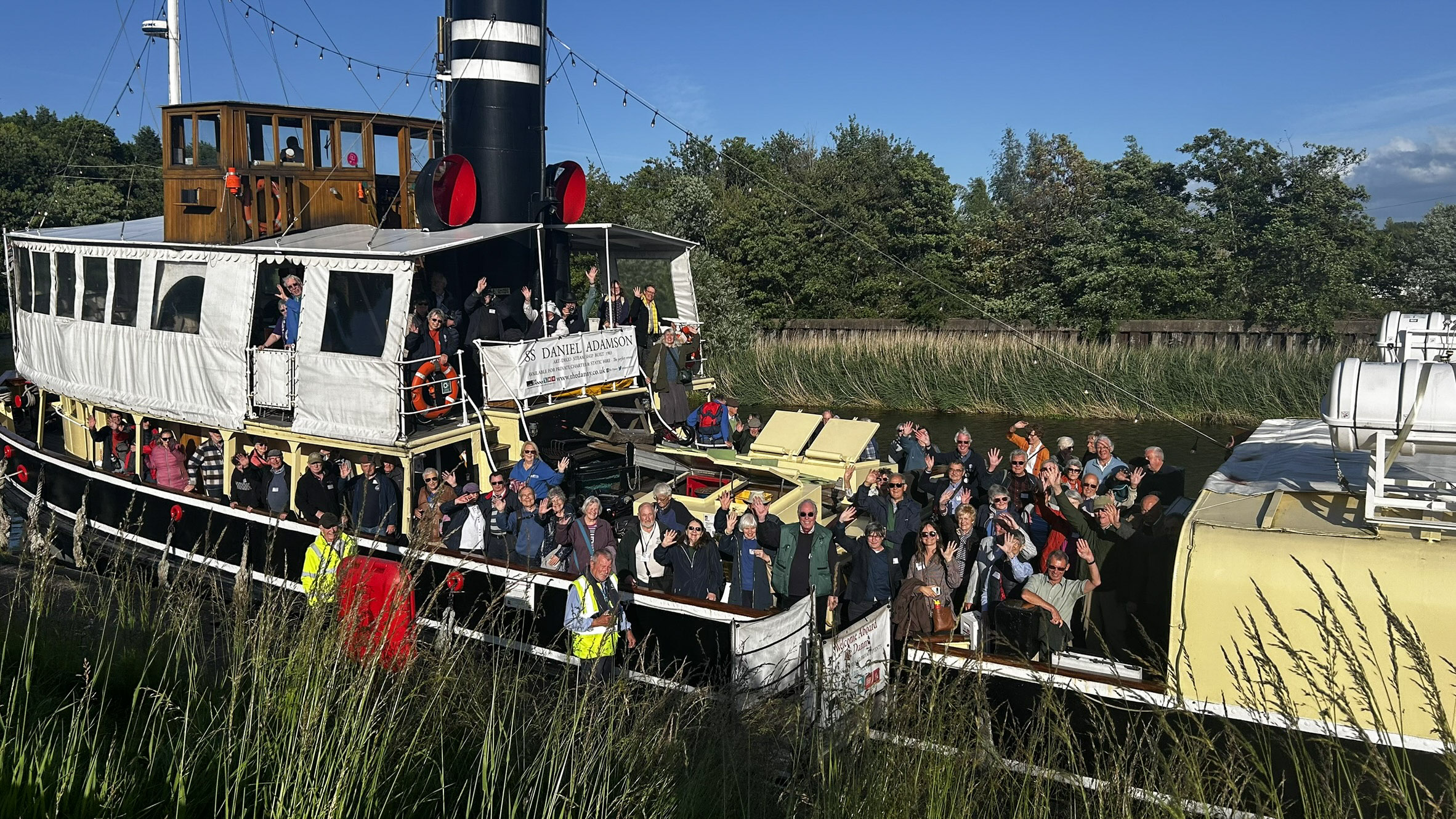
    The event celebrated eight decades of IWA’s work to protect, restore and promote the nation’s inland waterways, while also shining a spotlight on the potential of the River Weaver and the challenges that continue to affect its use and accessibility.

    Normally moored below Sutton Weaver Bridge, The Danny was a fitting backdrop for a campaign cruise to showcase one of the country’s most under-appreciated navigations. The River Weaver combines rich industrial heritage with exceptional natural beauty. Within a short distance of former industrial sites are thriving wildlife habitats, including some of the highest concentrations of kingfishers found on any UK navigation.

    The Weaver also offers a reliable and easy cruising experience due to it being non-tidal. Thanks to its large catchment area, water levels rarely become problematic, and the navigation has never been subject to lock restrictions because of low water levels. Its staffed locks make it easy to navigate, yet despite these advantages, the river remains significantly underused.

    IWA believes the River Weaver deserves far greater recognition as a recreational and heritage asset and so this is also a call to action because several longstanding issues continue to limit its full potential. A lack of dredging has constrained commercial and leisure use in some areas, while concerns remain about the long-term management and maintenance of key infrastructure along the navigation because of a loss of knowledge.

    More recently the closure of Marsh Lock which is the other access point onto the river via the Manchester Ship Canal from Ellesmere Port had exasperated the situation. The lock is now operable on 3 days per week, but passage must be booked, and there is a financial cost to boaters to use the Manchester Ship Canal. [This paragraph revised for clarity on 20th June 2026].

    The most pressing concern is the continued closure of the iconic Anderton Boat Lift that links the River Weaver with the Trent & Mersey Canal. Despite substantial support from the National Lottery Heritage Fund, the Canal & River Trust has yet to provide a confirmed timetable for reopening the lift.

    The closure has now exceeded 19 months, preventing boats from moving between two of the region’s most important waterways and restricting opportunities for tourism, recreation and economic activity.

    While IWA welcomes ongoing efforts to address the technical challenges facing the structure, the charity believes that such an extended closure is unacceptable for a nationally significant heritage asset and major navigation link. Greater clarity is urgently needed regarding the programme of works and the expected reopening date.

    Jim Forkin, chair of IWA Chester and Merseyside Branch, said:

    “The Anderton Boat Lift is one of the ‘Seven Wonders of the Waterways’ and its long closure plus at least another 12 months into 2027 is unacceptable. This situation needs addressing with more pressure put on Canal & River Trust to get the boat lift working again as soon as possible.

    “The lack of boats on the Weaver is very disappointing; it is a beautiful river with many attractions and historic assets. To bring boats back to the river would give a much-needed financial boost to many businesses and pleasure to boaters along its course.”

    Mike Wills, IWA Chair, said:

    “Over the last 80 years, IWA has helped secure the future of waterways across the country. The River Weaver is one of the finest examples of what our waterways can offer, combining industrial heritage, outstanding wildlife and excellent cruising conditions. However, its potential is being held back by avoidable infrastructure issues, most notably the prolonged closure of the Anderton Boat Lift.

    “We want to see this remarkable navigation fully connected, accessible and able to realise the benefits it can bring to local communities, boaters and visitors.”

    As IWA celebrates its 80th anniversary, the organisation remains committed to campaigning for well-maintained, connected and thriving waterways that can be enjoyed by future generations.

  • Parliamentary Group on Waterways Discusses Access, Water Quality and Active Travel

    Parliamentary Group on Waterways Discusses Access, Water Quality and Active Travel

    Under the secretariat of the Inland Waterways Association (IWA), the All-Party Parliamentary Group (APPG) for Waterways convened last week to hear evidence from Paddle UK and the Walk Wheel Cycle Trust on the growing importance of waterways for recreation, active travel, public health, and environmental stewardship. This was alongside concerns about water quality, access restrictions and the need for investment in infrastructure.

    Ben Seal, Head of Access and Environment at Paddle UK, outlined the recent growth in paddle sport participation: an estimated 7.5 million people paddle annually across the UK, this means water sports participation now exceeds that of popular sports such as football or rugby.

    Parliamentarians heard how waterways contribute significantly to both public wellbeing and the economy. Paddle UK referenced the Sport and Recreation Alliance’s “Reconomics 3.0” report, which found that water sports support around one million jobs, contribute billions to the economy as well as preventative health savings to the NHS.

    However, concerns were raised about threats facing waterways and those who use them with water quality a major issue. Representatives warned that pollution and the corresponding negative publicity are discouraging participation.

    The APPG also heard evidence about the positive environmental contribution volunteers and community groups make. Paddle UK gave the example of the removal of 11 tonnes of invasive floating pennywort by paddlers. This helped save navigation authorities significant costs, as well as citizen science schemes supporting water quality monitoring and public accountability.

    Paul Twocock, Executive Director of Strategy and Engagement at the Walk Wheel Cycle Trust, outlined the charity’s work to improve walking, wheeling, and cycling access across the UK. Around 500 miles of these routes run alongside canals, with a further 600 miles along rivers.

    He also described partnership projects delivered with CRT (Canal & River Trust), Scottish Canals, and local authorities, including towpath improvements along the Leeds and Liverpool Canal and lighting upgrades on Edinburgh’s Union Canal. He also discussed challenges associated with balancing shared towpath use in busy urban areas such as London’s Regent’s Canal.

    Paul Twocock said:

    “There’s nothing better than being alongside a canal or river for improving wellbeing, health and connecting with other people. We could open up those benefits to many more people across the UK, but as ever it’ll take some focused investment to make it happen and improvements in the way we deal with biodiversity net gain targets – that’s what we were urging parliamentarians to take action on this week.”

    Accessibility was also a major theme throughout the session. Polly Maton from Disability Rights UK emphasised why it is important that waterways and water sports are accessible to disabled people, noting that access to the water’s edge can be just as important as access onto the water itself.

    There was discussion of future policy opportunities, including the proposed Clean Water Bill, the Government’s forthcoming Access to Nature Green Paper, and proposals for new river walks announced in Labour’s manifesto.

    The roundtable concluded with parliamentarians acknowledging both the social and environmental value of waterways, and the importance of improving access, water quality, and infrastructure to support growing participation across a wide range of activities.

    Concluding, Lord German, also Honorary President of the Monmouthshire, Brecon and Abergavenny Canals Trust, said:

    “Our waterways are unique and precious, delivering social, environmental and economic benefits, including regeneration, tourism, biodiversity and public wellbeing – as seen from this APPG meeting and the evidence given. I look forward to helping further this agenda”.

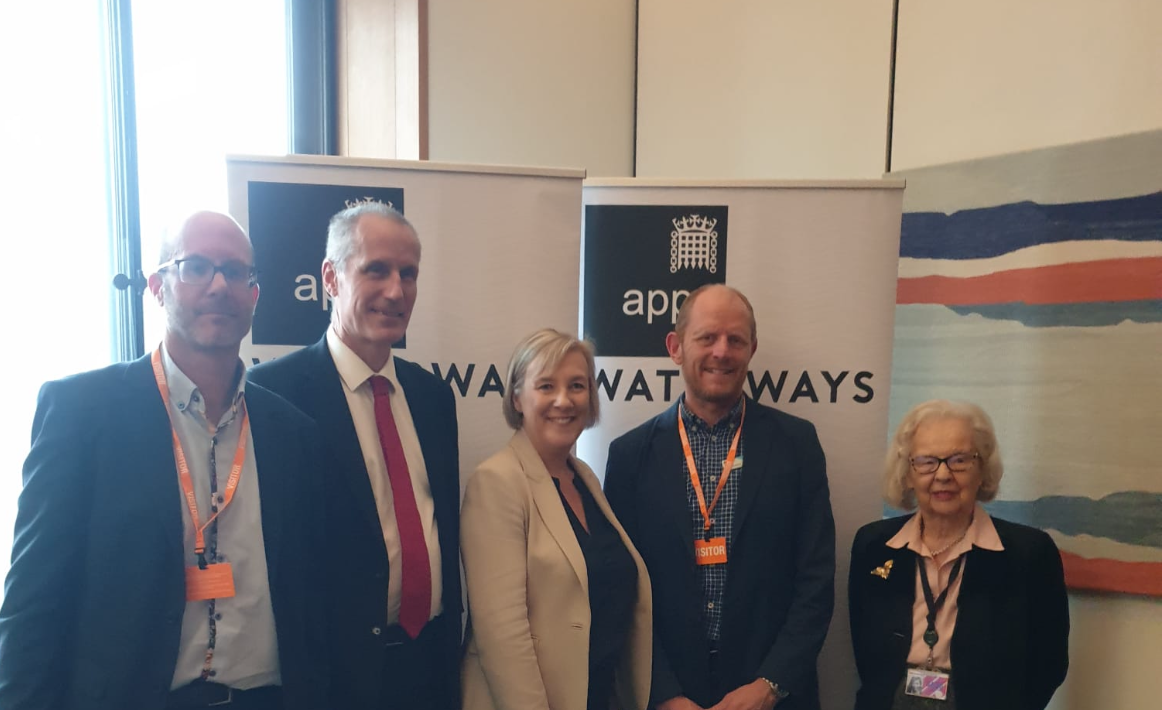
    Photo L-R: (not all members were present at the end of the meeting) Joanna Richardson (British Marine), Baroness Jenny Jones, Charlie Norman (IWA), Ben Seal (Paddle UK), Paul Twocock (Walk Wheel Cycle Trust), Polly Maton (Disability Rights UK), Alice Gibb (Defra)

  • IWA Seeks New Trustees

    IWA Seeks New Trustees

    The role of IWA Trustees is to drive the direction of the charity, monitor its effectiveness in achieving its goals, and ensure the organisation meets its charitable objectives. As a member of the Board, an individual Trustee’s role is to use skills and judgement to work collaboratively with the other Trustees to:

    • Ensure the charity is carrying out its purposes for the public benefit
    • Comply with the charity’s governing document and the law
    • Act in the charity’s best interests
    • Manage the charity’s resources responsibly
    • Act with care and skill
    • Ensure the charity is accountable and well managed

    We are looking to complement our existing Trustees and have identified the following skillsets that we think need
    strengthening:

    • Experience of engaging and enabling participation of younger people with the charity
    • Health and safety management
    • Funding/fundraising
    • Environment and sustainability
    • experience of restoration projects (not just waterways)
    • Marketing, membership and recruitment

    We would also welcome applications from individuals to apply if they think they have experience that would be valuable to the Association beyond those mentioned above. For example, we would like younger people (18 and over) to apply who may have very relevant skills and experience for growing IWA today.

    Candidates must be passionate about our campaigning: for sufficient funding for Britain’s waterways; the sustainable operation of navigations; restoration of closed waterways; and our work to make the waterways great places to live, work, travel, play, and for wildlife, nature recovery and mitigating climate change.

    Most Trustee meetings are held online. However, we feel it is important to meet in person and to visit sites and events from time to time. Reasonableexpenses are covered. We are committed to improving the diversity of our Board. We encourage applications from individuals from underrepresented groups, including those of varying ages, genders and minority ethnic backgrounds. Selection will be made on merit and the ability to best serve the Association’s charitable objectives, taking into account the current skills and experience of the Board. Candidates should have sufficient time available to be able to spend at least one to two days per month on IWA business

    The Application Pack contains information about the roles and responsibilities of Trustees and contact details in case you wish to discuss potentially applying. Applications will close at 12 noon on Friday 10th July 2026 (Note: extended closing date). Applicants will be asked to submit their CV, complete a skillset questionnaire, and submit a covering email rather than completing an application form.

  • Parliamentary Group Hears from Residential Boaters

    Parliamentary Group Hears from Residential Boaters

    A major theme of the discussion was related to rights, and the meeting allowed groups present to talk about the specific challenges faced by liveaboard boaters, thought to number around 50,000, though no official and agreed number exists.

    Members heard from the National Bargee Travellers Association (NBTA), and the Residential Boat Owners Association (RBOA), after which a roundtable discussion was held with input from Canal and River Trust (CRT), Accessible Waterways Association, the National Association of Boat Owners (NABO), and the Broads Authority.

    The session demonstrated that while it may be easy to hold romantic views about life on water the reality can be hard, from not having an address to registering with a GP, limited access to waste disposal services, and the difficulties in obtaining pet and other insurance.

    Ella Parry-Davies of NBTA outlined that around 8,500 boats navigate without a home mooring on CRT waters, but the total population of boaters could be as high as 50,000. This is a diverse and often vulnerable community, with significantly higher levels of disability than the national average.

    Rex Walden of RBOA reinforced this, describing a wide cross-section of society living afloat, from retirees and young professionals to key workers, veterans, and people in vulnerable circumstances.

    Despite this, both organisations acknowledged that boaters’ recognition had been hindered in policymaking.

    The NBTA called for the protection of existing legislation and opposed additional enforcement powers. They stressed that inconsistent communication and lack of transparency from navigation authorities exacerbated these challenges.

    At the same time, NBTA welcomed recent signals from CRT’s leadership, including a commitment to reset relationships with boaters, and was further positive that welfare support staff had recently increased.

    A central theme from organisations was the need for residential boaters to be treated on equal footing with land-based residents, including stronger tenancy rights, improved legal protections, and inclusion in national housing and planning policy. On this last Point, IWA has been campaigning for government to include residential boaters in its National Planning Policy Framework.

    Those present also raised concerns about stigma and mistreatment, with reports of verbal abuse and occasional physical incidents directed at boaters. A CRT representative acknowledged legislation ambiguity and the need for clearer definitions and safeguards, further explaining the need for the Report of the Commission on Boat Licencing. He said that there are increasing welfare issues with vulnerable boaters living in dangerous conditions and their welfare team are dealing with more referrals. He agreed that any new policy or legislation would need safeguards and checks and balances.

    Wendy Morton, MP for Aldridge-Brownhills, vice-chair of the Waterways APPG, questioned presenters and chaired a robust roundtable discussion after. Commenting, Wendy said:

    “This was an important discussion, and it is clear more must be done to support residential boaters.

    “For many, living on the waterways is their home, and they should be treated with the same fairness as those in bricks-and-mortar housing. Yet too often they face barriers and a lack of recognition in policy.

    “I will continue working with colleagues to raise these issues at a national level, particularly the need to properly reflect residential boaters in planning policy.”

    The round-table concluded with a commitment from MPs to raise these issues at a national level, including through parliamentary questions on the inclusion of residential boaters in planning policy.

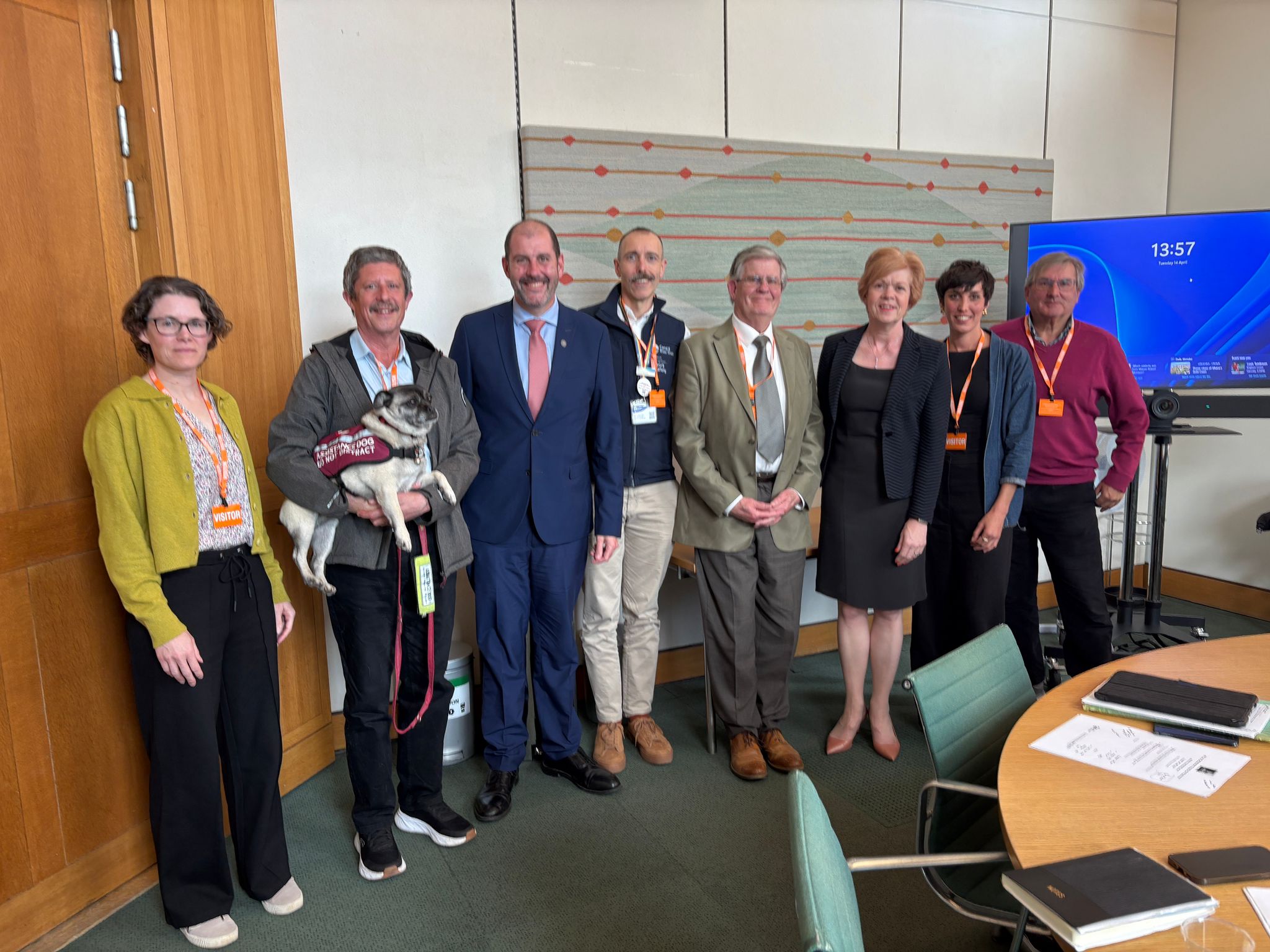
    Attached photo L-R: Lucy Burchnall (Head of Ranger Services and Navigation Officer, Broads Authority), Tim Clarke (Accessible Waterways Association) with Ozzie the dog, Lee Dillon (MP for Newbury), Matthew Symonds (National Boating Manager for CRT), Rex Walden (Residential Boat Owners Association). Wendy Morton (MP for Aldridge-Brownhills), Ella Parry-Davies, (National Bargee Travellers Association) and Roger Stocker (IWA).

  • Grand Union Water Transfer: Safeguarding Navigation and Enhancing Water Supply to Canals

    Grand Union Water Transfer: Safeguarding Navigation and Enhancing Water Supply to Canals

    The scheme is promoted by Affinity Water, Severn Trent Water and Canal & River Trust (CRT) to transfer water up to 115 million litres day from Birmingham’s wastewater treatment plant at Minworth to Luton in Bedfordshire via new pipelines, two new treatment plants and 60 miles of existing canals.  

    Water transfers, if designed with care, can help mitigate the growing impact of climate change on Britain’s waterways by keeping canals navigable, supporting ecosystems and preserving heritage. These benefits will only be realised through rigorous engineering, clear operating principles, and enforceable protections for the wider network. 

    IWA is calling for a more comprehensive and transparent demonstration of the engineering of the canal section of the scheme to show how the water flows will be managed and controlled. This will ensure navigation within the transfer length and to maintain, or preferably enhance, water supplies to the wider canal network to London, Oxford, Northampton, Warwick, Leicester and Shardlow (near Derby). 

    Water transfers via canal are not new. The Llangollen Canal, Gloucester & Sharpness Canal, Bridgwater & Taunton Canal and Fossdyke have all been used for water transfer for some years. Every canal has its own specific character, and this is why IWA is working with CRT to get the best deal for the canals impacted by the GUCT scheme. 

    IWA’s submission emphasises five key areas where additional information needs to be placed in the public domain: 

    • Engineering Feasibility Study

    IWA emphasises that a comprehensive engineering feasibility study, with appropriate supporting appendices, addressing all topics in IWA’s published water transfer guidelines and the topics below, should be prepared, published and subjected to a round of consultation before commencing the Development Consent Order process in mid-2027.  

    • Water management and control

    Under existing arrangements CRT has the capability, under its sole management control, to supply water from the Grand Union Canal towards London, Oxford, Northampton, Warwick, Leicester and Shardlow (near Derby). Documentation is required to demonstrate how the water flows in the transfer will be managed and controlled, with the resulting water levels, together with demonstration that supplies to the connected canals will be no less than the supplies historically provided, and ideally increased. During the consultation period CRT advised IWA that this is its intent, though its water management studies do not yet provide the required demonstration.  

    • Design principles and design criteria

    A comprehensive suite of design principles and design criteria is required to understand the engineering approach proposed. From discussion with CRT during the consultation period, it is apparent that such documents have been prepared but were not issued as part of the public consultation. The Design Principles document forming part of the consultation addresses only the visual appearance of structures. 

    • Bypasses and weirs

    Within the consultation documents, there are numerous qualitative discussions of water level and the need to vary weir levels and weir capacities, but no quantitative information to allow interested parties to understand what is proposed or how such changes might affect water levels, navigation and drainage. Affinity Water and CRT have this information but did not publish it for the consultation.

    • Bank raising and dredging

    IWA suggests that the extent of bank raising might be reduced through a programme of enhanced dredging allowing the Minimum Operating Level in the canals to be reduced. CRT has stated, in discussion, that an underlying principle before design commenced was that existing canal operating and maintenance regimes would not be altered, so this option has not been studied. IWA is of the opinion that the decision was premature and that the option deserves further attention. 

    Affinity Water and CRT have confirmed that they have addressed, or are currently addressing, issues raised by IWA but acknowledged that very few of their technical studies and conclusions were documented in the consultation documents. For these reasons IWA especially calls on the scheme leaders to be more transparent by publishing more of the studies undertaken. While these studies can be highly technical, they should be made accessible.  

    There is an opportunity for further discussion and feedback before formal commencement of the Development Consent Order process, which IWA welcomes.

    Graham Heald, IWA’s Water Lead, said: 

    ​“The Grand Union Canal Transfer scheme should safeguard navigation on the canals between Atherstone and Great Brickhill while providing an opportunity to enhance water supplies to the connected canals to London, Oxford, Northampton, Warwick, Leicester and Shardlow, near Derby.

    “We want to see this scheme work, and this is why we have been engaging with Affinity Water and CRT. Water transfers have the potential to play an important role in helping the network deal with a changing climate. As droughts become more frequent and water demand increases, better movement of water could help sustain our inland waterways, sadly now quite fragile in some places. However, these schemes are not a magic bullet, and if poorly designed, they risk damaging the very network they aim to support. 

    “Our response to the latest consultation highlights significant omissions that must be addressed. Water transfer using canals is a key benefit of the waterways and is part of long-established infrastructure use but needs to be sensitively managed”. 

    IWA’s evidence-based climate risk map, The Risk Index, shows where and why our waterways face the greatest threats by 2050, but it also reveals solutions. Because of the potential for water transfer to mitigate some of the pressure on our waterways, we are adding known and proposed water transfers to the Risk Index. This will help to see, at a glance where the schemes are both planned and happening across the network. 

    Read IWA’s full response to the consultation.

    ​

  • Government Planning Policy Overlooks National Role of Canals and Rivers

    Government Planning Policy Overlooks National Role of Canals and Rivers

    IWA has advised government to strengthen planning policy in recognising the role canals and navigable rivers play in housing, climate resilience, and local economies in a submission made via its Planning Advisory Panel to the The Ministry of Housing, Communities and Local Government (MHCLG) this week. This follows major changes to the NPPF in 2024, on which IWA commented in detail, and the recent passing of the Planning and Infrastructure Bill.

    Britain’s canals and navigable rivers deliver varied benefits for communities, nature and the economy, yet new national planning policy overlooks their strategic importance..

    While often celebrated for their heritage and leisure value, canals and rivers play a much wider role today. They support wildlife and biodiversity, provide natural flood management and climate resilience, create green corridors through towns and cities, attract tourism and investment, and homes for residential boaters.

    Yet because waterways frequently cross several local authority boundaries, they can too easily fall between planning policies. IWA says stronger national policy is needed so that canals and rivers are properly considered in decisions about housing, infrastructure and place-making.

    Charlie Norman, IWA’s Director of Campaigns, said:

    “Our submission outlines the need for residential boat moorings provision in the planning system, and the need to review and update Canal Conservation Areas. As well as this, there is so much potential that is not being realised, for example, water transfer by canals. From the contribution of water-based travel and inland ports to sustainable transport, our waterways are not being recognised for their potential, and the planning system can go a long way to fix this.

    “The value of canal restorations to healthy communities is immense. Despite all these benefits, they are treated as an afterthought in planning policy, and this is a wasted opportunity.”

    IWA’s response factors in these areas that could better reflect planning policy in valuing waterways:

    • Strategic infrastructure: Canals and navigable rivers should be explicitly recognised in national planning policy, so they are considered in housing growth, transportplanning, active travel,and regeneration projects;
    • Climate and nature: Canal and river corridors are natural green and blue infrastructure that support biodiversity, urban cooling, water management, and climate adaptation;
    • Homes: Residential boating is a long-established way of living, yet provision for residential moorings is rarely planned for properly. Local plans should assess and provide forresidential boat dwellers;
    • Heritage and place-making: Waterways are often the historic heart of towns and villages. Development should protect and enhance their character and heritage setting; and
    • Expert involvement: Waterway specialists should be consulted when development plans affect canals, rivers, and their surrounding corridors.

    IWA says that recognising waterways in planning policy would help unlock their full potential, from delivering environmental gains, economic growth to new opportunities for sustainable living.

    “If we want thriving communities, resilient landscapes and attractive places to live and work, canals and rivers should be recognised as part of the nation’s strategic infrastructure”, Charlie Norman concluded.

    Read IWA’s full submission to the NPPF consultation.

  • £6.5m Waterways Investment Welcome but Fails to Address Systemic Underfunding Crisis

    £6.5m Waterways Investment Welcome but Fails to Address Systemic Underfunding Crisis

    IWA has welcomed the announcement of £6.5m Government investment in Canal & River Trust waterways, while warning this one-off capital grant is not the systemic funding reform Britain’s canals and rivers urgently need.

    This additional investment will fund essential resilience work on specific infrastructure across the Canal & River Trust’s 2,000-mile network, supporting communities, businesses and wildlife that depend on secure waterways.

    However, the funding is targeted at discrete projects (e.g reservoirs) rather than addressing the broader maintenance backlog. It provides no support for the 3,000 miles of Britain’s navigable waterways not managed by the Canal & River Trust, many of which (particularly those managed by the Environment Agency) face critical infrastructure challenges due to chronic underfunding.

    Mike Wills, Chair of the Inland Waterways Association, said:

    “IWA welcomes any additional funding for our waterways, and this investment reflects the aims we’ve been campaigning for. Our Risk Index shows that climate change poses one of the biggest threats to canal and river infrastructure, so investment specifically targeting resilience to extreme weather is a priority.

    Last year’s disastrous breaches demonstrated the costs of fixing problems after they happen. But our Risk Index also shows that much more is needed. This is a one-off capital grant for specific projects, not the first instalment of ongoing investment, nor part of a comprehensive review of long-term funding requirements. It does nothing to change the Government’s overall funding approach to waterways, and it does nothing for the 3,000 miles of Britain’s canals and rivers managed by the Environment Agency and other navigation authorities.

    We need the Government to develop a long-term funding plan that addresses the needs of all 5,000 miles of Britain’s navigable waterways. Piecemeal project grants won’t build the resilient network the country needs.”

    IWA is calling on the Government to:

    • Conduct a comprehensive review of funding requirements across all UK waterways
    • Develop a funding strategy that covers maintenance and climate resilience
    • Extend support beyond Canal & River Trust waterways to the entire 5,000-mile network
  • Fenland Waterways Face Permanent Fragmentation as Old Bedford Sluice Becomes Fifth Indefinite Closure in the Region

    Fenland Waterways Face Permanent Fragmentation as Old Bedford Sluice Becomes Fifth Indefinite Closure in the Region

    IWA has warned that East Anglia’s waterways are being lost “in perpetuity” following the announcement that due to health and safety concerns, navigation though the Old Bedford Sluice V-doors has been closed indefinitely, the latest in a growing catalogue of closures across the Environment Agency’s Anglian waterways with no plans for reopening. 

    The closure, announced on 19th January 2026, further severs connections between the Middle Level and the Environment Agency’s waterways via the Old Bedford River and Welches Dam Lock on the Horseway Channel. 

    The Anglian waterways network now suffers from multiple indefinite stoppages with no remediation plans in place: 

    • Old Bedford Sluice V-doors (Old Bedford River): closed January 2025 
    • Brandon Lock (River Little Ouse): closed since 2024 
    • Harlam Hill Lock (River Ancholme): closed since 2012 
    • Welches Dam (Horseway Channel/Old Bedford River): closed since 2006 
    • Swaffham Bulbeck Lock (Swaffham Bulbeck Lode): no longer operational, reclassified as flood relief structure 

    In a statement to IWA, the Environment Agency confirmed there are currently no plans to reinstate any of these locks to navigation, citing ongoing financial pressures. 

    IWA’s Risk Index, which mapped risks across the inland waterways network from climate change and funding shortfalls, identified indefinite closures as a critical threat to the connected system.  

    The implications extend beyond navigation. A fragmented waterway network means: 

    • Lost economic opportunities for waterside businesses and tourism 
    • Reduced public access to green/blue spaces for recreation and wellbeing 
    • Irreversible damage to historic infrastructure and cultural heritage 

    Keith Alderton, Chair of IWA Great Ouse Branch said:  

    “This policy of failure to repair waterways infrastructure as it becomes inoperable is resulting in the loss of irreplaceable heritage, lost access to green/blue space for local communities and lost economic opportunities across the region. Without intervention and adequate funding, these historic waterways will not see another generation due to systemic neglect and that’s unacceptable.” 

    IWA is calling on the Environment Agency and government to: 

    • Develop costed restoration plans for all indefinitely closed structures and consider volunteer labour;  
    • Integrate waterway restoration into major infrastructure projects like the Fens Reservoir; and 
    • Recognise waterways infrastructure as vital assets to the environment and the economy. 
  • IWA Responds to South East Strategic Reservoir Option Plans

    IWA Responds to South East Strategic Reservoir Option Plans

    Thames Water is progressing the proposed South East Strategic Reservoir Option (SESRO) Project for a new 150 million m3 water storage reservoir located approximately 5km south-west of Abingdon in Oxfordshire plus strategic inter-company water transfers.

    The project is intended to provide a reliable and sustainable source of water for millions of customers served by Thames Water, Affinity Water, and Southern Water in Oxfordshire and the wider South East region, and to strengthen the region’s resilience to climate change, population growth, and drought risk.

    The project is being treated as a development of national significance for which development consent is required. It is intended that an application for a Development Consent Order will be submitted in autumn 2026. As part of the process a statutory consultation was held from October 2025 to January 2026. Water would be extracted from the River Thames (and potentially from a future Severn to Thames Transfer project) to be stored in the reservoir.

    IWA identified impacts on navigation due to abstractions from and releases to the River Thames, including in the event of emergency releases from the reservoir, which need to be mitigated during detail design.

    While accepting that a pipeline is the only feasible solution for the 300 Ml/day Severn to Thames Transfer previously proposed, IWA called for the option of transfer via the restored Cotswold Canals to be re-examined if the provision of storage at SESRO permits a lower rate of transfer over longer periods of time.

    IWA welcomed the provision of a water channel to protect potential navigation via the Wilts & Berks Canal, but expressed its disappointment that some of the proposals are no longer as comprehensive as previously. As currently proposed the project will make provision for the restoration of the Wilts & Berks Canal as a water channel around the reservoir, with provision for future operational features such as locks and a connection to the River Thames. IWA put forward alternative proposals which might permit the locks and connection to be constructed during the initial construction period at a similar cost to the Thames Water proposals.

    IWA encouraged the use of barge transport during construction to mitigate environmental impacts. We also supported the proposals to facilitate canoeing, paddle boarding, swimming and sailing on and around the reservoir, contributing to a multi sector reservoir which will provide public benefit in a variety of areas.

    Read the full response.

  • IWA Response to CRT’s Restoration Delivery Plan

    IWA Response to CRT’s Restoration Delivery Plan

    IN SUMMARY

    IWA has strongly challenged CRT’s new draft Restoration Delivery Plan (RDP), arguing that it treats restoration as a low priority rather than a core charitable objective. Several major restoration projects (including the Grantham Canal, Wendover Arm, and Pocklington Canal) have stalled under CRT ownership. The RDP would see volunteer groups face new financial burdens and bureaucratic obstacles that seem contrary to the collaborative spirit that CRT purports to offer, and a different mindset to that with which British Waterways delivered spectacular reopenings 25 years ago. As a critical friend to CRT, IWA is leading the charge to refocus attention on restoration, engaging directly with CRT’s senior management and its new CEO to ensure waterway restoration receives the leadership, support, and priority it deserves.

    THE BACKGROUND

    After consulting widely with restoration groups and other interested parties we have concluded that CRT’s plan is misguided because it addresses symptoms, not underlying issues. IWA has always thought of ourselves as a critical friend to The Trust, and on this issue, we must lean into the former description of our long relationship.

    Restoration work has been halted on several restoration projects where CRT is a landowner, either owning most of the waterway, as in the case for the Grantham Canal, the Wendover Arm and Pocklington Canal, or where it is a minority landowner, as with the Cromford Canal. In fairness, in some cases, CRT says work has stopped because of Health & Safety arrangements, or environmental issues, but it most case it just claims that it doesn’t have the resources to review work plans or respond to restoration groups’ correspondence.

    However, waterway restoration is one of CRT’s principal objectives alongside other important objectives as maintaining the navigable system, heritage and natural environment and landscape – yet the RDP seems to position waterway restoration as a something it might consider when funds permit. We think this is an abandonment of one of CRT’s principal duties. 

    The RDP requires restoration promoters to commission professional studies for planned works, and to pay CRT such studies and work proposals to be reviewed by additional staff or contractors. This has led to some outrage that CRT planned to charge £40 per hour to deal with correspondence and plans put forward by them. Other complaints concern external training courses to be undertaken at considerable expense although this requirement has since been reduced to compulsory on-site training. The latest draft of CRT’s Plan (published this summer) as part of a consultation met strong criticism from several restoration groups, particularly where works had been stopped, resulting in financial cost and volunteer disillusionment. A planned WRG Canal Camp on the Cromford Canal had to be cancelled, for example.

    CONCERNS & CHALLENGES

    Overall, it is our view that the plan reads as a defensive document; more like a commercial business on a cost-cutting mission, far from the ‘can do’ manifesto and operational plan expected of a high-profile national charity.

    So, on the one hand, CRT wants to be a leader of the restoration movement with a high profile at national events, but on the other hand it is custodian of multiple canals that were abandoned by its predecessors, but for which it is frustrating work to restore.

    25 years ago, with Lottery funding and regional development agency support, the then British Waterways Board management launched ambitious plans to revive and regenerate these waterways leading to spectacular restoration reopenings: the Huddersfield Narrow, Rochdale, Droitwich, Forth & Clyde, and Union canals are fine examples. Momentum has now faltered in a more difficult economic climate, and CRT is perceived, rightly or wrongly, as a blocker of restoration.

    We are clear about the challenges: The Grantham Canal, for example, is a complex and major restoration, on the other hand the Pocklington Canal and the Wendover Arm, both wholly owned by CRT are probably the two easiest waterway restoration schemes in the country, notwithstanding that the Wendover Arm has two difficult road crossings and some minor footbridges and pipes, yet these schemes have been dragging on for more than 50 and 40 years, respectively.

    Surely, CRT, given its charitable duties, should be taking the lead on these restorations rather than leaving them to two small groups? We accept that CRT must adhere to building, environmental and heritage protection legislation, and in some cases restoration promoters need to improve their operational practices, and where required, we support CRT’s moves to raise standards. However, this needs leadership and support rather than just raising obstacles.

    WHAT IS IWA DOING?

    We don’t wish merely to criticise; IWA wants to work constructively to resolve challenges and to provide support.  Over the years, IWA and the restoration sector have provided a broad range of professional services and know-how to bring about successful restorations. Work is also underway to ensure that IWA raises its support for waterway restoration and will do so as a 2026 priority. In conclusion, we are pleased to report that CRT is taking IWA’s views seriously. We are now engaged in direct meetings with senior management, the latest on 15th December, and we have ensured that Campbell Robb, CRT’s new CEO is fully aware of our concerns. We will continue to work constructively with CRT to achieve the best outcome for the waterways, including restoration.

  • IWA Welcomes Breakthrough Agreement on Monmouthshire & Brecon Canal Water Crisis 

    IWA Welcomes Breakthrough Agreement on Monmouthshire & Brecon Canal Water Crisis 

    IWA has welcomed last night’s announcement by the Welsh Government of a financial settlement to resolve the water abstraction crisis that has threatened the future of the Monmouthshire & Brecon Canal. The Welsh Government will provide cover for up to £400,000 every year, for the next five years. The Canal & River Trust (CRT) will also contribute up to £100,000 annually. The funding will support a vital water supply agreement.

    IWA has been at the forefront of the campaign as a key member of the Preserve & Protect the Mon & Brec Canal (PPMB) coalition. IWA representatives helped organise the Senedd Rally on 9th July 2025, which preceded the Senedd Petitions Committee debate that saw overwhelming cross-party support for action. Following the rally and debate, the Welsh Government announced the creation of the Task & Finish Group on 17th July 2025. 

    The agreement, announced by Deputy First Minister and Cabinet Secretary Huw Irranca-Davies, follows months of intensive campaigning, and negotiation between the Canal & River Trust (CRT), local authorities, and the Welsh Government through the specially convened Task & Finish Group. 

    The water abstraction crisis has seen CRT spend nearly £1 million this year alone purchasing water from Dŵr Cymru Welsh Water, with costs reaching up to £40,000 per week at peak times. This expenditure has diverted vital funds away from essential maintenance and dredging work on the canal. 

    Paul Thomas, Secretary of IWA South West and South Wales Region, said:  

    “This announcement is a major victory for everyone who has fought to preserve this historic waterway. The Mon & Brec Canal is not just a navigation route, it’s a vital part of our heritage, a significant economic asset for the region, and a much-loved recreational resource for thousands of people. We are delighted that the Welsh Government has recognised its importance and taken steps to secure its future.” 

    The Task & Finish Group, which includes representatives from Welsh Government, CRT, Natural Resources Wales, Dŵr Cymru, and local councils, finally convened on 17th November after delays. The announcement follows intensive behind-the-scenes negotiations between all parties. 

    Paul Thomas added:  

    “This shows what can be achieved when organisations work together with a common purpose. I want to pay tribute to all our partners in PPMB, the Commercial Operators Group, Brecon Beacons Tourism, the Bridge 46 to Five Locks Canal Group, and the many individual campaigners who have given their time and energy to this cause.” 

    IWA particularly acknowledges the crucial role played by members of the public, who signed the Senedd Petition in their thousands and contacted their local MSs and MPs to demand action. The support of Cllr Jan Butler, other local Councillors, MSs and MPs across party lines has been instrumental in keeping pressure on decision-makers. 

    Mr Thomas concluded: “We await the full details of the agreement. CRT will now be able to focus its resources on maintaining and improving the canal rather than simply keeping water in it. However, our work doesn’t end here – we will continue to monitor the situation closely to make sure this agreement delivers real, lasting benefits for the Mon & Brec Canal and all who use and love it.” 

  • IWA Seeks Higher Clearance for New Exeter Ship Canal Bridges

    IWA Seeks Higher Clearance for New Exeter Ship Canal Bridges

    Devon County Council held workshops for stakeholders on 22 October 2025, at which they presented the emerging proposals for two new replacement bridges across the Exeter Ship Canal on the A379 dual carriageway.  This followed from an announcement by the Department for Transport in July 2025 of a number of local authority road improvement schemes that were to be taken forward.

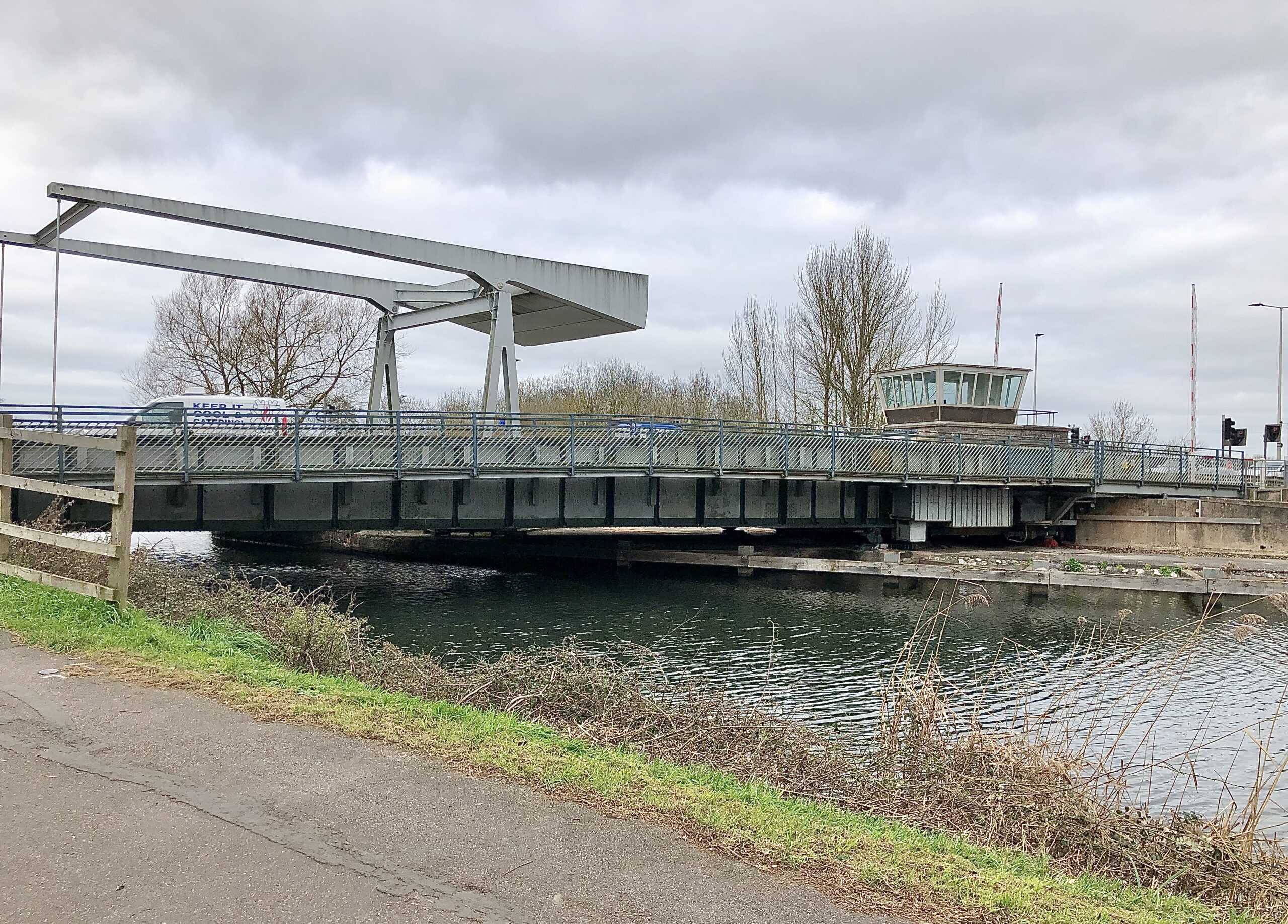
    The new bridges will be bascule bridges, similar in concept to the existing bascule bridge on the eastbound carriageway but of modern design.  They will replace the existing westbound steel swing bridge, built in the 1930s, and the eastbound bascule bridge, installed in the early 1970s, both of which are becoming life expired.

    The air draft of the existing bascule bridge is larger than that of the existing swing bridge and IWA is keen for advantage to be taken of the rebuilding to increase the air draft of both bridges.  IWA argues that the new bridges should provide sufficient air draft to permit a good number of leisure craft, including yachts with their masts lowered, to pass through without raising the bridges.  Opening moveable bridges is not only time consuming but also holds up the traffic using the busy A379 dual carriageway.

    Devon County Council has identified 5 options for replacing the existing bridges.  Option 3 provides for the road surface to be raised by 1.7m and Option 4 provides for the road surface to be raised by 0.7m with an opportunity for incremental increases above this.  IWA has a preference for Option 3 but Option 4 could also be supported if it results in leisure craft with an air draft of up to 3.0m being able to pass under the bridges.

    The Council is currently assessing the comments made at the workshops, with a view to holding a public consultation in spring 2026.

    PHOTO The A379 bridges at Exeter: swing bridge in the foreground, with superstructure of bascule bridge visible behind. (Photo: Sandy Wright)

  • 75% of Britain’s waterways face financial peril as almost all brace for heavier winter rainfall

    75% of Britain’s waterways face financial peril as almost all brace for heavier winter rainfall

    Britain’s unique canal and river network faces a “perfect storm” of underinvestment and climate risk – as reported in The Guardian today.

    • Three-quarters of Britain’s canals face financial insecurity, with the majority of the nation’s navigation authorities struggling to maintain essential infrastructure amid declining funding;
    • Climate pressures are intensifying, with new mapping showing every waterway in Britain will face greater risk from drought in summer and floods in winter; and
    • The combination of reduced funding and rising climate impacts creates a “perfect storm” for the nation’s 5,000-mile canal and river network, threatening heritage, navigation, tourism, wildlife, utilities, homes, communities and businesses.

    Following the Climate Change Committee’s warning to government to prepare for 2oC warming by 2050, the Inland Waterways Association (IWA) has published a first-of-its-kind map revealing the likely impact of this warming on Britain’s 5,000-mile network of canals and navigable rivers. 

    Facing a dual crisis of funding and climate resilience, the new map reveals 99% of Britain’s navigable inland waterways are at risk. The research from the only national charity that campaigns for all the country’s canals and river navigations finds that 75% of canals are financially insecure, while 99% are expected to experience increased winter rainfall, threatening infrastructure already struggling with years of underinvestment. 

    Key findings are: 

    • The majority of our waterways are managed by navigation authorities struggling financially;
    • Canals will be impacted by increased water shortages, especially in the Pennines and Midlands; and
    • Our mapping shows that no part of the system will escape susceptibility to winter precipitation and drought risk.
       

    Britain’s 5,000 miles of navigable canals and rivers, including the 2,700-mile connected system across England and Wales are a national treasure providing significant public benefit to millions of people across Britain. Our inland waterways are blue green corridors that connect fragmented wildlife habitats and provide free access to nature. They also generate significant economic activity, including associated tourism, supporting over 300,000 jobs [2] and saves the NHS over £1.1 billion [3] each year. Almost 80% of local authorities have a navigable waterway or a waterway under restoration, disproportionately so in more deprived areas. 

    Charlie Norman, IWA’s Director of Campaigns, says: 

    “Right now, Britain’s matchless canal and river network faces a perfect storm of underinvestment and climate risk.  

    “Our findings paint an alarming picture of vital national infrastructure under increased strain. Decades of erratic government support along with more frequent extreme weather events have left many waterways vulnerable to breaches, closures and mounting maintenance costs. This year’s drought led to the closure of dozens of canals across the country, affecting wildlife, tourism, businesses and people living on the canals. 

    “Without intervention the network, a cornerstone of the UK’s industrial heritage, providing leisure and tourism destinations for millions, as well as green corridors for wildlife, faces irreversible decline by 2050.” 

    Rainfall 

    Rising winter rainfall is placing Britain’s waterways under increasing strain. While reservoirs rely on winter rainfall to prepare for summer, excessive precipitation is already causing major damage, as seen in the catastrophic Bridgewater Canal breach on New Year’s Day 2025, and similar incidents on the Huddersfield Canal and Calder & Hebble Navigation. 

    IWA’s new mapping using Met Office climate projections shows no part of the network will escape increased winter rainfall under 2°C of global warming. In the south, rivers such as the Thames were closed to navigation for nearly five months last winter due to flooding: a blow to local businesses and leisure users alike. Many of the major navigable rivers in England (Thames, Nene, Great Ouse, Medway) are managed by the Environment Agency, which faces the threat of serious under-funding for maintenance. 

    Drought

    Following this summer’s drought, with the driest spring ever recorded, Met Office climate projection maps have been used to show how waterways are likely to be affected by lack of water in the future. This map shows the median projected drought severity for a global 2 degrees temperature rise, which IPCC data suggests could happen within the next few decades. 

    Higher drought severity figures are predicted for several crucial areas for the waterways – in areas of higher ground where canals cross summits and therefore where key reservoirs are located. The Pennine summit provides canal links between the North- East and North West waterways (Leeds & Liverpool, Rochdale and Huddersfield canals) and this whole area is predicted to see increased drought. This year already most of the Leeds & Liverpool Canal has been shut since May due to low water. 

    The other key area of concern is the Midlands, the heart of the canal network, fed by many reservoirs whose water resources will be increasingly stretched. An area rich in canal heritage and home to numerous waterways businesses depending on a connected network, it is an area that will be increasingly hit by drought in the future. 

    Funding 

    Lack of funding to maintain waterways in the face of climate change is a key factor and IWA has used expert knowledge of the status of the various navigation authorities looking after our waterways to categorise them. Only 25% of waterways are considered to be financially stable, leaving three-quarters of the network facing moderate to severe funding threats.  

    Charlie Norman continues: 

     “This is why IWA calls on Government to undertake a review of Britain’s inland waterways, with the goal of creating a long-term investment plan 

    “Some aspects of our unique, built environment are assumed to automatically happen. That seems to be the case with our waterways network: they are rightly cherished but there is a dangerous assumption that they are magically self-sufficient. 

    “They are magical, but they don’t just happen. 

    “We want a network that is well-maintained, accessible and alive. This includes the management of the system as a whole and more localised action, for example, where waterways heritage is concerned lest it fall through the gaps of heritage protection. 

    “Improved infrastructure can attract new businesses and enhance the experience of all who use them [4]. Waterways also play a very important role in mitigating the effects of climate change by cooling our cities [5], transferring water, providing active travel routes and supporting biodiversity.  

    “November’s Budget is the perfect opportunity for The Chancellor to signal investment now so we can strengthen this vital, historic network to prevent structural failures, water shortages, navigation stoppages and heritage loss. The case for action is clear: protect and invest today, and our waterways will continue to serve communities, nature and the economy for generations.” 

    Conclusion 

    Britain’s 5,000 miles of navigable waterways are a national asset, but reduced funding and climate change put them at severe risk. 

    Government should review Britain’s inland waterways to create a long-term investment plan because the case is clear: millions spent now will save billions later. With relatively modest investment, Government can secure huge returns in public health, economic growth, climate resilience, and regional renewal. 

    Improved infrastructure will attract new businesses, boost tourism, and enhance the experience of everyone who enjoys Britain’s waterways. 

    IWA’s evidence-based climate risk map shows where and why our waterways face the greatest threats by 2050: now, we need solutions. 

    This November’s Budget is an opportunity for The Chancellor to invest now and keep Britain’s waterways flowing and thriving. They are matchless, and deserve to be well-maintained, accessible and alive. 
  • Parliamentary Group Hears Urgent Evidence on Climate Change Impacts to UK Waterways

    Parliamentary Group Hears Urgent Evidence on Climate Change Impacts to UK Waterways

    This week (14th October), under the secretariat of the Inland Waterways Association (IWA), the All-Party Parliamentary Group (APPG) for the Waterways convened to hear expert evidence from the Canal & River Trust (CRT) and the Middle Level Commissioners (MLC) on the growing impact of climate change across the nation’s waterways. 

    Members heard that changing rainfall patterns in the Middle Level are affecting vegetation management, while reduced water flows in the River Nene, combined with sea-level and bed-level rises, could prevent boats from entering or leaving the system. Flooding and coastal surge risks are also increasing, leaving low-lying areas vulnerable. Responsibility for these regions lies primarily with the Environment Agency (EA), but navigation authorities are operating under mounting financial pressures. 

    The session highlighted that while waterways are among the first to experience the effects of climate change, they can also be part of the solution through adaptation, mitigation, and enhancement of the natural environment in pursuit of net zero. 

    Mr Esterson, Sefton Central MP, and chair of the Waterways APPG, questioned the MLC on their experience of recent flooding, which revealed how many communities remain disconnected from the risks of living below sea level. 

    Mr Esterson said: 

    “There are real challenges as the impacts of climate change intensify, but also significant opportunities in how we adapt and mitigate. These are serious issues relating to our waterways, that go far beyond those who live and work on the water. Our changing climate affects communities, economies, and environments alike. Yet within that jeopardy lies opportunity; opportunity to improve how people enjoy our waterways and to remind MPs just how many of their constituents live near and depend upon them.” 

    A major theme of the discussion was the question of funding, with Defra’s settlement for the Canal & River Trust reduced at a time when climate-related infrastructure costs are rising sharply. 

    Attached photo L-R: Paul Burrows (Chief Exec of the Middle Level Commisioners), Bill Esterson Chair (MP for Sefton in Liverpool), Lisa Smart (MP for Hazel Grove nr Stockport), Adam Comerford (National Hydrology Manager for CRT) and Baroness Lin Golding.

  • 88 extra lorries forced on to Yorkshire’s Roads Every Week Due to Six-Week Canal Lock Closure

    88 extra lorries forced on to Yorkshire’s Roads Every Week Due to Six-Week Canal Lock Closure

    The Canal & River Trust (CRT) has issued a notice of plans to close Sykehouse Lock, on the New Junction Canal near Thorne, South Yorkshire from the 3rd November to 19th December, for bottom and top gate repairs.

    IWA says the six-week closure is excessive and disregards the impact on navigation and local businesses. The duration of the intended closure means that the impact on navigation users, particularly commercial freight, will be substantial. The route is used by Casper River and Canal Transport, and Mainmast (Exol Oil).

    Between the two companies, one barge load of oil (400 tonnes), two 300 tonne barge loads of scrap, and one 100 tonne load of cement per week are transported through the lock. This adds up to 1100 tonnes per week, and the closure puts the equivalent of 88 25-ton lorry journeys per week back on road, adding to congestion and pollution in the local area.

    We’re calling on CRT to minimise the length of the stoppage to reduce the effect on commercial water freight, local roads, and air quality.

    IWA’s Freight Group released a recent report  highlighting the untapped potential of our inland waterways as a sustainable alternative to road freight. With the UK striving to meet net zero targets, the report shows that moving freight by barge offers substantial environmental and economic benefits.

    David Lowe, IWA Freight group said “To maximise the benefits of freight on the waterways the infrastructure needs to be available, and maintenance on key traffic routes carried out as efficiently as possible.”

  • Langport’s River Regeneration Celebrated in New Film

    Langport’s River Regeneration Celebrated in New Film

    • Riverside revival £300k Langport River Project has transformed 7.6 miles of river into a visitor destination, attracting around 250,000 people a year, helping new cafés, shops and services thrive
    • Community Cocklemoor meadow and Huish Bridge now boast renewed pathways, pontoons, canoe steps, fishing platforms, picnic areas, a slipway, cycle hire and a community boat, thanks to a partnership between Langport Town Council and IWA
    • Lasting impact With smart solar lighting, e-bike charging, recycled materials and biodiversity monitoring, the project delivers sustainability as well as local pride: plans are for more paths, parking and moorings

    Regeneration of the riverside in Langport, Somerset, has given this traditional market town a new lease of life. Five years on from initial completion of the Langport River Project, the Upper River Parrett attracts around 250,000 visitors per year and new businesses and services have opened in the town.  

    To celebrate the project’s success, local film-maker Gordon McKerrow has produced a short documentary about how it has helped boost Langport. The film was first screened in Langport on 16th of September to celebrate partnership and volunteer effort by the council and IWA, alongside community groups and local businesses.  

    Val Saunders commented: 

    “A range of new businesses have opened since the river project brought new life to the town. Langport has become a café culture centre and we rarely have an empty shop on the high street. The town has developed a renewed sense of civic pride.” 

    While the project ensured that 7.6 miles of river are now navigable for trail boats and paddle craft, its focus was to create an attractive destination in the centre of town, between Bow Bridge and Huish Bridge. The picturesque Cocklemoor lies at its heart, with activities including walking, paddleboarding, swimming, fishing, cycling and boat trips. Now, approximately 250,000 people per year visit the riverside.  

    Ray Alexander added: “Langport’s story shows just what can be done to enhance an area by improving its waterway and waterside. It wasn’t a big, multi-million-pound project, but it has achieved so much for the area.” 

    And Gerard Tucker, Town Clerk, concluded:  

    “The Langport Community expresses its gratitude to the IWA for their support in helping Langport in the delivery of its vision. We do not consider the regeneration of Langport to be complete and the refurbishment of more paths, creation pf cycle paths and additional parking are on our list for one day! Perhaps even a mooring for our community boat, The Duchess of Cocklemoor, to make it easier for people to access and enjoy the river.” 

    The funding neared £300,000 ten years ago, sourced from a combination of European funds, local authorities and the Canoe Foundation.  

    More about the regeneration 

    A 7.6 mile stretch of the river and its tributaries is now designated as navigable, from the sluice gates of Oath Lock upstream to Thorney Mills half lock (disused) along with short sections of the River Yeo and the River Isle. Fortunately, no major remedial navigational work, such as dredging or lock repair, was needed.  

    Cocklemoor is a riverside meadow with new pathways, pontoons, canoe steps, accessible fishing platforms, picnic spots, seating and information boards. From here, Langport’s community boat The Duchess of Cocklemoor runs pre-booked trips, led by local volunteers. 

    At Huish Bridge, the slipway has been restored for trail boats and paddle craft, with a new car park and community space. Langport Town Council acquired both Cocklemoor and the Huish Bridge slipway from the Environment Agency to deliver the project. Nearby, a cycle hire operates at Bow Bridge and a rowing club is based at Huish Bridge. 

    Sustainability, wellbeing and ecology were forefronted. The facilities include ‘smart’ solar lighting, recycled plastic furniture, e-bike charging points, outdoor exercise equipment and locally made willow bird hides. A system of monitoring the biodiversity of the riverbank has been established. 

    The IWA West Country Branch worked with councillors and council staff to initiate the project and see it through. An IWA consultant engineer surveyed the slipway and advised on its restoration. IWA’s Waterway Recovery Group helped at Langport on three occasions: removing silt from the slipway, undertaking tree clearance works and, earlier this year, renewing the paths across Cocklemoor.  

  • IWA makes a Submission to the Department for Transport Call for Evidence

    IWA makes a Submission to the Department for Transport Call for Evidence

    The Inland Waterways Association, (IWA) through its Sustainable Boating Group, has made a Submission to the Department for Transport’s (DfT’s) Call for Evidence on Decarbonising Smaller Vessels. 

    It has looked at propulsion and the use of domestic energy on leisure boats. The Group has a clear strategy to decarbonise this sector, so a submission has been made this week to the DfT. 

    The first part of the strategy relates to new build craft. It recognises that when high volume diesel engine production ceases, these engines will not be available to marinise, and inland waterways craft will use electric drive. Most boat builders today offer an electric option. 

    However, until either an adequate recharging network is installed or there is a step change in battery technology, even with the support of photovoltaic cells, a back-up generator will be required. As the waterways are currently underfunded the installation of sufficient charging points is unlikely without government assistance. 

    Bowman Bradley, Chair of the IWA Sustainable Boating Group, said:  

    “We believe that there is a clear technological pathway for decarbonisation of the inland waterways leisure fleet which can be achieved quickly and at low cost. However, given the current state of inland waterway funding and regulatory obstacles, it cannot happen without the assistance of central government.” 

    The existing feet is large and will be around for many years. Most will not be converted to electric drive. Hydrotreated Vegetable Oil (HVO) has been identified as a sustainable ‘drop in’ substitute for mineral diesel, both for existing engines and back-up generators, which can bring about an immediate reduction in emissions without capital investment. 

    Unfortunately, HVO, for reasons of price and regulatory complexity, is not readily available to leisure boaters. IWA is working with the Cruising Association, The Royal Yachting Association and British Marine to ask the government to adopt policies that will make HVO available to leisure boaters at an acceptable price. 

    IWA is concerned that in the pursuit of renewable diesel, non-sustainable sources are avoided, and support government measures to that end. We believe that decarbonisation is desirable and deliverable but will not happen without government assistance.  

  • Frustrations Continue with the Environment Agency Over Closure of Popular Thames Bridge

    Frustrations Continue with the Environment Agency Over Closure of Popular Thames Bridge

    UPDATE 12/08/25: In response to pressure from IWA and others this stoppage has now been reduced to one week, not one month. Great news for all river users and local businesses. More information: https://www.gov.uk/government/publications/temple-footbridge-works-2025-river-closure-notice/temple-footbridge-works-2025-river-closure-notice

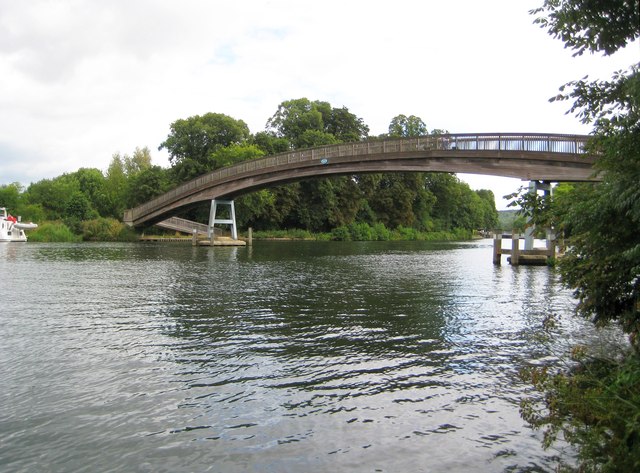
    The EA shut Temple Footbridge which crosses the Thames west of Temple Lock, near Marlow, in May 2023. A subsequent restriction notice sets out the plan to close the river completely from 10 September to 8 October 2025. 

    The Inland Waterways Association (IWA) says the round-the-clock closure is excessive, unnecessary, and disregards the impact on navigation and local businesses. The duration and timing of the intended closure at one of the busiest times of year and the impact on navigation users, both private and hire boaters, along with businesses, will be substantial.

    Verna Smith, IWA’s South East regional chair, said: 

    “Closing one of the most popular stretches of the Thames for a month during one of busiest times of the year makes no sense. It’s bad for businesses as well as everyone else. All river users, including anyone who wants to walk the Thames Path National Trail, have been in limbo for over two years. 

    “Serious questions need to be asked: how did EA’s neglect allow this structure to deteriorate so badly? Why has it taken so long to act? And most importantly, what is its plan to deliver a sustainable repair and properly manage the assets it is responsible for?”

    IWA calls on the Environment Agency to:

    • Postpone the planned removal of the bridge section until November if the works genuinely cannot be completed within 48 hours;
    • Publish a clear timetable and firm commitment for the full repair of the bridge, ensuring that future works do not involve prolonged river closures; and
    • Provide limited daily passage for boaters during any closure period, especially if postponement is not possible, allowing at least a few hours of access each day to reduce disruption.
  • Welsh Government Announces £5million Investment for Mon & Brec Canal

    Welsh Government Announces £5million Investment for Mon & Brec Canal

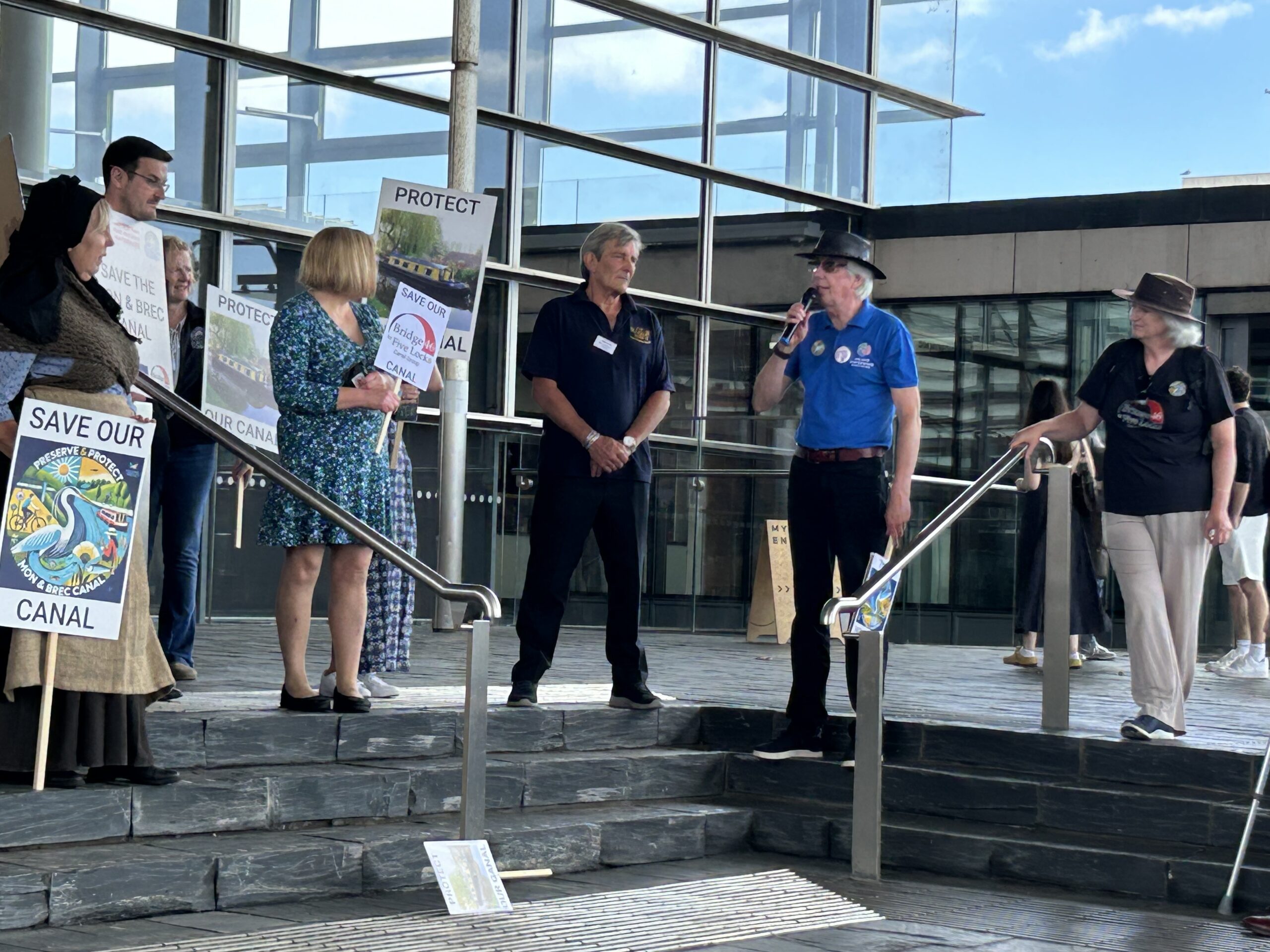
    On 9th July, IWA representatives joined members of the “Preserve & Protect the Mon & Brec Canal” group and other local campaigners outside the Senedd to call on Welsh Government ministers and Natural Resources Wales to act so that the future of the Monmouthshire and Brecon Canal is secured for the next generation.

    Following the Senedd debate and a meeting with key stakeholders, Deputy First Minister Huw Irranca-Davies MS announced on 17th July that the Welsh Government “intends to prioritise capital funding of up to £5m within its budget to upgrade the pumping station that is supporting the current temporary [water-supply] agreement.” 

    Additionally, he announced that a Welsh Government led “Task and Finish Group” will work together with key stakeholders to develop further options to build resilience in the canal’s capacity and identify how any capital works and ongoing costs of the water supplied will be met. 

    Paul Thomas, IWA South West and South Wales Region Secretary, said: “We welcome Huw Irranca-Davies’s statement which shows that the Mon & Brec canal is finally being taken seriously. The Welsh Government’s emergency investment is a vital first step to provide certainty to those whose livelihoods depend on the canal. But this job isn’t done. The new Task and Finish Group must move quickly and deliver a fair and lasting solution. The Mon & Brec is loved by communities, boaters, businesses and wildlife. It deserves a future as rich as its past. ” 

  • Missed Opportunities as Boating Sector Overlooked in Spending Review

    Missed Opportunities as Boating Sector Overlooked in Spending Review

    Responding to the Chancellor’s Spending Review, Bowman Bradley, Chair of IWA’s Sustainable Boating Group, said: 

    “We are disappointed that the Government has again overlooked the inland waterways sector in its 2025 Spending Review. Despite our detailed proposals and the sector’s substantial £4.41 billion annual contribution to the economy, the absence of targeted support for sustainable boating is a missed opportunity. 

    “Hydrotreated Vegetable Oil (HVO) stands out as a viable, cleaner alternative to diesel, offering up to 90% reduction in carbon emissions and compatibility with existing engines. The fact is that without fiscal incentives or infrastructure investment, its adoption remains limited. This inaction not only stalls our progress towards net zero but also does not help the livelihoods of 133,000 individuals employed within the sector. 

    “The Government’s apparent failure to invest sensibly undermines its own environmental commitments and neglects the potential of our waterways to lead in sustainable transport. 

    “Substantial increases in investment in infrastructure were announced, but the missing piece of the puzzle is delivery.” 

  • IWA at the Senedd Urging Welsh Government to Protect the Mon & Brec Canal

    IWA at the Senedd Urging Welsh Government to Protect the Mon & Brec Canal

    On Wednesday 9th July, IWA along with members of the “Preserve & Protect the Mon & Brec Canal” group will gather outside the Senedd to call on Welsh Government ministers and Natural Resources Wales to act so that the future of the Monmouthshire and Brecon Canal is secured for the next generation.

    It will begin at 12:00pm, featuring a rally from 12:30–14:00 bringing together campaigners, canal businesses, local residents, and liveaboard boaters. Campaigners are seeking an immediate and sustainable solution to the water supply crisis affecting this iconic canal.

    The Monmouthshire, Brecon and Abergavenny Canal, a vital heritage waterway that has operated for over 225 years, is facing an existential threat due to Natural Resources Wales’ current abstraction licence. The licence severely restricts the flow of water into the canal. This is not because of drought or water shortage, but to protect the River Usk, a Special Area of Conservation. Yet the modelling used to inform this decision has proven unreliable, with the canal running dry just 10 days after reopening earlier this year.

    Paul Thomas, IWA South West and South Wales Region Secretary, said:

    “The canal’s future is hanging in the balance. Without immediate action this summer, the Mon & Brec could become unusable again by March 2026, with devastating consequences for businesses, boaters, wildlife and local communities.”

    The temporary workaround in place involves CRT (Canal & River Trust) paying up to £1 million a year for additional water, which is not financially sustainable. The cost is diverting money from essential maintenance and dredging, putting the canal’s future further at risk.

    A report last year showed that Britain’s inland boating and tourism sector alone contributes £7.6 billion annually to the UK economy. If this uncertainty continues, businesses will be unable to take bookings or plan for 2026. Liveaboard residents also face the real prospect of losing their homes.

    IWA fully supports the protection of the River Usk, but warns that the current approach is deeply flawed.

    Paul Thomas concluded:

    “This isn’t just about boats and water, it is about people’s livelihoods, homes, wildlife, industrial heritage, health, and the very identity of the area.

    “The canal and the Usk must be treated as a single, interconnected ecosystem and rivers and canals should not be seen to be in competition with each other.”

    IWA is calling for the Welsh Government to step in now, and is putting forward a series of practical solutions, including:

    • Reconvening the Usk & Wye Abstraction Group to review the flawed modelling and abstraction licence;
    • Recognising the canal and river as a combined ecological system;
    • Supporting CRT with grant funding and access to alternative water sources;
    • Legislating for Dŵr Cymru Welsh Water to include navigable waterways in strategic water planning; and
    • Creating a dedicated project for the River Usk, similar to the existing Upper Wye Catchment Restoration scheme.
  • IWA calls for urgent action as Cam Conservancy faces crisis 

    IWA calls for urgent action as Cam Conservancy faces crisis 

    The Cam Conservancy (the Navigation Authority in charge of 6 miles of the River Cam in Cambridgeshire) has warned that it may “become unviable and inoperative” without intervention, as its financial struggles continue and its two locks remain closed. This is a crisis that threatens not just Cambridge’s river users, but the city’s economy and safety. However, this isn’t contained to one area. 

    The Cam Conservancy’s situation is symptomatic of a vulnerability that could threaten the entire waterway network along with communities and businesses nationally. Across Great Britain, navigation authorities are buckling under mounting financial pressures and climate change impacts. 

    IWA supports the Cam Conservancy’s urgent call for a comprehensive national review of waterways infrastructure. Our rivers and canals aren’t just recreational assets, they’re vital for local economies and the environment, an irreplaceable part of our national heritage and they must be well maintained to prevent flooding and risk to life. For this reason IWA is leading the Fund Britain’s Waterways coalition of more than 160 organisations to campaign for sufficient funding to safeguard the future of our waterways

  • All Party Parliamentary Group for the Waterways Discusses Waterway Restoration

    All Party Parliamentary Group for the Waterways Discusses Waterway Restoration

    On Tuesday 13th May, under IWA’s secretariat, the All Party Parliamentary Group (APPG) for the Waterways convened to hear expert evidence from Wilts and Berks Canal Trust and Buckingham Canal Society.

    13 MPs and their representatives attended to learn about the benefits of waterway restoration, citing the 50 canal restoration projects around the country. Example of the economic benefits of the Kennet and Avon canal were given:

    · £92m p.a. GVA increased economic activity

    · 11.2 million visits p.a. (up from 7.7million in 1995)

    · 2700 FTE jobs along canal corridor

    · 1230 FTA jobs form increased canalside activity e.g. hospitality

    · Doubled canalside development

    Martin Hollis, Chair of the Wilts and Berks Canal Trust, explained that housing beside waterways attracts a 10-20% premium. On health and wellbeing, he referred to research indicating that waterways users have higher life satisfaction and are more active. He summarised by saying canal restorations:

    · deliver significant Economic, Health/Wellbeing and Nature/Biodiversity benefit,

    · have been shown to stimulate doubling of Development and Housebuilding

    · alleviate Flooding and (as a side benefit) increase Agricultural Productivity & Yield

    Terry Cavender, Executive Officer of the Buckingham Canal Society, gave background on the Buckingham Canal Society, explaining that although they are a charity, they need to think and act commercially to take advantage of opportunities, and ensure paperwork including insurance and Health and Safety is covered.

    He cited advice for other restorations to capture everything, manage the ‘now’, consider all of the restoration phases including the before / meanwhile uses, during and after; and, have a vision that can evolve. Crucially they need to have sustainable funding plans for the future.

    Given the assembled political audience, he further laid out ways that MPs can help support waterways restorations:

    · Recognise canals as national infrastructure

    · Support the funding of our waterways by encouraging DEFRA to review all of the waterways grants – they need to be index linked

    · National Planning Policy Framework should protect restoration routes and include restoration groups as statutory consultees

    · National policy to use canals for flood alleviation and water transfer/supply

    Bill Esterson, MP, chair of the APPG thanked the speakers and mentioned how he has been pleased to see developers investing in waterways sites in his constituency.

    Lord German as co-chair raised the issue of leveraging these issues to get funding – need to incentivise private development – and provide evidence that there’s a 10-20% uplift in property value thanks to the proximity of a waterway.

    Charlie Norman, IWA’s Director of Campaigns and Public Affairs, said:

    “Canal restoration projects deliver huge benefit and deserve active support from voters, Councils and Parliament. It is also incredible how much volunteer expertise and time is devoted to restoration. This was a particularly well attend and enjoyable APPG session with thanks to all who contributed.”

  • IWA Response to CRT Commission on Licensing

    IWA Response to CRT Commission on Licensing

    The Canal & River Trust (CRT) established an independently led Commission to review the legal framework around boat licensing, to explore whether it is still appropriate in view of the changes in use of the waterway network over the last 30 years. The Commission started its review in January and is expected to run until September 2025. Its report will be submitted to the Board of Trustees, who will decide whether, and if so how, to take the recommendations forward.

    The Commission ran a survey of boaters and other stakeholders in March and April, covering both the experiences that people have had and any changes they would like to see to the Trust’s approach to boat licensing. IWA submitted a response including the following key points:

    1. It would be preferable if the review covered licensing for all navigation authorities as a step towards a joint system.
    2. The licensing framework should be kept as simple as possible to encourage compliance.
    3. The system should encourage more cruising, particularly on lesser-used waterways.
    4. The term ‘continuous cruising’ is not felt to be understood or helpful and should be removed.
    5. More thought should be given to the wider issues of residential boating, possibly a specific licence with appropriate benefits.

    Representatives of IWA’s Navigation Committee have been invited to a meeting with the Commission members to explore the IWA response in greater depth. Further reports will be provided as appropriate.

    More details of the Commission and its work can be found at https://canalrivertrust.org.uk/boating/boating-news-and-views/boating-news/commission-to-review-future-framework-for-boat-licensing

  • Better by Barge: A Smarter, Greener Future for Freight

    Better by Barge: A Smarter, Greener Future for Freight

    Better by Barge makes a compelling case for shifting freight transport from congested roads to the country’s 5,000 miles of navigable rivers and canals, helping to cut emissions, improve air quality, and reduce congestion.

    With the UK striving to meet net zero targets, the report demonstrates how moving freight by barge offers substantial environmental and economic benefits. A single freight barge can carry up to 1,500 tonnes, removing the need for up to 75 heavy goods vehicles (HGVs) from the roads. This shift could reduce carbon emissions from freight transport by as much as 76% per tonne, while also making urban areas cleaner and safer by cutting air pollution and traffic accidents.

    Here are IWA’s Freight Group Chair, Gerry Heward’s views: “Waterways already exist as a national transport infrastructure, and they have the capacity to handle more freight. This report proves that moving goods by water is not only cost-effective but also significantly reduces carbon emissions and urban air pollution.”

    The report also draws attention to the social and health benefits of reducing HGV traffic in cities, where high-density populations suffer disproportionately from poor air quality. Logistics UK Water Council’s Pamela Mounter called the findings “timely and relevant”.

    To make the most of the UK’s inland waterways, Better by Barge recommends:

    • Government investment to improve capacity and encourage modal shift.
    • Support for low-carbon fuels like Hydro-treated Vegetable Oil (HVO) to aid the transition to Net Zero.
    • Protection of key freight sites from redevelopment pressures.
    • Reintroducing Freight Facilities Grants (FFGs) in England to help businesses connect to waterways.
    • Expanding the Mode Shift Revenue Support (MSRS) scheme to make water freight more cost-competitive.
    • Investment in training to build skills in the water freight sector.

    The Better by Barge report underlines that inland waterways have an essential role to play in the UK’s journey towards a greener future. With the right policy support, investment, and infrastructure, shifting more freight onto water is a practical and achievable step in tackling climate change and congestion.

    Find the full report here.

  • Fund Britain’s Waterways flotilla to Westminster

    Fund Britain’s Waterways flotilla to Westminster

    Support the FBW Flotilla in Gainsborough on 1st April 2025. The journey begins with a flotilla of boats setting off from Keadby (River Trent) on 1st April 2025 as the start of the major FBW campaign cruise to the heart of government, culminating outside the Palace of Westminster on 7th May. This year’s flotilla is led by Hazel Owen, Chair of the AWCC (Association of Waterways Cruising Clubs) and a member of the FBW steering group. There is still the chance to join the flotilla.

    The boats will depart from Keadby on 1st April and progress upstream, aiming to be joined by further boats at West Stockwith and Gainsborough. The flotilla is set to pass through Gainsborough at approximately 10:00 a.m. on 1st April, and this is the chance to show support for Britain’s waterways. 

    SUPPORT THE FBW FLOTILLA IN GAINSBOROUGH, 1st APRIL 2025 Come to Gainsborough by 9.30 a.m. on Tuesday, 1st April, to support the Fund Britain’s Waterways flotilla as it makes its way towards Westminster. 

    The flotilla carries a crucial message: our canals and rivers are both valuable and valued but need adequate funding. The first group of boats will have set off from the Strawberry Island Boat Club in Doncaster at the end of March. They will join the tidal River Trent at Keadby, making their way upstream. At around 8:30 a.m. on 1st April, boats from the Chesterfield Canal at West Stockwith will join the flotilla. The combined flotilla will then pass through Gainsborough around 10:00 a.m., where they will be greeted by more boats and supporters on land. 

    Please note: this is a “passing through” event due to tidal schedules, so make sure to be at the river pathways near the bridge in Gainsborough by 9:30 a.m.

    You could also visit West Stockwith at 8:00 a.m. to catch the flotilla as it sets out. This event is the first of many leading up to the main Campaign Cruise at Westminster. The FBW flotilla will continue its journey drawing attention to the ongoing need for investment and support for Britain’s inland waterways. 

    The FBW campaign was launched in 2023 to highlight the severe underfunding and deteriorating condition of the country’s network of canals and navigable rivers. The campaign continues to seek support of parliamentarians and the general public to secure the necessary resources for the upkeep of these vital waterways. Hazel Owen, who will lead the flotilla, said: “The need for greater investment in our waterways has never been clearer. This flotilla is not just about boats; it represents the voices of everyone who cares about the future of our canals and rivers. We must show Parliament that we are serious about safeguarding these precious resources.” 

    To take part in the Cruise on a boat in the flotilla: For details please contact Andrew Phasey on info@fundbritainswaterways.org.uk.

  • Melksham Canal Restoration in Jeopardy

    Melksham Canal Restoration in Jeopardy

    While we acknowledge the need for housing, a healthy, thriving waterway network should not be the price that has to be paid for new homes.  Good planning should provide everyone with a decent home they can afford, as well as preserve and protect our heritage.

    The Melksham Link is a crucial initiative to connect the Kennet & Avon Canal near Semington to the River Avon at Challymead. This restoration would allow boats to navigate through Melksham, past Melksham Gate Weir, and eventually connect to the historic canal line near Forest Farm before joining the Thames and Severn Canal.

    We highlighted two major concerns. First, the developer has blatantly ignored strategic proposals for the area, despite acknowledging awareness of the Melksham Link plans. Second, the consultation fails to address the significant negative consequences of blocking this vital waterway connection.

    The Wilts and Berks Canal Trust is optimistic about securing planning permission for the Melksham Link this year. However, the Berryfield developer has deliberately objected to the canal scheme to clear the way for their housing development, disregarding both the Melksham Neighbourhood Plan and the Wiltshire Council Local Plan.

    We believe the developer should be required to modify their proposal to take account of the canal restoration and this is why we have submitted an objection.

    Blocking the canal route would deprive Melksham of significant potential tourism, leisure, and employment opportunities that would accompany a restored waterway, including canalside hospitality venues, marinas, and retail establishments.

    The council is already familiar with successful restoration work on the Wilts & Berks Canal, including the popular stretch at Pewsham Locks near Lacock and ongoing rebuilding around Swindon. We think this should be used as a model to show that it is possible to build new and much-needed housing, while protecting canals.

    These are the reasons why IWA has formally requested that the Planning Committee reject this application. If you’d like to submit your own views the planning application can be found here and is open until 12th March 2025.

    Thanks to the many volunteer hours that have been dedicated to this process. This objection also shows the importance of vigilance by local people and organisations as well as the enormous expertise within IWA. Waterway supporters are encouraged to report any local plans that threaten restoration to their local IWA Branch, IWA’s Chesham office or the relevant local restoration society.

  • Protecting the Future of the Mon & Brec Canal

    Protecting the Future of the Mon & Brec Canal

    Recent decisions on water abstraction licences pose a serious threat to the Monmouthshire & Brecon Canal (Mon & Brec) and could drastically reduce water levels, jeopardising the canal’s long-term sustainability and the communities, businesses, and wildlife that depend on it.

    The Canal & River Trust (CRT) recently lost an appeal regarding water abstraction from the River Usk and Trosnant Spring, limiting the amount of water that can be used to feed the canal. Without adequate water supply, CRT has warned that sections of the Mon & Brec could become unnavigable or even face closure, though this would be the worst-case scenario. We believe even the prospect of this is unacceptable. Many businesses do well in this area, and they can do without even the hint of uncertainly especially as we come into warmer months and the holiday season.

    For over 225 years, this canal has supported local economies, provided habitats for wildlife, and been a recreational space for all canal users. It’s also a significant part of Wales’ tourism industry: hire boat companies, trip boats, and canalside businesses generating jobs and revenue for the region currently operate successfully and are in need of reassurance. Up until now, the Welsh Government has supported canal restoration, most notably with the Montgomery Canal. We now need that same commitment for the Mon & Brec.

    IWA is actively working to ensure the canal’s future. We are urging Welsh Government to work with Natural Resources Wales (NRW) to reconsider the impact of these water restrictions, not only on the Usk’s ecology but on the canal itself with its diverse ecosystem.

    In South Wales, canal restoration efforts in Cwmbran have made significant progress, with restored bridges, new moorings, and lock gate replacements. Decades of investment, much of it funded through government grants and the National Heritage Lottery Fund, must not be wasted. Losing the northern section of the Mon & Brec would be very bad for future restoration and regeneration projects.

    We have written to Senedd members, the Deputy First Minister and Cabinet Secretary for Climate Change and Rural Affairs in the Welsh Government, and relevant MPs to put pressure on getting the right outcome for the Mon and Brec.

    Paul Thomas, IWA South West and South Wales Region Secretary, said:

    “This is a serious threat to the Mon & Brec Canal, we can’t just watch it happen. Cutting water supply risks making parts of the canal unnavigable, which would be bad news for local businesses, tourism, and wildlife. For over 225 years, this waterway has been at the heart of the community, and we need the same commitment to its future that we’ve seen for other Welsh canals. This is why we are urging the Welsh Government to work with Natural Resources Wales to reconsider these restrictions, and we are writing to all relevant politicians. People love their local canal, but waterways as we know and value them would not exist if not for the historic campaigning of many before us. That work is still needed today.”

  • Waterways APPG holds first Working Meeting 

    Waterways APPG holds first Working Meeting 

    The Waterways All-Party Parliamentary Group (APPG) held its first working meeting in parliament on January 21st, chaired by Lord German. The usual chair, Labour MP for Sefton Central Bill Esterson was called to the chamber minutes before the meeting started.  

    The APPG noted with deep sadness the recent passing of Baroness Jenny Randerson, who had been due to attend. Her longstanding support for, and love of, the waterways has been appreciated. 

    Pictured (from left) are: Lord Michael German, Abtisam Mohamed MP, Uma Kumaran MP, Wendy Morton MP,  Baroness Llin Golding. Not pictured but present: Sir Gavin Williamson MP PHOTO CREDIT: Susie Mather 

    The APPG discussed concerns over the growing crisis facing the UK’s inland waterways network, citing recent breaches on the Bridgewater and Huddersfield Canals as evidence of worsening infrastructure decline. 

    Members emphasised that despite the significant economic, social, and environmental benefits of the waterways, and the tireless contributions of volunteers, chronic underfunding is leading to increased structural failures, posing both safety risks and financial burdens. 

    Discussion focused on the critical need to safeguard the network’s future. The group also outlined key priorities for the coming year, including environmental management, flood defence, and sustainable freight solutions.  

    The Bridgewater Canal breach was cited as a stark reminder of the financial and operational challenges posed by ageing infrastructure.  

    The fragmented ownership of the network and the responsibilities of private navigation authorities in maintaining infrastructure were also discussed. 

    The APPG committed to progressing discussions on climate resilience and waterway funding, with plans to bring the issue to a Westminster Hall debate to drive parliamentary awareness and action. 

    As secretariat, he Inland Waterways Association (IWA) hopes the now 24-strong group will unlock the environmental, social, economic, and cultural potential of the UK’s rivers and canals by boosting local economies, promoting sustainability and connecting people to nature.