Category: Boating

Read news, articles and updates from IWA about boating on our waterways.

  • IWA Concern over Vazon Bridge Opening

    IWA Concern over Vazon Bridge Opening

    IWA has written to Network Rail to express concern about the ongoing problems with the opening times of the Vazon bridge over the Stainforth and Keadby Canal.  

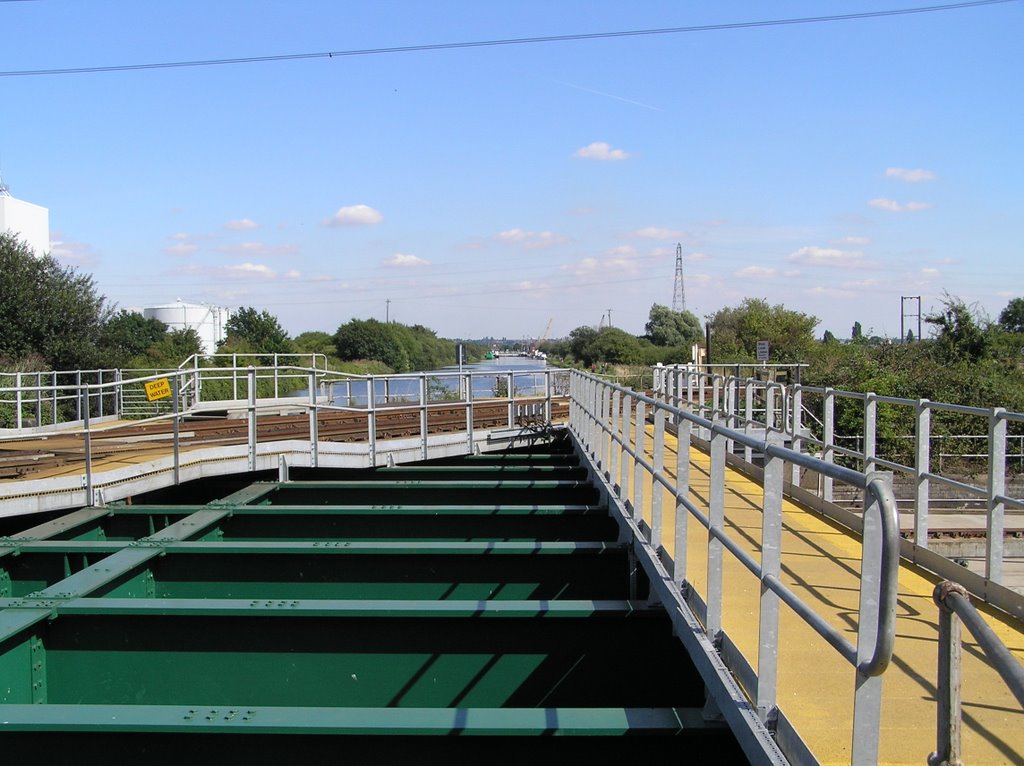
    The Vazon Sliding Railway Bridge works by sliding open to allow boats on the Stainforth and Keadby canal to pass, before returning to its original position, enabling trains to continue with their journey. The crossing connects trains between Doncaster, Scunthorpe and the Lincolnshire coast and is a busy rail freight route. The sliding bridge is Britain’s only sliding railway bridge over a canal, with the original structure dating back to the 1860s. 

    Sensors on the structure alerted Network Rail teams to a a fault with its mechanism which involves a key component that allows the bridge to slide across the canal. The part needs replacing and a new one is now being specially made. 

    Prior to the maintenance work, the bridge was opened for boaters as required, but at the time of writing the bridge is only opened at 10pm each day, with no indication of when normal service will resume. One daily 10pm opening is not only potentially dangerous due to the need to cruise in the dark but takes no account of tides, further limiting the availability of navigation. The bridge is now illuminated and signed to aid boaters, but whilst this is welcome, raises the further concern that Network Rail are looking to make this one opening in 24 hours a permanent arrangement.  

    Navigation rights at the Vazon bridge precede the railway as the Stainforth & Keadby Canal was already in use when the rail line was built and are covered by Act of Parliament. IWA has asked for reassurance that, once these bridge repairs are completed, the rail bridge will return to its normal service of being opened for boaters when required, and when this service would be reinstated. 

    In the meantime, thanks are due to Celyn Winter and Callum Joinson, two members of the “Try the Trent” group, who have been helping boaters navigate through the rail bridge and the nearby road bridge since night time access was required a month ago.

    Update: Keadby Bridge reopened on 24th September after engineers completed their investigations.

  • Lancaster Canal Isolated from the Sea

    Lancaster Canal Isolated from the Sea

    IWA is concerned that boaters have been trapped since September 2023, unable to pass through Glasson Dock because of a failure of the tidal gate that connects the Dock to the Sea, and a stand-off between the Port of Lancaster Commission which owns the gate, and the Environment Agency. The funding plight of navigation authorities in the area has been aggravated by the failure of a gate at the tidal end of the Ribble Link and a breach at Hollowforth Aqueduct, both of which are major works that will take months to fix at great expense. And boaters are, literally, stuck in the middle.

    At Glasson Dock, the 38 year-old gate is currently stuck, and although it’s owned by the port, in 2001 the Environment Agency added an extension to the gate to make it a flood defence. The port is not responsible for flood defences for the area. No modifications were made to the supporting structures. Since then, the port maintained and operated the gate with minimal contribution from the Environment Agency. In recent years, the port has spent a fifth of its annual turnover maintaining the gate. Over three years ago the port informed the Environment Agency that the gate was beyond its lifespan and needed replacing and that the port could not afford to do this. The Agency confirmed that replacement funds were in its capital scheme budget.

    Update October 2025 – The Lancaster canal is no longer isolated. The sea gate at the dock is still away for repair or replacement. Boats can use the basin lock and get out to sea, but there remains a problem is with high spring tides and flood risk to local population around the dock area. Ribble Link is fully back in operation and has been open for most of 2025 dependent, as always, on the weather and tides from April to September. Hollowforth Aqueduct has been fully repaired.

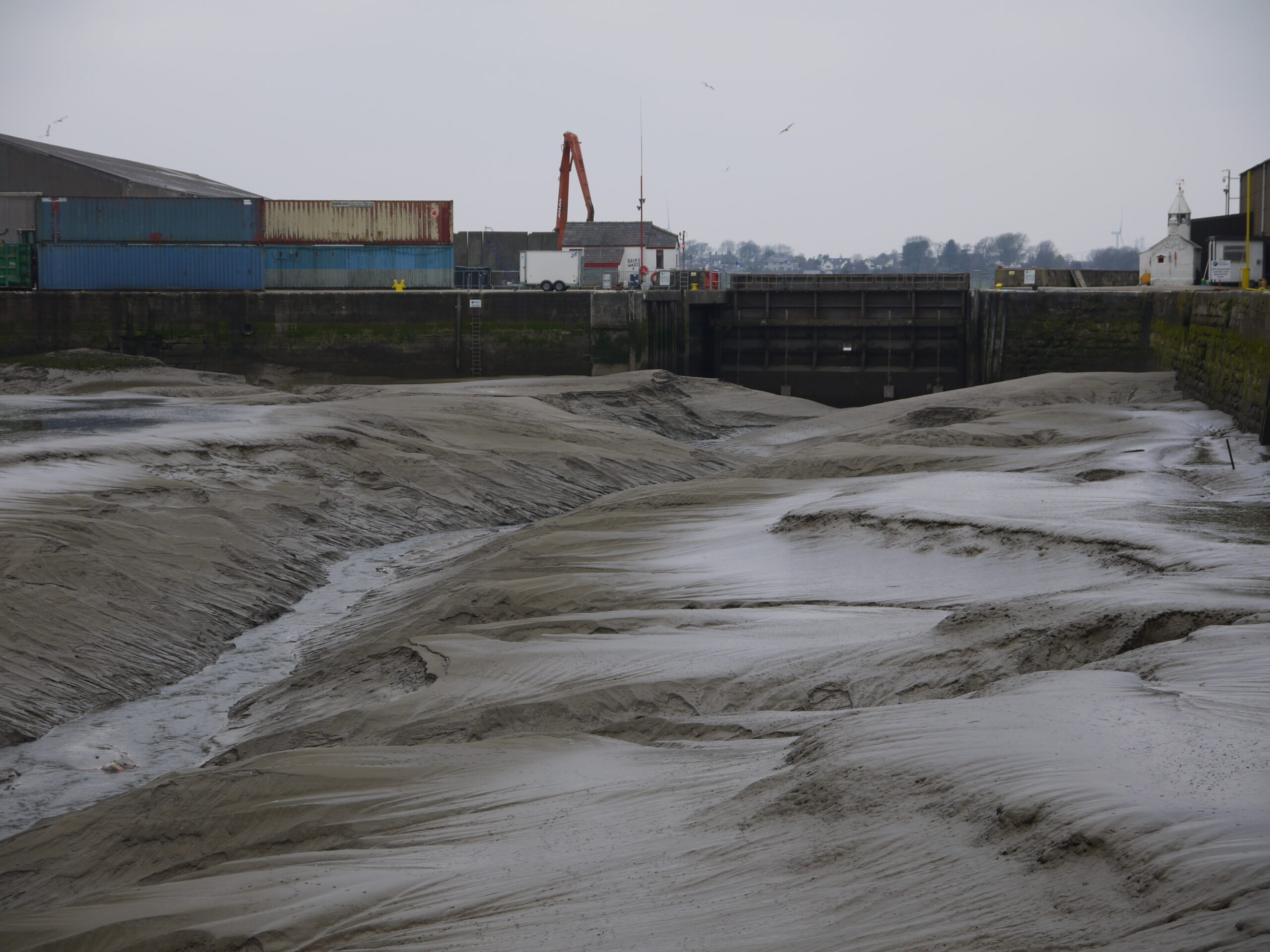
    [The photo above shows Glasson Dock, with tide out but the sea gate still in place – taken in July 2024 – by David Faulkner.]

  • Disappointment as Popular Boat Festival is Cancelled

    Disappointment as Popular Boat Festival is Cancelled

    The popular Ware Boat Festival, run by IWA Lee & Stort Branch every year to coincide with the Ware Festival, organised by Ware Town Council, due to take place on the 5th to the 7th of July, has had to be cancelled at the last minute. Hertfordshire County Council has issued a closure order for a large section of the towpath on the River Lee through Ware, including the entire site on which the Festival was to be held.

    The closure is on the grounds that the state of the towpath is now so dangerous as to constitute a danger to the public. Hertfordshire County Council has erected barriers at either end and entrances to the towpath to prevent public access, and anyone setting foot on the towpath could be liable to prosecution and a substantial fine.  The towpath has been in a poor state for many years, deteriorating each year, and usually volunteers from IWA Lee & Stort Branch undertake a few days’ work to make things safe for the festival.  The towpath, which is a public right of way, was assessed by Hertfordshire County Council’s contractors, Ringway, who identified 40 serious and dangerous issues, each of which could have been enough on their own to issue the closure order.  Hertfordshire County Council say that the issues are so serious that they have no choice but to maintain the closure until substantial works are undertaken, as a matter of public safety. 

    The cost of the works is estimated at £100,000s, which Hertfordshire County Council will fund, as highways authority, but only when they have the budget as it has been classified as a ‘complex’ issue for a specialist team.  There is no timescale for the work; IWA has asked for assurance the work would be complete before the 2025 festival, but this has not been forthcoming so far. The decision demonstrates a lack of multiagency partnership working, as no consultation with the town council, Canal & River Trust or IWA took place.

    Craig Haslam of IWA Lee and Stort Branch said “This is a sad and disappointing day for our local boaters and the wider community of Ware after 20 years of staging this incredibly popular festival.  We do not question the need for significant improvements. However, we feel this could have been achieved through a planned closure when footfall and river traffic is quieter, rather than electing for the blunt instrument of a full an immediate closure via a prohibition order which we believe is a disproportionate approach and was done with no consultation.”

    The situation highlights the fragility of Britain’s inland waterways, and that it is not just boaters who are affected when the waterways are not funded and maintained adequately. The Fund Britain’s Waterways group has come together to campaign to persuade national and local government to ensure that the benefits provided to the public by the waterways do not continue to be eroded.

  • Results of IWA Boaters’ Survey

    Results of IWA Boaters’ Survey

    In support of Fund Britain’s Waterways (FBW), IWA asked boaters for their views on the state of the inland waterways network and how it impacted on their cruising in 2023. The boaters’ survey was intended both to provide a snapshot of current conditions and as a benchmark to enable the identification of future deterioration if funding continues to be inadequate. As with FBW, it covered all navigations in Britain, and it gathered crucial insight into various aspects such as condition of locks, depth of water, ease of mooring and provision of services.

    726 boaters responded anonymously during March and painted a picture of declining condition since their previous cruises and in the long term over the total period that they had been boating. This really does back up FBW’s argument that our waterways are already deteriorating and action is needed urgently.

    You can read the IWA press release about the results of the boaters’ survey here and a summary of the results here.

  • IWA Leases Moorings at Stoke Bardolph on the River Trent

    IWA Leases Moorings at Stoke Bardolph on the River Trent

    There have always been moorings of a fashion for commercial barges stopping at the Ferry Boat Inn en-route up or down the Trent. The Inn dates from 1823.

    From the 1950s to the 1970s, the moorings and associated concrete slipway were maintained by a local sailing club based on the river, but when the sailing club ceased operation at the site just over 40 years ago, the timber and concrete moorings fell into disrepair with only ad hoc repairs carried out by local boaters.

    There was a foot ferry across the river by the moorings, to Shelford on the opposite bank. The ferry ceased operation in around the 1950s, but the steps and slipway either side are still present.

    The Ferry is an ancient one, being referred to as far back as the year 1275 when it “yielded a mark yearly”.

    With a shortage of visitor moorings on the River Trent, local boaters from the Facebook group “Visitor Moorings on the River Trent & Associated Waterways”, led by Robert Aspey (now IWA Nottinghamshire Trent Group Moorings Officer), met on site in 2018 to see what could be done to repair these dilapidated visitor moorings. They were now in a dangerous condition with many planks missing from the fixed timber pontoon, only one mooring ring still present, and overgrowth over the whole site.

    When contacted, Canal & River Trust and the brewery that owned the Ferry Boat Inn said they did not know who owned the moorings. Eventually, Severn Trent Water were tracked down as the owners of the freehold. One of their managers agreed to meet the group on site and thanked them for pointing out the poor state of the timber moorings, as the water company would have been liable for any accidents.

    [The photos show the moorings at Stoke Bardolph – by Robert Aspey]

  • Anglian Waterways isolated by closures

    Anglian Waterways isolated by closures

    IWA is deeply concerned about the double effect of funding cuts and the recent prolonged extreme weather on access to and within the Anglian waterways.

    Boaters are unable to navigate to or from the Great Ouse, as there is no completion date for the desilting works at Salter’s Lode, which did not start until 27th May. It could be mid-June or later before the first boat from the Middle Level and beyond will be able to access the Great Ouse system, and for Great Ouse boaters wishing to use their Anglian Pass licences to access the Middle Levels and Nene. The impact of the stoppage is already being felt by local boatyards and hireboat companies, whose trade relies on the navigable connection.

    The River Nene is expected to open fully on 1st June after winter works were delayed by the recent extreme weather and navigation on the Bedford Ouse is also affected by the ongoing closure of Brownshill Lock due to failure of parts which will need to be fabricated, with no date yet available for its reopening due to the complex nature of the repair. Further upstream, the Cam Conservators have had to close both Bait’s Bite and Jesus Locks due to structural concerns, with no timescales yet available for their reopening. Brandon Lock on the Little Ouse is also closed until further notice due to siltation. A broken beam on the Northampton flight connecting the canal system to the River Nene further limits access to the region.

    The Upper Great Ouse, the Ely Ouse and the Middle Levels are currently all isolated from one another, and no boats are able to get to the extremities of the Ely Ouse’s tributaries at Cambridge or Brandon. Whilst the waterways are open either side of all these closures, they create a fragmented system with users prevented from accessing key facilities and services, and hire boats trapped.

    Paula Syred from Fox Narrowboats in March said “Not only will half of our hire season have been affected, we have also seen a major down turn in our workshop and slipway services as customers have had to cancel or reschedule their work, being unable to reach us.  The only growth in business this year has been from boats being lifted onto lorries to escape the area.”

    Sue O’Hare, Chair of IWA’s Navigation Committee said “Combined with inadequate funding, issues such as these will only worsen as the impacts of climate change are increasingly felt. The Fund Britain’s Waterways group has come together to campaign to persuade national and local government to ensure that the benefits provided to the public by the waterways do not continue to be eroded.”

    The Environment Agency was approached for a response but was unable to comment in the pre-election period.

  • Hydrotreated Vegetable Oil Update – May 2024

    Hydrotreated Vegetable Oil Update – May 2024

    The Group’s objective is to make ‘subsidised’ HVO readily available, at an affordable price to ALL recreational boaters and not just limited to the inland waterways (Category A, B and non-tidal Category C waters, as designated by Marine Shipping Notice No 137) – as is currently the case. At present craft operating in tidal waters cannot benefit from Road Transport Fuel Certificates (RTFCs) two of which are applied to every litre of HVO sold to qualifying craft. Their value varies but they are currently worth £0.17 each, so a litre of HVO effectively attracts ‘subsidy’ of £0.34.

    Volatility in pricing is a real concern and does nothing to encourage boatyards and marinas to stock the fuel. In early April 2024, the wholesale price of HVO was only £0.12 (12%) greater than gas oil (red diesel) per litre, but by early May that differential was more like 50%. This is believed to be largely down to fluctuations in commodity markets as fuel prices themselves vary, alongside the raw materials (or feedstock) which are quite separately governed by the agricultural commodity market.

    Manipulating the value of an RTFC would, in theory, represent a government ‘device’ for controlling this volatility but with their current low value there is limited room for (pricing) manoeuvre. Two years ago an RTFC was worth £0.42 so, with an effective subsidy of £0.84 attached to each litre of HVO sold, there was ample room to make an external impact. Those in the fuel industry are therefore suggesting that the time has come to revisit Hydrocarbon Oil Duties Act 1979 – the Act that laid down our current fuel duty mechanisms: https://www.gov.uk/hmrc-internal-manuals/oils-technical-manual/hcoteg31000.

    The HVO Joint Working Group is currently building a case for RTFC application to all recreational boating around demonstrating that the consumption of diesel fuel (and potentially, HVO should it be made affordable) is extremely small and will therefore have little effect on revenue for HMRC. In addition, we are pointing out that this sector has few other alternatives to decarbonising as the biofuels allocated to both the Coastal and Deep Sea Maritime sectors are inappropriate for recreational boat users.

    Furthermore, the sea-going recreational sector depends upon reliable fuelling of their diesel engines, which may well still have a long life ahead of them, making scrapping an environmentally undesirable, unrealistic and an extremely expensive option. The emphasis on ‘reliable’ being a reference to problems with ‘diesel bug’ (and associated mechanical issues) exacerbated by the FAME content of mineral diesel on sale in marinas and boatyards.

    HVO sold in the UK is currently supplied by Neste and manufactured in Rotterdam. It is shipped to Stanlow (supplying Crown Oil and it’s agents and subsidiaries) and to Dagenham from where it is distributed by Certas. It has been mooted that with the refinery element of Grangemouth closing down, Neste (or one of its competitors) should be encouraged to establish an UK HVO manufacturing plant on the site.

    Finally, taking the bigger picture, the limiting of RTFC-eligibility to vessels plying Category A, B and non-tidal Category C waters is having a negative environmental impact on commercial carrying on the inland waterways, where many craft are transporting bulk cargoes, on tidal rivers into UK towns and cities, where air quality is at a premium. The Rivers Thames and Medway being good examples as, indeed, could be the Rivers Clyde and Tay.

    Not only is HVO 90% carbon neutral, it’s polluting nitrogen oxides and particulate emissions are substantially reduced, so there are consequently significant health benefits (apart from the obvious carbon reduction) to be gained where water-borne traffic interfaces with dense populations.

    The Department for Transport has told IWA that it intends to put out a Call for Evidence around maritime biofuel use, but as yet the Department has offered no time scales. To this end, the Group’s energies are predominantly focused on establishing usage data and general fact gathering in the belief that further, individual approaches to the Department, will only be referred to this upcoming consultation process.

    For more information about Biofuels and HVO, see our Sustainable Boating pages

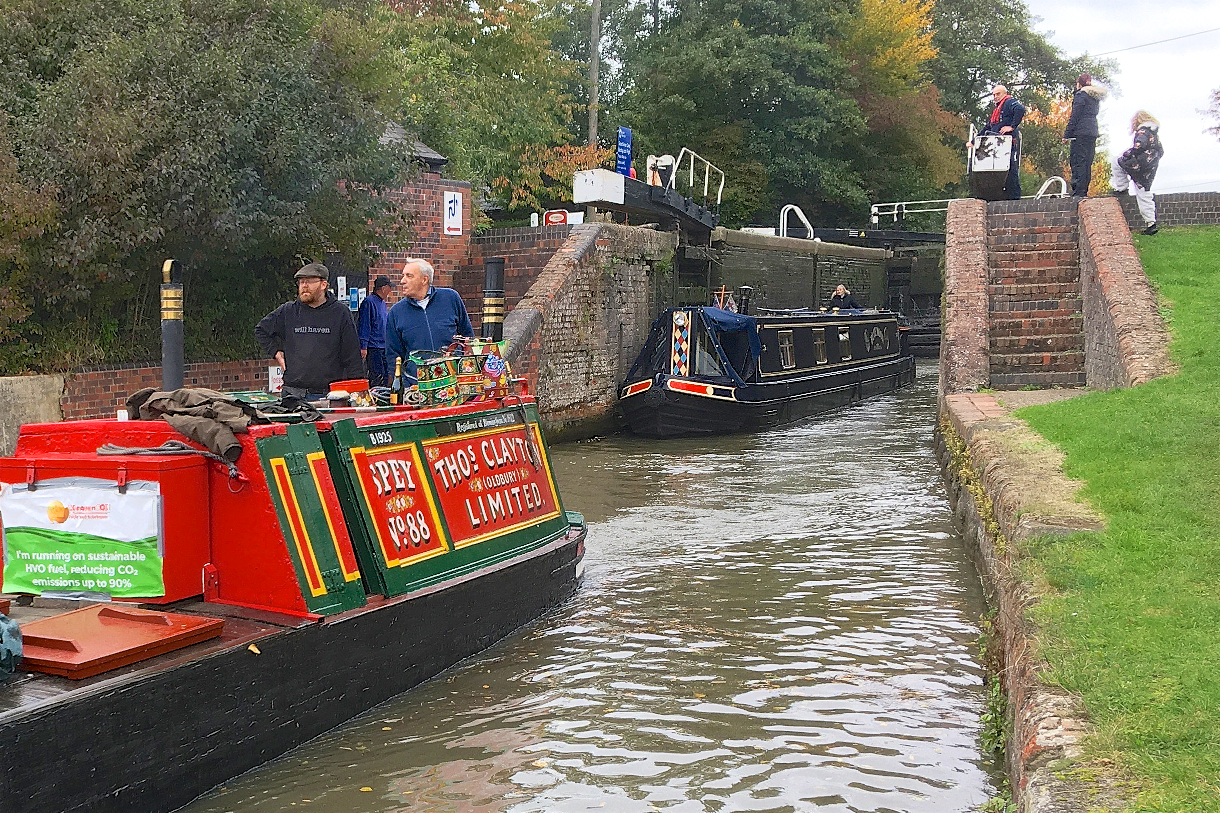
    [The title photo shows historic working boat ‘Spey’ using HVO – by Jonathan Mosse]

  • How to vote as a Live-Aboard Boater

    How to vote as a Live-Aboard Boater

    With the General Election announced for Thursday 4th July, it’s important for everyone to register to vote by the deadline of

    23.59 Tuesday 18 June.

    There are two ways to do so as a live-aboard boater:

    If you live on a boat and you have a permanent mooring which you use as an address, you can register to vote there.

    Register to vote on the government website

    If you don’t have a permanent mooring you can use as an address, you can choose to register at either:

    • a place where you spend most of your time
    • or where have some connection e.g where your family or friends live

    You could register at the place where you were last permanently registered to vote. Alternatively, you could register at somewhere like the boatyard you use for maintenance for example. It’s worth bearing in mind that if the address you use to register to vote is not the same as the one you use for banking this could impact your credit rating.

    To register to vote in this way, you’ll need to download and complete a form for someone with no fixed or permanent address.

    Download register to vote form

    Filling in your form
    The application form includes instructions on how to fill it in correctly.

    When you fill in the form, you’ll be able to say how you want to receive information about your registration. You can collect it from the electoral services team at the local council for the address you’re registering at, or have it delivered to an address you provide.

    Where to send your completed form
    Once you have completed the form and made sure you have signed it, you need to send it to the electoral services team at the local council for the address you’re registering at.

    You can send your form by post. The electoral services team at your local council may also accept a scanned copy of your form by email, but you should check with them first.

    Don’t forget you now need need Photo ID to vote, but it doesn’t need to match your address, just your name. Find out more here.

    Postal and Proxy Voting

    These methods can be useful if you are unable to get to the polling station where you are registered. The deadlines for these are:

    Deadline for applying for a postal vote17.00 Wednesday 19 June 
    Deadline for applying for a proxy vote17.00 Wednesday 26 June 

  • Stand Off Between Navigation Authorities Leaves Boaters Stuck

    Stand Off Between Navigation Authorities Leaves Boaters Stuck

    Denver Sluice and Lock on the Great Ouse are owned and managed by the Environment Agency (EA). Salter’s Lode Sluice and Lock are owned and managed by the Middle Level Commissioners. Transit between Denver Sluice and Salter’s Lode allows access to the Great Ouse, the river Cam, and the rivers Lark, Little Ouse, and Wissey. The Denver crossing is now effectively closed and the only navigable connection between the Great Ouse and the rest of the ‘system’ is by the difficult and hazardous Wash crossing (until the Bedford / Milton Keynes link progresses).

    After Christmas 2023, the Middle Level Commissioners (MLC) dredged Salter’s Lode lock. This necessitated removing over 250 tons of silt from inside the lock. There is a considerable build up of silt outside the lock, on the tidal Great Ouse managed by the EA. MLC are concerned that as soon as they open the tidal doors of Salter’s Lode it will immediately be filled with silt from the tidal Great Ouse, and so they have closed the lock until the EA dredge outside it.

    At a recent meeting of its Anglian Water Group (AWG), EA reported this to stakeholders, but currently the EA has no plans to dredge! The link between the Great Ouse and the Middle Level now appears indefinitely closed until one or other of the navigation authorities gives in. This closes off approximately 130 miles of navigation, affects hundreds of leisure boats and prevents access from the connected navigable system to places such as Bedford and Cambridge.

    During April 2023, contractors for EA dredged outside Denver (photo 1 below). Rather than removing arisings, they threw it back out into river (in the hope it would wash out to sea), and there was subsequently heavy siltation experienced downstream at the first bend in the river (photos 2 and 3 below). This blocked the outfall of the Old Bedford River and caused several hire boat groundings on the tidal side of Salter’s Lode. It appears that MLC feel that EA caused this sudden and dramatic increase in rate of siltation affecting Salter’s Lode, and are waiting for EA to do something about it on ‘their side’.

    Sue O’Hare, IWA deputy national chair, said “We are appalled that boaters are left stranded through no fault of their own, and that businesses are left to count their losses because of the Environment Agency’s inaction.  We sympathise with the Middle Level Commissioners’ wish to keep their lock clear of silt and functioning correctly for its dual purposes of navigation and flood protection for local communities, and we sympathise with the Environment Agency at having to deal with over double the usual monthly rainfall in this area so far this year, but the Agency has a legal duty to keep the waterway open for navigation.

    A Spokesperson for the Environment Agency said: “We have been and will continue to progress plans for the clearance of the blockages caused by the build-up of silt in the tidal river at Denver Lock and Salters Lode within the scope of our available budget.”

    There have been delays across all our navigation works programme as a direct result of the weather and subsequent river conditions. We will continue to work with our delivery partners to resolve the situation as soon as we can. Updates will be provided on our navigation notices which can be found at our Visit Anglian Waterways webpages.”

    [The title photo shows silting at Salters Lode in early March 2024 – by Paul Burrows of the Middle Level Commissioners]

  • Leisure boaters move closer to using subsidised biofuel in battle to decarbonise waterways

    Leisure boaters move closer to using subsidised biofuel in battle to decarbonise waterways

    A subsidised biofuel, which will help decarbonise the waterways, has been given the green light for more widespread use on leisure boats by the UK Government. DfT provided written clarification over the Renewable Transport Fuel Certificates (RTFC’s)subsidy after the HVO Joint Working Party – representing IWA, RYA and the Cruising Association – met with officials from the DfT in Westminster in November 2023.

    Leisure boaters looking to reduce their carbon footprint while cruising will be able to take greater advantage of a government managed subsidy on hydrotreated vegetable oil (HVO), after the Department for Transport (DfT) agreed that the benefit can apply to fuel used for onboard domestic purposes, as well as for the propulsion of vessels.

    The move will narrow the price gap between HVO and mineral diesel. It will also mean that it will be easier for suppliers to market HVO to the leisure boating sector in the future as they will not have to establish what proportions of the fuel will be used for domestic and propulsion purposes on the vessel, a requirement complicated by the fact that most leisure vessels have only one fuel tank.

    HVO is a biodiesel alternative to ‘FAME’- a first generation biodiesel currently being added to fuel supplied to the leisure boating industry and to road diesel.  The addition of 7% ‘FAME’ biodiesel to mineral diesel (B7) is resulting in fuel unsuited to a marine environment, causing regular boat engine failures due to blockages in vital fuel injection components.

    Bowman Bradley, chair of the Joint Working Party and IWA’s Sustainable Boating Group, said: “We are delighted that the DfT appear to have recognised the problems that the leisure boating sector faces and taken this important first step towards resolving them.”

    However, the group warned that even with the new measures, there will still be a significant price gap between HVO and mineral diesel. The Joint Working Party will continue to work with Government to seek to make HVO affordable to the leisure boater to allow the sector, and the existing fleet in particular, to transition away from fossil fuels.

    This will also then resolve the safety issues associated with using B7 diesel in a marine environment, particularly in craft that cruise challenging waters.


    Mr Bradley added: “We look forward to continuing the dialogue with the DfT, and other relevant government departments, to find a complete solution. In this way we can significantly transition the leisure boating sector away from fossil fuels and eliminate the engine failures associated with B7 diesel. If you are in the middle of the Trent and Mersey Canal it is just an expensive inconvenience but on the tidal Trent, in a fast-flowing estuary or two miles off the coast in a force 8 it becomes a problem.”

  • Parliamentarians hear about Achieving Net Zero on UK Leisure Craft

    Parliamentarians hear about Achieving Net Zero on UK Leisure Craft

    The MPs and peers of the All Party Parliamentary Group met in Westminster on 28th November, and were joined by representatives from navigation authorities, waterway organisations and government officials. Two speakers gave presentations describing ways how inland waterways could reduce emissions and contribute to the UK’s net zero carbon target and the barriers to doing so.

    Bowman Bradley, Chair of the joint IWA, RYA and Cruising Association Working Group gave an overview of the issue explaining how while technology for electric boats is progressing, the key to improve sustainability is the existing fleet. It is large, will be with us for a long time (leisure boats have very long lifetime) and most are unlikely to be converted to electric drive. They are mostly driven by, mainly small, diesel engines. They will need diesel fuel for decades into the future. First generation ‘FAME’ biodiesel gives significant problems in a marine environment, even at the 7% level. It is even more water absorbent than mineral diesel and deteriorates with storage, particularly in a damp environment.

    He explained how IWA’s Sustainable Boating Group have done extensive trials with a second generation biodiesel, HVO or Hydrotreated Vegetable Oil. This has been shown to be fully compatible with modern and traditional boat engines and other diesel burning appliances found on leisure craft. It can be used at 100% or mixed in any proportion with mineral diesel. It can use all of the existing refuelling infrastructure, on shore and on board. It has none of the problems associated with FAME biodiesel. HVO offers a net CO2 reduction of up to 90% and significant reductions in noxious tail pipe emissions when compared with mineral diesel.

    Simon Lawford, from Crown Oil gave a presentation on the factors preventing HVO from being widely available. Like most biofuels, HVO is inherently more expensive than mineral diesel and thus benefits from a government managed subsidy (RTFC’s), but this only applies to fuel used for boat propulsion, not that used for ‘domestic’ purposes. Most leisure boats have only one fuel tank and there are different tax and duties applied to mineral diesel when they refuel (the 60/40 split) and this also applies to HVO. Several different governments departments own different parts of this problem. The overall result is that HVO is expensive and complex for the suppliers to market to leisure boaters. Hence wholesalers and retailers are reluctant to supply it and boaters cannot, or will not, buy it.

    IWA, the Royal Yachting Association and the Cruising Association have recently formed a joint working group to bring this problem to the attention of government. After the presentations to the All-Party Parliamentary Group for the Waterways they met with the Department for Transport to explain the issue, but more needs to be done.

    We encourage all boaters to write to their MP’s drawing their attention to this problem and asking them to lobby government to adopt policies that will make HVO affordable and available to leisure boaters, thus allowing an immediate and very significant reduction in the carbon footprint of UK leisure craft.

  • IWA Announces 2024 National Trailboat Festival

    IWA Announces 2024 National Trailboat Festival

    The event is the largest annual gathering of trailable boats in the UK and has been held annually since the first gathering in 1989 on the Lancaster Canal, although, owing to the pandemic, there has been a gap of five years since the previous event, held in 2019, also on the Lancaster Canal.  The event has previously been held on the Ashby Canal in 2000, 2009 and 2017.

    The 2024 Festival will take place at the historic Moira Furnace, on the restored length of the Ashby Canal in northwest Leicestershire, DE12 6AT.  As well as a large gathering of trailable boats on this northernmost and isolated section of the Ashby Canal there will be a wide range of activities and attractions.  A Beatles tribute band will include songs from the beginning of the Beatles fame to the end, with costume changes over their twice daily performances. There will be a trad jazz band, Morris dancing will liven things up; with children’s conjuring fun and entertainment, train rides, a variety of stalls and demonstrations, classic cars, historic engines, boats, bar and refreshments. The organisers hope to have a visit from the Battle of Britain Memorial Flight, and Mother Duck will be there with her ducklings for visitors to enter a duck in the duck race along the Ashby Canal!  The organisers have also invited the Military Wives Choirs from Nottingham and Cottesmore. The Military Wives Choirs became famous under the tutelage of Gareth Malone, on BBC television, and have now been formed groups over many locations.  An illuminated boat parade is due to take place on the Saturday evening.  All this will revolve around the banks of the Ashby Canal at the Grade 2 listed Moira Furnace at the heart of the National Forest.

    The festival will raise money for the Ashby Canal Restoration Project.  The long-term aim is to restore the Ashby Canal from its current terminus at Snarestone to Moira. This major project will ultimately reconnect Measham, Oakthorpe, Donisthorpe and Moira to the national waterways network, and provide a green gateway to the Heart of the National Forest. The Ashby Canal Trust supports the restoration of the Ashby Canal.  Proceeds from the festival will assist the further restoration of the canal and contribute to the upkeep of the canal around the site of the Moira Canal Festival, for people to enjoy throughout the year.

    IWA currently has a Silver Propeller Challenge location on the Ashby Canal at the end of the connected length in order to encourage visiting boaters to use as much of the canal as possible.  We are looking forward to moving it to Moira once the isolated length is restored and reconnected.

    Boat entry details from fionapursglove@outlook.com; Trade booking enquiries to moiracanal@mail.com; classic vehicle entry bookings to alan.cuff1@ntlworld.com; general enquiries to ashby.canal@outlook.com.

    IWA is currently inviting applications from waterways groups to host the 2025 and 2026 festivals – enquiries to derek.smith@waterways.org.uk.

  • IWA National Awards 2023

    IWA National Awards 2023

    At its AGM on Saturday 23rd September, IWA presented a number of awards to individuals and groups, celebrating their contributions to the Association and to the waterways. The Vivian Bulkeley-Johnson Salt prize, recognising an outstanding contribution to waterways freight, was awarded this year for the first time in a decade.

    RICHARD BIRD MEDALS

    Richard Bird Medals are awarded to members of the Association whose efforts and support are considered to have brought significant benefit to the Association over a sustained period.

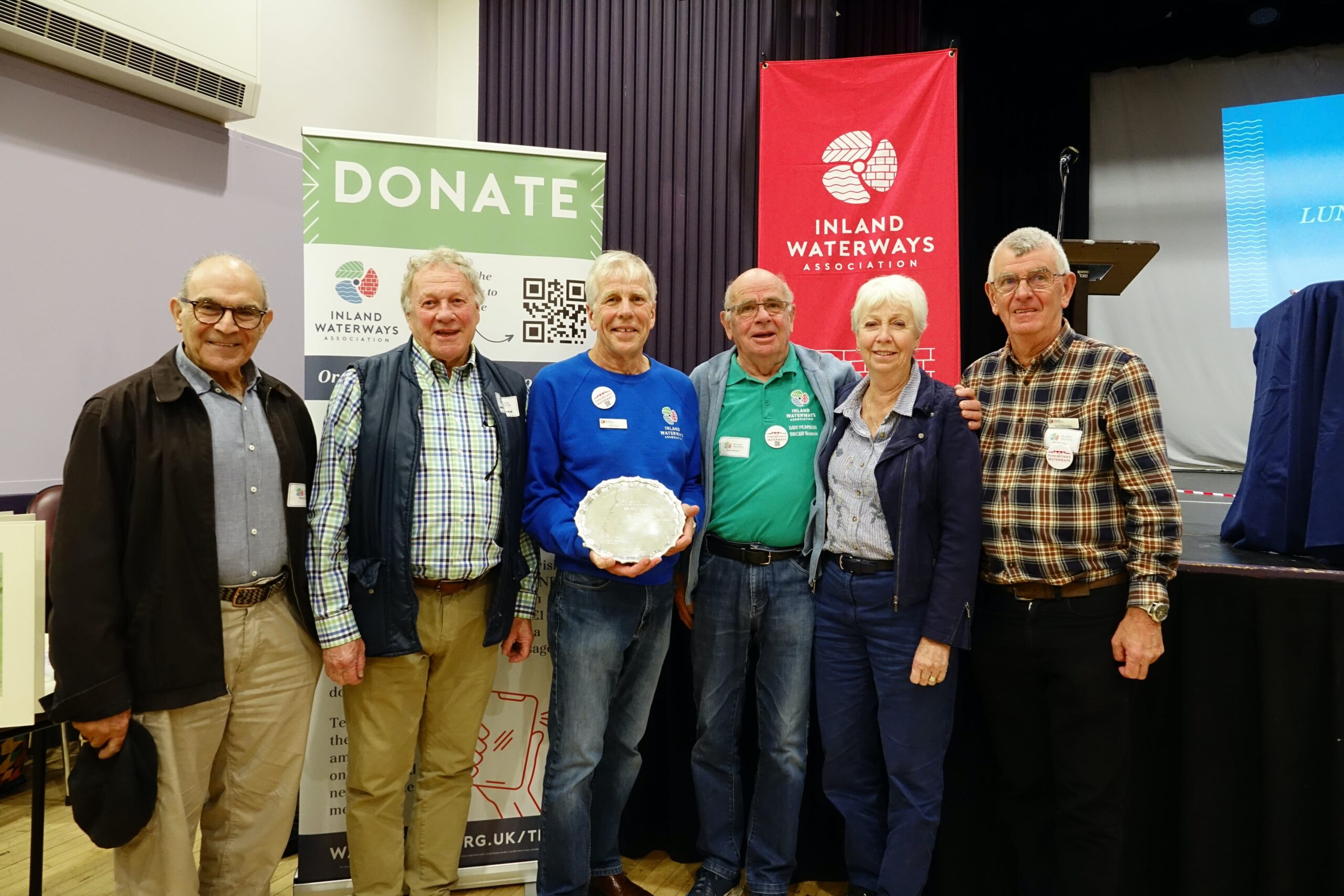
    There were two recipients this year: Alan Smith and Dave Pearson.

    Alan was nominated for his quiet background support for the vast amount of IWA work carried out by Christine Smith. Whilst that has been very important, it understates Alan’s contribution to IWA and the inland waterways. At Cavalcade he can always be found working on an information stand or some other part of the background work. He is also very knowledgeable about the inland waterways and is a regular contributor to the waterways press, often writing to correct errors that have appeared in print.

    Dave Pearson has served on the Birmingham Black Country & Worcestershire Branch for over 10 years, with 4 years as chairman. He has supported many local and national events, enthusiastically acting as harbourmaster, a challenging job, on many occasions. He has been instrumental in developing and maintaining good relations between IWA and local waterways organisations such as the BCN Society and Coombeswood Canal Trust.

    Dave largely initiated the Bradley Canal Restoration, acting as chairman during its recent phase and driving it forward. He also actively supports the Lapal Canal Restoration. He has a vast knowledge of waterways and other forms of transport which has been very beneficial to the branch and to IWA in general.

    The Christopher Power Prize

    The Christopher Power Prize is awarded to a person, society or trust who has made the most significant contribution to the restoration of an inland waterway.

    There is a cash prize associated with this award, which is given to a waterway restoration group associated with the winner, where the winner is a named individual. The aims and objectives of the group must be consistent with IWA’s aims and objectives. The trophy, a carved wooden otter, was presented to the Association by Volvo Penta.

    This prize was awarded to John Dodwell who has nominated the Montgomery Waterway Restoration Trust to receive the cash prize.

    Both the Trust and John are very deserving of this award.

    John is Chair of the Montgomery Canal Partnership which brings together various groups interested in completing the restoration of the Canal, including the Montgomery Waterway Restoration Trust.

    The Trust’s record for accessing substantial new sources of funding is outstanding, largely thanks to John’s in-depth knowledge of funders coupled with his skill in preparing bids. Funding the restoration of a canal that runs through 2 different countries – each with its own unique legislation and grant regimes – is a unique challenge.

    The combination of contractors working alongside volunteers to ensure speedy delivery of new build and sympathetic restoration has proved highly effective.

    The pace of progress over the past 5 years gives hope that we will see the full restoration of the Montgomery Canal achieved in the coming 5 years. As a result of his skilled leadership, the reputation of the Montgomery Waterway Restoration Trust is at an all-time high.

    Other major restoration groups are quick to praise John’s willingness to share his deep knowledge of SSSI’s and offer support in a discreet way. John is a highly effective ambassador for the wider inland waterways restoration movement. 

    The Branch Achievement Award

    The Branch Achievement Award goes to the IWA branch which, in the opinion of a panel consisting of the National Chairman, Deputy National Chairmen and Chief Executive, has made the greatest progress and achievement in promoting the Association’s aims and objectives during the past year. 

    The award this year goes to the Birmingham, Black Country & Worcestershire Branch. Not only have they carried out all their regular activities in terms of work parties and monitoring planning activities, but has also through its members been highly active in promoting the Fund Britain’s Waterways aspects of IWA’s Protect Our Waterways campaign, ensuring the success of the Birmingham Campaign Cruise in August, and also in the gaining of Heritage Inland Port status for Stourport.

    The Vivian Bulkeley-Johnson Salt

    The Vivian Bulkeley-Johnson Salt prize is awarded this year for the first time since 2013. It is awarded to the person or organisation who, in the opinion of Trustees, upon a recommendation from IWA’s Inland Waterways Freight Group, has made an outstanding contribution to the furtherance of commercial waterways transport in the United Kingdom. The trophy is a hall-marked solid silver salt, presented by Vivian Bulkeley-Johnson, a former IWA Treasurer from the 1950s and member of the Rothschild banking family, who financed the Willow Wren carrying operation.

    This year it goes to John Spencer who runs GPS Marine, a successful family firm engaged in a wide range of inland waterways activities (based on the Thames and Medway).

    John has been running a lobbying campaign to promote inland waterways freight across the board, certainly not limiting himself to GPS’s sphere of operation. He is largely responsible for the fact that pretty well all the commercial operators on the Thames are now running on HVO with the very substantial savings in emissions and particulates this represents.

    Over the past couple of years, he has been extremely helpful in guiding the IWA Sustainable Boating Group with its trial work with HVO for use in inland waterways craft, and has won a wide range of freight, logistics and sustainability awards. 

    Subsequent to his nomination for the Salt, John has taken over as Chair of the Inland Waterways Freight Group and will be leading an active campaign to increase the use of the waterways for freight.

    The Cyril Styring Trophy

    The Cyril Styring trophy is the Association’s premier award and goes to an IWA member who has, in the opinion of Trustees, made an outstanding contribution in furthering the Association’s campaign. 

    This year it is awarded to Christine Smith.

    Christine has worked in many roles in IWA and to all of them she has brought boundless quantities of enthusiasm and efficiency.

    Christine was not only Deputy Chairman, but also Publicity Manager and Liaison Officer for Canalway Cavalcade for a number of years. Her devotion to her various roles within the Cavalcade team has meant that she has had more or less a full-time job for months at a time, but she has still found time to encourage others and has shown determination and resilience in the face of obstacles placed by statutory bodies. Christine has ensured the success of Canalway Cavalcade and has been largely responsible for it becoming such a major event.

    In addition to Cavalcade, Christine was also Publicity Manager for the Festival of Water and, before moving out of London, served on the South London branch committee, helping to ensure the high quality of social events they run.

    Christine has made an outstanding contribution to IWA and is a thoroughly deserved winner of IWA’s most prestigious award.

  • IWA Concern Regarding CRT Licence Fee Rises

    IWA Concern Regarding CRT Licence Fee Rises

    IWA is disappointed that the recent announcement by Canal & River Trust (CRT) of its intention to increase boat licence fees disproportionately for different user groups does not take on board the concerns that IWA and many other organisations and individuals raised.

    Firstly, we are opposed to the introduction of surcharges that appear to be an attempt to change the principle that there is only one type of licence, the Pleasure Boat Licence. 

    We are also still concerned about the divisive effect of the consultation and ensuing discussion and announcement on the boating community, particularly at a time when CRT and the waterways need everyone’s support.

    Boaters use the waterways in a wide range of different ways, either with or without a home mooring. It is not necessarily the case that continuous cruisers use the system and its facilities more than boaters with a home mooring.

    IWA does support the proposal to charge by area, as this would bring CRT in line with the Environment Agency’s charging system and make Gold Licence administration more straightforward.

    Regarding overall price rises, bearing in mind that CRT is dependent for a good part of its income on a Government grant that is not inflation linked, we appreciate that the Trust has no option but to try to raise more from other sources to compensate. However, increasing the licence fee beyond inflation risks pricing boaters off the system, or boaters simply being unable to pay, which could result in a net loss.

    We would like to see CRT achieving a considerable increase in the non-boating income from all those who currently enjoy the waterways and whose benefits will suffer if they deteriorate.

    Alongside this, we (and the Fund Britain’s Waterways action group) will continue to campaign for local and national government to recognise the many benefits including health and wellbeing that the inland waterways provide to a large part of the population and to fund them accordingly.

  • #FBWOnTour With Atlas and Malus

    #FBWOnTour With Atlas and Malus

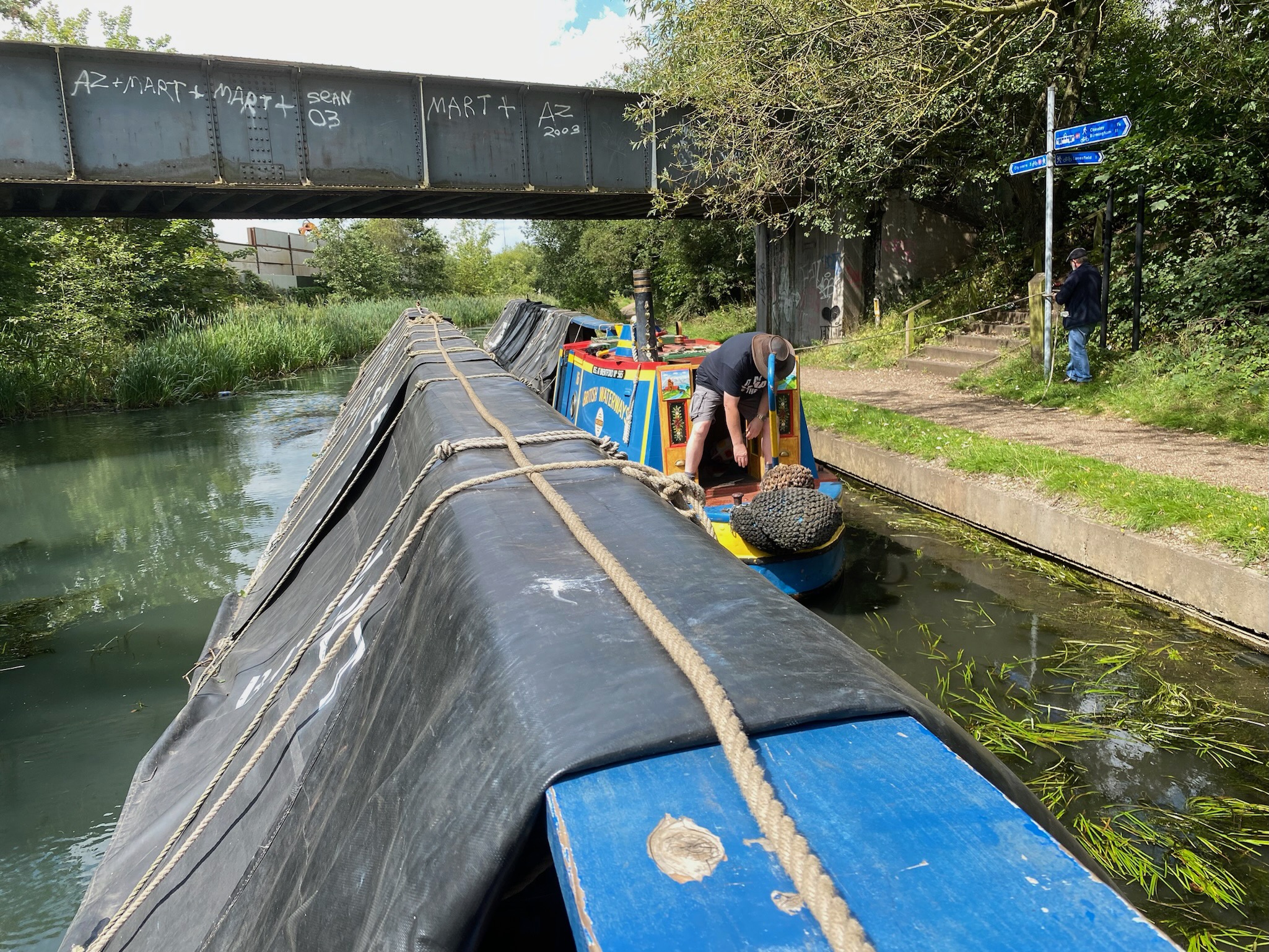
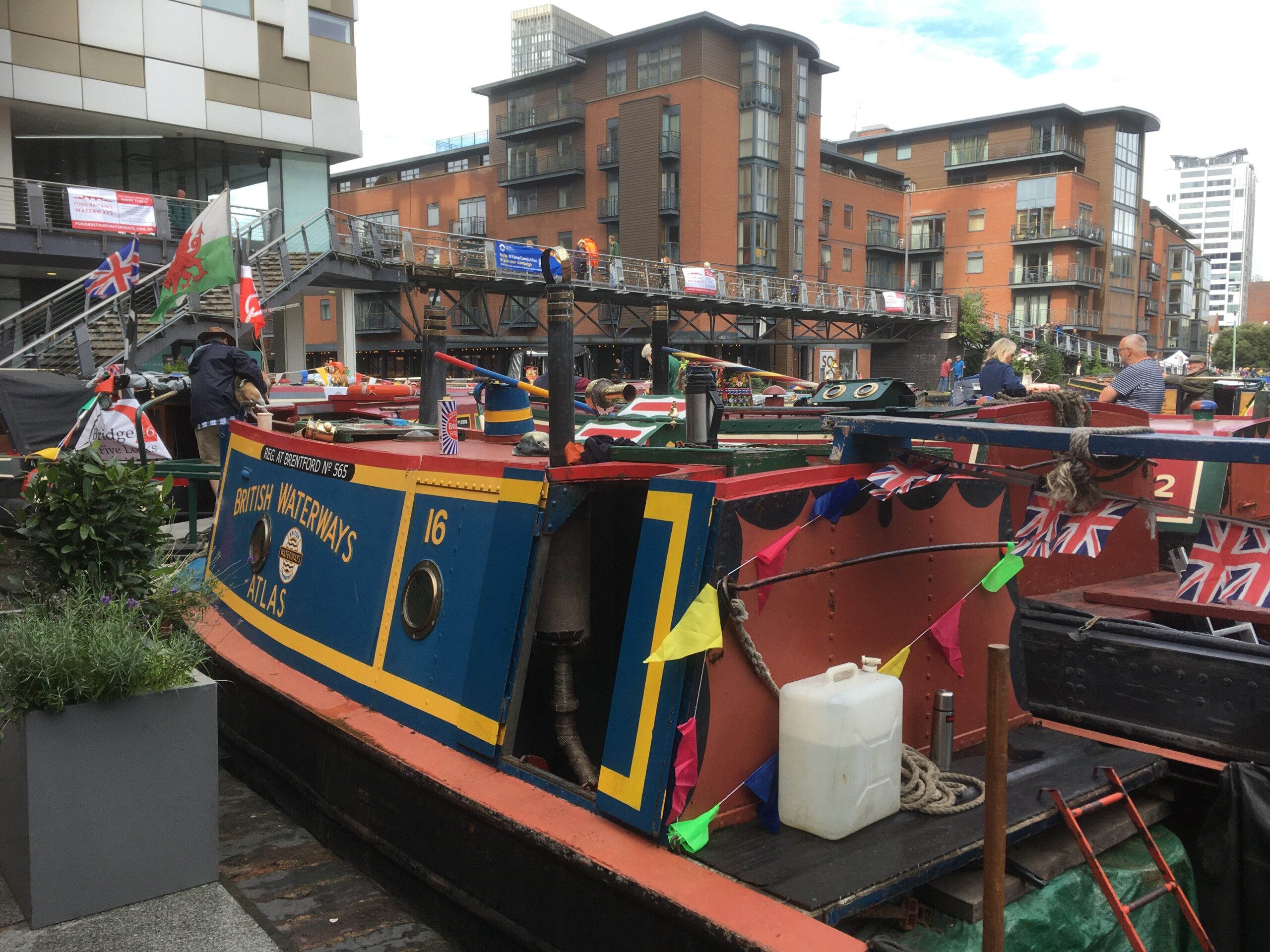
    We have been following the progress of the Birmingham Canal Navigations Society’s working boats Atlas and Malus as they take Fund Britain’s Waterways on tour. Read on to learn more about their remarkable voyage!

    Birmingham Campaign Cruise

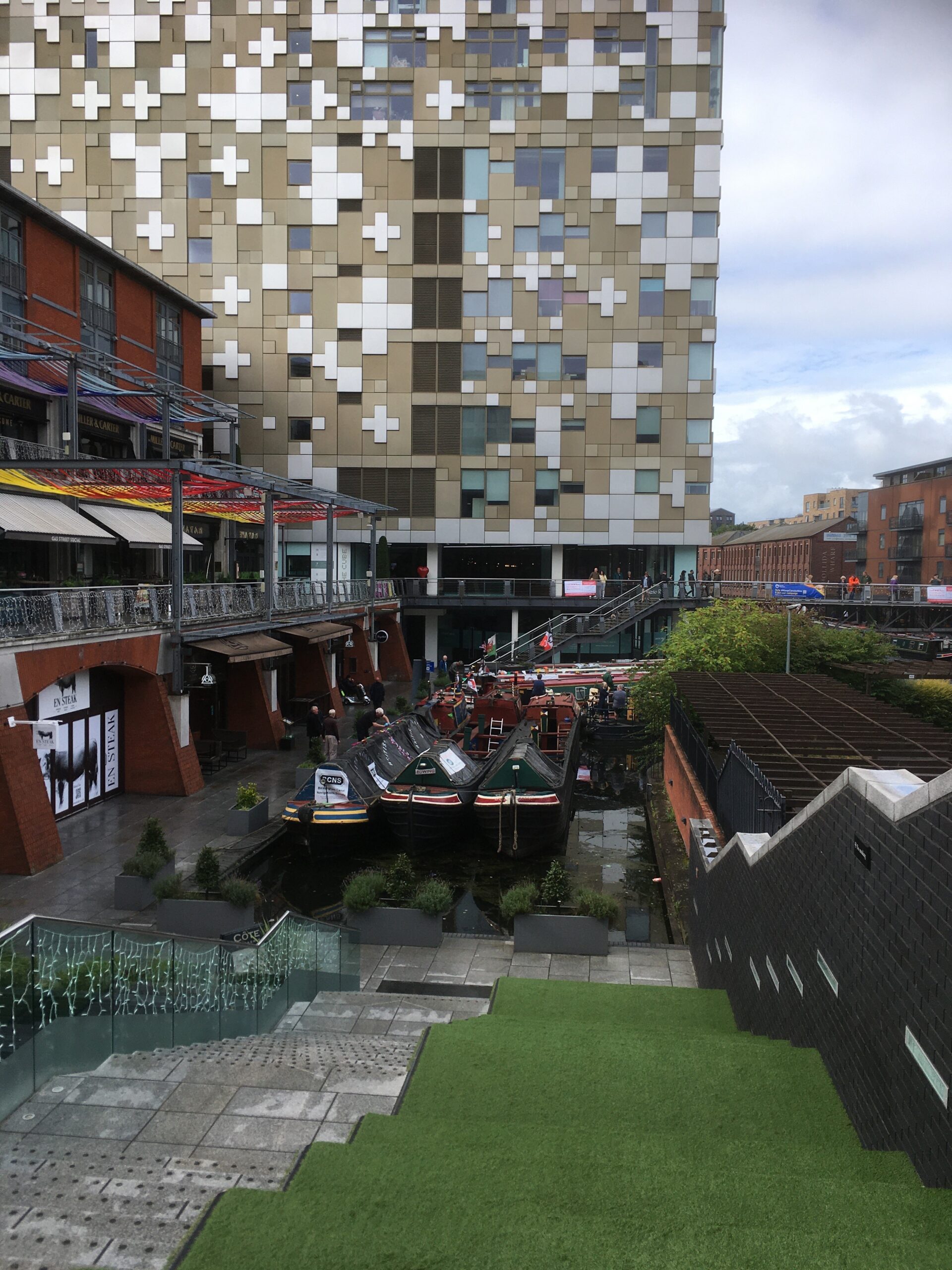
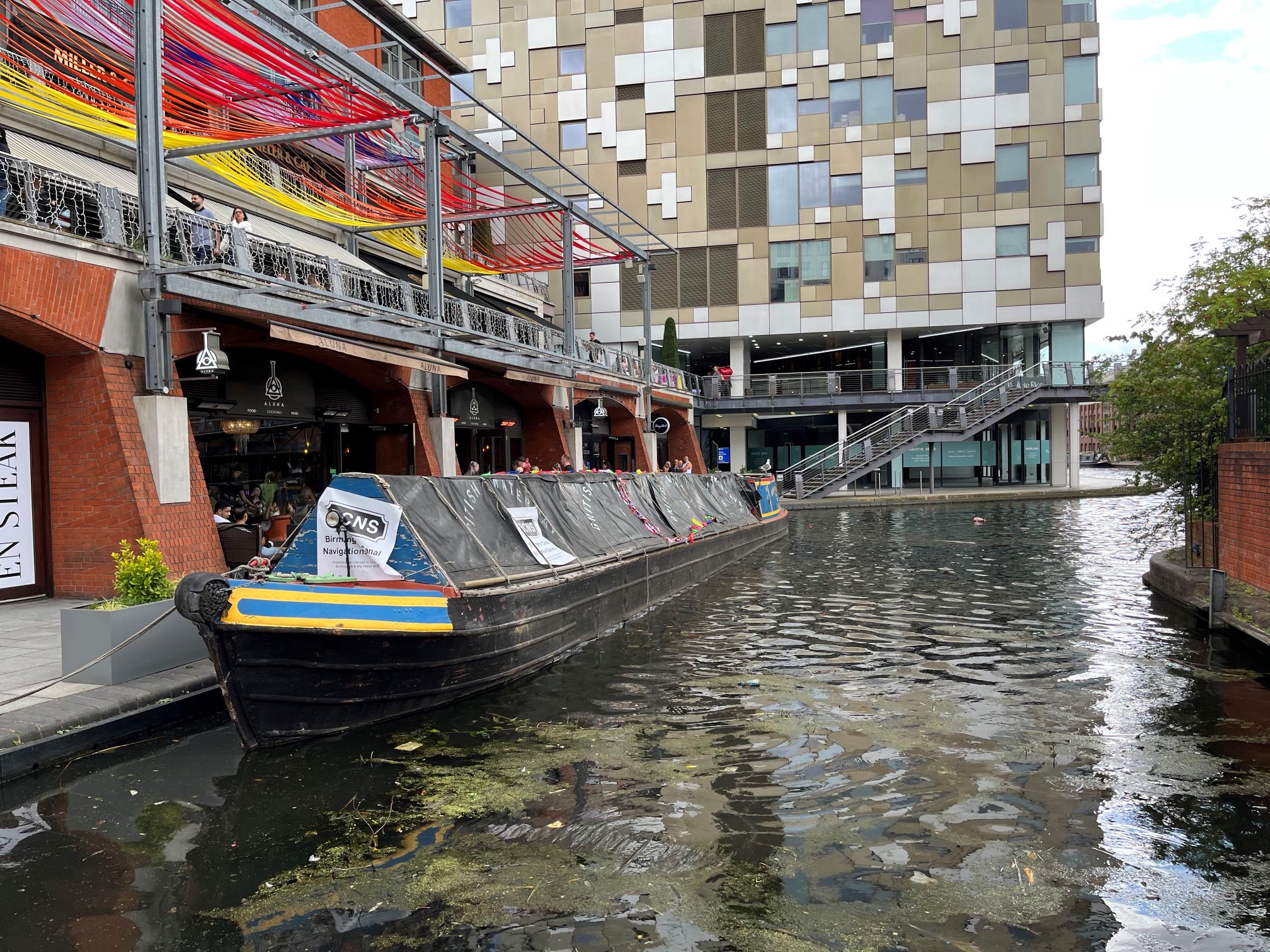
    The boats started at the Fund Britain’s Waterways Campaign Cruise which took place outside the Mailbox in Birmingham on 13th August.

    It was here that Atlas and Malus joined approximately 50 other boats to stage a demonstration in support of the FBW campaign which calls upon national and local government to act now and protect the public benefit and natural capital of our waterways. The event was organised by volunteers working on behalf of Fund Britain’s Waterways, a coalition of organisations representing hundreds of thousands of users and supporters of inland waterways.

    Visit the Fund Britain’s Waterways website to learn more about the campaign.

    brownhills canal festival

    The next stop for Atlas and Malus was the Brownhills Canal Festival which took place from 19th – 20th August. The event, which is organised by the Lichfield and Hatherton Canals Restoration Trust, took place on the Wyrley & Essington Canal at Brownhills in the Black Country. For Atlas and Malus, the next step of the journey involved cruising on the Birmingham Canal Navigations (BCN) from Birmingham city centre to Brownhills. They stopped at Titford Pumphouse and also moored overnight in Wolverhampton on their way to Brownhills Canal Festival.

    IWA Festival of water

    Following Brownhills, Atlas and Malus continued onwards to the IWA Festival of Water 2023 which was held in Pelsall over the August Bank Holiday weekend. While moored at the event on the Wyrley & Essington Canal, Atlas and Malus received a great deal of interest from festivalgoers who stopped by to admire these impressive boats and to learn more about the Fund Britain’s Waterways campaign. They also welcomed members of the public aboard to have a look inside the traditional working boats.

    Black Country Boating Festival

    The end of August didn’t mean the end of the voyage for these two working boats however, as they continued the tour by attending the Black Country Boating Festival which took place in early September. It is an annual event which takes place at the Bumble Hole Nature Reserve on the Dudley No2 Canal. Throughout the duration of their voyage, Atlas and Malus sported the distinctive FBW boat banners and helped to raise awareness about the Fund Britain’s Waterways campaign – not only at the events but also while en-route to each location! We thank the BCN Society for their support of the Fund Britain’s Waterways campaign and for allowing Atlas and Malus to take #FBWonTour. Thank you also to the crew members that took part including: Steve King (Skipper), Mike Rolfe, Steve Melia and John Holian on Atlas and Mike Paine, Ann Wild and Phillip Wild on Malus.

  • Restoration Successes on the Montgomery Canal

    Restoration Successes on the Montgomery Canal

    Can you help volunteers extend the restoration towards the Welsh border?

    Friday, June 2nd saw the long-awaited official re-opening of the Montgomery Canal navigation from Gronwen Bridge, near Maesbury Marsh, to the new basin at Crickheath Wharf. Some 60 official guests and a similar number of interested members of the public watched as North Shropshire MP Helen Morgan and National Lottery Heritage Fund’s Julian Glover cut the ceremonial ribbon across the canal from the bow of the steam launch Ictus.

    At a reception on the wharf, Helen Morgan MP and Shropshire Council leader Lezley Picton praised the work of the volunteers who had spent eight years on this length of the restoration and unveiled a plaque to mark the occasion.

    Meanwhile, an outstanding fundraising effort has achieved the £1 million needed to rebuild Schoolhouse Bridge, the last remaining road bridge obstacle confronting the restoration between Crickheath and the Welsh border at Llanymynech. Contractors Beaver Bridges have excavated the infilled canal and begun work to reinstate an arched road bridge over the navigation. Completion is expected by Autumn 2023.

    Volunteers from the Shropshire Union Canal Society (SUCS) have already started the next stage of the restoration from Crickheath Basin towards Schoolhouse Bridge, and the Montgomery Waterway Restoration Trust and its partners in the Restore the Montgomery Canal! appeal group have launched a fresh appeal for funds to enable this effort to continue.

    IWA Shrewsbury District & North Wales Branch is a member of the Restore the Montgomery Canal! group, along with SUCS and the Friends of the Montgomery Canal.

    The fundraising push aims to raise £250,000 to fund the next stage towards Schoolhouse Bridge and beyond, and is again being endorsed by popular actors and TV personalities Timothy West and Prunella Scales. The appeal has already raised £50,000 towards its target and is now asking for support from well-wishers among the public.

    The appeal leaflet will be included with IWA member communications as well as titles in the waterways press. Well-wishers can also donate online at www.localgiving.org/charity/restorethemontgomerycanal

  • Recent News and Updates From the Eastern Front

    Recent News and Updates From the Eastern Front

    Two influential boating figures from the Anglian Region have retired. Irven Forbes, Waterways Manager for the Environment Agency, and David Thomas Chief Engineer and CEO of the Middle Level Commissioners have both ‘hung up their boots’. They are replaced by Katherine Briscombe at the Agency and Paul Burrows at the MLC. Both Irven and David were friends to boating in the Anglian Region and we wish them happy retirements, just as we wish their successors, Katherine and Paul, the very best. Paul has come from the Environment Agency to the Middle Level. We strongly hope that these changes herald even closer working ties between the two Navigation Authorities. Initial indications are promising!

    Siltation of the tidal Great Ouse between Denver crossing and Salter’s Lode is becoming an increasing problem, and has demanded an increasing frequency of dredging. Works on the tidal side of Denver Sluice coincided with the exit to Salter’s Lode Lock (downstream) becoming blocked and a hire boat grounding. This was quickly remedied with minimal interruption to boating. We are confident that ‘lessons have been learned’ and the risk of further blocking of Salter’s Lode minimised.

    The crossing from Denver to Salter’s Lode is tidal. IWA has recently written a guide to this crossing, with helpful ‘dos’ and ‘don’ts’ which can be viewed and downloaded at https://waterways.new1.fixed-staging.co.uk/wp-content/uploads/2023/06/IWA-Guide-to-the-Denver-Salters-Lode-Crossing.pdf

    Prior to the clearing of Well Creek in the 1970s, The Old Bedford River was the only navigable link between the Middle Level and the River Great Ouse. This link was sadly lost when Welches Dam Lock was closed in 2006. A small, but determined, band of IWA members like to occasionally make passage up the Old Bedford River. This involves backing into the entrance and cutting through the silt with your propellor! Passage was last achieved in 2018 to coincide with the IWA Festival of Water in St Neots. On 2nd May Chris Howes & Christine Colbert (on Lily May) and Paula & Gerald Syred (on Platinum Fox) tried to again make passage. The siltation was 5ft up the tidal doors, and despite valiant efforts by contractors, it was impossible to get onto the Old Bedford River in the available tidal window. Thanks are due to everyone assisting, particularly Paul Separovic of the E.A. and Tom Lanarch (formerly Cams Conservators) of River and Rural Ltd.

    Let’s hope the next attempt will be more successful !

    A preferred site for the new Fenland Reservoir has recently been announced. This is on the Middle Level, North West of the junction of the Forty Foot Drain and the Sixteen Foot Drain. We are lobbying hard for Open Water Transfer (rather than sealed pipe). This offers the real chance of restoring boating to Welches Dam and the Horseway Channel, as well as providing a welcome and wide range of healthy outdoor leisure opportunities.

    The Middle Level Commissioners invested a lot of time and effort in putting the Middle Level Bill through Parliament. This allowed them to charge boats wishing to use their waters a licence fee. Funds generated by the licence are ring fenced to be spent on the provision of navigation facilities on The Level. However because of unfortunate administration by Canal & River Trust, funds from the Gold Licence that should be going to improve facilities on the Middle Level are getting ‘lost’ and instead probably going to the Environment Agency. We are lobbying Canal & River Trust hard to remedy this clear injustice.

    The small city of Ely with its shops, restaurants and glorious cathedral, has long been a popular stopping point on the river Great Ouse. The District Council enforce mooring time restrictions which in summer months ensure everyone gets a fair opportunity to moor for up to 48 hours. However in winter these same restrictions can appear over zealous. Ely District Council issues fixed penalty notices to over-stayers. We pointed out that when, this winter, the river was frozen, forcing boats to move was unreasonable and dangerous. The Council has now agreed to relax mooring restrictions when they have a ‘severe weather protocol’ in place.

    Ben Di-Giulio, one of the two Denver Lock Keepers left in August, for another job within the EA. Ben will be greatly missed as a friendly face and knowledgable source of information. We all look forward to seeing the first picture of the new ‘management’ Ben, spruced up in shirt and tie, and wish him and his family the very best!

  • IWA Festival Of Water delights crowds during August Bank Holiday weekend

    IWA Festival Of Water delights crowds during August Bank Holiday weekend

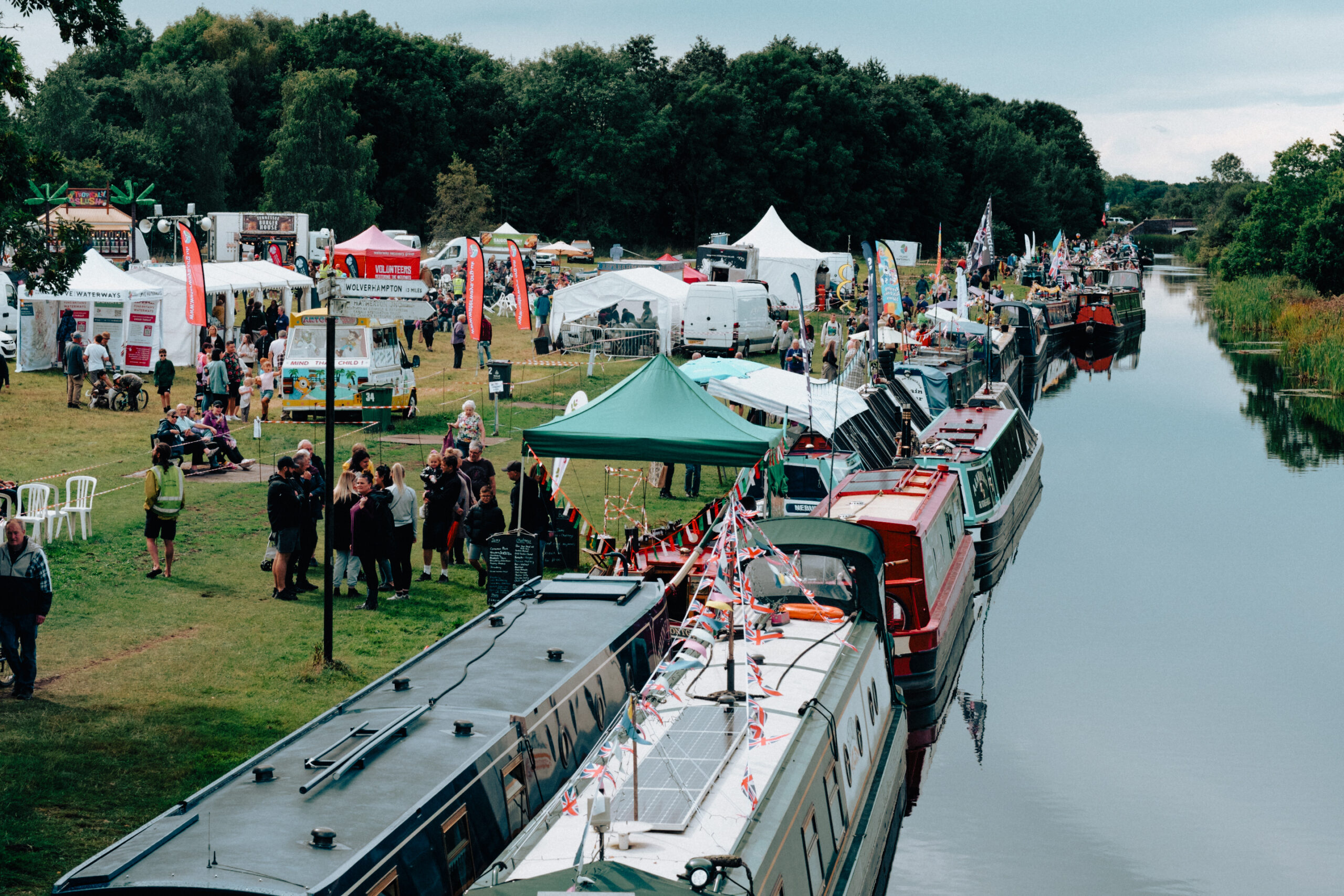
    IWA returned to Pelsall this year for the first time since 2016. We welcomed visitors to our annual Festival of Water which was held at Pelsall North Common over the August Bank Holiday weekend. The event attracted many hundreds of visitors throughout the weekend and was especially popular amongst families. Children enjoyed a range of activities – from having a go at driving a digger to testing their skills in the Arena with Giant Jenga, Connect 4, football and tug of war! Visitors didn’t go hungry, with an incredible choice of food and refreshments available including stone-baked pizzas, gourmet burgers, Caribbean street food and ice cream. Plenty of traders attended the festival, with numerous stalls selling everything from toys and books to marine engine parts, pet portraits, jams, chutneys, cookies and even bonsai trees. There were a number of charity stalls too with many promoting specific restoration projects in the local area and beyond including the Birmingham Canal Navigation Society (BCNS), Lichfield & Hatherton Canals Restoration Trust (LHCRT), and the Wilts & Berks Canal Trust.

    The bar served a fantastic choice of beverages including ciders and ales. Trade was steady throughout the weekend and was spurred on by a good turnout for the Open Mic Variety Show and a superb programme of entertainment. There was never a dull moment in the Entertainments Marquee where local artistes and festival favourites performed including Miles & Margaret, The Buskateers, and Reflections.

    Over 70 boats – from traditional working boats to modern narrowboats – all adorned with bunting, banners and flags – were moored on the Wyrley and Essington Canal in Pelsall. The variety and sheer volume of boats attracted a great deal of interest while the static Illuminated Boat Display proved very popular as festivalgoers enjoyed strolling along the towpath on Sunday evening to admire the vibrant spectacle.

    Councillor Chris Towe, Mayor of Walsall, opened the festival on Saturday, saying how delighted he was to open the event and thanked the Inland Waterways Association for returning to Pelsall, remarking “what better a location than the Wyrley and Essington Canal”. The Mayor went on to explain how the canal is a valuable asset to the local community, having been there for 230 years.

    Wendy Morton, MP for Aldridge-Brownhills, also attended the Opening Ceremony. She welcomed everybody to Pelsall and hoped that they would have a great time as visitors did back when the event took place in 2016. She continued, “I know how important our canals are to us, not just in Pelsall and in Walsall but right across the Black Country and the West Midlands. Once a key part of our industrial heritage, they are now part of our local communities. We see them playing a part in the restoration of many of our local towns as well.”

    Later on in the weekend, Jane Elwell, Chair of the organising committee, said: “We have between 70 and 80 boats here, all of whom have booked to come to the festival, including eight boat traders. There are also about 60 camping pitches.

    “It has been a successful event. I think there would have been bigger crowds if the weather had stayed fine but that’s always the problem.”

    At the Awards Ceremony on Monday afternoon four awards were presented:

    • Best picture coloured by a child aged 4 – 8 years was awarded to Alice
    • Best picture coloured by a child aged 9-13 years was awarded to Issy Patrick
    • The Ray Dunford Trophy for the best illuminated/decorated boat was awarded to Terry Smith for his narrowboat Moranwyl Phyllis, with commendations going to Bob and Mary Metcalf of Chedoona
    • The Offley and Slack Propellor Trophy, for the highest number of boats attending the festival, was awarded to the Boaters’ Christian Fellowship, with 14 boats

    Thank you to everyone who attended Festival of Water 2023.

    We hope you enjoyed it as much as we did and will look forward to seeing you again next year!

  • New Guide to Electric Boats Published

    New Guide to Electric Boats Published

    IWA has recently published a new guide: ‘An Introduction to Electric-Drive Narrowboats’. 

    IWA believes that it is vital for the inland waterways community to make their contribution to a more sustainable environment and the IWA’s Sustainable Boating Group has been looking at how inland waterways leisure boating can become more sustainable since 2019. They published their Vision Paper in 2020, covering propulsion, the existing fleet and domestic energy on boats. 

    IWA is delighted to see that an increasing number of new boats are now being built with some form of electric drive and most boatbuilders are now offering electric drive options. The technologies associated with this form of propulsion are not only unfamiliar to most boaters but are rapidly changing as electric road vehicle technologies develop. 

    This new guide is not intended to be a ‘design and build’ manual for electric narrowboats but hopefully will help boaters who are not experts in the technologies to understand the issues involved and make appropriate decisions when specifying their new (or converted!) boat, in consultation with their builder. 

    Malcolm Bridge, the principal author of the guide and a member of the Sustainable Boating Group, has owned an electric narrowboat for some years. The guide has been written in consultation with other electric boat owners and members of the Group, who are all experienced boaters owning boats ranging from historic ex working boats to modern leisure craft. 

    Download the guide at https://waterways.new1.fixed-staging.co.uk/wp-content/uploads/2023/08/An-Introduction-to-Electric-Narrowboating-Issue-1-1.pdf

  • IWA publishes new guide to the Denver Crossing

    IWA publishes new guide to the Denver Crossing

    Like most rivers the Great Ouse flows into the sea. The main boundary between the non tidal river and estuary is at Denver Sluice. The Middle Level is a series of drainage channels. To get from the non tidal waters of the River Great Ouse to the Middle Level requires a short estuary crossing between Denver and Salter’s Lode Lock. For those who have not made this crossing before, it can be daunting. Chris Howes, author of the Imray guides to the Great Ouse and Fenland Waterways, IWA member and Eastern Region representative has put together this very useful guide to navigating between the Middle Level and the Great Ouse.

    In it you well find details of how to contact the lock keepers at either end for the best times to cross, how the tides affect crossing and how to avoid the sand bar, as well as tips on equipment and checks to carry out before you make the crossing.

    View, download and print the guide here https://waterways.new1.fixed-staging.co.uk/wp-content/uploads/2023/06/IWA-Guide-to-the-Denver-Salters-Lode-Crossing.pdf

  • Six New Silver Propeller Locations for 2023

    Six New Silver Propeller Locations for 2023

    IWA’s Silver Propeller Challenge was set up to encourage visitors to the less well-used parts of the system, in boats of all sizes. To complete the challenge visit 20 locations or more and then let us know – details on how to submit can be found here.

    This year, six new locations have been added, from Scotland to Kent, inviting exploration of some underused but fascinating corners of the waterways system.

    Two new Scottish locations have been added:

    Rutherglen

    Take an adventurous trip up the River Clyde and see Glasgow from a new angle, by boat or canoe and enjoy spectacular views ‘doon the watter’.

    Although visiting leisure craft are scarce, the tidal river through the city is regularly used by members of the Rutherglen Cruising Club, many of whom moor up at the Club moorings for the winter and head off down the Clyde for each summer spent along the west coast of Scotland.  The Club was formed in the 1930s when the Old Pals Club and the Strathclyde Boat Club amalgamated. The Club’s home moorings were next to a slaughterhouse on the river bank near to where the Thomas Seath shipbuilding yard was located.

    Access to the River Clyde from the connected Lowland Canal System, is via Bowling, and then head upstream. Glasgow weir (separating tidal water from non-tidal) prevents direct access to Rutherglen and this can be negotiated at high tide by making a booking via 0141 276 1585.  Check out the River Clyde page for navigation hints and tips on the river.

    Stirling

    Take a scenic cruise along the River Forth and visit the historic city of Stirling, by boat or canoe and enjoy the Scottish countryside and distant mountains.

    Visiting leisure craft are few and far between, but the brand new mooring pontoon installed by Stirling Council is a popular spot for canoeing and other water sports by the locals.

    Access from the connected Lowland Canals for boaters would be by joining the tidal River Carron at the Kelpies, heading downstream for a short distance to meet the Firth of Forth at Grangemouth. From there it’s upstream via Kincardine and Alloa to Stirling.  The river is tidal all the way. 

    Two rivers sharing a name have also been added, but they are in different counties:

    The River Stour in Suffolk is navigable from Cattawade near the Orwell Estuary to Brundon Mill, just upstream of Sudbury.  Except for the first three quarters of a mile below Sudbury, the river forms the county boundary between Suffolk and Essex, and was immortalised in the paintings of John Constable.  Fifteen locks were built by the River Stour Navigation Company, but the waterway had largely fallen out of commercial use by the early twentieth century.  Restoration of the Navigation was one of IWA’s earliest campaigns, leading to the formation of the River Stour Trust, which runs a high profile campaign for restoration today.  Several locks have been restored and the whole Navigation can be used by canoes and other light craft.

    There is a right of navigation on the Kentish River Stour to Canterbury. However, it is presently navigable only from the sea at Pegwell Bay to Fordwich.  There are weirs a short distance above Fordwich Bridge – remnants of old mills.  It may be possible to canoe from Canterbury to Fordwich, but there is no official access or portage over the weirs.  Fordwich is the location for your Silver Propellor visit, encouraging you to have a scenic cruise along the quiet Kent countryside.

    The Manchester Bolton and Bury Canal

    The Middlewood flight of locks, which connect the Manchester Bolton & Bury Canal to the upper River Irwell and thus to the rest of the connected navigable system were restored and reopened in 2008 as part of a £600 million large property development.  However, due to an absence of water supply, the locks are not available for public access and the entrance off the Irwell has silted up.  The upper River Irwell leads into the Manchester Ship Canal, and can be accessed via Pomona Dock No3 from the Bridgewater Canal. A photo of your craft anywhere on the upper River Irwell in the vicinity of Middlewood Locks and the entrance to the Manchester Bolton & Bury Canal would be good evidence of your visit.

    Thames and Medway Canal

    The Thames and Medway Canal sees few waterways visitors other than local paddle-sports enthusiasts, ducks and enthusiastic volunteers from the Thames and Medway Canal Association who turn out on regular work parties to keep the waterway clean and accessible – so why not pay them a visit?

    The western side of the Thames & Medway Canal was opened between Gravesend and Higham in 1801 and continued in use until 1934, but the eastern end of the canal, mostly comprising Higham Tunnel, took longer to build and was sold to the railway company in 1846 and closed to Navigation.  For more about Higham Tunnel, check out our feature on canal tunnels.  For more about the history of the canal, see the Thames and Medway Canal page.

  • HS2 Continues to Impact Waterways: Update

    HS2 Continues to Impact Waterways: Update

    IWA continues to engage with any new public consultations and parliamentary petitioning opportunities to help protect the waterways and their users from undue impacts of HS2.

    For the extensive work already underway on Phase 1, London to Birmingham and to Fradley/Handsacre we rely on local Branches and members to monitor construction issues affecting their waterways.  You can contact us for advice, and any specific problems can be reported direct to the HS2 helpline: HS2enquiries@hs2.org.uk Freephone: 08081 434 434 .   Please copy your comments and HS2’s responses to IWA then we can monitor the bigger picture. Contact HS2@waterways.org.uk

    PHASE 1 (London to Fradley)

    Phase 1 between London, Birmingham and Fradley is under active construction with tunnels, major viaducts, and road crossings being followed by large scale earth moving for cuttings and embankments.  The engineering works are said now to be 40% complete, with the first services due to run between London and Birmingham “by the early 2030s”.

    Paddington Arm

    In the London area, work is underway on most of the tunnels and several of the viaducts.

    The route passes below the Regents Canal and the Paddington Arm in tunnels at depths of 12 to 30 metres.  More visible works by the contractor SCS are two temporary bridges over the canal near Willesden Euro Terminal site, one a conveyer bridge for spoil, the other for transporting tunnel segments. 

    Grand Union Canal

    The route emerges from tunnel to cross the Colne Valley on the very long but attractively designed Colne Valley Viaduct with arched spans over the Grand Union Canal and adjoining lakes.  The piers are under construction and the deck is being attached by a huge launching girder.  The canal crossing is timetabled for January to March 2024 with daytime closures requested.  There have been no complaints to CRT so far from this construction work by the contractor ALIGN, although concerns remain about the long-term noise impacts of the operational railway, here as at other canal crossings.

    Wendover Arm

    Further north, an unresolved concern is potential effects of a deep cutting on the springs feeding the Wendover Arm and Wilstone Reservoir.  Modelling of the aquifer has been completed and the results are with the Environment Agency for scrutiny but are not yet published.  Meanwhile, the HS2 Chiltern AONB Panel has awarded £300k to the Wendover Canal Trust for work to upgrade the towpath.

    Oxford Canal

    The section of route being constructed by the contractor EKFB includes culverting part of the Boddington Feeder to the Oxford Canal.  The Oxford Canal Viaduct crosses the summit section by Willison’s Bridge 128 near Wormleighton where a temporary haul road bridge has been built.  The canal wall under the viaduct will have sheet piles with a concrete capping.  After a public consultation, the viaduct piers and offside abutment wall will have masonry cladding, rather than a concrete finish, although the nearest canal bridges are brick.  IWA’s main concern remains the operational noise impact from trains on this currently tranquil and remote part of the canal, both at the viaduct and where the route skirts a loop in the canal near Bridge 127.

    In Warwickshire, Staffordshire, and Birmingham the contractor is BBV and IWA has attended several of their liaison meetings with CRT to discuss the designs of various canal crossings and help minimise construction impacts.

    Grand Union Canal

    The Longhole Viaduct over the Grand Union Canal, close to Longhole Bridge 31 near Welsh Road, will be a full span crossing with piers set back from the canal.  The main span will be launched (pushed in) to minimise the canal closure.  Construction is due later this year.  The temporary conveyer bridge over the canal for moving spoil from the nearby tunnel is due to be removed in May in an overnight stoppage.  CRT received payment for the conveyer crossing as it saved many lorry journeys for the contractor.

    Birmingham & Fazeley Canal

    The Birmingham & Fazeley Canal viaduct crossing at Curdworth, below Lock 5, is adjacent to the M42 box bridge which has already been installed.  The first offside pier coffer dam started with piling in April, to be followed by the towpath side pier with 40 metres deep piling, requiring a short towpath closure and diversion.  The deck beams will be lifted in with a giant crane on the north side, then pre-cast units set between the beams, with each lift requiring locally controlled short canal closure.  When complete the viaduct will be used as a temporary haul road for construction of the adjacent embankment.  The canal stoppage details over the next 2 years are yet to be confirmed.

    Lichfield Canal

    The Cappers Lane Viaduct crossing of the Lichfield Canal near Huddlesford will include a canal diversion to maintain headroom, as agreed after earlier campaigning by IWA and Lichfield & Hatherton Canals Restoration Trust.  The new channel is to have a concrete invert and walls, with design details of the interface with the existing channel ongoing.  The design of the replacement Cappers Lane road bridge is now agreed to have brick-faced wing walls with a concrete string course, patterned concrete abutments, and open style parapets.  The bridge construction is imminent, but there is no firm timetable yet for the canal channel or the viaduct.  The displaced boats of Lichfield Cruising Club have now moved into their completed new basin, which was funded by HS2, after many years campaigning by LCC and IWA.

    Trent & Mersey Canal

    There has been extensive clearance work around Wood End Lock above Fradley Junction for construction of the Trent & Mersey Canal Viaduct, and for the Handsacre Link which will now just miss the canal following IWA’s earlier campaigning.  But there has been no update on the final design of the viaduct recently.  A temporary canal bridge will be needed above Shade House Lock to construct the short stub of embankment north of the viaduct if this is built as part of Phase 1 as originally planned (although logically it would be done as part of Phase 2a).

    Birmingham & Warwick Junction Canal

    The design of the Saltley Viaduct in Birmingham across the Grand Union Canal below Garrison Locks has a wet abutment, and the site is tightly constrained.  However, the proposal to close and locally infill the canal to aid the preferred method of construction is not accepted by CRT which wants a narrow channel maintained for boats and water supply.  The construction timing is currently uncertain.  There is also a highway bridge crossing but with its piers set back from the canal this is less of a problem.

    Digbeth Branch Canal

    Also in Birmingham, construction of the Curzon Street Viaduct across the Digbeth Branch by Lock 6 is scheduled for winter 2023/24, possibly using night-time closures.  CRT want to avoid a simultaneous closure with the Saltley Viaduct works.

    PHASE 2a (Fradley to Crewe)

    Between Fradley and Crewe, early Environmental Works (trees, ponds, bat houses, etc) and some other enabling works are underway and statutory notices have been served on landowners, including CRT, but matters have been otherwise quiet.  The main concern with Phase 2a is construction of the Great Haywood Viaduct and subsequent operational noise impacts on the marina and Trent & Mersey Canal.  On 9 March the Government announced a 2-year delay to construction of Phase 2a.  The design contract was due to be let about now, followed by a main works contract later this year, but the timescale for these is now unclear.

    Meanwhile, several towpath improvement projects funded by HS2 are proceeding as planned.

    Trent & Mersey Canal

    Towpath work between Shade House Lock above Fradley Junction and the A515 Kings Bromley Road Bridge has now started.  It is being funded by HS2’s Road Safety Fund through Staffordshire County Council and being carried out by their contractors Amey.  The 3km length includes some bank protection and is expected to take 6 months.  There will be towpath closures and, with access at Woodend Lock being currently closed by HS2, there are no intermediate access points so it may be closed throughout.  However, CRT are conscious of how well used is this section, particularly over the summer and at weekends, so have asked that closures be limited as much as possible in length and to their working days of Monday to Friday.  This section of towpath is unusually wide so people may be able to pass behind the sections being worked on.

    In addition, funding has apparently been allocated by the Department for Transport for a new footbridge over the canal between Shade House and Wood End to connect the towpath with an offside footpath.  This would presumably be separate from the HS2 viaduct.  The canal is quite wide here so it would be a major structure but as yet there is no design.  It would seem easier and less expensive to simply reinstate public access to the tail bridge at Wood End Lock which is currently closed by the HS2 works.

    Staffordshire & Worcestershire Canal

    Towpath resurfacing from Great Haywood to Milford is being funded by HS2 through the Trent-Sow HS2 Group (on which IWA is represented) and is due to start in April.  The 3.75km length is expected to take 5 months.  CRT have requested further funding from the Department for Transport to continue this from Milford to Baswich and the A34.  They are also making funding bids to HS2’s Community & Environment Fund for work on the Junction Bridge and toll office at Great Haywood, and to their Biodiversity Fund for work on hedges, reedbeds etc. on both the S&W Canal and T&M Canal.

    PHASE 2b West (Crewe to Manchester)

    CRT are negotiating a ‘Side Agreement’ to the current Bill, based on their Phase 1 agreement with some improvements for clarity and protection, which may avoid the need for a Select Committee petition hearing.  The hearings have started but there has been no contact from the Committee or HS2 about a hearing date.  Previously, CRT with route-wide interests has been timetabled nearly last, and IWA has been grouped with them.  IWA’s main petition is on noise mitigation at the canal crossings, one issue that CRT has not significantly addressed.  CRT’s main outstanding concerns are the viaduct crossings.  Two more Additional Provisions are expected although their scope is not known and the impact on the timing of the Hearings is uncertain. 

    Middlewich Branch Canal

    The three Shropshire Union Canal Viaducts carry additional tracks into the Crewe North Rolling Stock Depot, crossing the canal between Bridges 25 and 26 on the Middlewich Branch.  In place of the visual impact of 3 adjacent viaducts with different alignments and heights, a single covered tunnel had been considered (illustrated in Canal Boat magazine in 2019) but CRT are currently reconsidering the design.  There will also be a new road bridge carrying the realigned Clive Green Lane, and IWA’s Additional Provision petition asks for changes to a towpath access cycle ramp.

    Trent & Mersey Canal

    There are three crossings of the Trent & Mersey Canal, by the River Dane Viaduct near Bridge 177, Puddinglake Brook Viaduct between bridges 179 and 190A, and the Trent & Mersey Canal Viaduct at Billinge Flash near Whatcroft.  This flash is the most notable area on the whole route of former high subsidence due to historic brine pumping.  CRT are asking for longer viaducts with more spans to better maintain the open views.

    Subsidence Risk

    An information paper published on 3 March on “Understanding the Ground Risk across the Cheshire Plain” seeks to retrospectively justify HS2’s choice of route across the subsidence prone salt field.  It identifies the two areas most at risk from ground movement as Billinge Flash and around Clive Green Lane, which may also affect the new road crossing of the canal there.  It recommends the viaducts use bored piles with jacking points but does not address the transition between viaducts and embankments.

    PHASE 2b East

    The 2021 Integrated Rail Plan cut back the plans for the Eastern Leg of HS2 to terminate at East Midlands Parkway, near the River Soar, with the route north through Toton to Leeds being dropped.  Although no longer allocated any funding or timescale, it has not been entirely abandoned and the route safeguarding directions remain in place.  A new study of how to take HS2 into Leeds was promised but has not yet started.  Neither is there any timetable for a further Bill for the remaining section of HS2 East, nor any sign of the amended plans needed to connect this with East Midlands Parkway.

    This unsatisfactory state of affairs leaves both the Chesterfield Canal and the Ashby Canal restorations in limbo.  The Chesterfield Canal at Staveley is having to make provision for a rail bridge crossing that may never be built.  The housing development at Measham that would fund restoration of a section of the Ashby Canal is on hold pending a decision on an alternative route which was promised in 2018.

    Northern Powerhouse Rail High Speed Lines

    The Integrated Rail Plan also included plans for two new sections of high speed lines as part of the Northern Powerhouse Rail plans for a Transpennine route upgrade: from Warrington to a junction with HS2 West and from Manchester to Marsden.  However, without any detailed route plans having been published their impacts on waterways are uncertain, and with no funding allocated or firm timescales, these plans seem to be just aspirational. 

    Consultation and Reporting

    HS2:    email: HS2enquiries@hs2.org.uk       Freephone: 08081 434 434 

    IWA:    email: HS2@waterways.org.uk
  • IWA Response to CRT Licence fee consultation  

    IWA Response to CRT Licence fee consultation  

    Regarding overall price rises, bearing in mind that CRT is dependent on a Government grant that is not inflation linked for a good part of its income, we appreciate that the Trust have no option but to try to raise more from other sources to compensate. However, increasing the licence fee beyond inflation risks pricing boaters off the system, or simply being unable to pay, which could result in a net loss.

    In response to the options for apportioning the rises across boat licence payers we had some concerns:

    We do not support the proposal to raise licence fees for continuous cruisers above those with home moorings. Firstly, as set out in The British Waterways Act 1995 there is only one Pleasure Boat Licence. Added to this, it is not possible to define continuous cruisers, which is the term used in the consultation. Some boaters never have what might be called a home mooring so continuously cruise all the time, others continuously cruise much of the year then tie up in a marina for the winter, some boaters have home moorings that are not on the CRT system and many other possible combinations.

    The proposal to charge more for continuous cruisers would be an administrative nightmare, open to abuse and highly divisive within the boating community. Dividing the community like this is especially detrimental at this critical moment, when the whole waterways community needs to come together to show Government how our canals and rivers are valued and need to be adequately funded.

    IWA does support the proposal to charge by area, as this would bring it in line with EA registration fees and make Gold Licence administration more straightforward.

    We would like to see CRT achieving a considerable increase in the non-boating income from all those who currently enjoy the waterways and whose benefits will suffer if they deteriorate.

    Looking at the income from CRT’s 21/22 annual report, boating brings in around £24M from licencing plus £20M from moorings and other commercial boating activities. As against this, income from CRT ‘Friends’ has remained constant at around £3M despite the large investment that was put into establishing this support.  

    Alongside this, we will continue to campaign for local and national government to recognise the many benefits including health and wellbeing that the inland waterways provide to a large part of the population and funding them accordingly.

    The benefits freely enjoyed by those local to waterways are the reason for national and local government to help fund the costs of keeping waterways in good condition so the benefits are not lost.

  • IWA joins Campaign for Energy Bill Support for Boaters

    IWA joins Campaign for Energy Bill Support for Boaters

    IWA has joined a campaign led by the National Bargee Travellers Association (NBTA) to ensure boaters who live off grid or without a home mooring are able to access the Government’s Energy Bill Support Scheme.

    Currently, boaters who do not pay their fuel/electricity bills directly and those who are off-grid or without a home mooring are exempt from the Government’s Energy Bill Support Scheme. IWA worked with NBTA on a paper which was submitted to the Department for Business, Energy & Industrial Strategy (BEIS).

    The scheme opened to boaters on fixed moorings on February 27th. Search “Apply for energy bill support if you do not already get it” to find the details. However the process for boaters without a home mooring to apply for the grant is still not confirmed so IWA will continue to work with NBTA in campaigning for access to energy support for all boat-dwellers.

  • Call for Review of Ely Winter Mooring restrictions

    Call for Review of Ely Winter Mooring restrictions

    The current 48-hour time limit in summer appears fair and ensures that as many boaters as possible are able to stop and enjoy Ely. However, many navigation authorities and local councils relax summer 48-hour restrictions during winter and extend them to 10-14 days. Since demand for moorings in Ely is much lower in winter, we have asked that the Council considers following this practice. ECDC policy is that boaters needing to stay for more than 48 hours can use the marina opposite, but this may not always be safe or even possible, especially if the need was not anticipated.

    We also highlighted the issue of extreme weather conditions: strong water flows or flooding, high winds, poor visibility and freezing conditions, which can make boating dangerous. Our attention was drawn to the problem after a novice boater received two mooring violation tickets stuck to their boat, during conditions that would have made moving the boat unsafe. ECDC had activated its Severe Weather Emergency Protocol at the time of this incident.

    We have made three requests to ECDC, asking them to
    • relax the mooring time limit during the winter season
    • suspend all mooring restrictions during periods of strong water flows or flooding, high winds and poor visibility
    • incorporate the suspension of all mooring restrictions into their Severe Weather Emergency Protocol.

  • Wendover Canal Trust Celebrates 25th Anniversary

    Wendover Canal Trust Celebrates 25th Anniversary

    On Tuesday, November 1. Wendover Canal Trust (WCT) staged its biggest ever community engagement event with more than 100 guests from 85 different organisations, to mark the 25th anniversary of work starting on restoration of the Wendover Canal. The occasion also enabled the Trust to provide an update on its activities, hold a dialogue with representatives from local organisations and thank its current supporters.      

    IWA has supported the project throughout those 25 years, both nationally and through IWA Chiltern Branch, while IWA’s Restoration Hub has been providing a significant amount of support recently Our Technical Support Officer, Mikk Bradley, worked with Canal & River Trust over drawings and designs for Whitehouses sluice structure. He has also prepared detailed drawings for the repairs to the foundations of the swing bridge, including stop plank design, the Narrows structure and towpath strengthening wall. Mikk has also taken on an active role in training WCT volunteers in levelling. The WCT Environment Group were trained by IWA’s former Volunteer Co-ordinator Alex Melson on Biodiversity Net Gain, who lead a training afternoon walking along the Wendover Canal and highlighting many aspects which were of value to the wildlife at Whitehouses Pocket Park.

    At the event, which was held in “Your Café in the Park” in Aston Clinton, WCT chairman Clive Johnson said the canal was almost impenetrable when the decision was taken to restore it and the first task was to clear the hawthorn scrub. He said that volunteer construction started in 1997 and that “our wonderful volunteers have been doing heavy construction work for 25 years – and we are all unpaid.”

    He added: “Our plan is that by the end of 2025 we will complete our lining of section which has always leaked near Tring, then we will restore the water level all the way to Wendover for boats to Buckland, and eventually Wendover. None of this would have been possible without the funders of the restoration and the towpath upgrade.” The canal and its towpath were becoming a green corridor, he said, “accessible to us all to boost our well-being, with increased biodiversity.” Ros Daniels (Canal & River Trust Director for London and South East) proposed a celebratory toast and other distinguished guests included Commodore Tim Hennessey, RN DL, Deputy Lieutenant of Hertfordshire; Wing Commander Anna Toothill, Deputy Station Commander, RAF Halton and Councillor Christopher Townsend, Mayor of Tring.

    Over the years, local Waterway Recovery Group volunteers have got stuck in at the Trust’s regular work parties, and this summer two WRG canal camps were held on the Wendover Canal. WRG regional groups have held weekend digs on site, two digs so far this year. IWA’s Restoration Hub will continue to support this project and run camps there in 2023 and beyond.

  • Successful campaign to protect Caldon Canal heritage

    Successful campaign to protect Caldon Canal heritage

    IWA North Staffordshire & South Cheshire Branch submitted an objection to a Canal & River Trust planning application for Listed Building Consent for alterations at Hazelhurst Top Lock (Lock 10). IWA objected strongly on heritage and health and safety grounds to one aspect of the application, which was the proposal for a fabricated “restrictor” on the end of the balance beams.  Despite what the Heritage Design and Access Statement says, we were concerned that this would have had a detrimental impact on the heritage setting of the Listed lock (which is also part of a conservation area), and would have introduced a new unexpected hazard to boaters operating the lock, who would no longer be able to pass around the end of the balance beam in an emergency, for example if the gate is swinging closed of its own accord.  The problem at this lock is that the balance beams are too long for the original stonework of the lock.  We suggested that this could be rectified by reducing the length of the balance beams and adding additional weight underneath (if the balance of the gate is affected), as has been done in many other locations around Canal & River Trust’s network of waterways. This view has been endorsed by IWA’s national Navigation Committee. Objections were also submitted by the Caldon and Uttoxeter Canals Trust and the Historic Narrow Boat Club for the same reasons.

    We recently heard that our objections have been taken on board, as Canal & River Trust have removed the part of the application referring to the balance beam “restrictors”. They are now planning simply to move the handles on the end of the balance beams to align with the quadrant below, as well as investigate the possibility of shortening the beam.

  • Canal & River Trust draw on IWA research for Facilities Consultation

    Canal & River Trust draw on IWA research for Facilities Consultation

    Canal & River Trust is currently consulting on the provision of facilities for boaters, aiming to establish the baseline minimum services that users require. In doing so, they have drawn on the “Gaptracker” survey carried out by IWA in 2018 (and the subsequent report on the findings). Ahead of the launch we met with the Trust to discuss the findings from our report and how they could be used to inform their facilities consultation.

    In our report we made several recommendations on the provision of customer service facilities for boaters:

    Water points, rubbish disposal points including recycling points, portable chemical toilet disposal points and electricity (shore power mains connection charging sites) at the following frequencies:

            – Every 5 hours of cruising across most of the inland waterways system, including between waterways managed by neighbouring navigation authorities

            – Every 2 hours of cruising in London and other urban areas with large numbers of residential boats on unserviced moorings.

    Pump out facilities at regular intervals, ideally provided by boatyards, marinas and other third-party providers. Where there are gaps of more than 10 hours of cruising then navigation authorities should encourage third party provision and where this fails, should provide DIY pump out facilities, or portable chemical toilet disposal points should be suitable for the use of boat-based DIY pump out equipment.

    Recycling points at the majority of rubbish disposal points, as recycling is currently seriously under-catered for and when cruising accessing recycling points away from the water is not always practical or possible. IWA recognises that boaters will only be encouraged to separate items for recycling if there are frequent recycling points and their location is known. As recycling policies and the colour coding of bins vary from place to place, clear information about what can and cannot be recycled will be needed.

    Our full report can be found here.

    We are pleased that Canal & River Trust are using IWA’s recommendations and proposing that, as a minimum provision, the following facilities should be provided by the Trust approximately 5 cruising hours apart (shorter in very busy areas e.g. London).

    – Water points

    – Elsan points

    – Refuse/recycling points

    We encourage those who use Canal & River Trust’s waterways to complete the facilities consultation, which can be found here. We will also continue to campaign for other navigation authorities to adopt our recommendations.

  • Waterways For Today Report launched at our 63rd Annual General Meeting

    Waterways For Today Report launched at our 63rd Annual General Meeting

    In a bid to highlight the importance of the waterways network, and as the only independent and national charity dedicated to supporting all of Britain’s navigable rivers and canals, we have produced a new report: Waterways for Today.

    We are pleased to announce that the report was officially launched at our 63rd Annual General Meeting on Saturday 24th September at The Guildhall in Lichfield. News of the report was very well received by members at the AGM and hard copies were distributed to the branches in attendance.

    Visit the Waterways For Today section on our website here or contact Head Office to request a hard copy.

    The report demonstrates how inland waterways can contribute to the country’s economic recovery and outlines the 12 most significant benefits that the inland waterways can bring to our economy, environment, local communities and lives.

    Waterways for Today Report Cover
    The Waterways For Today Report

  • IWA Festival Of Water 2022 was a Great Success

    IWA Festival Of Water 2022 was a Great Success

    IWA returned to Burton upon Trent for the third time with the Festival of Water which delighted crowds at Shobnall Fields during the August Bank Holiday weekend. In the Arena, children (and adults) showed off their Giant Jenga skills, tried to kick footballs past the goalie, learned how to throw a rope correctly, and were taught how to drive a digger. There was a superb choice of food available at the Festival of Water 2022, from delicious chunks of meat at the carvery, sausages and bacon rolls, Vietnamese street food, pancakes and ice cream to fragrant Indian vegetarian bhajis, pakoras and spring rolls, and numerous stalls with everything from promoting charities to selling wooden toys.

    The bar did brisk trade with a great choice of beers, ciders, Pimms and Prosecco and there was a continuous programme of entertainment in the Entertainments Marquee featuring local artistes and festival favourites, including the acclaimed Lucy Ward, Miles & Margaret and Burton Folk Group.

    Nearly 100 boats, from traditional working boats to modern narrowboats, decked with bunting, flags and flowers were moored along the towpath and adjacent to Shobnall Fields and attracted a constant stream of admirers. The static display of illuminated boats was very popular.

    Councillor Philip Hudson, Mayor of East Staffordshire, who opened the festival on Saturday, said he was delighted to welcome The Inland Waterways Association back to the Trent & Mersey Canal, one of the earliest to be built, with strong links to Burton. He hoped visitors would also visit some of the many easily accessible attractions. John Butler, IWA National Treasurer, thanked Councillor Hudson for the Council’s support and all the volunteers who make the event possible.

    At the Awards Ceremony on Monday afternoon, four awards were presented:

    • Best picture coloured by a child aged 4 – 8 years was awarded to Charlotte Green, aged 6 and in the 9-13 years category it was awarded to Bella Whiting, aged 9.
    • The Ray Dunford Trophy for the best illuminated/decorated boat was awarded to Jonathan Brown for his narrowboat Brown Trout, with commendations going to Peppertree, Alice and Bezzitoo.
    • The Offley and Slack Propellor Trophy, for the highest number of boats attending the festival, was awarded to Stafford Boat Club, with 9 boats.
    • The Festival of Water Harbourmasters introduced their own special prize this year, to recognise the support of the local community, some of whom decorated their back gardens to complement the boats. Two bottles of wine were presented to Cyril Dutton for his beautiful display of flags.

    Thank you to everyone who attended Festival of Water 2022.

    We hope you enjoyed it as much as we did and will look forward to seeing you again next year!

    In the meantime, you can view some of our favourite photos from the festival below.

  • In Honour of Her Majesty the Queen

    In Honour of Her Majesty the Queen

    We are deeply saddened to hear about the passing of Her Majesty the Queen and our thoughts are with the Royal Family at this time. In honour of the State Funeral, IWA’s office at Island House will be closed on Monday 19th September.

    Her Majesty the Queen’s unwavering service and commitment over the past 70 years to our country and the Commonwealth will be long remembered.

    Many in the waterways community will have fond memories of her unveiling the Kelpies in Scotland as recently as 2017. During the official opening, she also unveiled the Forth and Clyde Extension – the Queen Elizabeth II Canal – which is a new section linking the existing navigation to the Firth of Forth.

    This wasn’t the Queen’s first involvement with the waterways however, as she attended many other events including:

    The River Thames in London

    1977 – The Queen celebrated her Silver Jubilee with a pageant on the River Thames in London

    1979 – The Queen visited the Boat Museum at Ellesmere Port and unveiled a plaque

    Close up of the Clock Warehouse and signage at Shardlow

    1986 – The Queen opened the Stoke-on-Trent Garden Festival on board Narrowboat Cactus

    A narrowboat on the Kennet & Avon Canal

    1990  The Queen opened the restored Kennet & Avon Canal

    Her Majesty the Queen opening the Falkirk Wheel

    2002  The Queen opened the Falkirk Wheel linking the Forth & Clyde Canal to the Edinburgh & Glasgow Union Canal

    Preparations for Her Majesty the Queen's Diamond Jubilee Pageant

    2012  The Queen took part in the Thames Diamond Jubilee Pageant for her Diamond Jubilee

    The Kelpies in Scotland

    2017  The Queen unveiled the Kelpies in Scotland

    A lift bridge on the Forth & Clyde Canal

    2017  The Queen also opened the Queen Elizabeth II Canal, a new section which links the Forth & Clyde Canal and the Firth of Forth

  • CRT Changes To Boat Licence Fees

    CRT Changes To Boat Licence Fees

    The Inland Waterways Association understands the extraordinary economic climate that is affecting Canal & River Trust and appreciates the reasoning of a second increase (of 4%) within one year. IWA welcomes the confirmation that the Trust will support boaters who may be struggling to pay their boat licence fees on a case-by-case basis.

    However, IWA regrets that this second increase in boat licence fees has been carried out without any consultation of users. IWA notes that CRT has only now decided to focus spending on only navigation and legal requirements.

    IWA is well aware of the pressures and costs of running a navigation (IWA operates the Chelmer & Blackwater Navigation through its subsidiary Essex Waterways Ltd) and makes extensive use of volunteers for ongoing maintenance and repairs. Through IWA’s Waterway Recovery Group, IWA is experienced in repairs to, and maintenance of, waterway heritage infrastructure. IWA believes CRT could make better use of volunteers across its whole network to carry out preventative maintenance and repair work.

    IWA’s Chair Les Etheridge commented:

    These are extraordinary times and it is understandable that CRT needs to take every action possible to support its waterways. It is regrettable that planned maintenance will be deferred by CRT.  IWA and Waterway Recovery Group have already demonstrated to CRT that volunteers can carry out serious repairs and maintenance, and believe CRT has not taken full advantage of volunteers to support navigation.

    Les Etheridge