Category: Boating

Read news, articles and updates from IWA about boating on our waterways.

  • IWA petitions against HS2 (Crewe – Manchester) Bill

    IWA petitions against HS2 (Crewe – Manchester) Bill

    IWA petitions against HS2 (Crewe – Manchester) Bill

    The Bill received a second reading on 20 June and was referred to an HS2 Select Committee to hear petitions from those directly and specially affected.

    The HS2 (Crewe – Manchester) Bill for Phase 2b West affects the Middlewich Branch of the Shropshire Union Canal, the Trent & Mersey Canal, and the Ashton and Rochdale canals in Manchester.

    IWA’s main objection to the plans is the absence of adequate noise mitigation measures for canal users.

    The plans include (i) the Crewe North Rolling Stock depot and three adjacent viaduct crossings of the Middlewich Branch, (ii) three separate viaduct crossings of the Trent & Mersey Canal north of Middlewich, and (iii) a main construction compound in Manchester. At each of these interfaces the canals would be subject to excessive noise unless better mitigation is provided.

    IWA has responded to several previous consultations, including the National Infrastructure Commission and the Transport Select Committee, criticising the choice of route through an area prone to brine subsidence, and its adverse effects on the canals’ landscape, environment and heritage.

    This Petition concentrates on the major impacts of noise on canal users and is closely based on our response to the Environmental Statement consultation.
    (See: HS2 Bill threatens tranquillity of waterways around Middlewich and Lymm. 11/4/2022)

    We are particularly concerned that the residential use of boats is not adequately assessed, and the noise mitigation measures proposed are therefore inadequate where HS2 crosses or runs near to each of the affected canals.

    Noise Mitigation

    Our canals are major heritage assets, wildlife sites and recreational corridors, valued for their tranquillity, and each HS2 affected location is used by tens of thousands of people each year.

    Noise levels close to HS2 bridges will be extremely high without acoustic barriers and the noise of passing trains will propagate over a wide area. Although this is intermittent, it is the peak noise levels that cause maximum disturbance, and any form of averaging noise levels is misleading.

    HS2 automatically includes noise barriers, earthworks or fencing, to protect residential properties but continues to misrepresent all canal users as ‘transitory’ and thus not worthy of consideration. A few canal crossings benefit from the proximity of inhabited buildings, but most crossings in rural areas are given no protection and will be subject to intolerable levels of noise.

    Our Petition explains in detail the wide variety of ways in which people use and reside on the waterways, and the vulnerability of moored boat occupants to external noise. Canal boats are residences, and whilst not always permanently occupied, and capable of moving, wherever more than a few boats are moored, permanently or intermittently, it is likely that people will be living there for significant periods, so their acoustic environment should be protected.

    Parliament failed to address this issue for Phase 1 and for Phase 2a, but that is no reason why the same mistakes should be repeated with Phase 2b.

    Canal Interfaces

    IWA’s Petition details the usage of the canals around each HS2 interface. On the Middlewich Branch permanent moorings at Park Farm and visitor moorings at Yew Tree Farm are affected. On the Trent & Mersey Canal visitor moorings at Bramble Cuttings, popular temporary moorings at Billinge Green Flash and permanent moorings at Oakwood Marina would be particularly affected.

    At each canal crossing location there should be 4-metre-high noise barrier fencing across the viaducts and on adjacent embankments. In Manchester the construction compound should have substantial noise fencing.

    First Additional Provision

    The Bill, as deposited, would also affect the Bridgewater Canal and the Manchester Ship Canal, although the Government’s last-minute decision to remove the Golborne Link through an Additional Provision (AP1) removes the threat to moorings on the Bridgewater Canal, for now at least.

    However, AP1 includes some new works on the Middlewich Branch at Clive Green Lane Bridge that, whilst providing improved cycle access, would worsen pedestrian access. IWA’s second Petition therefore asks for retention of the access steps and towpath hedge.

    Read IWA’s Petitions:

    The full text of both IWA petitions; that against the Bill and that against the First Additional Provision; as published on the Select Committee website, can be seen here:

    Petition against the Bill

    Petition against the First Additional Provision

  • Successful Campaign to protect Boaters’ Facilities on the Middle Level

    Successful Campaign to protect Boaters’ Facilities on the Middle Level

    Thanks to campaigning from IWA, Fox Boats and The Middle Level Commissioners, Fenland District Council have reversed their decision to remove the important boaters facilities block on March Riverside.  

    When we first learned about the March Future High Street Fund, we were delighted that it recognised the potential of the waterway passing through the town and sought to improve visitor moorings and facilities. However, we then discovered that the proposed moorings had been cut and the vital boaters services ditched. 

    IWA wrote to Fenland District Council in April 2022, to make the case for the retention of these services, emphasising that if March is to attract visiting boaters to stop and contribute to the local economy, they need these facilities provided, and that they also benefit local river users. We argued that there was a proven need for water, refuse disposal and pump out services, as the only other facilities in the area, at Fox’s Marina, may not be able to provide these services to the anticipated rises in boater numbers. We encouraged the District Council to commit to waterside regeneration for all the benefits it brings to the area. 

    Recently we had confirmation that Fenland District Council will be retaining the boaters facilities and investing in a new pump-out in the coming months. 

  • Canalway Cavalcade 2022 declared a great success

    Canalway Cavalcade 2022 declared a great success

    Beautiful weather on the opening day saw record numbers of visitors to the event with over 120 boats gleaming in the pool and along the Grand Union and Regents Canals. As with most years, many travelled from far across the country but, encouragingly, we welcomed many boaters closer to home, with a fantastic representation of the London based boating community. 

    Alongside the shining brass work and bunting, interspersed with many boats flying the Ukrainian flag in solidarity, we had a selection of events and activities. The Noyze Boyz Jazz Band burst into life as the festivities kicked off on Saturday, and soon the pool was buzzing with beautifully decorated boats parading in front of an eager audience. Elsewhere in the festival we had a variety of stalls selling their wares. Including jewellery, traditional painted boating paraphernalia, beautiful lamp shades and much more. This year we were also delighted to welcome Midland Chandlers, and Tim and Sam from Youtube Channel ‘Chugging Along’ promoting their brilliant board game ‘Argy Bargey’. As has become the tradition, the Stone Wharf offered the hub for many food and beverages, keeping the hungry visitors sustained whilst they listened to colourful live music in the festival real ale bar. 

    At midday on our first day Libby Bradshaw, Ceremonial and Children’s Activities Manager, introduced the Lord Mayor of Westminster, Councillor Andrew Smith, who welcomed everyone to the City of Westminster and thanked IWA for putting on the event. Richard Parry, Chief Executive of Canal & River Trust followed with his thanks. John Edmonds, IWA London Region Vice-President welcomed everyone to the event paying special attention to the dedication from volunteers for organising the event. And finally Tom Claydon, Chair of the organising committee, thanked the volunteers, committee members and supporters. Wrapping up the presentation, Libby thanked British Land for their sponsorship and support before the Lord Mayor of Westminster, Councillor Andrew Smith rang the bell to formally open the event. This was echoed by cheers around the pool, the ringing of bells and horns, and the start of the Pageant. 

    In Rembrandt Gardens children and adults alike were entertained by Punch and Judy, the Noisy Oyster, a circus workshop, and the legendary Alarum Theatre with pieces such as “I Dig Canals”. Faces were being painted and there was plenty of learning and joviality in the marquee over the weekend. Sunday saw the wonderful Teddy Bears’ picnic in the beautiful surrounds of the garden and even the sun came out to warm the crowds. Other children’s activities were led by the Floating Classroom on the Electric Barge, the Church Army and the Pirate Castle from Camden.  

    On Sunday evening Craig Haslam once again excelled as Master of Ceremonies for the Procession of Illuminated Boats, where the boaters covered their boats (and themselves) with as many lights as would fit – we even had two illuminated banana costumes. Mark Saxon, Waterspace Manager, produced a spectacular display with disco lights, glitter balls and even a smoke machine! 

    On Monday afternoon, the awards were presented by John Edmonds. 

    Marcus Boudier Trophy

    For the best decorated privately entered boat in Saturday’s themed Pageant, was awarded to Rachel, steerer Mark Saxon, and the Canal Dream Team led by Chuntian Hu, of the Royal College of Art, and Ran Yan of Central Saint Martins University of the Arts, London.                                                                              

    Runner up: Thyme, steerer Elizabeth Jones

    The Ray Dunford Buckby Can Trophy

    For the best decorated boat entered by a waterway or community group:

    Red Watch, steerer Tony Catchpole

    The Cruise Electric Trophy

    For the best illuminated boat in Sunday evening’s Procession:

    Tros Yr Afon, steerer Phil Gaskell

    Runners up: Giant Anteater, steerer Gary Howes; and Annie & Walt, owners Mike & Lorraine Newman

    The Graham Capelin Award

    For the best entry by a boater who has not previously taken part in either the Saturday Pageant or Illuminated Boats:

    Giant Anteater, steerer Gary Howes

    The Westminster Trophy

    Donated by the City of Westminster for the winner of the Boat Handling Competition:

    Middlesex, steerer Robin Hendley

    Runner up: Tintagel, steerer Graham Smith

    The Roger Squires Trophy

    Presented by St Pancras Cruising Club in recognition of Roger’s ten years as their Commodore, it is awarded to the best novice competitor in the Boat Handling Competition:

    Thistle Doo, steerer Charlotte Trimby

    Runner up: Barossa, steerer Colin Warner

    The Mike Stevens Memorial Trophy

    Goes to the “Best Boat” at Canalway Cavalcade, selected from all the boat entries at the event, it is awarded in recognition of Mike’s outstanding contribution to IWA and Canalway Cavalcade during his lifetime:

    Ampere, owners Malcolm & Barbara Bridge

    The Idle Women Shield

    Sponsored by Jan Knox, proprietor of Canal Experience Training School, the shield was awarded to the best lady entrant in the Boat Handling Competition:

    Ampere, steerer Barbara Bridge

    Runner up: Stella, steerer Karen Cook

    A new prize, Graham’s Choice Bear (with a backpack) for helpfulness and kindness, in memory of our special Cavalcade friend, Graham Nunn, of the Church Army, was awarded to Olivia Parlett. Olivia, now in her teens, has been attending Cavalcade since she was very small and specifically wanted to help to ensure the little ones attending the Teddy Bears’ Picnic on Sunday afternoon enjoyed it as much as she had done as a little girl.

    Tom Claydon, chair of the IWA Canalway Cavalcade Organising Committee said: “It’s wonderful to Welcome Back everyone to Little Venice for IWA Canalway Cavalcade 2022. A truly incredible spectacle in the heart of London’s waterways. This event would not be possible without the 10,000 hours of dedicated volunteer time, and I thank each and every person for making this such a great success.

  • HS2 Bill threatens tranquillity of waterways around Middlewich and Lymm

    HS2 Bill threatens tranquillity of waterways around Middlewich and Lymm

    HS2 (Crewe – Manchester) Bill

    The High Speed Rail (Crewe to Manchester) Bill for HS2 Phase 2b West was deposited in January 2022, with a public consultation on the Environmental Statement to the end of March.

    IWA has studied the 335 reports and map books, totalling tens of thousands of pages, for their impacts on several waterways and the changes since previous consultations. The environmental reports detail the major adverse visual, heritage and community impacts the Proposed Scheme will have on the waterways from both construction and operation of the railway.

    Noise impacts

    However, the noise impacts on canal users, and particularly on the residential use of boats, is not adequately assessed and the noise mitigation measures proposed are therefore inadequate for each of the affected canals.

    HS2 Ltd seek to dismiss all canal users as ‘transitory’, with only short exposure to the noise from HS2. This ignores the facts that people live on their boats when underway, can moor for up to 14 days in most places, and often stay overnight on their moorings, whether these are officially residential or not.

    IWA’s response concentrates on this outstanding issue of noise mitigation, and again asks that all canal crossings are provided with noise barrier fencing across viaducts and bridges, and with fencing or earth barriers on adjacent embankments.

    Our response details how each of these interface locations are used for temporary, visitor and permanent moorings.

    Waterways affected

    The main affected locations are:

    • The Middlewich Branch of the Shropshire Union Canal – 3 viaducts close together at 7 to 8 metres height, and affecting permanent moorings at Park Farm and visitor moorings at Yew Tree Farm.
    • The Trent & Mersey Canal in the Dane valley – 3 viaduct crossings (River Dane, Puddinglake Brook, Trent & Mersey Canal) at 10 to13 metres above canal water level, and affecting visitor moorings at Bramble Cuttings and permanent moorings at Oakwood Marina.
    • The Bridgewater Canal at Agden near Lymm – a viaduct 11 metres high directly above the Lymm Cruising Club moorings, which will be lost during the construction period of over 3 years.
    • The Ashton Canal and Rochdale Canal in Manchester city centre with the Main Compound for building the new HS2 Station right alongside the Ashton Canal at Ducie Street.
    • At each of the viaduct sites IWA has called for noise fencing 4 metres high for maximum protection.

    Read the full response text

  • 10 things I wish I knew before living on a canal boat

    10 things I wish I knew before living on a canal boat

    I’ve lived afloat for nearly 14 years, on two different boats. I’ve experienced live aboard life whilst moving around the system, off grid, and on a static mooring with facilities. I enjoy living on my boat and wouldn’t change it for the world. Here are a few things I wish I’d known before living on a canal boat.

    1. Keeping up with boat chores takes as much time as a part time job

    Even more so if you are moving around and need to find a new mooring every couple of weeks. There are so many extra jobs that you need to do to maintain and run a boat. For example, collecting and moving fuel, filling your water tanks and emptying toilet tanks. A fairly significant chunk of your time will be devoted to these daily tasks, so it’s important to think about how this will affect your life.

    2. Small jobs become big jobs

    All the systems on a boat are connected. If one thing fails, it’s likely to cascade and affect lots of other systems. If you have no power, then as well as no lights you’ll also have no water pumps. So it’s a good idea to have two methods of heating water, two ways to heat the boat, and several ways to charge your batteries!

    3. Living on a canal boat needs Systems planning

    How will you use the boat – will it match with existing systems? There is no standard way of setting up the systems you need to live comfortably on a boat. Decisions about heating and plumbing need to take into account whether the boat will be off grid or not, and whether it will be moving or in one place for days at a time.

    For example, a boat that spends a lot of time in a marina and connected to mains power will likely have systems that rely heavily on electricity. Take that same boat off grid and you may struggle with hot water and space heating because these systems rely on power-hungry pumps. If hot water is generated by running the engine and stored in a tank, this is fine if you’re moving every day. However, if you’re in one place for days you may wish you had an instant gas water heater that doesn’t need you to run the engine.

    4. It is possible to lose things on a boat

    I imagined I would become some kind of minimalist with only useful possessions. However, I was never a minimalist before I moved aboard and after 14 years we have accumulated a lot of stuff. On the flip side it’s entirely possible to have a library on a boat!

    5. Living on a canal boat takes some Defending

    You’ll learn that you need to defend your lifestyle all the time and on several fronts. You’ll need to defend your decisions to friends and family but also to the various authorities we all need to interact with. Our way of life is not always well understood and I have spent a lot of time in meetings with local authorities advocating for the rights of my community. That said, I’ve made firm friends through campaigning and learned a lot along the way.

    6. Having ‘No Fixed Abode’ is really annoying

    Even if you have a mooring, many boaters don’t have an address the same way as land dwellers do. I spent a decade without an address and it affected me in so many annoying ways. Everything needs a postcode these days and many boaters end up struggling to vote as a result. I got by with two different addresses for different purposes. One in another county that a family member kindly let me use for “official” things. And another when I actually needed to get something delivered or show a local connection. Even now, on a full residential mooring with a post box, it took months of letters and phone calls to add our boat to Royal Mail’s official address list.

    7. Setting a fire to keep in overnight is an art form

    There is a certain timeless fulfilment that comes from heating your home all winter using wood and coal. But on a chilly night when you’ve run out of kindling and firelighters, and the coal is in a heavy wet bag on the cabin top, you do envy those with central heating. Actually I do now have central heating on our boat. But like everything with boats it’s never simple. You have to make sure there’s enough power to run the heating pumps and enough diesel (or HVO) in the tank. The answer to the eternal question that boaters get asked by land dwellers “does it get cold in winter?” is YES, but only if the fire goes out.

    8. Living on a canal boat makes you feel like you’ve become public property

    Spending time moored on the country’s network of navigable waterways, you often find yourself passing through tourist hotspots and holiday destinations. The sight of boats adds to the colour and vibrancy of the area. Which is great, and it’s quite satisfying to be living (for a few days at least) somewhere that other people visit for fun. Until those people start climbing on to your boat to take selfies, or asking you if you offer boat trips!

    9. It isn’t always cheaper than living on land

    It can be, especially in cities like London but licence, fuel and maintenance costs add up. Then there may also be loan repayments and mooring fees to consider. Boat breakdowns can also be unexpected and very expensive to repair. But with my mooring fees, council tax (which is sometimes payable depending on the mooring), fuel and maintenance it’s about the same as renting or paying a mortgage on a small place on land in a similar area.

    10. Living on a canal boat Is more than a lifestyle

    Living afloat has become more then a lifestyle for me, it’s an identity – I feel part of a community of people who support each other, and I love how close I am to the changing seasons and to wildlife. When I am in the kitchen, maybe preparing some food to share with my neighbours, I might look out and see one of the resident pair of cormorants diving into the water. And I can’t imagine living anywhere else.

  • Winterising your boat

    Winterising your boat

    Winterising your boat is particularly important if you plan to leave it moored up for the duration. But even if you’re using your boat in winter, it’s worth giving your boat an annual once-over.

    Maintaining your boat externally and internally will keep your boat looking at its best, extend the life of its engine and other parts, and minimise any damage that could occur over the winter.

    Have a checklist

    It is a good idea to create a checklist before you start to ensure nothing is missed. With different boat sizes and types, come different systems to check. If your boat has a service manual, reading through it will help with tasks such as replacing fluids and parts properly. Information on winterising your boat should be provided in the section either called ‘lay up’, ‘cold weather’ or ‘extended storage’. Things to add to your checklist might include:

    • Gather all tools and new parts, fluids to use to winterise your boat.
    • Take out kitchenware, linen, blankets to wash and remove any food (if not using your boat over the winter.)
    • Clean the inside of your boat
    • Change the engine oil and replace oil filters
    • Drain the coolant system and fill half water and the other half with antifreeze.
    • Disconnect and clean the batteries
    • Flush out the toilet with water and pump out the holding tank
    • Drain and leave the freshwater tank empty (if not using your boat over the winter.)
    • Drain and put antifreeze in radiators and sealed heating systems
    • Allow air to circulate inside the boat.

    Winterising your boat Tools & parts

    Gather together all the new parts that may need replacing for example impellers, oil filters, and air filters etc. Make sure you have all the fluids that need replacing such as oil, anti-freeze and corrosion inhibitor.

    Cleaning Inside the Boat

    If you are not using your boat over the winter season, take out any kitchenware to wash, empty the icebox and wash linens or blankets so that when you return to your boat in the spring there won’t be any nasty smells or moulds. Remember to remove any food or anything else that may attract rodents.

    When everything has been cleared, clean the inside of the boat from the floor to the cupboards and even down in the bilge.

    Cleaning Outside the Boat

    Give your boat a good clean on the outside; getting rid of any vegetation and mould. Afterwards inspect your boat’s exterior checking for any damage or leaks. If anything is found get this checked by an expert.

    Winterising Your Engine

    This task will take the longest and will be messy. If you have been using your boat during the summer it is likely there will be a build up of by-products, water and acid which can lead to corrosion. Changing the oil is therefore important to decrease the chance of loss of power, poor fuel economy or engine failure.

    Change your engine oil and replace the filters and it is also a good time to drain out the cooling system with clean water and fill up the antifreeze halfway and the other half fill up with water.

    Thoroughly grease the steering and control parts, working into the joints and check it all moves easily.

    Batteries

    Disconnect the batteries and give them a clean because they can be expensive to replace. Some boat owners take the batteries away with them to charge over the winter others choose to leave them out in the boat fully charged. Some boats may need the batteries kept in for the bilge pump to continue operating.

    Plumbing

    Flush out the toilet with water and then pump out the holding tank.

    Before flushing your fresh water tank, pull the circuit breaker or remove the freshwater pump fuse. Some freshwater tanks come with a drain on the bottom or a filter close to the water pump allowing the tank to drain out water. You may want to add some non-toxic antifreeze directly through the water tank and plumbing. If you are leaving your boat for the winter leave the fresh water systems drained down and empty.

    Antifreeze

    When winterising your boat, don’t forget to drain and put antifreeze in all radiators, air conditioning pumps, sump pumps and bilge pumps.

    Leaving the Boat

    It’s worth checking whether there are any liquids in containers around that may burst when frozen.

    Remember to open any internal doors to allow air to circulate inside you may also want to add any moisture and odour absorbers just before you close up the boat.

    Check your boat regularly

    If you are away from your boat during the winter don’t forget to regularly check everything is ok with your boat as this will minimise the chances of any serious damage occurring over the winter, should something go wrong.

    Things to check include:

    • Making sure the engine is working and if needed, charge the batteries.
    • Make sure the covers haven’t moved and that the boat is watertight.
    • Ensure the mooring ropes are secure and loose enough for fluctuation in water levels when the boat is left unattended.
    • Remove any build up of rainwater and leaves, clear any cockpit, handrail or well-deck drains
    • Check the bilge pump is working.

    Top Tip

    When winterising your boat for the first time, why not make a note of what tools and equipment you have used during the process to make it easier next year.

  • River Idle campaign for navigation

    River Idle campaign for navigation

    The River Idle joins the Trent at West Stockwith. Despite having a statutory right of navigation there is no navigation authority for the river. The river is accessible only by paying a fee to the Environment Agency to open up a pair of sluices.

    IWA has written to the Environment Agency to raise IWA’s concerns. We are calling for action to restore the river to its former capacity as a navigation and drainage channel. This would be through a programme of maintenance and channel reprofiling.

    In its current state, the River Idle is virtually un-navigable. Through a lack of management and maintenance over many years, the river is now heavily silted and overgrown with trees and shrubs. Owing to this, cruises previously undertaken by the Retford & Worksop Boat Club have ended. However, we have members keen to recommence navigation, beginning with small boats to assess the river for the safety of larger boats.

    The Association of Drainage Authorities have highlighted the problem faced by their Internal Drainage Board members. Namely, that heavy silting and vegetation growth have caused a severe reduction in the river’s capacity to convey water. With more flooding and drought likely in the future because of climate change, it is crucial to maintain waterways such as this to improve their capacity for water transfer.

    Dredging this waterway will have wider benefits for the local population and economy, recreation, wildlife and fishing.

  • Community moorings

    Community moorings

    Co-operative moorings, community moorings… Call them what you will but one thing is certain – they’ve become something of a buzzword on our waterways in recent years.

    In London especially, where the growing number of people living aboard is putting ever greater pressure on mooring space, they’re being hailed as one of the few success stories to date in tackling the problem. So much so that IWA’s Vision for London document in 2019 identified the creation of more community moorings as key to future policy in the capital.

    What are co-operative moorings?

    Co-operative moorings are owned and run by the boaters living there. They are usually small in scale (most contain no more than ten boats) and often in disused basins or derelict canalside sites.

    Paul Strudwick, IWA’s London Region chair, says: “The idea of the community moorings is to use places – basins, off-side stretches – that are currently waiting for development. They’re often locations that can’t have long-term or permanent moorings, or any work that could reduce future options for developers.”

    In the same way that charity shops are sometimes given short-term leases for empty units before a permanent business moves in, so a group of boaters might set up a co-operative to look after the land for the duration of the lease and operate the moorings, continues Paul. It’s not a new idea, but in the past, especially in London, efforts to set them up haven’t always got off the ground. “We’re hoping that with IWA support, new co-ops will have more success.”

    And indeed they are. The Surge Co-op is a case in point. Al Cree is one of its founder members. His quest for somewhere permanent and reasonably priced to live afloat in London was complicated further by the size of his craft – it’s a beast, at 127ft x 17ft, of a Belgian freight barge. When development around his former mooring forced him to move off in 2016, he started looking at other offerings on the tidal section of the River Lea.

    Affordable moorings

    In the end he found a “friendly factory owner” on the Channelsea River, who allowed Al to moor outside and have access from their yard. When other boaters kept asking if they could moor there too, four of them set up Surge, a non-profit organisation with the primary focus of reanimating Bow Creek with affordable, co-operatively run moorings.

    He explains: “It’s not Canal & River Trust land, so we can set up moorings with minimal capital cost. We’re using a standard co-operative housing model where everyone will pay to cover the initial loans/expenditure and generate a constant income for upkeep and creative workshops/community outreach.”

    There’s also a focus on ecological engagement, with regular river clean-ups and replanting already underway.

    Community and heritage benefits of co-operatives

    Ultimately the mooring will include all the main services, including visitor mooring, plus access for rowers and other watersports. Another key point, says Al, is that all the vessels will be valued beforehand, and that won’t include the mooring, so no one will be able to profit from the sale of their boat in its current location. “That’s one of the key problems in London – people selling their boat and cashing in on where it’s moored. It prices people out of the waterways.”

    At Surge’s current site, members are hoping to eventually accommodate eight larger boats, but the group’s ultimate vision is up to 200 moorings along the whole of this tidal river. “There are over 40 known, disused wharves, so historically there would have been hundreds of barges here. There’s so much opportunity and it would be a real shame if we lost this waterways heritage,” says Al.

    Not far away is Cody Dock, another thriving creative and community hub on the River Lea in Newham, East London. Gasworks Dock Partnership, a registered charity and social enterprise, has been operating two tidal live/work moorings beside the dock since 2011 and plans are now underway to restore and reactivate the brick-lined dock itself to create a further seven moorings within it. The charity says the new moorings “will form an integral part of [its] sustainable business model and provide an exciting way of continuing the strong community focus that has been at the heart of Cody Dock’s restoration”.

    “Ecology, history, art and volunteering”

    But community moorings are by no means confined to the capital. Wolverhampton Urban Moorings on the Wyrley & Essington Canal are a great example of how boaters can help themselves elsewhere on the system too. The group was previously based at Minerva Works, Digbeth, where it used its volunteer experience with CRT to create the Friends of Warwick Bar canal adoption scheme, regenerating a run down and underused section of canal.

    When this site was sold, the group secured a longterm lease for a community mooring at a disused wharf in Wolverhampton. In 2016 they set to work transforming it into a community centre and garden for boaters and local land-dwellers alike, with a focus on sustainability and the arts. But the over-riding aim, says the group, is “to create mooring sites that boaters actually want, integrating ecology, history, art and volunteering”.

  • IWA brings a great atmosphere to Perdiswell Park, Worcester

    IWA brings a great atmosphere to Perdiswell Park, Worcester

    The Inland Waterways Association celebrated its 75th anniversary year at Perdiswell Park in Worcester. The IWA Festival of Water during the August Bank Holiday weekend attracted thousands of eager visitors keen to join in the fun.

    Close to 100 boats moored along the towpath for the festival. Traditional working boats and modern narrowboats decked with bunting, flags and flowers attracted a constant stream of admirers.

    Visitors also enjoyed the Worcester heritage walk, following the waterways from the centre of Worcester to Perdiswell Park. This included a short length of the River Severn, Diglis Docks and the Worcester & Birmingham Canal.

    Children had plenty to do in the ‘Find it Do it’ Worcester arena, ‘Wild over Waterways’ marquee and Victorian funfair. The quality of delicious food – from pizzas and doughnuts to stew and irresistible duck fat roasted potatoes – was excellent. The sun brought out queues of people to sample the real ale. Likewise artists in the Entertainments marquee, including local groups, played to full houses.

    A fitting celebration

    Councillor Adrian Gregson, Deputy Mayor of the City of Worcester, opened the festival on Saturday. He said he was delighted to welcome The Inland Waterways Association back to the Worcester & Birmingham Canal, where its formation was first mooted just a few miles away at Tardebigge. Since then, many hundreds of miles of waterways have been restored by the 75 years of campaigning work of IWA.

    Volunteers worked tirelessly for the past two years to put on this event – despite it having to be cancelled in 2020 owing to Covid. Paul Rodgers, National Chair of IWA, said: “I am extremely grateful to the team at Worcester City Council for their unwavering support, to the caterers and stall holders who held the faith and to all the volunteers who gave their time and put in so much effort to ensuring the event was such a success.”

  • York lock reopened thanks to IWA

    York lock reopened thanks to IWA

    Castle Mills Lock – that gives access to the River Foss from the River Ouse in the centre of York – is reopen. Volunteers from IWA and River Foss Society once again now operate the lock.

    The first pleasure boat through the lock since 2018, ‘Slipstream’, was a 16ft Norfolk crab boat. Castle Mills Lock is open thanks to the determination of local volunteers and the expertise of IWA. The new formal agreement between City of York Council, the navigation authority, and IWA means that volunteers can again operate the lock.

    You can book a passage through Castle Mills Lock. (At least 2 days notice is needed).

    Following an IWA campaign cruise in 2004, trained volunteers operated Castle Mills Lock on the River Foss. Thanks to a new formal arrangement in 2020, volunteers from IWA and the River Foss Society received training to operate the lock. However, the pandemic and two long stoppages on the lower river delayed the reopening. Further training took place in early August 2021 ahead of the York Walls Festival.

    The River Foss up to Wormalds Cut is a recent addition to our Silver Propeller Challenge. The challenge aims to get more people out on the water and enjoy the far-flung reaches of the wonderful waterways.

  • Canal and river heritage: 5 good reasons it matters

    Canal and river heritage: 5 good reasons it matters

    1. An important industrial heritage

    Our canals and rivers tell the story of Britain’s industrial past.

    The 7000 miles of waterways are home to 2700+ listed structures, 70 listed ancient monuments and 5 UNESCO world heritage sites. Many are in conservation areas. Yet there are still stretches of waterway and buildings which have no protection at all.

    The heritage of each waterway is unique to that canal or river, as each canal company found a different way to design their infrastructure.

    Heritage Bridge 77, Congleton on the Macclesfield Canal by Martin Allaway
    Bridge 77, Congleton on the Macclesfield Canal by Martin Allaway

    2. It’s not a museUm

    Britain’s canal and river heritage is not in a museum. Our waterways are a vast, open air network connecting city and countryside, alive with boats and enjoyed by millions.

    Moreover, no other heritage system is as widespread or as accessible as the inland waterways. Anyone can walk along a canal in one of many cities and towns across Britain and help to operate a 200 year old lock mechanism with no training – just an enthusiasm to get stuck in and push a balance beam!

    waterways heritage industrial landscape canal
    Gas Street Basin, Worcester & Birmingham Canal. Photo by Nigel Essery

    3. Good for economic growth

    Canal regeneration is a catalyst for economic growth in previously deprived, urban areas. Canal and river heritage alongside the natural world can also give a much-needed boost to rural areas.

    Similarly, the waterways tourism industry is thriving like never before. Because of environmental, health and financial reasons, many more people are choosing to holiday in Britain instead of abroad.

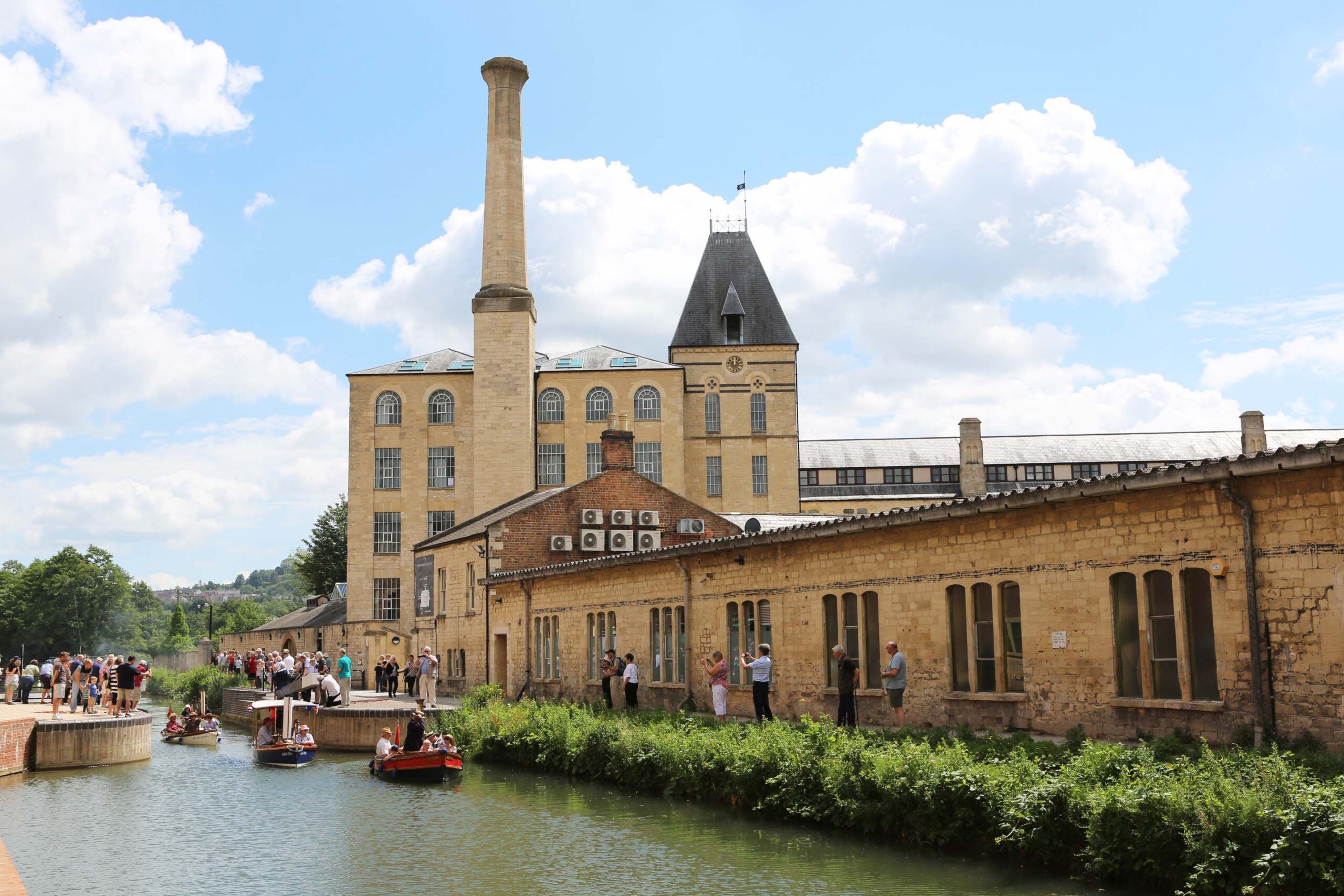
    Ebley Mill
    Ebley Mill in Stroud. Photo by Mike Gallagher.

    4. Better quality of life

    Canals and rivers create green routes through cities and towns, supporting wildlife and improving the mental and physical health of everyone who lives beside them.

    Heritage contributes to how good people feel about the places they live and their quality of life.

    Autumnal canal bridge surrounded by trees
    Ellel Grange Bridge on the Lancaster Canal. Photo by Peter Thomas

    5. It builds communities

    Our surroundings contribute to our ideas about who we are, where we live and how we feel about our local community.

    Canal and river heritage builds communities around buildings, landscapes or cultural traditions and memories. It is vital we preserve this heritage for the future.

    Canoeists paddle under the Lune Aqueduct
    Lune Aqueduct carrying the Lancaster Canal over the River Lune. Photo by Peter Thomas

  • Parliamentarians urged to support residential boaters

    Parliamentarians urged to support residential boaters

    IWA facilitated the online meeting, with presentations from the Residential Boat Owners Association, the National Bargee Travellers Association and Canal & River Trust. The groups highlighted areas where the Government could provide more support for those living on the waterways.

    Michael Fabricant MP, Chair of the Group, led the meeting. It was attended by MPs and peers, officials from Defra and representatives of many waterway organisations and navigation authorities. Also attending were representatives from a number of new and established community mooring co-operatives.

    Support for liveaboard boaters

    The presentations and the lively discussion that followed identified a number of key issues. More support from Government and other public bodies would be beneficial to:

    • Make sure that health, social services or other local authority services are available and accessible to liveaboard communities
    • Better co-ordinate between navigation authorities and planning authorities to allow a more constructive and positive response when residential mooring developments are being considered
    • Support and help for setting up more boater-managed community or co-operative style moorings
    • Better support for reducing the impact on boaters of anti-social behaviour in inner city locations
    • Support for navigation authorities in making waterway infrastructure more resilient to the impacts of climate change and extreme weather
    • Help for boaters to adapt to low carbon technology to support Government net zero carbon targets
    • Ensure no adverse impacts on boaters’ legitimate way of life through the Police, Crime, Sentencing and Courts Bill 2021
    • Putting arrangements in place to rectify the missed opportunity in the 2021 Census to collect data about how many people are living on boats, which in turn will help to improve access to public services.

    The meeting concluded with Michael Fabricant MP stating that the APPGW would write to the Defra Minister with responsible for waterways, Rebecca Pow MP, to ask her to convene a meeting to discuss these issues with representatives of relevant organisations and government departments.

    As well as providing the Secretariat for the APPGW, IWA also lobbies government directly. IWA will continue to press relevant government departments and local authorities to make progress in these areas.

  • Fuel for Thought – HVO & Greener Boating

    Fuel for Thought – HVO & Greener Boating

    Hybrid electric drives and, ultimately, hydrogen-powered fuel cells will undoubtedly become the standard specification for new boats in the years ahead. In the meantime, however, IWA has been puzzling over how to green the diesel-driven boats currently on our inland waterways. These engines may well have a useful life of up to 40 years, making their replacement with a brand-new hybrid drive both unnecessary and uneconomic for the average boater.

    Dino-Diesel Replacement

    The solution IWA has identified, in tandem with other organisations and commercial operators, is to replace fossil fuel diesel (often referred to as dino-diesel) with a carbon-neutral alternative. Initially this was biodiesel produced by a process known as transesterification, using methanol and sodium hydroxide (or similar) as a catalyst. But these two components mean that the fuel is, in fact, only about 87% carbon neutral. This product has become known as first generation biodiesel. For a number of reasons, it is generally considered totally unsuitable for marine use.

    Fortunately, early this century the Finns starting developing a process for converting animal fats and waste vegetable oil into diesel fuel, employing hydrogen. Today this alternative, known as second generation biofuel, is becoming readily available and is already in regular commercial marine use. More than 90% carbon neutral, and with none of the shortcomings displayed by its first generation cousin, it looks like being the drop-in replacement fuel for those keen to run their existing diesel engines into a carbon-neutral future.

    HVO perks FOR BOATERS

    Hydrotreated Vegetable Oil (HVO) carries a wide range of endorsements from Vetus to Volvo, Kubota to Yanmar. It is completely stable when stored (up to ten years), remains free-flowing down to at least -25°C and is not hygroscopic (attracts water). In other words, unlike first generation biodiesel, it does not promote the development and growth of diesel bug. What’s more, it is 100% miscible, meaning that it happily mixes with all other diesel fuels.

    Strict tracing of the feedstock ensures that HVO is made from waste oils. It is not directly produced on land otherwise reserved for growing food. It also boasts up to 30% lower nitrogen oxide outputs – and the potential to reduce particulate emissions by nearly 90%. Combined with a higher cetane value, it’s superior in every way to dino-diesel.

    IWA has started a conversation with the Canal & River Trust (soon to be cascaded down through other Association of Inland Navigation Authorities members) to explore the place that HVO will occupy in their Position Paper on Sustainable Boating. As with all these things, price and availability are everything, and currently outlets for the fuel are fairly limited.

    HVO campaigning

    Going forward, IWA will be pressing for greater use of HVO on our waterways. You can read more about our vision for sustainable propulsion, which has already gained considerable respect and traction across the inland waterways.

    Availability of the fuel is still limited in the UK, and IWA has been at the forefront of its promotion on the inland waterways. We are working with fuel companies, existing users and potential outlets to raise its overall profile. This follows IWA trials with HVO on boats, encompassing propulsion through to heating and cooking. So far absolutely no problems have been encountered and users often report a cleaner burn with lower visible emissions.

    Fuel-boat

    One of the most exciting initiatives on the HVO front is the fuel-boat Barnet. It has just started trading on London waterways following an extensive refit. With the exception of the Thames tideway, Barnet is the first fuel-boat to sell HVO. The London Waterbus Company will be among its new customers.

    HVO fuel boat
    nb Barnet – HVO fuel boat

    The initiative is the brainchild of Lee Wilshire, director of Waterway Projects Ltd. Lee also operates a boatyard just north of Stonebridge Lock on the Lee & Stort.

    For those keen to support a sustainable future it’s worth noting that the fuel will have seen zero road miles since leaving the refinery, probably in Finland. Instead, it travels by ship to the Thameside Stolthaven Terminal and thence by bunker-barge Dispenser up Bow Creek, before being pumped into Barnet.

    GPS Marine services largely operates Dispenser to supply its own tideway fleet of tugs and workboats. They have been using HVO across the board without problems in a wide range of propulsion units and ancillary engines, including Lister-powered generator sets. The CEO, John Spencer, is also a member of the IWA HVO sub-group.

    Find out more

    Together with the Commercial Boat Owners Association, IWA will be campaigning to level the price playing field between mineral diesel and HVO, and encouraging the general uptake of this fuel on the inland waterways. To this end, a group of experts and current users of the fuel has been established. Among other ‘duties’, its members are available to answer general queries about biofuels in a boating context. Contact jonathan.mosse@waterways.org.uk or find out more about sustainable boating.

  • Price parity of biofuels key in bringing UK’s inland waterways to net zero

    Price parity of biofuels key in bringing UK’s inland waterways to net zero

    Therefore, the Government must support HVO as it is the best current option for boats on the inland waterways. 

    We believe HVO provides an immediate solution for the majority of diesel-powered craft registered on the inland waterways. This is based on research carried out by members of IWA’s Sustainable Boating Group and wider commercial operators.

    As a drop-in alternative to mineral diesel, HVO is more than 90% carbon neutral with many other benefits. Most importantly, it is available now. Potential uptake is only sluggish due to its availability, as well as greater production costs and therefore price at the pump.  

    One of the current barriers to the commercial use of alternative fuels is that fossil fuel prices do not fully reflect the environmental costs that result from their use. Examples of this are the costs of climate change and pollutant impacts. This reduces the perceived cost-effectiveness of alternative fuels, leading to under-investment in related technologies and systems.  

    The Government needs to support HVO until fuels made from renewable sources (other than biomass) are readily available, at an acceptable price and are free of any diesel engine operating issues. 

    We have responded to the Government’s ‘Targeting net zero – Next steps for the Renewable Transport Fuels Obligation’ consultation.

  • Red diesel budget announcement is a win for boaters

    Red diesel budget announcement is a win for boaters

    Keeping the use of red diesel for both private and commercial boats is fantastic news for the inland waterways. IWA has lobbied government about this issue for many years and it will be very much welcomed by boat owners, freight operators, boatyards and waterway-based fuel suppliers.

    This is a successful outcome of our campaigning for many years around the use of red diesel and taxation. The only disappointment is that the Chancellor has not so far recognised the significance of alternative fuels with any form of tax break. Hydrotreated Vegetable Oil (HVO) – identified by the IWA Sustainable Propulsion Group as a drop-in replacement for mineral diesel – is currently sold at around a £0.10 premium over its fossil fuel equivalent. At over 90% carbon neutral, its use can reposition inland boating close to the target carbon neutral goal.

    The announcement in the Chancellor’s Budget of 3rd March coincided with the publication of the conclusion of last year’s Treasury consultation into the use of red diesel. It confirms that the current arrangement for private boat owners will continue. This means they can use red diesel and pay their fuel supplier the difference between the red diesel and white diesel rates on the proportion they intend to use for propulsion.

    The document also confirms that all commercial boat operating industries will be able to continue to use red diesel. This is great news for inland waterways freight and getting more traffic off the roads.

    The decision overturns the announcement from HMRC last July, which stated that privately owned pleasure craft would not be able to use red diesel from April 2022. Boat owners will welcome this change of plan, along with boatyards and boat-based fuel suppliers who would have had to invest in new equipment.

    More details can be found in the government’s response document

  • IWA’s call for more electric charging points gains support from MPs and Lords

    IWA’s call for more electric charging points gains support from MPs and Lords

    Our vision for sustainable boating outlines how developments in more environmentally friendly propulsion can help the inland waterways meet the UK’s zero carbon commitments.  The All Party Parliamentary Group (APPG) for the Waterways learned more about the subject of sustainable propulsion on 10th November. MPs and Lords were joined at the meeting by IWA, boating organisations, navigation authorities and other stakeholders, to hear the latest thinking.  A lively discussion followed four expert presentations and concluded when Michael Fabricant MP, Chair of the Group, committed to write to the Chancellor on behalf of the APPGW.  His letter (see below) focuses on 3 key issues: 

    • the need to invest in infrastructure to deliver more electric charging points across the system;
    • a proposed boat engine scrappage scheme to encourage conversion of existing boats;  and
    • a move towards greater distribution and use of biofuels. This step is favoured, over the current proposal by HMRC and HM Treasury to move from red diesel to white for inland waterways craft.

    the Presentations

    First off, Bowman Bradley, chair of IWA’s Sustainable Propulsion Group, presented IWA’s viewpoint.  He pointed out that policy makers will need to develop a legislative framework to meet the sector’s vision.  For instance, Government would need to invest in a recharging infrastructure, to include electric charging points, hydrogen technologies as well as provide more support for biofuels.

    Second up, Jonathan Collins of Cadent Gas highlighted the growing importance and developments of hydrogen-based technologies in reducing emissions from the residential, transport and maritime sector.  Philip Whiffin from the University of Warwick demonstrated that the low energy and low power requirements of the majority of canal-based pleasure craft, made battery-based solutions feasible and cost effective as replacements for traditional hydrocarbon-based engines.   Finally, the Group also heard about a scheme led by Oxfordshire County Council.  Marine engine manufacturers, electric vehicle and infrastructure providers and other user and stakeholder groups are working together on a feasibility study to install electric charging points on the Oxford Canal.  

  • Navigating Canal Tunnels Safely

    Navigating Canal Tunnels Safely

    TUNNELS – THE BASICS

    Due to the history of the canal network that we have today, most currently navigable canal tunnels fall within Canal & River Trust’s jurisdiction.  There are exceptions however, such as on the Grand Western Canal, the Monmouthshire Canal and on waterways in Scotland.

    Canal tunnels vary in length and width. Some can be very short, such as Dunsley on the Staffordshire & Worcestershire Canal which is just 23 metres.  Alternatively they can be very long indeed such as Standedge and Dudley tunnels, at 5000 metres and 2900 metres respectively, where special arrangements are in place to allow passage. Some longer canal tunnels have one-way working systems, where passing two boats isn’t possible.  On the other hand, some, where they are wide enough, allow two way passage at any time.

    Lifejackets (personal flotation devices)

    We strongly recommend the wearing of lifejackets or buoyancy aids when travelling through tunnels, in any type of boat. All users of unpowered boats should wear a lifejacket. The skippers of powered craft are strongly advised to do so, particularly if travelling through single handed.

    If a person falls in the water whilst travelling through a tunnel, the darkness will be disorientating in addition to the shock from the cold water. Tunnels also give added issues surrounding access and rescue. A buoyancy aid will help keep you keep yourself afloat. A properly fitted life jacket is designed to turn your body over and keep your face clear of the water, even if you are unconscious or injured.

    SINGLE AND TWO WAY WORKING THROUGH TUNNELS

    Single way working

    In some tunnels you are unlikely to encounter an oncoming boat unless one of you has ignored the lights or signs!  Examples include Foulridge on the Leeds & Liverpool Canal, which has a traffic light system, or Preston Brook and Saltersford tunnels on the Trent & Mersey Canal, which have timed periods for boats entering at either end.  On waterways where wide beam boats are more common, for example in London, one-way working needs to be in place.  This is true even if the tunnels are wide enough for two narrowboats to pass each other, as the boat coming the other way may be wider than 7ft.

    Two way working

    Many canal tunnels permit two way unrestricted passage, allowing narrowboats to pass in the tunnel.  Signage at the tunnel entrance will indicate whether two way passage is allowed, or whether there are time restrictions on entering.  When the tunnel is short and straight enough to see all the way through you simply need to wait for the tunnel to be clear.
    Note: Passage by boats wider than 7 feet through tunnels which normally have two way working, needs to be arranged in advance with the navigation authority. With the increase of wide beam boats, particularly on the Grand Union Canal, there is an increase in cases of the tunnel being closed to other traffic to allow an authorised passage. The number of incidents of meeting wide beam boats in tunnels where permission has not been obtained is also on the increase.

    ADVICE TO SKIPPERS OF POWERED CRAFT

    All boaters should take great care and keep a good lookout when navigating tunnels.  Beware catching up the boat in front of you, and make sure to look out for any unpowered craft that may be using the tunnel.
    A boat’s tunnel light should not be aimed straight ahead but slightly up to illuminate the roof so as to not blind the steerer of on-coming boats.
    Users of powered boats should carefully read the noticeboard at the tunnel entrance for any specific instructions, and to find out whether unpowered craft are allowed to enter.
    Except where two-way working is the general practice, wait until the tunnel is clear of other boats before entering.  Alternatively abide by the instructions of traffic lights or time restrictions.

    Whitehouse Tunnel, Llangollen Canal

    Before entering a tunnel:

    • Switch on your headlight and also some internal lights. Make sure that additional lighting in the form of a waterproof torch is available for the person steering.
    • Check that there is no boat already in the tunnel coming towards you if it is too narrow for two boats to pass.
    • Ensure nobody is on the roof or sides of the boat.
    • Put on waterproofs as tunnel roofs are often wet with dripping water
    • Put on your lifejacket (recommended), especially if you are boating alone.

    ADVICE FOR SMALL UNPOWERED CRAFT USING TUNNELS

    When planning your journey:

    • Check the list on CRT’s website when planning your route to find out which tunnels you are allowed through:
    • If tunnels that allow passage by unpowered craft are included in your route, arrange for others to join you on your trip so that you do not go through alone.
    • Make sure you have a forward facing strong white light of a minimum of 80 lumens (which can be a head torch) and that you have spare batteries for it.
    • Don’t forget your buoyancy aid/lifejacket and whistle.
    • Consider fitting reflective strips to clothing and paddles to help your visibility whilst travelling through a tunnel

    On the day:

    • Do not enter any canal tunnel unless signage explicitly says that unpowered craft are allowed.
    • Do not enter the tunnel if you can see any oncoming boats in the tunnel, even if two way working is allowed. Stay clear of the tunnel entrance if it is not clear to enter.
    • Do not ignore traffic lights or timed passages – where these exist they apply to all craft, powered and unpowered.
    • Turn on your headlight/headtorch
    • Ensure that you are wearing your lifejacket/buoyancy aid and that you have your whistle to hand.
    • Enter the tunnel as part of a group of two or more.
    • Proceed directly through the tunnel, no loitering or turning around
    • If you do meet a powered boat going the other way, keep to the right side of the tunnel and be prepared for turbulence as the larger boat passes.
    • Avoid dazzling steerers of oncoming boats by not pointing your head torch directly at them.

    Permissions for small unpowered craft to use tunnels

    Canal & River Trust allows small unpowered boats to use some of their shorter tunnels and a list can be found on their website.
    In general, CRT allow passage of tunnels by small unpowered craft if the tunnel is less than 400 metres long and there are good sight lines through the tunnel. Longer tunnels up to 650 metres long are included in the list if a single way traffic system is in place. Passage of other tunnels can be requested by groups for managed events which would involve closing the tunnel to other traffic for the duration of the event. Boats being towed are excluded from these requirement.
    Canoeists and people in other small unpowered boats are reminded that they need to heed the instructions of the traffic lights or time restrictions in order to avoid coming face to face with an oncoming boat.

    OUR RECOMMENDATIONS TO NAVIGATION AUTHORITIES REGARDING TUNNELS

    We recommend navigation authorities ensure that clear signage exists at all tunnel entrances, and suggests that two sets of signage is desirable.  The signage should be:

    1. Positioned for the steerers of powered boats – well back from the tunnel entrance so that the information on the sign can be taken in before getting too close to the tunnel, and in large enough lettering to be seen clearly).
    2. Signage specifically for users of smaller unpowered craft can be closer to the tunnel entrance but should be positioned lower down so as to be visible by someone closer to water level
    • Both sets of signage need to be kept clean and clear of vegetation.
    • All tunnels should have chains fitted along the sides of the tunnel to allow people to hold on to and pull themselves out if necessary.
    Signage on entering Foulr

    We suggest that Canal & River Trust’s current criteria for access to tunnels by unpowered craft should be maintained (ie passage allowed if the tunnel is less than 400 metres long and there are good sight lines through the tunnel, longer tunnels should only be included in the list if a single way traffic system is in place). Passage of longer tunnels should continue to be prohibited other than by special request for managed events which would involve closing the tunnel to other traffic for the duration of the event.  We encourage other navigation authorities to adopt similar criteria and signage for tunnels.

  • Greening our waterways

    Greening our waterways

    The overwhelming proportion of craft currently navigating our inland waterways are propelled by fossil fuels, mainly diesel but in many cases petrol. While their overall contribution to UK carbon emissions is small, it will inevitably come under scrutiny in the near future and, in any case, we also have a social responsibility to ‘do our bit’. While there are many steps boaters can take right now to reduce carbon emissions from their craft, such as not running engines at locks, the thrust of this feature is to paint a picture of what sustainable propulsion on our canals and rivers might look like in the coming decades. Technology will inevitably develop, possibly in ways we do not envisage, but IWA’s focus is on technologies that are currently available or close to being available rather than ‘blue sky’ thinking.

    There are many stakeholders in the inland waterways world, from boaters, navigation authorities, boat-builders and marinas, to hire companies, chandlers, marine surveyors, BSS inspectors and more. Most will be required to make a significant (to them) investment if we are to resolve the issue. It is hoped that our vision for the future, if ultimately validated, will allow these groups to move forward with a degree of confidence.

    When we talk about the boats themselves, we’re mainly referring to steel, diesel-powered canal craft, both narrow and wide-beam. The reason for this is the large number in the existing fleet and within the IWA membership, as well as the similarities of the basic design. However, the principles established will be applicable in some cases to other types of craft, including river boats, but not all.

    This is not a technical feature, but is assembled from my technical knowledge (limited), the useful discussions that have taken place over the last month or two with IWA colleagues, and some feedback from the ‘trade’. Hopefully it will prompt others with specialist knowledge or bright ideas to do further work to underline or amend the vision. The problems are largely economic and logistical rather than technical.

    Diesel-electric propulsion

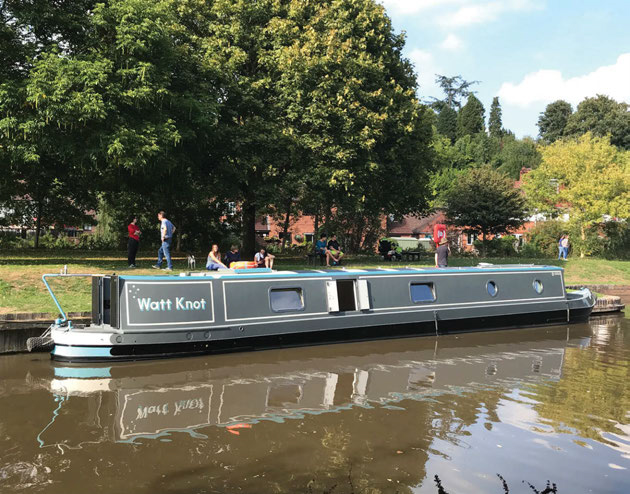
    Photo: Leading the way: Ortomarine’s ‘Watt Knot’ boasts diesel-electric propulsion with a 775Ah 48V battery bank and eight 160W semi-flexible solar panels fixed flush to the roof.

    New-build boats

    It seems extremely likely that the canal boat of the future will be driven by an electric motor. The technology exists and is mature. Quite a few boats have been built over the years with electric motors and they work. Motor vehicle technology will lead development.

    As with road vehicles, the problem is how to carry the energy around. Hydrocarbon liquids are a very efficient and effective method of transporting energy. There are two current solutions, both of which are being actively developed for road and rail vehicles:

    1) Batteries:

    There are very few issues installing a battery bank in a narrowboat. Weight is not a problem and space is more readily available than in a car. Power requirements are well within the range of the current technology and less than most road cars. The main drawback of batteries is range and recharge times. Both will improve. Batteries can be recharged using a shore connection, by onboard photovoltaic cells or small wind turbines. PV cells and wind turbines, given the current state of development, will not be able to provide all the energy required. However, PV cells are developing rapidly. Batteries can also be charged by hydrogen fuel cells, see below.

    Batteries are, of course, only ‘green’ if the electricity used to charge them is ‘green’, which at the moment is only partly true. This is a national problem and will not be addressed here. There are also environmental issues around the manufacture, recycling and disposal of batteries.

    2) Hydrogen:

    Hydrogen is an efficient method of transporting energy but not as good as hydrocarbon liquids. The hydrogen is converted into electricity in a fuel cell. The technology is well developed (and will develop further) and the size of existing cells is within that required to propel a narrowboat. Hydrogen, while potentially dangerous, can be engineered, in my opinion, to be no more hazardous than a petrol system. It will never be as intrinsically safe as a diesel system. Yet, California has 10,000 hydrogen cars and they are commercially available worldwide. Germany has hydrogen trains and they will be on the UK rail system too in a year or so. I assume they will be allowed in tunnels! Hydrogen engineering is well understood and mature.

    Currently hydrogen is not ‘green’ as it is mainly manufactured from hydrocarbon liquids and gases. This could be made ‘semi-green’ with CO2 capture. It can also be manufactured from ‘green’ electricity if available in sufficient quantity. Again, this is a national problem not confined to the waterways.

    IWA’s current vision for new-build narrowboats of the future

    • Powered by an electric motor.
    • Equipped with a battery bank large enough for canal cruising at normal speed.
    • Equipped with a hydrogen tank and a fuel cell powerful enough for canal cruising at normal speed.
    • Both would be used when high power (stopping, starting, manoeuvring) is required.
    • Battery charging by shore connection, onboard PV cells or the fuel cell.
    • The combination of battery and hydrogen fuel cell gives flexibility and reduces the cost of the total installation because of the reduced size of the fuel cell.
    • The cost would currently be higher than a diesel set-up, but this would come down with time.
    • Batteries would be adequate for short trips.
    • The hydrogen system would give range and fast refuelling capability.
    • An electronic management system would be required, but this technology is available.

    French electric hire boats and charging

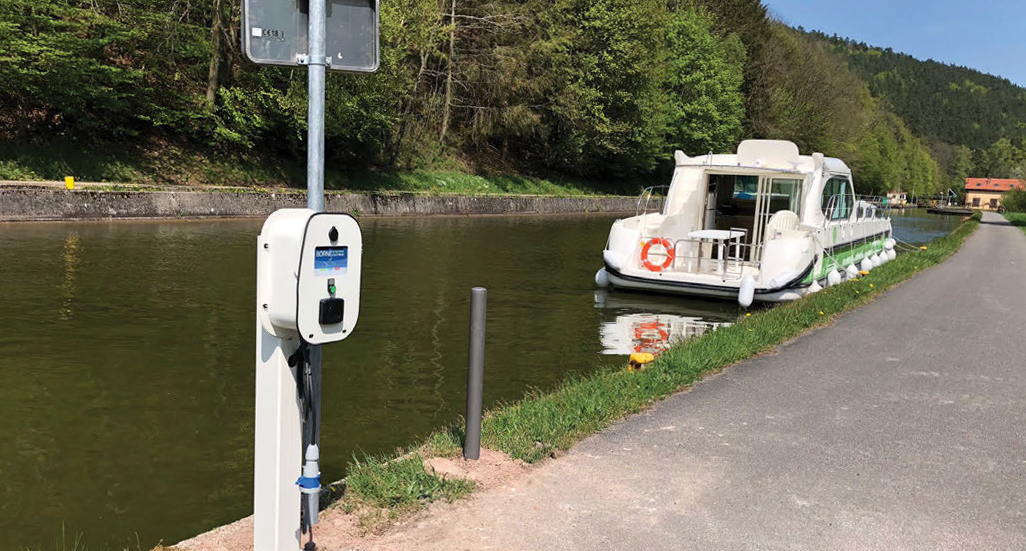
    Photo: ‘Tout vert’ and it only takes two hours to charge! France is well ahead of the UK network with electric hire-boats and newly installed charging infrastructure on some waterways.

    Existing craft

    Boats last a long time, as do their diesel engines. Owners, especially those with few engine hours a year, will be reluctant to convert from diesel to electric drive unless required by legislation, which is unlikely. It therefore follows that most of the existing diesel fleet will be with us for many years to come.

    Given that we don’t wish these boats to be made obsolete by legislation or owners being forced into expensive conversions, we need to find a way of significantly reducing the environmental impact of the existing diesel engine.

    One possibility is to use biodiesel. While not entirely ‘green’ (its manufacture requires use of a small quantity of hydrocarbon) it is a significant improvement on mineral diesel. Using biodiesel at 100% concentration has a number of disadvantages and problems. On our inland waterways, however, we can probably mitigate most:

    1) Biodiesel is manufactured from vegetable oil, and almost any vegetable oil can be used. The most common is palm oil, which gives a biodiesel that thickens in temperatures such as we experience during UK winters. This isn’t a problem when used at low percentages in mineral diesel, as in current road diesel, but it does cause issues at 100%, particularly when fuel lies unused in tanks for a significant period. Fortunately, proprietary biodiesels (using a blend of oils) are now being produced which can resist northern European winter temperatures.

    2) Pure biodiesel burns at a slower rate than mineral diesel and hence high revving, turbo-charged road diesels can struggle on 100% biodiesel. This is not a problem when blended at low percentages into mineral diesel. Most, if not all, canal-boat engines are low-revving and not turbo-charged, and so we would not expect this to be a problem for the majority of craft.

    3) The rubber seals and similar components of some canal-craft engines, mainly in fuel systems, may not be fully resistant to 100% biodiesel. This can be corrected – at a cost. Work would need to be done to identify and convert these engines, but it is believed that most modern ones are biodiesel resistant.

    4) Biodiesel is currently, and perhaps inherently, more expensive than mineral diesel.

    5) Biodiesel is manufactured from vegetable oils, and its production normally uses land which could otherwise be given over to food. In most cases, the oil itself is a foodstuff. For this reason biodiesel has not become the universal solution to road vehicles emissions. Inland waterway use, however, would be relatively small in comparison to cars etc, and so could be acceptable.

    Refuelling and recharging

    Assuming existing boats can be converted to biodiesel, the current refuelling infrastructure could be used.

    Future builds, however, will require more investment, whether we are considering an electric recharging infrastructure or a hydrogen refuelling one. At the moment we’re in a catch-22 situation:
    commercial operators will not invest until the boats to use it exist, and private owners won’t buy the boats until the infrastructure is available. It is unlikely that Government will stump up the cash, as is happening, to some extent, with road transport.

    An electric charging infrastructure does, of course, exist in most marinas and this will be adequate for slow charging of boats moored for significant periods. It would require upgrading for faster charging. This could be adequate for most ‘hybrid’ (hydrogen/electric) boats as envisaged earlier. It is difficult to imagine every visitor mooring on the system being equipped with charging points.

    Hydrogen refuelling stations are more problematic. None exists on the system as far as we know. They will also need a distribution system, probably tankers, to service them. They will be more costly than red diesel pumps and tanks, but the technology is available. Work is currently being done to develop hydrogen infrastructure in the UK, both for road/rail transport and for domestic use, but this is some way off. The natural gas industry is actively looking at using the gas grid to distribute hydrogen for domestic use. This may ultimately develop into a partial solution.

    It may also be possible to develop a network of hydrogen refuelling stations around hire-fleet bases, if enough hire companies could be persuaded to use hydrogen boats. Hire-boats are typically refuelled at base, sent out for one or two weeks and refuelled at the same base on their return. Hire-boats are also replaced at relatively frequent intervals, compared with private boats. This combination could make installing a hydrogen refuelling station at a hire-base reasonably economical, with a hydrogen fleet being available in a short period of time.

    If sufficient bases could be ‘converted’ this would provide a basic network for private boaters to use and hence encourage the uptake of hydrogen boats, eventually leading to further development of the hydrogen refuelling infrastructure. This would only apply to the central part of the system, however, where hire bases are common, and leave a problem for outlying waterways, at least initially.

    Have your say

    This article is not intended to be a final solution to the problem of sustainable boating on our inland waterways. It tries to paint a picture of where we might go and is intended to stimulate discussion, development and the generation of new ideas. Some may disagree with parts of it.

    Photo top: Mothership Marine’s 57ft semi-trad stern with 10kW electric drive and 2kW of solar panels was launched last year. It’s not entirely electric – a 7kW ‘range-extending’ generator is also on board – but it’s not bad!

  • Staying safe afloat in a flood

    Staying safe afloat in a flood

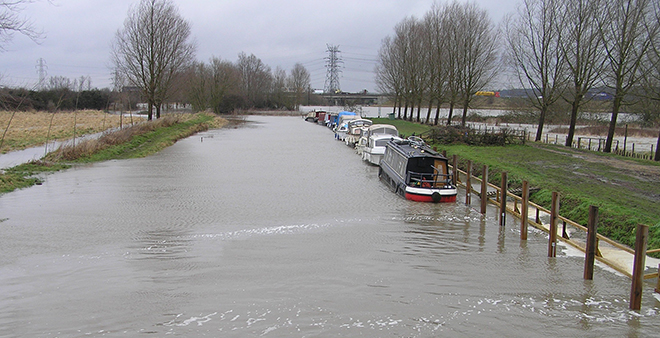
    Mooring matters

    Choosing a secure spot is easier said than done, however, especially when a river is already in flood. Try to avoid shallow banks or steep falls as this increases the chances of your boat listing when the water comes down or, if you have the opportunity, moor in a lock as it provides some protection from floodwaters.

    River Canal Rescue also urges boaters to take into account the flow of water: “Will it push or pull the boat and could it cause problems with other mooring points? Several boats sunk in recent floods because they were subject to water level changes which left them at an angle with outlets allowing water in.”

    Clean out drainage holes

    Drainage holes on the stern deck can easily become blocked with leaves and other debris over time, and become corroded. The risk here is that water may leak into the engine compartment and the alternators and starter motors, compromising charging and even starting the boat. If you’ve only got a manual bilge pump the entire engine room could fill with water. Clean out drainage holes regularly to reduce the chances.

    Ease off the ropes

    Fluctuating water levels will mean any boat tied too tightly is in real danger of listing. This could potentially sink the craft if outlets are submerged and water allowed to ingress. Keep your mooring ropes slack to stay safe.

    It’s also worth ensuring your ropes run to points that can be accessed even in a flood situation, so they can be adjusted to the conditions. If it’s especially windy, check ropes for chafing too.

    Battle of the bilge

    There are three words which could spell the difference between a boat sinking and staying afloat: automatic float switch. If you have a manual bilge pump fitted, and it works – you’ve checked! – it’s no good on unattended craft without a switch.

    Meanwhile, bear in mind that all pumps are reliant on batteries being in good condition and well charged. RCR advises: “Most batteries with a good charge can operate a pump for one week to 10 days with a bilge pump continuously running. To charge the battery, frequently run the engine for a minimum of one to two hours. It’s also worth finding out how long your battery will last on continuous use so if there is heavy rain, you can gauge how often to visit the boat.”

    Wind factor

    Strong flows and difficult river conditions aren’t your only concern in adverse weather – wind can cause havoc underway too. Check the direction it’s coming from before attempting any manoeuvres – it’s all too easy to lose control.

    Stay up-to-date

    Canal & River Trust issues stoppage or restriction notices when flood locks are brought into operation or when a navigation is closed due to flood conditions. You can sign up to receive emails advising of these per particular waterway, or you can check this information at any time on CRT’s website: canalrivertrust.org. uk/notices.

    Meanwhile, the Environment Agency issues Strong Stream Advice whenever flows reach a level that could be hazardous to boaters on its navigations. When Strong Stream Advice is in force, red flags, signs and warning lights at various lock sites are activated.

    Up-to-date information on any strong stream warnings in force on Environment Agency navigations can be obtained by telephoning EA’s Floodline Information Service on 0845 988 1188. EA operates a messaging system to inform boaters by telephone message, text or email, to advise when Strong Stream Advice has been issued or cancelled. You can sign up for these on EA’s website for Anglian waterways (gov.uk/ guidance/anglian-waterways-river-conditionsclosures-and-restrictions) and the River Thames (riverconditions.environment-agency.gov.uk).

    Point plank

    RCR managing director, Stephanie Horton, has a great tip to help prevent a boat drifting onto land when water levels rise: “Position a boarding plank between the boat and the river/ canalside edge and fix it into position on the side of your boat.” This basically acts as a stop.

    She also advises using the engine to keep the craft from getting grounded. However, she warns, “be mindful that as the propeller is at its lowest point, it can easily be damaged if the boat does drift. These options are not advisable other than in emergencies.”

    If your boat does drift onto land, it can be tempting to try and push it back into the water yourself. Timing is everything here – and so is your health and safety. Don’t attempt this potentially dangerous manoeuvre rashly, especially if you’re unable to see under the water.

  • First Silver Propeller Challenge finishers

    First Silver Propeller Challenge finishers

    The intrepid couple who were the first across the finish line were a husband and wife team, Michael and Jo Morehouse, who have been video blogging as Minimal List about their experiences via a YouTube channel and keeping fans updated on social media.

    The Silver Propeller Challenge aims to encourage boaters to visit 20 or more lesser-explored waterways across the UK and it was with a visit to Standedge Tunnel that Micheal and Jo finally made it to their 20th location.

    The couple have been boating the network since May 2017 and found out about the IWA Silver Propeller Challenge after its launch in early 2018. They realised they had already ticked off eight or nine of the destinations and made the decision to go for it and visit as many as they could. Their social media followers grew, with their YouTube channel now having over 10,800 subscribers and well over 1,000 on both Twitter and Instagram. It was this interaction that drove them forward as they knew they were encouraging other people to visit these rarely visited destinations.

    As Michael says, “We appreciate the IWA’s cruise-it-or-lose-it ethos and wanted to highlight some of the gems of these out of the way places. There were some canals where there was no love lost, but others were definitely worth the struggle, including the Ashby Canal and the end of the Montgomery.”

    Michael and Jo Morehouse joined us for an online talk to tell us about their adventures. Watch the recording on our YouTube channel.

  • IWA’s Voice is Heard in Ely

    IWA’s Voice is Heard in Ely

    Whilst IWA would have preferred the land to remain in the ownership of EA, for future navigation income and legacy, the purchase by East Cambridgeshire District Council means that the land will remain in public ownership and as such IWA welcomes the announcement.

    IWA hopes that this will bring a more secure future to the three waterway-related businesses based at the site:  Bridge Boatyard, which has been operating for over 40 years and which is now the only holiday boat hire company on the River Great Ouse, hotel barge Water Nimf and The Boat Yard boat restoration business.

    The three plots of land, amounting to over 300 metres of river frontage in total, had been offered for sale by private auction last summer.  IWA considered that this was extremely short-sighted given that the businesses and moorings at this location bring in an income to EA as the navigation authority, and wrote to EA, the Waterway Minister, MPs and local councillors to raise concerns.  As a result of the number of representations received, EA confirmed to IWA several weeks after the closing date for bids that it was reviewing the situation.

    Bridge Boatyard brings between 2000 and 2500 people on to the river each year on their hire boats, the loss of which would have had a serious effect on the tourism and leisure use of the river and consequently on the economy of Ely and other towns and villages along the river through loss of visitor spend.

    After an uncertain few months for the businesses based at the site, the announcement this week in a letter from EA to IWA, stating that the land would remain in public ownership through its sale to the council, is welcome.

    IWA Eastern Region Chairman, Chris Howes, said “East Cambridgeshire District Council is to be congratulated on its acquisition and stepping in to keep the waterside businesses going.  We understand that the Council has ambitions for the regeneration of this part of the City of Ely and hope that in developing this area the current navigation and leisure activities will be preserved and encouraged.”

  • Using VHF Radio

    Using VHF Radio

    Guidelines on the use of VHF radio by inland pleasure craft on UK freight waterways, including advice on navigation lights, sound signals and navigational safety.

    Download guidelines on the use of VHF Radio (PDF 616KB), prepared by John Pomfret.

    Summary:

    Marine-band VHF radio provides a means for vessel crew to communicate with other vessels and shore station (e.g. ports, locks, bridges and marinas) on operational, navigation and safety matters.

    As well as providing an effective means of calling for help in an emergency, use of marine-band VHF radio can inform you of the presence of large vessels and their intentions, as well as providing a means to call for locks to be prepared or moveable bridges to be swung or raised in advance of your arrival.

    Simply listening to the appropriate radio channel will provide a picture of vessel traffic, which may enable you to avoid meeting a large vessel in an awkward location, for example.

    Availability of radio-communication and establishment of vessel traffic services (VTS) in some areas has contributed to the penetration inland of larger vessels than hitherto, presenting an increased hazard to small pleasure craft.

    Marine-band VHF radio has become widely used on larger waterways, replacing flag signals and to some extent sound signals, so that if your vessels is not so equipped, you may be exposing yourself to unnecessary risks.

    Marine-band VHF radio is obligatory on vessels navigating many tidal waterways, including parts of the Ouse, Humber, Trent, Witham and Thames.

    Portable marine radio sets are now relatively inexpensive and the ship portable radio licence is free. Users will also need to attend a one day course, available in all parts of the country, to obtain the required operator’s certificate.

    IWA strongly recommends that boaters carry marine band VHF radio on all major tidal waterways and on other waterways where locks and bridges are equipped with VHF radio.

    Vessels navigating at night or in conditions of reduced visibility must carry full navigation lights except for narrow canal craft, which only need to carry a single light at the bow on narrow canals and some other waterways.  However, even narrow boats must carry full navigation lights on all tidal waterways and on many of the larger non-tidal waterways.

    Boaters should also familiarise themselves with local signage before venturing onto a large waterway; some waterways use local signs not found elsewhere.

  • Boating at night on inland waterways

    Boating at night on inland waterways

    There are many reasons why a boater may find themselves having to boat at night.  It could be due to illness or emergency, such as a crew member becoming unwell or needing to get your boat past a short-notice stoppage.  It could be due to the timing of a tidal passage, or it could be through miscalculation of the time needed to reach a mooring, or it may simply be through choice.

    IWA supports the principle of being able to navigate at night. Boating at night is something that is allowed for in some but not all navigation authority byelaws, and for commercially operated boats it is often a necessity.  There are some places where it is prohibited, for example on the River Wey, Middle Level and Chelmer & Blackwater navigations – so it is best to check with the relevant navigation authority.  Most hire boat companies also prohibit boating at night, so if you are on a hire boat holiday in the winter you will need to make sure your schedule allows for mooring up before it gets dark.  Boat owners should check the terms and conditions of their insurance.

    There are a few things that boaters should bear in mind, especially if you’ve not been boating in the dark before.

    1.  Headlight

    Ensure your boat has a good headlight, particularly on narrow waterways where you may need it to see where you are going and to avoid damage to your own or other craft.  Bear in mind though that headlights are intended for use in tunnels and can easily dazzle oncoming boaters or towpath users.

    2.  Navigation Lights

    Whilst carrying a headlight alone is permissible for narrow boats on the narrow canal system, for larger craft and on larger waterways, rivers and freight waterways navigation lights are required.  These should consist of a white masthead light (not a headlight), a red side light on the port side and a green side light on the starboard side (neither of which should be visible from behind), along with a white stern light.

    Night boating on the River Thames. Photo by Tim Lewis.

    You should have these navigation lights fitted if you are cruising on any of these waterways, even if you do not intend to do any boating at night, as you may find you have to use them if you break down, or your plans change once you are on the waterway and you need to make a tidal passage late in the day or early in the morning, or you suddenly find visibility is reduced (e.g. due to fog) and there is nowhere safe to moor nearby.

    More detailed information, including requirements for vessels of different lengths and for different waterways, can be found on our boating pages.

    3. Passing Moored Boats

    When boating in the dark try to consider moored boats and the people who may be on board – especially if boating late into the evening, through the night or very early in the morning.  Sound travels on the water, so avoid having to shout to your crew, and slow well down past moored boats (pass even more slowly than you would during the day) to minimise disturbance.

    Passing moored boats. Photo by Paul Strudwick

    4. Have a Torch to Hand

    Make sure that your instruments are visible in the dark.  Head torches are great inventions and extremely useful when boating in the dark, especially when operating locks or mooring; however, be careful not to dazzle others by moving so that the beam shines in their eyes.  Having a hand held torch close to the steering position can also be a good idea – but bear in mind that bright lights will affect your night vision. Having a supply of spare batteries for your torches is also sensible.

    5. Navigating Your Route

    Make sure that you are familiar with your route, and have appropriate maps, guidebooks or navigation charts to hand, so that you know when to expect junctions, locks, bridges and bends and can recognise individual lit navigation marks.  Take particular care at these places and in particular take extra care if operating locks at night (where this is permitted). If you are boating single-handed give serious consideration to the risks.

    Beware of overhanging bankside vegetation, on cloudy or moonless nights in particular, and especially on rivers keep a look out for floating objects.  Depending on the surface material, towpaths or river banks may show up more than the darkness of the water in the waterway, and you can sometimes use the towpath or bank to work out which way the canal or river goes around a bend.  Night boating on rivers or larger waterways can bring other challenges and you will need to be on the look out for weir signs and navigation channels that may not be so obvious in the dark.

    6. Let Someone Know

    Make sure someone else knows where you are going, have some form of reliable communication on board (preferably marine band VHF radio on larger waterways where this is in use) and have an anchor ready for deployment in an emergency (and know how to use it!).  Even if you don’t wear a lifejacket the rest of the time, it can be a good idea if boating in the dark or in very low temperatures (immersion in very cold water is more likely to lead to life-threatening situations).  IWA advises against boating in the dark in other conditions with increased risks, e.g. floods, mist or fog, extreme ice or snow, etc.

    Photo-top: Boating at night on the River Weaver. Photo by Steve Wood

  • So you want to rent a boat?

    So you want to rent a boat?

    Article by boater Kate Saffin with additional contributions from the London boating community.

    There are regular requests for boats to rent. However, be warned – this isn’t a guide to finding a boat to rent. It’s a summary of why you will find very few, what is realistic and what to be cautious of if someone offers you something that looks too good to be true.

    Official renting

    First, and most important, letting a boat is only permitted by Canal and River Trust if the boat has a permanent residential mooring, a commercial licence, insurance and boat safety checks (just like all the holiday hire boats you see around the system).

    Read Canal & River Trust’s guide to renting or hiring your own boat.

    Unofficial renting

    Unofficial renting, is where there is a boat without a home mooring, or one on a leisure mooring.  In this instance you are not renting a home, you are simply paying for the use of a ‘chattel’, a possession.  This means that none of the legislation designed to protect tenants applies. There is a good summary of the issues on the Landlord Law Blog.

    Photo: Regents Canal – Tim Lewis

    Why it’s hard to find a boat to rent

    You will rarely find boats advertised to rent because residential moorings are few and far between, even in London where there are more than on other parts of the system. However, boats to rent on residential moorings do turn up occasionally and are often managed by estate agents. These agents may not know very much about boats, so if you do find one, take someone with boat knowledge with you when you go to look, and don’t be fooled by nice decor. By going through an estate agent, at least you will have some recourse to law if you find something doesn’t work as you expected.

    Then there are some boaters who want to let their boats but aren’t on a residential mooring and don’t have the appropriate licence, insurance and boat safety certificate. Those who know they are doing something under the radar fall into two categories:

    • First, the boater who is going away for a period of time and wants to let the boat so that it is looked after and costs are covered.  They rarely advertise because CRT may become aware that the boat is being rented and refuse to renew the boat’s licence. They will tend only to let by word of mouth to trusted friends of friends.
    • Secondly, there are a few exploitative individuals who own several boats and choose to run an illegal letting business – they too will have networks they operate through that they don’t publicise.

    Then there are those who are looking for someone to look after their boat because they need to be away – perhaps working abroad for a few months. It is permissible to have a ‘boat sitter’ as long as they are not charging. They rarely advertise because the boat is their home, and they are very unlikely to let someone they don’t know live on it in their absence. They do not want to return to batteries that have been damaged or to letters from CRT because the boat hasn’t moved far enough. They will tend to look for a suitable sitter by word of mouth. Again it will be to trusted friends or friends of friends.

    So, in a nutshell, you will very rarely see a boat advertised to let. And if you do, please check it out carefully. Be particularly careful of the person who implies that you will have the same legal deal as renting a flat (you won’t).

    Some concerns about renting boats

    These are the some of the concerns that experienced boaters have expressed about renting a boat.  These are particularly aimed at those who have no experience of boating and are renting from a stranger.

    “Renting a boat which doesn’t comply is the same as someone driving a car without Tax, MOT, and Insurance. If a non-compliant rented boat explodes, catches fire etc. it is unlikely to be covered by the owner’s insurance which will have been declared null and void. Any third party damage or injury will also not be covered.”

    “ ’I would be happy with a continuous cruiser licence’ – but CRT would not. It is therefore technically not legal [to rent a boat without a residential mooring], which you might get away with for a while, until something goes wrong and CRT decides to take the boat’s licence away for breaking the terms and conditions and you lose your home.”

    “You have no recourse to letting law.  …I witnessed a girl working on one of the cafe boats bolt down the towpath screaming ‘That’s my boat. What’s it doing here! What have you done with my dog!?’ just this summer. Landlord dispute – took the boat (apparently abandoning the dog and either stealing all the girl and partner’s belongings, or dumping them on towpath).”

    “If you do a share boat or rent to buy, please make sure you get a proper contract drawn up, preferably by a solicitor. Not going into fine detail, but …I’ve heard some very odd stories indeed – one where the tenant was made homeless and evicted from the boat he was two months from owning (see note regarding ‘rent to buy’ below) and another where the tenant sold the boat with no legal comeback.”

    This is not to say that it will go wrong, just that it might.

    Photo: Camden, Regents Canal

    Other considerations and options

    There are some additional considerations and options for renting. These have also been supplemented with contributions from the London boating community.

    If you still want to pursue the idea:

    • Don’t do it because you think it will be cheaper – generally it isn’t, or not much, especially if you are renting legally.
    • For most of us living on a boat is a lifestyle choice not primarily a financial one. You need to want to empty a toilet regularly (and worry about whether the facilities will be in working order to do so), manage a temperamental solid fuel stove, live with running out of gas at midnight, wonder what that strange noise from the engine/water pump/bilges is, worry about security on the towpath and whether your bike is still on the roof…
    • You can try a long term commercial rental if you want to be on the move or can’t find a boat on a mooring. The rent (£940-£1400/mth) will be similar to a flat in London and reflects the level of maintenance, insurance and support that is needed. Google ‘long term narrow boat hire’ and you will find a few companies plus some other possibly useful links.
    • Note: searching on terms like ‘boat’, ‘rent’, ‘London’ will bring up a number of old adverts that contain very out of date information – “When I lived aboard I generally lived in the East London area…” – try that now and you’ll be in trouble very quickly!
    • Learn how to handle a boat– there are numerous centres that offer the RYA Inland Helmsman training. You can search RYA’s website for a centre near you.
    • Walk the towpath, get to know boaters. Look for opportunities to volunteer and get to know people. There are a regular clean ups around the London waterways, some organised by boaters (watch for details on the London Boaters Facebook page), others by local groups on the River Lea or the Lower Regent’s Coalition or IWA London Branches.
    • Check with any marinas in the area as to whether they allow their residents to rent and if so, keep an eye out for any opportunities.
    • You might also find the occasional room advertised in a shared boat – these are usually on the bigger static houseboats to be found on the Thames. Search terms; ‘houseboat’ (actually a static structure that just happens to be on water), ‘rent’, ‘London’.
    • Consider buying a boat.

    Things to check

    • Check whether you are being offered a legal rental – if so, make sure it meets the CRT requirements as above. Check that the licence, boat safety and insurance are legal for renting (because it they’re not, you may be the one to suffer).
    • If it doesn’t meet the legal requirements and you still want to take the risk, get an agreement drawn up by a solicitor that is specific to the boat and your circumstances – an off the shelf shorthold tenancy agreement will have no standing in UK tenancy law.

    Boat Sitting

    Some things to check when boat sitting:

    • If you are boat sitting check:
      • that the owner has cleared it with their insurers,
      • when the last boat safety certificate was done, and that any recommended work has been done,
      • that you know how everything works, particularly the smoke and CO alarms,
      • that you have someone to call on for advice and help – on a day to day basis as well as in an emergency
    • If the boat has no home mooring you must make yourself familiar with the current (and changing) rules about movement – if you don’t you could put the owner’s licence at risk (and thus your home). Currently this means covering a range of at least 20 miles in the course of a year and moving every 14 days (or more often).

    Rent to buy

    Finally a note on ‘rent to buy’ from London Boater, Paul Powlesland.

    “There have been a few posts recently about people wanting to buy boats in instalments. However, you should be aware that where possession and full ownership isn’t exchanged at the same time, there are serious risks for both the purchaser and the seller.

    From the seller’s point of view, if the buyer stops paying the instalments, they can sue the buyer. However, depending on the facts of the case, if the buyer has sold the boat on to a third party purchaser for value without notice (the so called ‘equity’s darling’), there is a strong chance that they will not be able to recover the boat and they will probably have a tough time tracking down the buyer who has made off with the cash.

    It’s not all rosy from the buyer’s point of view either, as there have been cases where all the instalments were paid, but the seller then claimed that it was merely rent and demanded back possession of the boat.

    In short, consider very carefully before entering into an agreement to buy or sell a boat in instalments.”

    Please note, all of the information in this blog is meant to serve as general guidance rather than specific advice.  If you want proper advice on a specific case, please seek a lawyer or qualified person.

    Photo-top: Little Venice on Paddington Arm of the Grand Union Canal by Adrian Rayson

  • How to Moor a Boat

    How to Moor a Boat

    Learning how to safely moor your boat is an essential lesson to any new boater.  However a reminder for the experienced boater can also be valuable and can lessen the chance of damaging their boat, the bank or even another boat.

    Read on for an overview of how to moor your boat, what knots to use and the safety precautions to take.

    Encourage everyone to use long lines for mooring; it is good practise to reduce load and wear on rope, bollards, bank piling, mooring pegs, structure of the boat, boat bollards, and also to reduce the damage done when the water level changes more dramatically.

    The last one may be rare on the inland waterways, but any breach in a canal or change in level for emergency reasons, will result in damage to boat and/or bank (i.e. to both boat owner AND navigation authority), or of course pull your mooring pins out.

    Those who moor sensibly cause little or no damage.  Those who moor carelessly with short rope are either hanging there, damaging the boat, possibly causing the bank to give way, or drifting down-stream with rope in the water.

  • Historic Narrow Boat Features

    Historic Narrow Boat Features

    1.  Livery

    Carrying companies had different colour schemes or liveries, which helped with identification from a distance.

    Fellows Morton & Clayton’s early livery was black and white with a red dividing line but this changed in 1921 to red, green and yellow.

    The Grand Union Canal Carrying Company had four liveries, from the two-tone green of the original Grand Union Canal Company subsidiary, Associated Canal Carriers, then two tone blue, then the red, white and blue “coronation” livery to celebrate the coronation of George VI in 1937, and finally a wartime austerity livery with less lettering.

    2.  Signwriting

    Cabin signwriting on working boats tended to include a lot of information, some of which was required by law through the original canal company regulations. As well as the name of the boat and the fleet number, the cabin sides were painted with the company’s name and address, and in later years the telephone number.
    Image: Town Class Motor Dover in full GUCCCo livery and signwriting

    3.  Registration Number

    This number painted on the cabins of working boats indicated that the cabin had been registered as fit for habitation by the local authority. The Canal Boat Act of 1877 allowed local authorities to inspect boats and restrict the number of people per cabin, although they weren’t required to do this until the Act was amended in 1884.

    4.  Cabin Decoration

    It is thought that the families moving aboard (see evolution of the narrow boat) gave rise to the high level of decorative paintwork, brass and furnishings found on the long distance boats.
    Image: Narrow boat Friendship, now at Ellesmere Port Boat Museum, showing high level of decoration and painting

    5.  Rams Heads and Swans Necks

    On horseboats and butties, the rudder and tiller arrangement is known as the ‘elum’.  The rudder is the large blade (usually wooden, even on a metal butty) that allows the boat to be steered, with a detachable handle (’tiller’) connected to the top of the rudder (called the ‘rams head’).  A butty tiller is curved and can be turned the other way up when not in use to allow more room for getting in and out of the cabin.  Sometimes a horse’s tail would be hung from the rams head as decoration.

    On motor boats a smaller metal rudder is used to direct the wash from the propeller in order to steer the boat, and the tiller is connected to it by a solid ‘Z’ shaped metal bar known as a ‘swans neck’ or ‘swan neck’.  The horizontal bar of the tiller used to steer with is often made of brass, is held in place by a ’tiller pin’ and is again detachable to give more space when moored up for getting in and out of the cabin.
    Image: Thomas Clayton’s horse boat Gifford, also at Ellesmere Port, showing tiller in up position

    6.  Gunwhales and Cants

    On working boats, the top of the hull sides were traditionally finished in a solid strip of wood (even on metal boats) known as gunwhales (or gunnels).  On many historic boats these days they have been replaced with metal.  On motor boat cabins the gunwhales continue around the cabin, to allow access from the back deck to the engine room (also known as the ‘engine ‘ole’) and the back of the hold.  Butty cabins don’t have gunwhales, as in the absence of an engine room, there is generally a door giving access into the hold.  This gives more width inside the cabin.

    ‘Cant’ is the term for the continuation of the gunnels around the front or back decks of a narrow boat, again traditionally made out of wood, and therefore easily replaceable following wear and tear, but often these days replaced in metal.
    Image: This photo shows the cabin of a motor boat (with gunwhales) and the cabin of a butty (without)

    7.  Tumblehome

    A nautical term originally used to describe the shape of a ship’s hull, in historic narrow boat terms tumblehome refers to the inward slope of a cabin’s profile.  This change in dimension across the top of the cabin roof compared to the cabin at gunwhale height is an important feature of modern narrowboat design.  Too great a tumblehome will restrict the living space inside, but too little and the cabin is at risk of being damaged on bridges and tunnels.
    Image: Town Class Motor Whitby showing the tumblehome on the cabin

    8.  Pigeon Box

    A ‘pigeon box’ is a small raised box on the cabin roof with an opening pitched roof, often incorporating small brass portholes, used for ventilation and letting light into the engine room on a motor boat.  Some boats had simpler a simpler ‘flat box’.  It is thought that the term ‘pigeon box’ arises from the similarity in shape to baskets used for transporting carrier pigeons.
    Image: Carrying companies tended to supply flat boxes or plainer pigeon boxes, as shown here.  The more decorated pigeon boxes tended to be owned by the boatman himself and would be taken with him if he changed boats.

    9.  Inside the Cabin

    The term ‘boatman’s cabin’ is a modern one, and it is more traditional to refer to the living cabin as the ‘back cabin’ or simply the ‘cabin’.  Over generations since narrow boats were first used on the canals (see evolution of the narrow boat), the most efficient design for a cabin evolved and most back cabins have identical layouts, regardless of what carrying company the boat was built for. On the left (facing forwards) inside the door (to keep the steerer warm on a cold day) is found the cooking range. In front of that is the table cupboard, with a vertical door which can double up as a table when lowered. A drawer below the table is known as the ‘knife drawer’ (and sometimes as the ‘crumb drawer’ due to the crumbs landing in it as the table is put away). In front of that is the ‘bed ‘ole’ with a cross bed that folds out across the width of the cabin.  On the right side of the cabin is a simple bench for sitting on, which can also be used as a further bed, and is known as the ‘side bed’.
    Image: A tantalising glimpse into a back cabin – despite the pride that boatmen felt in the overall appearance of their boats, cabins were always very private places and it was considered rude to look inside someone else’s cabin unless invited.

    10.  Water Cans

    There is no running water or plumbing in a back cabin, and the water supply lives on the roof in a water can (or two).  Many people call these water cans ‘Buckby Cans’ but in fact a ‘Buckby Can’ was specifically a water can that had been bought from Buckby on the Grand Union Canal. Kettles are filled directly from the water can (by taking the kettle out to the water can rather than vice versa). Frequent water points would have been essential in the days before boats had large water tanks, and were often at a lock, so that a water can could be filled while going up or down a lock without wasting any time.

    Enamel bowls would have been used for washing people and clothes, along with a ‘dipper’, a shallow basin that could be used for scooping water out of the canal.
    Photo: The water supply for the whole family – a system still used today by many owners of unconverted historic boats

    11.  Mop and Water Can Arrangement

    You may have noticed that on working boat back cabins the mop is always in a particular place – leaning up on the water can.  This tradition goes back to horseboating days, and relates to how horse boats passed each other without getting the towlines tangled up, given that both horses would be on the same towpath.  One towline would be slackened by the horse slowing down, so it passed under the other boat, while the position of the mop helped the first one’s towline ride up over the obstructions on the cabin roof, with the steerer just lifting it over the range chimney once it was in reach.
    Image: Mops and water cans at IWA Waterway Festival at Beale Park in 2010

    12.  Cratch Boards

    The ‘cratch’ is the name given to the area at the front of a narrow boat’s hold, protected by a ‘cratch board’ (also known as a ‘deck board’).  The shape is triangular with the top of the triangle cut off.  Often highly decorated, it supports the top planks and protects the cargo.
    Image: A beautifully decorated cratch board on Malcolm Braine’s boat Cactus, painted specially for the Queen’s Diamond Jubilee in 2012

    13.  Cloths and Planks

    Cloths supported by a wooden frame are used over the hold to protect perishable cargoes.

    The ‘top planks’ form the top of the tent-shaped arrangement, with diagonal ‘uprights’ spaced along the hold.  ‘Stands’ are the vertical supporting posts which are usually decorated, as is the ‘mast’ which is the first upright support for the top planks, which includes on its top a ‘looby’, a spring loaded pin which protrudes above the top planks and is used for towing.  At the stern of the hold the top plank rests on a ‘cabin block’ on the cabin roof.

    When a boat was empty, or carrying a cargo such as coal that did not require protection from the elements, the top planks would be lowered to gunwhale level, where they would rest on the horizontal ‘beams’.  The ‘beams’, usually three down the length of the hold, protect the ‘chains’ which are positioned across the hull and can be used for pulling in the sides to prevent spreading.

    Sometimes just side cloths would be used to prevent water splashing in if there was little freeboard.
    Image: This photo of Southern Cross at the Braunston Historic Boat Gathering in 2014 shows the cratch and top planks in position at the front of the boat, and the planks lowered along the rest of the hold.  Note the smartly painted stands and mast (which consists of the decorated wooden ‘boxmast’ and the metal ‘topmast’ and ‘looby’ above the planks).

    14. Uxters!

    There are other features to be found on historic narrow boats, and stories behind them, but for now this article will finish with ‘uxters’ or ‘uxter plate’.  Uxters is a little known word (which might be useful if playing Scrabble!) used to describe the (usually) concave metal bottom plate below a historic motor boat’s counter stern, immediately in front of the ‘skeg’ (the metal bar that the rudder is attached to and that protects the rudder from hitting obstructions) and behind the ‘swim’ (the deeper part of the hull).
    Image: This photo shows Skylark, built by WJ Yarwoods & Sons of Northwich for WH Cowburn & Cowpar Ltd (see Blog 2 in this series) in dry dock for blacking.  The photo is looking forwards and shows the rudder, the propeller and the swim (the back of the hold as it narrows towards the back of the boat).  The “uxters” is the bottom plate above the propeller.

    This is the third feature in our series on historic narrow boats, which includes the evolution of the narrow boat and a historic boat spotting guide.

  • Getting to Grips With Single Handed Boating

    Getting to Grips With Single Handed Boating

    IWA supports the principle of single handed boating, but acknowledges that risks of accident are much greater if you are boating without crew, and recommends the following advice for people boating on their own.

    Planning ahead

    Single handed boaters should take responsibility for their own actions in the knowledge that the risks associated with boating on their own are greater than with a crew and they should limit those risks according to conditions.  For example, someone who frequently single hands their boat through locks in normal weather conditions may decide to postpone his or her trip due to extreme conditions such as ice or snow.

    When boating single handed it is sensible to plan ahead and to have an idea of where you intend to get to each day, especially on rivers or waterways with few places to moor.  It’s also a good idea to plan for practical things, such as ensuring that you have enough food and drinks easily to hand and extra layers of clothing or a waterproof jacket easily accessible in case the weather should change.  Some boaters prepare hot drinks in a flask, before they set off, to drink later on.

    Mooring and setting off

    A centre line (typically attached to the roof of a narrow boat or to bitts or cleats on the stern quarter for barges or cruisers) of a good length is essential for single handed boating for a number of reasons.  It is useful when mooring up, enabling you to bring the boat alongside the bank before then making it secure at each end.

    A centre line is also handy for temporarily mooring up your boat at the lock landing stage while you get the lock ready, but make sure it is tied up tightly enough or that the engine is left in forward gear to hold the boat in, so that one end of the boat won’t swing out in front of boats coming out of the lock.  A centre line can also be used for those occasions when you need to moor up very briefly to use the toilet or boil the kettle, for example, but remember that if the rope is attached to the boat roof, passing traffic may make the boat tilt significantly.

    Having the centre line coiled ready near the steering position means you can step off the boat with rope in hand. Photo by Alison Smedley

    The centre line should be long enough for the end to be coiled up and placed close to the steering position, so it can be picked up easily as you step off the boat.  Another handy tip is to position the end of the rope to the side of the cabin closest to the towpath and move it across if the towpath changes side or to have two ropes, one on each side (especially on a larger barge or cruiser), so that you can always easily step off the boat with rope in hand.  On a river or tideway with noticeable flow, it is essential never to step off the boat without a rope in hand; if the boat drifts away while you are ashore there will be no-one on board to bring in back in again!

    When you set off from a mooring, make sure you coil the mooring ropes neatly so that they are ready to use when you want to moor up again later on. It’s a good idea to have the mooring hammer and pins handy too.

    Locks

    Allow extra time – it will probably take you longer to get your boat through a lock than it would with crew, as you will have no-one available to go ahead to prepare locks.

    When operating locks single handed it’s a good idea to do things as efficiently as possible so you don’t get over tired, although you will find that there is no way to avoid a certain amount of walking backwards and forwards.   Take it steady and don’t run, as that may lead to a fall or slip.

    Experienced single handed boaters will adapt their own technique for going through locks, which will be based on their knowledge of how their boat behaves in different types of locks and in certain conditions (eg wide or narrow locks, going up or going down) and on knowledge of specific hazards with locks on a particular waterway which may result in the boat getting caught up (for example wide gaps between balance beams and planking on river locks which may catch your bow or lockside chains on which a hard-chined narrow boat may hang up).

    A narrow lock with a lock ladder makes for easy work for the single handed boater.  Photo by Alison Smedley

    Most locks these days have lock ladders fitted, which makes life much easier for the single handed boater.

    Just as when locking with a crew, it is essential to keep an eye on what the boat is doing at all times and to check that it is floating freely and hasn’t got hung up anywhere.  Even in narrow locks it is always sensible to have a rope (ideally a centre line) on the lockside with you, so that you can pull the boat out of trouble if necessary and can move it to a ladder allowing you to board.

    On river navigations and canals with wide enough locks, it’s always best to share locks with other boats in order to save water.  If the other boat has plenty of crew they may be happy to operate both sides of the lock but don’t assume so and be prepared still to do your bit.

    On some larger waterways there is a requirement for marine band VHF radio (and it’s a good idea on larger waterways even where it’s not obligatory), in order to communicate with lock and bridge keepers and other vessels.  On certain larger waterways, such as parts of the tidal rivers Ouse and Trent, the byelaws prohibit single handed boating and you may be denied access to the tideway at places such as Goole if you are alone, so you will need to find some crew if your journey includes any of these stretches.

    Lift and Swing Bridges

    Moveable bridges, just like locks, should have a landing area where you can tie up the boat while you open the bridge, then return to the boat and take it through, tie up again and return on foot to close the bridge.  Some moveable bridges still have the operating controls on the offside, which can make it difficult for the single handed boater and operation usually involves having to nose the boat right up to the bridge in order to get off, so that you can get back on again once you’ve opened the bridge in order to move the boat through, and then carry out a similar procedure once you are through the bridge in order to close it again.  IWA policy is to press for proper landing stages to be provided on the offside in these cases but there are still bridges where the only option is to climb over bridge railings with rope in hand.

    Tunnels

    Before entering a tunnel it’s worth making sure that you have a torch to hand (and a spare in case the batteries fail), and a waterproof jacket, as most tunnels tend to have water dripping from the roof and there won’t be anybody in the cabin to pass out a coat to you!

    Caldon Canal, Leek Tunnel

    Weather conditions

    Ice, snow, rain, hail and strong winds are all types of weather that can make single handed boating more difficult and when these weather conditions are extreme it is probably advisable to postpone your trip.  Don’t forget the effects of too much sun either.  If boating in hot weather or a heatwave it is advisable to wear a hat and sunscreen, make sure you have plenty of cold soft drinks to hand and be prepared to moor up for a siesta during the hottest part of the day.

    Safety considerations

    Even if you don’t wear a lifejacket all of the time, it can be a good idea if you are boating on your own in certain conditions, such as on rivers, through tunnels, in the dark or in cold weather conditions (immersion in very cold water is more likely to lead to life-threatening situations).

    On rivers and tidal waterways (and in tunnels) falling overboard when alone may be extremely hazardous, even if wearing a lifejacket.  On a boat steered with a tiller, contact between the rudder and floating debris when the boat is moving at a reasonable speed can be enough to unbalance the steerer.  Risks can be minimised by steering the boat from the safest position possible; for example on a traditional-stern or semi-trad narrow boat, stand in the hatches with the doors closed behind you, so that you can only fall inside the boat.

    Wearing stout shoes with a good grip is sensible and do take extra care when stepping on and off the boat in the rain, ice or snow, as surfaces are likely to be slippery.

    It’s good practice to keep the roof of your boat clear so that you can get on and off using the roof when locking. Lock ladders are rarely in the right place (and in the bottom of a narrow lock it is difficult to walk along the gunwales to get to the lock ladder), so you will need a way of easily getting on to the cabin roof (a small folding metal step is easily installed on the cabin side if you don’t already have one) from the steering position.

    Single handed boater at Fradley on an early spring day. Photo by Alison Smedley

    It’s a good idea to know where you are along the waterway and what feature, such as a junction, flight of locks or a tunnel, is coming up next, so you might want to make sure you have a waterway guide showing the whole of your route handy.  If you are boating on a river or tidal waterway it’s sensible to know where there are safe places to moor in an emergency.  It’s also advisable to ensure that your anchor is ready for use at all times on rivers and tidal waterways.

    These days most boaters have a mobile phone and when boating on your own this is recommended, as you may need to call for help in the case of an accident or sudden illness.  It’s a good idea to know roughly where you are along a stretch of waterway as if you can inform the emergency services of the nearest bridge name or number this can usually help them to locate you.  It can also be a good plan to make sure that family or friends are aware of your route and to arrange to make regular contact with them.

    Many of these suggestions equally apply if you are boating with a crew, so whatever trip you are planning, with or without friends and family, do stay safe.

  • The Pros and Cons of Living Afloat

    The Pros and Cons of Living Afloat

    Thinking of embracing a life afloat but not sure what to expect? For most people it will mean a huge lifestyle change and isn’t a decision to be taken lightly. Alison Smedley, chair of IWA North Staffs and South Cheshire Branch, spent seven years living on a boat. Find out about some of the highs and lows of her experience living aboard a narrowboat.

    “Isn’t it Cold in Winter?” people used to regularly ask me, during the 7 years I spent living afloat.  “No”, I used to reply “It’s nice and snug with the stove going”.  That wasn’t the reality, of course, I used to gloss over the mornings when I would wake up shivering under the duvet with ice on the inside of the windows because the stove had gone out during the night, or because I’d arrived home too late the night before to re-light it.

    People often have an image of life afloat as being idyllic and peaceful.  It’s nothing of the sort, in my experience.  It can be fun and exciting, but it can be cold, hard work and lonely too.

    Photo: Mopping the decks

    During much of my 7 years living on a narrow boat I travelled around a lot, and religiously moved the boat every two weeks.  For a lot of this time I was working as a secretarial “temp”, so was able to move from town to town and pick up work anywhere.

    As well as wanting to comply with the rules, moving every 2 weeks was necessary for practical reasons, being an opportunity to fill the water tank and visit a boatyard to get the toilet pumped out and occasionally fill up with diesel and get gas bottles replaced. I would often plan this for a weekend and invite friends over for a day trip or a weekend on the boat, but the rest of the time I had to do it on my own, which could be challenging and wasn’t quite so much fun in the rain.

    Photo: Moving from one place to another can often make for a lovely day out with friends

    One winter the canal froze for weeks and I couldn’t move the boat anywhere.  I managed to obtain sacks of coal and a new gas cylinder by dragging then along the towpath through the snow from the nearest boatyard, but the available water in the water tank got less and less as it froze in layers above the reducing amount that was still liquid.

    Photo: Snowed in at Uxbridge

    One peculiarity of living on a boat is that unlike bricks and mortar it doesn’t necessarily stay where you put it!  I once woke up in the middle of the night to the sound of rushing water to discover the boat had come adrift (strong winds had pulled out the mooring pins) and the boat had drifted some distance along the canal into the lower entrance of a lock, with excess water pouring over the bottom gates.  Quite a shock when I opened the front doors to a cascade of water!  Another time the boat was purposefully set adrift from the mooring rings I had tied to, and I woke up to find the boat on the other side of the canal along with 2 or 3 other boats that had been untied.

    As a female in my early twenties, my personal safety was something that other people, particularly my parents, used to worry about – walking home along a dark towpath late after a night out didn’t particularly worry me at the time, but looking back I realise that I was lucky not to have had any serious mishaps.  One time the boat was broken into and a camera and jewellery stolen – fortunately I wasn’t on board at the time.

    Photo: You may decide to make modifications to your boat, these photos show a corner cupboard being replaced with a solid fuel stove.

    Although I am a fairly practical person, I don’t think I would have survived at all without a circle of friends who used to come along and help me sort out flat batteries and an engine that wouldn’t start, or help installing a wood burning stove, or helping out in dry dock.  Of course often these events turned into social occasions, and I like to think that I hosted some pretty good parties during those seven years!

    Photo: First dry docking of many – Tardebigge Dry Dock

    When people heard that I lived on a boat, they would often ask me about it as a cheaper way of living.  My response was always that you should want to live on a boat for the right reasons, because you are interested in boating and the waterways, and not just because it might seem like a cheaper option than a flat or a house.

    In my experience, barely a week would go by without some issue to deal with – a storm bringing a tree down on the boat, the engine not starting, going to moor up after moving one weekend to discover I’d left the mooring pins behind ten miles away, but the sense of satisfaction of owning and living on my own boat was something that for me made it all worthwhile.


    Photo: The pleasure of steering your own boat down the cut

    Living on a boat might seem cheap compared to living in a house, but instead of gas, water and electricity bills, and repairs to plumbing, roofs, boilers and the like, on a boat you have diesel and gas to purchase, toilet contents to get rid of (whether that is emptying it yourself or paying for a pump out), repairs and regular maintenance to the hull and superstructure, and maintenance, repair or replacement of equipment such as engines, generators, water pumps, bilge pumps, shower pumps, inverters ( there is an endless list of equipment that people can have on their boats).

    Photo: One day you may decide a complete re-fit-out is needed! Photo: Alison decided to take out the pump out tank and replace it with a porta potti – not a pleasant job!

    Many people who live afloat these days rely heavily on the various trading boats who do a sterling service plying up and down our waterways selling solid fuel, gas and even offering toilet pump outs.  Although even these boaters have to fend for themselves if the canal ices over for weeks and the service boats can’t get to them.

    Photo: Some parts of the waterway system have a trading boat offering solid fuel, diesel, gas and even pump-outs

    There are many things to consider when contemplating a life afloat:

    • Licence – you will need a licence for the navigation authority for the river or canal that you plan to be based on, and visitor licences for any waterways in different navigation authority ownership that you may wish to visit.
    • Mooring – if you want to live in one place, so you can attend college or get to your place of work, for example, and not be continually moving your home around, you need to find a mooring (preferably before you take the plunge and buy a boat). Suitable moorings in popular areas such as London are scarce and can be very expensive.
    • Alternatively, on Canal & River Trust waterways  you can declare yourself as ‘continuously cruising’, which means you don’t have to pay for a mooring, but you will need to move your boat at least every 14 days (sooner if moored at a visitor mooring which specifies a shorter period).  And this doesn’t just mean moving round the bend to the next road access point.  If you have a job based in one place, or other local commitments such as school for your children, this isn’t a practical option, and you should look for a permanent mooring.
    • Insurance – in order to obtain a licence you will need to take out at least third party insurance.  However, if all your worldly goods are on board you may wish to take out full insurance on the contents too.  Boat fires and boat sinkings are both things that can and do happen.  Boats also tend to be less secure than houses and boaters often find things stolen from their roofs or decks even if the cabin hasn’t been broken into.  If the boat is more than 20 years old then most insurance companies will insist on regular hull surveys (out of the water) – a considerable expense.
    • Are you practical?  Can you fix the engine (or bilge pump, water pump, etc) when it breaks down, or will that be an additional expense?
    • Can you actually steer and manoeuvre the size of vessel you are contemplating?  Why not book yourself on an RYA Helmsman course to learn some useful skills.
    • Boat safety – boat fires and carbon monoxide poisoning occur on board boats for various reasons – you need to be aware of your own safety and not block air vents or escape routes. Every 4 years you will need to pay for a Boat Safety Examination – and heed the advice of the examiner in keeping your boat safe for you and other users of the waterway.  Boat fires happen more often than you might think, and could happen on a boat moored next to you, however safe your own boat is.
    • Water – filling up the water tank is something that you will have to do more frequently than you might think if you are living aboard, and it could be some hours boating to the nearest water point.  You’ll very quickly become conscious of the amount of water you use washing up or having a shower.
    • Heating – How is the boat heated – it’s a good idea to have two sources of heat so that one can be a backup in the event of running out of fuel or something breaking down.  Diesel and gas can be used for heating systems, and most boats also have a solid fuel stoves which can burn wood as well as solid fuel (smokeless fuel is not required by law even in a smokeless zone but is a good idea to avoid annoying local residents).  You will have to think about how you will transport solid fuel, gas and diesel if not moored at a boatyard which sells them.
    • Toilet – What type of toilet does the boat have, and is it the best type for you?  A pump out tank needs emptying less often but can only be emptied at certain places, with a cost involved.  A “cassette” style toilet has a small portable tank that you can empty yourself, at “sanitary stations” provided by the navigation authority, at no cost, but will need emptying more often.  It’s a smelly job and not for the faint hearted!  It also has the benefit of being more portable so if you can’t get the boat itself to a disposal point you can still take a full cassette there.
    • Internet access and mobile phone signal are things everyone takes for granted these days, but you will need to think about how these are going to work for you on a boat, particularly bearing in mind a steel cabin’s tendency to affect signal.  There are various solutions available and you should research them if technology of this type is important to you.

    Some additional things to consider if going down the “continuous cruiser” route:

    • Planning ahead – You will have to think about where you are going to move your boat to every time you move, and plan your progressive journey ahead. Some parts of the country, notably London and the Bath/Bristol area, are getting extremely overcrowded, making it very difficult to find a mooring when you do move.
    • Transport – If you own a car you will have to work out where you will keep it, and how you will retrieve it each time you move (a bicycle comes in very handy here).  You may also find that you will be using public transport a lot more – another added expense.
    • Electricity – These days electricity is needed for everything from lighting the boat to running the pumps so you can have a shower, and for charging your mobile phone or tablet. Where is your electricity going to come from?  You will need to either run your engine or a generator (both noisy) in order to keep your boat batteries topped up.  Wind generators and solar panels can be useful additions to top the battery up, but both rely on certain weather conditions so cannot be relied upon solely. Finding a mooring which comes with an electricity supply is the best solution to this problem, if you think you are going to spend most of your time moored up and not travelling around the system.
    • Being a good neighbour – Do be considerate to your neighbours on land or water. Excessively smoking chimneys, generators or engines running for long periods and belongings spread across the towpath will not endear you to the local community.
    • Groceries – Think of all the food (and drink!) that you consume, and then bear in mind that you are more than likely to have to carry it some distance from where you bought it.
    • Winter months – What will things be like in the winter?  Make sure you have made plans for how you are going to cope.  Not all areas benefit from the services of a coal boat regularly plying up and down selling coal, diesel and offering pump outs.  A spare portable type toilet (or extra cassette) in case you can’t get your tank pumped out, is a good idea, but bear in mind you will have to carry it along the towpath (although a wheelbarrow or trolley can come in handy here).
    • Personal security – Your personal security getting to and from the boat – will you feel safe walking along unfamiliar towpaths in the dark as you move around from place to place?  Or would you be better off with a permanent mooring in a secure boatyard or mooring site?
    • Health services – You will need to consider what you are going to do if you need medical attention – while getting access to GP surgeries, dentists and hospital appointments is possible, it will always be harder if you are just passing through an area, and may hold up your planned schedule while you have to wait to be seen or for follow up appointments.
    • Voting – You can register to vote even if you do not have a permanent mooring or home address, by registering a “declaration of local connection”.  This can be the place you were last registered, a boatyard you have used for maintenance, or somewhere you spend a lot of time. 
    • Emergencies – When moored up in the middle of anywhere its always a good idea to know your exact location so that you can advise the emergency services should they be required due to an injury, illness, accident or fire.
    • What happens when you want to move back to the land – Living on a boat should not be seen as a first step onto the housing ladder.  Unlike property, even well built and maintained boats will not appreciate in value and are likely to lose value each year.
    • Over-staying – If you are tempted to ignore the rules and over-stay in one place, you will find yourself extremely unpopular with fellow boaters, which is a pity as the camaraderie between boaters is one of the special things about living afloat.  More importantly, Canal & River Trust can and will take action against offenders and you may ultimately end up in court and/or lose your boat.

    Many of these problems are overcome if you have a permanent mooring, or if you are genuinely travelling around the waterways network.  If you are continuously cruising your electricity will be generated as you boat along, and you will frequently pass shops, water points and boatyards.  Some Navigation Authorities such as Canal & River Trust offer winter mooring permits to boats that are otherwise “continuously cruising”, which mean that you can base yourself in one place for the colder months.

    Living aboard can be a hugely enjoyable and rewarding experience for those who have a passion for boating and the waterways environment – but it’s a labour of love. It’s not an easy or particularly cheap option, so it’s important to seriously consider all the implications before making a decision.

    To find out more, do look at the living afloat section of IWA’s website

    Alternatively you can consult the Residential Boat Owners Association website

    Or see the advice given to people contemplating continuous cruising on the Canal & River Trust website (PDF).

  • Historic Boat Spotting Guide

    Historic Boat Spotting Guide

    Wood or Iron/Steel?

    The early narrow boats were all made of wood.  Iron was used from the 1830s and was much more expensive but the boats lasted much longer.  By the 1930s, steel was being used for most of the new boats being built, although there were some still being built in wood and iron, particularly on the BCN (Birmingham Canal Navigations).

    Wooden narrow boats are becoming scarce because the maintenance required has meant that many have been lost over the years.
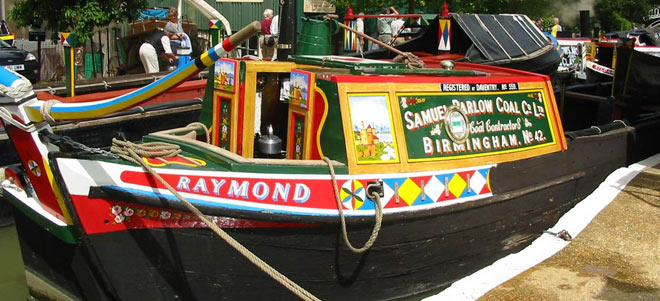
    Image: This photo shows Raymond, which was the last wooden narrow boat built, in 1958 at Braunston (photo by Tim Lewis)

    Motor or Butty?

    In the early 20th century, steam and later diesel engines started to be installed in boats, which meant the shape of the stern had to be changed to allow the new arrangement of a propeller to work.  This became known as a counter stern.  Butties (the towed second boat) meanwhile retained the overall hull design of the horse boats.

    When identifying a butty, it is useful to know that some of them are still original unpowered butties, some have been given some form of propulsion but retain their pointed stern, whilst yet others have had the butty stern cut off and a modern counter stern put on.
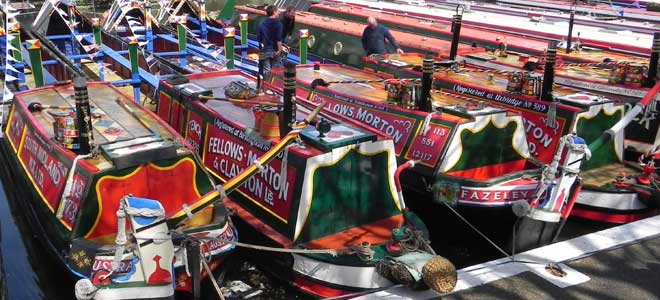
    Image: Two motor and butty pairs at IWA’s Canalway Cavalcade, Little Venice (photo by Alison Smedley)

    Rivets or Washers?

    Generally speaking, a boat with rivets is likely to be historic.  However, many modern boats are built with washers welded on the outside of the hull to look like rivets.  Some boat builders are getting very good at building replicas of working boats, so that it can be difficult to tell the difference (one clue is to look inside the well deck to see if you can see the other side of the rivets!).

    There are also some other exceptions, such as the fleet of welded wrought iron narrow boats built in 1930s for Severn & Canal Carrying Co Ltd.  There were all named after a species of tree (Oak, Elm, Fir, Pine, Beech, Alder, Willow and Ash) and were built by shipbuilders Charles Hill of Bristol.  Other exceptions include the last narrow boats built for commercial carrying, the River Class and the Admiral Class, built between 1957 and 1961, which were of welded steel construction.
    Image: Riveted hulls of working boats (photo by Alison Smedley)

    GUCCCo or FMC?

    Many of the historic working boats you see around today belonged to Fellows Morton & Clayton Limited (FMC) or the Grand Union Canal Carrying Company (GUCCCo), the two largest carrying companies.  FMC boats are known as “Joshers”, after Joshua Fellows, although in fact it was his father James who started the business in 1837.
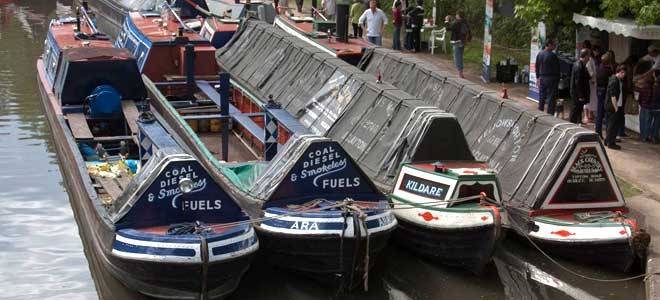
    Image: GUCCCo and FMC pairs at the Rickmansworth Festival (photo by Tim Lewis)

    Hill Class or Fish Class?

    FMC had two boatbuilding yards, at Saltley where they built iron boats and at Uxbridge where wooden boats were built.  They also had many boats built by W J Yarwoods of Northwich. There were various classes of boats, such as the 16 motor boats all named after Fish (eg Bream, Lamprey, Dory), and other series named after countries, flowers and birds. FMC’s Uxbridge yard was still producing wooden boats in the 1940s, including a series of boats named after hills (eg Clent, Clee, Chiltern)
    Image: Some FMC boats were named after animals, such as Kangaroo, Jaguar and Camel, shown here (photo by Alison Smedley)

    The George and The Mary

    GUCCCo is a much younger company and was a subsidiary of the Grand Union Canal Company Ltd, which had been formed in 1929 following the amalgamation of five separate canal companies.  At that stage they had just a motor and a butty George and Mary and the following year took over a small carrying company, Associated Canal Carriers.

    Further boats were acquired and then a fleet of boats, similar in design to George and Mary were ordered.  These were the Royalty Class boats:  Duke & Duchess, Edward & Alexandra, Henry & Anne, Prince & Princess, Victoria & Albert, William & Adelaide, and a number of these survive today.  They were big boats, with sides five foot deep and capable of carrying 70 tonnes a pair.
    Image: Royalty Class Victoria taking part in the historic boat parade at the Braunston Historic Boat Gathering (photo by Alison Smedley)

    Town or Star (Large or Small) / Woolwich/Northwich/Ricky

    In 1934 GUCCCo launched an ambitious expansion programme to increase the fleet to 100 pairs of boats, built by three different boat builders; WJ Yarwoods of Northwich, Harland & Woolf on the River Thames at Woolwich (both well known ship yards) and Walker Brothers of Rickmansworth. The first boats became known as the Star Class boats, all named after stars and constellations, and the later ones, which were built slightly deeper in the hold, were the Town Class boats, named after English towns and villages.  The boats built by Yarwoods and Harland & Woolf were all made of riveted steel, while the Walkers Brothers boats were wooden.  The combination of boat builder and class gave rise to nicknames such as ‘Large Woolwich’ or ‘Small Ricky’, a Large Woolwich being a Town Class boat built by Harland & Woolf, while a Small Ricky was a Star class boat built by Walker Brothers.

    In 1936 the Chairman of the GUCCCo was quoted as saying “never before in the history of canal transport has such a programme been embarked upon. The greater the number of boats in commission, the more economically and efficiently we can run our concern”.
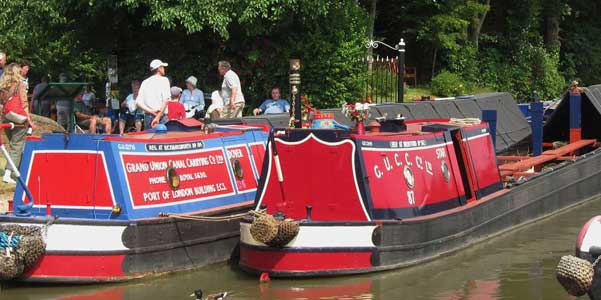
    Image: This photo shows Star (Star Class) and Dover (Town Class) (photo by Tim Lewis)

    Other Carrying Companies

    As well as GUCCCo and FMC, there have been many smaller carrying companies throughout the history of the inland waterways, from Pickfords to Willow Wren.  There are too many to talk about here, but we’ve mentioned a few of them below.

    Young Sam or Old Sam?

    Samuel Barlow was born in 1847 as the son of a canal boatman, who in 1867 set himself up as an owner boatman carrying coal from the Tamworth pits.  SE Barlows was a separate company set up in 1919 by Samuel Edwin Barlow, grandson of the original Samuel Barlow.  To distinguish between the two fleets, boatmen referred to boats of the original company as ‘Old Sam’s’ and the SE Barlow fleet as ‘Young Sam’s’.  The two companies worked well together, often on the same contracts.  Barlows boats still around today include Daphne, Ian and Beatty.
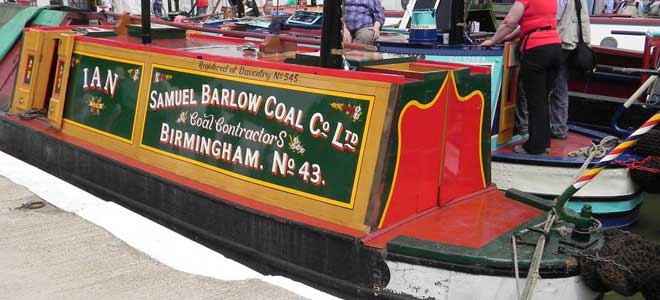
    Image: Ian, a Samuel Barlow’s motor (photo by Alison Smedley)

    Thomas Clayton of Oldbury Ltd

    Thomas Clayton (a member of the same family as the FMC Claytons) operated a fleet of wooden narrow boats built specially for carrying liquid cargoes such as tar, crude oil and creosote.  The boats (originally horse boats and later motors and butties) were built by a number of different builders, and were maintained at Clayton’s own dock at Oldbury.  Due to the preservative nature of much of the cargo, several of these boats still survive and they are recognisable by their long flat deck with small loading hatches.  Dane and Pearl are both examples of horse boats that were converted to motor boats.  Claytons boats that are still around today include Spey, Stour and Towy.
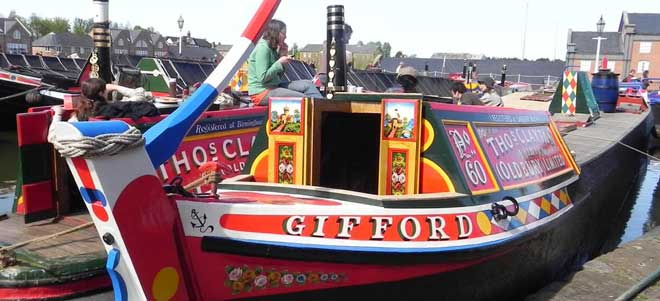
    Image: Gifford, the only Clayton’s horse boat to survive in an unconverted condition, restored and maintained by the Boat Museum Society at Ellesmere Port (photo by Alison Smedley)

    WH Cowburn & Cowpar Ltd

    This company’s origins began in 1877 when William Henry Cowburn went into partnership with a Mr Parkinson with premises at Potato Wharf beside the Bridgewater Canal at Castlefield Basin.  From the 1890s they supplied Courtauld’s Textile Mills with chemicals for cotton manufacturing and by 1914 they were responsible for the supply of much of Courtaulds raw materials to their sites in Coventry and Wolverhampton.

    The main cargo was carbon disulphide, but other products included acids, solvents, acetone and oils carried in drums or glass carboys. The hazardous nature of carbon disulphide led to the introduction of pairs of cylindrical steel tanks being fitted to some of the boats between 1935 and 1936.  When the tanks were put in, all boats were equipped with a flood valve in the fore end port side to enable the boat to be sunk quickly in the event of fire.

    The only Cowburn & Cowpar boats that still exist today are the eight motor boats built for the company between in 1933 and 1936 by WJ Yarwoods.  They are all named after birds beginning with S:  Swan, Swift, Swallow, Stork, Skylark, Seagull, Snipe and Starling.  Originally they were all fitted with a Gardner 4VT which is a hot bulb semi-diesel engine, and three of the boats still have these distinctive engines today.
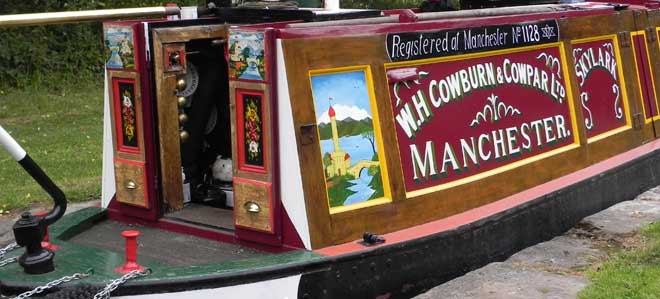
    Image: Cowburn & Cowpar motor boat Skylark

    Railway Boat or Station Boat?

    The London Midland & Scottish Railway (LMS), when it was formed in 1923, inherited a considerable canal network and fleet of boats. Many of the boats were wooden and no longer exist, but in 1928 WJ Yarwoods were commissioned to build a fleet of riveted iron day boats, for use on the 22 railway interchange basins of the Birmingham Canal Navigations. Ajax, Mecca and Manchuria are examples of these ‘Railway Boats’, still around today, all since converted to motor boats with counter sterns.

    After nationalisation most of the boats were sold, but 12 of the Yarwoods boats were converted to long distance boats. They were re-named after railway stations, in an alphabetical order:  Alsager, Birdswood, Crewe, Ditton, Exeter, Ford, Grantham, Hereford, Irlam, Jesmond, Kidsgrove, Lincoln and are known as ‘Station Boats’.
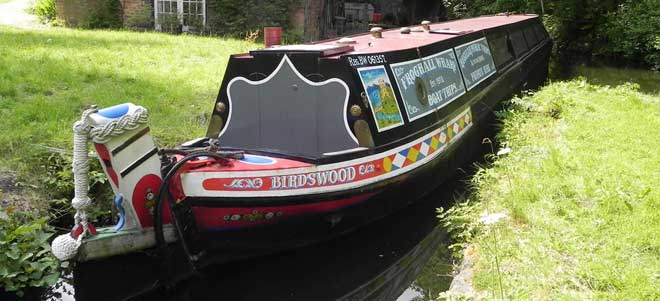
    Image: Birdswood, recently restored and now operating as a trip boat on the Cromford Canal, after many years on the Caldon Canal (photo by Alison Smedley)

    Bantock or GWR?

    ‘Bantocks’ are boats built by Thomas Bantock & Sons, a company that both built boats and operated them as agents for the Great Western Railway (GWR), who also had transhipment yards on the BCN.  Some boats were owned by GWR and some by Bantocks but they used a combined fleet numbering scheme.  The company also built boats for other carriers including LMS. Early Bantock boats are distinguishable by having wooden footings (the bottom part of the hull sides) in addition to the wooden bottom. Later Bantocks were all iron and many of these survive and are considered to have more pleasing lines than many of the other BCN built boats.
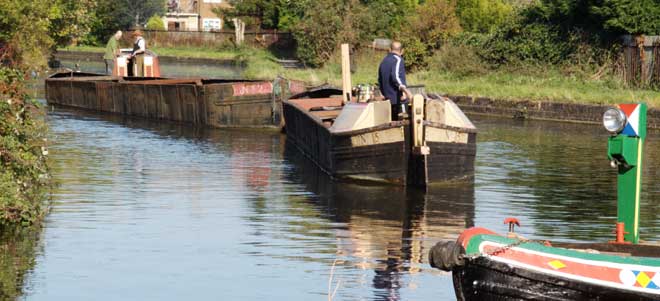
    Image: GWR 15 – built by Bantocks for Great Western Railway

    BCN Boats – day boats and tugs

    Around the canals of the Birmingham Canal Navigations there were once thousands of wooden and iron day boats.  Day boats were used for local traffic and were either open boats with no cabin, or had a small day cabin with a stove and a bench seat.  Many were pulled by horses or even mules, but later tugs were built and these could pull trains of several day boats.  There were numerous companies operating on the BCN, including:

    • Stewarts & Lloyds Ltd – who owned the steel works at Coombeswood on the Dudley No 2 canal – their tugs are still around today include Pacific and Bittell.
    • Leonard Leigh Ltd, whose wooden tugs include James Loader and Christopher James.  During the second world war, Leonard Leigh Ltd won a contract with the Ministry of War to supply coal and so they commissioned 6 new riveted iron tugs to help fulfil the orders, all being named after Fighter Aeroplanes, including Spitfire, Typhoon, Tempest and Hurricane.  
    • T&S Elements – based at Oldbury – boats still around today include Ben (unusual on the BCN for having been built as a full length motor) and Princess Anne (which started life as a GUCCCo motor).

    There were hundreds of boatyards across the BCN all building wooden day boats, and dozens of others making iron day boats and tugs.  BCN day boats are often referred to as ‘Joeys’, although there are those that consider that a ‘Joey’ was specifically a wooden day boat built by Joe Worsey. Worseys had three wooden boat building yards on the BCN, at Toll End Dock, on the Icknield Port Loop, and at Bloxwich Road, Walsall.
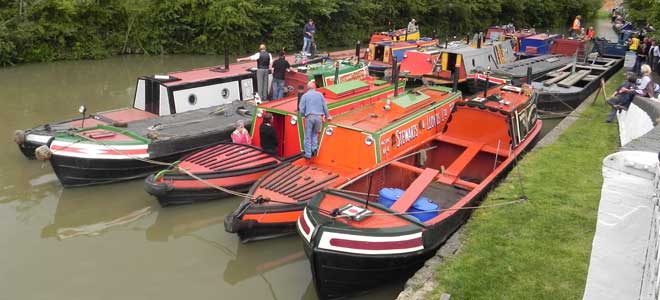
    Photo – BCN Tugs at the annual Braunston Historic Boat Gathering

    See previous feature on the evolution of the narrow boat.

  • The Evolution of the Narrow Boat

    The Evolution of the Narrow Boat

    Until the second half of the 18th century there was no standardisation of inland waterway craft and boat size varied around the country on the different river navigations.

    The concept of a boat approximately 7ft wide by about 70 ft long is attributed to James Brindley, who was one of the most influential canal engineers. Brindley reached an agreement with the Proprietors of the Trent & Mersey Canal Company to build the locks on their canal to take boats of that size. The dimensions, which were considerably narrower than craft using the rivers that the canal would link to, were perhaps due to the need to tunnel under Harecastle Hill.  This then became the standard size of lock on the rest of the Midlands canals built subsequently.

    Wooden Horse Drawn Boats

    From the late 18th through to the early 20th centuries there were hundreds of companies building and operating narrow boats for the transport of goods around the waterways system, some long distance and some just for local traffic.  Originally they would all have been horse drawn.  There were thousands of these boats, mostly wooden and mostly all long gone.  Many of them would have been day boats used for short journeys, such as shown here on the BCN (Birmingham Canal Navigations).
    (Photo – oil painting by Harley Crossley)


    Boatmen’s Families

    Initially, the long distance boats typically saw the men work on the boats and their families stay on the land.  Early carrying companies typically employed a man to steer the boat and a boy to lead the horse. As time went on, however, and economic situations changed, particularly with the competition from the railways, it became unviable to keep a house on the land with the wages paid to a boatman, and so the long distance boatmen’s families moved on to the boats to work as unpaid crew.
    (Photo – horseboating – ‘Kildare’)

    Butties

    Even horse drawn boats were sometimes worked in pairs, the towed boat being known as a butty (possibly from the word buddy meaning friend).  This gave two cabins of living accommodation for what were often quite large families, as well as twice the cargo carrying capacity.
    (Photo – pair of horse boats at Berkhamsted)

    Number Ones

    Number Ones were independent self employed boatmen who owned their own boat. Joe Skinner on narrow boat ‘Friendship’ was one (‘Friendship’ is now an indoor exhibit at Ellesmere Port Boat Museum).
    (Photo – narrow boat ‘Friendship’)

    Introduction of Steam Engines

    Towards the end of the 19th century some companies began to introduce boats powered by steam engines.   Fellows Morton & Clayton Ltd (FMC), who operated a large fleet of horse drawn boats, introduced steam powered boats from 1886, some of them being converted from horse boats.  These steamers were mostly used on long distance runs between London, Braunston, Birmingham, Leicester and Nottingham.  They worked ‘fly’, non-stop day and night to a strict timetable.
    (Photo – FMC Steamer ‘Monarch’)

    Experiments with gas and diesel Engines

    The steamers were very successful for FMC, but they did have their disadvantages – a large amount of the cargo space was taken up with the engine, boiler and coal required for the journey, and the high number of crew required.  A steamer pair required a crew of seven men (four on the steamer and three on the butty).
    From 1906 FMC experimented with various gas engines, and in 1912 fitted their first Bolinder (a Swedish engine) to narrow boat ‘Linda’.

    The early Bolinder installations had no reverse gear, although this didn’t worry the boatmen, for of course horses don’t have reverse gear either!  The arrangement worked well and all further boats were fitted with Bolinders (the later ones did run in reverse).  The steamers were all converted and by 1927 they all had Bolinders too.  Many FMC boats still have their Bolinder engines today.
    (Photo – Bolinder engine)

    Carrying Companies

    As well as FMC there were many other smaller companies, and by the 1930s the other large carrying company was the Grand Union Canal Carrying Company Ltd (GUCCCo), which was a subsidiary of the Grand Union Canal Company Ltd.  In 1934 the company launched an ambitious expansion programme to increase their fleet to over 100 pairs of boats.  Many of these boats are still around today.
    (Photo – two GUCCCo motor boats)

    Nationalisation of the Waterways

    In 1948 the waterways were nationalised, which included GUCCCo as a subsidiary.  Most of the boats were transferred to the British Transport Commission, which 20 years later was to become the British Waterways Board.  GUCCCo at that time had 126 motor boats and 130 butties.  FMC boats also joined the fleet, following voluntary liquidation.  This gave the British Transport Commission a total of 368 boats, probably the largest fleet of narrow boats that ever existed.
    (Photo – ‘Hadley’ in British Waterways livery)

    Decline of the Waterways

    Unfortunately the canals were suffering from a lack of maintenance during the war, and traffic had declined to an all time low. Despite some attempts at revival, by the 1960s a lot of the boats were surplus to requirements.  In 1963 The British Transport Commission became the British Waterways Board, and one of their early decisions was to discontinue most of its narrow boat carrying operations.  This followed a bad winter where boats were iced up for months and much cargo was transferred to the roads.  Many boats were abandoned in a few designated places, including Braunston reservoir, Harefield Flash, Norton Canes and the Wendover Arm.
    (Photo – Abandoned boats on the Wendover Arm)

    Pleasure Boating

    Canals were late in being used for pleasure boating on a serious scale due to their continued use for commercial traffic until the middle of the 20th century.  Many early pleasure boats were converted ex working narrow boats. Ken Keay and Harris Brothers of Bumblehole were boat building yards that diversified into building pleasure boats.   Although fibreglass cabin cruisers began to be popular on the canals from the 1950s, by the 1970s many boatbuilders had sprung up building purpose built steel narrow beamed boats for hire companies or private use.
    (photo – an early purpose built narrow beam pleasure boat)

    Modern Narrowboats

    The term ‘narrowboat’ (one word) has become widely accepted to describe modern purpose built steel craft of a beam to fit on the narrow canal system.  It is generally more accurate to refer to historic working boats as ‘narrow boats’ (two words).

    These days a wide variety of narrow boats can be found on the waterways – from preserved historic working boats, purpose built hire boats, hotel boats, camping boats, and privately owned boats of every kind from scruffy to the immaculate floating ‘country cottage’ with all mod cons.
    (Photo – these days anyone who wants to can go boating on an historic working boat – by going on an hotel boat or a camping boat)

    Keep an eye out for forthcoming features including a narrow boat spotting guide and interesting features of historic narrow boats.

  • Finding a Permanent Mooring for your Boat

    Finding a Permanent Mooring for your Boat

    Owning your own boat can be hugely rewarding, with the freedom to travel the UK’s waterways at your own pace, closeness to nature and sharing your love of the waterways by entertaining friends with day trips.

    Some initial things to consider include the costs, types of boat, getting a boat licence and boat maintenance.  Unless you intend to continuously cruise the network throughout the year, you need to give some serious thought to finding a permanent mooring for your boat.  Generally finding the right boat at the right price is fairly straightforward, but finding somewhere to berth it can be a little more tricky. It is therefore a good idea to find a permanent mooring before buying your boat.
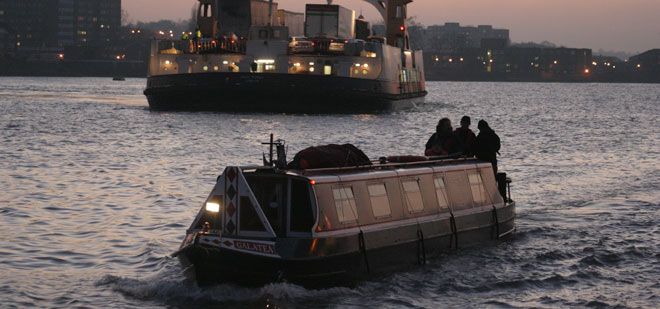
    Choosing a Waterway

    Firstly you’ll need to know what area and on which waterway you would like your boat to be based. If you intend to live on your boat, this might be close to your place of employment, family or friends. Otherwise, you might choose to moor your boat on the other side of the country from where you live. Things to consider would include the size of the boat you intend to buy – you’ll need to check whether it will fit through the locks on the waterways you intend to use! Do you like to eat out or enjoy a swift pint? If so you’ll want to check out nearby pubs and restaurants.

    Once you’ve got an idea about where you’d like to moor your boat, you can start to look at what moorings are available in the area. You may already have a very clear idea, but if not, you can take a look at our waterways route map or see the individual waterways pages.

    Online vs Offline Moorings

    Permanent moorings can be found within marinas or basins (offline) or along the main line of a canal or river (online).

    Marinas are usually large purpose made water spaces but moorings can also be found at boatyards and the wharves, arms and loops left from the commercial days of the waterways.

    Offline moorings are generally run by businesses, and can be more expensive than online moorings. However, you are more likely to benefit from facilities such as water, toilets, sanitary disposal, showers, a diesel pump, electricity, coal, gas and Wi-Fi. Some marinas also have boatyards and chandlery shops on site and there may even be some basic security against vandalism and other crime. Marinas and basins often have transport links and car parking, which is something to consider if you need to travel. Apart from the cost, possible downsides include the fact that some marinas may have a waiting list for their berths.  Some marinas will have residential moorings, and a few marinas may offer a ‘caretaker’ (residential) berth, but these are rare.
    Image: Braunston Marina

    Online moorings along the main line of a canal are usually run by the navigation authority, or in some cases local farmers who set up moorings along their land, and tend to cost less than offline moorings because there aren’t as many, or any, facilities. Apart from the cost, advantages of online moorings include being closer to nature, heritage and often beautiful scenery.

    Some moorings are available along the towpath side but these lack privacy and any degree of security. Those on the non-towpath (off-side) are preferable and will have some security depending on the access, fencing and gating arrangements.

    You could buy or lease a length of land alongside the waterways but remember that this does not necessarily mean that you have rights to moor a boat there. There may be planning restrictions and on canals you will still have to pay the navigation authority for mooring. These can be referred to as ‘end of garden moorings’ or ‘farmers’ field moorings’.  On rivers the situation is different as riparian owners generally have the right to moor alongside their land if they own their side of the land under the river. Remember that rivers go up and down, so you will need suitable mooring arrangements to allow for this and you may not be able to get to your boat in flood conditions.  In either case, you should consult with the navigation authority first before committing to a mooring.
    Image: Online moorings, Shropshire Union Canal
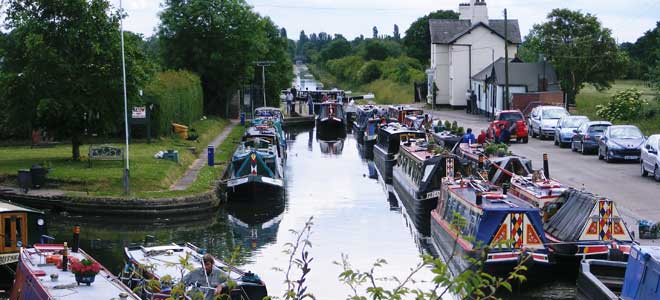
    Boat Clubs

    Boat club moorings may be online or offline. These clubs often have club-houses and host social events. Many clubs require their members often pitch in with maintenance of the site, which saves money.
    Image: Longwood Boat Club, Rushall Canal (photo by Angela Acott)

    Residential Moorings

    If you intend to live on your boat, there are additional things to consider. For a start, unless you intend to continuously cruise the waterways you’ll need a suitable mooring.  Most residential moorings require planning approval, so you should always take advice to ensure your proposed residential mooring is legitimate. Some residential mooring operators require boats to be away from the mooring for a certain time each year or require you to have an address elsewhere.  In some cases you may be required to pay Council Tax, but Housing Benefits could contribute towards the mooring fees.

    You’ll also need to think about the facilities that will be available in winter, for example if you’re moored online and the canal freezes, how would you go about emptying sanitary facilities or getting fuel and water? Take a look at our features on the pros and cons of living afloat and ten things I wish I knew before living on a canal boat for more information.

    Finally, it’s useful to be aware that many residential berths are based on short term mooring agreements, which can easily be terminated by your landlord – it is important to read and understand the ‘small print’ of your mooring agreement.

    Next Steps

    Once you’ve got an idea about where you might want to moor, you can refer to our individual waterway pages to find details of navigation authorities, boat clubs and marinas to get in touch and find out about the availability of long term moorings.

    Some navigation authority websites provide information on finding residential and permanent moorings on their waterways:

    Other links