Blog

  • IWA joins Campaign for Energy Bill Support for Boaters

    IWA joins Campaign for Energy Bill Support for Boaters

    IWA has joined a campaign led by the National Bargee Travellers Association (NBTA) to ensure boaters who live off grid or without a home mooring are able to access the Government’s Energy Bill Support Scheme.

    Currently, boaters who do not pay their fuel/electricity bills directly and those who are off-grid or without a home mooring are exempt from the Government’s Energy Bill Support Scheme. IWA worked with NBTA on a paper which was submitted to the Department for Business, Energy & Industrial Strategy (BEIS).

    The scheme opened to boaters on fixed moorings on February 27th. Search “Apply for energy bill support if you do not already get it” to find the details. However the process for boaters without a home mooring to apply for the grant is still not confirmed so IWA will continue to work with NBTA in campaigning for access to energy support for all boat-dwellers.

  • Waterways Vital to Government Environmental Improvement Plan

    Waterways Vital to Government Environmental Improvement Plan

    IWA welcomes today’s announcement by the Government about its Environmental Improvement Plan 2023. However, we would like to see more emphasis on the role our waterways can play.

    IWA’s Waterways for Today report highlights the importance of waterways for protecting the environment and providing access to nature for those living in urban areas. Our canals and rivers are blue-green corridors that allow opportunities for reconnecting disparate habitats, biodiversity net gain and improvements for wildlife.

    Canals and rivers offer homes for wildlife to flourish, while at the same time providing opportunities for people to see plants, insects, and birds that they wouldn’t normally experience in an urban environment. Our local communities benefit from improved health and wellbeing. They bring economic benefits, providing jobs and attracting people to the area which contributes to people using local businesses when accessing the waterways.

    With the impact of climate change, canals are providing the water transfer highways to ensure London and other areas being severely affected by reduced rainfall have sufficient supplies to meet the growing demands.

    Enhancing and restoring our waterways is vital to achieving the Government’s target of having everyone living within 15 minutes’ walk of a blue or green space. But this ageing infrastructure will require an ongoing financial commitment to survive the increasing threat of climate change and rising costs.

    We call on the Government to recognise the value of our waterways in achieving the environmental targets set out in the Environmental Improvement Plan, and to invest in them for the future.

  • Cotswold Canals water transfer action needed

    Cotswold Canals water transfer action needed

    IWA is supporting the Cotswold Canals Trust in campaigning for a scheme which would provide desperately needed additional water supplies to London and the South East, and could enable the restoration of the whole 36 miles of the Thames – Severn link. IWA will be submitting responses to this and the other Water Resource Management Plans currently out for consultation, but this is one where additional voices would really make a difference.

    The consultation considers a wide range of issues affecting water resources but the biggest impact on canal restoration is how to transfer water from the Severn to the Thames. Both a pipeline and open water transfer via restored canals are being considered.

    A key omission in the consultation when comparing the canal vs pipeline, is the presentation of a well considered analysis of the financial value of the restored canal to society and the local economy. This seems to have been largely ignored but, the Cotswold Canals Trust have used the recent IWA Waterways for Today Report, to calculate the additional financial value of restoring the canal. This could run to about £800million over the next 80 years (the basis on which the costs and best value calculations are based). That additional benefit more than offsets the difference in cost between the pipeline and canal options. It also justifies pressing for the full restoration of the canal rather than the minimum necessary to enable the transfer of water alone.

    For further details and how to make your voice heard, the Cotswold Canals Trust has a full guide which can be found here.
    The two relevant consultations close on February 20th and March 21st.

  • Call for Review of Ely Winter Mooring restrictions

    Call for Review of Ely Winter Mooring restrictions

    The current 48-hour time limit in summer appears fair and ensures that as many boaters as possible are able to stop and enjoy Ely. However, many navigation authorities and local councils relax summer 48-hour restrictions during winter and extend them to 10-14 days. Since demand for moorings in Ely is much lower in winter, we have asked that the Council considers following this practice. ECDC policy is that boaters needing to stay for more than 48 hours can use the marina opposite, but this may not always be safe or even possible, especially if the need was not anticipated.

    We also highlighted the issue of extreme weather conditions: strong water flows or flooding, high winds, poor visibility and freezing conditions, which can make boating dangerous. Our attention was drawn to the problem after a novice boater received two mooring violation tickets stuck to their boat, during conditions that would have made moving the boat unsafe. ECDC had activated its Severe Weather Emergency Protocol at the time of this incident.

    We have made three requests to ECDC, asking them to
    • relax the mooring time limit during the winter season
    • suspend all mooring restrictions during periods of strong water flows or flooding, high winds and poor visibility
    • incorporate the suspension of all mooring restrictions into their Severe Weather Emergency Protocol.

  • Successful campaign to protect London waterways heritage

    Successful campaign to protect London waterways heritage

    IWA’s Heritage Advisory Panel supported the North and East London Branch in objecting to a proposal from Canal and River Trust to dispose of the strip of land alongside Commercial Road Lock on the Regent’s Canal. IWA felt that disposal of this land threatened the canal’s heritage setting and amenity value.   

    Taking Limehouse Basin as a meeting place for boats between the tidal Thames and the inland canals, this lock stands as a gateway to the canal system.  The two lock chambers fit neatly into the space between two historic bridges, twin arches of the Commercial Road Bridge and the fine single arch of the docks railway, now DLR. This canalscape is very important to the character of the designated Regent’s Canal Conservation Area and we felt that anything built on the site would inevitably damage these views.   

    Additionally we believe that it is inappropriate to dispose of any land that forms part of the operational environment for a canal lock. The second chamber is an important heritage feature, and it deserves to be kept to show how the canal operated in its busy commercial days. It is also important to make sure that restoring the second chamber is possible in the future, even if not currently an option. 

    Objections were also raised by the Friends of Regent’s Canal, the Commercial Boat Operators Association, the Lower Regents Coalition and the Greater London Industrial Archaeology Society. The Canal and River Trust responded to the objections saying that they have “carefully considered the various representations made”, and “accept that that the sale of this land on a freehold basis is not in the best interests of the Trust and we will not be progressing it.” 

  • Committee members required for Festival of Water

    Committee members required for Festival of Water

    The IWA Events Committee needs your help ahead of the 2023 Festival of Water. The three-day event takes place every August Bank Holiday, and is organised and staffed entirely by volunteers. It is an opportunity each year to remind the public of everything IWA does and everything that only IWA can do for the waterways. The event is free to the public and there are live performers in the Entertainments Marquee all weekend, as well as plenty of activities for both adults and children. We attract about a hundred boats and nearly as many campers.

    We also have to attract a good selection of caterers, traders and exhibitors, and this is one area where we need your help – it’s a major income stream for the Festival.

    Jane Elwell, the Chair of Events, has taken on the job of recruiting caterers and traders as well as all her other responsibilities. We really need someone to take on this role, initially of course with Jane’s help. We have a core group of traders and caterers who attend every year, and we would like to reach out and add to this group, looking especially for local businesses and charities to engage with the local community.

    It’s not just recruiting and selling space – someone has to record and manage traders’ application forms and their requirements for space, power and water, as well as liaising with the site team on the allocation of spaces. We can tailor the role to suit the volunteer, and in the past caterers and traders have been managed by two different volunteers.

    We also need a volunteer to identify sources of grant funding and sponsorship. Finding grants that are available could become a valuable source of extra income, and so could local businesses prepared to sponsor us. We would have to make sure that we comply with any terms attached to grants, and also that any grants and sponsorships are properly acknowledged and publicised, in our programme or on banners, for instance.

    For more information about volunteering as a committee member for the 2023 Festival of Water, please get in touch with IWA National Treasurer, John Butler: john.butler@waterways.org.uk

  • Debate on the future of the UK’s canals and waterways

    Debate on the future of the UK’s canals and waterways

    IWA welcomed the parliamentary debate on Tuesday 22nd November, which saw more than a dozen MPs speak passionately and knowledgeably about the importance of public funding for inland waterways, but was disappointed by the response from the Waterway Minister.  IWA considers that Government has missed an opportunity to reassure the public that 2000 miles of waterways in England and Wales will receive sufficient funding in the future to keep them safe for the people who live, work and spend time on or near them, and to protect this important infrastructure network for future generations. 

    The Westminster Hall debate was opened by Michael Fabricant, MP for Lichfield and Chair of the All Party Parliamentary Group for the Waterways.  Michael outlined the importance of waterways to local people, the environment and the economy.  He noted that with waterways more popular than ever “we are seeing their benefits realised on a grand scale, re-purposed for leisure and recreation, for health and wellbeing, for homes – and still playing a vital economic role for freight and other commercial uses, attracting visitors from across the globe whilst also enriching the lives of so many local communities.”

    The 90-minute debate heard about waterway projects in constituencies across the country, with many MPs mentioning the importance of the Canal & River Trust’s 2000 miles of waterways.  Waterways managed by other navigation authorities were also discussed, with MPs from Norfolk, Scotland and Northern Ireland also taking part. 

    Issues raised during the debate included the potential for more water transfer projects, the impact of climate change on historic infrastructure, waterway restoration projects and the hard work put in by volunteers, as well as the most important issue of continued support for the waterways funded by Government.   

    The outcome of the review by the Department for Environment, Food & Rural Affairs (Defra) of its funding for Canal & River Trust’s waterways, originally due to conclude in July and then postponed until ‘the autumn’, will be critical for the Trust’s long-term financial position, with the current grant funding contract only in place until 2027. 

    Rebecca Pow MP, recently re-appointed as the Defra Minister with responsibility for waterways in England and Wales, responded to the debate, but was unable to confirm any timescale for the announcement of Defra’s review into Canal & River Trust’s funding, saying only that, “… the outcomes… will be announced forthwith.

    IWA is disappointed that the Minister was unable to give a more positive response to the debate, and in particular to the question of timing for the Defra announcement.  As mentioned by many of the MPs during the debate, IWA considers that it is essential for Canal & River Trust to have the certainty of knowing that it will receive sufficient funding to meet the increasing challenges of climate change and inflation, so that it can plan for the proper maintenance of its waterways and associated historic structures. 

    The debate is available to watch on Parliamentary TV: 

    https://parliamentlive.tv/Event/Index/22b0e1d0-5597-4646-91cb-b67ecb079d37

    The Hansard transcript can be found here:

    https://hansard.parliament.uk/commons/2022-11-22/debates/FE3F3FA4-11FF-4A45-B697-94E60F145B6E/UKCanalsAndWaterways

    Photo by Paul Rodgers shows, left to right:
    Maggie Throup, MP for Erewash 
    Richard Parry, Canal & River Trust Chief Executive 
    Michael Fabricant, MP for Lichfield and Chair of the All Party Parliamentary Group for the Waterways 
    Sue O’Hare, IWA Deputy National Chair
    Wendy Morton, MP for Aldridge-Brownhills

  • Wendover Canal Trust Celebrates 25th Anniversary

    Wendover Canal Trust Celebrates 25th Anniversary

    On Tuesday, November 1. Wendover Canal Trust (WCT) staged its biggest ever community engagement event with more than 100 guests from 85 different organisations, to mark the 25th anniversary of work starting on restoration of the Wendover Canal. The occasion also enabled the Trust to provide an update on its activities, hold a dialogue with representatives from local organisations and thank its current supporters.      

    IWA has supported the project throughout those 25 years, both nationally and through IWA Chiltern Branch, while IWA’s Restoration Hub has been providing a significant amount of support recently Our Technical Support Officer, Mikk Bradley, worked with Canal & River Trust over drawings and designs for Whitehouses sluice structure. He has also prepared detailed drawings for the repairs to the foundations of the swing bridge, including stop plank design, the Narrows structure and towpath strengthening wall. Mikk has also taken on an active role in training WCT volunteers in levelling. The WCT Environment Group were trained by IWA’s former Volunteer Co-ordinator Alex Melson on Biodiversity Net Gain, who lead a training afternoon walking along the Wendover Canal and highlighting many aspects which were of value to the wildlife at Whitehouses Pocket Park.

    At the event, which was held in “Your Café in the Park” in Aston Clinton, WCT chairman Clive Johnson said the canal was almost impenetrable when the decision was taken to restore it and the first task was to clear the hawthorn scrub. He said that volunteer construction started in 1997 and that “our wonderful volunteers have been doing heavy construction work for 25 years – and we are all unpaid.”

    He added: “Our plan is that by the end of 2025 we will complete our lining of section which has always leaked near Tring, then we will restore the water level all the way to Wendover for boats to Buckland, and eventually Wendover. None of this would have been possible without the funders of the restoration and the towpath upgrade.” The canal and its towpath were becoming a green corridor, he said, “accessible to us all to boost our well-being, with increased biodiversity.” Ros Daniels (Canal & River Trust Director for London and South East) proposed a celebratory toast and other distinguished guests included Commodore Tim Hennessey, RN DL, Deputy Lieutenant of Hertfordshire; Wing Commander Anna Toothill, Deputy Station Commander, RAF Halton and Councillor Christopher Townsend, Mayor of Tring.

    Over the years, local Waterway Recovery Group volunteers have got stuck in at the Trust’s regular work parties, and this summer two WRG canal camps were held on the Wendover Canal. WRG regional groups have held weekend digs on site, two digs so far this year. IWA’s Restoration Hub will continue to support this project and run camps there in 2023 and beyond.

  • Waterway Funding Discussed At First Hybrid APPGW Meeting

    Waterway Funding Discussed At First Hybrid APPGW Meeting

    The first ever hybrid meeting of the All Party Parliamentary Group for the Waterways (APPGW) took place on Wednesday 2nd November, with MPs in a meeting room in Westminster while representatives of waterway organisations were able to join by video link. 

    The hybrid APPGW meeting was chaired by Michael Fabricant, MP for Lichfield and APPGW Chair, and was also attended by Heather Wheeler MP for South Derbyshire, Wendy Morton MP for Aldridge and Brownhills, and Suzanne Webb MP for Stourbridge.  Other MPs and peers joined by video or sent representatives to attend on their behalf. 

    The main purpose of the meeting was to highlight to MPs the importance of waterway funding, particularly in the context of DEFRA’s review of Canal & River Trust’s grant funding which is currently taking place.

    As Richard Parry, Chief Executive of Canal & River Trust, explained in his presentation, the outcome of the DEFRA review will be critical for Canal & River Trust’s long-term financial position, with the current grant funding contract only in place until 2027. 

    Richard gave an overview of the Trust’s achievements during its first ten years, and explained the importance of the Trust’s waterways to the 9 million people who live within a 10 to 15 minute walk of them.  He also highlighted the importance of the inland waterways to the government’s plans for ‘levelling up’, with 61% of households within 1km of their waterways experiencing wellbeing inequalities. 

    Richard also outlined the wider benefits that waterways can bring through access to the outdoors, mobilising volunteers and community support, water transfer, waterborne freight and helping to tackle climate change.  New research published in Canal & River Trust’s new Valuing our Waterways report, shows that their waterways provide £4.6 billion in social value each year, as well as £1.5 billion in annual economic value. 

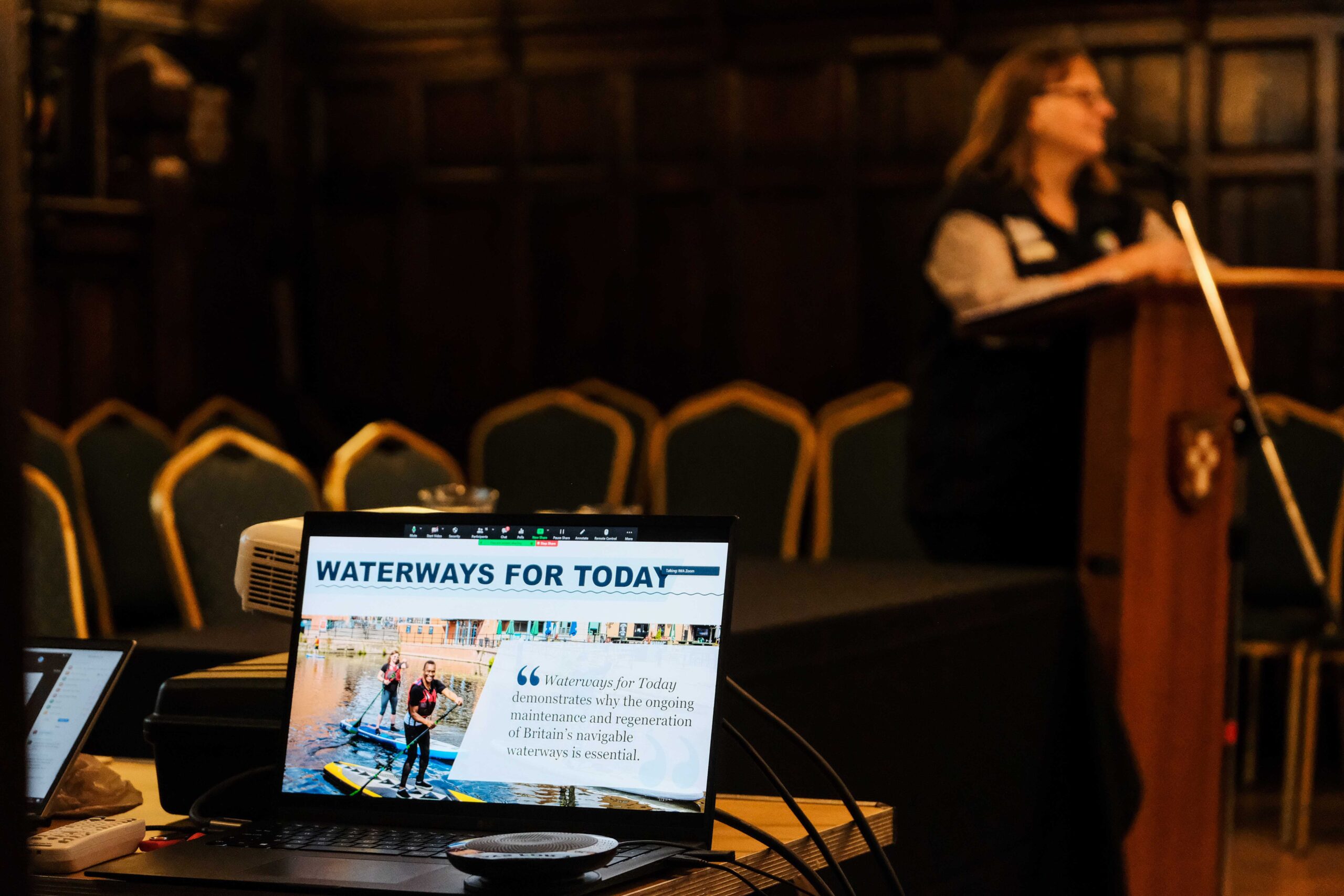
    Our Chief Executive, Jonathan Smith, then gave a presentation detailing our new report: Waterways for Today.  This report demonstrates how the country’s network of 5000 miles of inland waterways can all contribute to the country’s economic recovery.  It details the 12 most significant benefits that the inland waterways can bring to our economy, environment, local communities and lives.  The target audience for the report is politicians, at national, devolved and local level.  Jonathan outlined the key recommendations identified in the report, which has been sent to all MPs with waterways in their constituencies. 

    A lively Q&A session followed, with questions raised by waterway organisation representatives and discussed by the MPs and presenters on subjects such as the impact of climate change on the costs of maintaining safe waterways, heritage structures at risk and how waterways under restoration and those run by other navigation authorities can also get better support from government. 

    The meeting closed with the MPs agreeing to put in requests for an adjournment debate on the subject of waterway funding and the other issues discussed during the meeting. 

    Thank you to IWA members who encouraged their MPs to attend in person.

    All Party Parliamentary Groups are informal cross-party groups that are run by and for Members of the Commons and Lords.  Groups can decide to invite non-parliamentarians to their meetings, but they are not public meetings.  Since the first Covid lockdown the APPGW meetings have been held entirely online until now, allowing many more waterways organisations to be invited than was the case when the meetings took place in small meeting rooms at Westminster. 

  • Plans for The Next IWA National Trailboat Festivals

    Plans for The Next IWA National Trailboat Festivals

    The next National Trailboat Festival is planned to take place in 2024, and sites are under discussion about sites for 2025 and 2026. An announcement for the 2024 Festival should be made in late 2023.

    Trailboat Festivals are very useful for drawing attention locally and nationally to restoration or improvement projects. In addition to a greater awareness of the project, these events can draw local political attention to successful restorations and also provide a source of additional income. When people see others gathering and the tranquil movement of pleasure boats – illuminated at night and decorated with bunting and flags – on even a small part of their previously disused canal, it gives a lot of pleasure. It adds considerably to the quality and tone of the locality – urban or rural. It leaves people wanting to see further improvement and attracts more supporters for the restoration project.

    For those interested to host a Trailboat Festival in future years:

    There is no set design for a Trailboat Festival as its very nature will depend upon the waterway being promoted. These events depend in part on the availability of volunteers, financial resources, and the extent of support from local politicians and the community. We have members and supporters in all parts of the country, and can certainly ask those who are local to you if they are willing to help with preparation. A Waterway Recovery Group (WRG) team could be available if requested, depending on availability, to provide manual assistance in constructing, running and dismantling as they have people who have been putting on events for many years and may be available to give advice in person, over the phone or by email. We may also be able to free loan a two-ton trailer full of the sort of gear necessary to stage an event, although a 4×4 vehicle with a tow bar is required to collect it. Some marketing for the event can be carried out centrally as part of our programme of events which is advertised each year, and our website can also be used. You can apply to our Finance Committee for help with your early organising costs.

    The format for applications is to submit a written request but the first step is to check that you have the basic facilities available. Please email the Trailboat Officer for a list of required facilities. As each event tends to be unique to its waterway and to its organising committee, all we need at the outset is an Outline Proposal of your Trailboat Festival Plan. We will send you advice on what this should cover and an example for guidance. To secure the approval and support of IWA, it is necessary for us to feel sure the event is likely to take place and that the event is planned properly. Organisers will need to plan several years ahead and have a suitable budget in place. For assistance with answering the questions in the application, just email iwa.trailboat.festivals@gmail.com. We are continuously looking for applicants for Trailboat Festivals up to 4/5 years in advance to allow plenty of advertising time.

  • Successful campaign to protect Caldon Canal heritage

    Successful campaign to protect Caldon Canal heritage

    IWA North Staffordshire & South Cheshire Branch submitted an objection to a Canal & River Trust planning application for Listed Building Consent for alterations at Hazelhurst Top Lock (Lock 10). IWA objected strongly on heritage and health and safety grounds to one aspect of the application, which was the proposal for a fabricated “restrictor” on the end of the balance beams.  Despite what the Heritage Design and Access Statement says, we were concerned that this would have had a detrimental impact on the heritage setting of the Listed lock (which is also part of a conservation area), and would have introduced a new unexpected hazard to boaters operating the lock, who would no longer be able to pass around the end of the balance beam in an emergency, for example if the gate is swinging closed of its own accord.  The problem at this lock is that the balance beams are too long for the original stonework of the lock.  We suggested that this could be rectified by reducing the length of the balance beams and adding additional weight underneath (if the balance of the gate is affected), as has been done in many other locations around Canal & River Trust’s network of waterways. This view has been endorsed by IWA’s national Navigation Committee. Objections were also submitted by the Caldon and Uttoxeter Canals Trust and the Historic Narrow Boat Club for the same reasons.

    We recently heard that our objections have been taken on board, as Canal & River Trust have removed the part of the application referring to the balance beam “restrictors”. They are now planning simply to move the handles on the end of the balance beams to align with the quadrant below, as well as investigate the possibility of shortening the beam.

  • Canal & River Trust draw on IWA research for Facilities Consultation

    Canal & River Trust draw on IWA research for Facilities Consultation

    Canal & River Trust is currently consulting on the provision of facilities for boaters, aiming to establish the baseline minimum services that users require. In doing so, they have drawn on the “Gaptracker” survey carried out by IWA in 2018 (and the subsequent report on the findings). Ahead of the launch we met with the Trust to discuss the findings from our report and how they could be used to inform their facilities consultation.

    In our report we made several recommendations on the provision of customer service facilities for boaters:

    Water points, rubbish disposal points including recycling points, portable chemical toilet disposal points and electricity (shore power mains connection charging sites) at the following frequencies:

            – Every 5 hours of cruising across most of the inland waterways system, including between waterways managed by neighbouring navigation authorities

            – Every 2 hours of cruising in London and other urban areas with large numbers of residential boats on unserviced moorings.

    Pump out facilities at regular intervals, ideally provided by boatyards, marinas and other third-party providers. Where there are gaps of more than 10 hours of cruising then navigation authorities should encourage third party provision and where this fails, should provide DIY pump out facilities, or portable chemical toilet disposal points should be suitable for the use of boat-based DIY pump out equipment.

    Recycling points at the majority of rubbish disposal points, as recycling is currently seriously under-catered for and when cruising accessing recycling points away from the water is not always practical or possible. IWA recognises that boaters will only be encouraged to separate items for recycling if there are frequent recycling points and their location is known. As recycling policies and the colour coding of bins vary from place to place, clear information about what can and cannot be recycled will be needed.

    Our full report can be found here.

    We are pleased that Canal & River Trust are using IWA’s recommendations and proposing that, as a minimum provision, the following facilities should be provided by the Trust approximately 5 cruising hours apart (shorter in very busy areas e.g. London).

    – Water points

    – Elsan points

    – Refuse/recycling points

    We encourage those who use Canal & River Trust’s waterways to complete the facilities consultation, which can be found here. We will also continue to campaign for other navigation authorities to adopt our recommendations.

  • 2022 Photography Competition Results

    2022 Photography Competition Results

    Judged by photographers Kevin Maslin, Margaret Beardsmore, Derek Pratt and Alan Stopher.

    We were delighted to receive over 300 entries to this year’s photography competition! Amateur and professional photographers alike took part, and we received some fantastic photographs featuring Britain’s canals and rivers. Some photographs were taken using digital cameras whereas others used mobile phones. Significant advancements in technology have made photography a lot more accessible, which is good as it allows people from all walks of life to participate in competitions such as ours.

    Photographs were submitted to the following four categories.

    Our judging panel consisted of four exceptional waterways photographers including both Derek Pratt and Kevin Maslin who judged the competition last year. Derek is the author of several books and articles on canal and river photography, and has a library of over 80,000 photos taken over a period of 45 years. Kevin runs photography walks along the canal and his work has featured in BBC Wildlife and Waterways World magazines, as well as in the popular Geo Projects maps. Derek and Kevin are joined by Margaret Beardsmore; a Staffordshire-based photographer and canal-enthusiast. Margaret has been volunteering with IWA for over 25 years, being both a committee member and a leader of local work parties. Margaret is a Licentiate with the Royal Photographic Society and enjoys capturing landscapes, nature and people. She also held a Waterways Webinar on the art of waterways photography in 2020. Alan Stopher completes the judging panel as a guest judge. He won last year’s photography competition with his photograph of boaters waving at a train crossing the River Ouse in York. Alan is also a member of his local photography society in Huddersfield. ​

    Congratulations to each of the category winners who will all receive £25 to spend in our online shop, plus IWA goodies. Please also join us in congratulating the overall photography competition winner: Nicola Turner, who will receive a print of their photo. A massive thank you to our judges: Kevin Maslin, Margaret Beardsmore, Derek Pratt and Alan Stopher, for judging the competition – and to everyone who entered. We hope you will enjoy seeing your photographs if they are used in our marketing materials, and that you are looking forward to our 2023 Photography Competition next year!

    British Waterscapes – overall Photography competition winner

    Landscape photography is all about capturing the light, and this wonderful image portrays that in spades. Nicola Turner was the early bird who caught the worm and her superb morning study of the Peak Forest Canal ticks all the right boxes. The diagonal composition leads the viewer’s eye into the picture and the low Winter sun filtering through the skeletal trees and picking out the details of the moored boats adds that touch of magic. The fact that this shot was taken on a camera phone reinforces my belief that it’s the photographer’s skill and not the equipment which makes a successful photograph.

    – Kevin Maslin

    Photography Competition 2022 - Winner
    Marple, Peak Forest Canal – Nicola Turner

    Old Meets New

    Photography Competition 2022 - Old Meets New Category Winner
    River Severn at Upton upon Severn – Teresa Fuller  

    This is an excellent image, well composed and with good exposure. The attractive boats in the foreground give interest and colour. The curve of the modern bridge provides the ‘new’ part of the brief, while there are several references to the ‘old’ element.

    The couple standing on the bridge looking down at the river encourage us to look into the distance to see the traditional boat heavily laden with aggregate coming towards us.

    But the ‘pièce de résistance’ is the modern lorry on the bridge carrying old steam engines. A very attractive image, well seen and well executed. Congratulations to Teresa.

    – Margaret Beardsmore LRPS

    Living Waterways

    Digital photography has made everyone a photographer regardless of whether you’re using a digital camera or a mobile phone. This was particularly true for the Living Waterways category where the quality of photographs submitted was so great that I found it difficult choose the best one.

    This photo of a boat crossing an aqueduct fits the bill as Roger has used diagonals to lead the eye to a focal point which is the boat.

    Derek Pratt 

    Photography Competition 2022 - Living Waterways Category Winner
    Iron trunk Aqueduct – Roger Agnew
    Photography Competition 2022 - Heritage Details Category Winner
    Rochdale Canal Milepost at the entrance to Bottomley lock, S is for Sowerby Bridge – Gillie Rhodes   

    Heritage Details

    Gillie’s image fully satisfies the requirement for portraying a heritage detail but in doing so gets so many other things right. The lighting is good in that it avoids harsh shadows, the viewer can see the texture of all the stone from which it is fashioned as well as that of the wall which gives context to the scene. I loved the way that the milestone was shown off-centre and balanced by the grasses to make an effective composition and the colour palette is easy on the eye. Well done!

    – Alan Stopher

  • IWA National Awards 2022

    IWA National Awards 2022

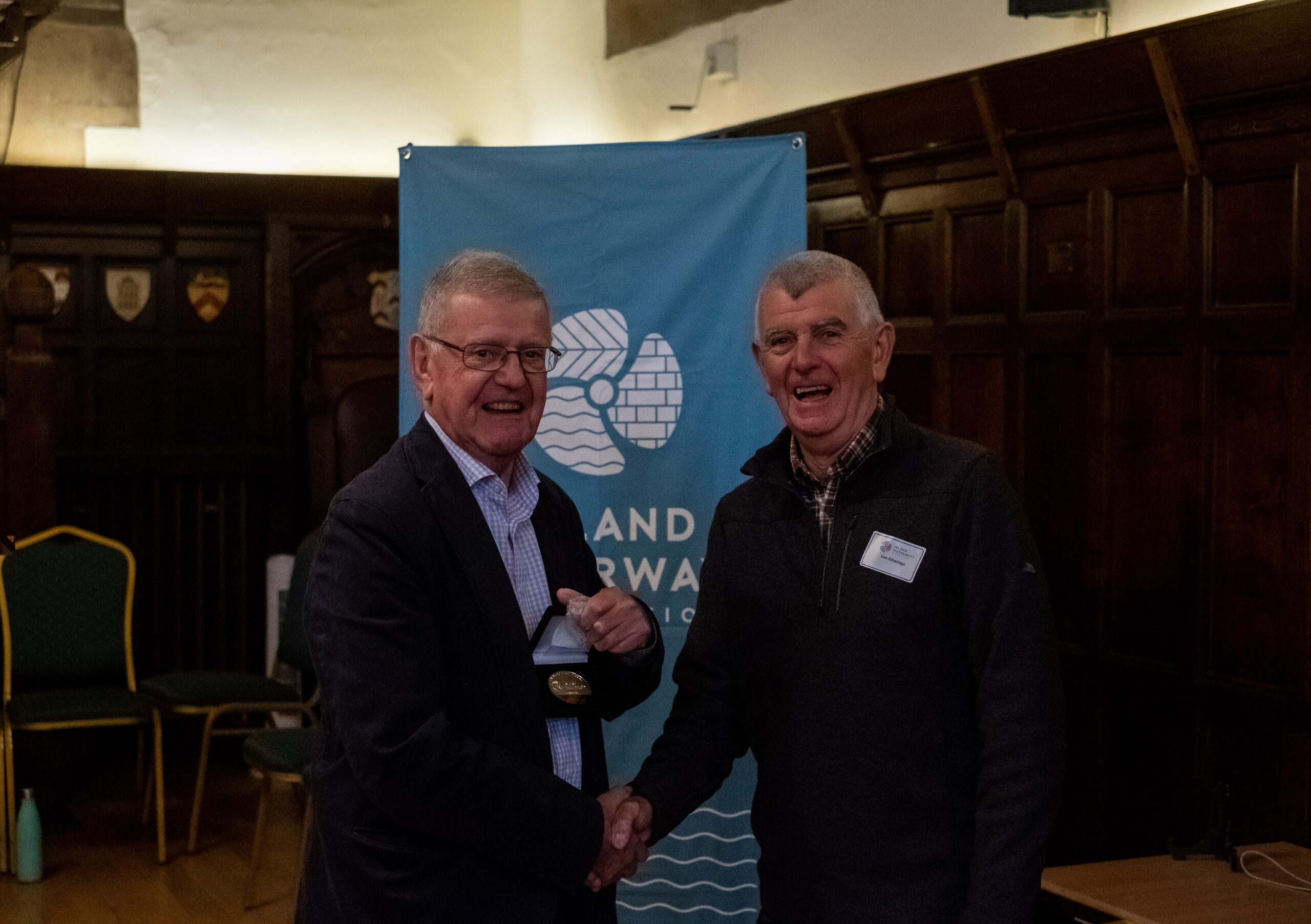
    Winners of the Inland Waterways Association National Awards were announced at this year’s AGM. The awards are presented annually to volunteers and groups who have made a significant impact through the work they do and their overall commitment to IWA. Please join us in congratulating the winners of the 2022 awards:

    Cyril Styring Trophy

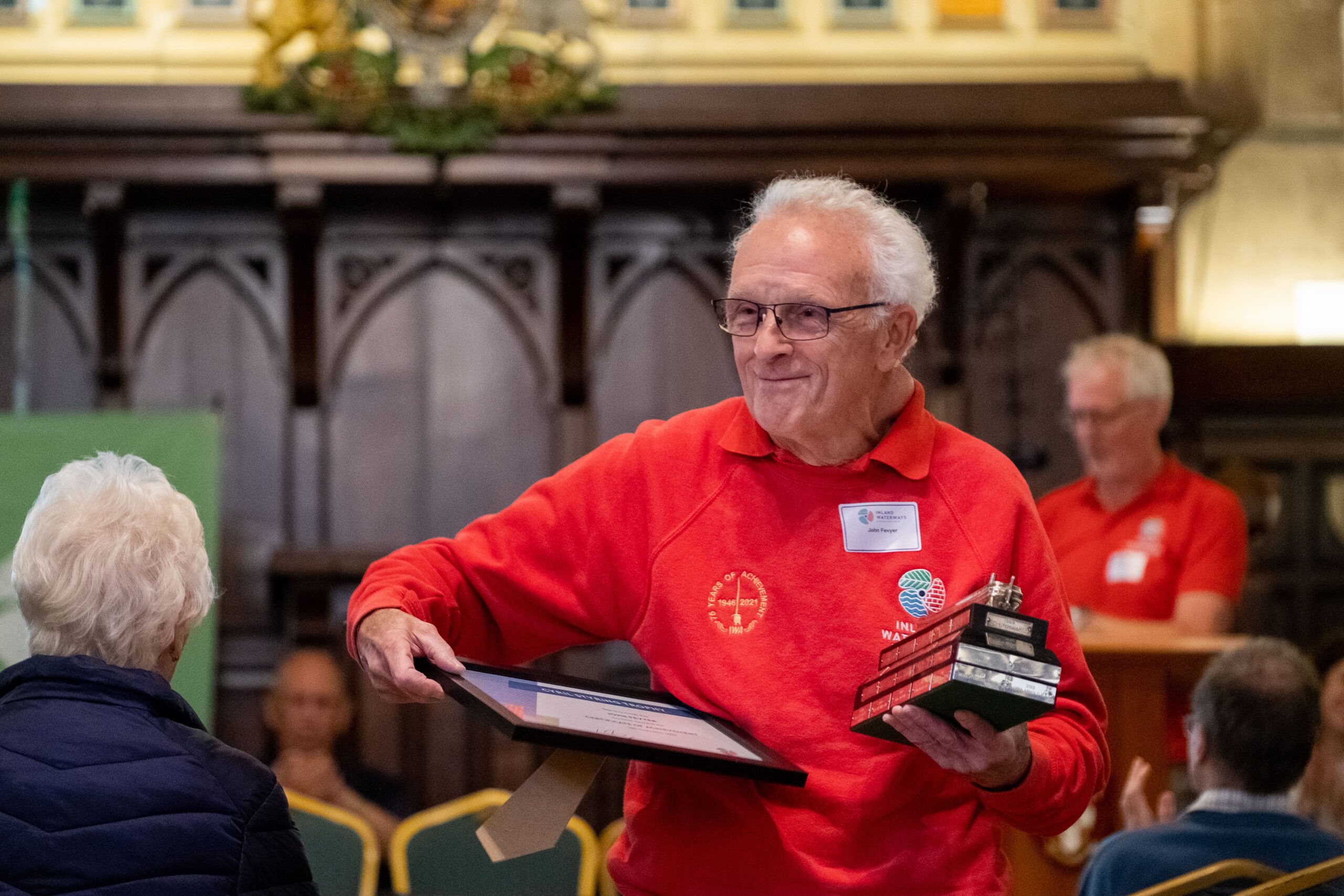
    This is the Association’s premier award. It is presented to an IWA member who has, in the opinion of trustees, made an outstanding contribution in furthering the Association’s campaigns. The recipient of this year’s Cyril Styring Trophy is John Fevyer.

    We think that it is fair to say that due to John’s efforts over a prolonged period of time, IWA has been able to reliably promote its campaigns all over the country in a way that would not have been possible without his superhuman and consistently reliable efforts.

    John has worked tirelessly for many years to ensure IWA has a presence at events such as Canalway Cavalcade, Festival of Water (and its predecessor National Waterways Festivals), IWA Campaign Festivals , Trailboat Festivals, AGMs and also at non-IWA events such as the London Boat Show, Boat and Caravan shows at the NEC in Birmingham, the Crick Boat Show, the Braunston Historic Boat show, the Rickmansworth Festival and various other events. John joined IWA in 1970 and has worked at IWA events every year since he attended Earls Court Boat show in 1972!

    He ensures that the appropriate display panels and equipment arrive at an event in good time and frequently works long hours to load, drive and unload the hire van and then, after a drive of 2-3 hours, assists local volunteers to set up marquees, display stands and sales items such as boxes of books and maps. He then does all of this in reverse at the end of a show!

    Christopher Power Award

    An award for a person, society or trust who has made the most significant contribution to the restoration of an inland waterway. This year, we presented the award to Terry Cavender from Buckingham Canal Society.

    Terry regularly organises and attends up to two work parties per week. This involves preparing plant and material for tasks as well as obtaining machinery for the society.  He trains members of the society to operate this machinery while also proposing them for courses.

    Terry chairs regular committee meetings and attends various events throughout the year to promote the canals such as council meetings, college/work/volunteering talks, and civic events. He liaises with Canal & River Trust, local councils and other bodies to promote and apply for permissions to further the restoration of the Buckingham Canal. Terry also develops and organises work days on the canal for companies and organisations. He is also a member of IWA’s Restoration Hub‘s High Level Panel.

    Branch Achievement Award

    This award is for the IWA branch which has made the greatest progress and achievement in promoting the Association’s aims and objectives during the past year. The Branch Achievement Award went to IWA Lichfield Branch this year although there were many strong contenders including West Country, North Staffordshire and South Cheshire, Northampton and the newly invigorated West Riding Branch with their campaigning on Salterhebble Lock.

    IWA Lichfield Branch has a strong team who work in conjunction with Canal & River Trust to cut back the off-side vegetation once a week over the winter months. Their Planning Officer responds to 200+ planning matters per year and is the lead on HS2 for IWA . The branch has close links and donates money to all the canal restoration societies in their area. Several branch members man the national IWA sales and recruiting stand at various venues around the country: Crick Boat Show, Festival of Water and Canalway Cavalcade. Members actively recruit new supporters for IWA within their branch area and have regular monthly meetings over the wintertime. They also organise walks at least 6 times per year for members and non-members, and publish an interesting branch magazine every quarter. Above all, the members of Lichfield branch enjoy themselves!

    Richard Bird Medals

    The Richard Bird Medals were presented to members whose efforts and support are considered to have brought significant benefit to the Association over a sustained period. The 2022 award recipients are as follows:

    David Carrington

    David joined the Finance Committee in 2009 and became a member of the Investment Working Group, which he has subsequently chaired for the last 10 years. His financial advice and experience have been invaluable to IWA. David has also been a director of Essex Waterways Limited since 2013.

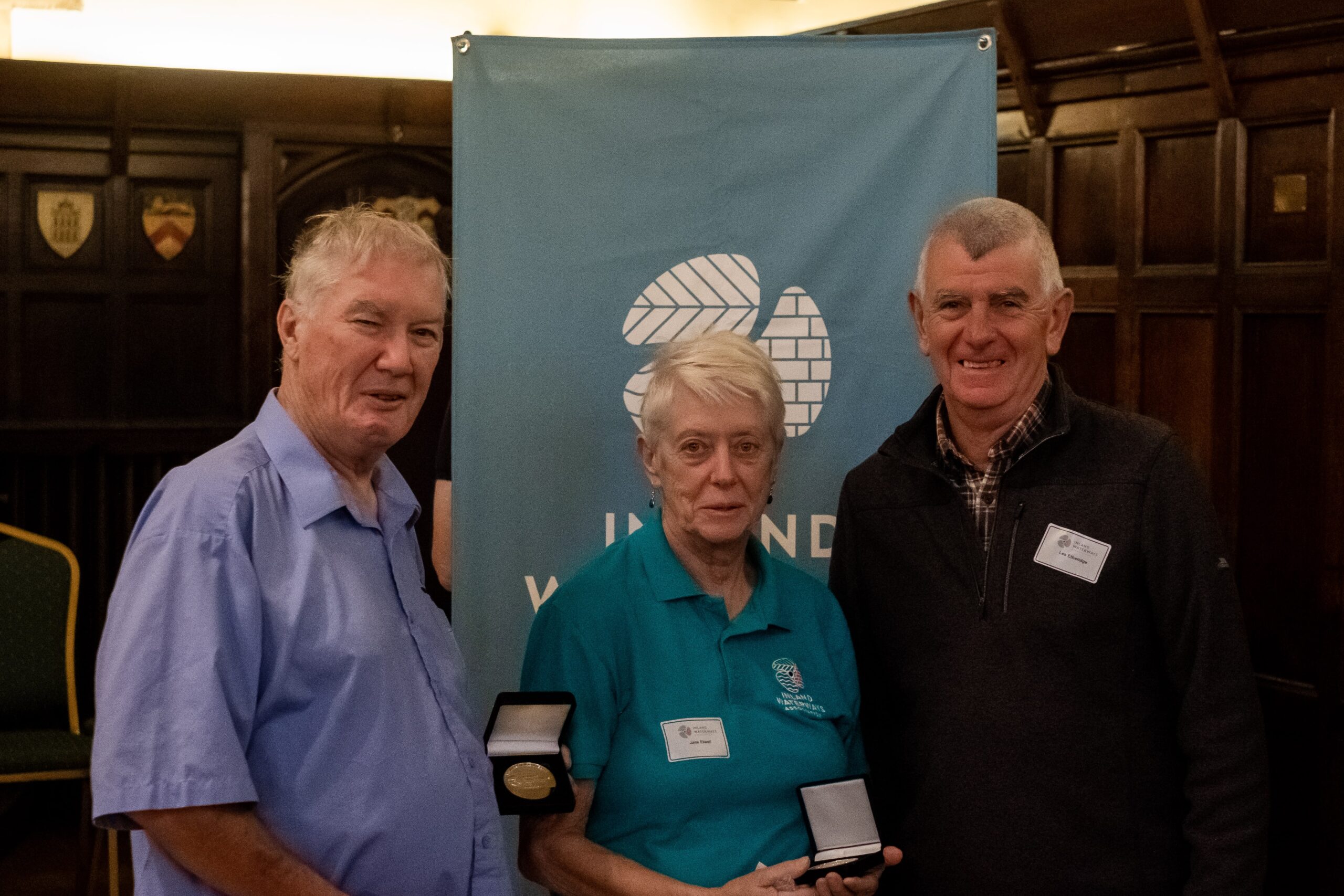
    Mike Elwell and Jane Elwell

    Mike and Jane Elwell were part of the supplies team for the old National Festival for several years. They have since been key members of the Festival of Water team since 2014, where Mike looked after finances until 2018. Jane has taken on various roles over the years including Supplies Director from 2014 and then Chair from 2017.

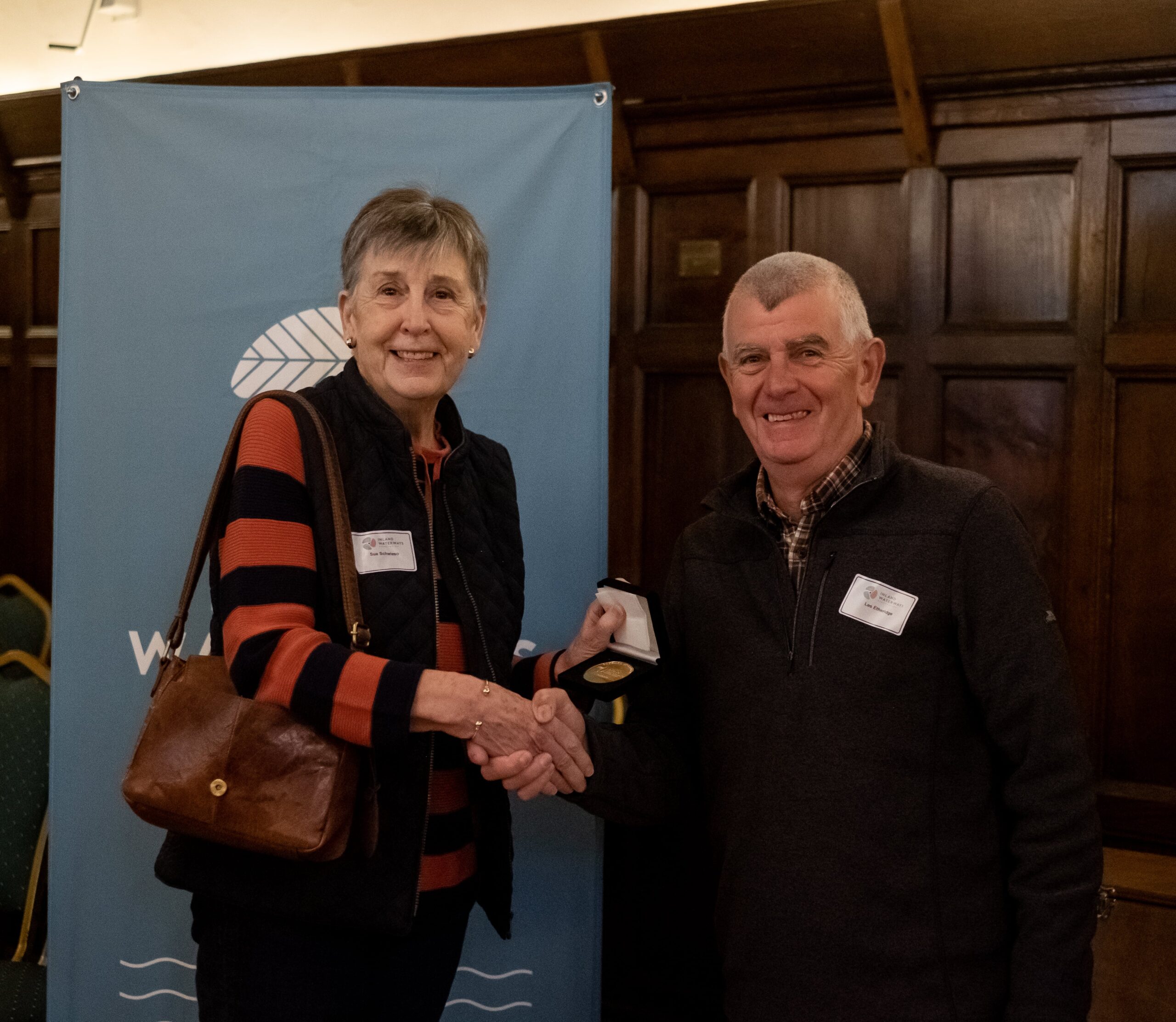
    Sue Schwieso

    Sue has recently retired from IWA Kent & East Sussex Branch committee. She joined the committee in 2005 where she immediately offered to take the vacant role of Social Secretary. She typically organised a social event every two months from September to May, with free entry to members of all waterway groups and to the public at large. Events were mostly funded by raffles to be financially neutral. Sue organised a variety of venues for the event, located throughout the wider branch area. Several group visits were arranged to places including the Royal Gunpowder Works, the Cross Ness Steam Pumping Station and a meal and boat trip up the River Rother to Bodiam. Sue has also been an active member of the Thames and Medway Canal Association with her husband.

    John Hawkins

    John has been a director of Waterway Recovery Group for over 30 years, during which time he has organised printed materials with help from his wife Tess (who has now sadly passed away). This has involved physically printing and collating not only Navvies, but all WRG’s leaflets from his garden shed up until very recently! John has also worked on very many WRG weekends and Camps on restoration projects throughout the country.

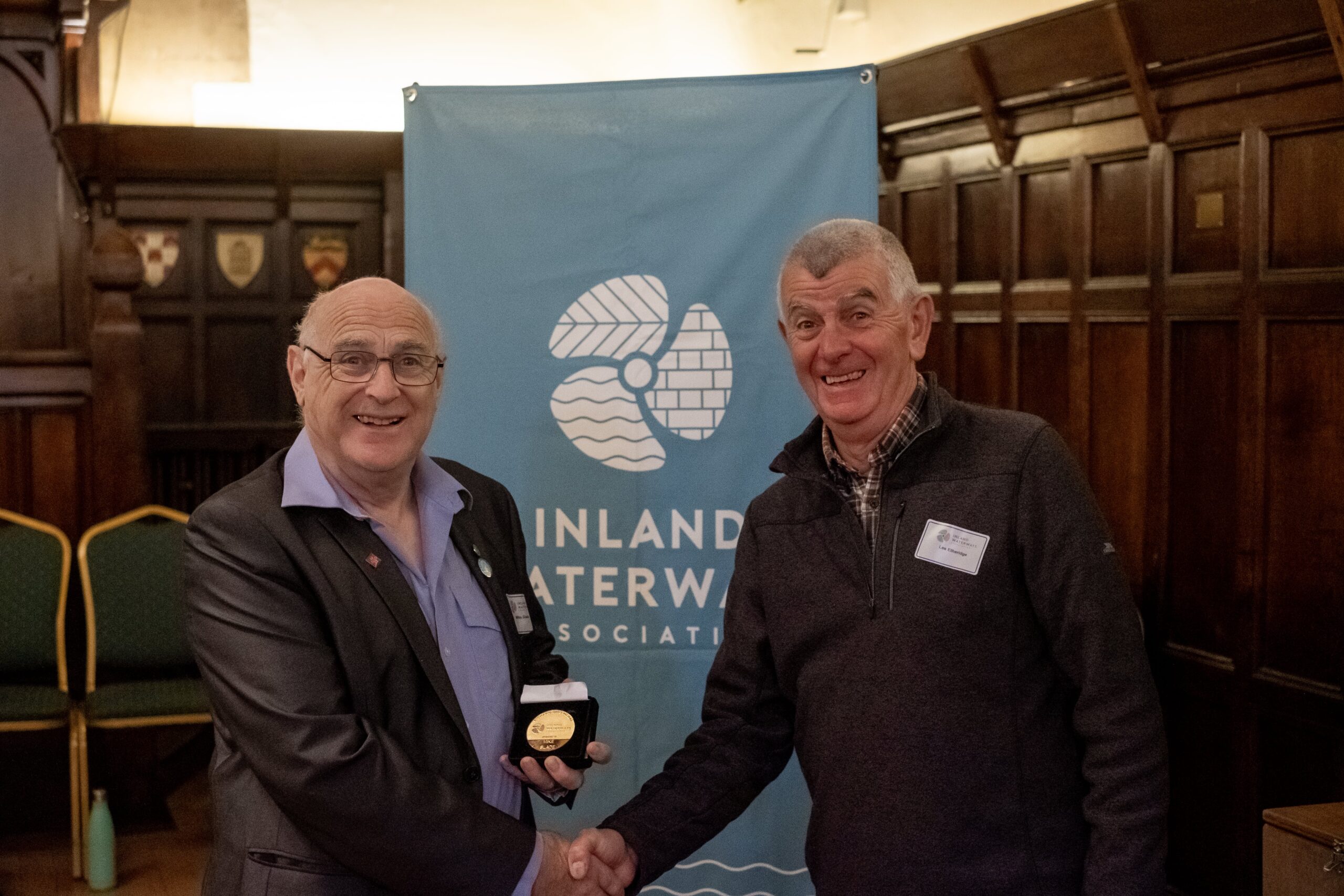
    Mike Slade

    Mike moved to Bridgwater around 2013 and it wasn’t long before he joined IWA West Country Branch and subsequently became the Volunteer Co-ordinator. Under Mike’s leadership the work parties went from strength to strength and have now recovered completely from the hiatus caused by Covid. Mike manages almost 100 registered volunteers and runs between 2 or 3 work parties every week at either the Bridgwater or Taunton ends of the Bridgwater & Taunton Canal or at Langport. The Branch has two 5-mile adoption agreements with Canal & River Trust and an agreement with Somerset County Council for the volunteer work at Bridgwater Docks. Mike also runs a separate Facebook page for the volunteers, which has more than 400 followers. Mike and his volunteers have won a number of awards and many accolades for their work. Their recent awards include the Keep Sedgemoor Tidy Award  as well as an award from the Canal & River Trust for the branch achieving 25,000 hours of volunteer work to date.

  • Waterways For Today Report launched at our 63rd Annual General Meeting

    Waterways For Today Report launched at our 63rd Annual General Meeting

    In a bid to highlight the importance of the waterways network, and as the only independent and national charity dedicated to supporting all of Britain’s navigable rivers and canals, we have produced a new report: Waterways for Today.

    We are pleased to announce that the report was officially launched at our 63rd Annual General Meeting on Saturday 24th September at The Guildhall in Lichfield. News of the report was very well received by members at the AGM and hard copies were distributed to the branches in attendance.

    Visit the Waterways For Today section on our website here or contact Head Office to request a hard copy.

    The report demonstrates how inland waterways can contribute to the country’s economic recovery and outlines the 12 most significant benefits that the inland waterways can bring to our economy, environment, local communities and lives.

    Waterways for Today Report Cover
    The Waterways For Today Report

  • IWA Festival Of Water 2022 was a Great Success

    IWA Festival Of Water 2022 was a Great Success

    IWA returned to Burton upon Trent for the third time with the Festival of Water which delighted crowds at Shobnall Fields during the August Bank Holiday weekend. In the Arena, children (and adults) showed off their Giant Jenga skills, tried to kick footballs past the goalie, learned how to throw a rope correctly, and were taught how to drive a digger. There was a superb choice of food available at the Festival of Water 2022, from delicious chunks of meat at the carvery, sausages and bacon rolls, Vietnamese street food, pancakes and ice cream to fragrant Indian vegetarian bhajis, pakoras and spring rolls, and numerous stalls with everything from promoting charities to selling wooden toys.

    The bar did brisk trade with a great choice of beers, ciders, Pimms and Prosecco and there was a continuous programme of entertainment in the Entertainments Marquee featuring local artistes and festival favourites, including the acclaimed Lucy Ward, Miles & Margaret and Burton Folk Group.

    Nearly 100 boats, from traditional working boats to modern narrowboats, decked with bunting, flags and flowers were moored along the towpath and adjacent to Shobnall Fields and attracted a constant stream of admirers. The static display of illuminated boats was very popular.

    Councillor Philip Hudson, Mayor of East Staffordshire, who opened the festival on Saturday, said he was delighted to welcome The Inland Waterways Association back to the Trent & Mersey Canal, one of the earliest to be built, with strong links to Burton. He hoped visitors would also visit some of the many easily accessible attractions. John Butler, IWA National Treasurer, thanked Councillor Hudson for the Council’s support and all the volunteers who make the event possible.

    At the Awards Ceremony on Monday afternoon, four awards were presented:

    • Best picture coloured by a child aged 4 – 8 years was awarded to Charlotte Green, aged 6 and in the 9-13 years category it was awarded to Bella Whiting, aged 9.
    • The Ray Dunford Trophy for the best illuminated/decorated boat was awarded to Jonathan Brown for his narrowboat Brown Trout, with commendations going to Peppertree, Alice and Bezzitoo.
    • The Offley and Slack Propellor Trophy, for the highest number of boats attending the festival, was awarded to Stafford Boat Club, with 9 boats.
    • The Festival of Water Harbourmasters introduced their own special prize this year, to recognise the support of the local community, some of whom decorated their back gardens to complement the boats. Two bottles of wine were presented to Cyril Dutton for his beautiful display of flags.

    Thank you to everyone who attended Festival of Water 2022.

    We hope you enjoyed it as much as we did and will look forward to seeing you again next year!

    In the meantime, you can view some of our favourite photos from the festival below.

  • In Honour of Her Majesty the Queen

    In Honour of Her Majesty the Queen

    We are deeply saddened to hear about the passing of Her Majesty the Queen and our thoughts are with the Royal Family at this time. In honour of the State Funeral, IWA’s office at Island House will be closed on Monday 19th September.

    Her Majesty the Queen’s unwavering service and commitment over the past 70 years to our country and the Commonwealth will be long remembered.

    Many in the waterways community will have fond memories of her unveiling the Kelpies in Scotland as recently as 2017. During the official opening, she also unveiled the Forth and Clyde Extension – the Queen Elizabeth II Canal – which is a new section linking the existing navigation to the Firth of Forth.

    This wasn’t the Queen’s first involvement with the waterways however, as she attended many other events including:

    The River Thames in London

    1977 – The Queen celebrated her Silver Jubilee with a pageant on the River Thames in London

    1979 – The Queen visited the Boat Museum at Ellesmere Port and unveiled a plaque

    Close up of the Clock Warehouse and signage at Shardlow

    1986 – The Queen opened the Stoke-on-Trent Garden Festival on board Narrowboat Cactus

    A narrowboat on the Kennet & Avon Canal

    1990  The Queen opened the restored Kennet & Avon Canal

    Her Majesty the Queen opening the Falkirk Wheel

    2002  The Queen opened the Falkirk Wheel linking the Forth & Clyde Canal to the Edinburgh & Glasgow Union Canal

    Preparations for Her Majesty the Queen's Diamond Jubilee Pageant

    2012  The Queen took part in the Thames Diamond Jubilee Pageant for her Diamond Jubilee

    The Kelpies in Scotland

    2017  The Queen unveiled the Kelpies in Scotland

    A lift bridge on the Forth & Clyde Canal

    2017  The Queen also opened the Queen Elizabeth II Canal, a new section which links the Forth & Clyde Canal and the Firth of Forth

  • CRT Changes To Boat Licence Fees

    CRT Changes To Boat Licence Fees

    The Inland Waterways Association understands the extraordinary economic climate that is affecting Canal & River Trust and appreciates the reasoning of a second increase (of 4%) within one year. IWA welcomes the confirmation that the Trust will support boaters who may be struggling to pay their boat licence fees on a case-by-case basis.

    However, IWA regrets that this second increase in boat licence fees has been carried out without any consultation of users. IWA notes that CRT has only now decided to focus spending on only navigation and legal requirements.

    IWA is well aware of the pressures and costs of running a navigation (IWA operates the Chelmer & Blackwater Navigation through its subsidiary Essex Waterways Ltd) and makes extensive use of volunteers for ongoing maintenance and repairs. Through IWA’s Waterway Recovery Group, IWA is experienced in repairs to, and maintenance of, waterway heritage infrastructure. IWA believes CRT could make better use of volunteers across its whole network to carry out preventative maintenance and repair work.

    IWA’s Chair Les Etheridge commented:

    These are extraordinary times and it is understandable that CRT needs to take every action possible to support its waterways. It is regrettable that planned maintenance will be deferred by CRT.  IWA and Waterway Recovery Group have already demonstrated to CRT that volunteers can carry out serious repairs and maintenance, and believe CRT has not taken full advantage of volunteers to support navigation.

    Les Etheridge
  • IWA petitions against HS2 (Crewe – Manchester) Bill

    IWA petitions against HS2 (Crewe – Manchester) Bill

    IWA petitions against HS2 (Crewe – Manchester) Bill

    The Bill received a second reading on 20 June and was referred to an HS2 Select Committee to hear petitions from those directly and specially affected.

    The HS2 (Crewe – Manchester) Bill for Phase 2b West affects the Middlewich Branch of the Shropshire Union Canal, the Trent & Mersey Canal, and the Ashton and Rochdale canals in Manchester.

    IWA’s main objection to the plans is the absence of adequate noise mitigation measures for canal users.

    The plans include (i) the Crewe North Rolling Stock depot and three adjacent viaduct crossings of the Middlewich Branch, (ii) three separate viaduct crossings of the Trent & Mersey Canal north of Middlewich, and (iii) a main construction compound in Manchester. At each of these interfaces the canals would be subject to excessive noise unless better mitigation is provided.

    IWA has responded to several previous consultations, including the National Infrastructure Commission and the Transport Select Committee, criticising the choice of route through an area prone to brine subsidence, and its adverse effects on the canals’ landscape, environment and heritage.

    This Petition concentrates on the major impacts of noise on canal users and is closely based on our response to the Environmental Statement consultation.
    (See: HS2 Bill threatens tranquillity of waterways around Middlewich and Lymm. 11/4/2022)

    We are particularly concerned that the residential use of boats is not adequately assessed, and the noise mitigation measures proposed are therefore inadequate where HS2 crosses or runs near to each of the affected canals.

    Noise Mitigation

    Our canals are major heritage assets, wildlife sites and recreational corridors, valued for their tranquillity, and each HS2 affected location is used by tens of thousands of people each year.

    Noise levels close to HS2 bridges will be extremely high without acoustic barriers and the noise of passing trains will propagate over a wide area. Although this is intermittent, it is the peak noise levels that cause maximum disturbance, and any form of averaging noise levels is misleading.

    HS2 automatically includes noise barriers, earthworks or fencing, to protect residential properties but continues to misrepresent all canal users as ‘transitory’ and thus not worthy of consideration. A few canal crossings benefit from the proximity of inhabited buildings, but most crossings in rural areas are given no protection and will be subject to intolerable levels of noise.

    Our Petition explains in detail the wide variety of ways in which people use and reside on the waterways, and the vulnerability of moored boat occupants to external noise. Canal boats are residences, and whilst not always permanently occupied, and capable of moving, wherever more than a few boats are moored, permanently or intermittently, it is likely that people will be living there for significant periods, so their acoustic environment should be protected.

    Parliament failed to address this issue for Phase 1 and for Phase 2a, but that is no reason why the same mistakes should be repeated with Phase 2b.

    Canal Interfaces

    IWA’s Petition details the usage of the canals around each HS2 interface. On the Middlewich Branch permanent moorings at Park Farm and visitor moorings at Yew Tree Farm are affected. On the Trent & Mersey Canal visitor moorings at Bramble Cuttings, popular temporary moorings at Billinge Green Flash and permanent moorings at Oakwood Marina would be particularly affected.

    At each canal crossing location there should be 4-metre-high noise barrier fencing across the viaducts and on adjacent embankments. In Manchester the construction compound should have substantial noise fencing.

    First Additional Provision

    The Bill, as deposited, would also affect the Bridgewater Canal and the Manchester Ship Canal, although the Government’s last-minute decision to remove the Golborne Link through an Additional Provision (AP1) removes the threat to moorings on the Bridgewater Canal, for now at least.

    However, AP1 includes some new works on the Middlewich Branch at Clive Green Lane Bridge that, whilst providing improved cycle access, would worsen pedestrian access. IWA’s second Petition therefore asks for retention of the access steps and towpath hedge.

    Read IWA’s Petitions:

    The full text of both IWA petitions; that against the Bill and that against the First Additional Provision; as published on the Select Committee website, can be seen here:

    Petition against the Bill

    Petition against the First Additional Provision

  • Successful Campaign to protect Boaters’ Facilities on the Middle Level

    Successful Campaign to protect Boaters’ Facilities on the Middle Level

    Thanks to campaigning from IWA, Fox Boats and The Middle Level Commissioners, Fenland District Council have reversed their decision to remove the important boaters facilities block on March Riverside.  

    When we first learned about the March Future High Street Fund, we were delighted that it recognised the potential of the waterway passing through the town and sought to improve visitor moorings and facilities. However, we then discovered that the proposed moorings had been cut and the vital boaters services ditched. 

    IWA wrote to Fenland District Council in April 2022, to make the case for the retention of these services, emphasising that if March is to attract visiting boaters to stop and contribute to the local economy, they need these facilities provided, and that they also benefit local river users. We argued that there was a proven need for water, refuse disposal and pump out services, as the only other facilities in the area, at Fox’s Marina, may not be able to provide these services to the anticipated rises in boater numbers. We encouraged the District Council to commit to waterside regeneration for all the benefits it brings to the area. 

    Recently we had confirmation that Fenland District Council will be retaining the boaters facilities and investing in a new pump-out in the coming months. 

  • IWA responds to DfT’s Future of Freight Plan

    IWA responds to DfT’s Future of Freight Plan

    IWA, and other campaign groups working to get more freight off roads and on to waterways want the government to take a closer look at how waterways can contribute to the freight sector, with waterbourne traffic taking the load off long haul road journeys, helping decarbonise the sector. 

    In June, the Department for Transport published its ‘Future of Freight’ plan.  IWA joined campaigners, including the Commercial Boat Operators Association, and freight operator GPS Marine to say that the inclusion of water freight, for what is believed to be the first time, is an important step but it doesn’t go far enough.  

    We support the vision of Transport Minister Judy Harrison for a ‘world-class, seamless flow of freight across our roads, railways, seas, skies and waterways’ and say the strategy is a welcome attempt to deliver a long-term strategy for freight.  But if the Government does not commit to waterways, including funding for navigation authorities, the benefits for people across skills, jobs, health, and the environment will not be delivered. We called on the Government to invest in improving freight waterways so they could take larger cargoes, in the same way that Government improved major roads for lorries. We added that a revival of the Freight Facilities Grant system for capital equipment was also needed. 

     Les Etheridge, Inland Waterways Association National Chair, said: “IWA welcomes the inclusion of inland waterways freight in this report but we feel that more detail and commitment is needed, in order to effect real change. On many inland waterways maximising potential for freight will require investment from navigation authorities to increase the capacity so it is vitally important that the waterways receive adequate funding from government. We also feel that planning guidance needs to be stronger, to protect wharves from the pressure of development.” 

    Obstacles to achieving fuller integration for barge and coastal maritime operators across the different freight channels include the closure of wharves, delays in planning permission to allow new riverside loading and unloading facilities and a lack of understanding of how river traffic can increase safety and reduce harmful emissions, compared with lorry transport. 

  • APPGW discusses waterways heritage and architecture

    APPGW discusses waterways heritage and architecture

    The history and architecture of our waterways was the topic of a recent meeting of the All Party Parliamentary Group for the Waterways (APPGW). 

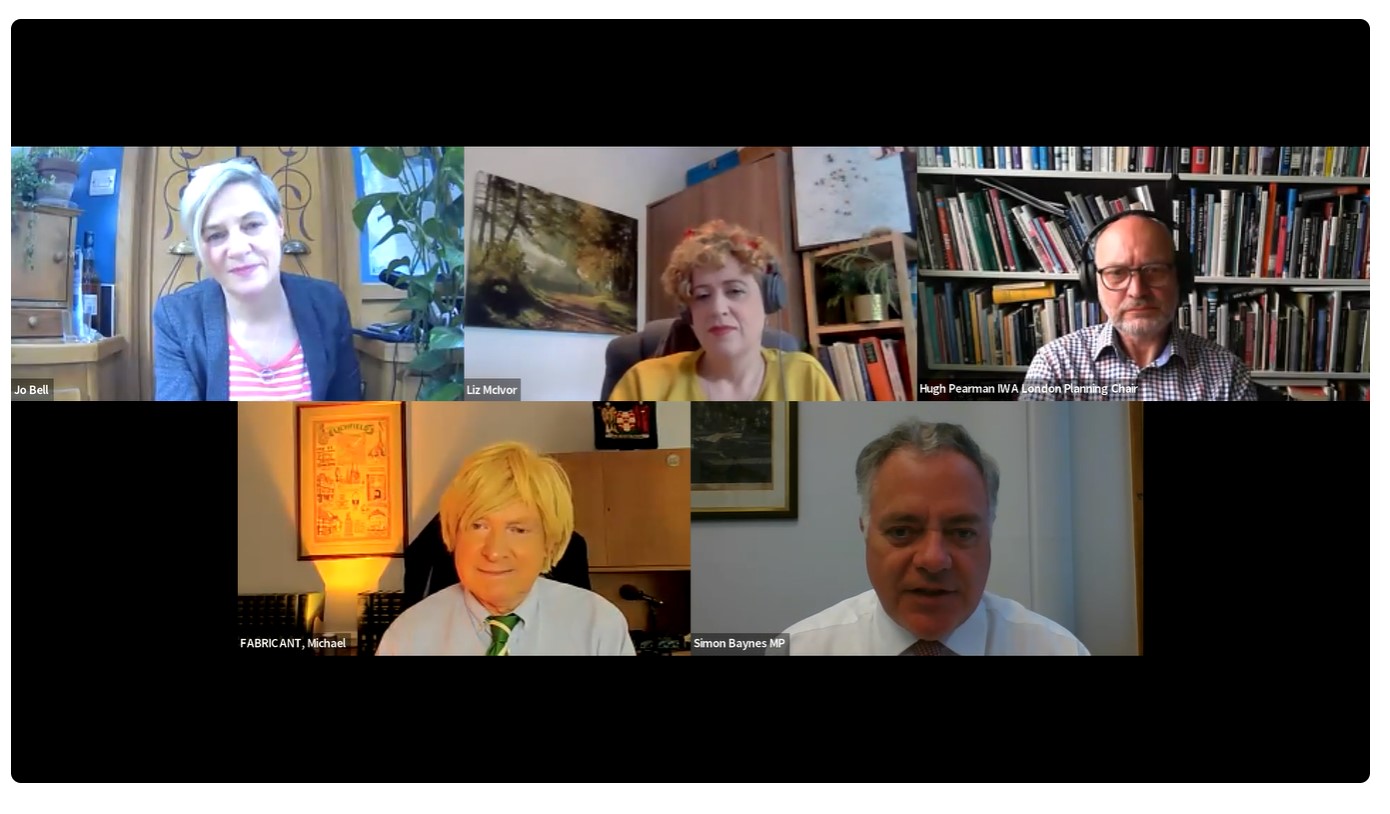
    Michael Fabricant MP, Chair of the APPGW, welcomed parliamentarians and representatives of waterway organisations to the video meeting.  Presentations from 3 well known speakers from the field of waterways heritage and architecture were followed by a general question and answer session.

    Liz McIvor, historian, author and TV presenter, talked about the physical remains of industrial waterways and their role in our future landscapes.  Jo Bell,  poet, author and industrial archaeologist, then presented on the importance of the culture of our canals as well as the built heritage, while Hugh Pearman MBE, architecture critic and author, concluded the presentations by talking about why architects, planners and developers must respond creatively to our waterways heritage. 

    The meeting also heard Jo Bell, who is a former Canal Poet Laureate, recite her poem, Springtime at the Boatyard

    The question and answer session included questions and discussion with MPs and peers as well as representatives from navigation authorities and waterway organisation. Among the issues discussed were better ways of protecting waterways from inappropriate development, the uniqueness of each individual waterway, Conversation Area status and other designations, and the cultural importance of the horse in the history of the waterways. 

  • Salterhebble Lock Cottage Saved from Auction

    Salterhebble Lock Cottage Saved from Auction

    IWA’s West Riding Branch heritage champions have saved this lock cottage near Halifax on the Calder and Hebble, at the last minute, from the auctioneer’s hammer.

    IWA felt that in this case sale into private ownership was not the best future for the property as it is an integral part of the Salterhebble Basin and would compromise planned ambitions for regeneration of the local area. The basin consists of three distinctively different locks and a mooring pound for 10 boats. Outside of the basin, there is also an underused canal arm that could accommodate 10 more boats, and an unused dry dock in an area where these facilities are in high demand. It is also the step off point for the popular Hebble Trail. Access to the cottage is over a footbridge over the top lock and there is no road access for a cottage resident and it was felt that the health and safety restrictions that this would bring to Towpath users and boaters had also not been taken into account.

    Salterhebble discussions are now in progress between IWA, the Canal and River Trust and the local council to develop the area and turn the heritage building in into a community centre for the local area, and the regeneration of the area will now be co-ordinated with the current and planned road improvements and planned national cycle routes. Initially the main focus will be on building a team from the local community, and education and practical skills experience will be top of the agenda. Everything will revolve around the canal environment and for the younger participants they will work towards bringing their learning to life using canal related activities such as C&RT Explorers. . For everyone else the focus is on boating, history and heritage – telling the story of the basin and looking to the future. If you would like to get involved, contact westriding@waterways.org.uk.

  • Canalway Cavalcade 2022 declared a great success

    Canalway Cavalcade 2022 declared a great success

    Beautiful weather on the opening day saw record numbers of visitors to the event with over 120 boats gleaming in the pool and along the Grand Union and Regents Canals. As with most years, many travelled from far across the country but, encouragingly, we welcomed many boaters closer to home, with a fantastic representation of the London based boating community. 

    Alongside the shining brass work and bunting, interspersed with many boats flying the Ukrainian flag in solidarity, we had a selection of events and activities. The Noyze Boyz Jazz Band burst into life as the festivities kicked off on Saturday, and soon the pool was buzzing with beautifully decorated boats parading in front of an eager audience. Elsewhere in the festival we had a variety of stalls selling their wares. Including jewellery, traditional painted boating paraphernalia, beautiful lamp shades and much more. This year we were also delighted to welcome Midland Chandlers, and Tim and Sam from Youtube Channel ‘Chugging Along’ promoting their brilliant board game ‘Argy Bargey’. As has become the tradition, the Stone Wharf offered the hub for many food and beverages, keeping the hungry visitors sustained whilst they listened to colourful live music in the festival real ale bar. 

    At midday on our first day Libby Bradshaw, Ceremonial and Children’s Activities Manager, introduced the Lord Mayor of Westminster, Councillor Andrew Smith, who welcomed everyone to the City of Westminster and thanked IWA for putting on the event. Richard Parry, Chief Executive of Canal & River Trust followed with his thanks. John Edmonds, IWA London Region Vice-President welcomed everyone to the event paying special attention to the dedication from volunteers for organising the event. And finally Tom Claydon, Chair of the organising committee, thanked the volunteers, committee members and supporters. Wrapping up the presentation, Libby thanked British Land for their sponsorship and support before the Lord Mayor of Westminster, Councillor Andrew Smith rang the bell to formally open the event. This was echoed by cheers around the pool, the ringing of bells and horns, and the start of the Pageant. 

    In Rembrandt Gardens children and adults alike were entertained by Punch and Judy, the Noisy Oyster, a circus workshop, and the legendary Alarum Theatre with pieces such as “I Dig Canals”. Faces were being painted and there was plenty of learning and joviality in the marquee over the weekend. Sunday saw the wonderful Teddy Bears’ picnic in the beautiful surrounds of the garden and even the sun came out to warm the crowds. Other children’s activities were led by the Floating Classroom on the Electric Barge, the Church Army and the Pirate Castle from Camden.  

    On Sunday evening Craig Haslam once again excelled as Master of Ceremonies for the Procession of Illuminated Boats, where the boaters covered their boats (and themselves) with as many lights as would fit – we even had two illuminated banana costumes. Mark Saxon, Waterspace Manager, produced a spectacular display with disco lights, glitter balls and even a smoke machine! 

    On Monday afternoon, the awards were presented by John Edmonds. 

    Marcus Boudier Trophy

    For the best decorated privately entered boat in Saturday’s themed Pageant, was awarded to Rachel, steerer Mark Saxon, and the Canal Dream Team led by Chuntian Hu, of the Royal College of Art, and Ran Yan of Central Saint Martins University of the Arts, London.                                                                              

    Runner up: Thyme, steerer Elizabeth Jones

    The Ray Dunford Buckby Can Trophy

    For the best decorated boat entered by a waterway or community group:

    Red Watch, steerer Tony Catchpole

    The Cruise Electric Trophy

    For the best illuminated boat in Sunday evening’s Procession:

    Tros Yr Afon, steerer Phil Gaskell

    Runners up: Giant Anteater, steerer Gary Howes; and Annie & Walt, owners Mike & Lorraine Newman

    The Graham Capelin Award

    For the best entry by a boater who has not previously taken part in either the Saturday Pageant or Illuminated Boats:

    Giant Anteater, steerer Gary Howes

    The Westminster Trophy

    Donated by the City of Westminster for the winner of the Boat Handling Competition:

    Middlesex, steerer Robin Hendley

    Runner up: Tintagel, steerer Graham Smith

    The Roger Squires Trophy

    Presented by St Pancras Cruising Club in recognition of Roger’s ten years as their Commodore, it is awarded to the best novice competitor in the Boat Handling Competition:

    Thistle Doo, steerer Charlotte Trimby

    Runner up: Barossa, steerer Colin Warner

    The Mike Stevens Memorial Trophy

    Goes to the “Best Boat” at Canalway Cavalcade, selected from all the boat entries at the event, it is awarded in recognition of Mike’s outstanding contribution to IWA and Canalway Cavalcade during his lifetime:

    Ampere, owners Malcolm & Barbara Bridge

    The Idle Women Shield

    Sponsored by Jan Knox, proprietor of Canal Experience Training School, the shield was awarded to the best lady entrant in the Boat Handling Competition:

    Ampere, steerer Barbara Bridge

    Runner up: Stella, steerer Karen Cook

    A new prize, Graham’s Choice Bear (with a backpack) for helpfulness and kindness, in memory of our special Cavalcade friend, Graham Nunn, of the Church Army, was awarded to Olivia Parlett. Olivia, now in her teens, has been attending Cavalcade since she was very small and specifically wanted to help to ensure the little ones attending the Teddy Bears’ Picnic on Sunday afternoon enjoyed it as much as she had done as a little girl.

    Tom Claydon, chair of the IWA Canalway Cavalcade Organising Committee said: “It’s wonderful to Welcome Back everyone to Little Venice for IWA Canalway Cavalcade 2022. A truly incredible spectacle in the heart of London’s waterways. This event would not be possible without the 10,000 hours of dedicated volunteer time, and I thank each and every person for making this such a great success.

  • Celebrating ASHTAC 50 years on

    Celebrating ASHTAC 50 years on

    Ashton Attack (ASHTAC for short) followed on from Operation Ashton, the campaign to save the Ashton Canal. Approximately 1000 people worked on the Ashton Canal and the Lower Peak Forest Canal over a single weekend in March 1972. The event contributed to the Cheshire Ring being fully re-opened to navigation in 1976.

    Ten years ago a large scale clean up took place to celebrate the 40th anniversary, with over 100 volunteers travelling from all over the country, including many of the original participants of the 1972 event. The 50th anniversary event was slightly more modest, with uncertainties over Covid preventing the planning of a larger scale event, but with a significant amount of work being carried out.

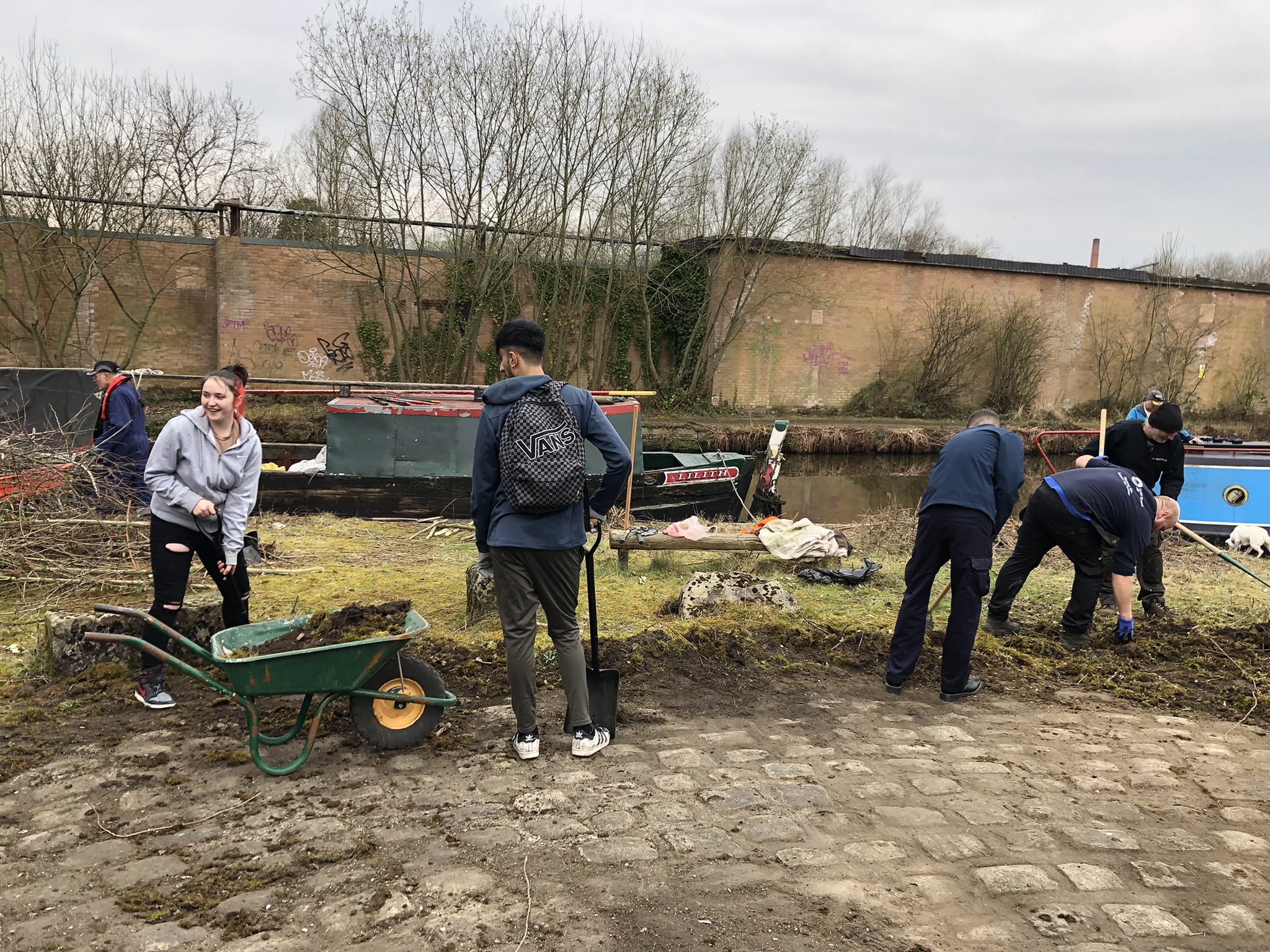
    The event held on 21st and 22nd March saw over 30 volunteers from the local area and from across the north west area, cleaning up the Ashton canal in the vicinity of Portland Basin. Tasks included litter picking, vegetation removing, tree cutting and general canal-side tidying.

    The event was organised by Tameside Canal Boat Trust, Canal & River Trust and IWA Manchester Branch with help from ASDA Ashton, Tameside Sea Cadets, Portland Basin Museum, Jigsaw Homes and the Wooden Canal Boat Society.

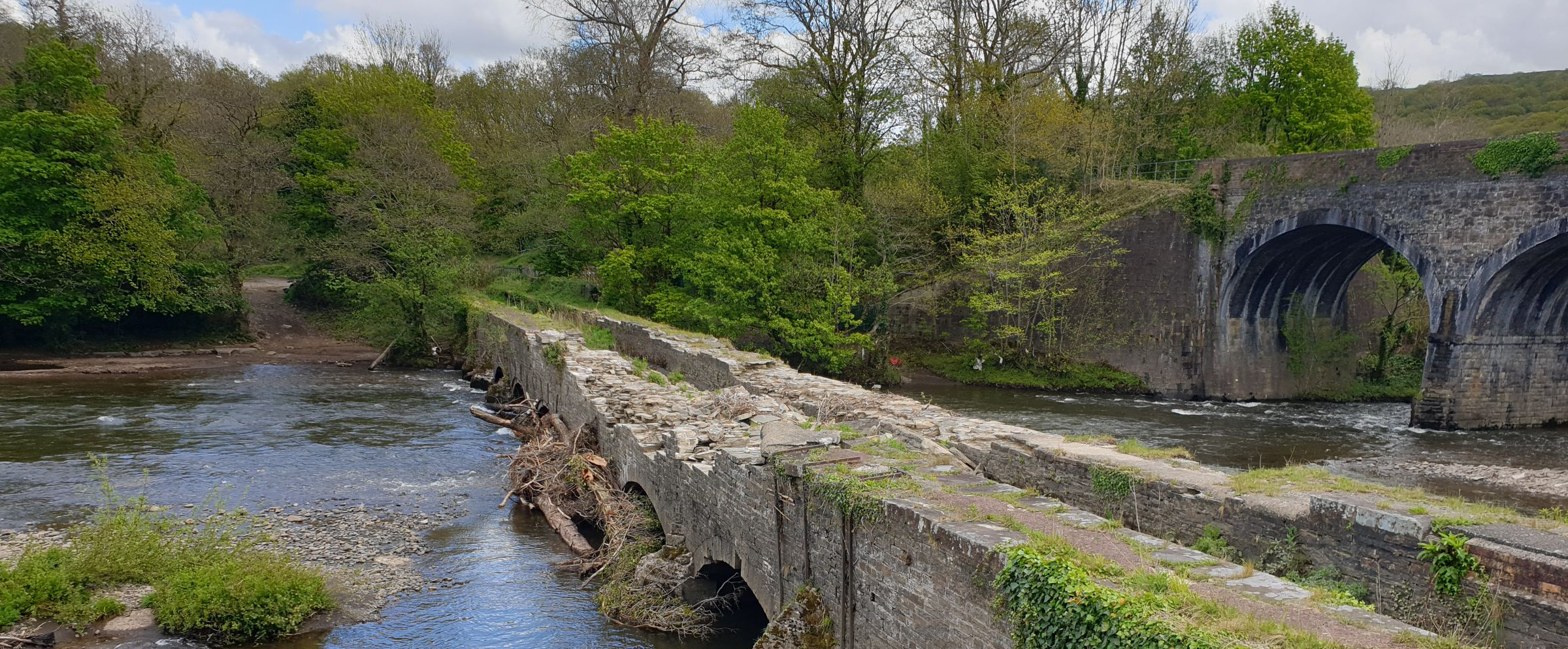
  • Aberdulais Aqueduct can be saved

    Aberdulais Aqueduct can be saved

    In August 2021 IWA successfully applied for a CADW grant to cover the cost of a structural survey of the Aberdulais Aqueduct. In September Mann Williams, who specialise in creative conservation of historic buildings and structures, undertook the survey and produce a report at the end of January 2022.

    The main conclusion of this investigation and report is that, despite appearances, the condition of the monument is relatively stable and in its current state repair is feasible. IWA believes urgent and immediate works should be as quickly as possible to mitigate further damage increasing the cost and complexity of repairs.

    In early May IWA, Neath & Tennant Canals Trust and CADW are planning to jointly host a site visit with all the key stakeholders (Natural Resources Wales, Neath Port Talbot Council, the owners of the Aqueduct and Network Rail) to discuss and agree the next steps for the project in order to conserve the structure, consolidating what is currently there, so that in the future it can be strengthened and relined and revert back to navigation.

    At a local level there is a growing awareness of heritage and the importance of project heritage assets in the area. We believe there is a real opportunity to save this heritage asset and will continue to lead on this campaign.

  • HS2 Bill threatens tranquillity of waterways around Middlewich and Lymm

    HS2 Bill threatens tranquillity of waterways around Middlewich and Lymm

    HS2 (Crewe – Manchester) Bill

    The High Speed Rail (Crewe to Manchester) Bill for HS2 Phase 2b West was deposited in January 2022, with a public consultation on the Environmental Statement to the end of March.

    IWA has studied the 335 reports and map books, totalling tens of thousands of pages, for their impacts on several waterways and the changes since previous consultations. The environmental reports detail the major adverse visual, heritage and community impacts the Proposed Scheme will have on the waterways from both construction and operation of the railway.

    Noise impacts

    However, the noise impacts on canal users, and particularly on the residential use of boats, is not adequately assessed and the noise mitigation measures proposed are therefore inadequate for each of the affected canals.

    HS2 Ltd seek to dismiss all canal users as ‘transitory’, with only short exposure to the noise from HS2. This ignores the facts that people live on their boats when underway, can moor for up to 14 days in most places, and often stay overnight on their moorings, whether these are officially residential or not.

    IWA’s response concentrates on this outstanding issue of noise mitigation, and again asks that all canal crossings are provided with noise barrier fencing across viaducts and bridges, and with fencing or earth barriers on adjacent embankments.

    Our response details how each of these interface locations are used for temporary, visitor and permanent moorings.

    Waterways affected

    The main affected locations are:

    • The Middlewich Branch of the Shropshire Union Canal – 3 viaducts close together at 7 to 8 metres height, and affecting permanent moorings at Park Farm and visitor moorings at Yew Tree Farm.
    • The Trent & Mersey Canal in the Dane valley – 3 viaduct crossings (River Dane, Puddinglake Brook, Trent & Mersey Canal) at 10 to13 metres above canal water level, and affecting visitor moorings at Bramble Cuttings and permanent moorings at Oakwood Marina.
    • The Bridgewater Canal at Agden near Lymm – a viaduct 11 metres high directly above the Lymm Cruising Club moorings, which will be lost during the construction period of over 3 years.
    • The Ashton Canal and Rochdale Canal in Manchester city centre with the Main Compound for building the new HS2 Station right alongside the Ashton Canal at Ducie Street.
    • At each of the viaduct sites IWA has called for noise fencing 4 metres high for maximum protection.

    Read the full response text

  • Reconnecting the Waterway Restoration Sector

    Reconnecting the Waterway Restoration Sector

    On Saturday 26th March 2022 over 120 delegates and volunteers descended on Stroud for the Annual Waterway Restoration Conference. The conference was jointly hosted by the Inland Waterways Association and Canal & River Trust.

    The last time the waterway restoration sector gathered together for a national networking event it was March 2019. Whilst the conference moved successfully online for 2 years, there was a demand for a face-to-face event.

    This year the focus was on ‘Overcoming obstacles and seizing opportunities’ . The Cotswold Canals Trust and partners showcased the significant progress that their project has made over the past 2 years. Specifically, through major infrastructure projects such as A38 Whitminster Roundabout and the Ocean Rail Bridge. Delegates also had the chance to attend workshops: ‘Relining the canal’, by the Canal & River Trust, and ‘Diversifying your volunteer base and board’, by the Young Trustee Movement.

    Jenny Morris, IWA’s Restoration Hub Coordinator, said:

    “It was fantastic to catch up with some many friends and familiar faces across the restoration sector. The networking over coffee and lunch at these events is just as important as the keynote sessions, all of which provided delegates the opportunity for problem solving, inspiration and sharing of ideas.”

    View the Annual Waterway Restoration Conference 2022 delegate pack & resources

  • 10 things I wish I knew before living on a canal boat

    10 things I wish I knew before living on a canal boat

    I’ve lived afloat for nearly 14 years, on two different boats. I’ve experienced live aboard life whilst moving around the system, off grid, and on a static mooring with facilities. I enjoy living on my boat and wouldn’t change it for the world. Here are a few things I wish I’d known before living on a canal boat.

    1. Keeping up with boat chores takes as much time as a part time job

    Even more so if you are moving around and need to find a new mooring every couple of weeks. There are so many extra jobs that you need to do to maintain and run a boat. For example, collecting and moving fuel, filling your water tanks and emptying toilet tanks. A fairly significant chunk of your time will be devoted to these daily tasks, so it’s important to think about how this will affect your life.

    2. Small jobs become big jobs

    All the systems on a boat are connected. If one thing fails, it’s likely to cascade and affect lots of other systems. If you have no power, then as well as no lights you’ll also have no water pumps. So it’s a good idea to have two methods of heating water, two ways to heat the boat, and several ways to charge your batteries!

    3. Living on a canal boat needs Systems planning

    How will you use the boat – will it match with existing systems? There is no standard way of setting up the systems you need to live comfortably on a boat. Decisions about heating and plumbing need to take into account whether the boat will be off grid or not, and whether it will be moving or in one place for days at a time.

    For example, a boat that spends a lot of time in a marina and connected to mains power will likely have systems that rely heavily on electricity. Take that same boat off grid and you may struggle with hot water and space heating because these systems rely on power-hungry pumps. If hot water is generated by running the engine and stored in a tank, this is fine if you’re moving every day. However, if you’re in one place for days you may wish you had an instant gas water heater that doesn’t need you to run the engine.

    4. It is possible to lose things on a boat

    I imagined I would become some kind of minimalist with only useful possessions. However, I was never a minimalist before I moved aboard and after 14 years we have accumulated a lot of stuff. On the flip side it’s entirely possible to have a library on a boat!

    5. Living on a canal boat takes some Defending

    You’ll learn that you need to defend your lifestyle all the time and on several fronts. You’ll need to defend your decisions to friends and family but also to the various authorities we all need to interact with. Our way of life is not always well understood and I have spent a lot of time in meetings with local authorities advocating for the rights of my community. That said, I’ve made firm friends through campaigning and learned a lot along the way.

    6. Having ‘No Fixed Abode’ is really annoying

    Even if you have a mooring, many boaters don’t have an address the same way as land dwellers do. I spent a decade without an address and it affected me in so many annoying ways. Everything needs a postcode these days and many boaters end up struggling to vote as a result. I got by with two different addresses for different purposes. One in another county that a family member kindly let me use for “official” things. And another when I actually needed to get something delivered or show a local connection. Even now, on a full residential mooring with a post box, it took months of letters and phone calls to add our boat to Royal Mail’s official address list.

    7. Setting a fire to keep in overnight is an art form

    There is a certain timeless fulfilment that comes from heating your home all winter using wood and coal. But on a chilly night when you’ve run out of kindling and firelighters, and the coal is in a heavy wet bag on the cabin top, you do envy those with central heating. Actually I do now have central heating on our boat. But like everything with boats it’s never simple. You have to make sure there’s enough power to run the heating pumps and enough diesel (or HVO) in the tank. The answer to the eternal question that boaters get asked by land dwellers “does it get cold in winter?” is YES, but only if the fire goes out.

    8. Living on a canal boat makes you feel like you’ve become public property

    Spending time moored on the country’s network of navigable waterways, you often find yourself passing through tourist hotspots and holiday destinations. The sight of boats adds to the colour and vibrancy of the area. Which is great, and it’s quite satisfying to be living (for a few days at least) somewhere that other people visit for fun. Until those people start climbing on to your boat to take selfies, or asking you if you offer boat trips!

    9. It isn’t always cheaper than living on land

    It can be, especially in cities like London but licence, fuel and maintenance costs add up. Then there may also be loan repayments and mooring fees to consider. Boat breakdowns can also be unexpected and very expensive to repair. But with my mooring fees, council tax (which is sometimes payable depending on the mooring), fuel and maintenance it’s about the same as renting or paying a mortgage on a small place on land in a similar area.

    10. Living on a canal boat Is more than a lifestyle

    Living afloat has become more then a lifestyle for me, it’s an identity – I feel part of a community of people who support each other, and I love how close I am to the changing seasons and to wildlife. When I am in the kitchen, maybe preparing some food to share with my neighbours, I might look out and see one of the resident pair of cormorants diving into the water. And I can’t imagine living anywhere else.

  • Campaign to save 124 year old Boxted Bridge in Essex

    Campaign to save 124 year old Boxted Bridge in Essex

    We have objected to plans to replace the historic Boxted bridge over the River Stour in North Essex, in support of a local campaign to protect the structure. Essex Highways has proposed demolishing the bridge and replacing it with a wider one.

    Boxted bridge is in the heart of the Dedham Vale, a designated Area of Outstanding Natural Beauty. It is a steel girder bridge built in 1897 and an important part of the waterways heritage of the area. The river is popular for navigation by small craft such as canoes and paddleboards.

    Replacing the bridge with a new and much wider bridge would be harmful to the setting of Boxted Mill. It would result in loss of a structure of intrinsic historic significance.

    Alongside the community, we feel that the bridge should be repaired and retained, not replaced.

  • HS2 & Integrated Rail Plans continue to threaten waterways

    HS2 & Integrated Rail Plans continue to threaten waterways

    The decision to scrap the Eastern Leg of HS2 between the East Midlands and Leeds in favour of upgrading existing routes is good news for several waterways that were threatened by the proposals.

    We have welcomed this in our submission to an Inquiry into the Government’s Integrated Rail Plan (IRP), which affects several waterways and canal restoration projects. However, we continue to be critical of the intention to press ahead with the Western Leg of HS2 2b. Additionally, there is a lack of detail on the Northern Powerhouse Rail (NPR) routes which may adversely affect other waterways.

    The IRP was published in November 2021.  It covers HS2 Phase 2b, NPR and some Midlands Rail Hub proposals and sets out the Government’s decisions on new high speed lines and major upgrades of the rail network in the North and Midlands over the next 30 years.

    Our submission was made in response to an invitation by the House of Commons Transport Select Committee to anyone concerned by the implications of the IRP and how it integrates with HS2.

    HS2 Phase 2b East

    Scrapping much of HS2 East avoids adverse impacts to several waterways including the Cranfleet Cut, Erewash Canal, Nottingham Canal, Chesterfield Canal, Sheffield & South Yorkshire Navigation, and Aire & Calder Navigation.  However, the “safeguarding” orders remain in place which means the Chesterfield Canal restoration at Staveley continues to be blighted by uncertainty, and we have called for this to be lifted.

    HS2 Phase 2b East will now end at East Midlands Parkway station but the IRP says nothing about its route through Measham which still threatens a large housing site that was set to contribute significantly to the restoration of the Ashby Canal.  The review of this route which was promised in 2018 should now be speedily completed to allow the restoration to proceed.

    HS2 Phase 2b West

    The IRP confirms the intention to proceed with HS2 Phase 2b West from Crewe to Manchester, which will have major impacts on the environment and heritage of the Middlewich Branch of the Shropshire Union Canal and on the Trent & Mersey Canal north of Middlewich. We have been critical of the engineering design of this route, crossing the Cheshire salt field with its unpredictable subsidence problems, and its poor integration with the NPR proposals for east-west connectivity. Therefore, we are advocating for progress on this route to be paused while new proposals are considered.

    New Transpennine Route

    The NPR proposals for a new Transpennine route have been cut back to upgrades of the existing route via Huddersfield to Leeds, with a new section of high speed line from Manchester to Marsden, east of Standedge tunnel.  But finding a new route through hilly terrain and dense built development will be a major challenge.  We have called for more information about the routes of new sections of NPR line, and where widening of existing lines outside the present railway land take is planned, which could impact several waterways.  They should also make clear if they plan to re-open the two original single track tunnels at Standedge, which would affect the current operational safety measures for the canal tunnel.

    Warrington to HS2 West

    Another section of high speed line is proposed between Warrington and a connection with HS2 West. This uses a freight line which crosses the St Helens (Sankey) Canal at low level on a former swing bridge which would permanently prevent its full restoration.  Either a raised crossing should be provided or if this is not feasible than a different route for NPR through Warrington Central should be considered.

    Protecting the Waterways from the worst effects of HS2

    We’re campaigning to protect canals and rivers from the damaging effects of HS2, especially where the tranquillity of the waterways is under threat. Our HS2 route changes have already reduced waterways crossings – saving the project £50 million – and we have secured agreement for a new canal restoration route, a new mooring basin, changes in viaduct designs and improved noise protection.

  • Aqueducts where one waterway crosses another

    Aqueducts where one waterway crosses another

    The answer is that they are places with aqueducts where one navigable waterway crosses over another. In fact, those six locations are the only places where this occurs on the main connected inland waterway network of Britain. The current structures all date from the 19th century and have listed status.

    Three of these special aqueducts are on the BCN within about 4 miles of each other:

    • Steward Aqueduct – Old Main Line crossing the New Main Line just before the top of Spon Lane Locks
    • Telford Aqueduct – Engine Arm crossing over the New Main Line (near Smethwick).
    • Tividale Aqueduct – Old Main Line crossing the Netherton Tunnel Branch

    The next two are also geographically quite close to each other, and were both built by the Trent & Mersey Canal Company:

    • Hazelhurst Aqueduct – Leek Arm crossing over the main line of the Caldon Canal
    • Poole Aqueduct – Hall Green Branch of the Trent & Mersey Canal crossing over the main line of the Trent & Mersey Canal

    And finally, the biggest and most well known…

    • Barton Swing Aqueduct – Bridgewater Canal crossing the Manchester Ship Canal

    Telford Aqueduct (1825)

    The Engine Branch was built in 1789 to improve the water supply to the summit level of the Birmingham Canal (now known as the Old Main Line). This was originally from a pumping engine which gave the branch its name.

    The cast iron aqueduct was built when Thomas Telford’s New Main Line was constructed through a cutting in this area. It was forged in 1825 by Horseley Ironworks in nearby Tipton. At this time, the Engine Branch was extended to carry water from the new Edgbaston Reservoir, part of Telford’s scheme.

    The aqueduct is Grade II* Listed and also a Scheduled Ancient Monument. The aqueduct consists of a 52 ft cast iron trough supported by a stone arch. It carries the Engine Arm (which is on the Wolverhampton Level, 473 ft above sea level) over the New Main Line (otherwise known as the Birmingham Level, 453 ft above sea level).

    Steward Aqueduct looking down to new main line

    Steward Aqueduct (1828)

    Also known as Stewart or Stewards Aqueduct, this Grade II Listed aqueduct was built in 1828 by Thomas Telford. It was to carry the old line of James Brindley’s earlier Birmingham Canal over his New Main Line, at Spon Lane, Smethwick. Later, in 1852, it had a railway bridge built adjacent to it. The railway line ran parallel to, but much higher up than, the New Main Line. In about 1970, the M5 was built over the top, at a higher level still. The aqueduct is made of brick with sandstone dressings.

    Poole Aqueduct (1828)

    Most people think of this aqueduct as being the place where the Macclesfield Canal passes over the Trent & Mersey Canal. However, it is the Hall Green Branch of the Trent & Mersey Canal crossing the main line of that canal. The branch canal crosses the main line by the brick built aqueduct immediately downstream of Poole Lock, just the second lock down from the summit and the junction of the two canals.

    The Trent & Mersey Canal Company’s Act of 1827 authorised them to build the first 1½ miles of the Macclesfield Canal’s line, and to charge tolls on cargo carried on it. The aqueduct was built in 1828 of red brick with a stone parapet, and is Grade II Listed. The Hall Green Branch, including Poole Aqueduct, was opened in 1831, at the same time as the Macclesfield Canal itself.

    Hazelhurst Aqueduct (1841)

    This aqueduct was part of the third arrangement of canals in the area around Hazelhurst and Hollinhurst on the Caldon Canal. When the canal was first built in 1778 the summit level was less than 2 miles long. However, it was extended when the Leek Arm was added (to supply water from Rudyard Reservoir) in 1801. This included a new staircase of 3 locks being built at Hazelhurst. The Leek Arm crossed the valley on a huge earth and stone embankment, joining the main line at a junction immediately above the staircase.

    40 years later in 1841, the original line of the canal was reinstated. This was as a result of the staircase causing a bottleneck for traffic and being replaced by Hazelhurst New Locks. (3 separate locks actually at Hollinhurst, half a mile away). The embankment was pierced with a new aqueduct, taking the Leek Arm over the main line of the canal. The aqueduct is Grade II Listed and consists of a single arch in painted brickwork with stone dressings.

    Tividale Aqueduct (1890s)

    The Netherton Tunnel Branch (including the tunnel) was built in 1858 to improve communications between the Dudley and Birmingham canals. The original aqueduct on this site carried the original Birmingham Canal over the new branch canal. This was just a few hundred yards before the newer canal heads underground through Netherton Hill.

    The aqueduct was rebuilt in the 1890s and the current structure is made of brick with sandstone keystones. It has two arches either side of a toll island, used for gauging boat traffic, and is Grade II Listed. An interesting feature, the water was run through pipes in the aqueduct from the higher canal through a turbine that drove a dynamo for the electric lighting in Netherton Tunnel. The pipes can still be seen on the south side of the aqueduct.

    Barton Swingbridge crosses the Manchester Ship Canal - Graham and Marilyn Speechley - 2004

    Barton Swing Aqueduct (1893)

    The Barton Swig Aqueduct carries the Leigh Branch of the Bridgewater Canal over the Manchester Ship Canal. Often referred to as one of the wonders of the waterways, it was designed by Sir Edward Leader Williams. Completed in 1893, it was officially opened for commercial traffic on New Year’s Day 1894.

    It consists of a 235ft long trough, weighing 1450 tons, that swings through 90 degrees on a central island. This allows unrestricted navigable headroom along the Manchester Ship Canal. The water in the higher canal is sealed off with gates at either end, and the aqueduct is swung using hydraulic power. The swing aqueduct is Grade II* Listed.

    It dates from the building of the Manchester Ship Canal, and replaced an earlier aqueduct by James Brindley. The previous aqueduct, built in 1761, had been the first canal aqueduct in Britain. This original Barton Aqueduct carried the Bridgewater Canal over the Mersey & Irwell Navigation. So in itself, it was another, and indeed the first, crossing point of one navigable waterway over another.